Tourist Office



Larva is a small population located to the southeast of the provincein the corridor that separates the Sierras del Pozo and Sierra Magina. Its territory is on the slope towards the Guadiana Minor River.The rainfall and vegetation are scarce and the erosion very strong, producing large ravines and torrenteres that make up a semi-desert landscape.
More than half of the municipal term is dedicated to pastures, tumiliars and splitsthe number of forest tree species, sometimes the result of repopulation.The economy of its inhabitants is exclusively and subsistence, dependent on cereals, olive, caparra and sheep.
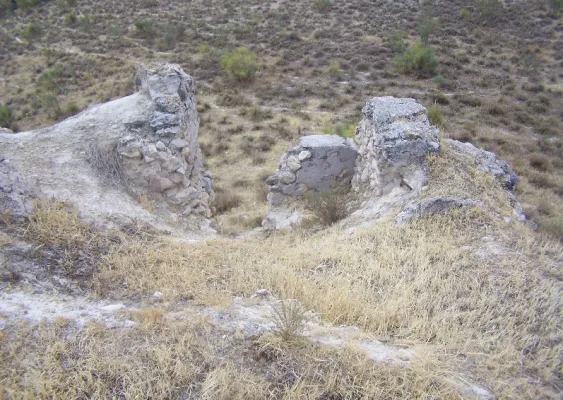
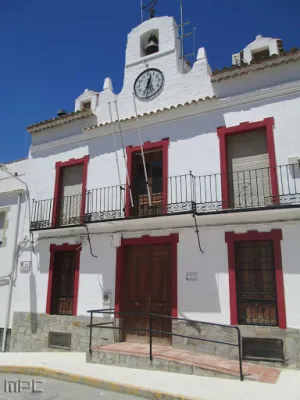
From its artistic heritage, the church of St. Peter the Apostlebuilt in the 18th century, it has a simple structure both outside and inside and El Castellón, remains of an ancient Iberian cyclopian fortress of the II and I centuries a. C.
Is part of


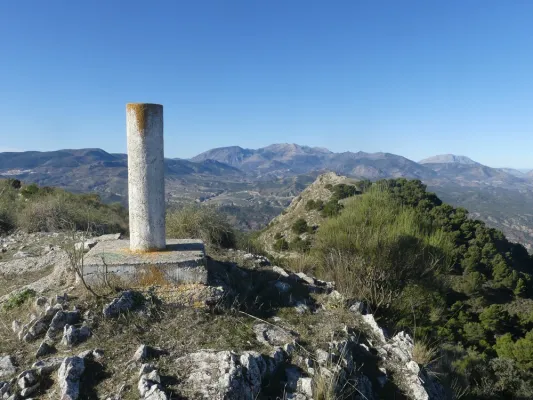
Larva is located in a privileged place between two natural parks in the province of Jaén. In a panoramic view, if we place ourselves in the urban centre looking north, the Sierra Magina Natural Parkand to the right the Natural Park of the Sierra de Cazorla, Segura and Las Villas. The cities of the World Heritage of Ubeda and Baeza. The Sierra de Larva is born on our back with pronounced slopes and with the dominant presence of the Mediterranean bush, with abundant matas of rosemary and thyme.
Special mention deserves the spartum, which was so important in history to go away.
In the tree extract the carrasco pines predominate. The top of this mountain is at 1,144 m of altitude, known as Crow of the Picones.
Over the last few decades the landscape has changed, according to agricultural needs. The fields we see, originally you have been occupied by large extensions of cereal crops. Over time, the steppe landscape has undergone a great transformation, leaving way for the cultivation of the olive tree, and occupying the largest area for agricultural use, the cultivation of the cereal being relegated to a second position.
The rainfall is low.
The economy of its inhabitants is exclusively agricultural and subsistence, dependent on cereals, olive, caparra and sheep. It houses a rich fauna: clumsy pigeon, abubilla, jineta, badger, boar, rabbit... and is an enabling ground for activities such as hiking, cycling and climbing, among others.
On the road to the Cañada Real you will find the farm of The Laguna. It is a flood area, where in years of rain and snow a natural lagoon abounds, becoming a special place that houses various species of birds and amphibians.
Another place of great natural appeal for the visitor is the Area of "The Pozuelo. "It is reached by the road that is born from" La Casería "to the Sierra. A place of special interest for nature lovers, in it there are three springs, two of them accessible for the visit: the Fuente- the Caño and the Fuente- the Cueva.
A few meters from these are the Cave of the Joso, a geological figure known colloquially as "coat" whose use is intended to keep livestock. This place is ideal for adventure sports.
Recreational area La Cañada: This is a perfectly equipped area with a interesting view, of a water source, an information panel on landscape interpretation and the panoramic area that is visible from there.
The visitor of this town can enjoy two festive cycles: those related to fire, and the great festivities and fairs.
Fire-related festivals:
Cycle of the great festivities and fairs:
This feast was originally held on June 29, the feast of St. Peter and Paul, but the presence on those dates of the wheat mieses and parvas in the ages were at serious risk of fire with the launch of the rockets. For this reason, and also so that on the days of the feast there may be those larveños that during the year are found outside the town.
The gastronomy, which is part of the cultural heritage of the town, we have to highlight the products derived from the slaughter, such as the exquisite chorizos or the adobado loin.
The following dishes are also rooted in tradition:
Of the pastry: Home empanadillas, dumb stained, flowers (fine fried mold), skillet rosks, drunks, "friar ears" and solillos.
In Larva there have been up to 4 ovens, but depopulation and low profitability made them close. Peoples such as Cabra del Santo Cristo or Peal del Becerro, spread to the municipality of bread.
The geographical location of Larvain the corridor that joined the Alto Guadalquivir, the depressions of Ubeda and Baeza, Guadix and Levante, makes these lands populated since the oldest prehistory.
The place of origin of the present Larva is located in the Iberian settlement of Cerro del Castellóndated between the 2nd and 1st century BC It is a fortified enclosure located on a rigged hill in the middle of a plain, which remained occupied in Roman times. The armchair walls are preserved and a large sealant inside. In the Arab era, this place was identified with the name of Ullawa, which refers to the holding of "Wednesday Market". Very close is the castle shelter of the Woven of the Moorsa fortification on a top.
The compound was divided into two spaces: the lower to house the animals, while the superior, identified as a castle, served as a shelter for the neighbouring populations. Larva is likely to be a property dependent on this settlement.
During the 13th century, Larva He was on the Castellano-Nazarí border, playing an important role in the control of both Muslim and Christian riots, the latter settled on the land of the advance of Cazorla.
Until 1836, Larva belonged to Quesadathe date on which the neighbors request the dependency of the municipality of Cabra of the Holy Christ. The dependence on the new town would last almost a century, until 1924, when it became a minor local entity.
It would be in 1936 when its segregation as an independent municipality was consolidated. After the Civil War, the population recovered, with 2,061 people being registered in 1950.
From this decade on, people are losing their population because of the emigration of people to both the large cities, Madrid, Barcelona, Valencia, and foreign nations. It currently has 450 inhabitants, one of the localities with the lowest population in the province.
3