Contact Details
Fax: 953 390 000



Huelma is a important location located to the south of the region of Sierra Magina, right on the provincial border with Granada.The third north of the municipality is included in the Natural Park of Sierra Magina, where you reach heights that exceed 2,000 m to go down to the Jandulilla Rivereast of the municipal term. Solera is a population that was annexed to Huelma in 1975.It is an important municipality in the region from an economic point of view. The main industry is the Manufacture of furniture of wood, with national and international markets, and which has been able to be renewed despite times of crisis.The ceramic and textile industry. It has important assets for cultural, nature and sport tourism.
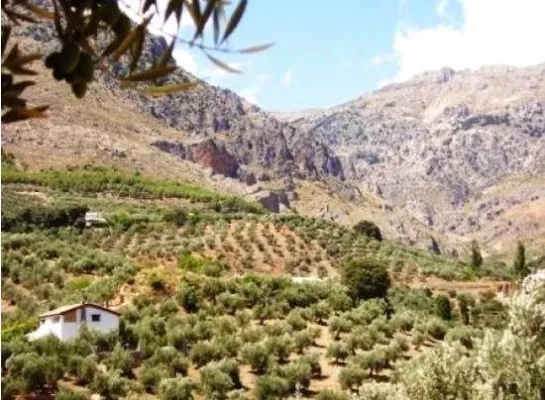
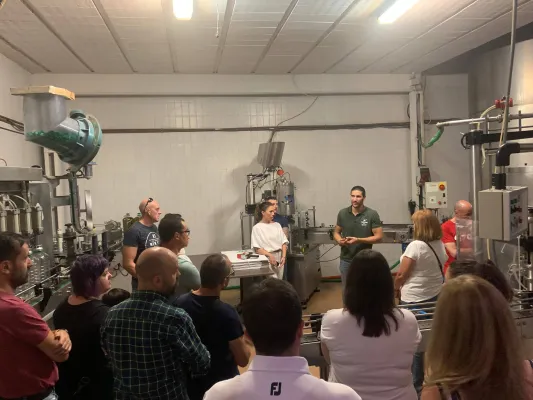
The United Nations agriculture is the most employed, followed by the Services sector,the olive tree is the largest crop, followed by cereal, while fruit and vegetable crops are almost testimonial. Within the industrial fabric there is a oil packaging which belongs to the Designation of Origin of Sierra de Magina.
The livestock It also takes on special relevance, it is raised livestock, sheep, and sows. The exploitation of the montesine sheep, originating in the mountain areas of the province of Granada and the south of the province of Jaén, is noteworthy.Huelma is a compulsory stop in the tourist product "Travel to the time of the Iberians," as it offers a Iberian field dated in the 4th century BC in the place the "Cortijo Pajarillo. "
With regard to his historical-artistic heritage, his castle which stands on a promontory of strong earrings. It is of interest to the parish Church of the Immaculate of the 16th century.
Is part of


The beautiful urban town of Huelma, made up of a set of white streets and houses, located under the remains of its castle, make up a harmonious and attractive set that has valued their cataloguing as Historical-Artistic Set in 1971.
From its rich heritage we highlight:
A very important part of the municipality of Huelma is crossed from south to north by the river Jandulilla, dividing it into two similar extension areas. On the left bank of the river is the Mágina saw massif and the town de Huelma. On the right margin, the Cabra saw and the historical core of Solera.Approximately 10% of the area of the municipal term is included in the Sierra Magina Natural Park. There are several signposted itineraries such as the healthy route of the Cordel del Salado, the road of the Borregueras or the path of ascending to the Magina peak that will offer us amazing panoramic views of the region.
The routes by the karst of Sierra Magina will allow us to observe meadows, bushes, sabinars and the vegetation of the summits (blue lead, fine piorno, mountain ruse, thyme and alfacarensis herring), as well as karst formations, snow wells, perdicular eagles, grey colalba, and capillants.
The low areas are covered with olive and almond plantations, mainly, although there are also frequent coals, complaints and pineapples of carrasco and salgareño pine.
Huelma's gastronomy is succulent and varied. They highlight strong dishes like the "scallops", bean peas with cod, chotto al ajillo, andrajos with cod, andrajos with hare. It is typical of the "cucumbers" on Holy Week.
In the field of pastry there is a large variety of sweets: "roscos," "flowers," "drunks," "buds," "polvorons," "stained," "moles eggs," "papajotes," "membillo meat," "gachas" and the typical "Hornazo" for Resurrection Sunday.
One of the most important milestones in the history of Huelma is the presence in these lands of a Heroic shrine of the Iberian era, specifically on the so-called hill "The Pajarillo"which can be given in the 4th century BC This sanctuary would be the entrance door to a territory controlled by an Iberian aristocrat on the Jandulilla River, and whose headquarters would be located in Ubeda. In Roman timesin the third century AD repopulate these lands the high valley of Jandulilla with small farms.
During the Muslim era we are living moments of great splendor in Huelma. From the conquest of the Iberian Peninsula by this civilization, it is when the present core arises around the hill where the castle is located. This Muslim fortification will become a key piece in the Middle Ages border struggles between the kingdoms of Castile and Granada.
The Nazaris They will possess it. to the late date of 1438, year in which it is conquered by Mr Íñigo López de Mendoza, I Marqués de Santillana. King John II will be granted it in a lordship, and years later, in 1474, Henry IV elevates the Lordship to the category of Vizcounty and then County in the person of D. Beltrán de la Cueva, I Duke of Albuquerque. Hence the castle was built at this time on the remains of the ancient Muslim fortress, also known as the "Castle of the Dukes of Albuquerque."
After the end of the Granada war, 1492, Huelma entered a period of political and economic stability during the first half of the 16th century, thanks to the repopulation and the cultivation of new lands. These years of economic bonus will be reflected in the undertaking major religious and civil worksas is the parish church.
It will be in the late 16th and early 17th century when there is a decline in the population due to crises and epidemics. The War of Independence will be the entry of French troops into Huelma who will destroy the fortress.
11
4
4
3