Contact Details
Fax: 953 360 002



Municipality of west of the Sierra Magina regionwhose municipal term is entered by the north-east end in the Natural Park of Sierra Magina, which is part of the Subbetica and which offers beautiful and spectacular landscapes. The town is located at the feet of the Serrezuela, at 798 m above sea level, where the spring of the Fuente de la Reja that supplies the Charca and the Huerta, elements exclusive the local landscape of Pegalajar.
The municipal term of Paste occupies a extension of 80 km2and is located in the valley of the Guadalbullion River, about 18.8 km. from the city of Jaén. Pedany The lock is part of the municipality.
The olive tree, become practically monoculture, occupies the descending slopes of the numerous peaks that coronate the geomorphology of Pegalajar, focusing on the south and east and occupying approximately half of the municipal term.The economy is based on olive trees and the oil industry.
In the municipality of Pegalajar there are 26 Property declared Heritage Real estate of Andalusia, six of them too Good for Cultural Interest. Let us quote: The Church of Santa Cruz, Tower of the Head, Arc of the Incarnation, Castle of the Peñuelas, Medieval Arrabal, Conistory House, hermitage of the Virgin of the Snow, The Fountain of the Reja, the Charca and the Huerta, the Molinos, the Plaza de Toros, the Caves of the Serrezuela...
Is part of


The Sticking Garden along with the Charca, is a Good Cultural Interest, for being an emblematic model of man-nature interaction.
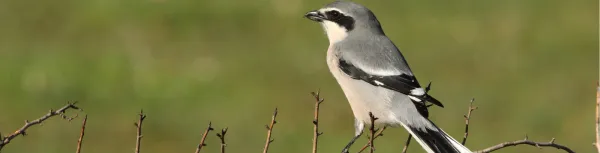
The Serrezuela de Pegalajar is a Mediterranean mountain, with a large mass of pino carrasco repopulation, natural regeneration cells and other shrubs (majelo, juniper, torvisco...). Very abundant are also the aromatic plants (rosemary, alhucema and thyme). Between her fauna There's big. Rape (perishable eagle, common fencing), Night rapes (royal owl, mocha and autillo) and mountain goats in the rocky areas.
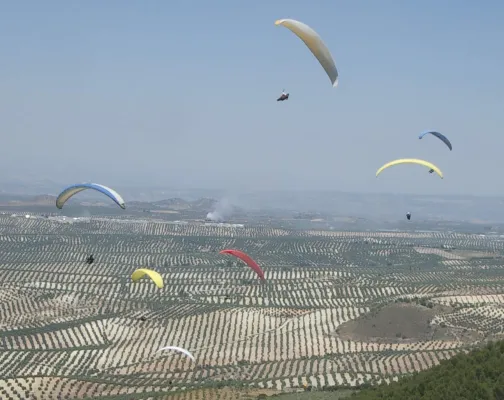
Currently takes advantage of this saw to do sport in nature: hiking, mountain bike, climbing, bulder, free flight... It has two views with splendid panoramic views of the mountain environment, and a recreational area known as "Seven Pillas."
Paste has numerous natural sites of high interest both environmental and cultural. Between them We stand out the following:
Other areas of interest They deserve to be visited: Valle del Guadalbullón (The Lock) and Bercho Valley.
In Pegalajar we find a very varied gastronomy whose fundamental base are the products of the garden. Among the most traditional dishes we have:
Warehouse:
The first documented references date back to the Bronze Age. It has been found in the Cueva de los Majuelosdiscovered in the 1970s of the last century, a collective burial with human remains and instruments carved in bone and silex, polished stone, ceramic remains...
Another of the prehistoric references is the hill of Tower of the Head in which the remains of the Copper, Bronze, Iberian, Roman and medieval epoch are mixed.
From the Roman era, deposits have been located scattered by the municipal term, corresponding to small necropolis and villas that indicate the existence of a scattered habitat, with an agro-livestock economy. One of these. necropolis is the Port Altowhere there is also a pottery of the seedling land, pieces of Roman teagula and a stone-carved altar. There are other locations, such as the Canteruelathe Charcons, even in the vicinity of the Torre de la Cabeza has been located Roman ceramics made around.The four militaries found in 1975 in The lock They make known to us the existence of an important Roman road passing through this town. The insecurity of the area in the Middle Ages is reflected in the disappearance of the Roman houses scattered by the term and occupation of the natural strength of the Peña de los Vultreswhere it was built a pebble that is still preserved.
The origin of the villa is from the time of Al-Ándalus. Their existence revolves around the Source of the Tea, aquatic origin of La Charca. With peace and the rise of the caliphate between the X and XI centuries should have to expand the network of accesses and banks that form the Paste orchard.
The Christian conquest took place next to that of Jaén by Fernando IIIwhich also took over the castle of Pegalajar. The primitive Muslim compound was expanded after the conquest, with the construction of a second compound and strengthening of the first one with circular towers more resistant to the gunpowder attack.
From the conquest in 1246, was a village of Jaén, was part of its alfoz and its proximity to the Muslim kingdom of Granada made it a fundamental defense of this city, until the end of the Reconquest in 1492. On this date he loses the strategic value of his castle, but not its economic importancebecause at the feet of the fortress a fertile vega of orchards and olive trees, inherited from the Arabs.
The origin of the population of Pegalajar after the Reconquista was linked to the city of Jaén, on whom it depended administratively. This population was formed by men in the 13th century from several Spanish areas.
In 1559 King Philip II granted Pegalajar a real privilege for which he recognized him. Jaén's exemption and the title of the villa in exchange for a service to the Crown of a significant amount of maravedis. The municipality begins a period of economic and demographic improvement.
After XVII crisis, increased by the tabs and famine in the 18th century, there is a slow population growth leading to the expansion of the agricultural land and the various production, which was maintained until mid-term 20th century where, as in the rest of the province, a important emigration to cities in search of a better life.
16
3
6
8