

Description
The Battle of the Saves of Tolosa of July 16, 1212 was one of the most prominent milestones in the medieval history of Peninsular, for its significance in the advance of the Christian kingdoms over al- Ándalus. Conceived as a crusade, which was preached by Pope Innocent III, he faced an army of men coming not only from the Peninsular realms, but from the other side of the Pyrenees, commanded by the Christian kings, Alfonso VIII of Castile, Peter II of Aragon and Sancho VII of Navarra, against the Almohad Caliph of Muhammad al-Nasir, in whose army were integrated fighters from the Maghreb, from sub-Saharan territories and from Turkish contingents. The Almohad defeat meant the beginning of the definitive conquest of al- Ándalus by the peninsular Christian kingdoms.
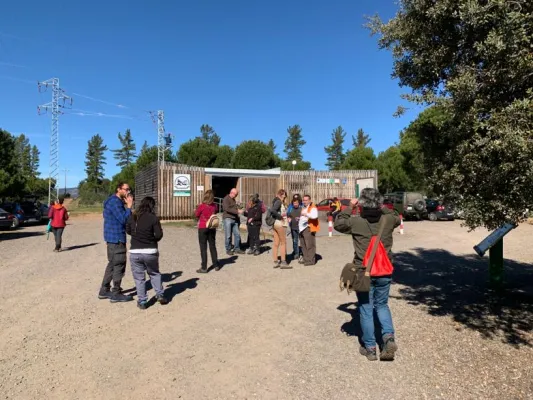
In the Park of Despeñacolos, within walking distance of the place of battle, is the Museum of the Battle of the Navas de Tolosa, in the town of Santa Elena. A centre in which visitors are guided by the history of the contest, from the prolegomens to the war, through audiovisual and scenography, teaching workshops or visits to the battlefield and the Natural Park of Despeñacolos. It is also a starting point and information of the Route of the Castles and Battle of the Kingdom of Jaén.
The seizure of the fortress of Salvatierra, the province of Ciudad Real, by the Almohades in September 1211, prompted Alfonso VIII of Castilla to organize a campaign for the summer of 1212 with which to destroy the Almohade military capacity, inciting Innocent III to enact a bull that turned the campaign into a crusade. This is a decisive act, as it brings them together with the company across Europe and gentlemen of the different military orders.
On June 20, 1212, three troops left Toledo: Aragonese and Catalan under the command of Peter II of Aragon; Castilians with his king Alfonso VIII; and Ultramontans; Leonese and Portuguese under the orders of Don Diego López de Haro, lord of Vizcaya. The troops of López de Haro, in their advance, take the castles of Malagon (24 June) and Calatrava (1 July), the latter by capitulation. The lack of booty and the course of events began to create unrest among foreign combatants, most of whom decided to return to their places of origin.
The Almohad Caliph Muhammad al-Nasir in whose army were integrated fighters from the Maghreb, from sub-Saharan territories and from Turkish troops, set in motion his men who leave Jaén with the aim of blocking Christian troops in Sierra Morena.
Between 4 and 6 July Alfonso VIII continued his progress by taking several fortifications, including that of Alarcos. With the arrival of Sancho VII of Navarra the total of Christian armies is gathered at the foot of the castle of Salvatierra, from where they continued in search of the Almohade army.
On July 12 advanced from Don Diego López de Haro took the Puerto del Muradal, with the fortification of Castro Ferral. Two days later, after being blocked in the passage of the Slayer, they camp in the place known as the King's Table, from where they go to the battle that took place on July 16, defeating the Alphade army that will withdraw from the fortresses that defended the entrance to the Guadalquivir Valley. On July 19 they occupied Baeza and a day later they besieged Ubeda, who would eventually capitulate.
After the campaign was completed and access to the Guadalquivir Valley was assured, Christians withdrew to their kingdoms in the north.
Archaeological investigations seem to confirm some of the sites where the written sources placed the contenders' camps. The results obtained by archaeological prospecting in Mesa del Rey corroborate the presence of a camp occupied not only by the troops, but also by higher-ranking characters of the Christian army, having identified areas within the internal organization of the camp, such as that intended to change the horseshoes of the beasts. It can be proposed that the King's Bureau be the place that occupied the troops of King Alfonso VIII of Castile, but not all of the Christian armies.
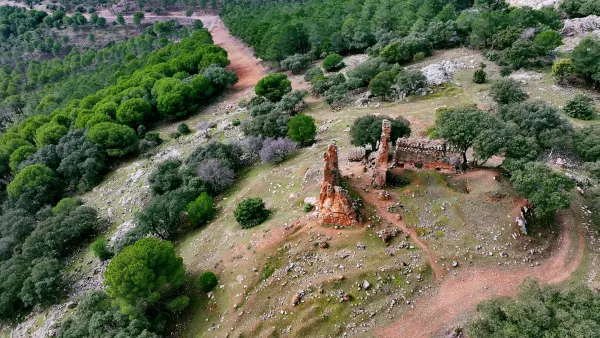
Similarly, in the surroundings of the castle of Castro Ferral, the great concentration of weapons material can be interpreted as the vestiges of the assault by Alfonso VIII's troops to the fortress. Parts related to daily life have also been documented in El Ferral and its military function (horsemen, furniture elements, garrison of clothing, tools, nails and passers).
The set of recovered pieces points to the existence of a large concentration of materials related to the battle, despite the intense expolity suffered throughout the area for more than a century.
LEYENDAS
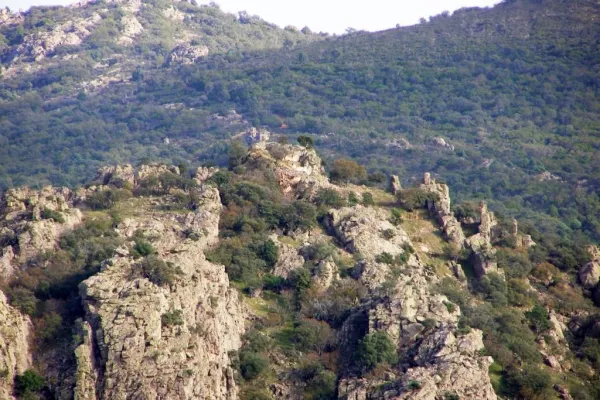
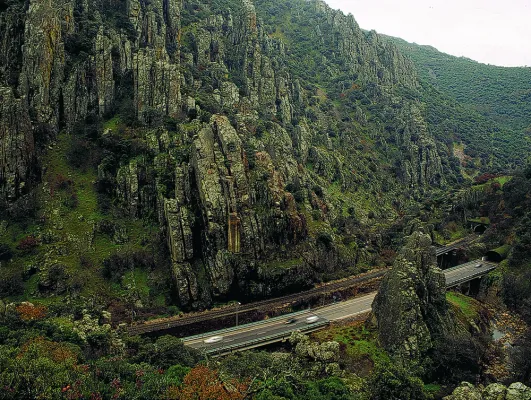
The pastor of the Navas de Tolosa. In July 1212 the Christian hosts, on their way to the heart of al- Andalus, were to cross Sierra Morena through the natural passage of La Losa, a narrow throat in the port of Muradal, defended by the fortress of Castro Ferral. Alfonso VIII sent Don Diego López de Haro to take the castle, but despite his conquest, the road remained strongly defended.
At the Christian camp came a man from the place, a connoisseur of those border lands, who showed them an alternative path between the mountains, leading Don Diego López de Haro and his troops to a high-level, ever since known as the King's Table. In it, the Christian camp was set up to launch its offensive against the Almohad army, on July 16, 1212, a confrontation that would open the door of al-Andalus to the Christian armies. The man who showed them the way was called Martin Halaja, a shepherd for some, a hunter for others and for the most pious of the same Saint Isidro.
Is part of