Holy Week in Lahiguera
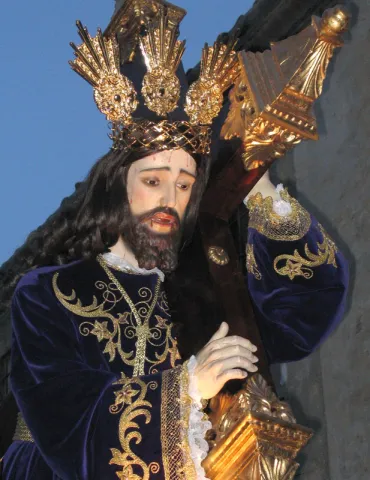
This is a highly intense Passion week, eagerly awaited by all the people of Villanueva. In our town, there is a strong tradition and enthusiasm for it. The various brotherhoods and their members process during their Station of Penance throughout the week. There is an atmosphere of strong participation and feeling.
Villanueva boasts a rich heritage of carvings and images depicting the Passion of Christ.
Holy Week in Úbeda takes on extraordinary grandeur and emotion. The processions of the eighteen brotherhoods that take part, some dating back to the 16th and 17th centuries, are of incomparable solemnity and splendour.
The Brotherhood of Nuestro Señor en la Columna and María Santísima de la Caridad leads one of the most spectacular processions. Also worth admiring is the beautiful band of Roman soldiers accompanying the Cristo de la Humildad and Nuestra Señora de la Fe, along with the night-time procession of the Brotherhood of the Santísimo Cristo de la Buena Muerte. The Brotherhood and Benevolent Society of Bricklayers of Nuestra Señora de la Soledad Magdalena carries out its swift ascent, on shoulders, up the Cuesta de la Merced.
Holy Week in Torredonjimeno holds deep roots in the town. It boasts truly exceptional religious imagery, with carvings by Palma Burgos, Castillo Lastrucci and Amadeo Ruiz Olmos. Alongside the quality of the images and platforms, the artistic value of the chamber of the Virgen de los Dolores stands out, of Baroque origin and recently restored, in the church of Santa María. There are also many distinctive features and traditions surrounding Holy Week, such as the procession of the Virgen de los Dolores, which, on the afternoon of Friday of Sorrows and the night of Good Friday, revives the custom of “running” the Sorrowful Virgin at various points along the route, carried on the shoulders of her bearers. All of this has contributed to Holy Week in Torredonjimeno being declared, in 2007, a Festival of National Tourist Interest of Andalusia.
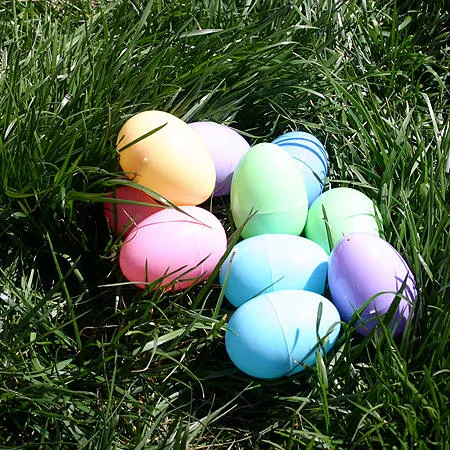
Of the Central European settlers who arrived in the 18th century, only the tradition of painting boiled eggs survives, eaten at the La Aliseda area as part of a salad. Before this, there is a ritual to observe: rolling the eggs down a grassy slope so that they don't break. Because of this, in Santa Elena, the celebration of this special day is known as Rulahuevos, with eggs of each colour kept until it was time for them to be eaten at Easter Sunday lunch.
During Holy Week, Sabiote brings its religious works of art out onto the streets to commemorate the Passion of Christ and his sacrifice for the salvation of humankind. Its origins date back to the mid-16th century, with the founding of the Brotherhoods of Nuestro Padre Jesús Nazareno around 1550, that of Nuestra Señora de la Soledad, and that of the Santísimo Cristo de la Expiración before 1561. Later, the Brotherhood of the Santo Entierro was created in 1636, followed by the Brotherhood of Cristo Resucitado before 1669. Given these historical roots, our Holy Week is comparable in age, splendour and devotion to those of Andalusian capitals such as Seville, Córdoba or Málaga.
The town of Sabiote has been shaped by the rich brotherhood culture found throughout Spain. Thanks to the men and women of this town, the indelible mark of devotion to the brotherhoods has been preserved.
Our Holy Week grows year after year, offering an artistic spectacle, both for the quality and value of its carvings, and for the music of its bands, distinguished by their Nazareno musicians, dressed in the tunics and costumes of their brotherhood, performing beautiful compositions and processional marches.
Each brotherhood has its own particular character and features, as is the case with the Brotherhood of the Nazareno, whose departure in the early hours of Good Friday from the Church of Santa María, when "El Miserere" is performed, moves all those present.
Six brotherhoods carry out their Station of Penance during Holy Week in Sabiote, with eleven Pasos to admire the beauty of the religious imagery, metalwork, carvings, embroidery and more.
Among the sculptors, Palma Burgos stands out, who shaped the figures of San Juan Evangelista and Santa Verónica.
We are grateful that hundreds of people work throughout the year to make Sabiote a meeting point for brotherhood devotion, for the enjoyment of both our own townspeople and all those who visit us.
Ten Passion brotherhoods parade through the streets of Mengíbar during Holy Week. Particularly notable are Holy Thursday, its opening addresses, and Easter Sunday.
In the early hours of Good Friday, the Sermón de Pasión is held at the Parish Church of San Pedro Apóstol, organised by the Brotherhood of Nuestro Padre Jesús Nazareno. During it, four laypeople sing, in a distinctive tone, the Opening Addresses: Confortación del Ángel, Sentencia a Azotes, Condena a Muerte and Justicia Recta. Their origin, judging by the style and vocabulary used, dates back to the 17th century.
The notable Brotherhood of the Santa Vera Cruz dates back to the 16th century.
Holy Week in Martos is, without doubt, one of the most beautiful and celebrated cultural and popular traditions in the province of Jaén and in Andalusia. Declared a Festival of National Tourist Interest of Andalusia by resolution of 18 June 2002, owing to the long history of its celebration, its originality and the variety of its events.
Records show that the "Cofradía de la Santa Vera Cruz", the "Cofradía de Nuestra Señora de la Soledad" and the "Cofradía de Nuestro Padre Jesús Nazareno" already existed in the 16th century.
It stands as one of the most important popular and religious traditions in Martos, given the number of tourists and the fervour it attracts.
Its spectacular nature undoubtedly lies in the winding, narrow streets, with quite steep gradients, through which the Brotherhoods process, combined with the unparalleled setting offered by this ancient rock-top city. Add to this the challenging departures from the churches, and the beauty of the images and platforms.
It is worth noting that in Martos, Holy Week takes to the streets in two different ways, in what are called "pasos" and "tronos", meaning there are two ways of carrying the sacred images: by bearers positioned inside the pasos, and by carriers positioned outside the throne, on wooden poles.
The Bandas de Cabecera (lead bands) are a distinctive feature that led, in 1998, to Holy Week in Linares being declared of National Tourist Interest.
Every year, on the first full moon of spring, Linares dresses itself in the Passion, Death and Resurrection.
Since time immemorial, the city has celebrated its Holy Week in a very special way; from Ash Wednesday onwards, the strong sense of brotherhood can be felt in every corner, with a wide range of activities such as exhibitions, band competitions, brotherhood gatherings and opening addresses.
Alongside this comes the popular sentiment that reaches its peak with the emotional impact of "la saeta", a simple form of singing capable of expressing feelings in their purest form.
Many brotherhoods work throughout the year to turn the city into an unforgettable place, filled with the scent of incense and wax as their Nazarenos, costaleros and horquilleros pass by. Moving moments are experienced every year during this week, when faith and devotion can be felt throughout the city's streets, showcasing religious carvings by prestigious sculptors such as Palma Burgos or Víctor de los Ríos.
Worth highlighting is the night from Holy Thursday to Good Friday, when Nuestro Padre Jesús Nazareno, María Santísima del Mayor Dolor and San Juan Evangelista process. For centuries, Jesús Nazareno has blessed his people, as well as the fields, so that they might bear the expected fruit and yield an abundant harvest. He gives three blessings: on setting out, at the town hall in Linares, and on returning to the church.
Holy Week in Jaén marks the celebration of the Passion, Death and Resurrection of Christ through the processions held by the brotherhoods over these days across the capital of the Santo Reino. This Holy Week represents a socio-cultural, tourist and economic phenomenon of great importance to the city, having been declared a Site of Andalusian Tourist-Cultural Interest since 2006 and a Festival of National Tourist Interest of Andalusia.
The early hours of Good Friday mark the most special night of Holy Week in Jaén, as this is when the procession of El Abuelo takes place, the most venerated image of Christ in the city, forming one of the most popular and famous processions in Andalusia and in Spain. Founded before 1594, it is one of the largest processions in Spain, with several thousand penitents accompanying the image of El Abuelo, the image to which the people of Jaén show the greatest devotion. It is based in the Camarín de Nuestro Padre Jesús Nazareno. The majesty and beauty of the sculptural quality of its religious imagery, such as the Virgen de las Angustias or the Cristo de la Expiración, is remarkable.