Museo Cerezo Moreno
The Sierra Mágina PDO Olive Oil Interpretation Center, located in Bedmar, is an educational space dedicated to showcasing the culture of mountain olive groves and the value of extra virgin olive oil with the Sierra Mágina Protected Designation of Origin. Through its permanent exhibition, the center introduces visitors to the history, landscape, and olive-growing identity of the region.
Its tour allows visitors to discover the evolution of olive cultivation, traditional milling, oil production processes, and the importance of certified quality in extra virgin olive oil. It also features the "From Olive Grove to Plate" exhibition, an educational program that connects fieldwork with gastronomy and the use of EVOO in both traditional and contemporary cuisine.
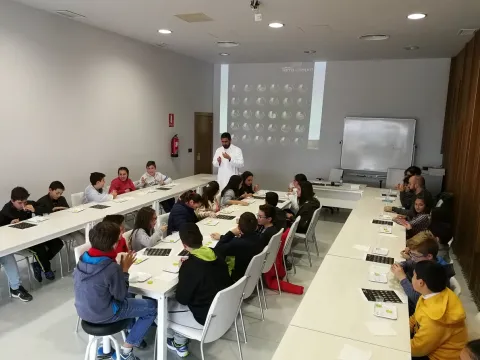
The center also offers activities for groups, such as educational olive oil tastings, guided tours of the olive grove and the olive mill, traditional miller's breakfasts, and experiences designed to provide an intimate understanding of the rich olive oil heritage of Sierra Mágina.
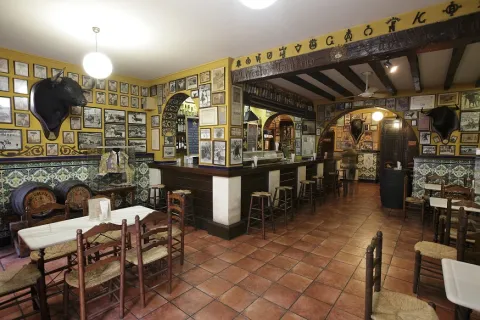
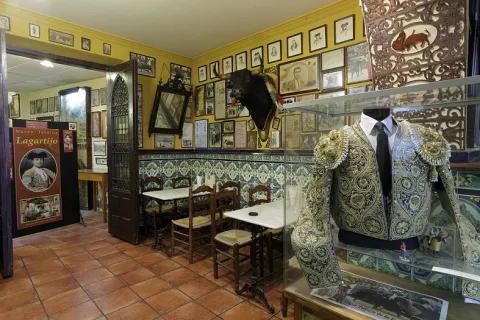
La Taberna Museo Restaurante Lagartijo, is a charming tavern dedicated to the tauromaquia and opened in March 1980. In it you can taste an excellent traditional cuisine in a tourist-cultural atmosphere decorated with billboards, photographs and taurine objects. In it, culture, tourism and gastronomy are hand in hand in a typical Andalusian environment.
The property consists of two areas. The Taberna, dedicated to tasting tapas and rations, can be found just after entering. In this atmosphere, you can enjoy a typical tavern kitchen, surrounded by many objects dedicated to the tauromaquia, such as photographs, posters and light suits.
In the interior is the Museum and Restaurant Room, which has a select menu of kitchen recipes, with typical and traditional dishes, where the meats, peas, and especially the confected and baked ones stand out.
Monographic Museum of the Tauromacia linarense. It is named after Rafael Molina Lagartijo, a 19th-century Cordobe bullfighter. It is located in a building dating back to 1795. The property retains the original well and courtyard of the time. La Taberna has an exhibition of topics related to the Tairian world. The collection highlights a series of memories of Manolete's mortal catch in Linares bullring in August 1947.
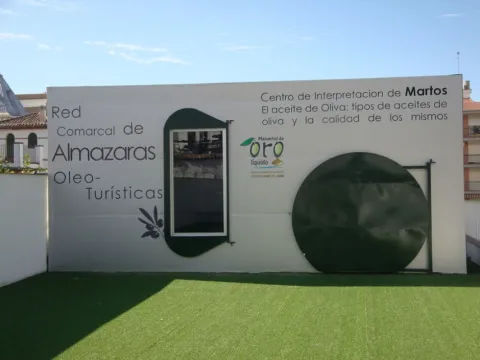
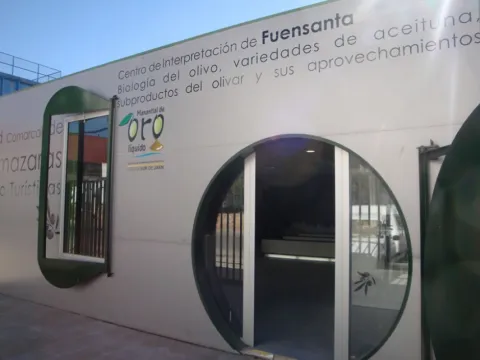
The Network is made up of nine Interpretation Centres in Almazaras Oileteras in the Sierra Sur de Jaén for the promotion of olive cultivation. Each Centre has a different theme on various aspects related to olive oil, such as olive oil production systems and evolution throughout history, olive oil qualities and uses, olive oil cultivation systems, olive oil analysis and olive oil marketing system, olive biology, olive varieties, olive by-products, olive oil and its uses, olive heritage, traditions, olive oil types and olive oil quality and history.
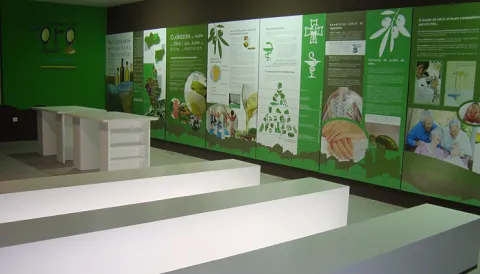
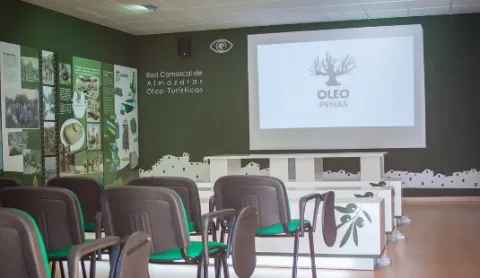
The Interpreting Centres have a space of about 85 square meters arranged for interpretation, teaching and tourism use, equipped with latest technology such as touch screen, and multitactile, to enjoy games and multimedia application, interpretative panels or 3D projection canyon.
It is intended to take advantage of olive oil and olive oil, very abundant resources in the region, such as tourism resources, to value the idle resources (facilities, machinery, documentation etc.) of the almazaras, for as long as they are not in the full process of collecting and producing oil, to promote knowledge about the different uses of the olive and olive oil, to promote knowledge of the culture, traditions and related customs, and to diversify the comarcal tourist offer by taking advantage of the resources available such as the almazaras, olive and olive oil.
Oilticulture will be promoted and disseminated in a didactic, dynamic and attractive way for a wide range of audiences, from thematic staff, professionals from the olive sector, people from school or training ages, to tourists or local audiences. Visitors will be able to connect intellectually and emotionally, through the Network's interpretative script, to the fascinating world of cultural and ethnographic heritage that olive oil and olive oil form around them.
The Comarcal Network of Almazaras Ole- touristic can be visited through the tourist route that connects the nine Interpretation Centres with the main tourist attractions of the municipalities of the Sierra Sur de Jaén: Alcalá la Real, Alcaudete, Castillo de Locubín, Friiles, Fuensana, Jamilena, Martos, Torredelcampo, Valdepeñas de Jaén and Los Villares can be traveled under the enigmas of liquid gold and the sea of olive trees that shape the orography of this territory. On the other hand, the visit to the Centres will be completed with an internal route through the facilities of the milling plants that make up the Network, adapted to the resources, and particular characteristics of each of them and of the visiting public.
The project is funded by the European Agricultural Fund for Rural Development (EAFRD) at 40% in the framework of the Global Action Plan, of the Council for Agriculture, Fisheries and the Environment, and by 60% from the Sustainable Tourism Initiative - Lands of Romance and Legend, of the Council for Tourism and Trade.
TheComarcal Network of Almazaras Ole- touristis a project promoted by the Association for Rural Development of the South Sierra de Jaén (ADSUR). It is a commitment to economic diversification by taking advantage of the tourist potential that the mills offer as a factor of sustainable development and as an element of territorial identity.
During the 17th and until the middle of the 18th century, the Palace was used as a Bank, proof of this are the two inscriptions existing on the walls of the central courtyard.
At the end of the 18th century, the building was acquired by the Royal Hospice Board by passing it to the Provincial Charity and settling in it, the Women's Hospice.
In the early 19th century, modifications were made to the building, including the remodeling of the entrance door of the Palace, replacing the previously existing one and placing on its lintel an inscription in white marble in grey stone.
Likewise, on both sides of this inscription, there were two shields: on the right, that of Bishop Fray Benito Marin (1751-1769); and on the left, the shield of Castile.
In 1868, when the Provincial Benefficiency Boards were abolished, the management and administrative functions of the charitable establishments became the responsibility of the Provincial Diputations, thus becoming part of the heritage of the Provincial Institution. Between 1901 and 1903 the Hospice was extended, demolishing to this end houses adjacent to the Palace. This extension includes the construction of a Chapel adjacent to the building, opened in 1903 under the title "La Visitación."
In 1939 the center was called "Internado de Santa Teresa" and served as a residence for both sexes and chronic patients until the second half of the 20th century, thus, with the transfer of the chronicles in 1971 to San Juan de Dios and that of the elderly in 1972 to the new Residence of Santa Teresa, the building remains empty. In those years the works of restoration of the Arab Baths located in the basements of the Palace and the rehabilitation of the entire building, which would be completed in 1984 and which were awarded the same year with the Medal of Honor of the Europa Nostra Association.
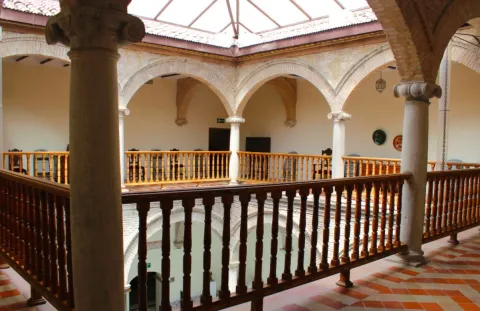
The central courtyard of the Palace is made up of a square of thick walls in which the windows and doors of different rooms are opened. Within this square is inscribed another one formed by a two-level column gallery, with three columns on each side and a total of eight columns on each of the two levels.
For the construction of the lower level or floor gallery, the chosen Order was Toscano applying half-point arches very slightly reduced. On the four columns of the corners rest four arches: the two eldest, form the angle of the gallery; the two minors, are attached to the perimetral wall becoming columns "in palm," a solution that had been used by the Muslim builder who had made the great Tempered Room of the underlying Arab Baths. In the same way, the architect of the Palace used a constructive structure identical to that used in the Baths: for the columns and the capitals he uses the stone and for the arches and the slices the chosen material was the brick.
As for the gallery of the upper level or floor, although it has a scheme similar to that of the lower floor, it has modifications, as a variant of the Toscan Order was chosen. Both columns and arches are lower than those located at the lower level. At present, the intercolumns of this level are closed with an abalaustrated wooden railing.
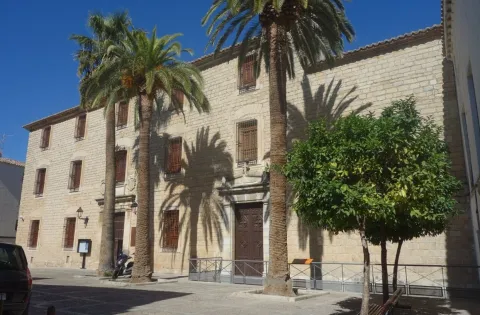
The Palacio de Villardompardo Cultural Centre rests on the Palace of the First Count of Villardompardo and Virrey of Peru, Don Fernando de Torres and Portugal, a Renaissance building in the 16th century, located in the very heart of the old town of Jaén.
The new building was the result of the aggregation of several houses, in which the body of the façade was transformed and unified. This mansion remained in use until 1851, when the Abbey of Alcalá la Real is abolished. After years of uncertain destination, he became an abacial archive and residence of Mr. Arcitara of the Ecclesiastical Territory.
In 1927 the building became municipal property; school classrooms and other services were installed. The Civil War caused major damage to the building that was restored by the Directorate General of Devastated Regions to give it new uses. In 1959 it was the seat of the Official Center for the Patronate of Secondary Education, which would then be the Institute of Baccalaureate "Alfonso XI." In 1995 the City Council and the Public Works Council of the Junta de Andalucía began their rehabilitation for uses more in line with the cultural demand of the city.
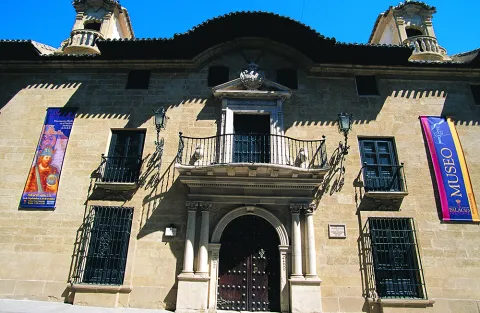
At present, after four years of rehabilitation, the Abacial Palace is the seat of the Municipal Museum. This new museum has been created with the intention of hosting for its exhibition, conservation and dissemination, funds of archaeological, ethnic, anthropological, paleontological and scientific type. All this heritage is organized in different exhibition spaces using new technologies. The visit to the museum makes it possible to know in an innovative way the heritage and vestiges of the past and the history of Alcalá la Real and offers the visitor a global vision to know the unique and attractive features of the city and its surroundings.
The Municipal Museum of Alcalá la Real is located in the old Abacial Palace. This was reconstructed in 1781 by the abbot Esteban Lorenzo de Mendoza and Gatica, due to the ruinous state in which the primitive palace was located within the Mota.
The Torreon, on its three floors, consists of a "honey room" and souvenir and beekeeping shop, an audiovisual room and workshop, the generic museum space, common areas for temporary exhibitions and a room dedicated specifically to the Bronze Age, in the Rumblar River Basin.
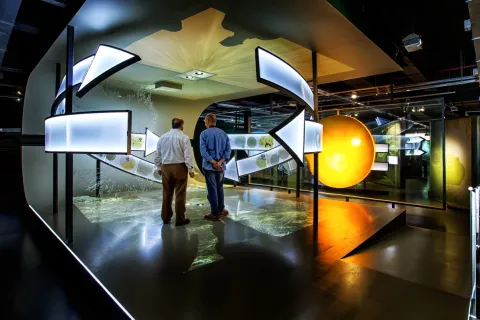
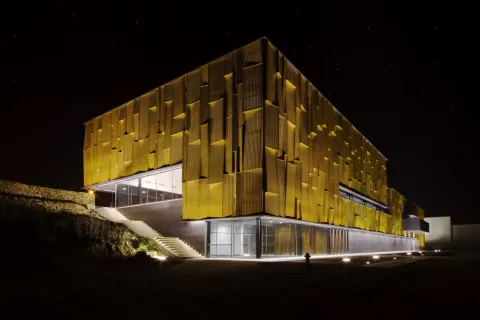
Selected as a reference centre by the European Union for the dissemination of the culture of Olive Oil, the space of knowledge and museum Terra Oleum is spread over an area of more than 11,000 square meters. The largest area of knowledge planned in the Mediterranean basin for a food product.
The Museum, promoted by the Diputación de Jaén, Consejeria de Agricultura de la Junta de Andalucía, and developed by the Fundación del Olivar, is located within the Geolit Technological Park in Mengíbar, the heart of the Andalusian olive tree.
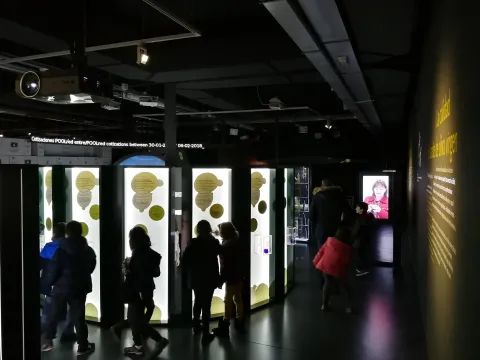
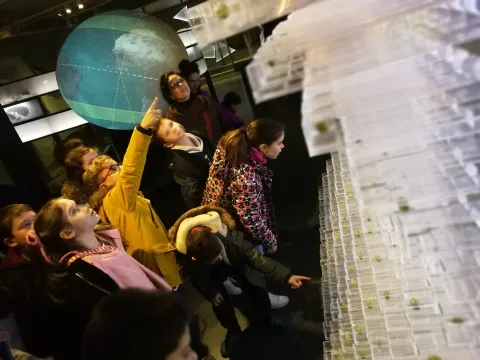
It has a permanent exhibition of modern interactive, audiovisual, machinery and other types of scenography, on olive, olive oil and sustainability. A revolutionary 3D video-aping system makes the visitor a true master of almazara able to direct all processes for obtaining olive juice.
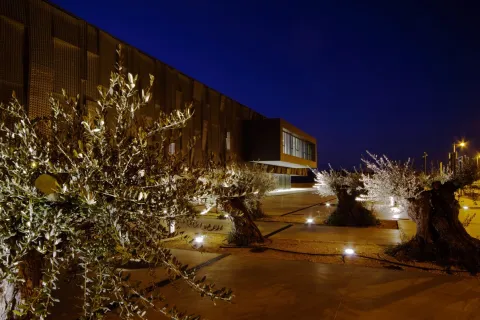
Terra Oleum is framed within the wet area of the Quebracántaros tributary, whose spring is born within the same Olivos Centenarios Forest of the Museum. The outdoor activities, from the collection of the olive, to the recognition of indigenous species in this natural space, are part of the essence of the center: harmony with a humanized forest.
The auditorium becomes the central space of the events that take place in the Museum. It has the most advanced technology in image and sound, equipped with electronic systems of participation that allows a fluid exchange of knowledge with the visitor.
Terra Oleum also offers an extensive programme of parallel activities that combines visits to the permanent exhibition with workshops, courses and seminars through proposals for all audiences. The field and the mill become the central axis of our dialogue with the visitor. An immersion into the world of virgin olive oil by the hand of experts in this science that becomes an authentic art.
The selection of extra virgin olive oils Terra Oleum brings together the best oil in practice all of the jiennese, Andalusian and Spanish olive trees. The green and mature fruits evoke the aromas of nature, in a permanent exhibition that allows the tasting and tasting of all of them in a relaxed environment: the Museum's Oleoteca.
Before the end of the visit we cannot forget Oleaginus, a space for art and culture, located in the area of quality promotion: Denominations of Origin, olive bookstore, contemporary painting and oleary art, demand the attention of the visitor in an atmosphere of light sipped by the solar courts that are born on their terraces.
The avant-garde architecture and its modern proposals for communication with the visitor make Terra Oleum a unique place to feel the culture of virgin olive oil from the first step.
The Active Museum of Olive Oil and Sustainability is home to a modern exhibition space composed of unique architectural spaces, including its Aurea Box and a natural environment formed by the Centennial Olive Forest. For the dissemination of knowledge related to olive cultivation, olive oil production technology and Mediterranean cuisine, its contents cover the practice of the whole world of olive and virgin olive oil.
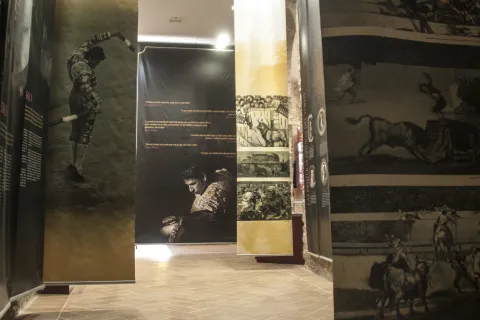
The museum is divided into two sections: In the first one is made a pleasant introduction to the bullfighting for the people of Novels on this theme and the second section speaks of the relationship that Villanueva of the Archbishop has with this world, from the beginning of the municipality going through the reasons why the current bullring square was built and making special mention of the most famous bulldozers who have stepped on this bullring.
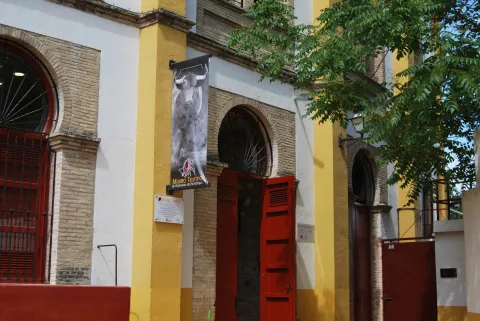
This taurino museum is located in the old blocks of the Plaza de Toros de Villanueva del Archbishop. Its rooms are home to texts, photographs and audiovisual collected throughout the more than 90 years of the history of that coso where some of the most prominent figures of the bullfighting, from Manolete to Curro Romero to the brothers Rivera Ordoñez, El Cordobés or Fandi, have performed. One part of the exhibition is dedicated to providing information about tauromacia in general, while another important part of the collection refers to local taurina history. For example, it is possible to see the story of the rejonador Antonio Cañero that opened the sign on the day of the opening of the square in 1928 and also to watch videos, models, publications and other materials.