Saltar al contenido principal
Image
logo_marca_andalucia_mosaico

Hostal Poeta Machado

Submitted by brandcode_deweloper on
Id
10620145
Descripción
Breve descripción

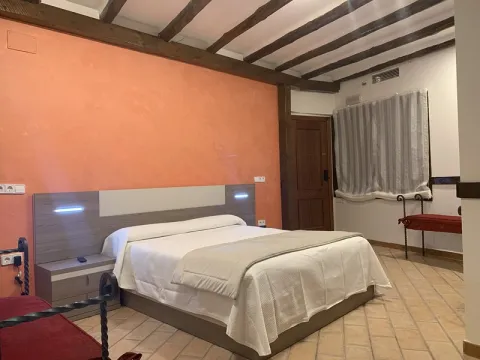
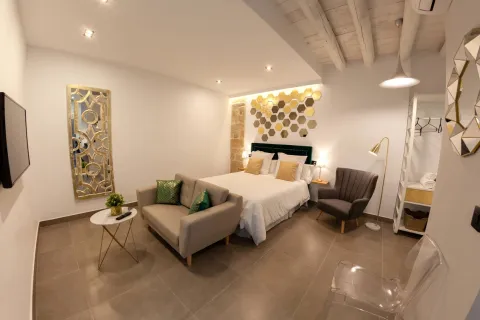
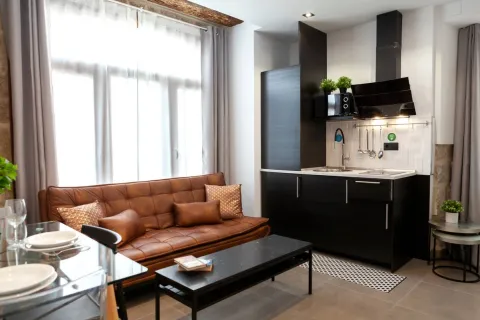
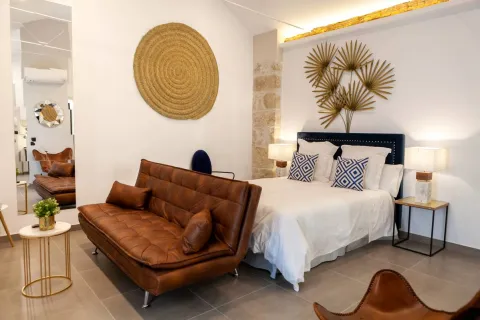
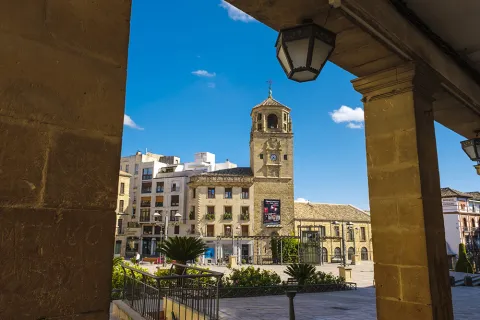
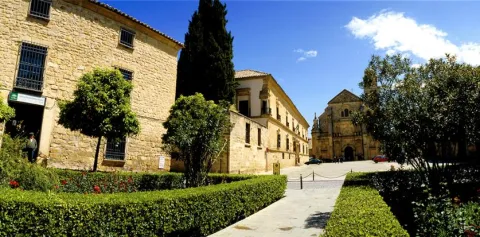
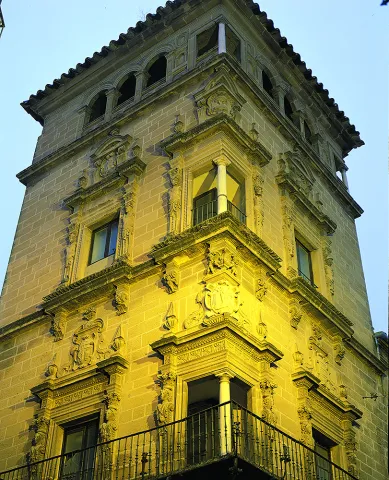
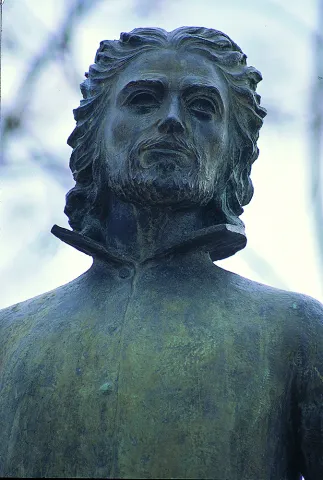
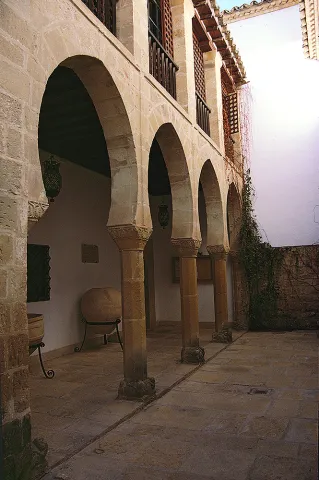
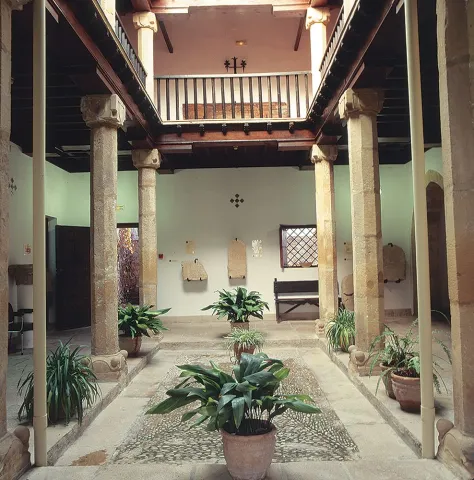
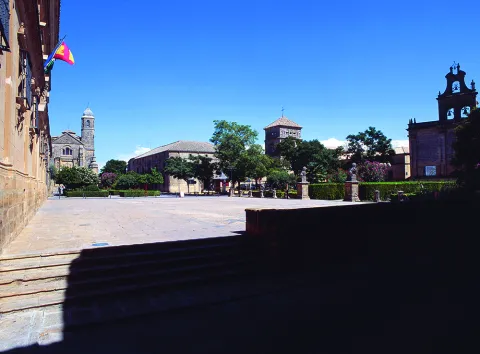
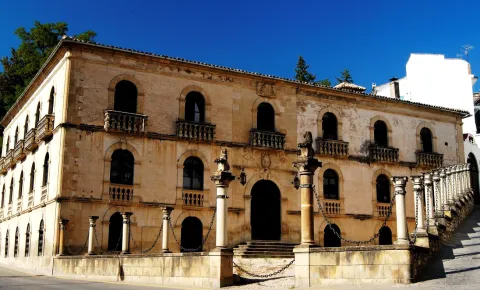
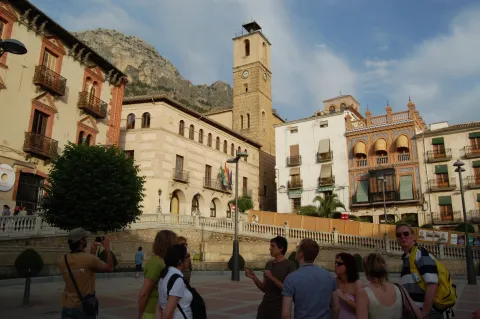
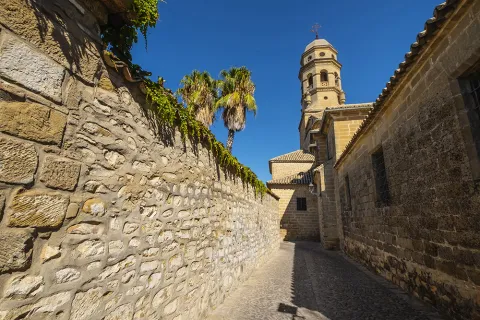
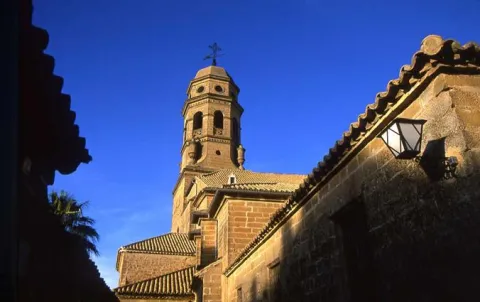
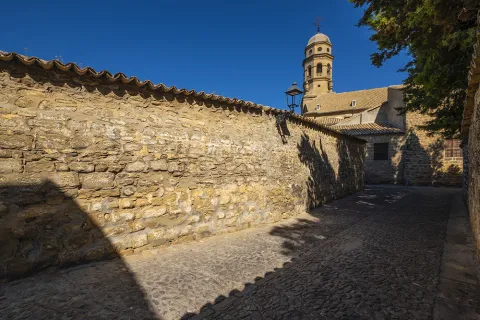
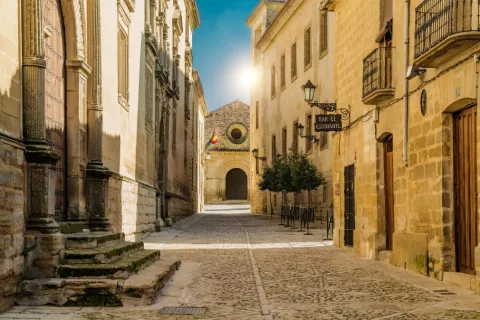
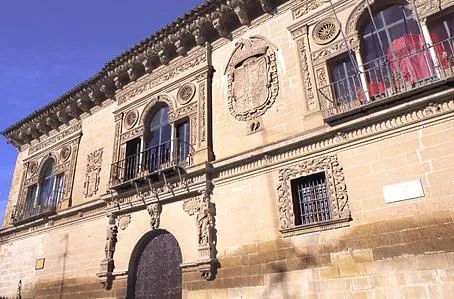
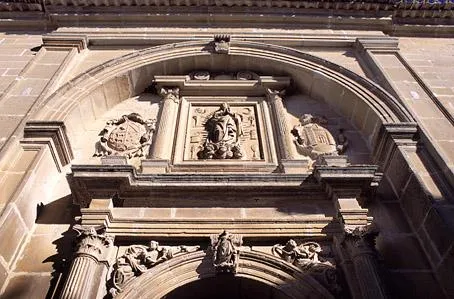
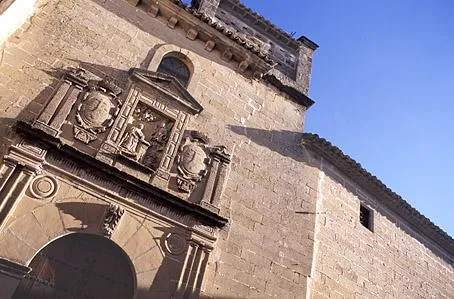
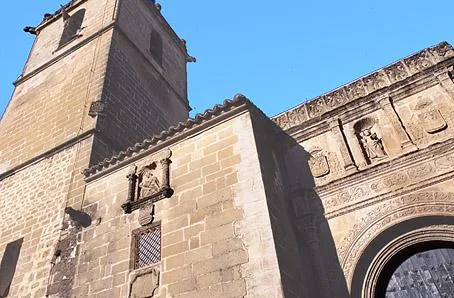
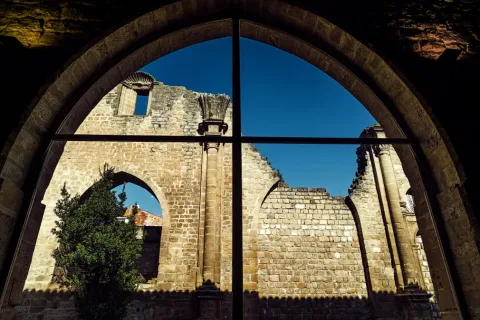
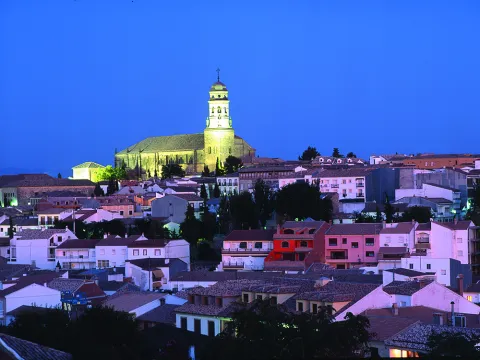
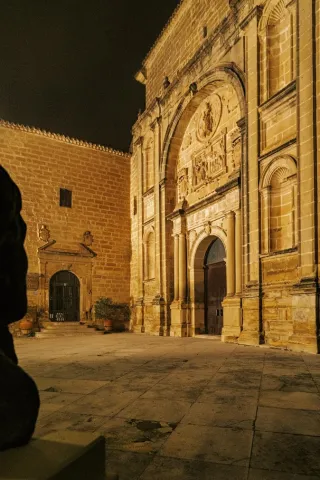
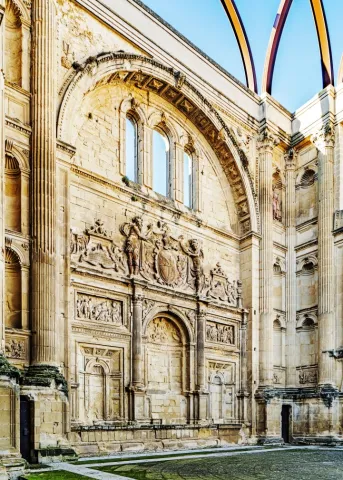
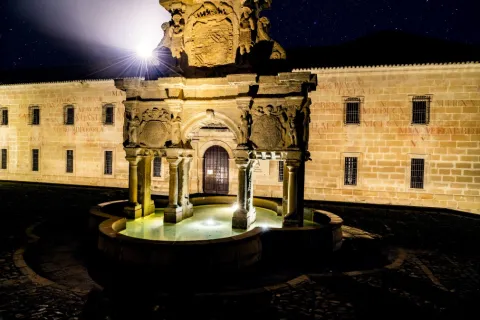
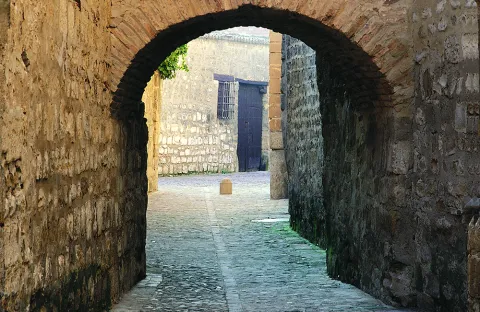
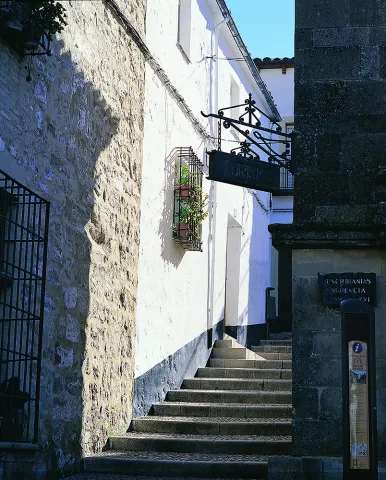
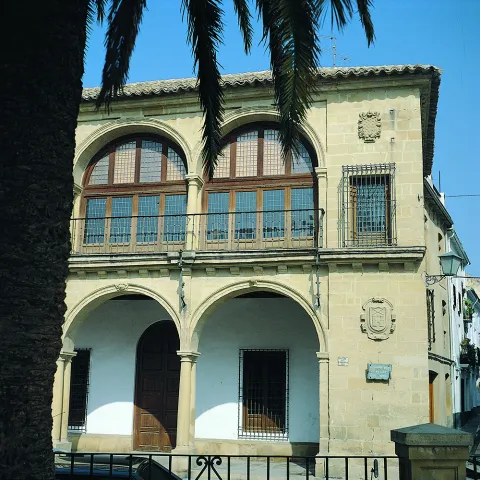
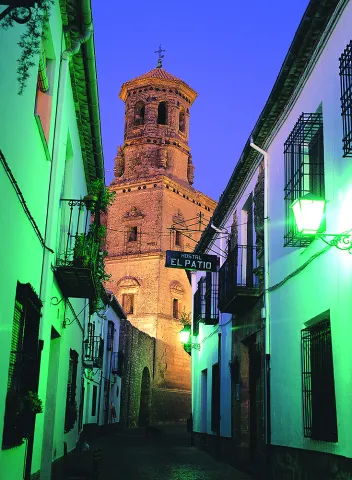
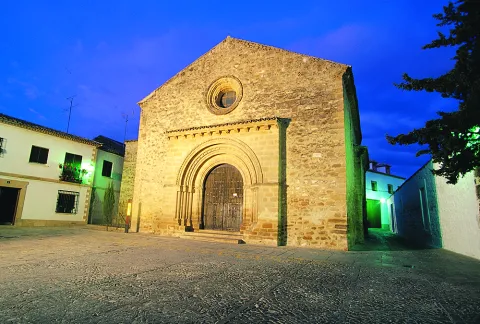
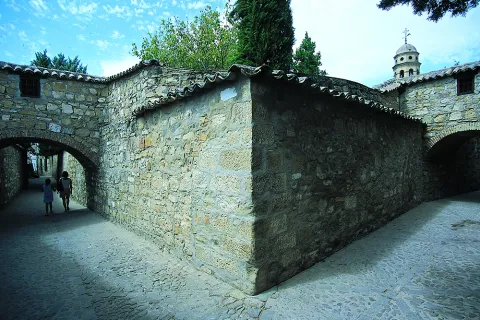
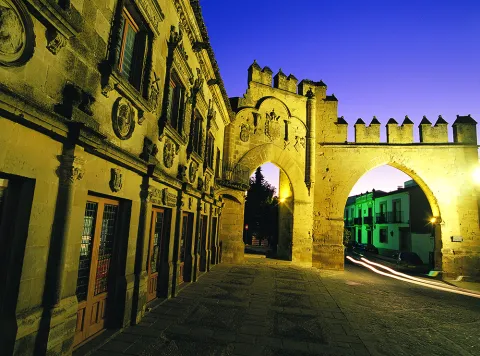
Hostal Poeta Machado is one of the best hotel establishments to stay in the city of Baeza, thanks to its good location and friendly, family and close treatment. It stands out for its privileged situation, in a quiet area of the old town, next to the Paseo de la Constitución that allows to reach a few meters from the classroom where he taught French Grammar the Poeta Antonio Machado in the Institute of Baccalaureate located in the Old University, less than 1 minute walk from other places of interest such as the Plaza del Populo, Santa Cruz and Santa María, City Hall, the main monuments of Baeza, as well as the commercial areas of the city.

Información de contacto
Teléfono
671 997 233
Sitio web
https://www.hostalpoetamachado.es/
Teléfono de contacto
953 079 709
Correo electrónico
hostalpoetamachado@gmail.com
Ubicación
Código Postal
23440
Latitud
37.992342
Longitud
-3.469025
Dirección
C/ Barbacana, 7
Municipio
Ubicación en el mapa
POINT (-3.469025 37.992342)
Tipo de alojamiento
Imágenes
imagen
Image
hostal%20machado%201.jpg
Imagen principal
Activado
imagen
Image
hostal%20machado%202.jpg
Imagen principal
Desactivado
imagen
Image
hostal%20machado%203.jpg
Imagen principal
Desactivado
imagen
Image
hostal%20machado%204.jpg
Imagen principal
Desactivado
Loading map
Preparing points of interest and routes...

Cazorla RV Overnight Parking Area

Submitted by brandcode_deweloper on
Id
11764292
Redes sociales
Facebook
https://www.facebook.com/turismodecazorla/
Instagram
https://www.instagram.com/oficina_de_turismo_de_cazorla/
Descripción
Breve descripción

Cazorla is known for its impressive natural park. Visitors can enjoy a wide variety of outdoor activities such as hiking, bird watching and boat rides in the tram reservoir. In addition, Cazorla has a rich history and culture that is reflected in its historical monuments and traditional festivals. Visitors can also enjoy the delicious local cuisine and stay in charming rural hotels. In short, Cazorla is an ideal place for those looking for a quiet and relaxing getaway in an impressive natural environment.

Información de contacto
Teléfono
953 720 000
Sitio web
https://cazorla.es/turismo/
Correo electrónico
turismo@cazorla.es
Ubicación
Código Postal
23470
Latitud
37.921284
Longitud
-2.998774
Dirección
Ctra. A-319, s/n
Municipio
Ubicación en el mapa
POINT (-2.998774 37.921284)
Tipo de alojamiento
Imágenes
imagen
Image
Area%20pernocta%20Cazorla.jpg
Imagen principal
Activado
Horario
24 h
Qué ofrece

Cazorla, an open and hospitable city, a tourist municipality, is the main urban enclave of these serranies. It is located in the shadow of the Peña de los Halcones, with the saw behind its back and an immense sea of olive trees towards the sunset. From any angle of vision offers us a unique, spectacular and impressive view. On the whole, the majestic Castle of the Yedra stands, which dominates the urban warp of narrow streets, with its traditional houses, its master houses and a large number of monuments of outstanding artistic interest. It is a real pleasure to walk through its narrow and steep streets full of Arabic-Andalusian taste; to record in the retina or to collect with its cameras images, one and a thousand, of unique charm; to retain in memory unique sounds, colors and aromas, rumors of cantarine waters in the numerous sources

Loading map
Preparing points of interest and routes...
El Hotel

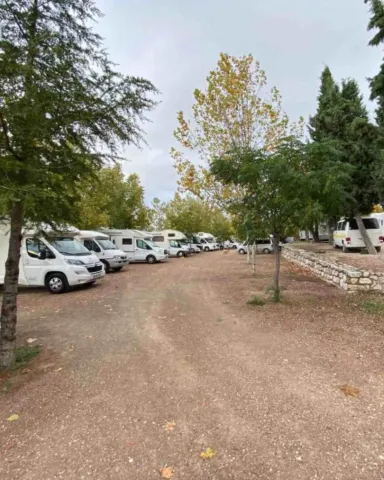
Free stay area, ideal for campers and motorhomes, with privileged views, water filling and emptying services and with an ideal location at the entrance to the Cazorla, Segura and Las Villas natural park.

Sierra de Segura Apartments

Submitted by brandcode_deweloper on
Id
2637718
Redes sociales
Facebook
www.facebook.com/apartamentossegura/
Descripción
Breve descripción

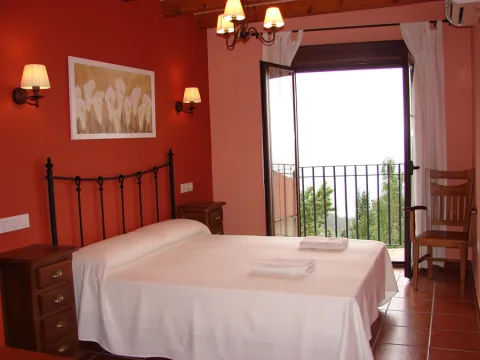
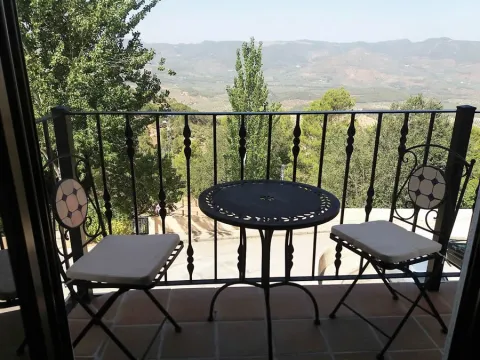
"Apartamentos Sierra de Segura" is a rural complex with apartments, one to three bedrooms, perfectly furnished and suitable for you to enjoy the tranquility and charm of rural tourism in the Natural Park of Cazorla, Segura and the Villas.

Información de contacto
Teléfono
953 070 029 / 607 515 664
Sitio web
www.apartamentossierradesegura.es
Correo electrónico
reservas@apartamentossierradesegura.es
Ubicación
Código Postal
23379
Latitud
38.296561
Longitud
-2.650789
Dirección
C/ de San Vicente, 24
Distrito
Ubicación en el mapa
POINT (-2.650789 38.296561)
Tipo de alojamiento
Imágenes
imagen
Image
Sierra_de_Segura.jpg
Imagen principal
Activado
imagen
Image
5.jpg
Imagen principal
Desactivado
imagen
Image
6%20%281%29.jpg
Imagen principal
Desactivado
Horario
08: 30 - 23: 00
Precio por noche
50.00
Las habitaciones

1 key

Loading map
Preparing points of interest and routes...
El Hotel

If you do not need to cook, you also have a floor with double rooms with bathroom, with all the details.

Located in the city centre of Segura de la Sierra, the most beautiful and emblematic town of the Natural Park, declared a Historical-Artistic Set by UNESCO and in 2017 awarded as one of the 57 most beautiful villages in Spain.

All rooms have free wifi.

"Apartamentos Sierra de Segura" offers its customers high quality rural accommodation that combined with the incomparable historical environment of the village and the natural area of the Sierra de Cazorla and Segura, maximum comfort, exquisite decoration and complete equipment of the facilities will make your stay unforgettable. We encourage you to meet them.

Rincón del Regidor Vitores Boutique Apartments

Submitted by brandcode_deweloper on
Id
10615136
Redes sociales
Facebook
https://www.facebook.com/Vitores-Apartamentos-Turisticos-%C3%9Abeda-625390631190863/
Instagram
https://www.instagram.com/vitoresubeda/
Descripción
Breve descripción

The Vítores Apartments are located in the heart of the historic city heritage of the humanity of Ubeda. Just a few steps away from the main tourist points of interest of the city such as La Sacra Capilla del Salvador, Vázquez de Molina Square or the emblematic Church of St. Paul.

Our apartments are in a privileged area to visit the city centre, without giving up a quiet rest. We are in the center of an oasis of Renaissance palaces, church stories with its time bells, between a sea of olive trees with infinite viewpoints,... Ubeda in love and her stay in our apartments will make your visit a unique moment full of sensations.

Información de contacto
Teléfono
633 428 961
Sitio web
https://www.vitoresapartamentos.com/
Correo electrónico
vitoresubeda@gmail.com
Ubicación
Código Postal
23400
Latitud
38.008387
Longitud
-3.368948
Dirección
C/ Corazón de Jesús, 1
Municipio
Ubicación en el mapa
POINT (-3.368948 38.008387)
Tipo de alojamiento
Imágenes
imagen
Image
vitores%201.jpg
Imagen principal
Activado
imagen
Image
vitores%202.jpg
Imagen principal
Desactivado
imagen
Image
vitores%203.jpg
Imagen principal
Desactivado
imagen
Image
vitores%204.jpg
Imagen principal
Desactivado
imagen
Image
vitores%205.jpg
Imagen principal
Desactivado
Idiomas
Loading map
Preparing points of interest and routes...

Úbeda

Submitted by brandcode_deweloper on
Id
785118
Perfil de redes sociales
Facebook
https://www.facebook.com/pages/Turismo-de-%C3%9Abeda/173591095987915
Twitter
https://twitter.com/Turismodeubeda
Descripción
Breve descripción

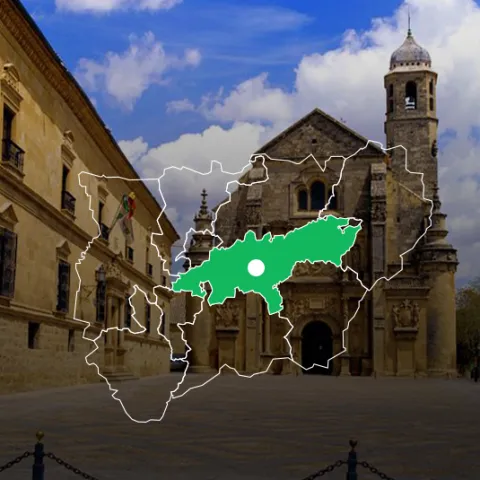
This important city, settled on the hills of its own name, is located in the centre of the province of Jaénand is the capital of the region called La Loma.

Surrounded by a landscape of an extraordinary natural beautyin which the flat grounds for the cultivation of the cereal are alternated, with the smooth slopes of olive trees, seems to summarize the essence of the province of Jaén.

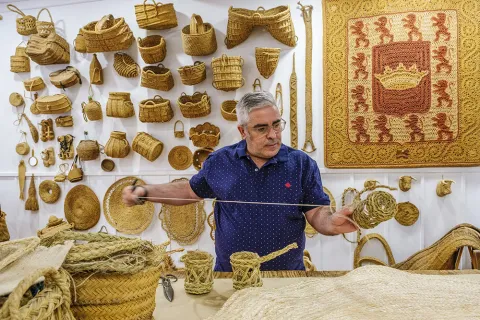
It is very important, within its varied economy, the crafts, with numerous workshops of pottery and ceramics, of forge, size, glass, tapestries, spartum, singing, etc.

As we walk through its lordship streets to admire the monuments, churches, palaces and lordship houses, we move virtually to the times of the historical splendor of this city.

Ubeda is known as "the city of the Andalusian Renaissance"for the quantity and quality of the monuments of this artistic age.

Together with Baeza, it has been declared World Cultural Heritage by Unesco on 3 July 2003.

Telecomunicaciones
Teléfono
953 779 204
Sitio web
www.turismodeubeda.com
Correo electrónico
promocion@ubeda.es
Ubicación
Nombre
Úbeda
Latitud
38.012640
Longitud
-3.371590
Municipio
Ubicación en el mapa
POINT (-3.37159 38.01264)
Imágenes
imagen
Image
4799c128-4243-ddbe-4c6c-d5f7ee6541a5?t=1603983703047
Imagen principal
Desactivado
imagen
Image
b990224c-93ea-e0df-74c2-b7e6183a3016?t=1603984517266
Imagen principal
Desactivado
imagen
Image
751f0349-5ec0-e737-56cf-235536e32ce7?t=1603983703075
Imagen principal
Desactivado
imagen
Image
6ddd0085-05f6-e8ef-366a-1963e112a78f?t=1603983703173
Imagen principal
Desactivado
imagen
Image
079eab40-54b9-462f-9652-50503cdb19b9?t=1585914434000
Imagen principal
Desactivado
imagen
Image
658dab1d-a8b7-6142-60d7-be18c41b4400?t=1620124630064
Imagen principal
Desactivado
imagen
Image
783f65fe-f295-0ac3-a5f1-c8a445f97f9d?t=1603987184323
Imagen principal
Desactivado
imagen
Image
a1c2cc59-155f-b35e-3797-8753b948883f?t=1603987072290
Imagen principal
Desactivado
imagen
Image
d514a2f2-df93-6914-23d0-4a2d3d8def54?t=1585914433864
Imagen principal
Desactivado
imagen
Image
96a361d6-abc7-8d8a-ac2d-39d7b956fb9a?t=1585914432211
Imagen principal
Desactivado
imagen
Image
34223fac-9819-3cc8-ab77-1ea66239de9c?t=1585914433058
Imagen principal
Desactivado
imagen
Image
897fc220-a1c5-8dc7-21a7-f794bb4b5ab1?t=1585914432869
Imagen principal
Desactivado
imagen
Image
fd162935-02a3-19d4-6d0a-e70d45e30088?t=1585914432724
Imagen principal
Desactivado
imagen
Image
c31acbfe-c818-2117-4875-2a38f23fdadd?t=1585777415890
Imagen principal
Desactivado
imagen
Image
a3df8019-f7c4-818f-49a7-812719c7627e?t=1585914432622
Imagen principal
Desactivado
imagen
Image
d66bcf17-80e3-b88c-1e2b-9e0c440410ed?t=1602853416998
Imagen principal
Desactivado
imagen
Image
ac732a47-55b6-b0eb-e42d-53cde4d8d4b5?t=1602853581698
Imagen principal
Desactivado
imagen
Image
5f1448d6-c40c-9c82-d042-dffbb558575d?t=1602853977830
Imagen principal
Desactivado
imagen
Image
8e10cba1-a64b-07b1-57ea-fa3bbbc174a1?t=1602854679588
Imagen principal
Desactivado
imagen
Image
a370e5d1-865a-9977-a663-e2feb66503c8?t=1602854760846
Imagen principal
Desactivado
imagen
Image
8f29648a-eadd-6fcc-1d1c-72ed12871101?t=1602858438953
Imagen principal
Desactivado
imagen
Image
d91d519d-ed0d-52aa-15a1-d61aeea22169?t=1602858557129
Imagen principal
Desactivado
imagen
Image
ec2bae3a-6a55-0359-e557-f51383218c1d?t=1602858895450
Imagen principal
Desactivado
Información adicional
Curiosidades

Oficina De Turismo De Úbeda
Plaza Andalucía, 5, 23400 Úbeda, Jaén
http://turismodeubeda.com/index.php/es/

Imágenes cabecera
imagen
Image
f6f7b606-a62a-fa14-8ad1-f8933a23bfde?t=1611066284336
Imagen principal
Desactivado
Datos de interés

Tourist area: Ubeda / Baeza
Distance to the capital (km): 56
Altitude over sea level (m): 757
Extension (km ²): 404
Number of inhabitants: 34345
Gentilicon: Ubetens
Postal code: 23400

Videos
Video file
Cultura

Ubeda has a beautiful monumental and cultural heritage that makes it a fundamental destination for those interested in the Renaissance architecture.

From its heritage we will highlight the excellent degree of conservation of many of its buildings, which still keep details of the time as can be the doors of claveted wood, the iron aldabas, the lanterns and the bars.

It covers such a number of monuments, churches, palaces and master houses, that it would be difficult for us to list them here to the full. Among its most notable monuments of Ubeda are the following:

Historical center:

  • Plaza Vázquez de Molina
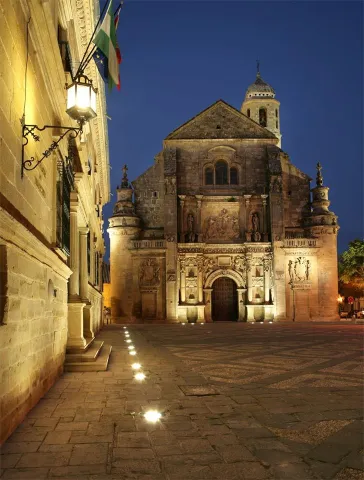
  • Sacra Capilla Funeraria de El Salvador del Mundo
  • Basilica of Santa Maria de los Reales Alcázares
  • Palace of Vázquez de Molina or Palace of the Chains. Current City Hall and houses the Andrés de Vandelvira Interpretation Center
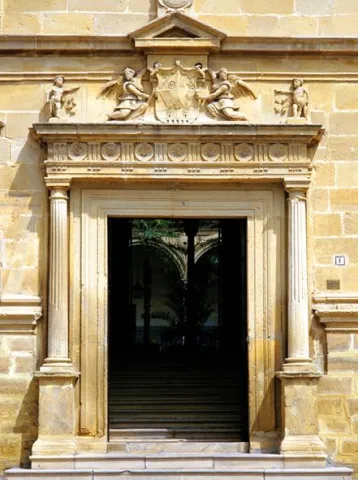
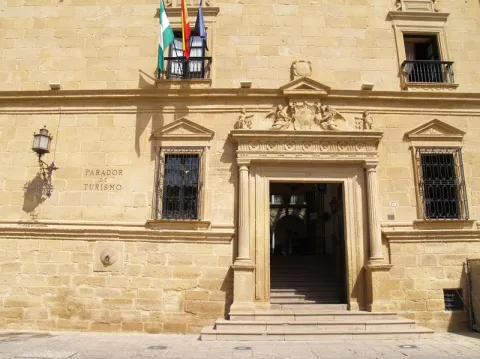
  • Deán Ortega Palace. Current National Tourism Parator
  • Hospital de los Honrados Viejos de El Salvador
  • Palace of the Marquis de Mancera
  • Vela de los Cobos Palace
  • Church of San Pedro
  • Church of St. Paul. Located at 1 May.

Barrio del Alcázar, San Lorenzo and Santo Domingo:

  • Casa de Las Torres
  • Palace of the Medinilla
  • Church of San Lorenzo
  • Church of Santo Domingo

San Isidoro district:

  • Santiago Hospital
  • Palacio del Marqués de la Rambla
  • Church of San Isidoro
  • Church and Convent of the Most Holy Trinity

Barrios de San Pablo y San Nicolás:

  • Church of San Nicolás de Bari
  • Convent of the Immaculate Conception. It houses a museum.
  • Casa de la Tercia - Olivar and Oil Interpretation Center

Barrios de San Millán y Santo Tomás:

  • Valencia Street. Numerous craft workshops to visit.
  • Church of San Millán
  • Palacio Francisco de los Cobos

Route of San Juan de la Cruz:

  • Convent of San Miguel and Oratorio of San Juan de la Cruz

In addition to these interesting attractions, we suggest a visit to the walls to contemplate the extraordinary panorama obtained from them.

Naturaleza

It is the main center of the region called La Loma. Ubeda is located on a hill at 750 m of altitude, and is surrounded by the valleys of the Guadalquivir and the Guadalimar.

Very close, around it, are the Natural Parks of Despeñacolos, Sierra Magina and Sierras de Cazorla, Segura and Las Villas.

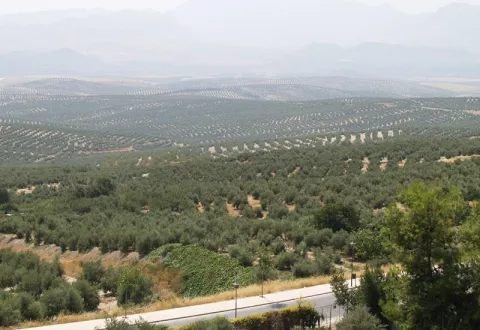
The landscape is very characteristic because it is composed of a "sea of olive trees," as the poet Antonio Machado wrote.

Fiestas y Eventos

The city of Ubeda presents a mosaic of cultural activities, festivals, fairs, romanias... Events all very deeply rooted in the population and with a very consolidated organization, which makes visitors from all parts of Spain participate.

It is worth the celebration of the Holy Week, one of the most popular parties in Andalusia, being declared a National Tourist Interest Party.

On May 1, the Romeria de la Virgen de Guadalupe, patron of Ubeda and known as the "Great Romery." That day the Virgin moved from her sanctuary to the village of Santa Eulalia.

Typical are also the San Antón fires"the lumbres." On January 16, fires are made in the different neighborhoods, where sardines are roasted or the cobbled.

Special emphasis party of San Isidro Labradoron 15 May, farmers' employers and who enjoy much devotion among the olive workers.

Together with the neighbouring city of Baeza, the Festival of Ancient Music. And in the last months of the year, the puppet and tale festivals take place.

And we cannot stop quoting the San Miguel Fairon September 29, the city's patron party. And during the days of this fair the Autumn Theatre Show takes place, as well as high-quality musical activities and children's activities for all ages.

Other relevant events highlight theFlamenco and Mestizo Festival "City of Ubeda" or Exhibition of Autumn Theatre of Ubeda.

+ INFO

Gastronomía

The ubetense cuisine is basically Mediterranean, with influences both manchegas, alumina and Andalusian root.

The table includes legumes, game meat and products derived from the "slaughter of the pig," and, of course, virgin olive oil and table olives. Among the most outstanding dishes would be:

  • The crumbs (reminiscent of the shepherds in transhumanism).
  • The ointment, an olive oil cake.
  • The slick.
  • Potage of beans with eggplants.

The bars and canteens are the traditional meeting point of the ubetens. If you visit the city in September you can attend the Fiesta de la Tapa.

We cannot forget the "Gourmet days of the Renaissance". They take place from January to March in the most emblematic restaurants, where both lunch time and dinner are accompanied by shows.

Historia

The latest archaeological research shows that the first settlements of Ubeda date back to the Copper and Bronze Age (III and II millennium A.C), being the "oldest city in Europe" scientifically documented.

In search of product exchanges the Greeks will arrive and later the Carthaginians, who would be defeated by the Romans. It is under the Roman Empire, from the battle of Llipa in 206 BC, when the old city is romanized and will be known as the Betula.

The city takes on importance with the arrival of the Arabs, in particular with Abdeleran II, in the S. IX, who overlooks it with the name of Ubbada or Ubbadat Al-Arab (Ubeda "of the Arabs"). As a Muslim city it was surrounded by walls and became one of the most important cities of Al- Andalus, due mainly to its crafts and trade.

In the S. XI it will be conquered by the alparavids. And the definitive Christian conquest was carried out in 1234 by King Fernando III.

A number of factors, such as the geographical location, its extensive and rich jurisdiction, as well as the presence of an increasingly powerful nobility, would lay the foundation for the splendor that Ubeda reached in the 16th century.

The economic development of the city based on agriculture and on the feral livestock, the rotations of the forests that represented an increase in the land of cultivation, and having a mesta of its own, will base the greatest splendor of the city, which was a demographic increase to reach 18,000 inhabitants.

In addition to the ubetense nobility and the Orders of Cavalry, we found a group of neighbors who have prospered (doctors, tailor, scribes, bots...) that will lead to an incipient bourgeoisie.

To highlight the role of Francisco de los Cobos, secretary of Charles I, who, with his interest in art and under the advice of the architect Andrés de Vandelvira, fills the city with palaces. In Ubeda, take root the humanist currents of the Renaissance. It will be Juan Vázquez de Molina, Secretary of Charles I and Philip II, who will continue with the planning initiated by his predecessor.

Declive:
The 17th and 18th centuries are of decline for the city, as Spain is in a general crisis. The bad crops, the unfair pressure of taxation to cover the cost of wars, corruption, the power of the clergy, the expulsion of the Moorish, will be factors that contribute to the loss of that splendor that characterized this city.

Later, in 1820 and 1836, ecclesiastical disamortizations, Carlist wars, Civil War and post-war will come.

Recovery:
It will be in the 1960s and 70s of the last century, thanks to the development pull, when slowly it was the "Florence of Alta Andalucía" go to the present place and become a provincial reference point, head of the region of La Loma and a centre of industry and services of increasing importance.

Otra información

Known people born in Ubeda:

  • Antonio Muñoz Molina, writer and member of the Royal Academy of Language.
  • Joaquín Sabina, singer.

In Ubeda dies San Juan de la Cruzon 14 December 1591.

The popular saying of leaving or "walking on the hills of Ubeda," has its origin in the conquest of the Almohades of the Jienese city of Ubeda in 1234. It seems that one of the most important captains of King Fernando III "the Holy," disappeared moments before entering into combat, and that he appeared after the city was conquered. Asked where he had been, he replied that he had been lost by the hills of Ubeda.

Loading map
Preparing points of interest and routes...
Imagen principal
imagen
Image
9bbdff4c-5e18-d227-f40c-7c89c56fd0d7?t=1603979510184
Imagen principal
Activado
Literatura

These reasons are further enriched by the fact that San Juan de la Cruz died here, having been brought to the city to recover from a slight fever, and by the fact that it is the birthplace of Antonio Muñoz Molina, winner of the Premio Planeta and the Princess of Asturias Award for Literature.

You must come to Úbeda and venture into its streets and monuments, discovering them through the eyes of these authors. Without doubt, a different way to enjoy this monumental city.

La Iruela

Submitted by brandcode_deweloper on
Id
739553
Perfil de redes sociales
Facebook
https://www.facebook.com/profile.php?id=100067577744297
Twitter
https://twitter.com/lairuela
Instagram
https://www.instagram.com/ayuntamientolairuela/
Descripción
Breve descripción

La Iruela, a small and beautiful town located in the north-east of the Sierra de Cazorla region. In its western part there are the cultivated lands, the rest of the municipal term is a mountain area reforested with pine trees. It belongs to the Natural Park of the Sierras de Cazorla and Las Villas, being its main entrance door.

The municipality of La Iruela, as if it were a puzzle, is composed of numerous cores, 17 pedanias are the ones that make it up. Burunchel, El Palomar, El Burrueco, Arroyo Frio, Fontanares, La Estrella, Mortalejos, Tramaya, El Pocico, San Martín, Pasada Barrero, Los Tísanas, Arroyos de Plaza, Juntas de Muriel, Nubla, Cortijo Enroque and Cañamares.

The economic activity of the municipality rests on two basic pillars: olive cultivation and nature tourism, also highlighting forest activity.
Among its historical heritage we quote the medieval castle, the ruins of the church of Saint Domingo de Silos and the conistory house.

The Iruela has been declared Artistic Historical Set in 1985.

Telecomunicaciones
Teléfono
953 720712
Sitio web
www.lairuela.es
Correo electrónico
info@ayuntamientolairuela.es
Ubicación
Nombre
La Iruela
Latitud
37.920350
Longitud
-2.994140
Municipio
Ubicación en el mapa
POINT (-2.99414 37.92035)
Imágenes
imagen
Image
00aa1637-c873-62dd-9f08-19a8dc93b82a?t=1594840447803
Imagen principal
Desactivado
imagen
Image
cascada-calavera-jpg
Imagen principal
Desactivado
imagen
Image
142fcccc-1b78-b00f-12b9-9861653aa985?t=1594840446686
Imagen principal
Desactivado
imagen
Image
984dda33-81c5-6dfc-f4c8-879496a017f7?t=1594840444901
Imagen principal
Desactivado
imagen
Image
cf00562e-66a8-42de-cafc-977dfa1c9576?t=1619544364548
Imagen principal
Desactivado
imagen
Image
0427da0e-3bb3-5495-44e8-9e5136623cc5?t=1611000362766
Imagen principal
Desactivado
imagen
Image
arroyo-de-las-truchas-la-iruela-2-jpg
Imagen principal
Desactivado
Información adicional
Imágenes cabecera
imagen
Image
La Iruela
Imagen principal
Desactivado
Datos de interés

Tourist area: Serras de Cazorla, Segura and the Villas
Distance to the capital (km): 106
Altitude over sea level (m): 954
Extension (km ²): 123
Number of inhabitants: 1,899
Gentilicon: Iruelenses or Firuqueños
Postal code: 23476

Videos
Video file
Cultura
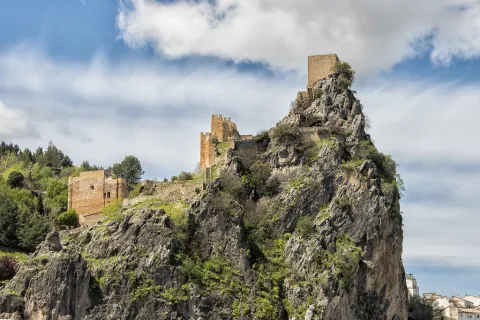
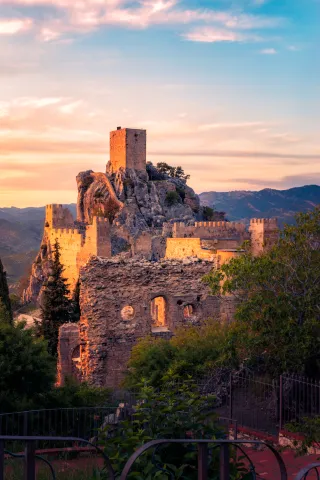
  • La Iruela Castle. The imposing castle rises on an abrupt rock and at its feet a medieval district of unquestionable architectural value is spread. It is of mothade origin and is built on pre-Berber foundations. In the eighth century, La Iruela was occupied by Muslims, who in order to cultivate the land created alqueras, then walls to defend themselves from the enemies and, already in the twelfth century, the first fortress of the three that it currently presents. The second, also the work of the Almohades, was a courtyard of weapons surrounded by a series of defensive torreons united with each other by thick wall canvas. Inside the courtyard of arms are the remains of a large aljibe. When Fernando III conquers this area, Christians reform the castle and build the tower of tribute in the highest part of the rock. An auditorium with artistic and cultural activities has been created between the castle and the rock. It was declared a Historical Monument in 1985.
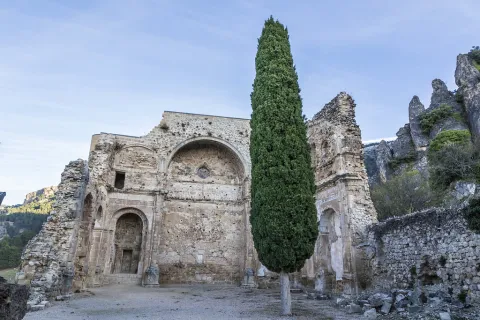
  • Ruins of the church of Saint Sunday. 16th century Renaissance Church, raised inside the walled castle enclosure. The church was composed of three ships, the largest central and where the presbytery was to be found, the sides had chapels. A building attached to the church would be the old tower-door of Muslim origin that would give entrance to the interior of the Almohad fortress and that Christians reused as a bell tower. During the French invasion, La Iruela suffered attacks and fires, in one of them (1810) the building was severely damaged. Some of its noble areas are still standing today.
  • Consistory house. It is a Mudejar-style monument that in its day was posited and grain storage. It dates back to the late 15th century. He was looted and burned in the War of Independence. In the mid-19th century it was set up as the municipality of La Iruela. A remodeling made at the end of the last century gave him the present look.

Naturaleza

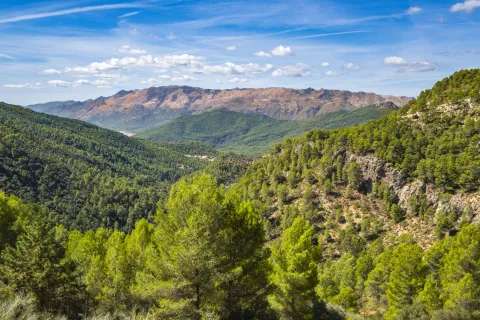
The Iruela is in the skirts of the saw of Cazorla, crowning the Guadalquivir valley. It is located 932 m above sea level, which means it is the highest municipality in the entire region, and the one that has the most portion of the Natural Park of the Sierras de Cazorla, Segura and Las Villas.

If something characterizes the area is the variety in the landscapes and ecosystems, with altitudes ranging from 2,100 m in the Cabilla saw to 360 m in the vicinity of the Cerrada bridge.

The region is characterized by landscapes where the high peaks are mixed with deep ravines, soft reliefs and large valleys, forests, olive groves and high mountain pastures, orchards, humid, dry and arid areas. The altitude rises from the west to the east, but not continuously, but forming saw teeth, whose rising and incoming with progressively more pronounced, alternating river courses and summit lines.

The traditional useof these lands has been of pastures for livestock, forestry, small areas of traditional crops (olive, cereal, orchard), hunting, fishing, collection of mushrooms, wild fruits of the forest and spartum and wicker for the varied popular crafts, mainly.

These traditional uses have given way to new economic activities, mainly service companies, especially tourism, in the area of the Natural Park. Today La Iruela has a large tourist infrastructure that, together with those of the cities of Ubeda and Baeza, are the most important in the province of Jaén.

At present the olive tree has been displacing the other crops, the loins are occupied by a sea of olive trees interrupted, sometimes, by orchards, all framed in the surrounding saws. In the drier and driest areas the almonds spatter in white spring.

A space with many ecosystems in which infinity of species that make up rich and varied fauna:: from the rapacious birds, the carrionies, the cynetic species, both of major and minor hunting, the fish, amphibians, reptiles, as well as the characteristic fauna of the riverside vegetation that exists next to the stream and river.

Without a doubt, a true natural paradise to recreate. It is almost compulsory to make direct contact with one of the wonderful places that this territory hides, where in addition to observing "in situ" both vegetation and fauna, we can enjoy a fabulous panoramic view of the mountains and the jienese countryside.
Most of the land in La Iruela belongs to Mount Público Guadahornillos, with just over 6,740 hectares.

In the municipality of La Iruela, the following public equipment is highlighted:

  • Nature Hall "El Cantalar."
  • Recreative area "Tejina"
  • "Air Pass" lookout
  • Path Rio Borosa (partial)
  • Path Cold Arroyo to Cerrada de Utrero (partial)
  • Mirador "Ribera del Guadalquivir", located on the path Arroyo Frio to Cerrada de Utrero.
  • Several sections of GR-247 Southern Forests. Stage 10 "Refugio CF La Zarza - La Iruela" and derivation stage "Port of the Doves - Cold Arroyo".
  • Most of the GR-7 "Coto Rios a Vadillo Castril" and some trips of the Vadillo Castril - Quesada section.

Fiestas y Eventos

We began the festive cycle of La Iruela in January:

  • Saint Anton, January 17. It is tradition to light fires and bless animals so that Saint Anthony Abad will protect them throughout the year.
  • San Blason February 3. The traditional doughnuts are distributed and a joint raffle is made with the products that the neighbors have donated. A few days before the celebration of the party, the image is brought from its Nubla hermitage. During the procession, the saint is the reason for many offerings in thanks to the favors received.
  • Celebrations in honor of the Virgin of the Unprotected and Holy Silos Sunday. They are held in the last days of August. There are many and varied activities that are carried out: fireworks, barter championships, serrano bolus, domino tournaments, local garden and gastronomy products competition, children's theatre, pasacalles, recitals and verbenas. The Virgin is brought from her hermitage to the parish, where she will remain until the fall, when she will return to her.
  • Saint Martin and the Virgin of the Rosary. Romeria that is celebrated the first weekend of October since time immemorial. In the pedania of San Martín
  • Party in honor of the Assumption of the Virgin Mary. It is celebrated between the 13th and the 15th of August and takes place in the pedanias of Arroyo Frio and El Palmar.
  • Celebrations in honor of the Immaculate Conception and Saint Julian. From 22 to 25 August, it is held in the pedanía of Burunchel. The saint is transferred from the hermitage of Saint Julian to Burunchel, where it is processed.
Gastronomía

It shares its gastronomy with the region where it is located. In general, peas are made from land products. Among the most characteristic are the following:

  • Gachamita, which is made from olive oil, flour, water and potatoes. You can eat with chorizos, torreznos...
  • Farmed flour, which are made with hard pasta.
  • Tallarines. It consists of a stew of meat, vegetables and mushrooms in which wafers of mass are cooked that are broken.
  • Rin-Ran. It has red pepper, onion, potatoes, cod, black olives and olive oil.
  • Serrano eggs. They are usually served in saucepan with pork products, such as chorizo, scratched bacon and meat from game animals.
  • Other: In Easter the dishes made with cod and Fried artichokes.

Warehouse:

  • Lis flowers. They are made of a very liquid mass of flour and passed through the frying pan in hot iron mold.
  • Fried milk and sugar roses.

Historia

The first signs of human presence in the Iruela environment date from the Copper Age, with great occupation until the Bronze Age. Then there was a depopulation of the area for which the researchers have no explanation, since after time we attended a proliferation of settlements. One of them is that of Nubla, with remains of fortification and that was active from the Iberians to the medieval era, the same happening in the times of the Romans, the bridge of the Mill that crosses the Cañamares River is attributed to this period.

It has been said that the Carthaginians founded the city, that it was popular in Roman times, and that the Arabs destroyed it and then populated and rebuilt it.

During the Islamic period it must have been one of the villages that populated the region. Around the 11th century this population was walled and the top of the promontory served as a refuge.

In the time of King Fernando III and thanks to the troops of the Archbishop of Toledo, conquer the castle and the rest of the municipality. In thanks the king gives him the jurisdiction of these lands within the advance of Cazorla. By the end of the 13th century, in order to strengthen the Alfoz of Cazorla, they donate to him La Iruela as a village, but La Iruela did not want to accept this privilege given to Cazorla.

He sometimes got the privilege of a villa, but for very short spaces of time.
Francisco de los Cobos, Secretary of Charles I, got the monarch to give him the villa to the detriment of the archbishop of Toledo, who pleaded until in 1606 he recovered it again. In this short period of time, the Cobos, large mecenas on the lands of their lordship, ordered to build the church of Saint Sunday of Silos in the interior of the castle.

The archbishops of Toledo always maintained the possession of this villa until 1811, when the Cortes of Cadiz abolished the territorial jurisdiction of the archbishop of Toledo. The spiritual jurisdiction over these lands reaches 1958, when it passed to Jaén.

Loading map
Preparing points of interest and routes...
Imagen principal
imagen
Image
Castillo La Iruela
Imagen principal
Activado

Cazorla

Submitted by brandcode_deweloper on
Id
727503
Perfil de redes sociales
Facebook
https://www.facebook.com/ayuntamientode.cazorla
Twitter
https://twitter.com/AytodeCazorla
Descripción
Breve descripción

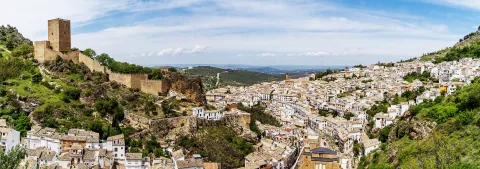
Cazorla is a municipality located to the east of the province of Jaén, declared a historical-artistic complex and within the Natural Park of the Sierras de Cazorla, Segura and Las Villas, the largest protected space in Spain, the second in Europe and declared a Biosphere Reserve by Unesco since 1983.

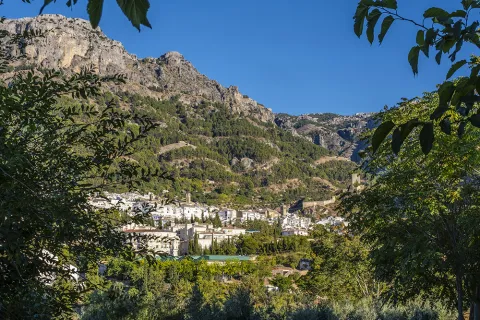
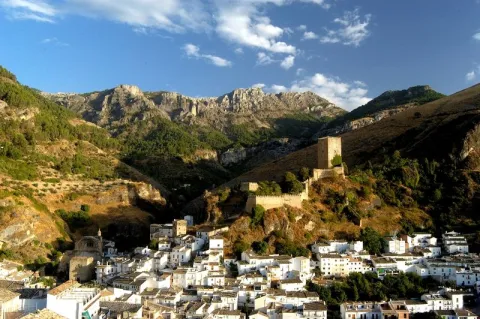
It is the main urban enclave in these serranies. Its urban centre is located in the shadow of the Hawks' rock, with the saw behind its back and an immense sea of olive trees towards the sunset.
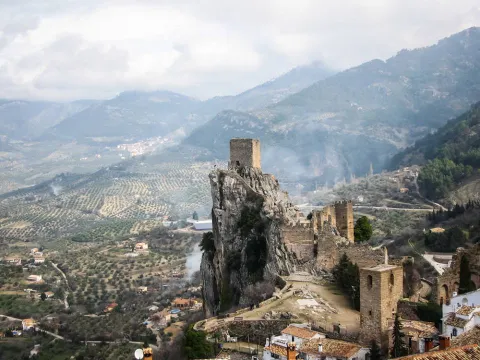
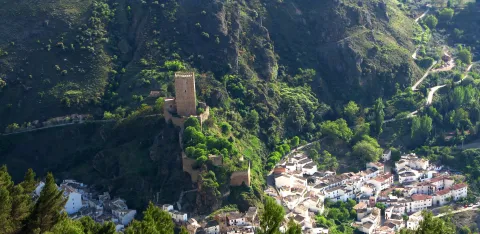
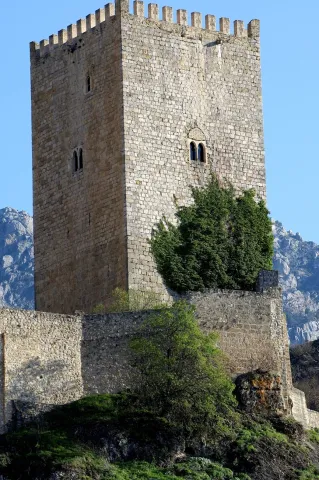
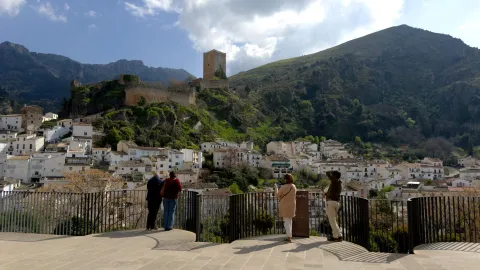
On the whole, the majestic castle of the Yedra stands out, from which you can see fantastic panoramic views of the urban warp of white houses, narrow and steep streets, with traditional houses and master houses, and a large number of monuments of outstanding artistic interest.

The waters of its slopes are collected by the River Cerezuelo, tributary of the Guadalquivir. A place where nature is expressed in its greatest splendor.

Telecomunicaciones
Teléfono
953 710 102
Sitio web
www.cazorla.es
Correo electrónico
hola@cazorla.es
Ubicación
Nombre
Cazorla
Latitud
37.913000
Longitud
-3.002700
Municipio
Ubicación en el mapa
POINT (-3.0027 37.913)
Imágenes
imagen
Image
85b80621-7b8b-3b9c-8a00-a8148aeeb028?t=1603980245902
Imagen principal
Desactivado
imagen
Image
b594df67-f959-109e-c0ba-7e18a6472567?t=1604611878998
Imagen principal
Desactivado
imagen
Image
c1c05e33-7065-7f4b-98d0-102559d70087?t=1617642311354
Imagen principal
Desactivado
imagen
Image
ddf4ab98-9081-e8a6-be4e-1de1e18fa35f?t=1585601103888
Imagen principal
Desactivado
imagen
Image
cascada-de-la-malena-jpg
Imagen principal
Desactivado
imagen
Image
5a4be7ef-845e-1311-4465-5d93ee402b65?t=1585662613147
Imagen principal
Desactivado
imagen
Image
6b0f484b-a6df-5339-56ce-d36c1b3447bf?t=1585662608904
Imagen principal
Desactivado
imagen
Image
98013154-7e60-0798-f8a2-8276d4558831?t=1585662610794
Imagen principal
Desactivado
imagen
Image
8e6fbd9b-cd54-a1bb-152d-26517851640a?t=1585662606458
Imagen principal
Desactivado
imagen
Image
53c2b0f0-ae8b-4c68-be4a-65a62d56213a?t=1585662608209
Imagen principal
Desactivado
imagen
Image
6dfc9684-2c39-5bcb-6034-5f683a2d4fe7?t=1585662610402
Imagen principal
Desactivado
imagen
Image
d05370ad-6492-179e-94f9-f68a1f31a13e?t=1617642404091
Imagen principal
Desactivado
imagen
Image
984decb5-d613-1794-5c3d-c6906af63538?t=1617642404161
Imagen principal
Desactivado
imagen
Image
19447111-87cb-503d-367d-48d3479d9dff?t=1617642477177
Imagen principal
Desactivado
imagen
Image
843cba48-ecf2-71bb-65c4-4c96633d6c17?t=1617642477250
Imagen principal
Desactivado
imagen
Image
b3601395-6287-90b8-0503-7c31c7d3cbb8?t=1617642477422
Imagen principal
Desactivado
imagen
Image
cazorla-1-jpg
Imagen principal
Desactivado
Información adicional
Curiosidades

https://cazorla.es/turismo/
turismo@cazorla.es

Imágenes cabecera
imagen
Image
castillo-de-la-yedra-6-jpg
Imagen principal
Desactivado
Datos de interés

Tourist area: Serras de Cazorla, Segura and the Villas
Distance to the capital (km): 105
Altitude over sea level (m): 836
Extension (km ²): 305
Number of inhabitants: 8527
Gentilicon: Cazorleños
Postal code: 23470

Videos
Video file
Cultura

Cazorla, at the gates of the Natural Park of the Sierras de Cazorla, Segura and Las Villas, is a lesson of how man and nature have forged an alliance that comes to this day. Its rich cultural heritage includes places that cannot be lost.

The castle of the Yedra, whose origins could be Muslims, perhaps from the Almohad era (12th century), although throughout the 13th, 14th and 15th centuries Christians finished giving it their definitive configuration, which explains that in many of their inner stays the Gothic style predominate. The tower of tribute houses the Museum of People's Arts and Costumbres of Alto Guadalquivir. It is a place where you can learn more about how the ancestors lived on these lands.

From its enclave, 831 meters above sea level, it is seen the town of Cazorla and its surroundings.

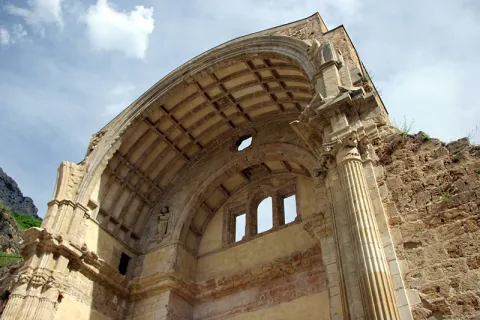
The ruins of the church of Santa Mariaa sample of the Andalusian Renaissance. It is very likely that its author was Andrés de Vandelvira, as many of its elements can be recognized in the temples of its author located in Ubeda.

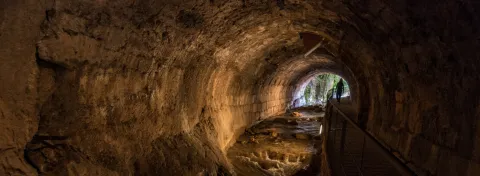
It is built on the Cerezuelo River, which was forced to channel previously, and which enters a large visitable vault under the main altar, across the whole church, to follow its course under the square of Santa Maria. It is very likely that the church was never fully completed and that the serious damage caused by the terrible storm and flood of 1694 would further make it difficult to complete it. It is the only church built on the bed of a river.

The City of Cazorla currently houses the Municipal Office of Information and Tourism and the Multipurpose Spacewhere concerts and shows are held.

Naturaleza

The location of Cazorla in the middle of the saw, whose historic town seems to be spilled on the rock of the Hawks, certainly makes it one of the most beautiful Jienian peoples. And the best way to discover the wonders of nature in this area is to realize one of the paths that, duly signified, exist in the environment. These include the following:

  • The Castle of the Five Skins Path.
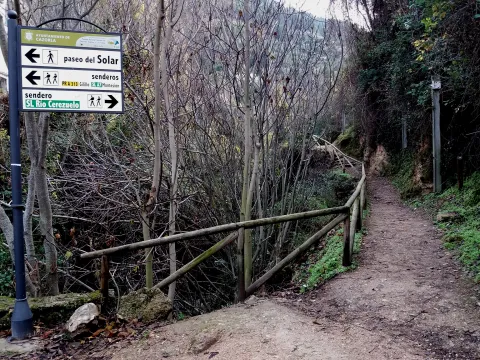
  • Circular path of the Cerezuelo River.
  • Path of the Stairway.
  • The birth of the Guadalquivir River.

Walking these paths will be the ideal way to contemplate the maze of valleys, calares, slices, mountains and river basins, as well as the large number of rivers and streams that go along the slopes. In these walks, we will also discover the variety of Mediterranean botany of this place: pine, juniper, oak and other endemic species. Among the fauna are rapacious birds and mammals such as the rabbit, hare, deer, foxes and boars. A unique opportunity to discover the many ecosystems that exist in this environment.

Fiestas y Eventos

The Holy Week is of unique importance in this town of Cazorla. During the days of this week they process several steps in each of the days and have been carved by well-known imagers.

The Romeria de la Virgen de la Cabeza, which takes place on the last Sunday of April, has a deep-rooted devotion among the neighbors. In preparation for the rosemary, on the Sunday of April before the rosemary, a parade of lambs decorated with colored ties is held to be offered to the Virgin and will be auctioned in the following days.

From the City Hall, numerous cultural and sports events are organized and promoted, including the following: Blues Cazorla Festival, International Theatre Festival, Festivals of the advance of Cazorla, Nocino de la Tragantía (a local theatrical association), Marathon BTT Sierra de Cazorla.

Gastronomía

The gastronomy of the 26 municipalities that form this Natural Park of the Sierras de Cazorla, Segura and Las Villas is influenced by both Andalusian and Castile La Mancha cuisine.

The raw materials they use are game meat, river fishing, vegetables and vegetables from their own harvest. That's right, all of it properly decorated with the oil of their olive groves.

Among the most typical dishes, we will mention the following:

  • The gachfriend, crumbs of flour, water, oil, dried and fried peppers, chorizo and, depending on the time of year, melon, cherries, grapes...
  • Ajoflour: flour, garlic, peppers, potatoes, tomatoes, pepper, water and salt.
  • Thalarines or rhinestones: fine flour mass cakes with hare or rabbit.
  • The rhin-ran.: a good entrance at any table. The traditional serrano bread is attached in a purée of pyrrrrrama or gypsy salad: made of onion, pepper, tomato, garlic, cumins, extra virgin oil, vinegar and salt.
  • The serrana trout, trout in almond sauce or trout with truffle.
  • Grape bread: an outstanding dessert made with dried figs and mixed with nuts, minced almonds and a chorrit of anis.
Historia

Around 2000 BC, on the ancient terraces of the Cerezuelo River, the first inhabitants are established.

During the romanization, the Romans settle in this region and exploit the wealth of silver and salt that existed in the area. It will be during the Muslim occupation that Cazorla, like its neighbouring localities, will be fortified by the construction of castles.

In this way the Lord of Cazorla in the Middle Ages will become a major border enclave. This shows the number of castles and fortresses that delineate the advance, created in 1231.

The Christian conquest of these territories was carried out by Mr Rodrigo Ximénez de Rada, Archbishop of Toledo, in 1235. It will be King Ferdinand III who gives in feud to the archbishopric of Toledo these territories under the name of the advance of Cazorla.

The lordship will continue until the abolition of the Lordships in the early 19th century, although in this time space there are jurisdictional conflicts between the inhabitants and the diocese of Toledo.

The Cortes de Cadiz gave him the title of City in 1813 for his participation in the War of Independence.

Loading map
Preparing points of interest and routes...
Imagen principal
imagen
Image
cazorla
Imagen principal
Activado

Baños de la Encina

Submitted by brandcode_deweloper on
Id
780098
Perfil de redes sociales
Facebook
https://www.facebook.com/AyuntamientoBanosdelaEncina
Twitter
https://twitter.com/ayto_banos
Youtube
https://www.youtube.com/user/bdelaencina2
Instagram
https://www.instagram.com/ayuntamientobanosdelaencina/
Descripción
Breve descripción

Baños de la Encina is a town located to the north-west of the province of Jaén, in the heart of Sierra Morena, being part of its municipal term included in the Sierra de Andújar Natural Park.

It is a town characterized by a rich cultural and natural heritage. Its abundant natural enclaves have a high ecological and landscape value.

The Rumblar reservoir or the brazen cattle shops give special beauty to the bathing landscapes. A picturesque place is the town of El Centenillo, a pedany with a past linked to mining that has inherited us very interesting vestiges of that extractor activity maintained until the second half of the 20th century.

Telecomunicaciones
Teléfono
953 613 338
Sitio web
www.bdelaencinaturismo.com
Fax
953 613 455
Correo electrónico
ayuntamiento@banosdelaencina.es
Ubicación
Nombre
Baños de la Encina
Latitud
38.175110
Longitud
-3.774660
Distrito
Ubicación en el mapa
POINT (-3.77466 38.17511)
Imágenes
imagen
Image
bb43412b-0b09-92e1-b5dd-2a3baaeef265?t=1616762819308
Imagen principal
Desactivado
imagen
Image
6e061618-da10-6b26-ebe5-300517ba8230?t=1616763048514
Imagen principal
Desactivado
imagen
Image
74310b79-8179-fae7-5b3e-b576735fa133?t=1616763048565
Imagen principal
Desactivado
imagen
Image
62832d7e-b9c5-e2e7-8c96-eaa006430cf6?t=1616763048614
Imagen principal
Desactivado
imagen
Image
7d8309d2-8fe8-afaa-52e1-30fa5ffd4344?t=1616763048663
Imagen principal
Desactivado
imagen
Image
5ad5a6f6-be90-af33-a942-c398c15eac8e?t=1585087446209
Imagen principal
Desactivado
imagen
Image
b8fc307b-b54e-2067-4fa8-d7b7e20df730?t=1616763335903
Imagen principal
Desactivado
imagen
Image
e80f5c5a-9de3-0a08-2ea9-d6e40613fec0?t=1616763335957
Imagen principal
Desactivado
imagen
Image
d5d6f262-ceaa-09c3-3124-4f3017e71822?t=1616763336007
Imagen principal
Desactivado
imagen
Image
5be66f78-cbbc-a026-651d-ffaef3679132?t=1616763336058
Imagen principal
Desactivado
imagen
Image
48647967-2b83-bcef-38bc-adf042b0be7d?t=1603119701256
Imagen principal
Desactivado
imagen
Image
8c045208-3641-3c84-2c69-e31fba4f077c?t=1616763336138
Imagen principal
Desactivado
imagen
Image
87fdbe3b-186b-19bd-8f89-e4a40bd26929?t=1616763491946
Imagen principal
Desactivado
imagen
Image
058a9ced-9222-cd95-ed71-43d8be494159?t=1616763492048
Imagen principal
Desactivado
imagen
Image
e6f47c26-b02d-fa14-8b66-df7a4cee0858?t=1616763492173
Imagen principal
Desactivado
imagen
Image
6de90817-a9cc-79c6-b605-f2af76b1648f?t=1616763336188
Imagen principal
Desactivado
imagen
Image
d4bc33bd-166f-3120-184e-4f2e5b6efdd7?t=1616763336243
Imagen principal
Desactivado
imagen
Image
1a4b34e9-0517-fd82-1815-920fb58433f6?t=1616763492470
Imagen principal
Desactivado
imagen
Image
798beea5-5af1-63e7-ac7d-4dceabb4b9ee?t=1616763492614
Imagen principal
Desactivado
imagen
Image
9c5a19f0-40c7-8be4-dbf1-e323dfae9bf9?t=1616763336434
Imagen principal
Desactivado
imagen
Image
43bfe44f-fb3e-b00e-99ad-015db6e53e10?t=1616769905170
Imagen principal
Desactivado
Información adicional
Curiosidades

Oficina Municipal de Turismo:

  • Avda. José Luis Messía, s/n. Centro de interpretación “Torreón del Recuerdo”
  • Tfno.: 953 613 338
  • https://www.laencinaturismo.com/
  • De Martes a domingo (lunes cerrado): de 10:00 h. a 13:30 h.
  • De Jueves a domingo: de 16:30 h. a 18:30 h. (verano de 18:30 h. a 20:30 h.)
Imágenes cabecera
imagen
Image
baños de la encina
Imagen principal
Desactivado
Datos de interés

Tourist area: Sierra Morena / Sierras de Andújar
Distance to the capital (km): 52
Altitude over sea level (m): 420
Extension (Km2): 392
Number of inhabitants: 2582
Gentillo: Bañuscos
Postal code: 23711

Videos
Video file
Cultura

Baños de la Encina has accumulated a rich artistic heritage that has been able to preserve and care for. To visit it is to connect with the tracks of other peoples and cultures that have passed through this territory.
From its heritage, we highlight:

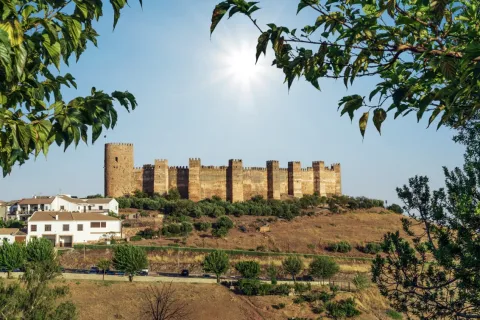
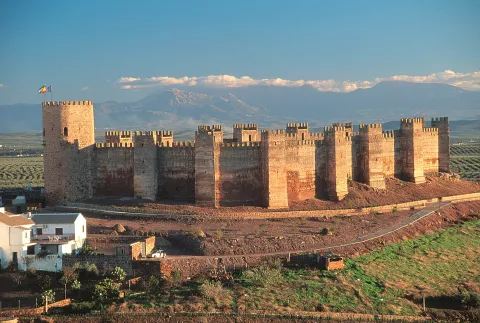
  • The castle of Bury al-Hamma (Burgalimar). The impressive silhouette of the castle dominates the rural landscape of Baños de la Encina. He rose in 968, in the califal period. It is flanked by a sturdy, almond wall with 14 towers, plus the Christian tower of tribute, and it has suffered little damage, constituting the best preserved fortified set of the time. The main Christian modification was introduced on one of the original 14 turreons: the Tribute Tower (also known as the "Gorda Tower"). This tower does not look to the countryside, but to the interior of the population, projecting itself above it, which indicates the transformation into a church building. It is Gothic and is built with irregular masonry, presenting cylindrical shape to the outside.
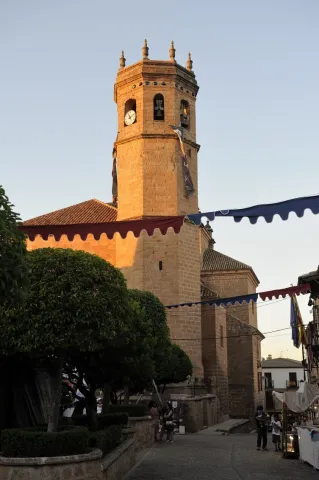
  • The Church of St. Matthew. It is Gothic, although the tower has Renaissance finishes, as does the main cover. The most important element in it is the sacred one, one of the jewels of the sacred art of the province dating from the 17th century. It is built of ebony wood, ivory, silver and shell of Carey that make up a plateau with baroque dome, framed by four columns of shell with capitals and silver basements.
  • Hermitage of the Jesus of the Llanus. Located in the middle of the Mesteño (sheep) rest, this sober building is raised, with a single ship and a bell tower in swordsman on the main facade. The construction takes place from the 16th to the 17th century. What surprises the interior is the Camarín Tower of the venerated image. Of clear granadine influence, it is a manifestation of the most expressive baroque of the 18th century.
  • Hermitage of the Virgin of Encina. The shrine of the Virgin of Encina is 4 km away. from Baths. It was built on a smaller and primitive one from the late 13th and early 14th century. In the 17th century a remodeling was carried out, leaving it as it is today.
  • Conistory house. It dates from the 16th century, and stands out for its sober and simple aspect, nuanced by the simplicity of the grating. The cover is made up of a half-point arch, on which a balcony is opened with the typical bathrobe.
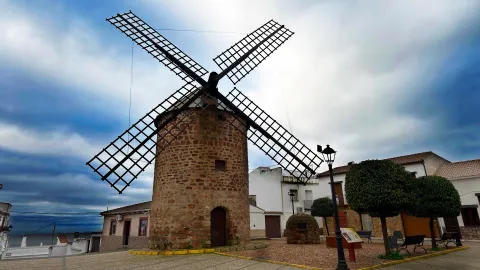
  • Wind Mill. Old wind mill of the 17th century, located in the upper part of the municipality.

Naturaleza

The Centenillo. It is a pedany that is located north of the municipal term and is located 18 km away. of the town of Baños de la Encina. A very old population, a result of the exploitation of their mines.

The year 1865 is the best time in this town, with the arrival of English entrepreneurs and the creation of a mining group that grouped 41 mines. A splendor that will be extinguished in 1963, year in which all the mines will be closed, passing the neighbors to live from the cynegetic activity.

To visit this landscape enclave to see the remains of the mining activity is to immerse us in the mining environment of that time: town of the miners, houses of the English leaders, scavengers, vagonets, laundry... Don't miss it!

Fiestas y Eventos

In addition to the celebrations of Christmas, Carnival or Holy Week, the following festivities are held in Baños de la Encina:

  • La Candelariawhich is celebrated on February 2 and the neighbors gather around great bonfires made with "ramon," remains of the pruning of the olive trees, as they eat, drink, sing and dance.
  • Romeria of Jesus of the Way. It is celebrated on the first Sunday of May, as before the great day of the Romeria de la Virgen de la Encina. This hermitage is on the way to the hermitage of the Virgin of Encina.
  • May Patronal Festivals. They take place during the second weekend of May. The main event is the Romeria de La Virgen de la Encina, in which on the 2nd Sunday of May, the image is moved to the sanctuary and all the bathrobes are accompanied by gilded carts, gilded horses or on foot. All with music, fair houses and good wine.
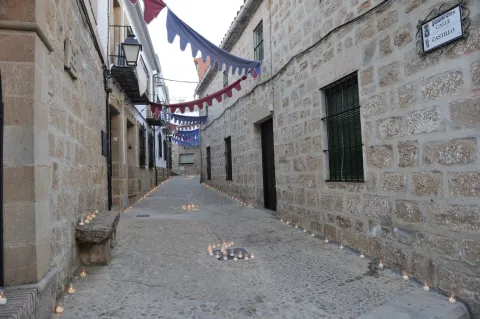
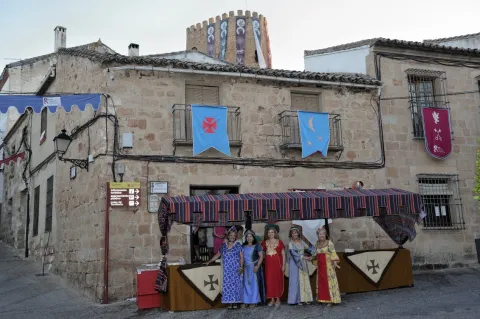
  • Medieval parties. They have been held for a few years in the square and the castle. Artisans stand, dramatic representations of the castle's take between Moors and Christians, stories of the time and dances.
  • Emigrant party. A party that takes place around the 15th of August, in honor of the bathrobes that are outside the village, with various cultural and sports events, in addition to the procession of the Virgin of Encina, which carry the migrants who cannot come to the rosemary. In the end, a migas contest, in which more than a hundred rocks participate, extends along the explanade.
  • Feast of All Saints (1 November). It is certainly one of the most rooted parties in Baños. This day men, and also women, form groups or "parañas," leaving the town leaving to cordijillo or huts of the saw, where they spend several days with their nights, dedicated to hunting birds with "liria," sharing bread, wine and jokes.

Gastronomía

The extra olive oil is harvested in the town and is an ingredient that enriches and gives a special taste to the gastronomy. Hunting meat, from both minor and major game animals, will also be the protagonist of many dishes.
Among the most typical, we highlight:

  • Knives, it is a "bread song" (what is left of a bread after taking off the miga) with oil and tomato that is accompanied by the traditional olives, beans, radishes and cod.
  • Carne de monte guisada (boar or deer). Due to the proximity of Sierra Morena there is an abundance of hunting, both smaller and larger.
  • Sweet peas, also called healthy gachas.
  • Migas serranas or healthy migas, are accompanied by melon, radishes or chocolate.
  • SobaA big, crispy oil cake.
  • Cigarettes, which can be acquired in any of the bakeries of the village. They are used in a special way at Easter.
  • Other typical products are: Coiled olives in various ways, honey, royal jelly, capers and capers in vinegar.

Historia

The settlements in these areas have been documented since early prehistoric times. The geological characteristics of the area, where there are cracks, cannons, caves or natural shelters, served to leave us evidence of its rock art. Thus:

  • The settlement of El Tambor dates back to the Copper Age.
  • And to the Bronze Age would correspond the three settlements that are located on the banks of the Rumblar River, with habitat on terraces and with powerful fortification systems: The Veronica, Peñalosa and Cerro de la Obra.

In the second millennium BC the mining of deposits rich in copper and bronze began. This would attract the Mediterranean civilizations of Greeks and Phoenicians.

During Roman times, In particular during the Empire, the exploitation of the silver mines and traces of this mining past we found them in The Centenillo, a paedania of Baños de la Encina. There are still traces of this exploitation in what is called the Roman trench of the Polygon.

In the period of Al-Andalus The fortress was built, which ended in 968 and was ordered to be built by Alhakem II.

The first Christian conquest will be carried out by Alfonso VII in 1147. It will then be passed from Christian to Arab hands to the final conquest in 1225 by Fernando III, the Holy One. This new territory will be incorporated into Baeza until 1246.

During the century XV It was the scene of clashes between the Constable Iranzo and the Maestres of the Orders of Calatrava and Santiago, a faithful reflection of the confrontation between the nobility and the Modern State.

At the end of the 17th and early 18th century the villa will take a new impulse with the intensification of agriculture and livestock.

But it's a end of XVIII when a number of events are emerging that will undermine the wealth of the villa:

  • On the one hand, it lost territory, in 1767, by the creation of Guarroman, Carboneros, La Carolina and Santa Elena, within the New Population Plan for Sierra Morena.
  • The ecclesiastical deamortization of Mendizábal, of 1835, as well as the Madoz's civilian,of 1855, they end up with the public mountains that brought wealth to Baños.
Otra información

Other places of interest belonging to the artistic heritage:

  • Court / House of Consumer. The current facilities of the Court are part of an old building for the collection of arbitrios (taxes) for the sale of perishable products in the town. Its construction dates back to the 17th and 18th centuries.
  • Hermitage of Jesus of the Way. This small hermitage is located 1 km away. of the hermitage of the Virgin of Encina, and a rosemary is performed on the first Sunday of May.
  • Ancient hermitage of Santa María del Cueto, of which part of a small tree that existed under it is preserved. These remains were dug up on the occasion of the remodeling works in the surroundings of the castle of Burgalimar.
  • Roman or Royal Road of the Port of the King. It is a stretch of a paved road of Roman origin that led from Toledo to the Guadalquivir valley.
  • Well of the Vega, It is a set made up of a well with a birch for cattle built with a cyclopean armchairs.
  • Plaza Mayor. This space located between the two hills that form the villa, equipped with water through the venero that would be the pillar of San Mateo, was a knot of encounter of the different pecuaries. It was a nerve center in the city.
  • Lordhouses, there are many houses blasphemed with shields that leave us witness of rich families in the town, that tell us of the glorious past of the town and that have been preserved over the years.
Loading map
Preparing points of interest and routes...
Imagen principal
imagen
Image
baños de la encina
Imagen principal
Activado

Baeza

Submitted by brandcode_deweloper on
Id
725103
Perfil de redes sociales
Facebook
https://www.facebook.com/aytobaeza/
Twitter
https://twitter.com/AytoBaeza
Instagram
https://www.instagram.com/aytobaeza/
Descripción
Breve descripción

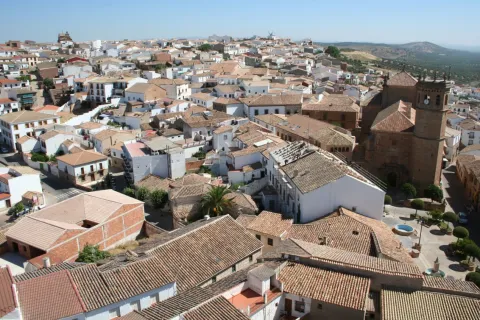
Baeza is located in the same geographical centre of the province of Jaén, located in the region of the Loma of which its western capital is considered.

Located near the Guadalquivir River, in a landscape of fertile land of orchards, olive groves and cereal. The absence of non-agricultural land reduces the areas of natural interest to the Guadalquivir River and the wetlands of the Lagoon Grande, of great ecological wealth and the largest in the province.

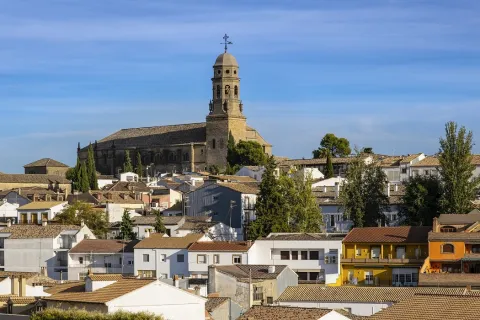
Baeza is a city where the Renaissance is shown in all its splendor, in both civil and religious monuments: palaces and churches that alternate with white houses, portades, porticos, towers, squares and fountains.

Its period of splendor dates back to the 16th and 17th centuries, although the city has been outstanding since remote times.

Telecomunicaciones
Teléfono
953 740 150
Sitio web
www.baeza.net
Correo electrónico
sac@baeza.net
Ubicación
Nombre
Baeza
Latitud
37.995930
Longitud
-3.474130
Municipio
Ubicación en el mapa
POINT (-3.47413 37.99593)
Imágenes
imagen
Image
6b113f25-c234-0491-af2f-c149a865afa8?t=1603923180029
Imagen principal
Desactivado
imagen
Image
a65f89b4-654e-e046-fdbd-d44fa6641988?t=1603922557103
Imagen principal
Desactivado
imagen
Image
6310a5e2-e849-e7b1-582a-468d48f758f0?t=1586171131274
Imagen principal
Desactivado
imagen
Image
1f236e61-7713-a025-2f0d-35391af76a7d?t=1603922557227
Imagen principal
Desactivado
imagen
Image
8a202e8f-385a-5f9e-3afe-569acec987a4?t=1616522299103
Imagen principal
Desactivado
imagen
Image
795a0c33-4ee3-408e-1c13-b816123adc64?t=1586171132490
Imagen principal
Desactivado
imagen
Image
b6010740-bf62-6b8e-ab23-6d9f76897f5b?t=1586171132143
Imagen principal
Desactivado
imagen
Image
750eeda9-773d-709d-2383-372d10701650?t=1586171130098
Imagen principal
Desactivado
imagen
Image
a78c862d-3c74-cde9-6ff9-b69630560ce4?t=1586171131756
Imagen principal
Desactivado
imagen
Image
beac10cd-9668-0c22-7db3-9966e5eda5b3?t=1586171132006
Imagen principal
Desactivado
imagen
Image
479bc6c3-babf-eaef-7fb3-b4ad8b635e5b?t=1616522299289
Imagen principal
Desactivado
imagen
Image
f361a4e0-b515-6e7c-a7dc-ff14c67688ec?t=1616522299347
Imagen principal
Desactivado
imagen
Image
81e8d636-ef0d-91e5-2750-3f56d6d04808?t=1616522299408
Imagen principal
Desactivado
imagen
Image
b1ddae0a-a5ee-4323-53d3-54bc68526d9a?t=1616522299473
Imagen principal
Desactivado
imagen
Image
0dee5670-1fe0-cbf4-5867-9147345e2afe?t=1616521131504
Imagen principal
Desactivado
imagen
Image
81d1e198-9d29-279e-149f-081024b27891?t=1586171130396
Imagen principal
Desactivado
imagen
Image
39a7fbfd-9aa2-1cac-c7d3-238c006f5a28?t=1616522299547
Imagen principal
Desactivado
imagen
Image
e016a9da-4297-fc04-4d3c-dfa579da9552?t=1586171130697
Imagen principal
Desactivado
imagen
Image
2b452c6d-15df-a819-aa50-e54921bbd0de?t=1616522299619
Imagen principal
Desactivado
imagen
Image
805356f8-60e7-d8f0-2e25-1edd5ebffa4d?t=1602694728132
Imagen principal
Desactivado
imagen
Image
7172efae-cdfc-d5aa-a347-037b6d6b16aa?t=1616522299688
Imagen principal
Desactivado
imagen
Image
36d285cc-5d64-d9a0-6e84-7ad58f539a76?t=1616522299749
Imagen principal
Desactivado
imagen
Image
bc9f53d4-3a83-f0a9-e1da-c486d747724b?t=1616522299815
Imagen principal
Desactivado
imagen
Image
0da7acd2-1162-bbf8-8c3d-d3a3d8140eaa?t=1603105398568
Imagen principal
Desactivado
imagen
Image
f1c392af-765a-3f53-d9a0-c0b6b9acfb77?t=1603105767022
Imagen principal
Desactivado
imagen
Image
2c724b20-61d7-99b1-e423-f4292a646491?t=1603106229722
Imagen principal
Desactivado
imagen
Image
eaa9f592-f374-8747-0f22-1cadb4e98585?t=1603106434496
Imagen principal
Desactivado
imagen
Image
02cdf257-dfc8-6b82-5816-a0ba6ba51dc1?t=1603106654931
Imagen principal
Desactivado
imagen
Image
8791fed9-36c1-40e4-b1a6-95e267986d8d?t=1603106857711
Imagen principal
Desactivado
imagen
Image
62bf1f22-afbd-c0da-1f93-ce52788b8636?t=1603107417445
Imagen principal
Desactivado
imagen
Image
79f98f41-2429-b937-f94c-827a88cb386c?t=1603107482920
Imagen principal
Desactivado
imagen
Image
086c140f-fab0-c0f1-595b-9eeda08b0616?t=1616522299958
Imagen principal
Desactivado
imagen
Image
59d90e88-c35f-3adb-7dbd-d51422bb9b63?t=1644243699085
Imagen principal
Desactivado
Información adicional
Curiosidades

Oficina de Turismo
Plaza del Pópulo, s/n, 23440
953 779 982
otbaeza@andalucia.org

Imágenes cabecera
imagen
Image
catedral-de-baeza176-2-jpg
Imagen principal
Desactivado
Datos de interés

Tourist area: Ubeda / Baeza
Distance to the capital (km): 48
Altitude over sea level (m): 769
Extension (Km2): 194
Number of inhabitants: 16012
Gentilicon: Baezanos
Postal code: 23440

Videos
Video file
Cultura

To understand today's Baeza, we have to go back to the first inhabitants who settled in the place known as the Alcázar hill, in the Bronze Age, evolving to the Iberian city Viatia or Vivatia, passing to the Roman era, when Biatia was one of the most important cities.

It would be the Muslims who made up the city's murary limits, some of which were remade in the 16th century. After the Christian conquest the epoch of splendor of Baeza begins. The new Christian Baeza begins to grow out of the world, where religious buildings are the most representative.

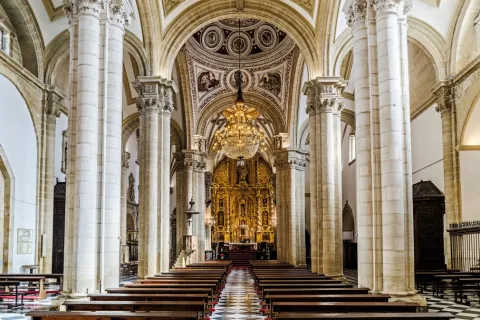
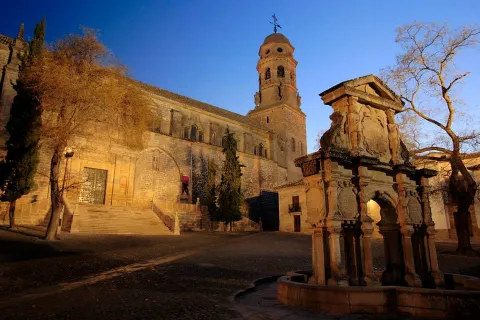
  • The Cathedral. It is the most representative building in the square. In this enclave there could have been a Roman temple, over which Muslims raise a mosque and, in 1227, under the Marian advocation of the "Nativity", the cathedralicia headquarters is erected. In the 16th century, a reform is carried out, which will be the one that prints the Vandelvirian Renaissance seal to the building. The cover was drawn in 1587 by Juan Bautista Villalpando with "relief of the Nativity of the Virgin." The base of the tower is believed to be the mosque's miner, adding in time of Vandelvira the body of the bells and the deck.
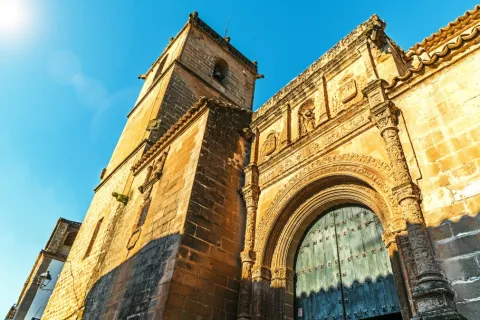
  • Church of Santa Cruz. This work dates from 13th century, of late Romanesque style and preserved after the Christian conquest. The exterior is austere, highlighting its two covers with half-point arquivolts. The interior consists of three ships.
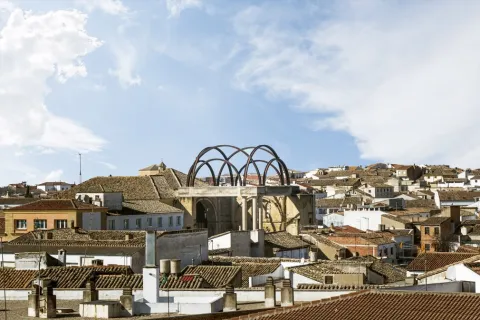
  • Ruins of the convent of San Francisco(extracamides). This work could have been one of the most important of the Andalusian Renaissance, but a number of misfortunes have prevented it, among these, the Lisbon earthquake of 1775 that brought down the vault of the major chapel. In this funeral and conventual complex, Vandelvira developed all its genius. The Latin cross church, which is accessed by a half-point arch that frames the entire cover, still remains with the relief of San Francisco and a tondo with the Virgin, which now give way to a large auditorium.
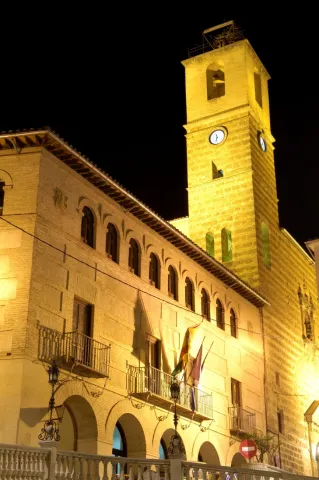
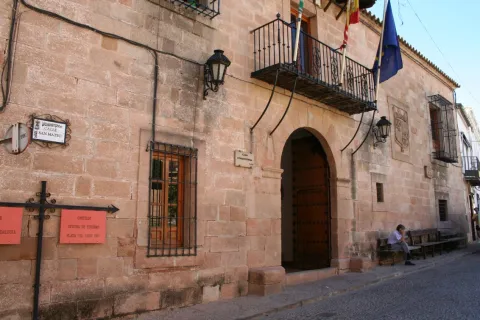
  • Old House of Correction and Prison, current City Hall(extracamides). It was built in 1520 as a prison at the request of Charles I. Since 1867 it has been home to the City Council. It is composed of the prison, with a more sober cover on which Justice and Charity are represented, and the house of the corridor with rich silver decoration. On the upper floor we find tripartite balconies with the shields of Philip II, the corridor and the city. It is topped with cornice decorated with membranes highlighted with figures. The Salon de Plenos has a Renaissance potter (horizontal and intertwined wooden ceiling) from the convent of San Antonio.
  • Church of St. Andrew. Building from the early 16th century, which held the title of a schoolgirl from 1764 to 1852. The silver-style cover, next to the square tower, stands out. The interior is a large main ship made up of arches pointed with side chapels.
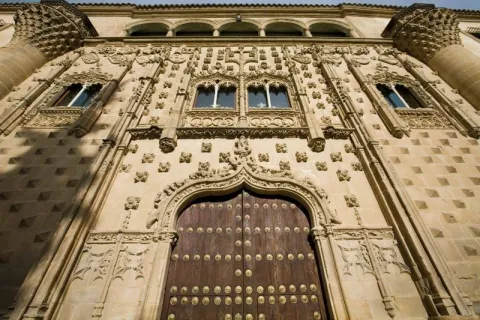
  • Jabalfifth Palace.In front of the church of Santa Cruz, the Jabalfifth palace, one of the highest exponents of the isabelin Gothic style, was built in the late 15th century. The isabelin Gothic We find it on the outside, with decoration based on diamond tips, pineapple nails, fronts, florons, ties, pinacles, mocaronas and heraldic shields. The facade it is overcome with five arches of half-point Renaissance period, as well as the courtyard of the late 16th century. Today it is the seat of the Antonio Machado International University.
  • The St. Mary's Square, Baezan monumental heart, concentrates the largest number of monuments: the cathedral, the conistorial houses, the fountain of Saint Mary; the seminary of St. Philip Neri, with its picturesque facade plagued with cheers, current headquarters of the International University of Andalusia or the house-palace of Rubin de Ceballos, behind the cathedral.
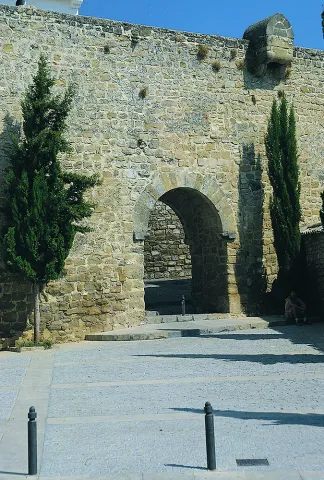
  • The Populo Square, framed by the door of Jaén and the arch of Villalar, is one of the most emblematic squares of the city, where we find the plateresque cover building of the old Escribanías, today the headquarters of the tourist office of the Junta de Andalucía, the old Carnicerías and the source of the Lions in the center.
     
Naturaleza

Baeza is located in a dominant place in the region of the Loma and on the right bank of the Guadalquivir River. The city is located on three hills and the small valley that remain in the middle, in a rather high position over the Guadalquivir valley, a situation conducive to being a very important square in ancient times. It is surrounded by the Guadalquivir rivers to the south and Guadalimar to the north.

A site that as we walk through the walls allows us to contemplate the immense sea of olive trees that is presented to us all around us. From the sights of this walk, you can see the beautiful picture of the Guadalquivir valley, the extensive olive trees, the Cazorla saw, the Segura and Sierra Mágina saw, with the villages of Jimena, Mancha Real, Bedmar and Garciez in the distance.

The predominant vegetation is the olive tree, but next to the river and the lagoon Grande we find what we call the gallery forest: white, mimberas, tarais, black, and other species of bushes. A vegetation that with the change of the seasons draw a color brush in the landscape, especially in the autumn season.

The fauna of the town is the one of the Jienese countryside: hares, rabbits, deer, foxes, parrots, quail... They are also easy to see the storks and a wide variety of prey birds. Without forgetting the fauna that lives next to the river line and in the vicinity of the lagoon Grande.

The absence of non-agricultural land reduces areas of natural interest to the river margins and to the wetlands of the Great Lagoon with a special ecological interest.

  • Laguna Grande: This permanent lagoon that suffers significant level fluctuations, is fed from the Torres River through irrigation channels. Precisely for maintaining water during summers, this wetland is particularly important for waterbirds, it is an ideal place for food and shelter. Around the water, in addition to the vegetation of carrizos, spadañas and juncos stands out the presence of tarajes, alamos, fresnos and zarzas, where there is plenty of the visitor and I shelter the fauna of the place, among which we can mention: common fence, real anade or common porron, highlighting the fly bird, where we can see the nests of this small bird, hanging from the trees of this natural place. The locals of both the Bishop's Bridge and Baeza are willing to visit this beautiful natural site.


Fiestas y Eventos

Among the parties with the most roots among the neighbors of Baeza, we highlight:

  • La Candelariaon February 2. On the eve of the feast of the Holy One celebrates the Candelaria, typical of the blessing of the donuts of Saint Blas, protector of the throat, in the parish of El Salvador.
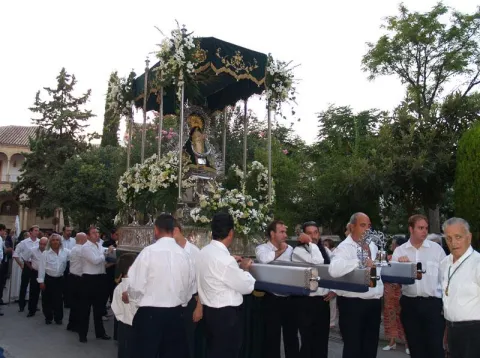
  • Holy Week. Between Andalusian and Spanish, the Holy Week of Baeza, declared of National Tourist Interest, stands out for the artistic richness of its steps. About 20 cofradies process through its streets and squares, in this jewel of the Andalusian Renaissance. Its creation dates back to the 16th century, when the co-fradia of the Vera Cruz, one of the oldest in Andalusia and Spain, emerged. One of the most beautiful moments of Baezan Holy Week, occurs on the morning of Good Friday, with the departure of the fellowship of Our Father Jesus Nazarene and the Cross of St. Helena, better known by the name "El Paso"; when the Nazarene Christ gives the blessing to his mother, through an articulated mechanism, when the images are crossed.
  • May CrossesMay 1. In different plazoletas and neighborhoods of the old town, altars are covered with the only theme of the exaltation of the Holy Cross.
  • Annual city fair. It is celebrated on August 15, the feast of its patron saint, Santa María del Alcázar.
  • Romeria de la Yedra. It is celebrated around the feast of the Nativity of the Virgin (8 September).
  • The Yedra, a pastry of Baeza, located 7 km. to the north of this, and where there is the Marian sanctuary of Our Lady of the Rosel and the Holy Christ of the Yedra. The Romeria itself is celebrated on Saturday day 7, the day when the Virgin travels through the city of Baeza and goes back to her shrine of La Yedra, accompanied by horses, carriages, reels and carrots, all covered with flowers.
  • Corpus Christi. With reminiscent of the 15th and 16th centuries. Procedural custody is certainly the goldsmiths of the city.

The annual calendar of celebrations is completed with the festivities of San Isidro Labrador, the pattern of farmers, Saint Christopher, pattern of the driving industry,Our Lady of Carmen and Council parties of Baeza in honor of San Andrés.


Gastronomía

The gastronomic culture is based on its history and geography. In many of its dishes you can find cultivated influences of Roman, Jewish, Islamic, Moorish and Mudejar cuisine.

The traditional cuisine is merged with the seasons and with the festivities, as well as the basic raw materials of the earth and all irrigated with the liquid gold of the olive fields of Baeza.

Among the indigenous dishes are:

  • The orza loin. It is a typical dish of the slaughter, which is used as a preservative, frying the fresh back on a slow heat in its own butter to which different spices, nails, cinnamon, pepper... are added... and then introduced into the orza. It is also done with the chorizos of the slaughter and thus are preserved all winter.
  • Cod to the baezan. In a saffrito of onion, tomato, peas and roasted peppers made from strips, you will add the already fried cod.
  • Pipirrana. In which peppers, tomatoes, garlic, onions and olive oil are used. A refreshing dish that can't be missed in summer.
  • Andrajos. Red pepper, green pepper, onion, garlic, laurel, olive oil, pepper, white wine, vegetables and hare or rabbit. All flavoured with peppermint. For the dough, flour and water.
  • "Sick-cooked"or" dizzy chickpeas, "a dish that tries to take advantage of the remains of another meal. In a pan with oil we chopped onion and added the chickpeas, which when mixed with the spoon are broken. It is added fried tomato and eggs that are mixed and cut.
  • "Eyes." or "Masoil". It consists of a bread of extra virgin oil, pepper and anise. The name comes from being the eighth part of the mass of a bread.

Warehouse:

  • Virolos, typical pebbles.
  • Butter cakes with nuts.
  • Torrijas, a way to take advantage of the bread left over.
  • Fried milk: It's about bounced and fried milk.
  • Papajotes, It's a frying pan. A mass of fried flour and bounced with sugar and cinnamon.
  • Oil ice cream, with milk, sugar, egg yolks and oil ingredients.


Historia

Atalaya over the Guadalquivir valley, its alcázar assured the Spanish rear in the constant threat of the Islamic kingdoms located to the west and south of Guadalquivir.

Baeza is now known for its olive production, its abundant monumental legacy (declared World Heritage by Unesco in 2003) and for hosting the International University of Andalusia.

Its main economic activity is agriculture, linked to the olive and the olive industry, although monumental tourism has developed the activity of the hotel.

Its churches, palaces and towers are a monumental set in which the different architectural styles take place, although the Renaissance and the Gothic isabelin are of particular importance. From its rich architectural heritage, it stands out the cathedral (16th century), the church of Santa Cruz (13th century), the convent of San Francisco, the City Hall and the church of San Andrés, all of the 16th century.

In short, the historic centre of Baeza is one of the most important monumental ensembles of the world renaissance.


Culture

To understand today's Baeza, we have to go back to the first inhabitants who settled in the place known as the Alcázar hill, in the Bronze Age, evolving to the Iberian city Viatia or Vivatia, passing to the Roman era, when Biatia was one of the most important cities.

It would be the Muslims who made up the city's murary limits, some of which were remade in the 16th century. After the Christian conquest the epoch of splendor of Baeza begins. The new Christian Baeza begins to grow out of the world, where religious buildings are the most representative.

  • The Cathedral. It is the most representative building in the square. In this enclave there could have been a Roman temple, over which Muslims raise a mosque and, in 1227, under the Marian advocation of the "Nativity", the cathedralicia headquarters is erected. In the 16th century, a reform is carried out, which will be the one that prints the Vandelvirian Renaissance seal to the building. The cover was drawn in 1587 by Juan Bautista Villalpando with "relief of the Nativity of the Virgin." The base of the tower is believed to be the mosque's miner, adding in time of Vandelvira the body of the bells and the deck.
  • Church of Santa Cruz. This work dates from 13th century, of late Romanesque style and preserved after the Christian conquest. The exterior is austere, highlighting its two covers with half-point arquivolts. The interior consists of three ships.
  • Ruins of the convent of San Francisco(extracamides). This work could have been one of the most important of the Andalusian Renaissance, but a number of misfortunes have prevented it, among these, the Lisbon earthquake of 1775 that brought down the vault of the major chapel. In this funeral and conventual complex, Vandelvira developed all its genius. The Latin cross church, which is accessed by a half-point arch that frames the entire cover, still remains with the relief of San Francisco and a tondo with the Virgin, which now give way to a large auditorium.
  • Old House of Correction and Prison, current City Hall(extracamides). It was built in 1520 as a prison at the request of Charles I. Since 1867 it has been home to the City Council. It is composed of the prison, with a more sober cover on which Justice and Charity are represented, and the house of the corridor with rich silver decoration. On the upper floor we find tripartite balconies with the shields of Philip II, the corridor and the city. It is topped with cornice decorated with membranes highlighted with figures. The Salon de Plenos has a Renaissance potter (horizontal and intertwined wooden ceiling) from the convent of San Antonio.
  • Church of St. Andrew. Building from the early 16th century, which held the title of a schoolgirl from 1764 to 1852. The silver-style cover, next to the square tower, stands out. The interior is a large main ship made up of arches pointed with side chapels.
  • Jabalfifth Palace.In front of the church of Santa Cruz, the Jabalfifth palace, one of the highest exponents of the isabelin Gothic style, was built in the late 15th century. The isabelin Gothic We find it on the outside, with decoration based on diamond tips, pineapple nails, fronts, florons, ties, pinacles, mocaronas and heraldic shields. The facade it is overcome with five arches of half-point Renaissance period, as well as the courtyard of the late 16th century. Today it is the seat of the Antonio Machado International University.
  • The St. Mary's Square, Baezan monumental heart, concentrates the largest number of monuments: the cathedral, the conistorial houses, the fountain of Saint Mary; the seminary of St. Philip Neri, with its picturesque facade plagued with cheers, current headquarters of the International University of Andalusia or the house-palace of Rubin de Ceballos, behind the cathedral.
  • The Populo Square, framed by the door of Jaén and the arch of Villalar, is one of the most emblematic squares of the city, where we find the plateresque cover building of the old Escribanías, today the headquarters of the tourist office of the Junta de Andalucía, the old Carnicerías and the source of the Lions in the center.
     

Nature

Baeza is located in a dominant place in the region of the Loma and on the right bank of the Guadalquivir River. The city is located on three hills and the small valley that remain in the middle, in a rather high position over the Guadalquivir valley, a situation conducive to being a very important square in ancient times. It is surrounded by the Guadalquivir rivers to the south and Guadalimar to the north.

A site that as we walk through the walls allows us to contemplate the immense sea of olive trees that is presented to us all around us. From the sights of this walk, you can see the beautiful picture of the Guadalquivir valley, the extensive olive trees, the Cazorla saw, the Segura and Sierra Mágina saw, with the villages of Jimena, Mancha Real, Bedmar and Garciez in the distance.

The predominant vegetation is the olive tree, but next to the river and the lagoon Grande we find what we call the gallery forest: white, mimberas, tarais, black, and other species of bushes. A vegetation that with the change of the seasons draw a color brush in the landscape, especially in the autumn season.

The fauna of the town is the one of the Jienese countryside: hares, rabbits, deer, foxes, parrots, quail... They are also easy to see the storks and a wide variety of prey birds. Without forgetting the fauna that lives next to the river line and in the vicinity of the lagoon Grande.

The absence of non-agricultural land reduces areas of natural interest to the river margins and to the wetlands of the Great Lagoon with a special ecological interest.

  • Laguna Grande: This permanent lagoon that suffers significant level fluctuations, is fed from the Torres River through irrigation channels. Precisely for maintaining water during summers, this wetland is particularly important for waterbirds, it is an ideal place for food and shelter. Around the water, in addition to the vegetation of carrizos, spadañas and juncos stands out the presence of tarajes, alamos, fresnos and zarzas, where there is plenty of the visitor and I shelter the fauna of the place, among which we can mention: common fence, real anade or common porron, highlighting the fly bird, where we can see the nests of this small bird, hanging from the trees of this natural place. The locals of both the Bishop's Bridge and Baeza are willing to visit this beautiful natural site.


Celebrations and Events

Among the parties with the most roots among the neighbors of Baeza, we highlight:

  • La Candelariaon February 2. On the eve of the feast of the Holy One celebrates the Candelaria, typical of the blessing of the donuts of Saint Blas, protector of the throat, in the parish of El Salvador.
  • Holy Week. Between Andalusian and Spanish, the Holy Week of Baeza, declared of National Tourist Interest, stands out for the artistic richness of its steps. About 20 cofradies process through its streets and squares, in this jewel of the Andalusian Renaissance. Its creation dates back to the 16th century, when the co-fradia of the Vera Cruz, one of the oldest in Andalusia and Spain, emerged. One of the most beautiful moments of Baezan Holy Week, occurs on the morning of Good Friday, with the departure of the fellowship of Our Father Jesus Nazarene and the Cross of St. Helena, better known by the name "El Paso"; when the Nazarene Christ gives the blessing to his mother, through an articulated mechanism, when the images are crossed.
  • May CrossesMay 1. In different plazoletas and neighborhoods of the old town, altars are covered with the only theme of the exaltation of the Holy Cross.
  • Annual city fair. It is celebrated on August 15, the feast of its patron saint, Santa María del Alcázar.
  • Romeria de la Yedra. It is celebrated around the feast of the Nativity of the Virgin (8 September).
  • The Yedra, a pastry of Baeza, located 7 km. to the north of this, and where there is the Marian sanctuary of Our Lady of the Rosel and the Holy Christ of the Yedra. The Romeria itself is celebrated on Saturday day 7, the day when the Virgin travels through the city of Baeza and goes back to her shrine of La Yedra, accompanied by horses, carriages, reels and carrots, all covered with flowers.
  • Corpus Christi. With reminiscent of the 15th and 16th centuries. Procedural custody is certainly the goldsmiths of the city.

The annual calendar of celebrations is completed with the festivities of San Isidro Labrador, the pattern of farmers, Saint Christopher, pattern of the driving industry,Our Lady of Carmen and Council parties of Baeza in honor of San Andrés.


Gastronomy

The gastronomic culture is based on its history and geography. In many of its dishes you can find cultivated influences of Roman, Jewish, Islamic, Moorish and Mudejar cuisine.

The traditional cuisine is merged with the seasons and with the festivities, as well as the basic raw materials of the earth and all irrigated with the liquid gold of the olive fields of Baeza.

Among the indigenous dishes are:

  • The orza loin. It is a typical dish of the slaughter, which is used as a preservative, frying the fresh back on a slow heat in its own butter to which different spices, nails, cinnamon, pepper... are added... and then introduced into the orza. It is also done with the chorizos of the slaughter and thus are preserved all winter.
  • Cod to the baezan. In a saffrito of onion, tomato, peas and roasted peppers made from strips, you will add the already fried cod.
  • Pipirrana. In which peppers, tomatoes, garlic, onions and olive oil are used. A refreshing dish that can't be missed in summer.
  • Andrajos. Red pepper, green pepper, onion, garlic, laurel, olive oil, pepper, white wine, vegetables and hare or rabbit. All flavoured with peppermint. For the dough, flour and water.
  • "Sick-cooked"or" dizzy chickpeas, "a dish that tries to take advantage of the remains of another meal. In a pan with oil we chopped onion and added the chickpeas, which when mixed with the spoon are broken. It is added fried tomato and eggs that are mixed and cut.
  • "Eyes." or "Masoil". It consists of a bread of extra virgin oil, pepper and anise. The name comes from being the eighth part of the mass of a bread.

Warehouse:

  • Virolos, typical pebbles.
  • Butter cakes with nuts.
  • Torrijas, a way to take advantage of the bread left over.
  • Fried milk: It's about bounced and fried milk.
  • Papajotes, It's a frying pan. A mass of fried flour and bounced with sugar and cinnamon.
  • Oil ice cream, with milk, sugar, egg yolks and oil ingredients.


History

It's in the Copper age, 3rd millennium BC, when they appear the first villages. Most of them were walled and their economy was based on agriculture and livestock.

In the Iberian period, 7th century BC, the hill of the Alcázar is considered a consolidated town.

During the 2nd and 1st centuries BC, in full Roman Empire, appears in several sources as Vivatia or Biatia. It acquires great importance due to its location, as it is a mandatory step on the commercial route Catulo - Málaga.

The territory of Biatia would be occupied in the second decade of the eighth century by Muslim troops. This time the city is known as Bayyasa.

Christian kings will take the city and lose it again on several occasions. But it will be Fernando III "the Holy One" who finally conquered it in 1227, and considered it as a bridge head in the reconquest of Al-Andalus, for this reason it is given to the city of privileges and a court, the "Fuero de Cuenca."

The presence of the Catholic Church is restored, establishing in Baeza the episcopal seat in the 13th century. From this date on, the most important religious and conventual orders were present in the city.

It will be in the 16th century when Baeza reaches its maximum architectural splendor with the foundation of the University, among other public buildings of interest. The apogee will continue in the 17th century, is the century of the greatest conventional apogee.

The 18th century will be of decline. With the war of Baeza Independence, he suffers considerable human and economic losses. Excessive demands and contributions would also help. The deamortization of Mendizábal, which brought the disappearance of the convents, was very remarkable.

The mainly agricultural economy, increases production and increases the area dedicated to olive trees to the detriment of other arable crops.

In 1966Baeza was declared "Historical-Artistic Set", which was a take-off in tourism services, increased by the Declaration in 2003 by UNESCO, in Baeza as World Heritage.

University tradition is recovering with headquarters Antonio Machado of the International University of Andalusia.

 

Otra información

Other monuments that form part of their heritage are:

  • Old college.
  • Old Seminary of San Felipe Neri.
  • Casa Estudio de Manuel Garrido.
  • Museum of Baeza.
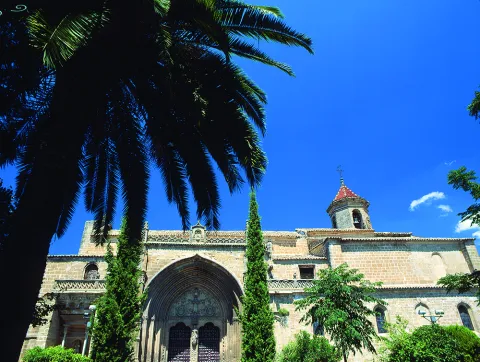
  • Casa-studio Diego Lozano, Father Sifon.
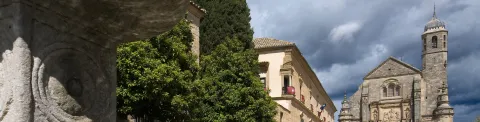
  • Antonio Moreno Museum.
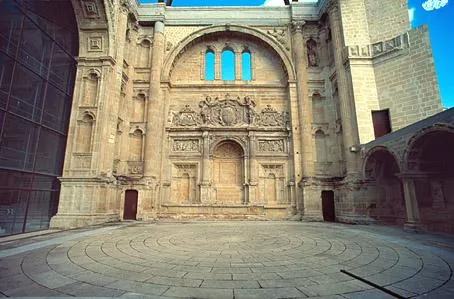
  • Museum of the Olivo Culture.
  • Old Carniceries.
  • Civil Audience and Public Writings 16th Century.
  • Gaspar Becerra Exhibition Room.
  • Church of El Salvador
  • Church of St. Paul
  • Forgiveness door and streets adjacent to the Cathedral.
     
Loading map
Preparing points of interest and routes...
Imagen principal
imagen
Image
c1150e7f-a3ee-92c6-f4dd-7d7b9b44728d?t=1603979507918
Imagen principal
Activado
Literatura

The city has had a great influence on distinguished authors such as Antonio Machado and Federico García Lorca, who had a momentous meeting here.

Not forgetting the important presence of San Juan de la Cruz in Baeza and the family ties linking Jorge Manrique to this town.

Úbeda Bus Travel Agency

Submitted by brandcode_deweloper on
10617149
Facebook
https://www.facebook.com/Autocares-UBEDA-BUS-1552898101633214/
Twitter
https://twitter.com/ubedabus?lang=es
Descripción larga

Autoaches Ubeda-Bus, S.L. is a company established in 1997, dedicated to the transport of passengers that provides urban, school and discretionary transport services, both national and international of road travellers.

Our staff has been working in the sector since 1985; we have conducted national and international circuits, convention and congress trips, excursions, business trips, school children, special services with vehicles accessible to people with reduced mobility and any other discretionary service. Our motto is quality in service and preferential and personalized treatment with the customer.

Teléfono
629 534 512
Sitio web
https://autocaresubedabus.es/
Correo electrónico
alfonso@ubedabus.com / viajesubedabus@gmail.com
Latitud
38.013047
Longitud
-3.377538
Dirección
C/ Huelva, 6
Municipio
Ubicación en el mapa
POINT (-3.377538 38.013047)

Ubeda Bus Travel has the Une-Iso 9001, 14001, 13816, 18001 and 39001 Road Safety certifications. We have also obtained the classification to be able to hire transport for public administrations. We have vehicles adapted for people with reduced mobility (with 4.3 and 2 pmr). We have a wide variety of vehicles, adapted for any need for transport. All vehicles with free wifi, safety belts, fridge, air conditioning, etc.

Our fleet consists of coaches and microbuses of 71, 69, 59, 55, 35, 30, 19, 16, 14, 13 and 7 places. Do not hesitate to contact us in order to advise and provide you with a budget without commitment.

imagen
Image
ubeda%20bus.jpg
Imagen principal
Activado
imagen
Image
ubeda%20bus%202.jpg
Imagen principal
Desactivado
Loading map
Preparing points of interest and routes...