




Description
Arroyo de la Rambla complex
Discovered in 1992. It currently reaches a total of 5.117 m of development with important prospects for exploring new galleries. This very important complex is located in the vicinity of the Pantano de la Bolera, in the Barrio known by Arroyo de la Rambla, the two mouths of access are opened in the municipal term Peal de Becerro (Jaén) and much of the cavity is developed under the term Cazorla (Jaén). Along with this large complex, several more cavities have been located that have not been able to communicate to date (PB-1, PB-2, PB-5, PB-7), which were certainly part of it at the time, and these cavities are currently being explored.
The main entrance, of small dimensions, provides access to a floor room that is damaged by the blocks that cover it, ceilings between two and four meters high and spacious, allowing to accommodate several dozen people. At the bottom, between blocks, the sinuous continuation is opened. Close steps and several descending highlights lead almost to the level of the ravine, and it is often found flooded. The water input is done through the PB-6 sink. A narrow corridor with clay-covered floor, followed by several climates, leads again to the level of the entrance room, out of reach of the waters. The transit through them is balized, to try to mitigate as much as possible the alteration of the floor, after the steps to be followed you have to climb to a top floor with the help of a small staircase of about 10 m.
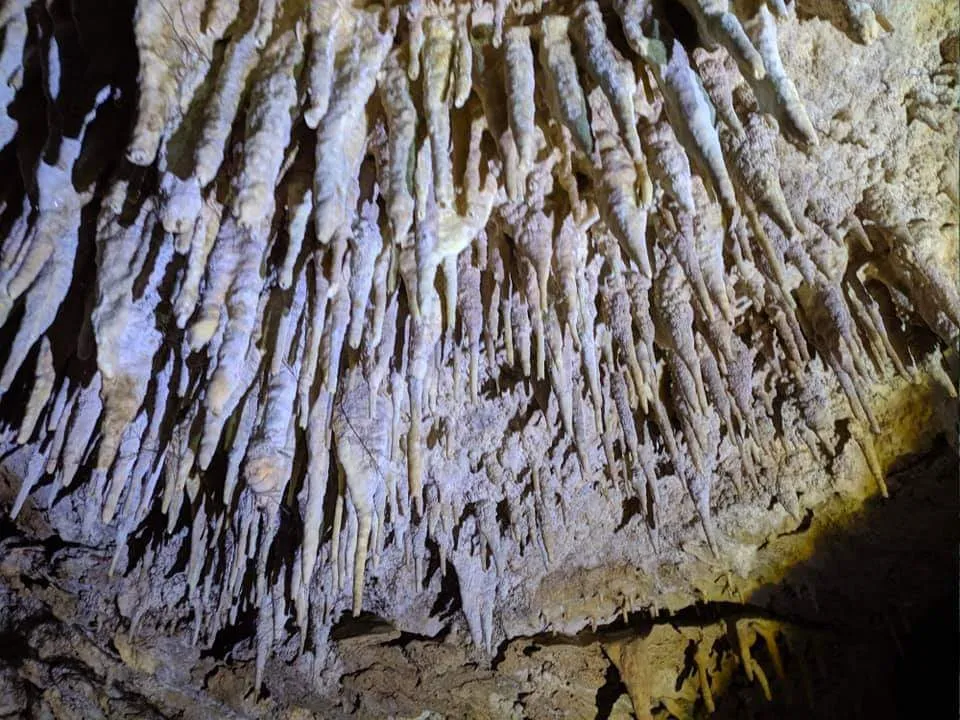
This apartment is characterized by a succession of steps between blocks that once stranded back down to the level of the gallery. From this point the continuation is more problematic, as the succession of ramps, steps between blocks, des climes, etc. make their description very monotonous. The second staircase opens a large room and an almost horizontal corridor of about 100 meters with the floor covered with gours and ceilings with large stalactic blankets, flags, etc. We meet about 700 meters from the mouth. A new drop to a siphon (usually dry) allows the passage, also between blocks, rips, and narrow steps of about 300 meters of very accidental gallery that leads to the final room or the siphon. Large room with different possibilities of continuation.
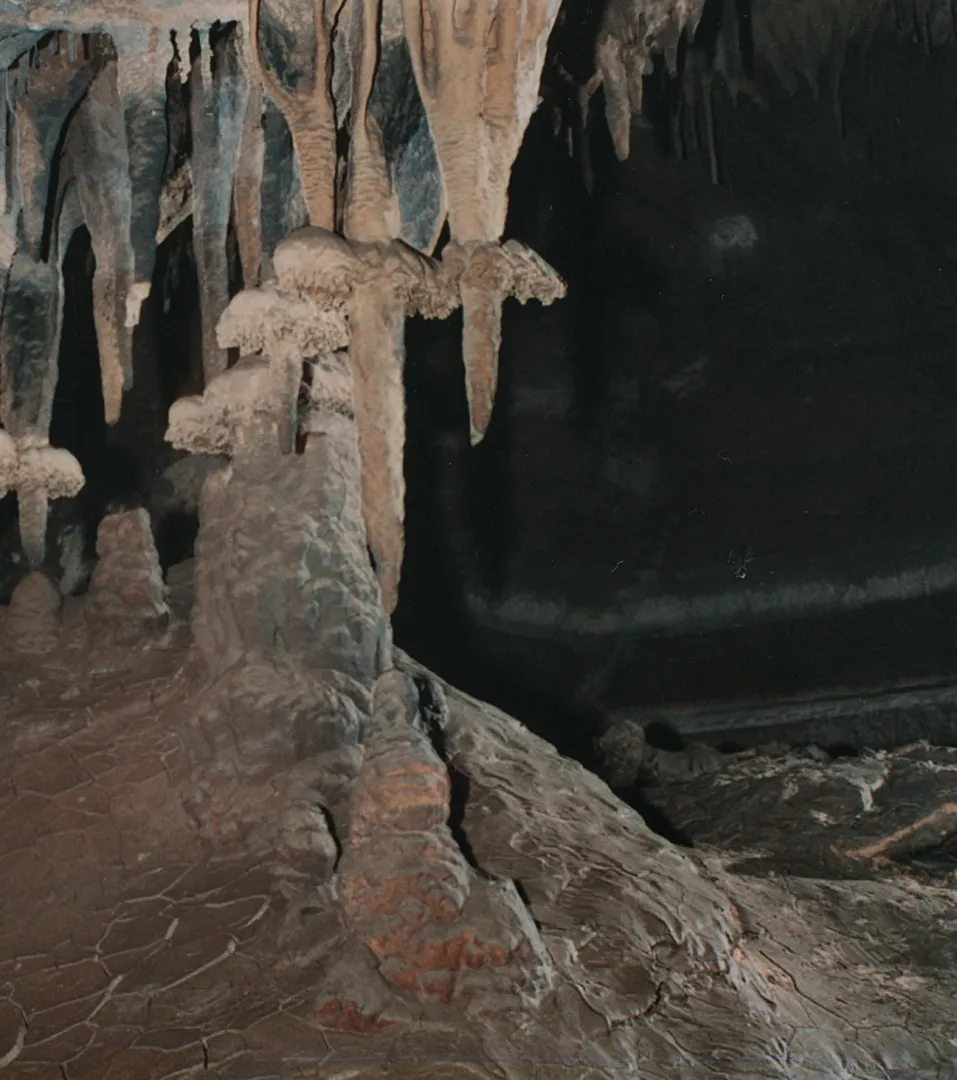
The 60-meter-long siphon with a penetrable gap to 6 meters under water leads to a descending gallery that connects with a large cavity, circulated by an active river that spills its waters in the Valentine's Source (PB-1 and PB-5). Currently in exploration of spelologists. This succession of rooms is beautifully decorated by spelotems in various ways, among which are predominantly ceilings covered with stalactite stylized.
About a hundred meters from the mouth, a new succession of weeds return us to the theoretical level of water, changing the morphology of the cavity strongly. After several stretches and decreases the dimensions of the gallery increase. In this area the two possible entries to the Network of the Talegas are located (flooded sectors, Red Gallery, Sala Alicia, etc.). Continuing through the main gallery you can reach the Paso Javi, a small laminator that cuts a rock barrier (this step is very common to find it flooded), if it is under the waters, the pass is carried out by a strong ramp to the right of the pass, followed by a vertical - easy to overdo - descent that goes down to the level of the main gallery, after the Paso Javi. The continuation is obvious, just follow the gallery, yes, with some other narrowing and passage between blocks, until you reach the gallery of the Levels, easy to recognize by the calcite sidewalks that go through all the walls, blocks and other speleotems.
From here a new rebound between blocks and slices lead to the header of some scarves. A few meters before reaching them and on the left wall, several narrow steps are opened, between blocks, which reach the base of these scarves. It is entering the Cebra Gallery, thus called by the successive levels of floating calcite that have been fixed on the clay walls; corresponding to different flood stadiums.
Source: Inventory of Georresources of Andalusia. Environmental Council. Junta de Andalusia.
Is part of

near here
We recommend


