

Antiguo Ayuntamiento Santiago de Calatrava
Monuments, Otros edificios, construcciones y espacios
Santiago de Calatrava

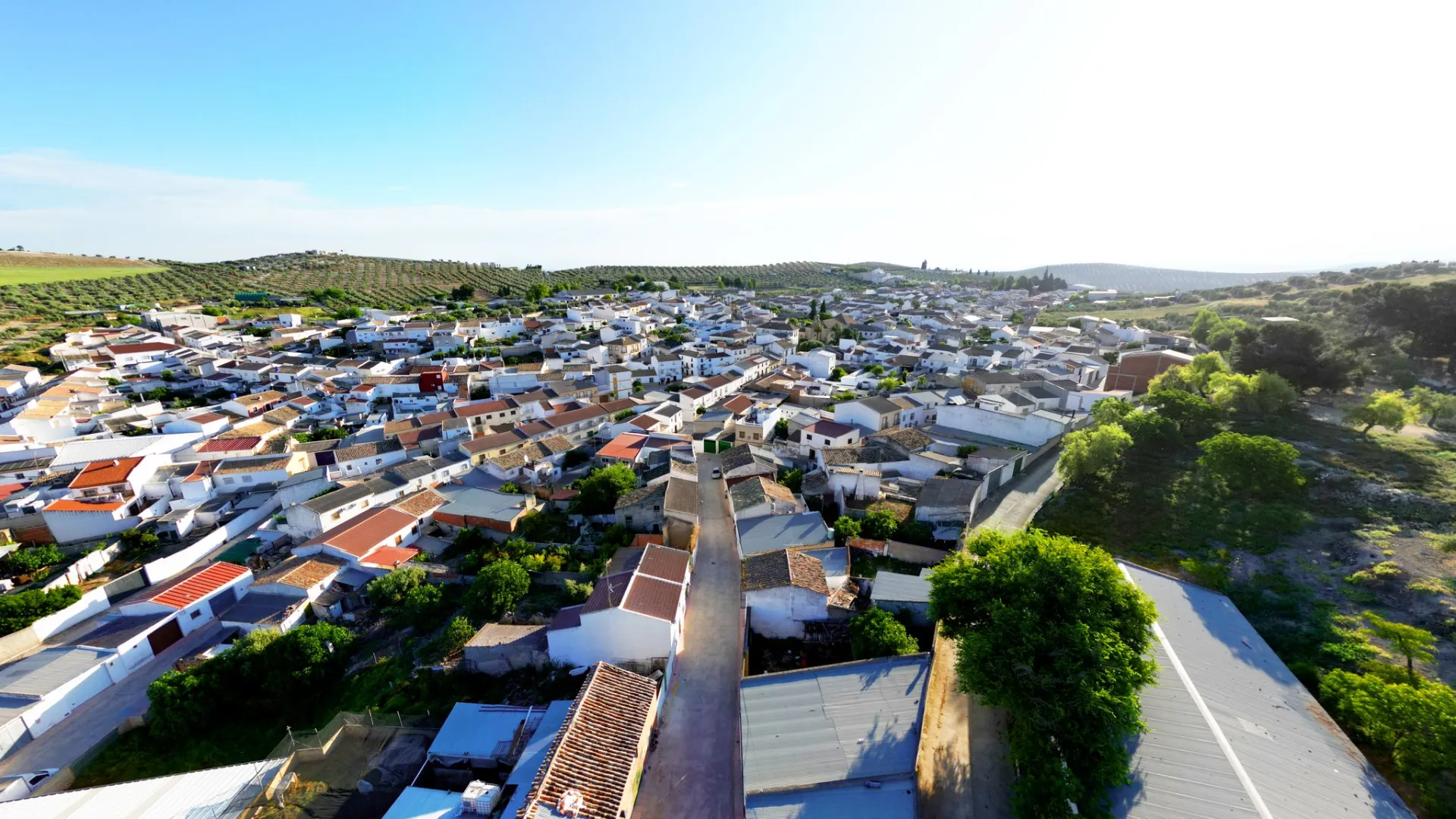




Santiago de Calatrava is located in the south-west of the Campiña region, on the border with the province of Córdoba. Its name comes from its past association with the Order of the Knights of Calatrava.
Its municipal area is entirely agricultural, with olive groves predominating over herbaceous crops, which are in clear decline.
The local economy is based almost exclusively on agriculture and the olive oil milling industry.
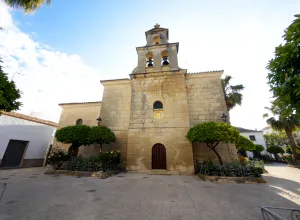
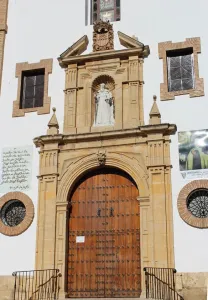
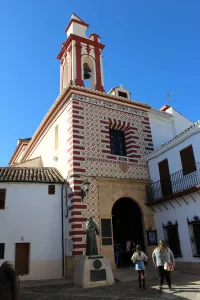
Among its monumental heritage, the Parish Church of the Virgen de la Estrella stands out, a Baroque church dating from the early 18th century. Also worth mentioning is its local Cámara Agraria, a 16th-century Renaissance building, and the church square, enclosed by an iron fence bearing the symbols of the Order of Calatrava. On one corner stands an interesting Baroque fountain.

The main monuments making up its heritage are:
Santiago de Calatrava is located 44 km west of the provincial capital, bordering the province of Córdoba.
With an average altitude of 386 m above sea level and covering an area of 47 km², it is a fundamentally agricultural municipality whose economy is based on olive growing.
Its landscape is characterised by a succession of low, rolling hills covered in olive groves. The vegetation found today is not the original one. The native holm oak woodland and scrubland have gradually been cleared and replaced by olive groves or cereal crops.
Almost all farming is rainfed.
Despite this being a landscape shaped by human activity rather than its original state, the olive groves sustain their own communities. As the olive grove is the predominant habitat in Santiago de Calatrava, it largely determines the local wildlife.
Despite being an artificial environment, the olive groves sustain their own communities, and as the predominant habitat in the area, they shape the local fauna.
The olive tree plays an important ecological role: numerous birds, mammals and reptiles find shelter in its old trunks, and its fruit is also a highly energy-rich food source. Few species are found continuously in pure olive groves, as they are mostly used as feeding or transit areas by certain species. Here you can spot species such as the European serin and the greenfinch; and in winter, the blackcap, the robin and the song thrush.
The best way to experience the flora and fauna of Santiago de Calatrava firsthand is to visit one of its natural sites:
El Paraje del Caño: a beautiful wooded spot located next to a natural spring that irrigates fields and orchards. This is also the site of the Hermitage of the Virgen de la Cabeza.
In addition to the Christmas, Carnival, Holy Week and Corpus Christi festivities, the people of Santiago de Calatrava look forward each year to the following celebrations:
The cuisine of Santiago de Calatrava shares dishes with the rest of the towns of La Campiña, whether from Jaén or neighbouring Córdoba. As a result, it is common to see Jaén-style gazpacho and Córdoba-style salmorejo coexisting in perfect gastronomic harmony. Nevertheless, Santiago de Calatrava's cuisine has dishes that assert its own distinct identity, including:
On All Saints' Day, boiled sweet potatoes are also typical, served with a syrup containing quince, plums, raisins and dried apricots.
In terms of pastries: "gallina en leche" ("chicken in milk", despite the name a milk-based cake), a homemade cake with milk, flour, sugar, eggs, cinnamon and bread; "fried biscuits", alongside "oil-based roscos", or fried sweets such as "pestiños", "flores" and buñuelos.
The area has seen intense occupation since the Bronze Age, with small settlements located in easily defensible spots: Cerro del Cortijo de Toledo, La Dehesilla, Cerro Lucero and Cortijo de Pedro Rubio Alto.
From the 6th century BC onward, during the Iberian period, small unfortified agricultural settlements were established, such as Manoteras, Cortijo de Pedro Rubio Bajo and Cortijo de Pilallos, which relied on two small fortified sites for their defence: Cerro de la Estrella and Cerro Boyero.
During the Roman period, thanks to its strategic position between the two major centres of Porcuna and Martos (Obulco and Tucci), a proliferation of small peasant farmhouses can be traced, including two at Cortijo de la Cruz Gorda, as well as those at Cerro Argamasón and Cortijo de Valdeutiel.
During the Islamic period, the settlement would have been a small hamlet (alquería) forming part of the administrative district of Tuss, or Martos.
Following its conquest by Ferdinand III, the same king granted it to the lordship of the Military Order of Calatrava in 1228.
Over the following centuries, until the conquest of Granada, life in Santiago de Calatrava was made difficult by its position on the frontier with the Nasrid Kingdom. It is said that in 1471, the town's inhabitants were caught while asleep, resulting in a great massacre.
With the dissolution of the Order of Calatrava, its possessions passed to the Crown of Castile.
It was in 1551 that the town's mayor petitioned King Philip II for the town's independence.
In the 20th century, the Civil War marked a turning point for the town. In 1939, Francoist troops turned it into a prisoner internment camp. In the 1960s, as happened in many other towns, low prices for agricultural produce, the harshness of farm labour and years of drought forced much of the population to emigrate to industrial centres or major cities, leading to a decline in population.
3


