
Saltar al contenido principal

Literary route of Antonio Muñoz Molina

Submitted by brandcode_deweloper on
Breve descripción

Follow in the footsteps of Muñoz Molina and discover the city that inspires his stories of light, time, and emotion.
The Antonio Muñoz Molina Literary Route invites you to explore Úbeda through the intimate and profound eyes of one of Spain's great writers. The author of *The Polish Rider* transforms his city into a territory where reality and fiction intertwine to construct a unique universe filled with memory, history, and emotion.
As you stroll through Úbeda, you delve into the settings that shaped his childhood and youth, and which remain alive today in novels such as *Beatus Ille* and *Plenilunio*. Each stop you make is a fragment of that sentimental map, which the author transforms into literature.
In the Sacra Capilla de El Salvador, with its "Juancaballos" carved in stone, you discover the first clue to a route that unites Renaissance heritage and literary evocation. From there, you continue towards the Monument to the Fallen, the Clock Tower, or the House of Towers, spaces that Muñoz Molina transforms into symbols of identity and collective memory.
The San Lorenzo neighborhood, with its cobblestone streets, viewpoints, and white houses, becomes the emotional heart of the route. Here you'll find the author's family home, a place that appears repeatedly in his novels as a refuge from which to contemplate the world. Nearby, the Orozco Palace and the Church of San Isidoro complete an itinerary where architecture and literature engage in a natural dialogue. The Mercado de Abastos (Central Market), the viewpoints along the city walls, and other everyday corners of Úbeda reveal the writer's more human side: daily life, trades, the landscapes of the Guadalquivir Valley, and the memory of a city that becomes a universal metaphor. This route is not just a monumental tour: it is an invitation to discover Úbeda through the sensibility of Muñoz Molina, to view its squares, palaces, and neighborhoods with the same blend of nostalgia, lucidity, and beauty that permeates his work. A journey where literature illuminates the landscape, and the landscape shapes literature.

Imagen principal
Desactivado
Puntos del trazado
Latitud
38.008
Longitud
-3.366
Latitud
38.006527
Longitud
-3.368141
Latitud
38.00724
Longitud
-3.37149
Latitud
38.0076
Longitud
-3.3705
Latitud
38.007394
Longitud
-3.371083
Latitud
38.0066
Longitud
-3.3794
Latitud
38.0070696
Longitud
-3.3702088
Latitud
38.0092
Longitud
-3.3705
Latitud
38.0108
Longitud
-3.37327
Latitud
38.0121
Longitud
-3.3681
Latitud
38.00775
Longitud
-3.36540
Desactivado

Route card

Úbeda

Sacra Capilla de El Salvador (Juancaballos): Renaissance façade featuring the “juancaballos,” mythical creatures revived by the author.

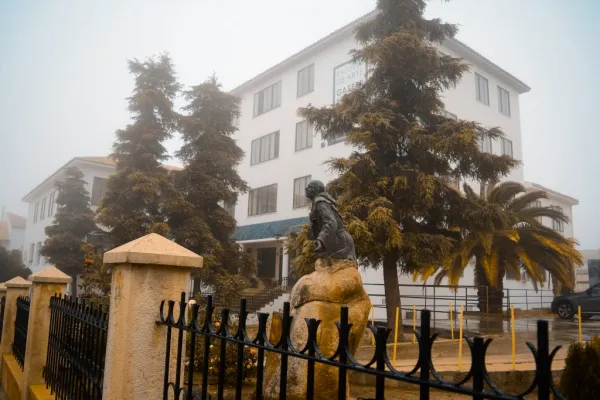
Sculpture to the Fallen: In the Town Hall Square. A space mentioned in several of the writer's works.

San Lorenzo Neighborhood: The emotional heart of his literature: cobblestone streets, viewpoints, the Church of San Lorenzo, the Granada Gate, and the Cava Gardens.

Antonio Muñoz Molina's Residence: The author's family home, located in the neighborhood square. It appears in The Polish Rider.

Casa de las Torres: A palace-fortress that houses the School of Arts. A key setting in The Polish Rider and in the legend of “the walled-up woman.”

Orozco Palace: The only 19th-century palace in Úbeda. A central space in Beatus Ille.

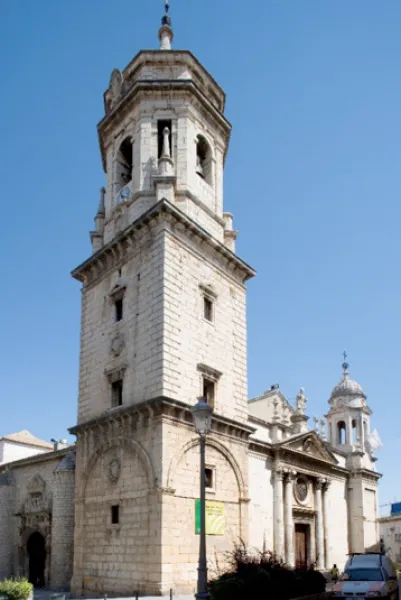
Clock Tower: An old Moorish tower converted into a clock in the 16th century. A symbol of the city and a recurring literary location.

Statue of General Orduña: A historical figure linked to Úbeda and mentioned in the author's work.

Church of San Isidoro: A setting recreated in The Polish Rider, full of atmosphere and characters.

Central Market: An everyday and symbolic place in The Polish Rider, where the protagonist's father worked.

Viewpoints along the city walls: Lookouts from which the Guadalquivir Valley can be seen. An essential landscape in his memory and literature.
Imagen

Juan Eslava Galán Literary Route

Submitted by brandcode_deweloper on
Breve descripción

Arjona is the birthplace of a storyteller who transformed Jaén into a land of legends.

Following the path of Juan Eslava Galán means discovering Jaén through the eyes of one of its greatest storytellers. Born in Arjona, the writer has made the province a recurring setting for his novels, where history, mystery, and landscape intertwine seamlessly.

In Arjona, his hometown, you'll wander through squares, churches, and hidden corners that inspired many of his works. From the ancient Alcázar to the Sanctuary of the Sacred Relics, each stop reveals fragments of a past that Eslava Galán brings to life with humor, rigor, and fascination.


His books—from *In Search of the Unicorn* to *The Templar Tombstone*—take you on a journey through Martos, Baeza, Jaén, Alcaudete, Baños de la Encina, and Úbeda, places that come alive with Templar enigmas, medieval adventures, and local legends.

This route is, in essence, a bridge between literature and the land, allowing you to enjoy the province with a curious and engaging perspective.

Imagen principal
Desactivado
Puntos del trazado
Latitud
37.9356
Longitud
-4.05447
Latitud
37.76972
Longitud
-3.78888
Desactivado

Route card

Arjona

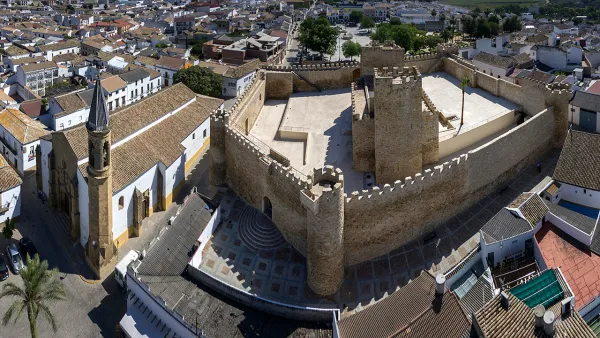
Plaza de Santa María: A natural viewpoint overlooking the Jaén countryside, where the ancient Alcázar of Aryuna still reveals its imposing outer wall. It is the perfect starting point for the tour: spacious, bright, and steeped in history. Eslava Galán describes it with the precision of someone who knows every stone, and the traveler can contemplate it with the same fascination.

Sanctuary of the Sacred Relics: A 17th-century Neoclassical temple that incorporates the ashlars of the old Mocha Tower. Its monumental staircase and Baroque crypt surprise visitors, who discover here a solemn space full of symbolism.

Church of Santa María del Alcázar: Majestic and austere, it rises above the former Great Mosque. Hidden on one of its facades is the famous Templar Baphomet, an enigmatic face carved in stone that seems to observe the traveler and plays a key role in The Templar Tombstone.

Templar Baphomet: A sculptural detail that sparks the imagination: forked beard, double profiles, Templar mystery. A must-see for lovers of legends.

Juan Eslava Galán Museum of Arts and Customs: Located in the former Hospital of San Miguel, this museum not only exhibits ethnographic pieces but also preserves part of the writer's personal world, including the table where he wrote In Search of the Unicorn. An intimate place, perfect for understanding his creative process.

Almohad Cistern:The oldest building in Arjona, hidden beneath the old mosque. Its vaults and alabaster pedestals transport the traveler to the medieval era, evoking the daily life of ancient Aryuna. 

Church of San Juan Bautista: Built on the site of an ancient Roman temple and later a synagogue, this church is a crossroads of cultures. Its Plateresque façade and octagonal tower are architectural gems that surprise visitors. 

Crypt of the Baron of Velasco:A Neo-Byzantine space of golden tesserae, marble sculptures, and an ingenious system of rails to access the niches. A place so unique it seems straight out of a mystery novel. 

Arjona Town Hall: A 19th-century Andalusian house that Eslava Galán describes in detail: a bright courtyard, columns, tiled wainscoting, and marble staircases. Visitors can recognize in this building the atmosphere that the author recreates in his works.

The Templar Tombstone: The element that gives the novel its title appears in an unexpected place, revealed in the final section of the book. The route allows visitors to discover this exact spot, adding excitement to the journey.

Juan Eslava's Literary Corner: In the Municipal Library, this space brings together all his works, many signed, along with his work table and typewriter. An intimate corner for those who wish to connect with the writer beyond his books.

Imagen

Jaén

Basilica of San Ildefonso:Site of the miracle of the Descent of the Virgin in 1430. A key location in the devotion of Jaén and in the author's historical narrative.

Church of La Magdalena: Former main mosque. The neighborhood, the fountain, and the lizard are recurring literary devices in his work.

Institute of Jaén Studies (IEG): Home to the author's personal archive: more than 8,000 documents, books, and files.

Castle of Santa Catalina: Emblem of Jaén. Medieval fortress and privileged viewpoint that appears in his historical essays.

The Lizard of La Malena: The most famous legend of Jaén. A literary and cultural symbol frequently used by Eslava Galán.

Arab Baths Cultural Center – Villardompardo Palace: 11th-century Arab baths, the largest open to the public in Spain. A recurring historical setting in his popular works.

Arrabalejo Tavern: Mentioned in In Search of the Unicorn. A place steeped in popular tradition and culinary memory.

Arch of San Lorenzo: A 13th-century Gothic-Mudéjar vestige. A space steeped in history that inspires the author.

Palace of the Constable Iranzo:Direct setting in *In Search of the Unicorn*. It preserves a magnificent Mudéjar hall.

San Francisco Square:An emblematic place in the city. The Templar chapel of the old convent was located beneath it.

“El Gorrión” Tavern:Founded in 1888. It appears in his works and preserves the famous “mummified ham”.

Maestra Street:Historic thoroughfare of the old town. Setting in *In Search of the Unicorn*.

Bernabé Soriano Street (La Carrera):Site of ancient horse races mentioned in his Planeta Prize-winning novel.

Puente Tablas:Iberian oppidum of great archaeological value. Eslava Galán incorporates it into his historical narrative.

Santa María Square – Jaén Cathedral:The Cathedral is masterfully described in The Templars and the Table of Solomon.

Imagen

Miguel Hernández Literary Route

Submitted by brandcode_deweloper on
Breve descripción

A journey to encounter Miguel Hernández in the places where his words became life

Arriving in Jaén, following in the footsteps of Miguel Hernández, means immersing yourself in one of the most intense and luminous chapters of his life, even with the shadow of war surrounding it. The people's poet, barely thirty years old and with overflowing creative energy, found in these lands a human and natural landscape that left a profound mark on his work and his memory.

His stay was brief—only seventy-two days—but extraordinarily fruitful. Here he wrote some of his most vibrant texts, among them "Aceituneros," which has become the anthem of the province. In Jaén, you don't just observe the land he contemplated: you listen to it, you walk it, you feel it in your skin. And that emotion connects with the verses that still resonate in the identity of Jaén.

Assigned as commissioner of the Southern Front's public address system, Miguel traveled through streets, squares, and shelters, living among the people and narrating from within the most harrowing episodes of the conflict. Following his trail, you travel from the capital to Andújar or Lopera and discover the young and committed perspective that bore witness to a turbulent time, but also to a humanity forging its path amidst the noise of war.

Today, as you walk this route, you will find a Jaén that speaks to you and to history: squares that bear scars, shelters that hold silences, thermal baths where the poet strolled with Josefina Manresa, and corners where his clear and courageous voice still seems to echo. It is a journey that invites you to pause, to look calmly, and to feel how literature intertwines with the land.

Miguel Hernández Legacy Website

https://www.dipujaen.es/miguelhernandez

Imagen principal
Desactivado
Puntos del trazado
Latitud
37.769
Longitud
-3.790
Latitud
37.84338
Longitud
-3.06561
Latitud
37.94542
Longitud
-4.21463
Latitud
38.03924
Longitud
-4.05056
Desactivado

Route card

Jaén

Basilica of San Ildefonso: Façade with shrapnel damage; a key point for understanding the poet's arrival in Jaén.

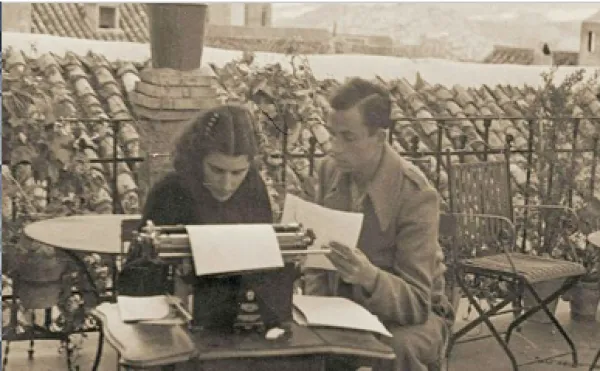
Poet's Residence and Headquarters of the Altavoz del Frente Sur (Voice of the Southern Front): On Llana Street (now Francisco Coello, 9). Here he lived with Josefina Manresa and worked as commissioner of the Altavoz del Frente Sur.

Plaza de Santa María (Jaén Cathedral): A space from which his perspective on the bombing of Jaén, reflected in his articles for Frente Sur, can be understood.

Plaza de los Naranjos (Orange Tree Square): The only place with a ceramic plaque dedicated to the poet, featuring verses from El último rincón (The Last Corner).

Air Raid Shelter in Plaza de Santiago: Built after the 1937 bombing; it allows us to understand the wartime context in which the poet lived.

Institute of Jaén Studies (IEG): It houses the Miguel Hernández Legacy, with thousands of documents, manuscripts, and images.

Jabalcuz Hot Springs: A place where Miguel Hernández used to go for walks and bathe with Josefina Manresa.

Imagen

Quesada

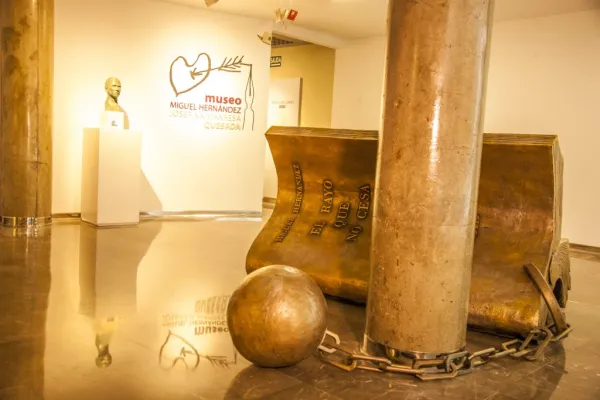
Miguel Hernández – Josefina Manresa Museum: The central space of the route in Quesada. It brings together a large part of the legacy of the poet and Josefina Manresa, with a chronological journey through their life, work, and human and social dimension.

Hernandian Corners: The historic center of Quesada becomes a literary stroll: narrow streets, white facades, and mosaics with verses, drawings, and texts by Miguel Hernández and Josefina Manresa. A vibrant and poetic way to explore the town.

Miguel Hernández Panels and Mosaics: Distributed throughout the municipality, especially in the Plaza de la Constitución, where large mosaics highlight the poet and Josefina's connection to Quesada.

Josefina Manresa's Birthplace: The house where Josefina was born on January 2, 1916. It is not open to the public, but it retains a ceramic plaque marking the location and its importance to local history.

Imagen

Lopera

Longitud del recorrido: 3km.

Duración estimada: 4h.

Tipo de ruta: A pie y en coche.

Lugares que componen la ruta:

Imagen

Andújar

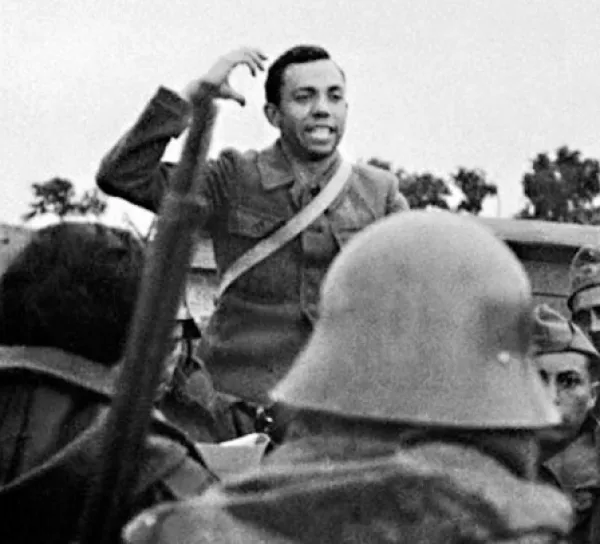
Sanctuary of the Virgin of La Cabeza was the scene of a fierce siege during the Spanish Civil War. Miguel Hernández, assigned to the Southern Front's propaganda unit, described the assault in his chronicles, narrating in detail the resistance that took place between September 1936 and May 1937. Photographs exist that confirm the poet's presence; some show him addressing the troops and others at the Republican command post.

This firsthand experience allowed him to accurately narrate the development of the siege, as he explains in On the Taking of La Cabeza. Letter and clarification, published in Frente Sur (no. 15, May 13, 1937): “I witnessed the fighting from the very beginning, although without pencil or paper… I prefer to relive it by remembering it.”

This passage reveals the poet in his most committed role: witness, chronicler, and emotional participant in one of the harshest episodes of the Civil War in Jaén.

Imagen

Antonio Machado's Literary Route

Submitted by brandcode_deweloper on
Breve descripción

When you follow the Antonio Machado Literary Route in Baeza, you enter one of the deepest and most silent chapters of his life. Here you discover the poet who arrived wounded by Leonor's death and found in our land a refuge of calm, study, and contemplation. For seven years, Baeza was his home, his inner landscape, and the stage where his poetry matured toward a deeper, more philosophical perspective.

On this route, you walk through the places that marked his daily life: the Hotel Comercio, where he lived his early years; the social clubs and gatherings where he listened more than he spoke; the narrow streets he strolled on his meditative walks; and the Santísima Trinidad Institute, where he taught French and where you can still enter his classroom, preserved as a small literary sanctuary.

You also visit the Plaza de Santa María, the Cathedral, the Paseo de las Murallas (Walk of the Walls), and the spots from which he contemplated Mágina, a landscape that ultimately captured his poetry. At each stop, you feel how Baeza healed his grief, restoring the slow rhythm of life and offering him a space to think, write, and rediscover himself.

This route encourages you to walk slowly, to see as he saw, and to discover Jaén from the serenity that inspired some of the most intimate verses of the Generation of '98.

Imagen principal
Desactivado
Puntos del trazado
Latitud
37.99343
Longitud
-3.46924
Latitud
37.84338
Longitud
-3.06561
Desactivado

Route card

Baeza

Old Hotel ComercioMachado's first home in Baeza. He lived here alone for his first two years, in a room overlooking the Sierra de Mágina mountains.

New CasinoA key space in his social life. In its hall of mirrors, he would hold long conversations, and today his inscription as a transient member remains.

Casino de ArtesanosA place of memorable encounters, such as his famous meeting with a young Lorca. Although no longer there, it forms an essential part of his life's journey.

Don Adolfo Almazán's PharmacyThe corner for afternoon gatherings where he listened to talk about politics, the countryside, and the weather. A humble but crucial space in his integration into the city.

Residence on Gaspar Becerra StreetThe house where he lived with his mother, bright and modest, from which he could see the old prison—now the City Hall—and where he found a more stable routine.

“Santísima Trinidad” InstituteHis workplace and one of the most emblematic spaces on the route. The classroom where he taught French is preserved intact as a museum-classroom.

Headquarters of the International University of Andalusia (UNIA)The Jabalquinto Palace and the Old Conciliar Seminary, now the headquarters of UNIA, pay homage to the poet by giving the institution his name.

Santa María Square and CathedralOne of his favorite places to stroll. A solemn and silent space that appears in his meditations and in the reconstruction of his daily itineraries. Paseo de las Murallas The place where Machado meditated while contemplating the landscape beyond the city walls. Today, a plaque and a monument commemorate his presence.

Imagen

Quesada

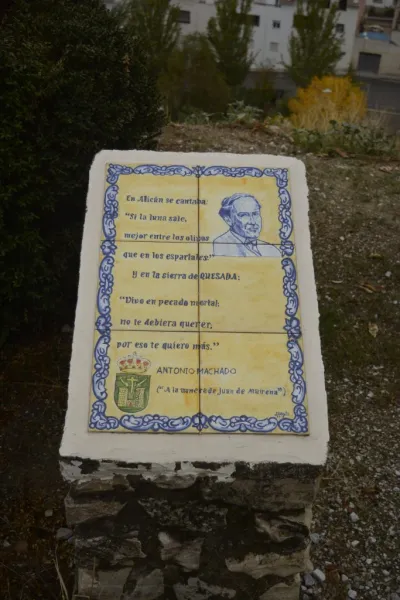
Park on the Road to the Port of Tíscar. A tribute to Machado with ceramics reproducing verses from Notes for an Emotional Geography of Spain.

Sanctuary of the Virgin of Tíscar: A place Machado visited on his excursions to the sources of the Guadalquivir River, a spiritual enclave at the foot of Peña Negra.

Website “Machadian Cities Network”

www.redciudadesmachadianas.org

Imagen

Literary Route of Saint John of the Cross

Submitted by brandcode_deweloper on
Breve descripción

With Saint John of the Cross, you begin an intimate journey through the places in Jaén where the mystic found refuge, inspiration, and silence. Here you discover the legacy of a poet who transformed spiritual experience into one of the pinnacles of world literature.

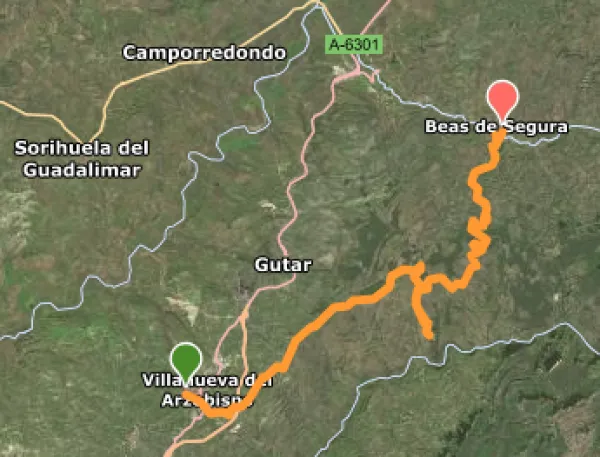
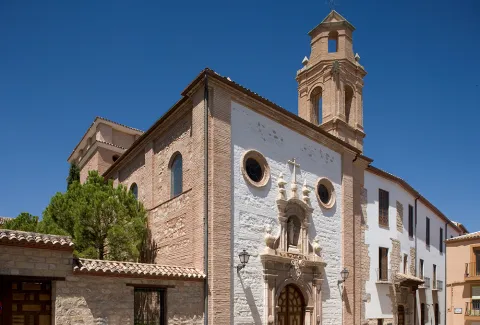
Your journey begins in Villanueva del Arzobispo, where Saint John arrived in 1578, ill and weakened after his captivity. In the Convent of Calvary, you will find the space where he served as prior and where, amidst confessions and spiritual direction, he began to outline the grand schemes of his thought. You will stroll through the Plaza Mayor and around the Sanctuary of Fuensanta, where he visited the new Carmelite convent.

The route continues towards Baeza, a university city and Renaissance center. Here he founded the Discalced Carmelite College, served as its first rector, and you feel the serenity of a place that fostered his formative work and contemplative life. Further on, you arrive at La Peñuela, in La Carolina, where he lived his last months as a simple subject following internal disputes within the Order. From there, he was transferred to Úbeda, where he died at the age of 49. In this city, you can visit the Museum of Saint John of the Cross, the only one in the world dedicated to him. The itinerary is completed with other essential sites: the Monastery of the Discalced Carmelites and the Center for the Interpretation of Mysticism in Beas de Segura, and the autograph manuscripts preserved in Andújar and Jaén, true literary treasures.

On this route, you'll discover Jaén through the depth, beauty, and silence that shaped the life and work of Saint John of the Cross. A journey where landscape, spirituality, and literature converge.

Imagen principal
Desactivado
Puntos del trazado
Latitud
38.012689
Longitud
-3.371985
Latitud
37.99343
Longitud
-3.46924
Latitud
38.25268
Longitud
-2.89087
Latitud
37.76633
Longitud
-3.78925
Latitud
38.0392362
Longitud
-4.0505603
Latitud
38.16859
Longitud
-3.00783
Desactivado

Route card

Úbeda

In Úbeda, you enter the final chapter of the mystic's life. Here you will discover the places where he spent his last days, where he wrote, where he was cared for, and where his legacy became forever linked to the city.

Convent of San Miguel / Former Convent of the Discalced CarmelitesHe spent his final days here after being transferred from La Peñuela. Here he was cared for by the friars and here he died on December 14, 1591. Although the original building no longer exists, the space preserves the memory of that serene and luminous end.

Museum of Saint John of the CrossIt is the only museum in the world dedicated entirely to him. Here you can explore his life, his work, and his spirituality through manuscripts, objects, recreations, and historical pieces that allow you to understand the depth of his thought.

Church and Convent of San Miguel (current location of the museum) The complex houses the museum and keeps the saint's presence alive.

Historic Surroundings of Úbeda This Renaissance city, a World Heritage Site, offers a perfect setting to understand the poet's spiritual dimension. Its quiet streets, squares, and churches invite you to walk slowly, as if following the echo of his verses.

Imagen

Baeza

When you arrive in Baeza, you are immersed in one of the most luminous chapters of his life. Here you discover the city where the mystic served as a formator, rector, and spiritual guide, in a university environment that fostered his thought and work.

Convent-College of Our Lady of Mount Carmel – San Basilio This is the heart of the route in Baeza. Here, in the former Convent of Our Lady of Mount Carmel, Saint John of the Cross founded the first University Residence of the Discalced Carmelite Order, intended to train young men with a vocation and academic pursuits.

Vicar's House An enclave linked to the Carmelite presence in Baeza. Although it is not preserved as a space open to the public, it forms part of the historical itinerary that helps you understand the context in which Saint John carried out his formative work.

Imagen

Beas de Segura

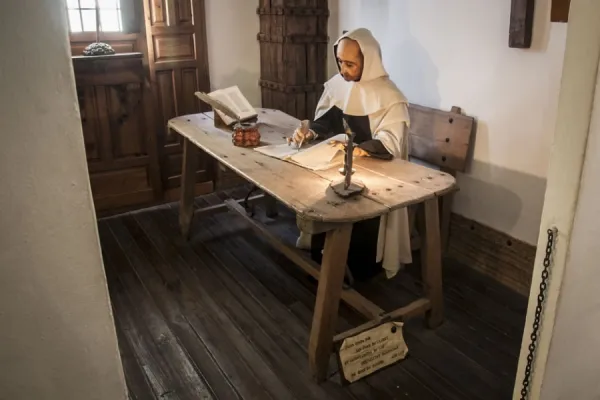
Monastery of San José del Salvador Your journey begins here. Saint John of the Cross arrived in Beas as Prior of the Convent of Calvary, sent by Mother Ana de Jesús, who wished to have the spiritual guidance of the Discalced Carmelites closer at hand. In this monastery—one of the most important Carmelite convents for women—the Saint heard confessions, offered spiritual guidance, and wrote, finding an environment conducive to organizing his mystical thought.

Interpretation Center of the Town of Beas, the 16th Century, and Mysticism Located next to the Sanctuary of Our Lady of Peace, this space allows you to understand the historical and spiritual context of the era. Here you can explore the history of Beas, its castle-fortress, the presence of the Order of Santiago, and, above all, the mystical universe shared by Saint Teresa of Ávila and Saint John of the Cross.

Way of St. John of the Cross A pilgrimage route that begins in Beas and ends in Caravaca de la Cruz. It traverses the landscapes the Saint visited as vicar and confessor, a 151 km itinerary that unites spirituality, nature, and memory.

Hospice of the Discalced Carmelites Built in 1659, after the Saint's stay, but intimately linked to his legacy. Located next to the main church and very close to the Monastery of San José, it is now part of private property on San Juan de la Cruz Street, historically known as Hospice Alley.

Imagen

Jaén

Length of the route: 0m.

Estimated duration: 1h.

Type of route: On foot.

Places that make up the route:

Imagen

Andújar

Length of the route: 0m.

Estimated duration: 1h.

Type of route: On foot.

Places that make up the route:

Imagen

Villanueva del Arzobispo

Length of the route: 29.63km.

Route: SANJUANISTA VILLANUEVA DEL ARCHOBISPO A BEAS POR CALVARIO Y PRIMITIVE

Imagen

Literary Route of Saint Teresa of Jesus

Submitted by brandcode_deweloper on
Breve descripción

In Beas de Segura, you follow the light of Saint Teresa, where words become calm and landscape.

In Beas de Segura, you enter a territory where mysticism becomes landscape. Here you discover the living imprint of a woman ahead of her time, who came to these lands to found, write, and open new paths within the Carmelite Order.

On your visit, you follow in the Saint's footsteps from La Ventilla de Beas, where she was received with jubilation, to the Monastery of San José del Salvador, her first foundation in Andalusia and one of the most luminous places in her life. You stroll through the former Hospice of the Discalced Carmelites, stop at the Mysticism Interpretation Center, and cross the Puente Mocho, the same one Teresa crossed on her way to Seville.

Beas de Segura envelops you with the serenity of a town that has preserved the Teresian spirit intact: a land “very delightful and of good temper,” as she herself wrote. This route invites you to discover Jaén through the calm, spirituality, and simple beauty that inspired one of the great voices of our literature.

When you follow the Teresian route in Beas de Segura, you walk in the footsteps of a woman who transformed the spirituality of her time. Each place holds a fragment of her story and invites you to discover the serenity, strength and light that marked her life in Jaén.

Imagen principal
Desactivado
Puntos del trazado
Latitud
38.27096
Longitud
-2.94367
Desactivado

Route card

Beas de Segura

La Ventilla de Beas:This is where your route begins. It was the spot where the locals joyfully welcomed Saint Teresa and her entourage. A welcoming place that connects you with the emotion of that first encounter.

Monastery of San José del Salvador:This is the first Teresian foundation in Andalusia and one of the most significant places in her life. Within these walls, she met Father Jerónimo Gracián and experienced some of her happiest moments. Walking around its grounds is to understand the essence of the Carmelite Reform.

Hospice of the Discalced Carmelites:Although built after the Saint's stay, it forms part of her legacy. The former hospice, now part of private properties, retains the atmosphere of traditional architecture. San Juan de la Cruz Street—the former Hospice alley—invites you to stroll at a leisurely pace.

Beas Town Interpretation Center, the 16th Century and Mysticism: Located next to the Sanctuary of Our Lady of Peace, this space helps you understand the historical and spiritual context of the era. Here you can explore the history of Beas, the presence of the Order of Santiago, and the mystical universe that shaped the work of Saint Teresa of Ávila.

Puente Mocho: A very sturdy Roman bridge that Saint Teresa crossed on her way to Beas. Situated over the Guadalimar River, it was part of the ancient "Carthaginian Road."

Web Portal “Teresa's Footprints in Jaén”

https://www.dipujaen.es/teresadejesus/

Imagen

Instituto de estudios Giennenses

Submitted by brandcode_deweloper on
Id
PUN-0015
Perfil de redes sociales
Descripción
Descripción larga

The IEG is included in this itinerary because of its work documenting and safeguarding the Legacy of Miguel Hernández.

A legacy made up of 5,600 records and more than 26,000 images (collections of manuscripts, photographs, pamphlets, musical scores, historical press, sound recordings, etc.), intended to serve as a key resource for encouraging study and research into the figure and work of the poet from Orihuela.

Although the Legacy can be consulted online at https://www.dipujaen.es/miguelhernandez, part of it can also be viewed at this institution, headquartered in the former Hospital of San Juan de Dios in Jaén, a 15th-century building.

Juan Eslava Galán has also donated his legacy to this institute: more than 8,000 documents from his personal archive (books, press cuttings, videos, sound recordings and various other items), serving as a reference for those interested in Jaén and in this author in particular.

This extraordinary collection alone would justify including the IEG in this itinerary, but the author also takes every opportunity in his works to celebrate the city's history or highlight its resources, as he does with its wonderful library in Los Templarios y la Mesa de Salomón.

(…) I looked for archaeological information about those places in the wonderful library of the Instituto de Estudios Giennenses, housed in a former hospital and Carmelite convent, with its comfortable reading room opening onto the quiet cloister. (…)

Los Templarios y la Mesa de Salomón. Chapter 2.

Breve descripción

The Instituto de Estudios Giennenses (IEG) is an autonomous body of the Diputación de Jaén, headquartered in the former Hospital of San Juan de Dios in Jaén, a 15th-century building, whose main function is to promote and study the province's culture, sciences and art.

Telecomunicaciones
Ubicación
Código Postal
23003
Latitud
37.7711
Longitud
-3.7922
Dirección
Plaza San Juan de Dios, 2
Distrito
Municipio
Ubicación en el mapa
POINT (-3.7922 37.7711)
Imágenes carrusel
Imagen principal
Desactivado
Imágenes cabecera
imagen
Image
Antiguo-Hospital-San-Juan-de-Dios-
Imagen principal
Activado
Microsite al que pertenece
Loading map
Preparing points of interest and routes...

Jorge Manrique Literary Route

Submitted by brandcode_deweloper on
Breve descripción

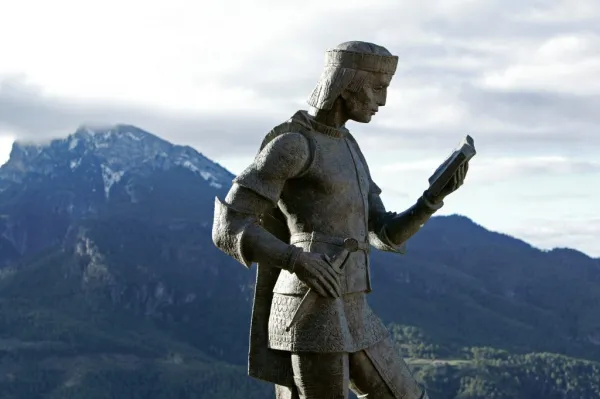
When you follow the Jorge Manrique Literary Route, you delve into the landscapes that shaped the life and work of one of the great poets of the 15th century. In Jaén, you discover the land where he was born, grew up, and found inspiration for one of the most universal works of our literature: the Coplas a la muerte de su padre (Stanzas on the Death of His Father).

Along the route, you stroll through places that still preserve his memory: Segura de la Sierra, where he was born; the castles and fortresses where I have served as a man of arms; as well as the roads that accompanied him throughout his family and political life. Each place allows you to better understand the poet's sensitivity and the depth of his perspective on time, life, and death.

When you follow in the footsteps of the warrior-poet, you journey through three essential places in his life. Each one brings you closer to his story, his work and the landscapes that accompanied him from childhood to maturity.

Puntos del trazado
Latitud
38.2980
Longitud
-2.6521
Latitud
38.312
Longitud
-3.043
Latitud
37.994
Longitud
-3.472
Desactivado

Route card

Segura de la Sierra

The journey begins in this historic town, one of the most beautiful in Spain and the birthplace of the poet. Here you can visit:

Jorge Manrique Viewpoint and Monument: next to the New Gate, with a sculpture representing his two facets: man of arms and writer.

Manrique Family House: the house linked to his lineage, with the coat of arms of the House of Feria still visible on the façade.

Segura de la Sierra Castle: an interpretive center dedicated to the author, with spectacular views over the entire mountain range.

Imagen

Chiclana de Segura

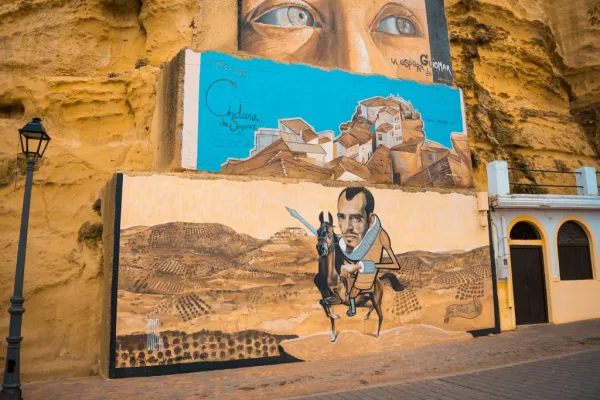
He lived much of his life in the castle of this town. From its walls, you can contemplate a vast horizon that spans four provinces. It is a key location for understanding his role as a military man and his connection to the Order of Santiago.

Imagen

Baeza

The route ends in this World Heritage city, a jewel of the Andalusian Renaissance. Here, Manrique suffered one of his few military defeats and was imprisoned for a time. Strolling through its streets allows you to connect with one of the most intense episodes of his life.

Imagen

Creaciones 3 Casas

Submitted by brandcode_deweloper on
12052851
Descripción larga

Technology producer of cultural, tourist and urban creations.

Teléfono
625 615 548
Sitio web
https://www.creaciones3casas.com/
Persona de contacto
Manuel López Marín
Correo electrónico
info@creaciones3casas.com | manuellomar1988@gmail.com
Latitud
-3.630422
Longitud
38.097195
Dirección
C/ Pío XII
Distrito
Municipio
Ubicación en el mapa
POINT (-3.630458 38.096965)
Curiosidades

Mounting shows of different themes, new technologies, virtual reality, etc.

imagen
Image
image-480x480-jpg
Imagen principal
Activado
Desactivado
Loading map
Preparing points of interest and routes...

Plaza del Pópulo

Submitted by brandcode_deweloper on
Id
PUN-0006
Perfil de redes sociales
Descripción
Descripción larga
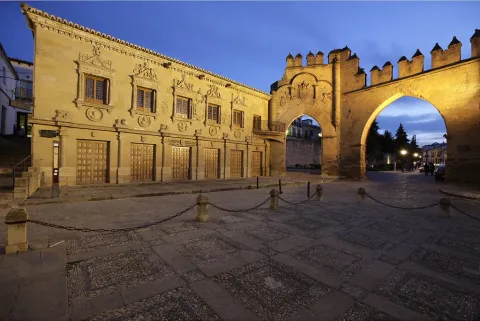
(…) In a serene square, which has an elegant but mutilated and dismantled palace, a graceful altar with rag flowers next to the aristocratic seriousness of a triumphal arch with a warrior air, and a fountain with lions blurred in the stone (…) The Plaza del Populo was one of the most important squares in Baeza, which housed the main public buildings. In this square were located institutions such as the Old Butcher Shops - current headquarters of the courts -, the Civil Court and Public Notary Office or Casa del Pópulo - current Tourist Office -, the Arco de Villalar, the Puerta de Jaén or the Fuente de los Leones, named after the ornamental elements in the shape of a lion through which the water gushed and which apparently come from the Ibero-Roman ruins of Cástulo, which today is in questionable, because for experts in Iberian sculpture its carving in siliceous stone and its formal appearance suggest a much more modern chronology.
Breve descripción
As he does with the Santa María square, Federico García Lorca describes the plaza del Pópulo or Lions square in an admiring and somber way, lamenting the abandonment in which it is found.
Telecomunicaciones
Teléfono de contacto
953 303 572
Ubicación
Código Postal
23001
Dirección
C/ Roldán y Marín, 1
Municipio
Tipos de punto de interés
Imágenes cabecera
imagen
Image
Baeza-plaza-del-pópulo-y-arco
Imagen principal
Desactivado