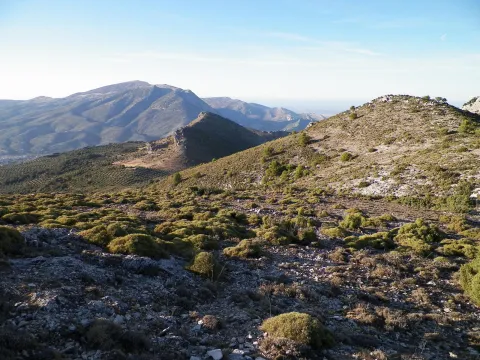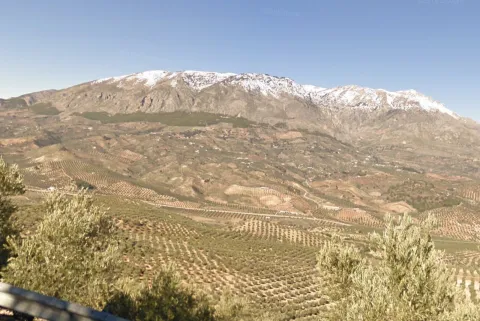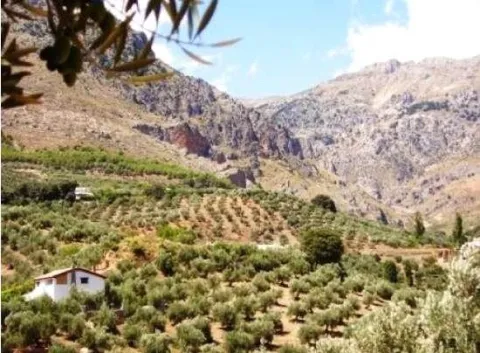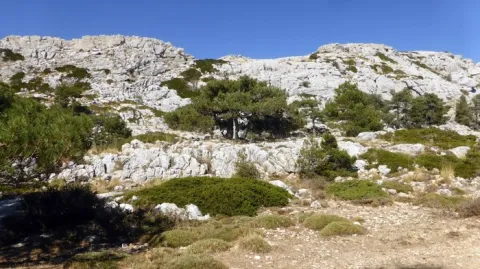
Alharilla Plain
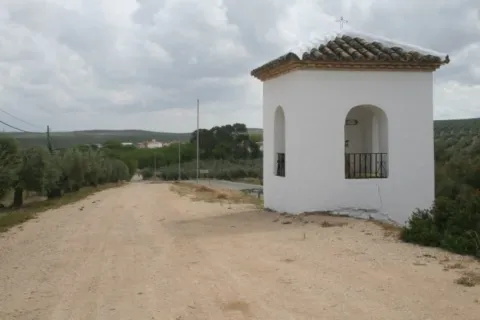
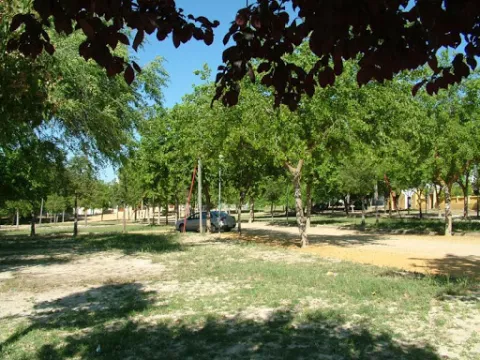
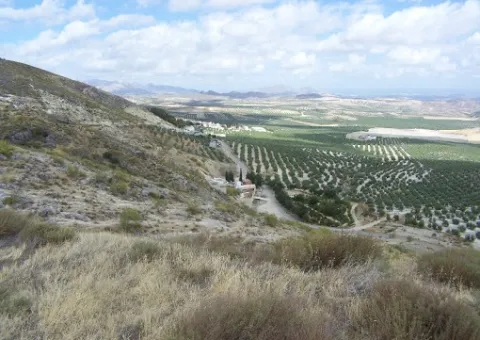
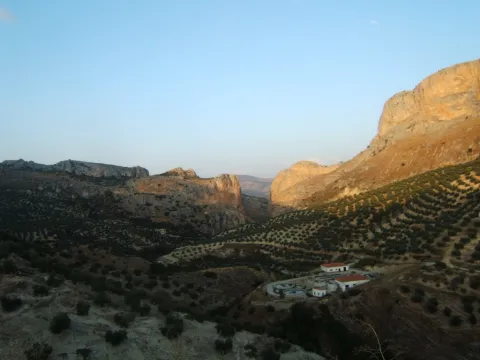
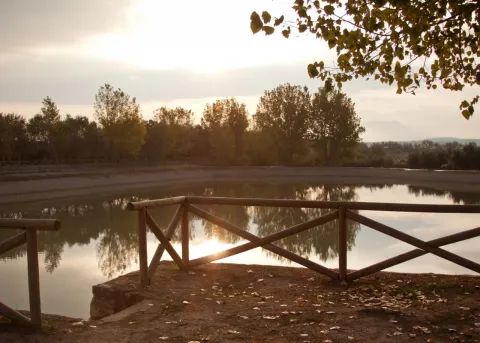
A place that has a large tree and is ideal for a day of field, as it has a magnificent road. There is the hermitage of the Virgin of Alharilla, in whose honor a rosemary is organized every year.
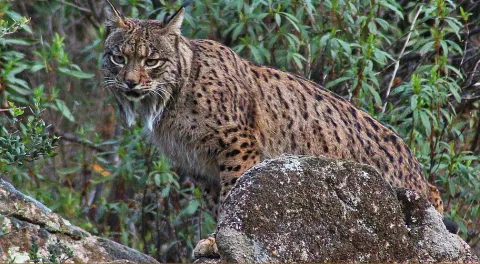
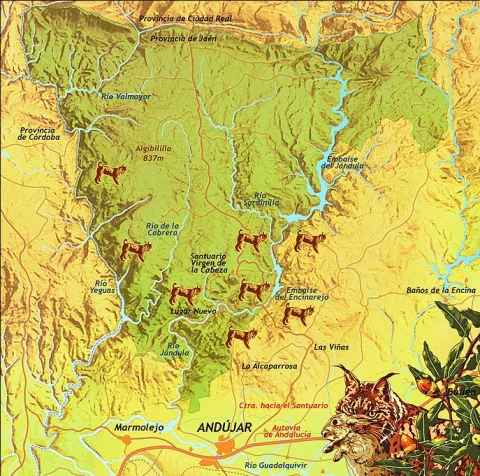
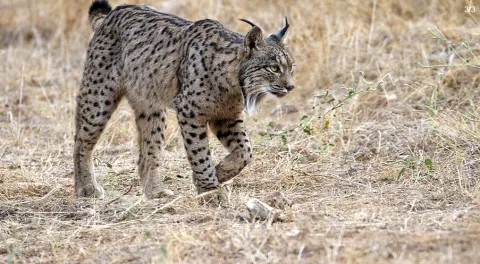
Although Iberian lince has been a protected species since 1966, this wonderful feline is in danger of extinction. At present, only two populations are viable and consolidated for the development and proliferation of this species: the one in Doñana and the one in the natural spaces Sierra de Cardeña and Montoro Natural Park and Sierra de Andújar Natural Park, where the most important population of the nail cat is located.
To see a lince in Andújar
To try to locate and observe an Iberian lince we must look for a good observatory from which we see a lot of saw, many slopes, rosquets, bushes and above all, many clear pasture. Among the best areas for an observation day are:
Road of the boat on its last stretch.
Road and recreational area of the Encinarejo.
Embalse of the Encinarejo from the north bank.
All the viewpoints in the south of the park.
Jabali Path.
Recreative area of the line in New Place.
Located at the observatory, it is essential to be always very attentive and silent, so, even in plain sight, we can distinguish a lineage moving if it is not too far away. We will also start a sweep of the area by means of binoculars. With them we will be looking at the clear and the exits of the land; so we can discover some cat placed on a rock. The telescope should be left for the last search, to go looking further and to go looking very slowly or even to look at the animal once we have discovered it.?
As with almost all predators, the corvids are also very aggressive with the Iberian lince (perhaps this is the animal with which they are most rattled), so we have to be very long-awaited of the movements and demands of the urracas. 50% of the success of observing a lince can come from being able to interpret the corvids.
For the sake of the species and the future visitors who seek to see the great cat, we must respect all the rules of public use, be respectful of the environment, always remain silent and do not in any way disturb animals. Nor should we enter privately owned farms without authorization or deviate from established paths.
The largest number of the nail cat population
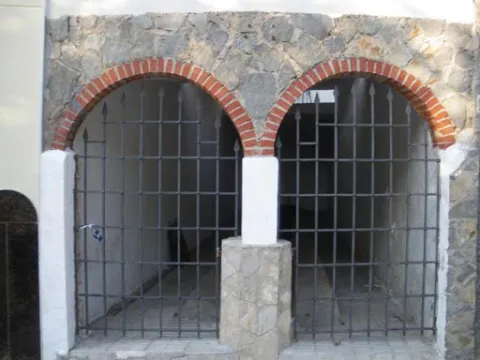
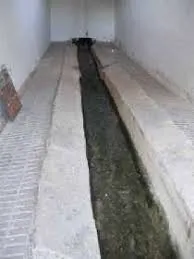
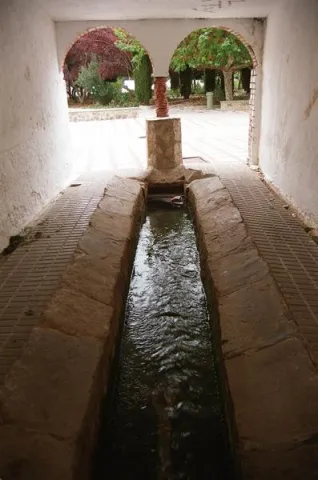
A few meters from the Fuente de la Negra is another public building related to water, the laundry, whose origin dates back to the 17th century, with architectural elements characteristic of the popular baroque such as the access panels arches or the small central salomonic column that is based on a pillar. Its use, markedly social, has been maintained until almost today. Incidentally, it is an elongated rectangular ship (10 x 2.5 meters), of argamase and lime, with a central channel, covered by a skylight, which constitutes the proper laundry.
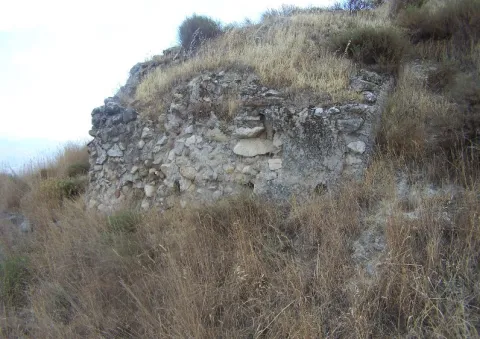
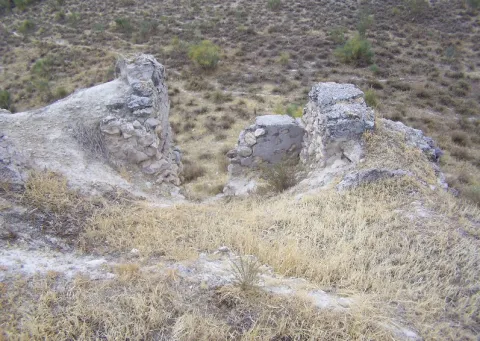
It is possibly the Muslim castle referred to in the 1243 delimitation between the episcopal headquarters of Baeza and the Archbishop of Toledo. Known as Ullurauam. In a territory between the Jandulilla River and the Guadiana Minor River, which would be identified as Larva. It is located near the current population of Larva, on a well-ridden hill, with a polygonal plant and two enclosures. Its construction is of tapial alternating with masonry. It keeps its perimeter walled and several towers. Then, because of the border situation and the demographic vacuum, this castle would run the same destination as that of Cabra, abandoned in a neutral area. Roman remains have also been found as a tegola.
Since the 13th century Larva was integrated into the Spanish-Nazi border, playing an important role in the villages of the minor Guadiana, in 1243 there were conflicts in the delimitations between the episcopal headquarters of Baeza and the archbishopric of Toledo.
Great beauty rocky scarves that are attached in the urban case of Torres, next to the municipal pool. For its accessibility, climbing routes have been installed, for which it is necessary to be a federated sportsman or to hire the services of an authorized service company.
Area of old gardens and mills belonging to the municipality of Huelma. Until well into the 20th century it was one of the most fruitful gardens in the province of Jaén. It cultivated multiple varieties of fruit and vegetables. Some of these varieties were inherited from ancient crops of the Middle Ages.
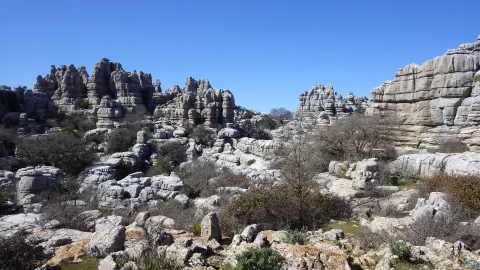
It is a very developed lapiaz with very good exposure, carved on limestone of the upper Jurassic. Stratification has a small dipping, and topography in this sector adapts to the stratification surface, generating a landscape of great beauty.
Source: Inventory of Georresources of Andalusia. Environmental Council. Junta de Andalusia.
Lapiaz del Torcal Llano
It has an area of 65 hectares, as well as an additional protection area around it of 220 hectares.
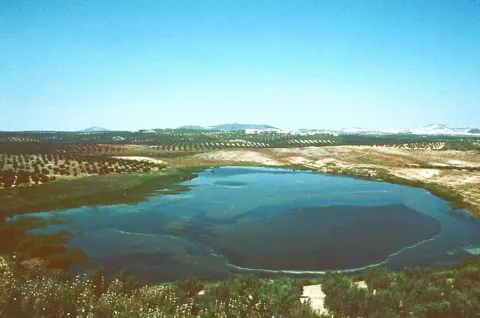
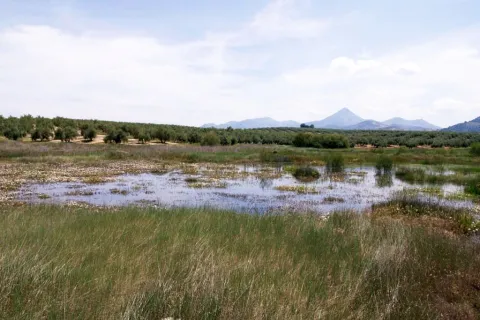
Laguna Honda is a humid, endemic area that is flooded with the first rains of autumn and remains as such until spring, with a small river mass, making it a seasonal lagoon although a small stream, which comes from the Sierra de Orbes, provides water flow.
This lagoon has a high saline content, caused by the materials of the substrate as well as the washing of adjacent land.
Vegetation
The area is surrounded by agricultural land of rainforest olive trees, highlighting its perilagunar palustre vegetation of eneas (typha dominguensis), carrizos (phragmites australis) and juncos. One of the primitive and still preserved plant varieties in this reserve is tarage.
Fauna
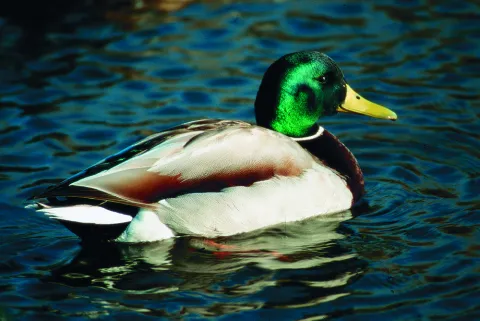
The main species that are located in Laguna Honda are vertebrates, always with a temporary or seasonal character, highlighting the aquatics, such as the hens (gallinula chloropus), easily recognizable because it emits a strong graznada, the common focal (fulica atra), which has the white peak and black plumage or the real anade (anas platyrhnchos), which has a yellow peak and is known as a common duck.
This Nature Reserve is located to the south-west of the province of Jaén, in the area of Tumbalagraja, very close to the Casariche cortijo, passing very close to the line of the old railway Linares- Puente Genil, today Via Verde del Eil, between the Sierra Orbes, the Cambrón and the Desgarradero, and limiting with the province of Córdoba.
It covers an area of about 206 ha., including the lagoon itself and a protection perimeter of 500 metres.
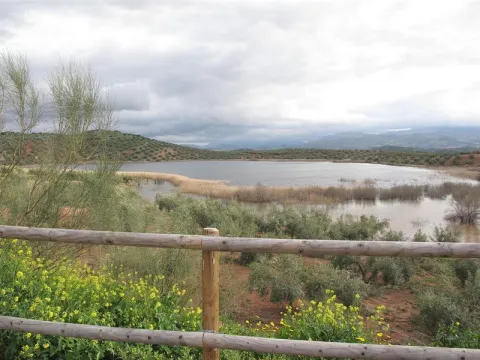
The vegetation it presents is typical of a wetland, with the presence of eneas (typha domingensis) and carrizos (phagmites australis). As for tree species, the white acacia (populus alba), taray (African tamarix) and strawberry (fraximus angustifolia), even in isolation, is highlighted. The rest of the area is dominated by olive groves.
As for the present fauna, there is a particular interest in the presence of typical wetland birds: common fences (as it grows), spoon duck (as clypeata), common porron (aythya ferina), small zumpullin (tachybaptus rufilollis), cold anade (as strepera), real anade (as platyrhynchos). In spring, many of these species move to their nesting area, remaining only those that do so in this area: storks (himantopus himantopus), the chorlitero chico (charandrius dubius) and the water cock (gallinula chloropus).
There are also the presence of non-aquatic birds, such as the common charcoal (parus major), the common pineapple (coelebs fridge), the capirotated curling (silvia atricapilla), the black head curling (silvia melanocephala), the common myrtle (turdus merula), the common cernícalo (falco tinnunculus), the common mouse (butyo buteo), the calcada eagle and the lagoon (circuls aeruginosus).
The mammals are minor, although the gineta (genetta genetta) and the badger (meles meles) stand out. As for amphibians, the gallipato (pleurodeles waltl), the southern ranite (hyla meridionalis), the San Antón ranite (hyla arborea), the common frog (rana ridibunda) and the common toad (bufo bufo) stand out.
It is a wetland near Baeza, about 2 Km. the Guadalquivir River, but about 80 meters above its level. This is an easy-to-contend space in which man has acted deeply: in fact, his origin is in agricultural activity, since his waters are used for irrigation and feed on a system of waterfalls, with a relatively high salinity. At present, it has no agricultural use, although it continues to be used as a water warehouse.
Its importance is increased, as in the case of Laguna Honda, due to the shortage of wet areas in the province. Natural vegetation has been transformed and only remains of perilagunar vegetation remain. The most common species are carrizo, swordsman and tarage. The fauna of this nature reserve of 6.5 hectares of extension, as such, and 39 hectares of protection area, is related to that of the neighbouring Laguna del Conde or Salobral in the province of Córdoba.
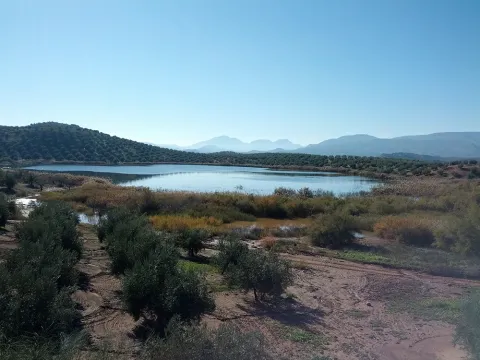
Surrounded by olive groves, it has a small natural vegetation of spadaws, reeds and carrizos. Among the aquatic birds, the occasional presence of pink flamingos, storks, royal anades and whistles and red ducks and spoon stands out. As for the terrestrial fauna, the rabbit and the red partridge abound in the area.
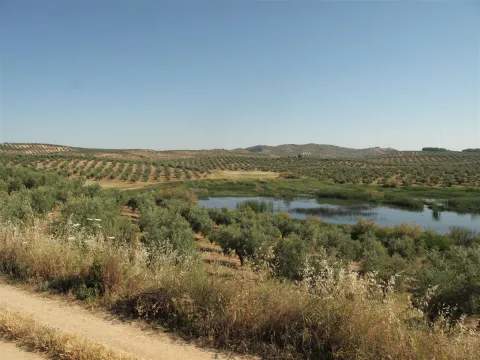
On a relief of soft profiles is raised this lagoon of endorreic nature fed by the surface runoff. The wetland, located in the south-west Jiennense, is surrounded by agricultural land and olive groves.