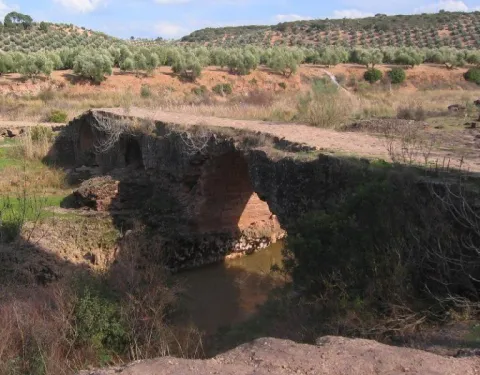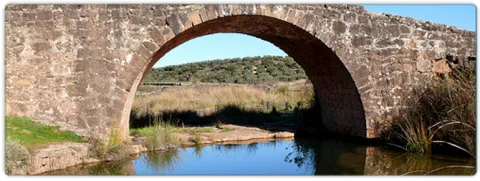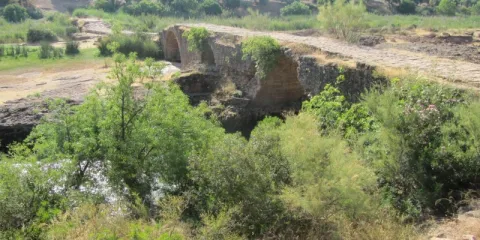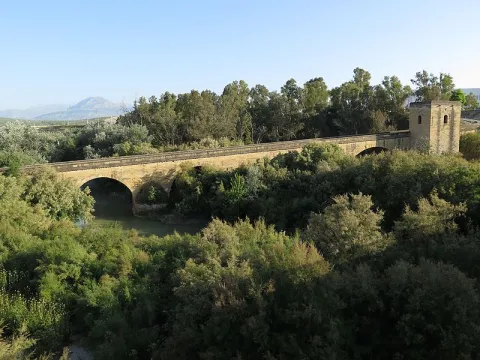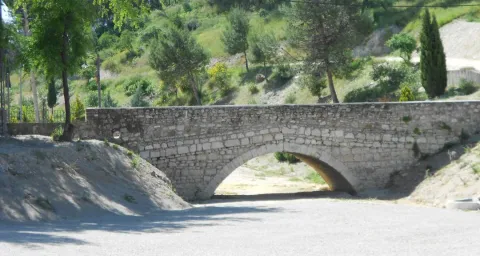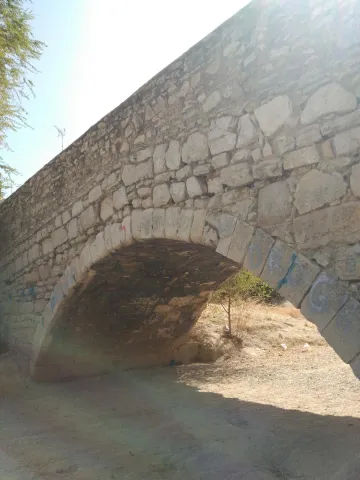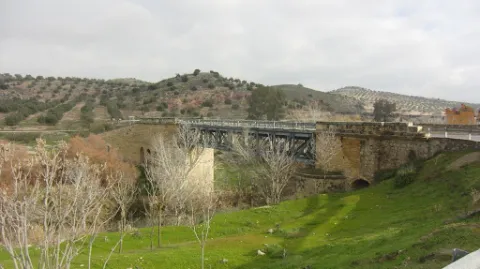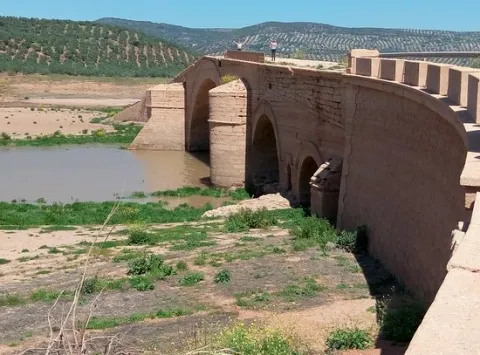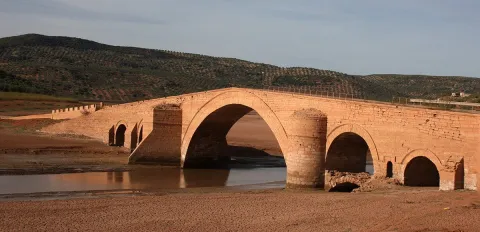
Mocho Bridge
Location: east of the city centre, in the pedanía of Puente Honda.
Distance: 4 km.
Medium: by vehicle tourism.
Access: local road to Puente Honda.
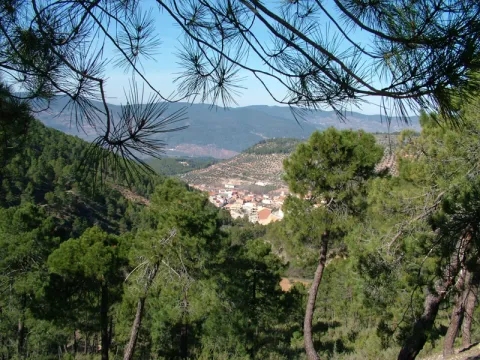
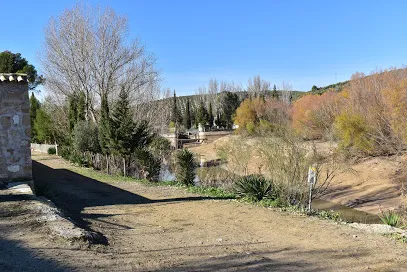
It is a recreational area in thepedanía de Puente Honda. 4 km. from the town of Benatae, and it is worth observing from this atalayo the Natural Park of the Sierra de Cazorla, Segura and Las Villas.
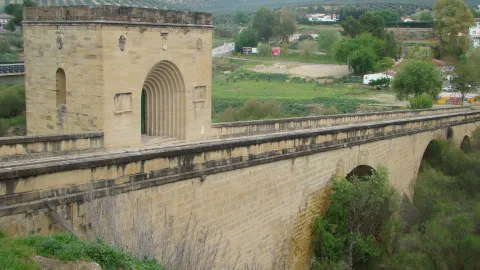
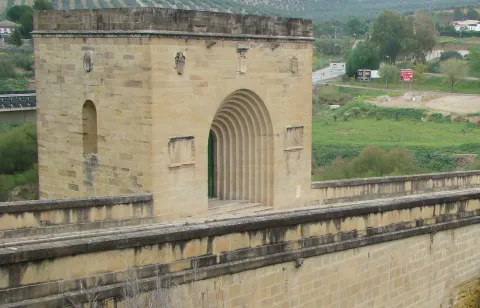
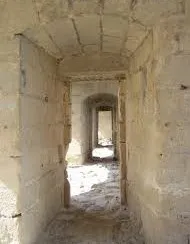
The tower has in its interior a chapel, which has access from the road of the bridge, through a door with arquivoltas, located on both sides of the same stone paths with inscriptions allusive to the bishop of Jaén, Mr Alonso Suárez of the Fuente del Sauce, who financed it. On the door, three shields reproduce the weapons of the prelate. On the three remaining sides of the tower, there are open and half-point windows, also topped by shields.
The Bishop's bridge, one of the first of the Hispanic Renaissance, consists of 4 unequal canyon vaults, of sandstone silery, accompanied by yarn of also unequal height. The trail is tilted, and has a quadrangular tower at its highest end. The batteries that hold the arches, they have Tajamars, and it is overcome with a factory pretil.
The bridge of San Sebastián, adjacent to the missing Gate of Martos on the one hand and with the pillar of the same name, rises on the salt stream. It responds to a Renaissance trail, made in quarry and beautiful proportions. It is made up of only half-point eye framed by strong stirring.
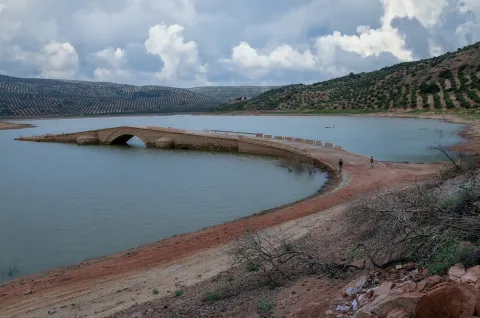
Thanks to an important documentation preserved in the Royal Chancellery of Granada, published by J. P. Cruz Cabrera, we know much of its constructive process. In 1561 the work was started according to a first trace designed by the Baezan quarry Ginés Martínez, reciting the material execution of the works in the Juanes de la Carrera and Pedro de Mazuecos, neighbors of Canena and Ubeda, respectively. The intervention of Pedro de Mazuecos in this work led to the popularly known bridge as "de Mazuecos" since the 17th century.
The bridge designed by Ginés Martínez was one-eye, wide light and 100 feet wide. Shortly after the works began, and after the inspections of various quarries, the project of this bridge, with a narrow and narrow profile, was abandoned to begin the construction of another of greater scale. From 1565 there is a documentary record of the intervention in the work of the famous singers Andrés de Vandelvira and Francisco del Castillo "El Joven," which gave a radical turn to the initial idea by projecting a monumental bridge more specific to a city than to a rural property. The traces, signed by both quarries and preserved in the above-mentioned documentation, allow us to know their configuration.
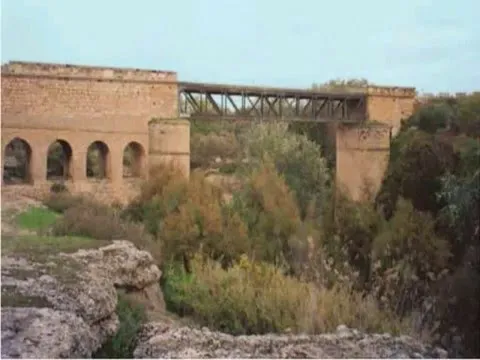
The plateau includes a large central arch of a half-point of 33 meters of light between four thick semi-cylindrical pillars with tachamars; the area facing the villa of Jimena is built directly into the rock in a descending way and only a small arc of discharge was worked; on the side facing Baeza, also descending, the composition is more complex due to the strong change of level, being formed by a sewer in the base and double line of half-point arches in the way of the Roman aqueducts, from which only the lower one is preserved; in this area of the bridge with the vaults were installed, in addition to a few of the vaults, and in a half-vaults.
They were used for storage and even leased. The work as a whole presented a careful aesthetic, both in terms of its architectural composition and in the decorative details; the ancestors, the balls of the rivets, the cardines of the pillars, the molding with double thread of the great central arch, the tones of the gears, among other elements, certainly embellished its image, radically disfigured after the intervention practiced following the sinking of the great central arch at the beginning of the 20th century; the central arc was replaced by an adintel metal structure and to adapt it to the rogiven traffic other original compositives disappear.
Vandelvira and Castillo show on this bridge, once again, their extensive knowledge of classicism as well as an extraordinary practice of stereotomy or cutting of the quarry stone. The Mazuecos bridge, which has a great resemblance to that of Ariza, a work also of Vandelvira, is to be related to that of Benamejí (Córdoba), made by Hernán Ruiz "El Mozo" between 1550- 1556. Vandelvira and Castillo, perhaps more intensively, conceive a bridge in which ornamental and constructive details are inserted clearly Italian. We must not forget, however, that it will be Vandelvira who carries the bulk of the work, participating Castillo with him in the assessments. In addition, without subtracting merit from the contribution of Castillo, Vandelvira, when working on the bridge of Mazuecos, is already an experienced architect in this type of work, as close to those carried out by the council of Ubeda on the bridge of Ariza on the avenue of the Guadalimar, more distant those practiced on the great bridge of San Pablo in Cuenca, and, for the same time, those of the bridge on the river Guadalmena, between the current terms of Siles (Jaén) and Montiel (Ciudad Real), for the Order of Santiago, whose remains are still unseen in their ingraceful shores.
The original "New Bridge" on the Guadalquivir channel was a project of the Baeza Council to enhance an alternative route of union between Granada and the Court that passed through Baeza, instead of doing so through Bailén and thus also enable better communication with other nearby villages such as Jimena and Bedmar, of which food and goods were provided.
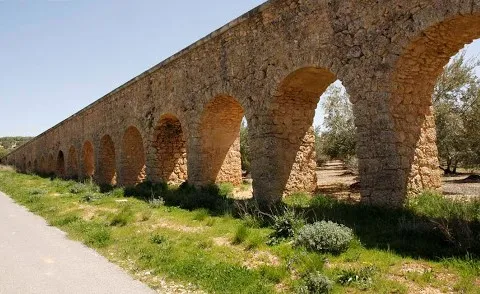
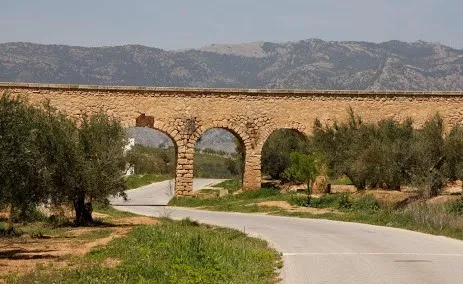
We arrive at the aqueduct by the Service Way that links Pozo Alcón with Cuevas del Campo, once we have overcome the Aqueducts of War and Caramaco we see at a distance the elongated silhouette of it. Its conservation status is quite good.
It is composed of 78 half-point arches of a plant, of masonry built with stone of the area - turroner - and argamase. It is about 400 m long and its arches are higher than those of the nearby aqueducts of War and Caramaco. Several of its arches have a height supplement to correct land irregularities.
It is an aqueduct dating from the early 20th century, following the typology of Roman construction, built in stone and argamase.
They have in the area that in the 15th century, when Isabel La Católica was traveling to the conquest of Granada from Córdoba, it reached this point where Guadalquivir was so grown that it did not allow its passage. In one night, according to the book, his gentlemen raised this robust bridge that allowed him to reach Baza and Guadix.
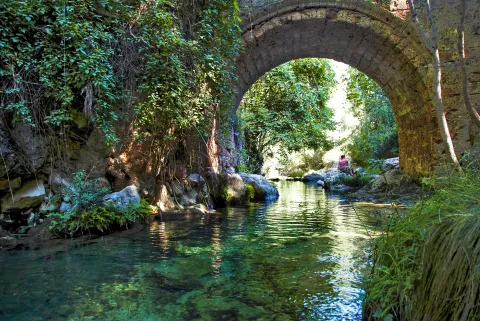
The place is beautiful by itself: the bridge is surrounded by fig trees and wild rosals. And in the paths around it you can observe boj, strawberries and hazelnuts.
On the right side is joined the Maillar stream - with another beautiful stone bridge - which makes in rainy years the place an authentic vergel and a very busy bathing area.
We suggest:
In Cazorla take the Sierra road (A-319) until the crossing known as the Empalme del Valle, 17 km. Turn right on the JF-7092 road and after passing the bridge over the Guadalquivir River (4 km from the Empalme) follow the right track (JF-7091) that after two kilometres reaches the Bridge.
The Herrera Bridge and its surroundings are one of the best known places in the Alto Guadalquivir. It is a great place to start some of the most interesting routes of the Sierra de Cazorla, and the enranche that involves its recreational area will allow you to rest, refresh and enjoy a Guadalquivir river, which at this point already contains a considerable flow. The bridge, built on porous limestone armchairs - here called toba - is perfectly integrated into the landscape.
It is a basin regulatory reservoir, belonging to the Guadalquivir River, where you can enjoy the typical landscape of the wetland (especially carrizos), as well as the abundant aquatic fauna that forms the ecosystem: avetoro, large tick, squid, real duck, spoon duck, common focha...
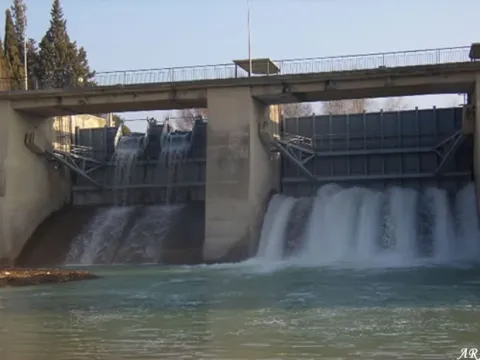
The Mengibar Dam was an important civil work in its time, as it was among the first hydraulic power plants to be built in Spain with mobile doors. Until then, the dams were fixed and, if they exceeded their capacity, overflowed. However, in the case of Mengibar, in anticipation of possible floods, Mengemor engineers designed to install mobile doors that allow the water to be depacked in a controlled way to the river. Built from load walls, with natural stone masonry, lacquered and assembled by concrete mortar. The holes form a half-point arc with material of similar characteristics. Covered with flat ceramic tile, mounted on metal fences. It is in good conservation and is currently used to generate electrical power and inject it into the network.
Located on the Guadalquivir River and inaugurated on 30 November 1916 by King Don Alfonso XIII, the project was the work of architect Antonio Palacios Ramilo and built by the company Mengemor.