San Juan de la Cruz Museum
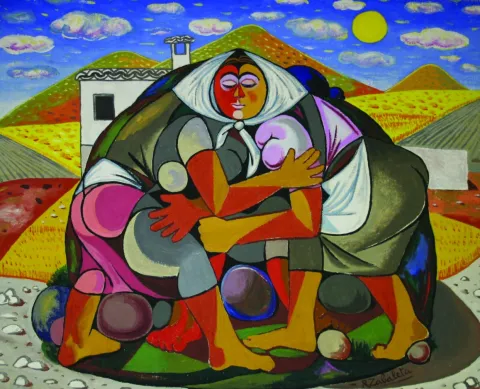
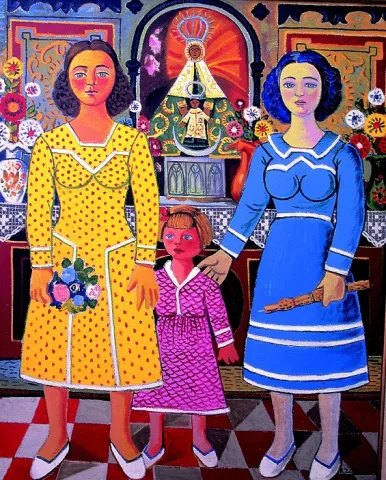
The museum's collection consists of numerous oils, watercolors and drawings, and other collections of modern art. Artists of the prestige of Miró, Percébal or Tapies donated their works for the museum. Rafael Zabaleta was linked to the Paris school. His painting is mainly nourished by the avant-garde, impressing into his landscape an air of metaphysical solitude. Picasso and Modigliani will also be of great influence in their entire career, collecting from the first that robustness in the nudes and the Parisian outdoor scenes. They will be the images of their native land with which the one of Quesada is most easily identified at the end of their career, both for its easy and true drawing and for its bright handling of the color in rural and customary scenes, in accordance with the times it has had to live.
Around the figure of Zabaleta, a prestigious international painting and sculpture competition has been held in Quesada since 1970. The award-winning works complete the museum's collection.
Located in the beautiful village of Quesada, this museum has a valuable collection of works by Rafael Zabaleta. In his biography he highlights the passion that the painter felt for his native people, for his people and for his landscapes and this is demonstrated by his work.
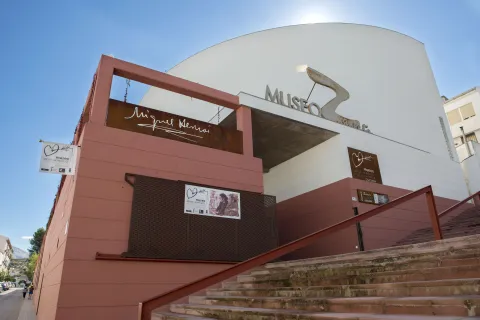
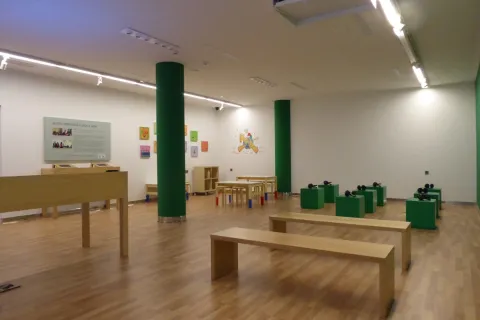
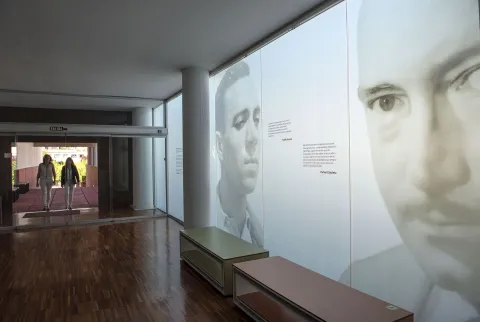
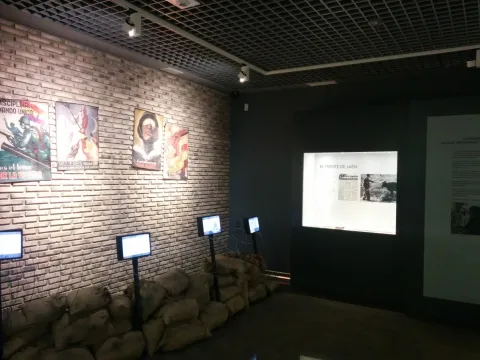
This museum responds to a chronological discourse that covers the work and life of the poet and his wife, Josefina Manresa from Quesada. A love story full of passions and emotions. The Museo Miguel Hernández - Josefina Manresa, located on the ground floor of the Museo Zabaleta, has an area of 553 square meters and reflects a large part of Miguel Hernández's legacy. The different museographic actions carried out run through six exhibition rooms.
Wednesday to Sunday: summer 10:00 - 14:00 and 17:00 - 20:00 (Wed - Sat) / Sunday 10:00 - 14:30. Winter: 10:00 - 14:00 and 16:00 - 19:00 (Wed - Sat) / Sunday 10:00 - 14:30.
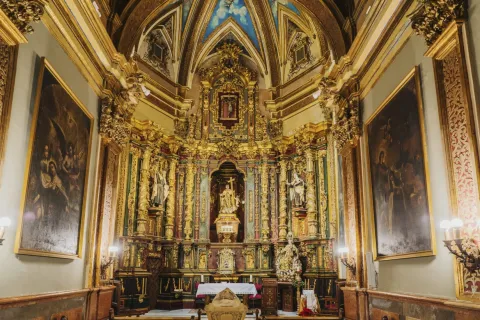
The museum is divided into three rooms, highlighting in the first one the mantos of the greatest historical significance, as well as a picture of the 17th century Romeria and the custody donated by Mussolini; in the second, we can see the mantos donated by the kings of Spain and other personalities, several reproductions of the image of the Virgin of the Head, its processional cage and several vitrines with objects of high significance; in the third room we can find a model of the sanctuary on a scale of 1 / 50, work by Manuel Molina and the pinacoteca of the painter Arsenia on the Menerora.
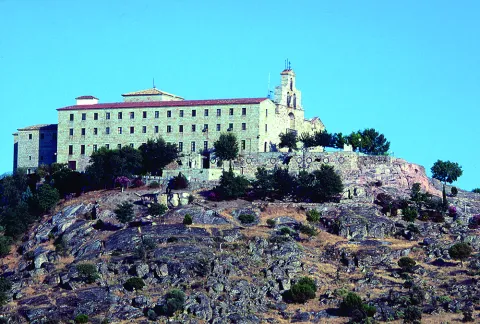
The Marian museum "Virgen de la Cabeza" is located in the very premises of the sanctuary (32 km from Andújar). Promised by the Trinity Fathers community, it contains an important artistic, documentary and anthropological exhibition of the historical legacy towards devotion to the Virgin of the Head.
The building where the Museum is located is a modern and avant-garde cultural infrastructure, built by the Junta de Andalucía, with more than 11,000 square meters and which has required an investment of more than 25.5 million euros. Located on the Paseo de la Estación, No. 41 of Jaén, in the heart of the capital, the Ibero Museum of Jaén aims to become a world reference of Iberian culture at the tourist, cultural and scientific level.
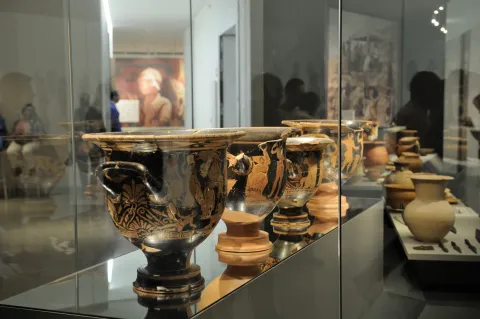
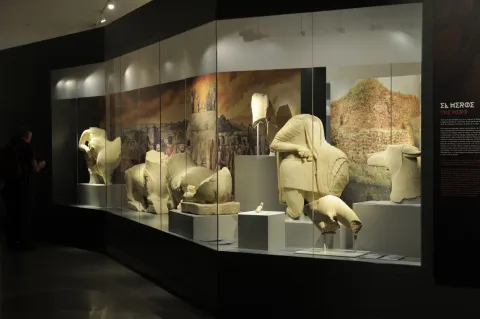
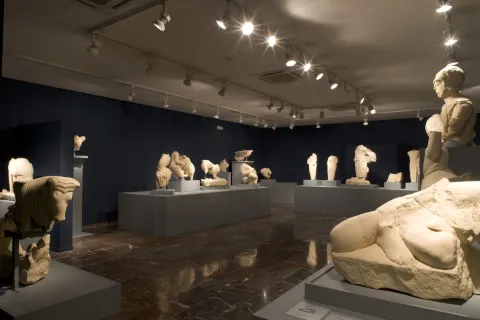
200 metres from the Ibero Museum is the Museum of Jaén, a container of Iberian pieces of art of extraordinary value, among others belonging to the Iberian sculptural ensemble of Cerillo Blanco de Porcra. The sculptures, which date back to the 5th century BC, tell us the mythical history of an aristocratic lineage, where the struggles of warriors are impressed by their great realism. The Museum of Jaén proposes two historical and two thematic tours: the Archaeology Section in which it highlights an important collection of Iberian times, in addition to other rooms dedicated to prehistory, Roman times, Spanish-Muslim culture and Visigoda culture; and the Fine Arts Section that offers us a vision of sculptures and paintings from the 14th to the 20th century.
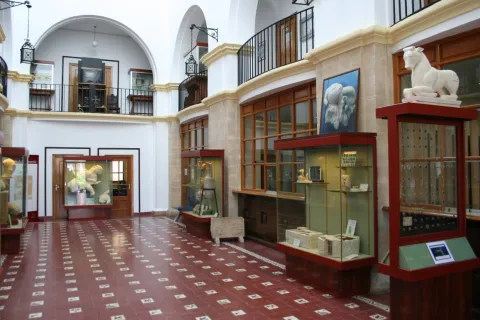
The new Ibero Museum of Jaén, opened on December 11, 2017 by King Philip VI and unique in the world in its kind, is created as a first-class museum institution that will collect the main material testimonies of the Ibera culture. The temporary exhibition entitled "The Lady, the Prince, the Hero and the Goddess" can now be visited, in which through these four prototypic characters of the Iberian people, the public is invited to take a scientific tour of this culture that had a wide development in the Jiennese province and that spread over six centuries, between the VI before our age to Roman domination. In addition, the exhibition includes a module to raise awareness among visitors and tourists about the archaeological expolio and the need to respect the valuable heritage received; as well as a space dedicated to schoolchildren to explain to them, in a didactic way, what iber art means. The new and spectacular exhibition space includes the Iberian monument of The Heroic Sanctuary of El Pajarillo, which was located in Huelma and dates back to the 4th century BC, to which are added pieces from other points of Andalusian geography. Finally, two new sculptures have been incorporated into the permanent collection of the Ibero Museum of Jaén, from the tombs of the Ibera aristocracy found in the site of Cerro de los Molinillos (Baena, Córdoba); they are a lion and a wolf made of limestone of great archaeological value.
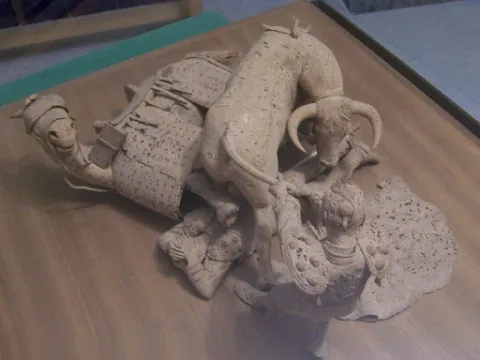
It presents a collection of 36 miniatures that represent scenes of life and popular customs of Santisteban, taurina and hunting scenes, created by Juan Antonio Higueras Fernández (1907-1994). His tools were a knife he spent on use, a simple lime and a small piece of sanding.
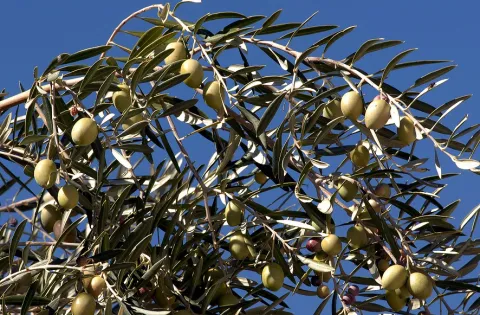
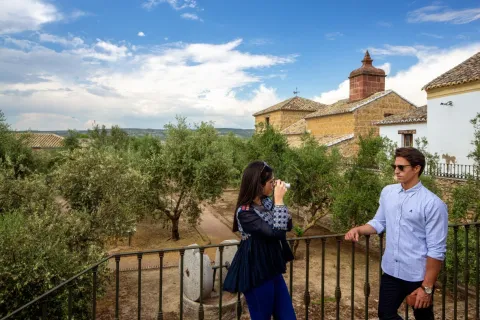
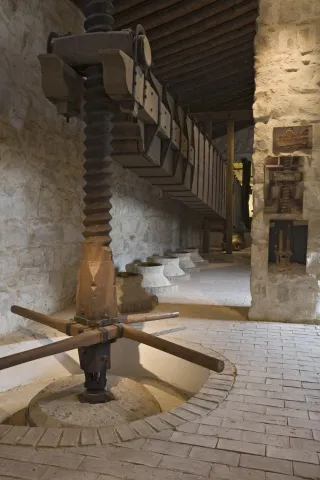
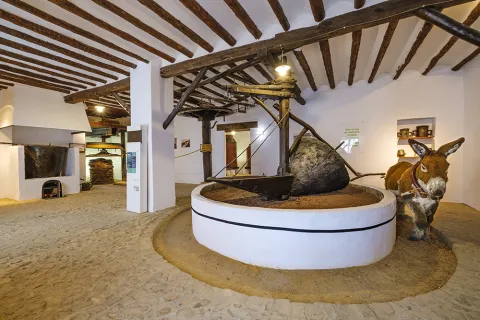
At the bottom is the machinery of a 19th century mill, faithful reflection of the production systems of the time, as well as original tools and useful. At the top you can deepen the culture of olive and oil, entering the world of the tasting ofextra virgin. There are rest areas, a projector with audiovisual to learn more about the olive cycle and the current production systems, as well as excellent panoramic views of the Fortaleza de la Mota, which rises imposing on the horizon, surrounded by the olive sea.
Finally we have a "Agro-shop" for sale of products as well as other typical jiennese products and a "Rincón Sensorial" to taste our oils. The entire facility has explanatory panels in English and Spanish. It is designed to be accessible to people with reduced mobility (lift, ramps...) and is heated. Free Wi-Fi is also available for visitors.
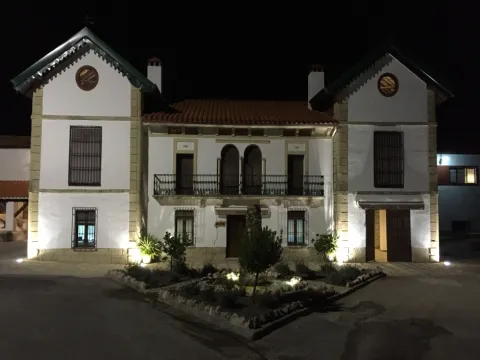
The museum is located in a building that is more than a century old, known as the factory of the Caserías de San Isidro. Alcalá Oliva has carried out a hard work of rehabilitation of all the buildings and their surroundings, returning to this place part of its former charm.
English, French and German.
The museum, formerly called the Archaeological Museum of Obulco, has two sites. In the Boabdil Torreon of the Porcella Castle built in 1435 by the Order of Calatrava, there are rooms 1 and 2. The rest of the rooms are located in the city hall, the former Royal Posite of the 18th century.
SOLA 1: Paleolithic and Neolithic, with legal and ceramic tools. Iberian culture of the city-state of IPOLCA, with ceramic red bands, cinerary urns, bronze exvotes, coins and Iberian sculptures.
SALA 2: Roman culture of the Ibero-Roman city of OBULCO, with tombstones, ceramics, coins, Corinthian capitals of Obulco and Roman sculpture.
TERRAZA: Magnificent views of the countryside of Jaén and Córdoba. Location of the various fields of Porcilla (Cerrillo Blanco, Alcores, City of Obulco, etc.).
SALA 3: Ibero-Roman culture, with development of vertical themes (sculpture, economy, rites, etc.).
It includes a guided tour of the Archaeological Park of Cerrillo Blanco, where an Iberian sculptural ensemble was found that for its number of pieces, as for its enormous artistic quality is the most important of the Iberian sculpture.
The museum manages several musealized deposits: the prehistoric fortified remains of the Los Alcores (III- I millennium) and the archaeological site of Cerrillo Blanco (a funerary building of the 7th century BC with 24 tombs of inhumation in posa, where an Iberian sculptural group of the 5th century, exposed in the Museum of Jaén, was buried in large graves) and the site of Obulco (it shows the remains of a main street with Roman houses of the 1st century AD).
The Porcilla Museum is located in the 15th century Boabdil Tower, in the historic centre of the town. Dedicated to prehistory, to Iberian and Roman culture, it has an important collection of Ibero-Roman sculptures. This museum offers guided tours with prior appointment and activity programming throughout the year that you can find your website.
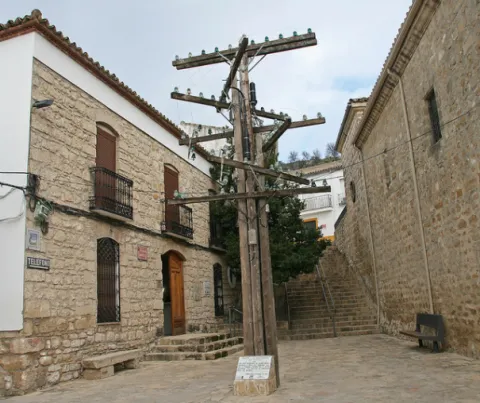
It was opened in December 2010 thanks to an agreement of the City Council of Canena with the Telefónica Foundation, which yielded many pieces and equipment from the previous historical-technological collection of the Foundation in Madrid (in the building of Gran Vía), which was dismantled in December 2007. The Canena Telecommunications Museum shows equipment, many of which are in operation, covering almost all telecommunications disciplines associated with the telephone service: terminals (both old and modern phones, including a pay-with-coins phone booth), switching, transmission, cables (some submarines), radio, satellite, external floor telephone posts, etc.
It has various exhibition spaces distributed on two floors and dedicated to manual and automatic switching, terminals, urban and interurban networks, data transmission, radio, satellites, mobile, electronic and regulatory components.
This original museum offers visitors an overview of the evolution of telecommunications, from the most primitive remote communication systems to the latest in satellite and Internet connections. This is a tribute to telecommunications professionals and the technologies that have made them possible.
The museum, considered a Good of Cultural Interest, is divided into several spaces; three buildings that house different models of almazaras, a garden of olive varieties from several countries and the Bodega.
Along the route of the visit, steps are shown to obtain the oil, from the most traditional methods of olive cultivation to the modern marketing and packaging processes.
In the museum you can know the characteristics of olive oil, value its properties and deepen the different aspects that define its quality, gradation, color, etc. You can also physically know the different varieties of olive trees, as it has a garden with trees of each variety, but it deserves special attention, a 19th century winery known as the "Cathedral of Oil." In addition, the complex has a conference room for 230 people. Oil caters are made for groups, tasting and other activities related to the olive tree.
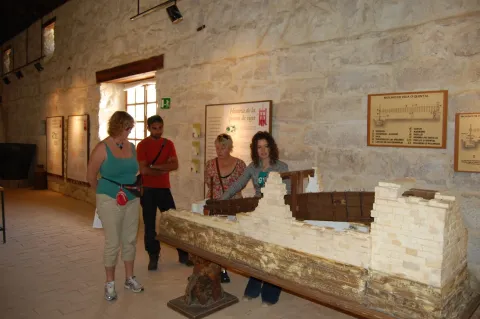
The Museum of the Olive Culture is part of the "Hacienda La Laguna" complex, located in Puente del Obispo, eight kilometres from Baeza. With an extension of more than 4,000 square meters is the museum on the largest oil in Spain. It contains models of old mills in which the three fundamental processes of oil production are collected: grinding, pressing and decanting.