Saltar al contenido principal

Chilluevar Centro Rural Accommodation

Submitted by brandcode_deweloper on
Id
4397612
Descripción
Breve descripción

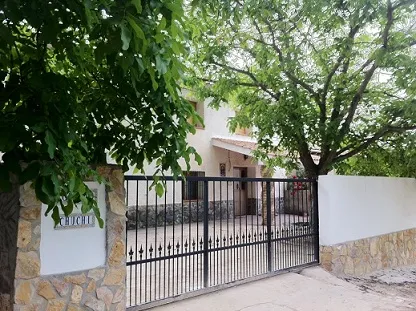
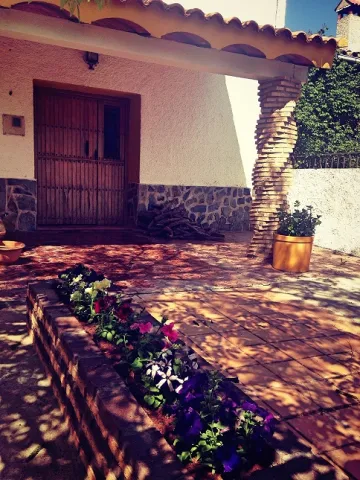
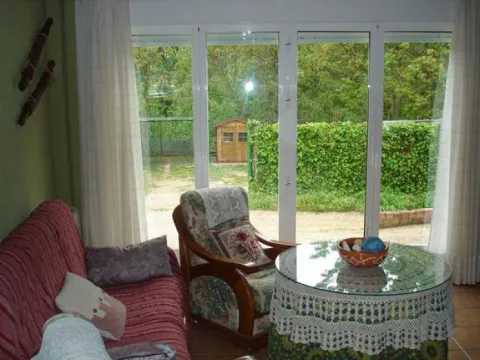
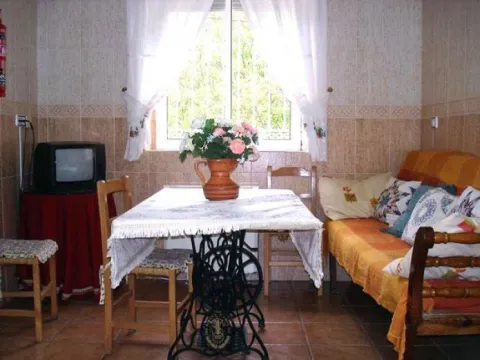
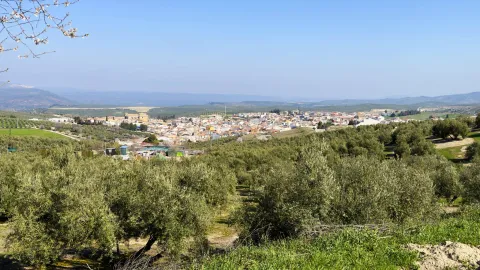
Chillúevar is a municipality in the province of Jaén where you can enjoy a natural environment and an interesting cultural offer. Accommodation Rural Chillúevar Downtown is the perfect place to stay in Chillúevar, rest and relax. The comfort and rest are assured.

Información de contacto
Teléfono
953 717 219 / 620 108 475
Correo electrónico
rosarosaegg@hotmail.com
Ubicación
Código Postal
23477
Latitud
38.002347
Longitud
-3.030787
Dirección
Av. Andalucía, 28, 2º
Municipio
Ubicación en el mapa
POINT (-3.030787 38.002347)
Tipo de alojamiento
Imágenes
imagen
Image
casarural_52.jpg
Imagen principal
Activado
imagen
Image
casarural_51.jpg
Imagen principal
Desactivado
Loading map
Preparing points of interest and routes...

El Pino Holiday Home

Submitted by brandcode_deweloper on
Id
4407369
Descripción
Breve descripción

The cortijo el Pino is a beautiful country house located 1.5 km from the village of Cortijos Nuevos, in the heart of the Sierra de Segura.

Información de contacto
Teléfono
953 496 233 / 615 657 830
Ubicación
Código Postal
23293
Latitud
38.245681
Longitud
-2.735714
Dirección
Cortijo El Pino
Distrito
Ubicación en el mapa
POINT (-2.735714 38.245681)
Tipo de alojamiento
Imágenes
imagen
Image
pino.jpg
Imagen principal
Activado
imagen
Image
pino1.jpg
Imagen principal
Desactivado
Las habitaciones

It has

  • 3 rooms with double bed
  • 2 double rooms
  • 1 single room
  • Option of bunk beds and extra beds.
  • 3 full bathrooms
  • 2 kitchens
  • 2 very spacious rooms
Loading map
Preparing points of interest and routes...
El Hotel

It has privileged views of the saw and its villages, as it is in the tranquility of the mountain.

Camino del Río Rural Accommodation

Submitted by brandcode_deweloper on
Id
4405137
Descripción
Breve descripción

Located in the town of Mogón, we find the rural stay Camino del Río, which has a capacity of 8 to 10 people.

Información de contacto
Teléfono
646 402 789 / 914 992 203
Sitio web
www.caminodelrio.com
Ubicación
Código Postal
23310
Latitud
38.071013
Longitud
-3.034874
Dirección
C/ Miralrío, s/n
Municipio
Ubicación en el mapa
POINT (-3.034874 38.071013)
Tipo de alojamiento
Imágenes
imagen
Image
ALOJAM.%20RURAL%20CAMINO%20DEL%20RIO.jpg
Imagen principal
Activado
imagen
Image
camino.jpg
Imagen principal
Desactivado
Loading map
Preparing points of interest and routes...
El Hotel

The stay has all thenecessary amenitiesto ensure a pleasant and comfortable stay; you can also prepare a tastybarbecuewith family or friends.

THE HOUSE:

- The kitchenIt has all the utensils for cooking and eating 10 people: Ceramic kitchen, electric oven, Microwave, Fridge, Freezer, firewood Fireplace, Washing machine, Menaje, etc.

- We count on3 double roomsand 2 with double bed that have everything we consider basic for one bedroom: Ropero, Chairs, Mirrors, Bed Wiring, Toilet Wiring, Mantas, Mesitas, Night Lamps, Iron and ironing board.

- The house has a comfortablevery cozy living roomwith: TV, DVD, SAT, Sofa and armchairs, dining table, Mesa-stretcher, Brasero.

- We count ontwo bathroomsOne on each floor of the accommodation: Ground floor bathroom with sink, WC and shower with pump and upper floor bathroom with sink, WC, bidet and bathtub.

As regardsenvironment,Mogón is set up as a beautiful village near Sierras de Cazorla, Segura and the Villas, which means anatural magic environmentand full ofTake it easy.

Welcome.

Fuente de la Mujer I Rural Tourist Accommodation

Submitted by brandcode_deweloper on
Id
4395367
Información de contacto
Teléfono
953 494 053
Ubicación
Código Postal
23391
Latitud
38.429699
Longitud
-2.686562
Dirección
Aldea Fuente de la Mujer, 1
Distrito
Ubicación en el mapa
POINT (-2.686562 38.429699)
Tipo de alojamiento
Imágenes
imagen
Image
casarural_14.jpg
Imagen principal
Activado
imagen
Image
casarural_60.jpg
Imagen principal
Desactivado
Loading map
Preparing points of interest and routes...
El Hotel

The ALOJ. T. RURAL Fuente de la Mujer I de Torres de Albánchez in the province of Jaén, is a nice comfortable, comfortable and very nice rural house. Ideal stay to enjoy, meet and sightseeing Torres de Albánchez and its surroundings or simply spend a few days of disconnection

Cazorla Youth Hostel

Submitted by brandcode_deweloper on
Id
2157272
Descripción
Breve descripción

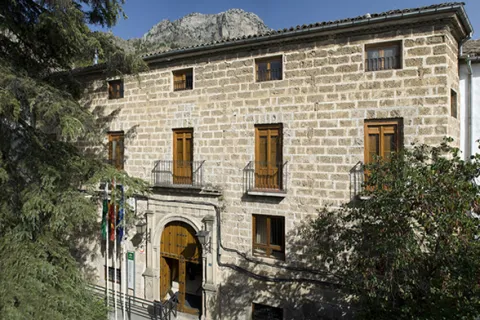
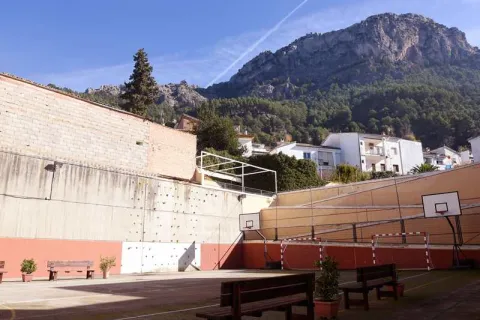
The Youth Inturyoung Hostel Cazorla is located in the historic building of an old convent. An unusual place that offers interesting services to the visitor: swimming pool, sports courts, rocodrome, tourist services, buffet dining...

Información de contacto
Sitio web
www.inturjoven.com/albergues/jaen/albergue-inturjoven-cazorla
Correo electrónico
cazorla.itj@juntadeandalucia.es
Ubicación
Código Postal
23470
Latitud
37.912493
Longitud
-3.001043
Dirección
Plaza Mauricio Martínez, 6
Municipio
Ubicación en el mapa
POINT (-3.001043 37.912493)
Tipo de alojamiento
Imágenes
imagen
Image
albergue-inturjoven.jpg
Imagen principal
Activado
imagen
Image
Cazorla_2017_Habitaci%C3%B3n%202PC.jpg
Imagen principal
Desactivado
imagen
Image
Cazorla_2019_Piscina%20remodelada.jpg
Imagen principal
Desactivado
imagen
Image
Cazorla_2017_Pistas.jpg
Imagen principal
Desactivado
imagen
Image
Cazorla_2017_Sal%C3%B3n.jpg
Imagen principal
Desactivado
imagen
Image
Cazorla_2017_Piscina.jpg
Imagen principal
Desactivado
Aforo
129
Loading map
Preparing points of interest and routes...
El Hotel

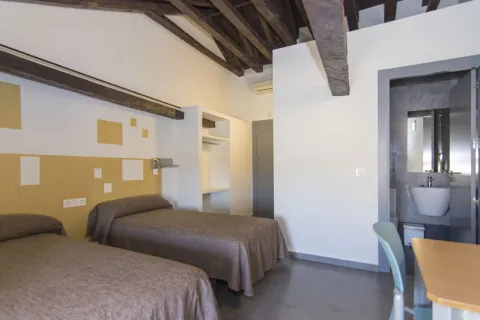
An important renovation has been undertaken on this hostel, with all its rooms with the bathroom inside.

This hostel is very well located in the centre of the village, so it becomes a perfect place to explore the Natural Park of Cazorla and enjoy the many possibilities of tourist, ecological and sports routes of this natural space: a luxury to breathe pure air and enjoy the leisure in a healthy, fun and young way.

Adventures and nature await you in Cazorla!

Albergue El Hornico Hostel

Submitted by brandcode_deweloper on
Id
2162143
Descripción
Breve descripción

The hostel El Hornico is located in the middle of the mountain within the Natural Park Sierras de Cazorla, Segura and Las Villas. They are located 10 Km from Pozo Alcón, in Jaén Province.

Antigua Casa Forestal rehabilitated and owned by the Consejeria de Medio Ambiente has facilities that are perfectly adapted to accommodate groups and develop Environmental Education Programs, as well as activities of Active Tourism for both its infrastructure and its location.

Información de contacto
Teléfono
667 227 275
Sitio web
www.aventurocio.com
Correo electrónico
info@aventurocio.com
Ubicación
Código Postal
23485
Latitud
37.774551
Longitud
-2.923538
Dirección
Pantano de la Bolera, s/n
Municipio
Ubicación en el mapa
POINT (-2.923538 37.774551)
Tipo de alojamiento
Imágenes
imagen
Image
el-hornico.png
Imagen principal
Activado
imagen
Image
habitaciones-hornico.jpeg
Imagen principal
Desactivado
imagen
Image
albergue%20%281%29.jpg
Imagen principal
Desactivado
imagen
Image
el-hornico.jpeg
Imagen principal
Desactivado
imagen
Image
turismo%20%281%29.png
Imagen principal
Desactivado
Aforo
48
Las habitaciones

2 rooms with 6 places with bunk beds, with 2 double for disabled. All with spring mattresses, protective and wardrobe for clothes and luggage. They also have sheets and blankets. All rooms have a bathroom with service, sink and shower.

Loading map
Preparing points of interest and routes...
El Hotel

It has two facilities: an old rehabilitated forest house located next to a Botanical Garden and a newly built Training Center located next to the Pantano de la Bolera, one of the most beautiful areas of Andalusia.

Villanueva del Arzobispo

Submitted by brandcode_deweloper on
Id
787624
Perfil de redes sociales
Facebook
https://www.facebook.com/villanuevadelarzobispo/
Twitter
https://twitter.com/ayuntvillanueva
Instagram
https://www.instagram.com/turismo_vva_del_arzobispo/?hl=es
Descripción
Breve descripción

Villanueva del Archbishop is a population in the the eastern end of the region of the Villas. Part of its term is included in the Natural Park of the Sierras de Cazorla, Segura and Las Villas, where there are many areas of extraordinary environmental and landscape value.

The geographical situation of the municipality should be noted, as it is the meeting area of four comarcas: County and their red lands, the Loma and its extensive olive fields, Safe with the largest natural park of Jaén of extraordinary beauty and that of Las Villas, made up of four municipalities, Villanueva being one of them. The Conistorio also includes the localities of Gútar and Montesina Barrio.

An important area is irrigated by the rivers Guadalquivir and Guadalimar, which leads to fertile lands that favour agricultural crops, including large olive fields.

Its economy is based primarily on the olive cultivation and obtaining olive oil. It also has an industry mineral water bottling machine.

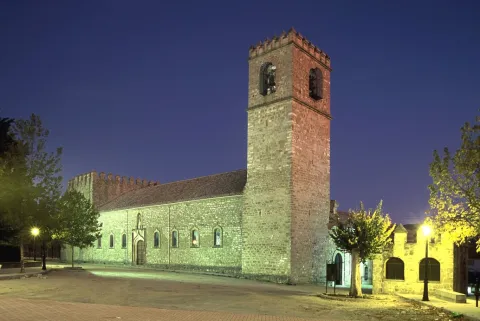
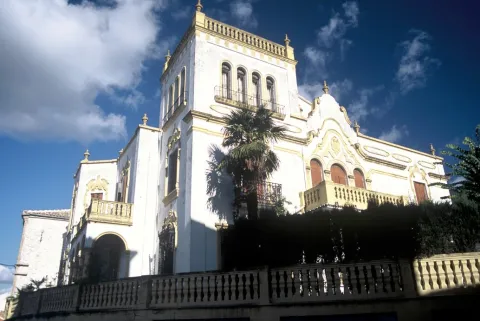
Its monumental heritage is important. Among others are the church of San Andrés, the church of the Vera Cruz, the Convent of Sana Ana, the bullring, the Calvary Sanctuary, the House of Arcos and, on the outskirts, the Sanctuary of the Virgin of the Fuensana.

Telecomunicaciones
Teléfono
607 184 628 
Sitio web
www.villanuevadelarzobispo.es
Fax
953 451 278
Correo electrónico
turismovillanuevadelarzobispo@gmail.com
Ubicación
Nombre
Villanueva del Arzobispo
Latitud
38.168770
Longitud
-3.007650
Ubicación en el mapa
POINT (-3.00765 38.16877)
Imágenes
imagen
Image
532806cd-619f-7cc9-44c2-092f56943a53?t=1599779812435
Imagen principal
Desactivado
imagen
Image
7990b2d2-d948-48a8-a614-11375318478c?t=1599779812524
Imagen principal
Desactivado
imagen
Image
738190d2-92fe-d42a-cd21-dee89312ab66?t=1621521463540
Imagen principal
Desactivado
imagen
Image
fccf37b3-51ea-0d40-d2d3-208d29d4b0fb?t=1599779812628
Imagen principal
Desactivado
imagen
Image
98803030-2a13-91ec-885d-33c12edb2ac3?t=1599779812669
Imagen principal
Desactivado
imagen
Image
ab294870-3b1c-2c43-c6d9-d9e82cd58348?t=1621521463664
Imagen principal
Desactivado
imagen
Image
fa16b75d-5183-daa9-6ae1-50f481dec7f2?t=1621521463705
Imagen principal
Desactivado
imagen
Image
4ead314e-cf27-6335-e563-707c37a36d70?t=1621521463848
Imagen principal
Desactivado
imagen
Image
80863fbc-ff97-c637-eddd-c388f63d4e11?t=1599779812778
Imagen principal
Desactivado
imagen
Image
660ffa23-8ba0-ab1e-b463-727ca59414bb?t=1621521463960
Imagen principal
Desactivado
imagen
Image
52d201af-c51c-763e-9c0c-8ef4115edc82?t=1599780126028
Imagen principal
Desactivado
imagen
Image
88ddd9fb-5893-6275-8058-a9c69b5ed6e2?t=1621521464134
Imagen principal
Desactivado
imagen
Image
73c4d06c-c93d-e031-dd46-d8ed1d675189?t=1599780126074
Imagen principal
Desactivado
imagen
Image
69c1c5b9-c705-6242-ea11-b4458d3a582b?t=1599780267391
Imagen principal
Desactivado
Información adicional
Curiosidades
  • Punto de información en el Ayuntamiento: Avda. de la Constitución 5, lateral derecho del edificio.

  • https://villanuevadelarzobispo.es/turismo/  

  • OFICINA DE TURISMO 
    Avenida de la Constitución Nº5. Tel. 607 184 628


Imágenes cabecera
imagen
Image
Villanueva del Arzobispo
Imagen principal
Desactivado
Datos de interés

Tourist area: Serras de Cazorla, Segura and the Villas
Distance to the capital (km): 99
Altitude over sea level (m): 688
Extension (km2): 177
Number of inhabitants: 7,703
Gentillo: Villanovens
Postal code: 23330

Videos
Video file
Cultura
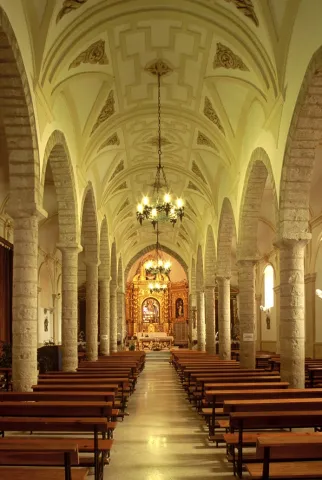
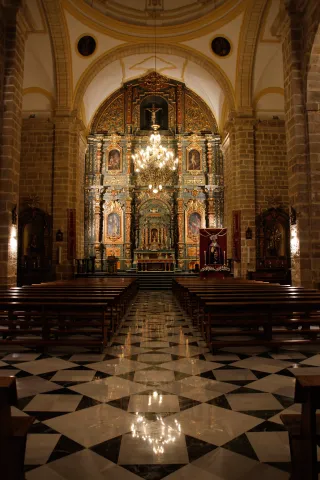
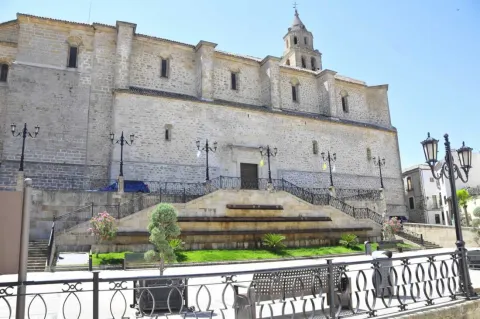
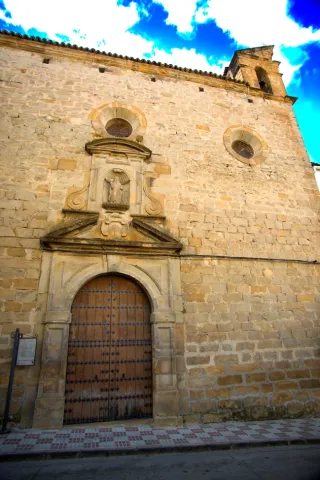
  • The Church of St. Andrew. It dates from the 16th century and is located in the historical center of the town. It rose on the pillars of the ancient medieval fortress, from which two of the four original towers, attached to the temple, are preserved, perfectly synthesizing the military and religious architecture. It has a mixture of different architectural and artistic styles: the Renaissance, Gothic baroque and classicist, due to its long construction. On top of the main door, which is of a classicist style, we observe a hornaine that contains the image of St. Andrew and that crown a half-point arch. Inside it consists of a single ship with side chapels that are linked through half-point arches on a ledge that runs through the temple. The major altarpiece is baroque. It has been declared Good of Cultural Interest and Spanish historical heritage.

  • Convent of Santa Ana. It is located in the old town. It was founded in 1540 and from the beginning became one of the most important of the Four Villas. In the walls of the refectory, the 16th century wall paintings and the shield of Santo Domingo are preserved. Inside is the church of Santa Anawith baroque altarpiece and a courtyard with Renaissance arches.

  • The church of the Vera Cruz. Built in the 16th century, with a Renaissance style façade. It consists of one ship in two sections, with chapels on each side. In its interior we find an extraordinary size of the Christ of the Vera Cruz, work of Mariano Benlliure, which replaced the primitive image stolen during the civil war. Rest on an extraordinary 1899 silver cross. The Christ of the Vera Cross is the patron of the town.

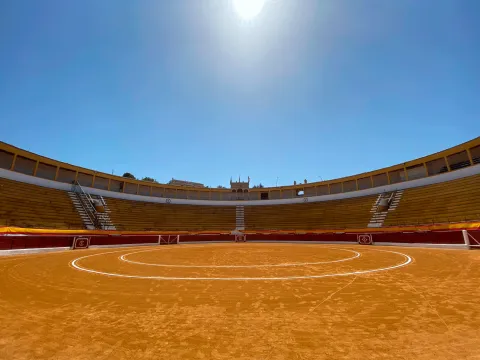
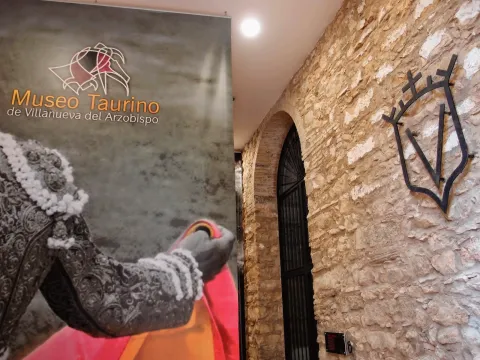
  • Toros Square. Built in 1928 it is neomudéjar style, where the use of brick and horseshoe arches that provide originality and elegance stands out. It is one of the largest bulls in the province, has all the necessary services and capacity for 6,000 people. The interior of the square houses the Taurino Museum of Villanueva del Archbishop.

  • Sanctuary of the Fuensana. It is of Romanesque style and was founded in the 13th century. It has subsequently been reformed. Because of its construction and the existing matacans it is considered that it was first a defensive fortress. Here is the image of the patron of Villanueva of the Archbishop, the Virgin of the Fuensanta. It has been governed by the Trinitarian religious order since 1884. The patron's holiday is held on September 8.

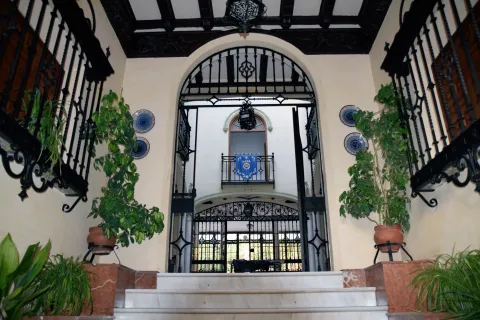
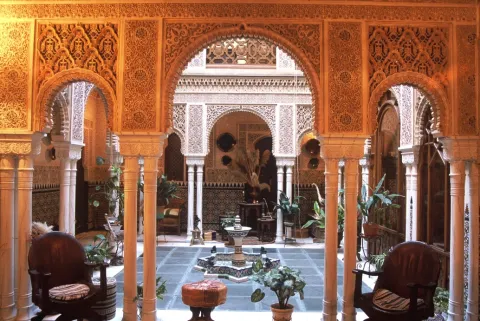
  • House of the Arches. It was built in 1928. With Renaissance lines on the fronts, they are combined with the baroque filiggranes of the bars and the Andalusian ceramics that kill the facade. It is chaired by six arches crowned by so many other ceramic vases. Its courtyard is a Nazi replica that imitates the palaces of the Alhambra. This building received the provincial beautification award.

Other heritage monuments: Hermitage of Jesus of the Mount, Hermitage of Saint Blas, Viaducto / Old railway way. The municipality is splashed with lordship houses like the Palacete de la Familia Cosano, Old Casino or Commercial Circle, House of the Arches, House of the Vélez Family or Sagrada Familia Palaceamong others.

Naturaleza

Villanueva del Archbishop is one of the four villas that, together with Villacarillo, Iznatoraf and Sorihuela del Guadalimarthey make up the region called Las Villas.

A town where there are many sites of extraordinary environmental and landscape value that are the gateway to the fascinating Sierra de las Cuatro Villas.

By its municipal term the rivers run Guadalquivir and Guadalimarwhich add beauty to the landscape, wealth to both vegetation and fauna. Surrounded by a sea of olive trees and cereal fields, part of its territory is included in the Natural Park of the Serras de Cazorla, Segura and Las Villas.

It is one of the localities where the vegetation has a greater variety, along with the species of the Alta mountain, such as the laricio pine or the acebo, coexist with other species that develop at a lower height, such as the black pine, the tejo or the boj and with those that develop in the lower area: melojo oak, the oak, the oak, the cucumber, olive trees, and other endemic and aromatic plants.

To this vegetation we will add the one that develops on the banks of the rivers: chopos, willows, mumberas, tarais...

The fauna, in line with the plant variety and the many habitats in the term, is also abundant and diverse.

To the raptures and scavengers of the mountains, eagles, broken bones, lethonated vultures, are joined the species, both of major hunting, deer, maflon, boar; as of minor hunting, rabbit, hare, parrots, gits, badges, kernels...

Without forgetting the typical birds of the olive tree, which either live in it, or feed on the migratory movements: curuca, verderon, zorzal, petirroja... Nor fail to mention the fauna of the rivers of crystal waters in their high courses: trout, barbo, nutrites, salamandra... Just like reptiles and amphibians.

A privileged world where Nature is the main attraction of these lands. Nothing better than to discover it in one of the many places in municipal terms, we will point out two recreational areas and have good accessibility:

  • The Charco of the Pringue or Charco of the oil. Located about 20 km. of the city centre, is a recreational area that has a water remnant in the same river Guadalquivir. It has a wall and a gate, which allows to empty it completely. The water outlet is a roundabout, which in addition to continuously renewing the water from the remnant, serves to allow us to pass from one side to the other of the river. The name so curious, is because they tell that a donkey loaded with pear of oil precipitated from the narrow upper path and fell into the remnant, stained with oil water.
  • Cueva del Peinero. It is one of the most abrupt and steep places in the park. Its natural exit is the impressive throat where the river runs Avocados Grande, cThe crystal clear waters descend into successive waterfalls. On the contrary, in the recreational area, the river is sorely and silently spread between the thick vegetation of willows, chopos and nozzles. The huge lanterns that close the site rise more than 600 meters, forming scalated poyos covered with fully virgin vegetation by the difficult access. It tells the tradition that this cave was inhabited in the summer by a craftsman who was dedicated to making boj wood utensils, very abundant material in the area, and among other objects, made hair combs.

Fiestas y Eventos

The main parties in Villanueva del Archbishop are:

  • San Antón. January 17. They turn on "luminaires" in different places and the neighbors gather around drinking the traditional artisan wine.
  • San Blas. It is held on February 3. This day the villanovens come to the hermitage of the Holy, lighting a lumnaria around it and celebrating the tradition of passing the garrot through the throat so that San Blas will protect their health throughout the year.
  • Holy Week. Living representations are held dating back to the 17th century. They stand out for their realism and expressiveness. The different cofradies and cofrades process throughout the week. It has a great heritage in sizes and images that represent the passion of Christ.
  • Festivals of the Christ of the Vera Cross. These parties are held in the days before and after May 3. On that day, the Christ goes out in procession through some streets of the town and blesses the fields in the era of the Virgin of the Head. Verbenas and cultural activities accompany religious acts.
  • San Isidro. It is celebrated on May 15 and is the patron of farmers. In the parish of San Andrés The Eucharist is celebrated, followed by a procession with the Holy one on the streets, accompanied by tractors, agricultural machinery, horses... And at the end of the day a sisterhood meal is held.
  • San Fernando. It is held in Gútar May 30 with a traditional Eucharist, meals, drinks and verbena.
  • Corpus Cristi. The streets of the procession tour are embellished with flowers, carpets, paintings, plants to magnify the passage of Corpus Cristi. End of May, early June.
  • The Night in White. In July, with increasing demand and participation, a cultural night is celebrated: theatre, guitar, music bands, little children, dances... A very cultural and emotional night.
  • Festivals of Our Lady of the Fuensana. Between 7 and 11 September, the great days of Villanueva del Archbishop take place. On the 7th and 8th, in the morning, the procession and the traditional Romeria are held in the vicinity of the Sanctuary. From that day on the party is moved to the city centre with taurino shows, concerts and lots of activities. The final clasp put it, the last day, the fireworks.
Gastronomía

The gastronomy is traditional and varied, highlighting these dishes:

  • Cod onions, Cod stew, potatoes and onion.
  • Ajoharina, tomato saffrito, potatoes and eggplants with red pepper, garlic, cumins and water. Add flour to thinner.
  • Whites, salty, hard and crispy cakes accompanied by tomato and raw beans.
  • Garlic, rice with chopped onion, pig blood, butter and fences.
  • Gachamita, potatoes, garlic, oil, flour and water.
  • Other: Pipirrana, crumbs, gachas, "sleeping" cakes.

Warehouse:

  • Drunk, mass of flour, roasted olive oil, spirits, lemon, cinnamon and sugar.

Typical drinks:

  • Membile or fig liquor, crow, misteland traditional came from San Antón.

Historia

In the Arab era, Villanueva del Archbishop, was one of the fortresses that reinforced the village of Iznatoraf. It was a village like a few inhabitants, called "La Moraleja." The Arabs who lived in those places chose it as a leisure area, where horse races were organized and the artisans set up their workshops.

After the conquest by Fernando III of Iznatoraf, the village of "La Moraleja" was donated by the king, in the early 13th century, to Cazorla's advance.

The town as such in 1396, thanks to the request made by the Archbishop of Toledo to King Henry III, who granted him a Letter from Privilegio which is preserved in the Town Hall of the Villa. By this Charter the city was founded with all the privileges possible at that time: market, police and cessation of the payment of taxes to Iznatoraf. But an obligation was imposed on him: to lift a wall with two doors and to close the city in five years.

The municipality became the most important core of Señorío de Cazorlawith several flour mills on the Guadalquivir River.

Miguel de Cervantes lived for some time in this village as a tax collector.
Why did the municipality get this name? Villa, for the title given; new, because until that moment it did not exist as such and Archbishopin honor of Mr Pedro Tenorio, who was called the ecclesiastical office.

The city was moving forward and Philip II granted him criminal jurisdiction in 1573.

During War of IndependenceThe people became a refuge for guerrillas who harassed the French troops. As a result of these events, some convents were damaged and the Charter of Privilegio disappeared. After many years she appeared in Linares, she was restored and kept well guarded in the City Hall because she is the oldest document we have.

In 1920 he received the title of City from King Alfonso XIII.

Loading map
Preparing points of interest and routes...
Imagen principal
imagen
Image
Villanueva del Arzobispo
Imagen principal
Activado

Villacarrillo

Submitted by brandcode_deweloper on
Id
4581827
Perfil de redes sociales
Facebook
https://www.facebook.com/VillacarrilloAyuntamiento/
Youtube
https://www.youtube.com/channel/UCSS-7wNamznXxiHQlHe-f-Q
Descripción
Breve descripción

Municipality located in the eastern part of La Loma and the Four Villas, in the north-eastern part of the province and at 794 m altitude. It has two well-defined orographic sectors, on the one hand the area of the countryside, of land alominated and occupied by a true "sea of olive trees," and on the other, the area of the Sierra de las Villas, where the coniferous, the bushes and the low mountain define the landscape.

Several rivers irrigate their territory: Guadalimar, which serves as a natural border with the region of El Condado; Guadalquivir, which separates the countryside from the saw, with its two tributaries, the Huascebas Grande and Avocados Chico.

The municipality of Villacarillense includes the following population units: Villacarillo, Cabeza de Mogón, La Caleruela and Agupación de Mogón y Arroturas.

The economy is based almost exclusively on the cultivation of the olive tree, we cannot forget that Villacarillo is currently the world's largest olive oil producer.

The historical-artistic heritage of the town is much and varied. Among others, the Church of the Assumption, the Church of Santa Isabel de los Angeles, the City Council, the House of Inquisition, anti-aircraft shelters, as well as numerous palaces and houses of different times and great artistic interest.

Telecomunicaciones
Teléfono
953 440 000
Sitio web
www.villacarrillo.es
Fax
953 440 000
Ubicación
Nombre
Villacarrillo
Latitud
38.117650
Longitud
-3.079750
Municipio
Ubicación en el mapa
POINT (-3.07975 38.11765)
Imágenes
imagen
Image
4988dd3b-5735-8c56-439d-1c1f61fd5155?t=1595533596392
Imagen principal
Desactivado
imagen
Image
Villacarrillo
Imagen principal
Desactivado
imagen
Image
c3c668b7-f134-fcb6-d9bb-395c42ced8d4?t=1595533644381
Imagen principal
Desactivado
imagen
Image
b5048a37-5162-490f-2a58-bd4b21064b02?t=1595533722236
Imagen principal
Desactivado
imagen
Image
40dab106-ae56-70ee-351e-83887ba49a0c?t=1595533692248
Imagen principal
Desactivado
imagen
Image
c064696c-14a6-9059-a4bb-73793690c862?t=1595533703628
Imagen principal
Desactivado
imagen
Image
3f3b062a-a83a-65b8-dc1b-0b2d71c7d7fd?t=1595533715604
Imagen principal
Desactivado
Información adicional
Curiosidades

Paseo Santo-Cristo

Imágenes cabecera
imagen
Image
Villacarrillo
Imagen principal
Desactivado
Datos de interés

Tourist area: Serras de Cazorla, Segura and the Villas

Distance to the capital (km): 84.3

Altitude over sea level (m): 785

Extension (km ²): 239.37

Number of inhabitants: 10,726

Gentilicon: Villacarillenses

Postal code: 23300

Videos
Video file
Cultura

- Parish of the Assumption.It's the most important monument of Villacarillo, is a proud building built between the 16th and 17th centuries, in which the last forms of the Gothic and the first manifestations of the Renaissance coexist. It is one of the great works of Andrés de Vandelvira, who set up his first home here, married the neighbor of this city, Luisa de Luna, and had seven children. The construction works begin in the year 1540, setting up the Vandelvirian project on the primitive medieval castle of Mingo Priego, part of which is integrated into the upper dependencies of the temple, now converted into a museum.

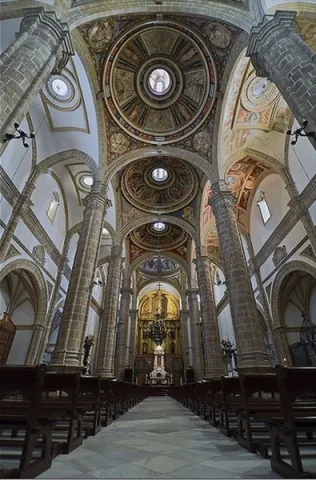
The Church of the Assumption is extraordinary for the uniqueness of its volumetric profile, the inner spatial grandiosity, the originality and beauty of its vaults, and the integration of medieval traditions into Renaissance classicism. It is one of the most significant churches of the Renaissance in the diocese of Jaén. National Monument since 1931. The interior is of basic and three ships with the same height separated by high and slender pillars that complete the feeling of a monumental set. Even with Gothic resabies, visible on the pillars and side ships, it shows what will be the idea of a Christian temple that Vandelvira has, dominated by vaults of a vanish type. On the side walls, hornadine chapels are opened, which are covered with nerve vaults.

The Central cover It is formed by a beautiful succession of half orange domes with lanterns on decorated breasts. We can imagine Vandelvira and his assistants during the first years of the construction of this church, large wooden scaffolding, the noise of the quarries, piles of stone to be turned into armchairs and the caleros selling lime for the argamase. Without a doubt, the most curious image should be the perplexity of the elderly, seeing such thin pillars on the sides of a great central ship, nothing to do with the churches of the area, or the recite Sanctuary of the Virgin of Fuensanta, in the nearby Villanueva of the Archbishop. Very important will be all the pictorial decoration of vaults, The work of Peter of Raxis, mainly dated from 1575, representing scenes of the Old Testament and the Passion of Christ.

The altarpiece, Baroque, by Juan Gómez Lobo, from Toledana, in 1670; Chapel of the Christ of the Veracruz, with his baroque shrimp of the 18th century and the Sacristywhich begins to be built after the temple is finished at the end of the 16th century, in which Alonso Barba must intervene, on what had until then been a parish of Santa María del Castillo of Gothic style. It has a rectangular floor, with a cover divided into three sections with vaulted vaults.

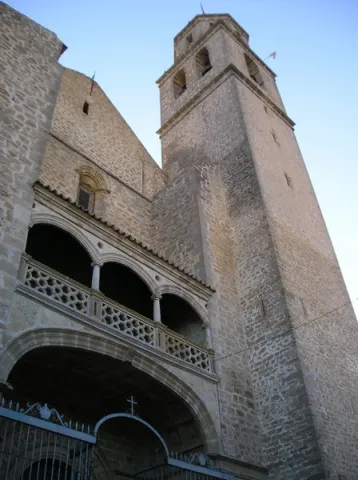
The Puerta de Sol and Door of the Umbria are the main accesses to the temple. The tower designed by Vandelvira is quadrangular, topped by a body of bells, crowned by a regular octagon and petreous cone and located on the right side of the main door, Puerta del Sol, its height is 56 meters. The climb of stairs is helical. In Parish Museum of La Asunción the collection of baroque goldsmiths of the 17th, 18th and 19th centuries, as well as misals, bibles, casullas, etc.

- Church of Santa Isabel de los Angeles is one of the most important monuments of Villacarillo, of Renaissance style. It is located on Ramón and Cajal Street, popularly known as "Cuesta de las Monjas." Old Franciscan convent, built in 1645 and made by the architect Juan de Aranda Salazar. The interior of a single ship with a barrel vault, with high chorus to the feet and remarkable frescoes that are attributed to the village of Escudero de la Torre. The baroque-style golden altarpiece has salomonic columns that are decorated with grapes, sardines and glass leaves. The facade is made of stone with irregular armchairs and a simple three-body swordsman.

The cover, elegant and classic, with a garden in which you will find the stone image of Santa Isabel of Hungary. In 1812, a solemn act of swearing of the Constitution of Cadiz, popularly known as "The Pepa". The building attached to the church was a closing convent until 1737, a public prison during the French occupation and, from 1884, a hospital to which the services of the former San Lorenzo Hospital were transferred. Between 2012 and 2013, a number of work has been done to recover the damaged church areas. Today it houses several municipal units.

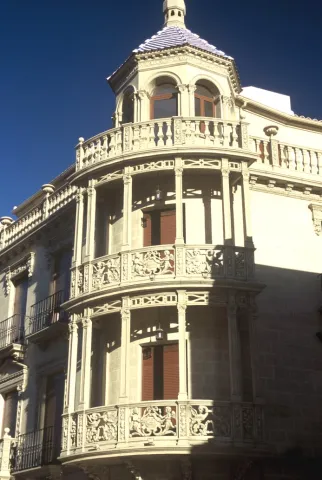
- Municipal Public Library. It is a 19th century building considered of high value, with two floors of height and marked modernist and eclectic character in its architectural concept. Inside, the staircase and the entrance fireplace stand out. Also, the decoration of the ancestors of the low windows and balconies is remarkable.

- City Hall. In a neoclassical style, it was built in the 19th century, with horizontal façade with three clearly differentiated floors and regularly distributed vain. It highlights his cover.

- The House of Inquisition. Located in the old town, on Repullete Street, it is a historic three-storey building built between the 16th and 17th centuries. The original facade, the grating and the rise of the gilded stairs with shields of the Holy Office of the Inquisition and a pontored cross are preserved.

- La Feria Streetthe main artery, in which the best examples of domestic housing are located, particularly bright in the casas- palaces like the House of the Rubials; Palace of Cardinal Benavides; Courts; current House of Youth and below we find that of the Regil, of the 17th century, which must have belonged to this family of quarters who also worked in the church.

- Vandelvira's house and bust. On the side of the church and on Vandelvira Street there is a house, at number seven, which is held by the house of the master in Villacarillo and a bust tribute to Vandelvira.

- Anti-aircraft shelters. They were built in the middle of the Civil War in 1937 to protect the population in the event of air bombardment. They never got used. They have subsequently served as a food store. In 2018 they were rehabilitated to be included in the city's heritage. The shelters and the Parish are within the program "Hidden Treasures" de la Loma and Las Villas.

- Archaeological settlements. Villacarillo is prodigy in archaeological discoveries that shed light on the successive peoples and civilizations who chose their territory to settle. Many of them are concentrated in the Turruñuelos fieldwhere the human presence has been documented, and almost uninterruptedly, from the Copper Age to the Roman era. The Castellones de Mogón, place located on the right bank of Guadalquivir, have documented the existence of a village appeared in the 6th century BC, From this place comes a relief known as the Domador de Caballos. The ceramic elements located west of the mouth of the Arroyo Del PocicoThey say it would be a necropolis.

- Other interesting constructions are the bridges in Villacarillo and Mogón, as well as the hydroelectric power plant of the Duende or the Gardening Mill of the Pepper in La Caleruela.

- Almazara Tourist Agricultural Cooperative Ntra. Mrs. del Pilar, the largest of the province and surely of Spain, built on a plot of 160,000 m ² located on the outskirts of the municipality, includes a factory of 12 production lines and more than 11,000 m ², four industrial ships, several wineries and a social building of 2 floors, with 1,800 m built.

Naturaleza

Villacarillo with an extensive municipal term, has two well-defined orographic areas:

- The countryside, which extends through the eastern end of the region of La Loma, occupying most of the municipal term. The orography of this area is of lomas with soft slopes and almost entirely covered by olive trees. It is the fauna of the olive tree that corresponds to the small-game cynetic species: hare, rabbits, partridges, clumsy pigeons, badgers... Without forgetting the olive fauna, both the birds that the shelter has here and those who feed on it on their migration trips. To point out the importance of insecticide birds to prevent the spread of pests in the olive tree, an ecological insecticide.

- The area of the Sierra de las four Villas, which is part of the Natural Park of the Sierras de Cazorla, Segura and Las Villas. One of the features that draws the attention of the landscape of this area, is the water abundance and lush vegetation. Four rivers go through its term: The Guadalimar, which is a natural limit to the region of El Condado; the Guadalquivirwhich serves as the border between La Campña and the Sierra and the rivers Huascebas Grande and Chico hives, whose waters will go to Guadalquivir. These waters make up an agribusiness relief, with large cliff slopes, enclosed valleys, canyons, flashlights... The water dissolves the limestone and while modeling the landscape will result in karmic formations such as caves, wells, bowling...

The vegetation In this area it is colonized by large-scale larix and black pines, strawberries, maples, boj, madroños, tejos, some of them millennia. It's an ideal place for it to develop cynetic species of major game like: the boar, deer, gamo... and it is very easy to see the royal eagle, the perdicular eagle or the black vulture or the leonated vulture lying in the rocks or flying over the skies of the area.

Walking the trails of the area is to have the opportunity to enjoy really wonderful panoramic, as you can see the Guadalquivir Valley, the Yelmo, the villages of La Loma or even Sierra Nevada.

Mirador: Road A-316 in its Torreperogil- Villacarillo-Villanueva del Archbishop section. It is just an example of the great olive groves that can be seen when travelling through the province of Jaén. In particular this stretch of road runs almost air in the interflude of the valleys of the Guadalimar and the Guadalquivir. From this area you can see thousands of hectares of olive trees in a single look, framed by the horizons of Sierra Morena on one side, and Sierra de Segura and Sierra de Las Villas on the other.

There are many places where we can enjoy an exuberant nature at the end of Villacarillo, but we will quote three of them: The Path of the Odera, the Cascade of Chorrogil and the reservoir of Aguascebas.

In Mogón, the StrawberryIt's a beautiful natural place surrounded by trees. There is the Astronomical Outreach Centre of La Fresnedilla, which aims to introduce the visitor into the various techniques and means of astronomical observation.

Fiestas y Eventos

- Holy Week. Festivity of great tradition in Villacarillo, dates back to the 16th century and stands out for the solemnity of its steps, for the Songs of Passion and Saetas, for the devotion of the cofrades and in general, of all the participants. They have processions every day, from Dolores Friday to Resurrection Sunday. The cornet and drum bands that spread along with the hermandades are originating in Villacarillo. The traditional "songs of passion" take place on Good Friday. This is all what makes this holiday really unique.

- San Isidro. On May 15, the image of San Isidro comes out in procession, accompanied by horsemen with typical costumes and beautifully decorated carrots, from the church of Our Lady of the Assumption, to the hermitage located in the Mastizal Road. There the Eucharist is celebrated in honor of the farmers' pattern and the fields are blessed. After the religious events, the attendees have in the surroundings of the hermitage a day of coexistence and a meal of brotherhood.

- Corpus Christi. It is the most important and traditional holiday of Villacarillo. It has been held for about 650 years and since the 19th century this celebration is held in the afternoon due to a papal bull (Lion XIII). The streets through which the custody will pass are covered with pots and pits, the floors are covered with carpets made with colored sawdust and flower petals, creating true works of art and covered with awnings and banners. To highlight the gothic silver custody in which the Body of Christ has been processed since the 17th century. The court leaves the Parish Church of Our Lady of the Assumption. The public influx during the celebration or following it from the balconies is a massive one. The National Poetry Prize "Corpus Christi" in Villacarillo has been held since 1975.

- Fairs and parties. The origin dates back to the trade fair and livestock which was held in the Middle Ages. Fernando VII gives him an official character. Parties between the 9-14 September in honor of the patterns, The Most Holy Christ of the Vera Cross and Our Lady of the Rosary. In the first days the traditional braggard coils, they go back to the 18th century and enjoy great popularity. The bullring that since 1955 has seen the first figures of the bullfighting, has gained a well-deserved prestige. Many cultural, sports, concerts, verbenas... organized by the City Council.

- Patterns. In honor of their patterns, in addition to the September parties are held individually, the 3 May, theLegacy of the Christ of the Vera Cross a Villacarillo; and 7 October the day of Our Lady of the Rosary.

- Serrano bowling. The serrano bowling is a way of expression, in the form of a traditional game or sport, which is shared and internalized by the inhabitants of the mountain massif that forms the current Natural Park of the Sierras de Cazorla, Segura and the Villas as part of their identity, with Villacarillo being the municipality that provides the largest number of practitioners and currently has seven active bowls.

Gastronomía

- The Calandrajos. They have as ingredients water, flour and salt for wafers. In the frying pan a saffrito of tomato, garlic, onion, green pepper, a little spicy and rabbit, hare or partridge. When cooked the meat is added the wafers and let be boiled. They're served in the same pan.

- The Migas. It was a dish used to take advantage of hard bread. They are fried in a frying pan of garlic teeth, to which the bread is added until it is touched. The crumbs are usually served with fried peppers, torreznos, sardines, grapes and melon.

- The Harina Garlic. A saffrito is made with tomato, onion, potato and eggplant. In the frying pan, dry red peppers are tasted, once toast is crushed in the mortar with cumins and salt. When everything is ready, water is added and at the end flour is to be weighed.
- The Popes' Hat. It is a mashed potatoes with garlic and is added a saffrito of tomato, onions, peppers, pepper and cumin. It rehogs all together and can be served hot or cold.
- The piirrana. and the damp, the latter with crushed chickpeas and cod strips. Others: La Gachamita, El Ajo de Morcilla, El Picadillo, la Morcilla Blanca and the Papajotes.

- Other: The Gachamita, the Ajo de Morcilla, El Picadillo, the White Morcilla and the Papajotes.

In the pastry shop:

- The Sweet Gachas. They are made from roasted flour, bread, milk, cinnamon, sugar, olive oil and matalahúva or anis. They're typical of All Saints Day.

- The Bitch. Made with a bread made of oil and egg cooked in the center. It's consumed on Easter.

- The Drinks. Oil, wine, flour, a little anise and sugar.

- The Sobaos. It's a big, baked, sugar-cooked rosy. Also typical of Easter.

- The fried thighs, Pestives, butter and butter cakes, made in a handmade way.

Historia

Although we have no archaeological research that can specify the antiquity of human occupation in the locality, the quality and quantity of the remains found in its surroundings allow us to go back to the Neolithic. Among these, we quote numerous legal instruments, such as neolithic axes, funeral tombstones of different historical times, the Treasure of Mogon, currently in the National Archaeological Museum, the Mercury God, in golden bronze, the Winged Sphinx of Phoenician origin or the Roman mosaic of Teatino. The Iberian and Roman settlements were very important.

Villacarillo originated in the Muslim era as a fortress defending Iznatoraf. After the conquest of this by Fernando III the Holy one in 1226, his evolution began. At first he was known as the village of Mingo Priego, which the king donated to the advance of Cazorla.

The growth and importance of the population were increasing until the archbishop of Toledo, Alfonso Carrillo, gave him the category of independent villa in 1449, giving him his name and shield. Category that was later confirmed by King John II of Castile and later, in 1498, by the Catholic Kings.

The richness of its cerealistic field will allow for a rapid growth maintained over the following centuries, the population has been consolidating and increasing, leading to the formation of the urban town of regular layout and large solariegal houses. In the 19th and 20th centuries it enjoyed an important boom that is reflected in the modernist buildings that splash their streets. By Royal Decree of 8 March 1877, Alfonso XII grants the City title.

Loading map
Preparing points of interest and routes...
Imagen principal
imagen
Image
Villacarrillo
Imagen principal
Activado

Torres de Albanchez

Submitted by brandcode_deweloper on
Id
783103
Perfil de redes sociales
Facebook
https://www.facebook.com/Ayuntamiento-de-Torres-de-Albanchez-1726466144283447/?tn-str=k*F
Twitter
https://twitter.com/torres_farmacia
Youtube
https://www.youtube.com/channel/UCYcO0DJOJlKSeUA2bLN0CmA
Descripción
Breve descripción

It is a municipality located at the north-eastern end of Jaén provincein a valley in the mountains of the Sierra de Segura. It has some pedanias such as Fuente Carrasca or Fucofría, toponyms related to its springs.

Su municipal term is found included in the natural park de la Sierra de Cazorla, Segura and Las Villas.

Their lands, of flare reddish tonesthey have numerous springs and archaeological sites that witness their past.

This municipality has an enclave, Madroño Roomlocated between the municipality of Villarrodrigo and the limits of the provinces of Ciudad Real and Albacete.

Torres de Albanchez enjoys of some of the best views of the province of Jaén, towards the Sierra de Segura and the plain of the Guadalimar. The numerous elevations that make up its municipal term provide natural viewpoints, such as the Mount Picarzo. It rises next to the Fort Tower, in a highly attractive mountain landscape, a mixture of olive groves, cereal lands, orchards and mountain areas.

In its monumental heritage we must highlight the Tower of Tributefrom the 14th century, which belonged to a castle of the Military Order of Santiago and the Parish Church of Our Lady of the Presentation.

Telecomunicaciones
Teléfono
953 494 005
Sitio web
www.torresdealbanchez.es
Fax
953 494 106
Correo electrónico
torresalbanchez@yahoo.es
Ubicación
Nombre
Torres de Albanchez
Latitud
38.415368
Longitud
-2.676730
Distrito
Ubicación en el mapa
POINT (-2.67673 38.415368)
Imágenes
imagen
Image
97b3fe58-a709-2d54-15a9-f3267420ae6c?t=1595353210034
Imagen principal
Desactivado
imagen
Image
a98c5165-c97a-397f-f1f2-81971a8ce23b?t=1620332085324
Imagen principal
Desactivado
imagen
Image
0f9593f5-fe76-3878-1ff9-43a1d476a669?t=1620332085366
Imagen principal
Desactivado
imagen
Image
3af8e679-8ca7-80ae-3ed1-b59a8441dc78?t=1620332085410
Imagen principal
Desactivado
imagen
Image
27a218c2-8bb0-f149-0e44-fd826447c469?t=1620332211943
Imagen principal
Desactivado
Información adicional
Imágenes cabecera
imagen
Image
Torres de Albanchez
Imagen principal
Desactivado
Datos de interés

Tourist area: Serras de Cazorla, Segura and the Villas

Distance to the capital (km): 155

Altitude over sea level (m): 880

Extension (km ²): 58

Number of inhabitants: 1,055

Gentillo: Torreños

Postal code: 23391

Videos
Video file
Cultura
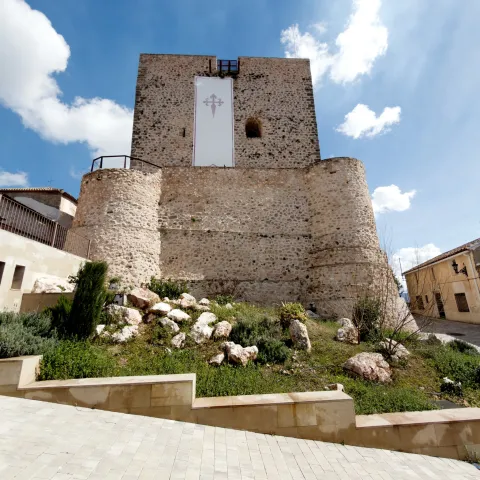
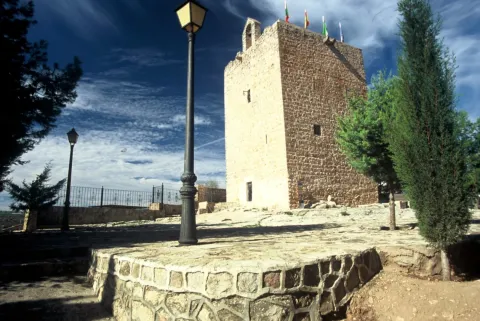
  • Tribute Tower. This important tower is located in the centre of the village next to the church and the city hall, and dates back to the 14th century. It is square and is built in scarlet masonry in small yarn and with corners reinforced by sillery pieces arranged to rope and sawn. The outer enclosure It is composed of wall and four solid cubes that protect the corners. Inside Its stone is more well-kept and is structured on three floors: in the lower one there is an aljibe, and the superiors are divided, by a central wall, into two halves, covered by canyon vaults pointed and very low. It rises to the floors through an inner staircase that goes up around the tower. This tower of the homage of the old Castle was declared Good of Cultural Interest in 1985.
  • Yedra Castle. The primitive location of Torres de Albanchez was in a nearby mound, defended by the castle of Yedra, already melted, but from which some remains are preserved: remains of masonry walls, defensive structures and aljibes, excavated on the same rock. It is estimated that its origins may be in a Hispanic-Visigoda community between the centuries V and VIIwho, after leaving the vegas of the Guadalimar, settled in this strategic enclave. It was conquered by the troops of Fernando III the Holy in 1235, who granted it to the Military Order of Santiago, which promoted the construction of a new settlement in the present less abrupt place. The castle of Yedra was declared Good of Cultural Interest in 1985.
  • Church of Our Lady of the Presentation. Its construction began in the century XVI and rises in the square of the municipality. Its plant is rectangular and one-ship, divided into four sections covering half-barrel vaults with pseudophajon arches. The square base header was added in the 17th century. The towerbuilt in the 20th century, it is the least valuable and is not integrated into the whole.
  • House of Mayorship. In Torres de Albanchez, there have been a loss of lordial mansions of interest, such as this so-called House of Mayor. With Renaissance cover and characteristic hardware of the second half of the 16th century. Inside it had a cave with canyon vault for shelter in times of danger. The cover was intellized, provided with zapatas in rolls in the intrados. There is a new cultural equipment in the town, the Eidades de la Sierra interpretation centrein which the geological history of the Sierra de Segura is represented, including the phases of human occupation.
Naturaleza

Most of the municipal term Torres de Albanchez is included in the Natural Park of the Serras de Cazorla, Segura and Las Villas.It is an eminently agricultural municipality, although it also has an important forest area located in the north of the city.

It's framed by limestone of 1200 and 1300 m of altitude, which by being limestone accumulate water, giving rise to more than 30 natural springs that we can visit the time we discover their villages. Among them we highlight the spring of Fuente Vieja, that of Fuente Larga and Fuente Bellia, from which We can see excellent panoramic, the Valle del Guadalimar and its tributaries, where it stands out the River Onsares, with fertile red triasic clays in which pine forests, olive groves, self-consumption cultivation gardens, pastures and bushes are transformed with the passage of the seasons. From its inclined streets can be seen peoples how Orcera, Siles and Segura de la Sierra.

Places that must be visited:

  • The village of Fuentefrera offers us the opportunity to contemplate beautiful panoramic views of the Natural Park. Near the settlement, we can visit the source of Fuentecolda spring located at the foot of Mount La Cordera.
  • The Tala and the Hoya, are two villages practically abandoned. The house is preserved, although already with remarkable flaws and some buildings in a ruinous state. Nearby you can visit the cave of La Tala and the cave of the Coto.
  • El Cerro del Castillo, is a natural enclave located at 1145 m high, from which we can enjoy impressive panoramic views of the Natural Park and the urban core.
  • The Hermitage of the Virgin of the Way, is located at the foot of the mountain Picarzo (1296 m.), this enclave has a natural water source, and is the ideal starting point for starting the routes that take us to the Natural Park.
Fiestas y Eventos

The parties in this municipality include:

  • La Candelariaon the 2nd of February, a feast in which the custom of making "lumbres" continues, around which you sing, dance and drink.
  • "The Eight of Torres," the name whose origin is to be sought in the ancient tradition by which every 8 May the Virgin of the Field was brought from her hermitage to the parish church, where she was to remain until 8 September, when she returned to her hermitage. Dates that were modified in 1968, going on to the last Sunday of May and the last of August, respectively, to facilitate the attendance of other migrant turreños to the party.
  • The Virgin of the Field, is held in the first days of September, in which are very traditional the taurino celebrations, following the serrana tradition.
  • San Marcoson April 25, when the Holy One is asked to bless the fields and to "fear the devil."
  • Our Lady of the Presentationunder his title is the parish and whose religious feast is held on November 21.
  • Romeria de la Virgen del Campo. The last Sunday of May. During her celebration she goes up with the Virgin to her hermitage, to spend the summer there. Then, at the end of the summer, it must be transported back to the village with another Romeria that is celebrated last Sunday of Augustso that the Virgin may remain in her church during the feast that is held in early September.
Gastronomía

It must be made clear that in the country's gastronomy it is called "garlic" to any stew in which the ingredients are crushed or crushed until they acquire the texture and appearance of a mashed, whether or not it has garlic.

Among the most traditional dishes, we highlight:

  • "Ajoatao." Prepared with cooked and crushed potatoes, linked in the mortar with olive oil from the ground with eggs and garlic. It is usually taken either in a slice of roasted bread, or as a garrison of the meat at the roast, like the following lamb.
  • "Ajoharina." It is a very old stew of flour, potatoes and a saffrito of vegetables, it weighs all in a frying pan.
  • "Ajopringue." It is made with the pig's liver once cooked and crushed that is served with olive oil, tomato, red peppers, garlic, parsley, bread miga and species: nail, oregano, pimenton and saffron.
  • Lome of orza. Which has already been preserved in olive oil or butter. He'll be present at the table all year.
  • Migas, with chorizo and turrezos.
  • Lamb to the young shepherd, Pastor chandelier or the lamb garlic cabañil, dishes that originate from the pastors, who used the meat of the following sheep.
  • Chickpeas. To consume preferably at Easter, and that in addition to the chickpeas is added spinach and cod.

In pastry shops:

  • "Fried roses." and "flowers" with sugar or honey for Easter days.
  • "Sweet peas with toast" for the day of All Saints, accompanied by milk or honey.
Historia

The occupation of the area dates back to the Copper age, III millennium BC, a time when the consolidation of agriculture and the development of mining and metallurgy will take place, leading to an increase in the number of settlements.

The Guadalquivir Valley will be a natural transit area of communication to Levante and the Plateau. For this reason, many settlements will be located in this area of communication, and will have a strategic mission to control these routes.

During the development of the Iberian culture, there is a restructuring in the territory that is characterized by the "oppid," fortified settlements in which an aristocrat exercises power.

It will be with the arrival of Roman civilization when the "oppid" are again transformed into rural settlements called "villae"

This settlement is known as Yedra Castleof which remains are still preserved such as masonry walls or aljibes, and which could be related to a hisponovisigoda community, that after leaving the vegas of the Guadalimar between the centuries V and VII, are established in this strategic place of the Sierra de Torres de Albanchez.

On the Islamic past of Torres de Albanchez there are virtually no signs, just that was conquered to the Muslims on 1 May 1235, integrating the castle and the place in the Encomienda de Segura, belonging to the Military Order of Santiago.

It will be this Military Order that promotes a new settlement in the current location, and they build the defenses on a rocky promontory.

It's in the middle of the 16th century, in 1552, when Torres de Albanchez achieve Segura de la Sierra segregation, giving Philip II the title of the villa.

During the 19th century, a demographic expansion began, with 1226 inhabitants in 1900.

The rotating phenomenon by which the mountains become farmland was an increase in the cultivated area, mainly dedicated to the cereal at the cost of the reduction of pasture and mountain. The population growth increased significantly in 1940 to have 2626 inhabitants.

From these years, in the middle of the post-war period, in Torres de Albanchez, emigration to the large Spanish cities or to countries of Europe began, thus decreasing the population.

Loading map
Preparing points of interest and routes...
Imagen principal
imagen
Image
Torres de Albanchez
Imagen principal
Activado

Sorihuela de Guadalimar

Submitted by brandcode_deweloper on
Id
751297
Perfil de redes sociales
Facebook
https://www.facebook.com/aytosorihuela/
Descripción
Breve descripción

Sorihuela de Guadalimar is a small municipality that belongs to the region of Las Villas and is located between the districts of La Loma and El Condado. The municipality has a territorial enclavein the heart of the Natural Park of the Sierras de Cazorla, Segura and Las Villas.

Limit with the neighbouring municipalities of Chiclana de Segura, Beas de Segura, Villanueva del Archbishop and Castellar. The enclave that is part of the municipality is inserted among the municipal terms of Beas de Segura, Hornos de Segura and Villanueva del Archbishop, as a forest territory that historically guaranteed the supply of wood and pastures to the inhabitants of Sorihuela de Guadalimar. This factor makes that even though its main core is outside the protected space, this municipality does actually have a presence in the natural park.

Forest area represents half its extension the city, focusing on the mentioned enclave. The agricultural land, with the olive tree as the dominant crop, is located in the main sector of the municipal term, located between the county district of Sierra Morena and the plain areas of the region of Sierra de Segura.

The economic activity of the town is based on the olive-growing, in the Almazara industry and in tourism, since part of its term belongs to the Natural Park of the Sierras de Cazorla, Segura and Las Villas.

Between architectural jewels of Sorihuela de Guadalimar, the Parish Church of Santa Águeda of the 16th century and of Renaissance style, and the Castle, this one, of Arab origin, is erected in a plateau of the urban core.

Telecomunicaciones
Teléfono
953 430 004
Sitio web
www.ayuntamiento.es/sorihuela-del-guadalimar
Fax
953 430 002
Correo electrónico
ayuntamiento@sorihueladelguadalimar.es
Ubicación
Nombre
Sorihuela de Guadalimar
Latitud
38.240410
Longitud
-3.053610
Distrito
Ubicación en el mapa
POINT (-3.05361 38.24041)
Imágenes
imagen
Image
078cb81f-7cc9-574e-7e0d-debaff233ada?t=1621471900297
Imagen principal
Desactivado
imagen
Image
bc88e55c-2209-c3a2-c865-49e1ee791914?t=1621471900331
Imagen principal
Desactivado
imagen
Image
16d382e5-7602-41e6-42ea-31866526a17b?t=1621471900362
Imagen principal
Desactivado
imagen
Image
7b48f74b-9c4b-2b12-ec25-422c7c862ea5?t=1621471900392
Imagen principal
Desactivado
imagen
Image
e40a5ebd-b8f0-a246-e0c9-cf1e445d4218?t=1621471900426
Imagen principal
Desactivado
imagen
Image
e1527c2a-3906-0f25-bf92-d8d4990e06a8?t=1621471900460
Imagen principal
Desactivado
imagen
Image
69bdf3bb-ddcb-2aee-5fbb-87a06b28d3e8?t=1621471900581
Imagen principal
Desactivado
imagen
Image
b8ddddb1-9a18-3005-0526-edf915c321d6?t=1621471900678
Imagen principal
Desactivado
imagen
Image
6cb6c999-e795-d839-ce47-8c7f3c6518ea?t=1621471900773
Imagen principal
Desactivado
Imágenes cabecera
imagen
Image
Sorihuela del Guadalimar
Imagen principal
Desactivado
Datos de interés

Tourist area: Serras de Cazorla, Segura and the Villas

Distance to the capital (km): 115

Altitude over sea level (m): 638

Extension (Km2): 55

Number of inhabitants: 1,269

Gentilicon: Sorihueleños

Postal code: 23270

Videos
Video file
Cultura
  • Parish Church of Santa Águeda. It is Renaissance in simple and simple forms and is under the title of the Patroness of the town, Santa Águeda. It began construction in 1571, on ruins of another existing temple. The plant is a drawer, that is, it consists of a unique ship, covered with a wooden armor, according to the Mudejar tradition. The Major chapel is of rectangular base, it is accessed by a step and through a large arch of half point. Another part that has particular interest is the Tower of the bell tower, design by Andrés de Vandelvira. It is structured in three bodies, separated by cornels, and that of the bells covered with half orange domes. The factory in the whole building is a shillery. It also highlights the magnificent imaginationThe size of Saint Agueda from the 16th century and a size of Jesus Crucified from the same time stand out.
  • Arab turret: It was built in 886. And the purpose was to fortify the left bank of the Guadalquivir River, and at the same time to serve as an advance to the fortress of Iznatoraf. The castle, of which a single tower remains, rises on a rocky structure and at whose foot the village extends.
  • Hermitage of Santa Quiteria. The old construction, already in 1,511, is cited among the hermitage of Iznatoraf, a municipality from which it gained independence. She is the co-patron of Sorihuela and is located three kilometres from the town centre, in the area called "Cerrico Pelón." It has a single ship and lacks architectural value due to the numerous reforms it has undergone.
  • Plaza de los Caños. They have their seven different cages and for the reason of origin, for the water of the four on the left is in the orchard of Moscoso, the three rows on the right are spread from the upper part of Mina Street. Its breadth and good situation make this square point of reference and guidance For one's own and strangers, no less than seven streets converge in it in vain.
Naturaleza

Sorihuela de Guadalimar is a municipality divided into two realities. Your term of fact is separated into two parts. Where the village extends, Sorihuela looks to the county, while in another good piece of the municipal term it is within Las Sierras de Cazorla, Segura and Las Villas.

For her the term runs the rivers Guadalimar and Guadalquiviras well as various streams. It has in its near surroundings the following heights: Alberconies (1,064 m.), Sima (1,063 m.), Chiclana Muela (1,043 m.) and Iznatoraf (1,031 m.).

It is one of the localities where vegetation has a greater variety, along with the species of the High mountain, such as larix pine or acebo, they live with other species that develop to lower heightsuch as black pine, tejo or boj and with those that develop in the lowest area: melojo oak, oak oak, coconut, olive trees, and other endemic and aromatic plants.

To this vegetation we will add the one that develops in the river banks: chopos, willows, mumberas, tarais...The faunain line with the plant variety and the numerous habitats in the term, abundant and diverse.

A mountain rapes, eagles, broken bones, lethargy vultures, the cynetic speciesboth major game, deer, muflon, boar, like the minor hunting, rabbit, hare, parrots, quail...

Without forgetting the typical olive birdswho either live in it, or feed on migration movements: curuca, verderon, zorzal, petirred... The fauna of the rivers of crystal clear water in its high courses: trout, barbo, otters... Just like reptiles and amphibians (salamander, for example).

A privileged world where nature is the main attraction of these lands. Nothing better than to discover it in one of the many places in municipal terms, we will point out the following:

  • Knights' Canyon. This enclave that extends along the Knights' stream offers beautiful panoramic natural park, highlighting the typical coastal vegetation surrounding the stream. It is located to the east of the town in full natural park50 km away. of the city centre.
  • The Ray. The surrounding landscape is of great beauty, being a good starting point for excursions inside the Park.
  • Hoya of the Trevejiles. It is a forest house, which is in turn the ideal starting point for different natural routes inside the park and to discover the Sierra de Segura and the Sierra de Las Villas.
Fiestas y Eventos

The Sorihueños look forward to the arrival, among others, of the following parties:

  • Santa Águeda, 4 and 5 February. It's the Patrona de Sorihuela de Guadalimar, and with this holiday it recalls on February 5, 1,235, the day the town was conquered to the Muslims. The cults will begin on January 27 in the parish with the ninth to the Holyin which it is dedicated every day to a group of people (children, young people, elderly people, migrants, catechists...) There are many acts with which the Sorihueleños pay tribute to their patron: a great stake, recited of poetry by children, songs, competitions... There is much devotion in the town to Santa Águeda, the lawyer for the diseases of women's breasts. It's customary to share bread doughnuts in the days of the ninth, popularly called "charity". These doughnuts are kept and taken when one is sick.
  • Romeria de Santa Quiteria. The last weekend of May is held the Romeria of Santa Quiteria, Co-patron of Sorihuela and patron of the fields of the canyon on the hermitage bearing its name, 3 km. of the town in the called place "Cerrico Pelón." On Sunday afternoon, the image is processed to the bridge over the Guadalimar River.
  • Fairs and Festivals of Augustbetween 20 and 24 August. Although they are destined to venerate Santa Águeda, it is also a wink to the migrants who return these days to their people of birth. The parties begin with the traditional pregon and will not miss the characteristic cobwebs.
  • Sewing: A very deep-rooted custom is that of "ask for figs" on Christmas Eve night. The children go from home to home singing and asking for figs, even though they will pick up other sweets to give them or some coins.
Gastronomía

The massacres of the pig, which, in addition to bringing together relatives and friends, filled the beams of the kitchens with chorizos, morcillas and salchicones that ensure the contumio of the year.

But the culinary culture of this villa has other viandas that, although simple, add to the palate of the most demanding. These include:

  • Pipirrana de las Villas. Made of cooked potatoes and dried peppers, garlic, salt and the irreplaceable olive oil.
  • Gypsy salad: chopped onion, tomato and pepper, dressing it with salt, oil, vinegar and some crushed cumins.
  • Eggs to the turret, which are achieved by frying some garlic with onion until they are golden with some ham and chorizo tacos until they form the porreta. Then eggs will be added until they are curved.
  • Chickpeas. A typical Easter dish, to which breads or cod are added.
  • Wedding stew. It was served at the weddings of the past and is composed of a thick broth consisting of half a dozen meatballs, a chicken thigh, two very small cooked and minced eggs, and a dressing where the nail and oregano are highlighted with nuts and almonds.

Warehouse:

  • Drunk, flour mass, roasted olive oil, spirits, lemon scraping, cinnamon and sugar.

Historia

In the Arab timesSorihuela was a fortress that reinforced the village of Iznatoraf. In year 886 sand raises the strength of which the Tower of Tribute is left alone.

This castle would be conquered by King Fernando III on the day February 5, 1,235.

The area was repopulated by Christians from Castile who welcomed the day of conquest, the day of Santa Águeda, as Patrona de la Villa.

Fernando III "el Santo," cede Sorihuela as a village to the village of Iznatoraf, becoming part of the advance of Cazorla.

Philip II granted Sorihuela the title of Villa on 11 April 1595, exempting it from the jurisdiction over it that Iznatoraf had. An independence that was expensive for its 650 inhabitants, who had to borrow from several villages in the province.

By 1,652, Mrs. Teresa Martínez, the Hospital of San Martínnext to the hermitage that existed in that place. It was a hospital for the sick and needy.

Ermita and Hospital would succumb in 1826 due to the Decriminalization of Mendizábal.

In 1855, a cholera epidemic forced the City Council to raise a cemetery outside the population.

In 1,915 the construction of the Bridge on the Guadalimar River began.

At present, Sorihuela de Guadalimar supports its future towards tourism in order to make known the artistic and natural heritage that it encloses in its term.

Loading map
Preparing points of interest and routes...
Imagen principal
imagen
Image
Sorihuela del Guadalimar
Imagen principal
Activado