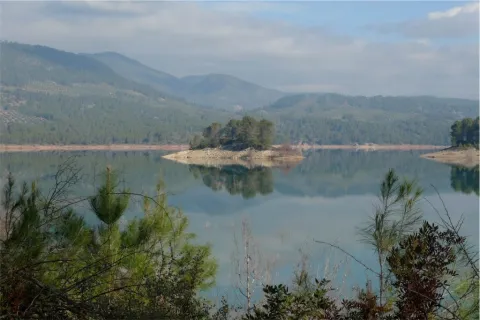
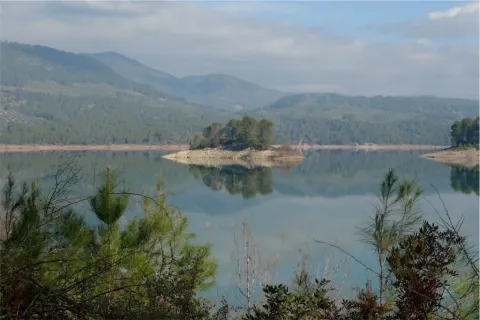
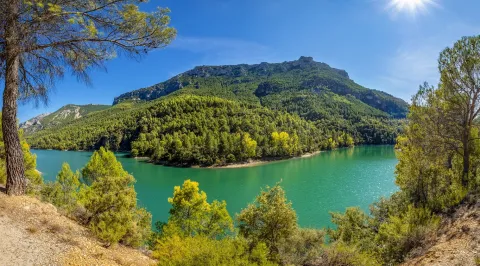
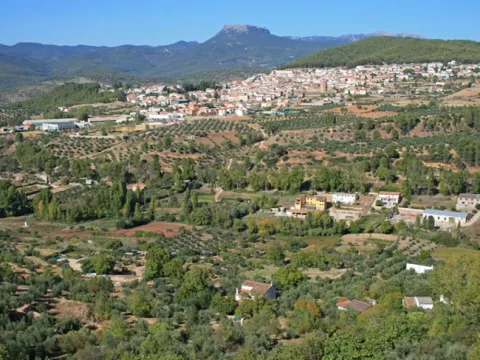
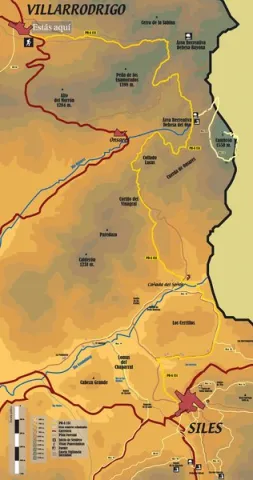
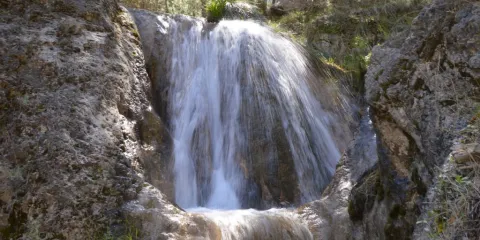
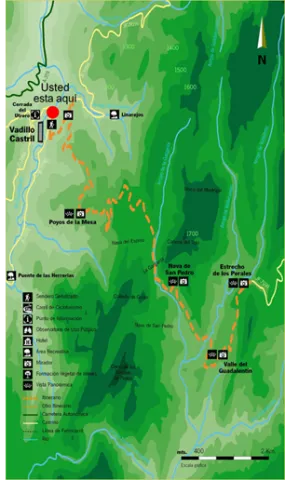
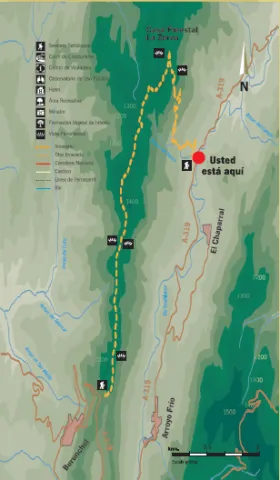
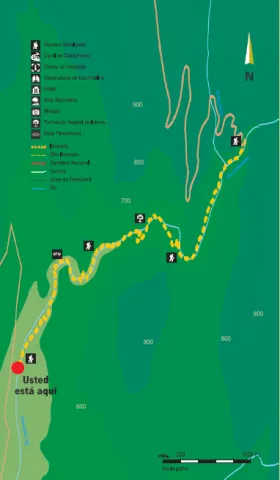
This route begins at the LINAREJOS VIEWPOINT, from where you can enjoy an excellent panoramic view of much of the Sierra de Cazorla, one of the mountain ranges that make up the Natural Park. The renowned naturalist and great admirer of these landscapes filmed countless scenes very close to this location. During the winter months, you can hear the sound of the water plunging down the nearby Linarejos Stream waterfall. In addition to the “Félix Rodríguez de la Fuente Viewpoints” Route, there are other equally interesting routes nearby that allow visitors to discover more of this magnificent Natural Park, such as Cerrada de Utrero and the Linarejos Viewpoint Route.
The second VIEWPOINT included on this route is POYOS DE LA MESA, which offers one of the most spectacular panoramic views in the Sierras de Cazorla, Segura y Las Villas Natural Park: the Poyos de la Mesa plateau, which reaches an altitude of 1,635 metres. Should you decide to climb it, you will enjoy breathtaking views of the Guadalquivir Valley, Vadillo-Castril and the El Adelantado Parador, among other places. It is a geological formation highly characteristic of these mountains: a unique high plateau that ends in a steep descending slope. Among the pine forests near this point stands the Pino Abuelo, or Grandfather Pine, one of the oldest trees in the area.
Coordinates: 37.906835,-2.913155
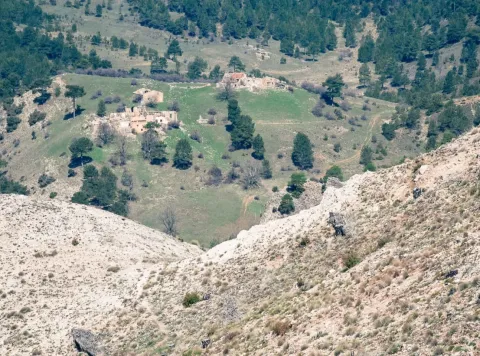
The third VIEWPOINT on the route is NAVA DE SAN PEDRO, where the meadows were once converted into vegetable gardens and cultivated fields. It provides an insight into living conditions at a time when timber was one of the main resources extracted from the mountains and the inhabitants used the relatively scarce open spaces for livestock farming and agriculture. On many occasions, the forest rangers themselves established forest houses in suitable locations such as this one, where vegetable gardens and small-scale livestock farming supplemented both their diet and their income. From this viewpoint, you can enjoy impressive views and learn about the return of the bearded vulture to Andalusia.
The landscape before you was the last Andalusian refuge of an animal as little known as it is spectacular: the bearded vulture. This Iberian vulture disappeared from the mountains you are now looking at in the late 1980s, resulting in its extinction in Andalusia.
Shortly afterwards, work began on the programme to reintroduce the bearded vulture to Andalusia, promoted by the Regional Ministry of the Environment. The species’ most remarkable characteristic is its scavenging diet, as it is the only bird on the planet that feeds almost exclusively on bones. To do so, it has developed an ingenious behaviour from which it takes its name: it drops bones from great heights so that they break against the ground in places known as bone-breaking sites. This allows it to consume large, hard bones. Although the bird is harmless, all the threats faced by bearded vultures are associated with human beings and their activities.
Their populations declined and became locally extinct as a result of direct persecution, collecting, collisions and electrocution involving power lines, and the illegal use of poisoned bait.
Today, they are also affected by disturbance around nesting sites caused by nearby recreational activities such as climbing and paragliding, as well as by reduced food availability and the decline of extensive livestock farming.
To achieve the return of the bearded vulture to Andalusia, feasibility studies were carried out to identify the most suitable areas for the species. A captive-breeding programme was established to provide chicks for reintroduction, together with a release and monitoring plan and a public-awareness programme aimed at informing the sectors involved in its conservation.
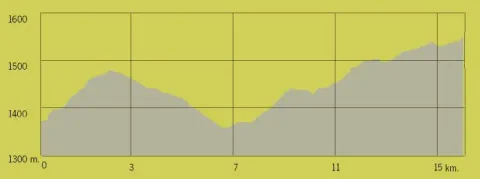
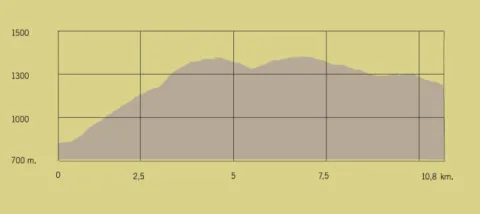
The fourth stop has been named the BARRANCO DEL GUADALENTÍN VIEWPOINT, where you can clearly observe the course followed by the river on its way towards the nearby La Bolera Reservoir. Over the centuries, the Guadalentín River has carved an impressive valley through the hard rock, which later narrows into secluded gorges known locally as “cerradas”. From here, the Sierra del Pozo rises majestically, containing some of the highest peaks in the Natural Park, including Pico Cabañas, which stands at over 2,000 metres and dominates the mountain landscape. At the foot of the viewpoint lies the path of the “Félix Rodríguez de la Fuente Viewpoints” Route, which climbs continuously until reaching the end of this magnificent route at the Estrecho de los Perales.
The fifth stop is the ESTRECHO DE LOS PERALES VIEWPOINT, a remarkable gorge distinguished by the beauty of its unusual rock formations. Below, the Valdetrillo Stream tumbles through lively rapids, providing a pleasant natural soundtrack. In this area, you may see agile mouflons and male Iberian ibex climbing the vertical rock faces, or enjoy the majestic flight of a golden eagle, griffon vulture or booted eagle. Behind the viewpoint stands Cerro de los Trancos, which offers views of some of the highest mountains in this protected natural area, including El Cabañas.
“We must do everything within our power; we must fight together, united and tenaciously, so that a vast, round rock does not die: a rock with a heart of iron and basalt, a rock with a skin of water and clouds, a rock whose voice is the singing of birds and the whisper of the breeze, now increasingly overwhelmed by the roar of the machines invented by humankind; a rock travelling through space, carrying the human species and every living animal; a rock that I like to call the blue planet.”
Félix Rodríguez de la Fuente in El Hombre y la Tierra.