Saltar al contenido principal
icon-intereses-viajar-solo

Alcalá Oliva Oil Museum

Submitted by brandcode_deweloper on
Id
7161140
Descripción
Descripción larga

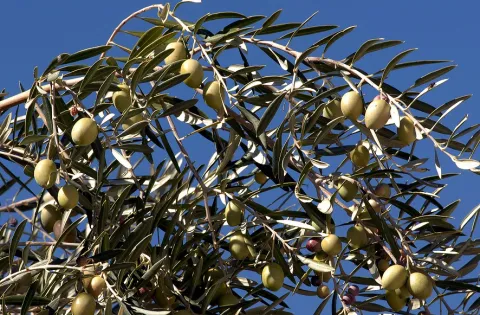
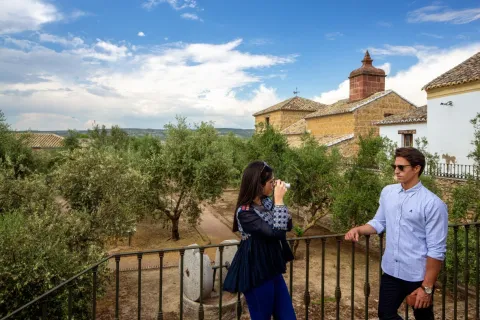
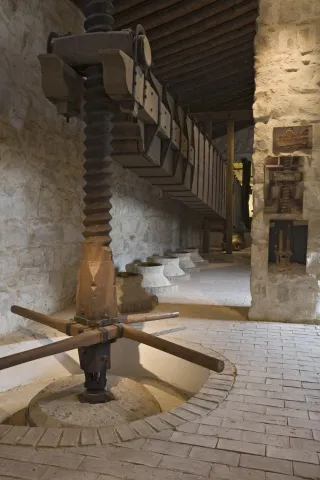
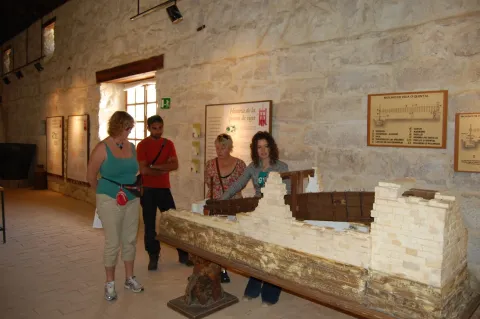
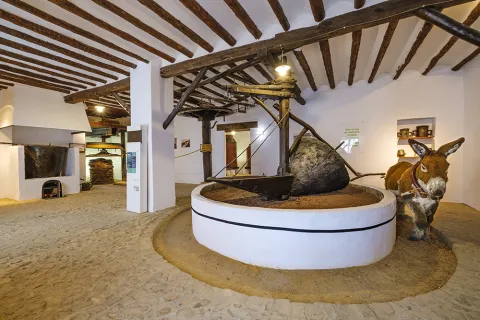
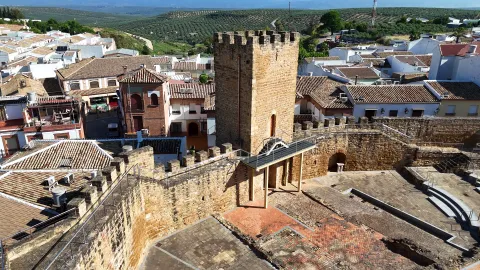
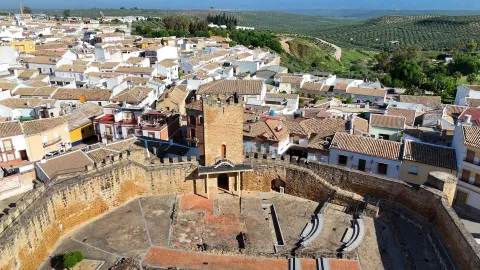
At the bottom is the machinery of a 19th century mill, faithful reflection of the production systems of the time, as well as original tools and useful. At the top you can deepen the culture of olive and oil, entering the world of the tasting ofextra virgin. There are rest areas, a projector with audiovisual to learn more about the olive cycle and the current production systems, as well as excellent panoramic views of the Fortaleza de la Mota, which rises imposing on the horizon, surrounded by the olive sea.

Finally we have a "Agro-shop" for sale of products as well as other typical jiennese products and a "Rincón Sensorial" to taste our oils. The entire facility has explanatory panels in English and Spanish. It is designed to be accessible to people with reduced mobility (lift, ramps...) and is heated. Free Wi-Fi is also available for visitors.

Breve descripción

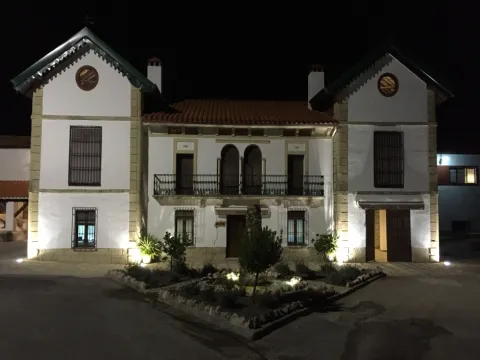
The museum is located in a building that is more than a century old, known as the factory of the Caserías de San Isidro. Alcalá Oliva has carried out a hard work of rehabilitation of all the buildings and their surroundings, returning to this place part of its former charm.

Telecomunicaciones
Sitio web
www.alcalaoliva.com
Teléfono de contacto
953 581 017
Correo electrónico
info@alcalaoliva.com
Ubicación
Código Postal
23680
Latitud
37.463700
Longitud
-3.964290
Dirección
Carretera A-339, Km. 50. Las Caserías de San Isidro
Distrito
Municipio
Ubicación en el mapa
POINT (-3.96429 37.4637)
Tipos de punto de interés
Imágenes carrusel
imagen
Image
Aceitunas.jpg
Imagen principal
Desactivado
Imágenes cabecera
imagen
Image
983fb56032c1ac1b726360eae9dd3d18_XL.jpg
Imagen principal
Activado
Horario
Monday to Friday: 09: 00 - 14: 00 and 16: 00 - 19: 00. Saturday: 10: 00 - 13: 00.
Microsite al que pertenece
Otros servicios

English, French and German.

Loading map
Preparing points of interest and routes...
Marcas de calidad

Museum of Porcuna

Submitted by brandcode_deweloper on
Id
2279213
Descripción
Descripción larga

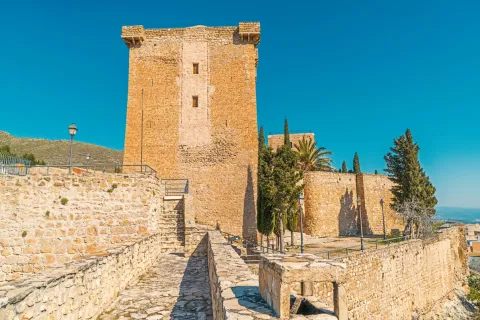
The museum, formerly called the Archaeological Museum of Obulco, has two sites. In the Boabdil Torreon of the Porcella Castle built in 1435 by the Order of Calatrava, there are rooms 1 and 2. The rest of the rooms are located in the city hall, the former Royal Posite of the 18th century.

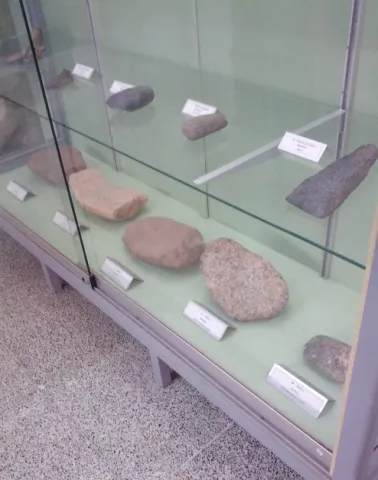
SOLA 1: Paleolithic and Neolithic, with legal and ceramic tools. Iberian culture of the city-state of IPOLCA, with ceramic red bands, cinerary urns, bronze exvotes, coins and Iberian sculptures.

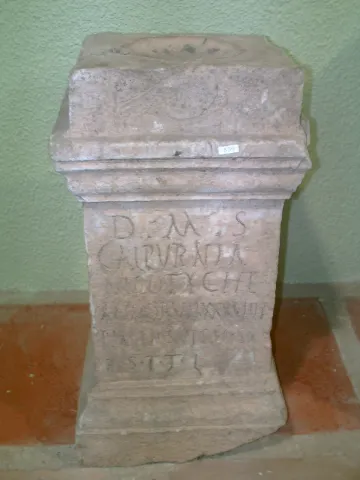
SALA 2: Roman culture of the Ibero-Roman city of OBULCO, with tombstones, ceramics, coins, Corinthian capitals of Obulco and Roman sculpture.

TERRAZA: Magnificent views of the countryside of Jaén and Córdoba. Location of the various fields of Porcilla (Cerrillo Blanco, Alcores, City of Obulco, etc.).

SALA 3: Ibero-Roman culture, with development of vertical themes (sculpture, economy, rites, etc.).

It includes a guided tour of the Archaeological Park of Cerrillo Blanco, where an Iberian sculptural ensemble was found that for its number of pieces, as for its enormous artistic quality is the most important of the Iberian sculpture.

The museum manages several musealized deposits: the prehistoric fortified remains of the Los Alcores (III- I millennium) and the archaeological site of Cerrillo Blanco (a funerary building of the 7th century BC with 24 tombs of inhumation in posa, where an Iberian sculptural group of the 5th century, exposed in the Museum of Jaén, was buried in large graves) and the site of Obulco (it shows the remains of a main street with Roman houses of the 1st century AD).

Breve descripción

The Porcilla Museum is located in the 15th century Boabdil Tower, in the historic centre of the town. Dedicated to prehistory, to Iberian and Roman culture, it has an important collection of Ibero-Roman sculptures. This museum offers guided tours with prior appointment and activity programming throughout the year that you can find your website.

Telecomunicaciones
Sitio web
www.deporcuna.com/museo.html
Teléfono de contacto
953 545 130
Ubicación
Nombre
Museo de Porcuna
Código Postal
23790
Latitud
37.869610
Longitud
-4.183830
Distrito
Municipio
Ubicación en el mapa
POINT (-4.18383 37.86961)
Tipos de punto de interés
Imágenes cabecera
imagen
Image
Img%20014.jpg
Imagen principal
Activado
Horario
Tuesday to Sunday: 10: 00 - 13: 00. Other hours, on appointment.
Microsite al que pertenece
Loading map
Preparing points of interest and routes...

Museum of las Telecomunicaciones de Canena

Submitted by brandcode_deweloper on
Id
9277785
Descripción
Descripción larga

It was opened in December 2010 thanks to an agreement of the City Council of Canena with the Telefónica Foundation, which yielded many pieces and equipment from the previous historical-technological collection of the Foundation in Madrid (in the building of Gran Vía), which was dismantled in December 2007. The Canena Telecommunications Museum shows equipment, many of which are in operation, covering almost all telecommunications disciplines associated with the telephone service: terminals (both old and modern phones, including a pay-with-coins phone booth), switching, transmission, cables (some submarines), radio, satellite, external floor telephone posts, etc.

It has various exhibition spaces distributed on two floors and dedicated to manual and automatic switching, terminals, urban and interurban networks, data transmission, radio, satellites, mobile, electronic and regulatory components.

Breve descripción

This original museum offers visitors an overview of the evolution of telecommunications, from the most primitive remote communication systems to the latest in satellite and Internet connections. This is a tribute to telecommunications professionals and the technologies that have made them possible.

Telecomunicaciones
Sitio web
www.canena.es
Teléfono de contacto
953 770 161
Correo electrónico
canena@canena.es
Ubicación
Código Postal
23420
Latitud
38.048650
Longitud
-3.484489
Dirección
C/ García Lorca, 4
Municipio
Ubicación en el mapa
POINT (-3.484489 38.04865)
Tipos de punto de interés
Imágenes carrusel
imagen
Image
MUSEO%20TELECOMUNICACIONES.jpg
Imagen principal
Desactivado
Imágenes cabecera
imagen
Image
CENTRALITA%20MUSEO.jpg
Imagen principal
Activado
Horario
Monday: 16: 00 - 18: 00. Rest of days by appointment.
Microsite al que pertenece
Loading map
Preparing points of interest and routes...

Museum of the Culture del Olivo

Submitted by brandcode_deweloper on
Id
763157
Descripción
Descripción larga

The museum, considered a Good of Cultural Interest, is divided into several spaces; three buildings that house different models of almazaras, a garden of olive varieties from several countries and the Bodega.

Along the route of the visit, steps are shown to obtain the oil, from the most traditional methods of olive cultivation to the modern marketing and packaging processes.

In the museum you can know the characteristics of olive oil, value its properties and deepen the different aspects that define its quality, gradation, color, etc. You can also physically know the different varieties of olive trees, as it has a garden with trees of each variety, but it deserves special attention, a 19th century winery known as the "Cathedral of Oil." In addition, the complex has a conference room for 230 people. Oil caters are made for groups, tasting and other activities related to the olive tree.

Breve descripción

The Museum of the Olive Culture is part of the "Hacienda La Laguna" complex, located in Puente del Obispo, eight kilometres from Baeza. With an extension of more than 4,000 square meters is the museum on the largest oil in Spain. It contains models of old mills in which the three fundamental processes of oil production are collected: grinding, pressing and decanting.

Telecomunicaciones
Sitio web
https://www.museodelaculturadelolivo.com/
Teléfono de contacto
953 765 142 / 677 461 206
Correo electrónico
info@museodelaculturadelolivo.com
Ubicación
Código Postal
23529
Latitud
37.945310
Longitud
-3.567020
Dirección
Finca Hacienda La Laguna, s/n
Municipio
Ubicación en el mapa
POINT (-3.56702 37.94531)
Tipos de punto de interés
Imágenes carrusel
imagen
Image
oleoturismo-d2-0046.jpg
Imagen principal
Desactivado
imagen
Image
MUSEO%20OLIVO%20BAEZA.jpg
Imagen principal
Desactivado
imagen
Image
_MG_2577.jpg
Imagen principal
Desactivado
imagen
Image
_MG_2578.jpg
Imagen principal
Desactivado
imagen
Image
_MG_2581.jpg
Imagen principal
Desactivado
imagen
Image
baeza-muaseo-cultura-del-olivo-1-jpg
Imagen principal
Desactivado
Imágenes cabecera
imagen
Image
Baeza%20Museo%20olivo%201.jpg
Imagen principal
Activado
Horario
Monday to Sunday: 10: 30 - 13: 30. Late: consult by season. Last access 45 minutes before closing.
Microsite al que pertenece
Loading map
Preparing points of interest and routes...
Marcas de calidad

Museum of the Ciencia y Museo Arqueológico

Submitted by brandcode_deweloper on
Id
2343982
Descripción
Descripción larga

The current number of pieces is 449 and are classified in the sections of: acoustics, heat, photography, mechanics, chemistry or technology. You can also see archaeological pieces of Martos and his region that was gathered in his work as local scholar Father Alejandro Recio. Its library also includes archaeological topics from all over the town.

Breve descripción

The collection offered in the exhibition has a great scientific value, both for the number of pieces and for the quality of many of them. It is a clear exponent of the physical sciences of the late 19th century.

Telecomunicaciones
Teléfono de contacto
953 550 030
Correo electrónico
culturaymision@gmail.com
Ubicación
Nombre
Fundación Cultura y Misión
Código Postal
23600
Latitud
37.721980
Longitud
-3.972190
Dirección
C/ San Antonio de Padua, 2
Distrito
Municipio
Ubicación en el mapa
POINT (-3.97219 37.72198)
Tipos de punto de interés
Imágenes carrusel
imagen
Image
13.jpg
Imagen principal
Desactivado
imagen
Image
12.jpg
Imagen principal
Desactivado
Imágenes cabecera
imagen
Image
10.jpg
Imagen principal
Activado
Horario
Make a date.
Microsite al que pertenece
Loading map
Preparing points of interest and routes...

Museum of La Carolina

Submitted by brandcode_deweloper on
Id
4383459
Descripción
Descripción larga

On the basis of the fact that it was the Archaeological Museum of La Carolina and continuing the previous trajectory, this museum centre was opened in 2011 to gather, preserve, investigate and transmit the historical cultural heritage and the testimony of the human communities that have lived and left their mark on this territory, a land so linked to mining and to the despeñacolos parade.

An important and exceptional collection of all types of objects, together with the achievement of museum and multimedia resources, allow us to know the physical characteristics of the territory and the uniqueness of its natural environment, as well as to make a chronological journey through its history, from the first vestiges of human remains in the Paleolithic, to practically today. Highlighting stages as important as the Spanish-Roman mining, the period of creation and development of the New Populations as a colonizing project of Charles III and the intense contemporary mining activity that ended at the end of the last century, traces all so present in the collective memory of its inhabitants.

On the other hand, the Museum of La Carolina offers a wide range of temporary exhibitions and activities, both in the museum itself and in the territory.

Breve descripción

To the north of the province of Jaén and located in the city of La Carolina, capital of the "Nuevos Poblos de Sierra Morena," The Museum of La Carolina is integrated into the majestic building of the Palacio del Intendente Olavide, where it offers countless possibilities of knowledge, culture, history and research of the city. The building that houses the Museum of La Carolina has the latest technologies, an unbeatable infrastructure and a human team that make it an inescapable cultural and tourist resource when visiting the city.

Telecomunicaciones
Sitio web
www.facebook.com/Museo-de-La-Carolina-496879273669867
Teléfono de contacto
953 662 081
Correo electrónico
museolc@lacarolina.es
Ubicación
Código Postal
23200
Latitud
38.275660
Longitud
-3.617350
Dirección
Plaza de la Iglesia, s/n
Distrito
Municipio
Ubicación en el mapa
POINT (-3.61735 38.27566)
Tipos de punto de interés
Imágenes carrusel
imagen
Image
image_290287.jpeg
Imagen principal
Desactivado
imagen
Image
La%20Carolina%20-%20Museo.jpg
Imagen principal
Desactivado
imagen
Image
Sala%20Museo%20La%20Carolina.jpg
Imagen principal
Desactivado
Imágenes cabecera
imagen
Image
La%20Carolina%20086.jpg
Imagen principal
Activado
Horario
Monday's closed. Tuesday to Friday: 10: 00 - 13: 00 and 18: 00 - 21: 00. Saturday: 10: 00 - 14: 00 and 18: 00 - 21: 00. Sunday and holidays: 10: 00 - 14: 00.
Microsite al que pertenece
Loading map
Preparing points of interest and routes...
Marcas de calidad

Museum of the Batalla de Bailén

Submitted by brandcode_deweloper on
Id
320829
Descripción
Descripción larga

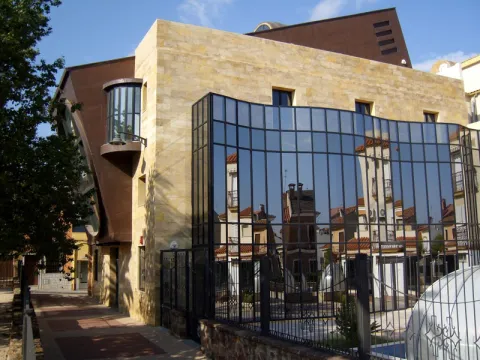
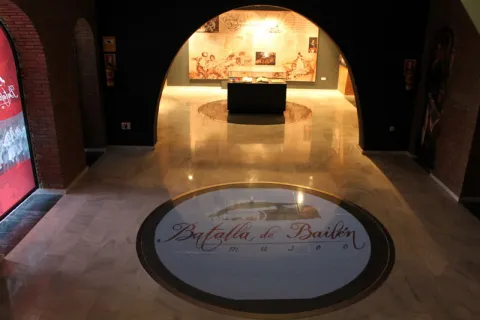
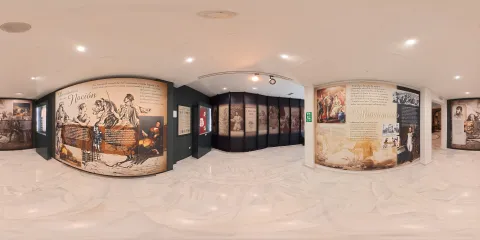
Bailén cuenta con un museo dedicado a la batalla librada en sus inmediaciones. Su visita permite al viajero conocer más acerca de este episodio, clave en la historia contemporánea de España. 

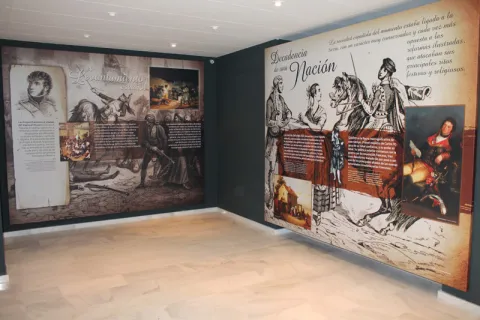
La exposición permanente del museo se estructura en varios espacios temáticos a través de cuatro plantas. En ellos se propone una aproximación histórica a los hechos de la Guerra de la Independencia, a través de un recorrido por los seis años de contienda y sus consecuencias.

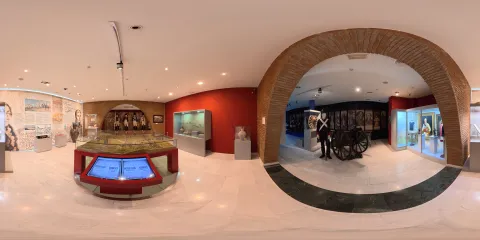
La aproximación a la evolución de la Batalla se desarrolla a partir de los puntos de vista de ambos bandos, español y francés. En relación con los contendientes se puede contemplar una colección de reproducciones de los uniformes de ambos ejércitos y diferentes objetos como botones de uniformes, armas, monedas o escritos inéditos. Se completan estas colecciones con audiovisuales donde se narran detalles biográficos de los protagonistas de la Batalla de Bailén: El General Castaños, el General Reding, el general Dupont o María Bellido.

Destaca en la exposición una maqueta-croquis del campo de batalla, con cerca de 1.000 soldados de plomo en miniatura pintados a mano, sobre la que se proyecta una audiovisual con las fases más destacadas de la misma. La maqueta es una cesión del Museo del Ejército. 

El visitante puede conocer también Bailén en una sala arqueológica que muestra la narración secuenciada de su historia, su patrimonio natural, así como su potente industria alfarera.

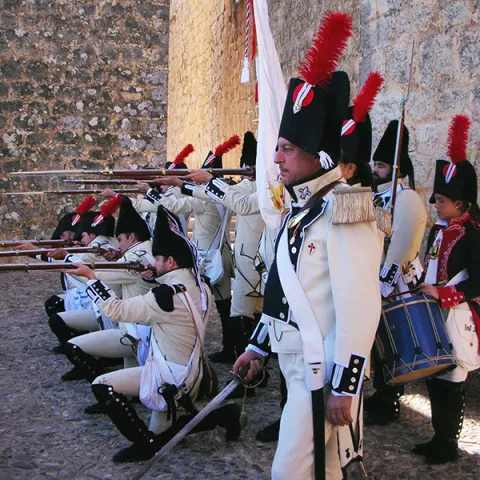
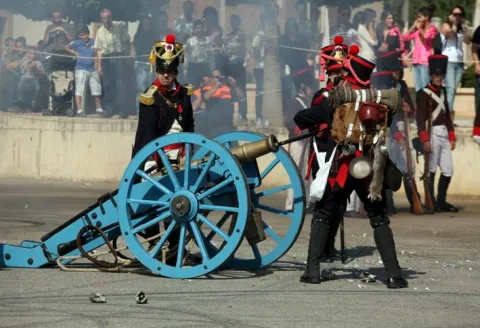
La localidad conmemora en el mes de julio la batalla con un acto en el que participan autoridades civiles y militares, mientras que en octubre tiene lugar, cada dos años, una recreación histórica de la batalla por parte de diferentes grupos y asociaciones.

En base al Tratado de Fontainebleau, que permitía a Napoleón atravesar España, el 18 de octubre de 1807 el general francés Junot entra en España con cien mil hombres, al frente de los cuales situó Napoleón al general Murat. Sin embargo, sus intenciones eran ocupar el país, colocando en el trono de España a su hermano José I tras el Motín de Aranjuez, acontecido entre el 18 y el 19 de marzo de 1808. El posterior levantamiento en Madrid del 2 de mayo de 1808, reprimido con fuerza por el general Murat, iniciará la guerra de Independencia.

En la primavera de 1808 el ejército español puede considerarse totalmente desarticulado, habiéndose producido un colapso total de la estructura militar. En Andalucía, la Junta Suprema Provincial de Sevilla organizó un ejército, bajo el mando del General Castaños, con profesionales y voluntarios civiles, a los que se sumó el refuerzo procedente de Granada al mando de Teodoro Reding. Pese a ello, la caballería del ejército francés era muy superior a la española, sin embargo, la infantería lo era por parte del español, contando además con una mejor adaptación a las duras condiciones ambientales, que influyeron de manera trascendental en el enfrentamiento. A esta situación habría que añadir, la ventaja que obtuvo la artillería española se debió al posicionamiento estratégico de sus baterías, superioridad que resultaría fundamental en el desarrollo de la Batalla de Bailén.

El 23 de mayo, Napoleón ordenó a Murat que el segundo cuerpo de Observación de la Gironda, al mando de su general, Dupont, partiera de inmediato, para proteger y rescatar la escuadra del almirante Rosilly, bloqueada por los ingleses en Cádiz.

Las tropas bajo su mando estaban compuestas por la 1ª división de infantería del general Barbou, con las brigadas de los generales Chabert y Pannetier; la Brigada suiza a las órdenes del general Rouyer; la división de caballería del general Fressia con la brigada de cazadores del general Dupré y la brigada de dragones y coraceros del general Privé; artillería e ingenieros y finalmente una división al mando de Vedel.

El 2 de junio, una vez atravesado Despeñaperros, Dupont llega a Andújar, desde donde partirá hacia Córdoba, saqueándola tras vencer a un pequeño ejército de unos tres mil voluntarios que le salió al paso el día 6 en Alcolea. Ante la noticia de la rendición de Rosilly en la bahía de Cádiz, unido a las informaciones que le llegan de la concentración de un poderoso ejército al sur de Sevilla, decide volver nuevamente a Andújar donde se le une la división de Gobert, a la espera de la llegada de Vedel. El 11 de julio, las tropas del general Castaños llegaron a Porcuna, donde se le unieron las enviadas por la Junta de Granada. El plan de Castaños consistía en crear una maniobra envolvente para cortar la posibilidad de retirada del adversario.

El día 15, Castaños llegó a las inmediaciones de Andújar. Coupigni expulsó al destacamento galo de Villanueva de la Reina, mientras que Reding amenazaba a las tropas francesas de Vedel que guardaban los vados del Guadalquivir en Mengíbar, ante lo cual Vedel emprendió un ataque contra Mengíbar, siendo rechazado por Reding. Éste, a su vez, atravesó el Guadalquivir con su división, lanzando una ofensiva contra Vedel, a la vez que lograba rechazar una carga de la caballería francesa. Tras la victoria se replegó a Mengíbar, lo que confundió a Dufour, quien supuso que el objetivo de los españoles era cortar las comunicaciones francesas en Despeñaperros, tomando la decisión de dirigirse hacia el norte y dejando Bailén desguarnecido.

Por su parte, Dupont, que ignoraba esta decisión, ordenó a Vedel que se uniera a Dofour en Bailén, quien, al no encontrarlo allí prosiguió la marcha hacia el norte, acampando también en La Carolina y Santa Elena. La ausencia total de tropas francesas en Bailén que protegieran su retirada, obligó a Dupont a replegarse camino de Bailén, pero Reding y Coupigni ya habían acampado en las afueras de la localidad, con la idea de descender hacia Andújar en cuanto amaneciera y atacarle.

El 19 de julio de 1808, sobre las tres de la madrugada, se produce el primer enfrentamiento entre las tropas de vanguardia de Dupont, que subían hacia Bailén y las de Reding, que se disponían a bajar a Andújar, marcando el inicio de la batalla. 

El general Chabert, al mando de la vanguardia de Dupont, lanzó una carga contra las líneas españolas sin aguardar la llegada del grueso del ejército, siendo rechazado por la artillería de Reding. 

Dupont, presionado por la inminente llegada del ejército de Castaños, decidió romper las líneas españolas ante la posibilidad de verse atenazado por el enemigo, sin esperar la llegada de su propia retaguardia con sus mejores tropas (caballería, artillería y los efectivos suizos). Con este fin, lanzó su ataque alrededor de las 5 de la madrugada, interviniendo la brigada Chabert y la brigada de caballería de Privé, pero la artillería decantó la balanza en favor del bando español.

Al amanecer, respaldado por los regimientos suizos y las tropas de retaguardia, Dupont lanzó su tercer ataque, pero el apoyo de la caballería no fue suficiente para afrontar el fuego de la artillería enemiga, teniendo que replegarse nuevamente. En las horas siguientes se produjeron algunas refriegas que no alteraron la disposición del frente.

El ejército francés comenzó a acusar el desgaste por los continuos ataques y bajas, a lo que se sumaron las altas temperaturas y la falta de agua, produciéndose las primeras deserciones. En el bando español, el desgaste fue menor ya que se limitaron a defender sus posiciones, al tiempo que tuvieron asegurado el aprovisionamiento de agua para beber, así como para refrigerar las piezas de artillería, a través de un continuo abastecimiento, que se llevaba a cabo desde la localidad de Bailén, a donde se evacuaba también a los heridos.

Sobre las doce y media, Dupont lanzó su último ataque contra las líneas españolas fracasando nuevamente por la acción de la artillería de Reding. Una situación que obligó a Dupont a enviar parlamentarios para solicitar la suspensión de las hostilidades y ofrecer su rendición. En este escenario, Reding exigió que la capitulación incluyera a las fuerzas de Vedel y Dufour, a pesar de no haber intervenido en la batalla.

Hacia las tres de la tarde, llegó la división de reserva española, posicionándose a la retaguardia del enemigo, cerrando así la “tenaza” en torno al ejército francés.  Dos horas más tarde, Vedel lograría alcanzar la retaguardia de las tropas de Reding, atacándola y capturando el Cerro del Ahorcado.

Finalmente, con el grueso de sus tropas atrapadas y sin recursos, Dupont ordenó a Vedel que suspendiera el ataque, reanudándose las conversaciones.
Las capitulaciones se firmaron finalmente el 22 de julio, en la casa de postas en que se había establecido Castaños entre Bailén y Andújar, en las proximidades de Villanueva de la Reina.

La victoria de Bailén tuvo importantes consecuencias, puesto que psicológicamente enalteció la moral y el entusiasmo de los españoles, que a nivel general se incrementaría con la resistencia mostrada por los habitantes de Zaragoza y Girona ante los ataques de las tropas francesas. En el plano político se impuso el argumento de la necesidad de instaurar un poder único, acatado por todos, que dirigiera la guerra, aunando y coordinando fuerzas, constituyéndose así la Junta Suprema Central y Gubernativa del Reino. En el ámbito militar se abrió el camino hacia Madrid, provocando que José I, por su seguridad, tuviera que retirarse a Vitoria. Sin embargo, estos episodios y logros, sólo fueron el capítulo inicial de una guerra que duraría 6 años, prolongándose hasta 1814.

 

Breve descripción

On July 19, 1808, the first defeat of the French imperial army took place. Divisional General Pierre Dupont, in charge of the second observation body of the Gironda, after a long day of continuous unsuccessful attacks, marked by the heat and lack of water, surrendered to the army organized by the Captain General of Andalusia, Francisco Javier Castaños. The capitulation, which was signed in a post house between Bailén and Andújar, near Villanueva de la Reina, was a decisive development in the subsequent development of the War of Independence, with political, economic and military repercussions.
The town offers visitors the opportunity to know this confrontation in depth through a museum dedicated to the battle, within the framework of the War of Independence, through an interesting permanent exhibition, temporary exhibitions, archives, cultural activities and publications. In addition, Bailén carries out events commemorative of the battle, as well as a historical recreation of the battle, represented by different local groups and associations.

Telecomunicaciones
Teléfono de contacto
953 678 394
Correo electrónico
cibbailen@ayto-bailen.com
Ubicación
Código Postal
23710
Latitud
38.094780
Longitud
-3.779260
Dirección
C/ Pérez Galdós, 19
Distrito
Municipio
Ubicación en el mapa
POINT (-3.77926 38.09478)
Tipos de punto de interés
Imágenes carrusel
imagen
Image
Castillos_ruta_bailen.jpg
Imagen principal
Desactivado
imagen
Image
batalla_bailen2-jpg
Imagen principal
Desactivado
imagen
Image
batalla_bailen.jpg
Imagen principal
Desactivado
imagen
Image
Batalla de Bailén
Imagen principal
Desactivado
imagen
Image
recreación Batalla de Bailén
Imagen principal
Desactivado
Imágenes cabecera
imagen
Image
CyB_Arjonilla_01
Imagen principal
Desactivado
imagen
Image
CyB_Arjonilla_02
Imagen principal
Desactivado
Horario
Winter (oct - may): Wednesday, Friday, Saturday and Sunday 10: 00 - 14: 00 and 17: 00 - 20: 30. Summer (jun - sept): Wednesday, Friday, Saturday and Sunday 10: 00 - 14: 00 and 18: 30 - 22: 00.
Microsite al que pertenece
Experiencia 360
Image
cyb_bailen_zonabatalla360_05
Image
cyb_bailen_museo360
Image
cyb_bailen_museo
Image
cyb_bailen_zonabatalla360_05
Loading map
Preparing points of interest and routes...
Marcas de calidad

Museum of Historia Local de Jódar

Submitted by brandcode_deweloper on
Id
2343646
Descripción
Descripción larga

The Museum is divided into seven rooms:

1. "Narciso Mesa Fernández" Culture Hall with conference room, Galdurian theme library and authors and the "Saudi" Phototeca and video library since the mid-19th century.

2. City History Room.

3. "José María Balboa Ruiz" room dedicated to popular arts and customs with the reconstruction of a house and various trades.

4. Room "T.E. Traschina." Dedicated to popular arts and customs, with spaces for popular religiosity, media and historical memories.
5. Hall of the spartum crafts and olive culture.

6. Temporary exhibition room.

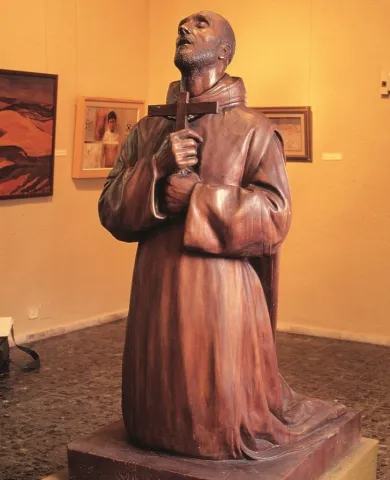
7. The "Brilop" Naif art museum that collects the pictorial legacy of Blas T. Rivera López.

Breve descripción

Since 1983, the "Saudar" Cultural Association has been doing a informative and research work on the historical, artistic, cultural and traditional origins of the population. We believe that we are contributing to the protection, conservation, knowledge and dissemination of it and we have materialized this in a Museum. The one we know today as the Jodar Museum, which is a "time walk" to get to know the city in close contact, "Jodar, naturally simple."

Telecomunicaciones
Sitio web
www.saudar.com
Teléfono de contacto
635 602 704
Correo electrónico
asociacion.saudar2@gmail.com
Ubicación
Código Postal
23500
Latitud
37.844560
Longitud
-3.352210
Dirección
C/ Juan de Mata Carriazo, 4, 2º, 1ª puerta
Distrito
Municipio
Ubicación en el mapa
POINT (-3.35221 37.84456)
Tipos de punto de interés
Imágenes carrusel
imagen
Image
Castillo%20de%20Jodar6.jpg
Imagen principal
Desactivado
imagen
Image
Castillo%20de%20Jodar9%20%281%29.jpg
Imagen principal
Desactivado
imagen
Image
Castillo%20de%20Jodar8%20%281%29.jpg
Imagen principal
Desactivado
imagen
Image
Castillo%20de%20Jodar10%20%281%29.jpg
Imagen principal
Desactivado
Imágenes cabecera
imagen
Image
Castillo%20de%20Jodar4.jpg
Imagen principal
Activado
Horario
Monday to Friday: 11: 00 - 13: 00.
Microsite al que pertenece
Otros servicios

Visitors' Center "Sierra Magina Natural Park" (South Tower) and "Xodar" Interpretation Center of the Castle's History (North Tower). Saturdays, Sundays and holidays, from 11: 00 to 13: 00. Friday, Saturday and holidays, from 16: 00 to 18: 00. For concerted visits by cultural groups on another schedule call 635 602 704 or email: culture and festivities The visit will have a guide from our association.

Loading map
Preparing points of interest and routes...

Museum of Escultura Jacinto Higueras

Submitted by brandcode_deweloper on
Id
2279225
Descripción
Descripción larga

It is formed by the donation of original works and documentation made by the family of Jacinto Higueras Fuentes in 1963, in addition to the awards of the International Sculpture Competition that is held in memory of the sculptor. The exhibition spaces are articulated around the two floors with which the building has

On the lower floor we find a single room, with well-defined spaces; in it are exposed the religious sculpture, the family of the sculptor and the monuments. On the upper floor there are two rooms, in one there are portraits made by the sculptor and in the other the awards of the International Sculpture Competition. The permanent exhibition only allows to contemplate a part of the considerable volume of the work housed in the museum.

Breve descripción

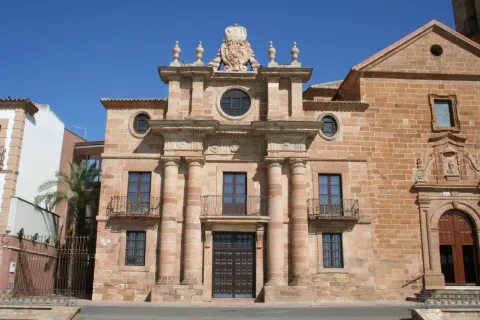
The museum is located in a building dating from 1868, where for a century municipal life was developed. The facade is made of red-toned silery stone and has very beautiful balconies made of forged iron.

Telecomunicaciones
Sitio web
www.museojacintohigueras.org
Teléfono de contacto
953 402 111 / 953 402 112
Correo electrónico
santisteban@promojaen.es
Ubicación
Código Postal
23250
Latitud
38.247890
Longitud
-3.205950
Dirección
Plaza Mayor, 8
Distrito
Ubicación en el mapa
POINT (-3.20595 38.24789)
Tipos de punto de interés
Imágenes carrusel
imagen
Image
Mon075.jpg
Imagen principal
Desactivado
imagen
Image
unnamed%20%2816%29.jpg
Imagen principal
Desactivado
Imágenes cabecera
imagen
Image
Mon684%20%281%29.jpg
Imagen principal
Activado
Horario
Monday to Sunday: 09: 00 - 14: 00 and 17: 00 - 20: 30.
Microsite al que pertenece
Loading map
Preparing points of interest and routes...

Museum of Baeza

Submitted by brandcode_deweloper on
Id
2335314
Descripción
Descripción larga

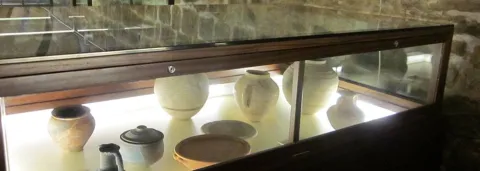
From its first occupation (Bronze Age 2500-100 BC): Ceramics and funerals, loom weights, tips or needles, among others.

From the Roman Age (Flavia Dynasty S. I d. C.): Packaging and ceramic and domestic like dishes, pot, bowls, dishes, glasses, etc.

From the Medieval Time, the distinction is made between Arab civilization (Almohad invasion) and Christian: Decorative elements and domestic life as remains of pliers, candles, jars, dishes, etc.

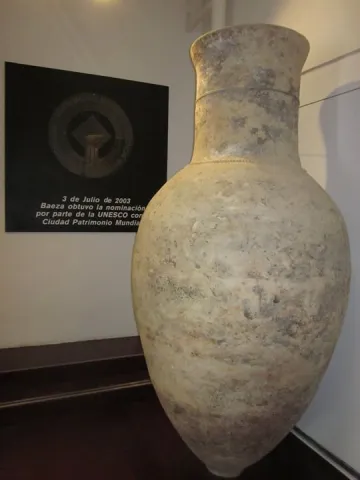
From the Modern Time, you can pick up passing doors, keys, arches, flow box, portraits, etc. From this time to highlight three very significant pieces, the first the painting of Juan de Bolaños, The old (the only preserved specimen of this author's pictorial work) that represents the scene of the Battle of the Navas de Tolosa that occurred in the vicinity of the castle of Castro Ferral. The second is the impressive tincture shown in the lobby of the Baeza Museum for oil storage. And, finally, the door known as the three keys and which in its day kept the most important documents of the city in the building of the High Concierial Houses.

They are therefore pieces that serve visitors of excellent procedure to know the life of man and brushes of the history of the city. But the main capital of the Baeza Museum is its own public, who when visiting it regains collective memory.

Breve descripción

The Baeza Museum is located in the Atarazanas building in the centre of Baeza where the history of the city is reflected. This museum reports through the pieces that shows different times of human occupation on the Baeza site, distributed in two rooms on the ground floor of the headquarters of the First University Foundation of Baeza.

Telecomunicaciones
Sitio web
www.baeza.net
Teléfono de contacto
953 741 582
Ubicación
Código Postal
23440
Latitud
37.990580
Longitud
-3.471430
Dirección
C/ Casas Nuevas, s/n
Municipio
Ubicación en el mapa
POINT (-3.47143 37.99058)
Tipos de punto de interés
Imágenes carrusel
imagen
Image
museo-baeza-3.jpg
Imagen principal
Desactivado
imagen
Image
museo-baeza.jpg
Imagen principal
Desactivado
Imágenes cabecera
imagen
Image
unnamed%20%2818%29.jpg
Imagen principal
Activado
Horario
Tuesday to Friday: 10: 00 - 14: 00. Tuesday to Saturday: 18: 00 - 20: 00. Saturdays and Sundays: 10: 00 - 13: 30.
Microsite al que pertenece
Loading map
Preparing points of interest and routes...