Saltar al contenido principal

Quesada

Submitted by brandcode_deweloper on
Id
750095
Perfil de redes sociales
Facebook
https://www.facebook.com/ayuntamientoquesada
Youtube
https://www.youtube.com/user/AyuntamientoQuesada
Instagram
https://www.instagram.com/ayuntamiento_de_quesada/
Descripción
Breve descripción

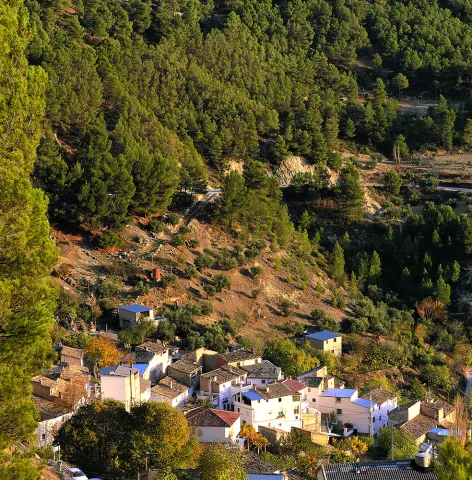
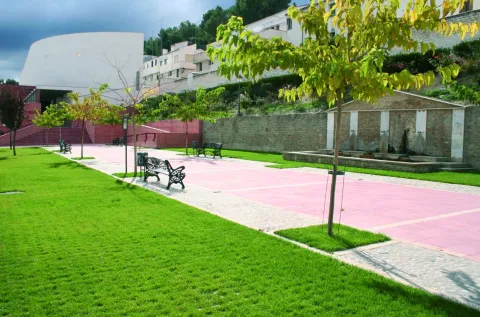
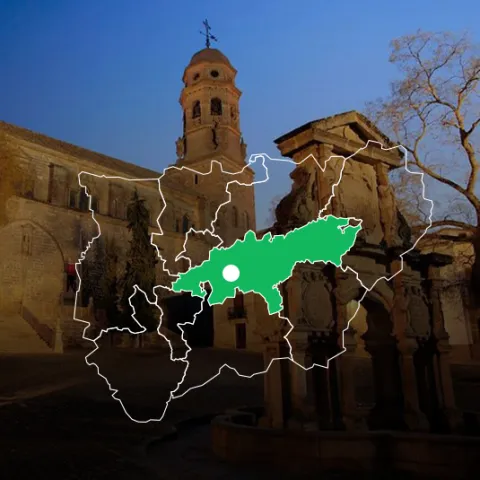
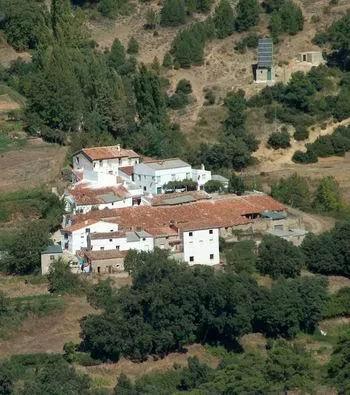
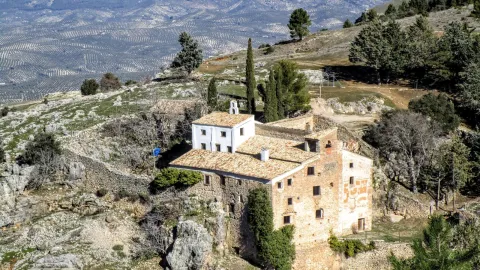
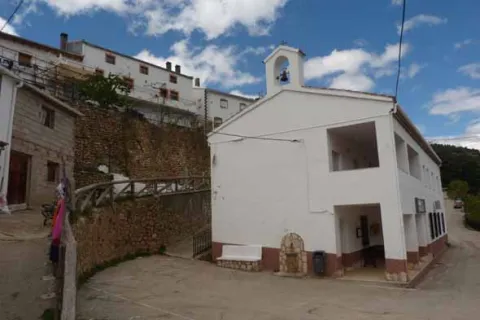
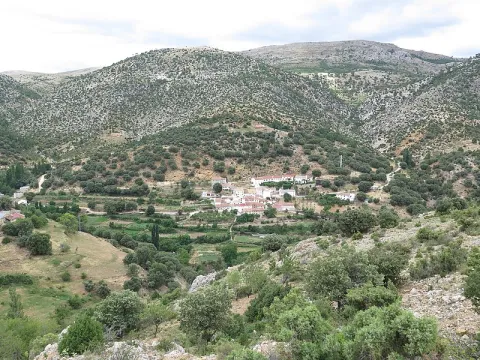
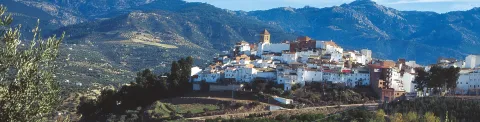
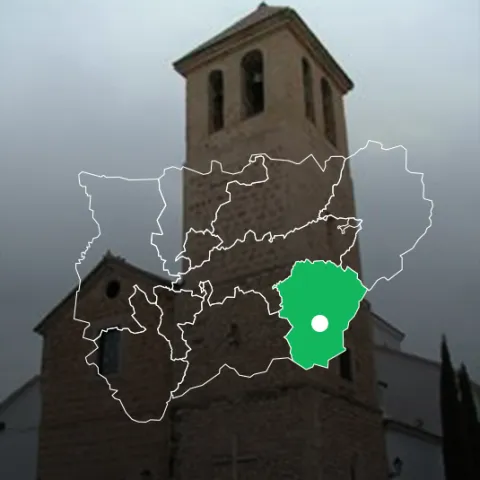
Quesada is a municipality in the Sierra de Cazorla region, south-east of the province of Jaén. The east and south of its territory are part of the Natural Park of the Sierra de Cazorla, Segura and Las Villas.

This municipality is made up of Quesada and the villages of Belerda, Don Pedro, Collejares, Los Rosales and Tícar, as well as El Cortijuelo.

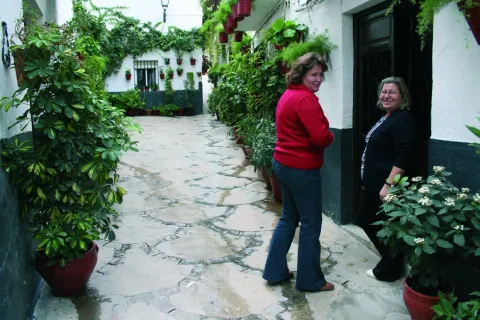
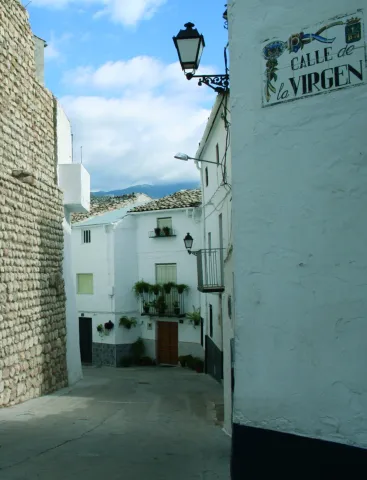
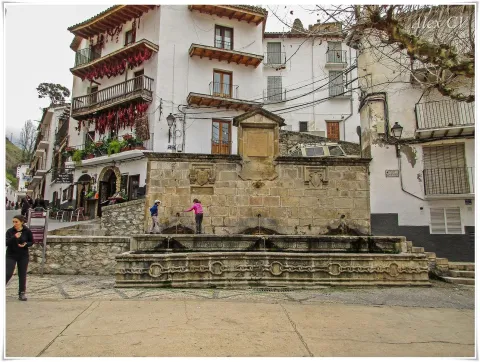
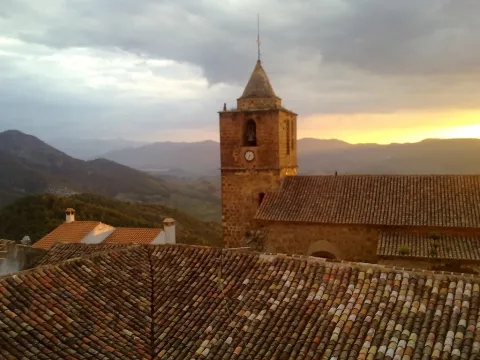
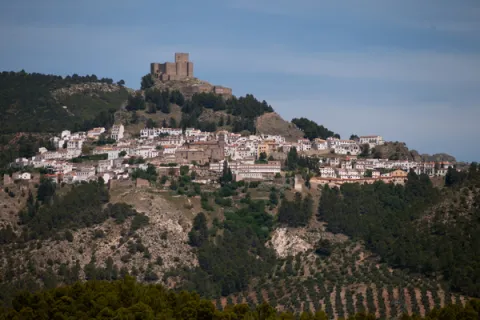
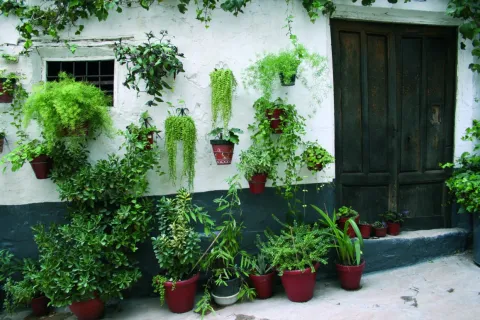
This is one of the most beautiful and historic villages in the park. Built around a hill, the streets and squares present the curved and heterogeneous physionomy of the medieval route.

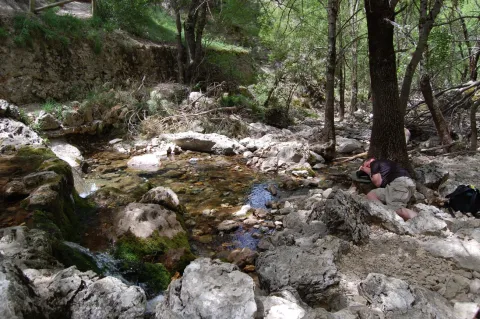
In its municipal term is the birth of the Guadalquivir River, in La Cañada de las Fuentes.

In agriculture the olive grove dominates. It has an olive cooperative that is part of the designation of origin "Sierra de Cazorla." It is also very important to have sheep. The cultivation of the cereal is residual and has been replaced by the olive tree.

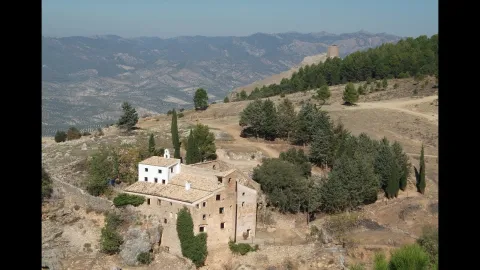
Its surroundings are splashed with places of environmental and heritage interest, such as the Roman villa of Bruñuel and the venerated shrine of the Virgin of Tícar.

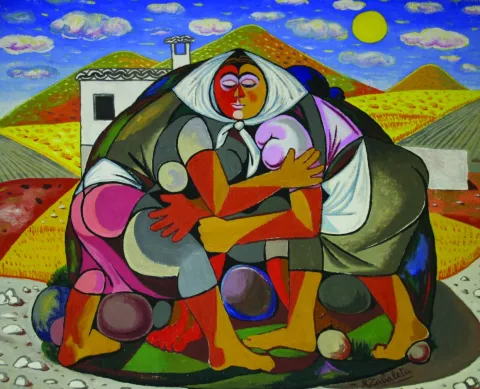
Among its heritage is the Parish Church of San Pedro and San Pablo, the Atalaya del Infante Don Enrique, the Arc of the Saints and the rock paintings of the style of the Levine, declared World Heritage and located in the Cave of the Encashier; and finally the Museum of Rafael Zabaleta, a native painter of Quesada, and that of Miguel Hernández, whose wife was born in this town.
Telecomunicaciones
Teléfono
953 733 025
Sitio web
www.quesada.es
Fax
953 733 707
Ubicación
Nombre
Quesada
Latitud
37.842980
Longitud
-3.066920
Municipio
Ubicación en el mapa
POINT (-3.06692 37.84298)
Imágenes
imagen
Image
8bd2037d-3371-a447-c462-f23bb08238ba?t=1621356088703
Imagen principal
Desactivado
imagen
Image
b19dc278-a564-d320-1b28-83f48077c0be?t=1621356088757
Imagen principal
Desactivado
imagen
Image
915ef1cf-917d-c03a-a168-b51a2e548138?t=1621356088805
Imagen principal
Desactivado
imagen
Image
3bfc6c96-084a-ed27-97c6-8687538dd6dc?t=1621356088943
Imagen principal
Desactivado
imagen
Image
9ee5d02b-d843-108d-1f27-14997322ea39?t=1603724928275
Imagen principal
Desactivado
imagen
Image
1556b6e2-6b04-b9cc-c61b-9487ac687d36?t=1603747428216
Imagen principal
Desactivado
imagen
Image
ec921ab0-540a-0430-4cb0-0cf4c14bdd15?t=1621356089164
Imagen principal
Desactivado
imagen
Image
9b35f320-001f-6702-e3e2-b9000cbeea31?t=1621356089364
Imagen principal
Desactivado
imagen
Image
7f7a9beb-08e0-9187-90f8-061c87d37ef0?t=1621356089555
Imagen principal
Desactivado
imagen
Image
cazorla-pinar-jpg
Imagen principal
Desactivado
imagen
Image
nacimiento-del-gadalquivir-jpg
Imagen principal
Desactivado
Información adicional
Curiosidades

Oficina de Turismo de Quesada
Plaza de la coronación, 5
https://admin.dipujaen.es/municipios/Quesada/turismo.html
Imágenes cabecera
imagen
Image
431db42c-0322-5342-0307-bd339c5a9014?t=1606405219719
Imagen principal
Desactivado
Datos de interés

Tourist area: Serras de Cazorla, Segura and the Villas
Distance to the capital (km): 99
Altitude over sea level (m): 676
Extension (Km2): 328
Number of inhabitants: 5,944
Gentillo: Quesadeños
Postal code: 23480

Videos
Video file
Cultura

From the abundant and rich historical-artistic heritage, we highlight:

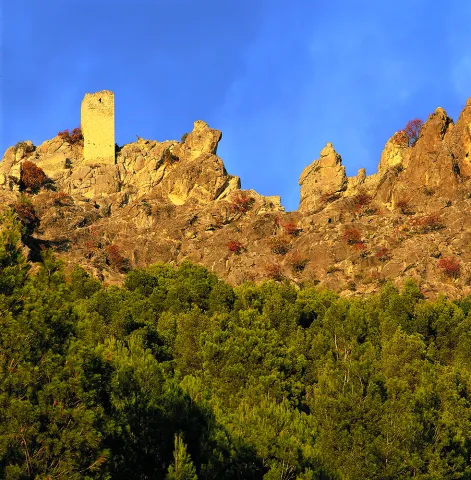
  • Tiscar Castle. It was raised in the Arab era and located in a rocky area of easy defense. The first news of the castle dates back to 876. It is a small complex with a small tower of tribute. Built in apial cane, with parts of bulkhead and the wall cloth attached to the rock. In the center there is a great rosehold called "Black Peña." In 1949 it was declared Good of Cultural Interest.
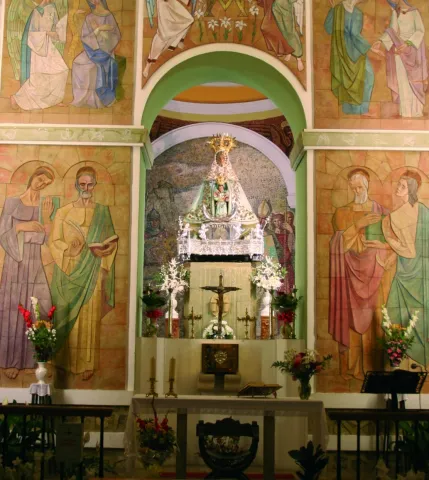
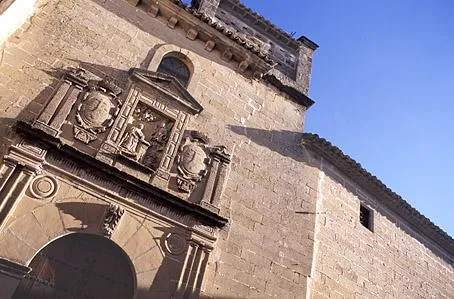
  • Sanctuary of the Virgin of Tícar. It is certainly the center of Marian devotion of the region, both for its tradition and for its location, under the "Black Peña Castle."The present construction of the Sanctuary of the Virgin of Tiscar dates back to the mid-20th century, although it retains architectural remains of previous times, such as the great entrance door with pointed bow and decorated jambas, remains of the plywood of the Granadine in the sacristy of the 14th century and others that can place us at the end of the Gothic of the 16th century. The exterior of the Sanctuary maintains the original trail and on the facade the two-high swordsman. Above the main door is an image of the Virgin between two trees sculpted in relief. During the Civil War he suffered great damage, which is why the Sanctuary has been reformed.
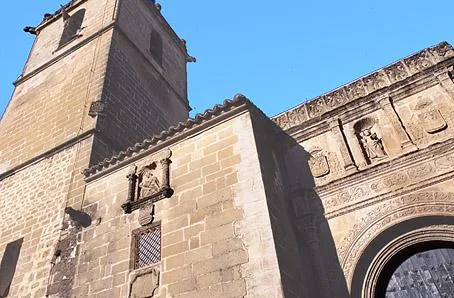
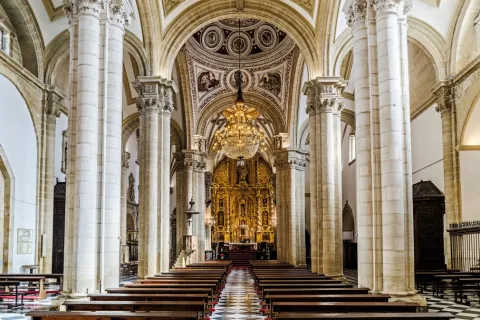
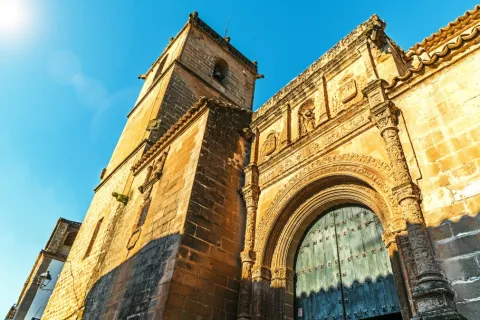
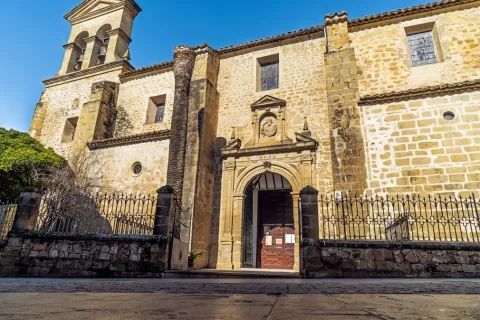
  • Parish Church of St. Peter and Paul. It dates from the 18th century, in a neoclassical style and built on the site that had previously occupied another Gothic church of which a chapel is preserved. It has a cross floor with three ships covered with half-canyon vaults with lunetes. The entrance door with 18th-century bronze carnation and the bell tower built on an ancient medieval tower are outside.
  • Atalaya del Infante Don Enrique. The spectacular cylindrical tower of More than 10 m. of height is in the Tiscar port. Its role was to monitoring the movement of troops of the Nazari kingdom of Granada. It was built in the late 13th century by order of the Infante Don Enrique, son of Fernando III. After its restoration, a metal staircase allows us to access its interior by the original door, located about three meters in height. From its privileged situation, we can see a very important extension of the territory.
  • The Arc of Saints. Gothic door that gave entrance to the walled enclosure, built in the 14th century. The exterior shows an arch pointed with a quarry, with two novels whose right hamba is a Roman funeral stele of the third century. At the bottom is a half point brick arch with a half-barrel vault. The double arcade that it presents today could be due to the fact that the arch of half-point interior was the original of the Andalusian enclosure, remade in Christian times.
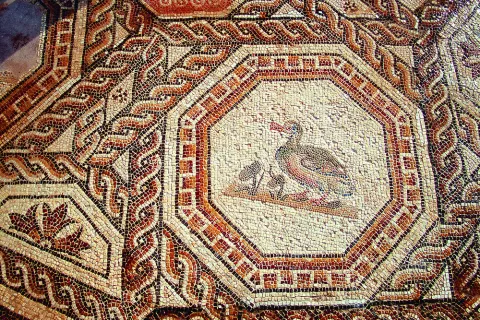
  • Roman Villa of Bruñel. This villa is a magnificent testimony of Roman domestic architecture linked to agricultural exploitation. The exceptional wealth and magnitude of Bruñel makes it a scarce model among the rural houses of this time. Originally there must have been a rather modest construction that was reformed during the second century after Christ to build an extensive complex of great decorative wealth. An urban building was designed around a large central courtyard around which the rooms are distributed, mostly with splendid mosaics and covered walls. In the fourth century, part of the house was destroyed to overcome it another with a porticated central courtyard, with a large double room to the north and another wing with a central courtyard to the east. In this last phase, although a great decorative wealth is still maintained, there is already a great ruralization of life in the villa. Their abandonment and ruin had to take place gradually during the VI and VII centuries. This villa was declared Good of Cultural Interest in 2005.

Other monuments are: The Church of Purification, known as the Chica Church, built in the 17th century with Baroque-style features and the Hermitage of San Sebastián.

Naturaleza

It is surrounded by mountains of considerable height, such as the Gilillo peak (1899 m.), Rayal (1884 m.), or Magdalena (1219 m.), which is located in the surroundings of the Guadiana Menor River, with streams that serate along its slopes, it is an invitation to travel one of the many paths to let us be surprised by the botanical and faunistic wealth of its territory.

Part of its municipal term is included in the Natural Park of the Serras de Cazorla, Segura and Las Villas, the largest protected space in Spain. An orographic labyrinth of valleys, calares, slices, mountains, high-rise hydrological importancebecause of the large number of rivers and streams that run by their end; botany (larix pine, carrasco pine, tejos and a wide variety of endemic species; pheasant-cynetic and landscape.

In the mountains of Quesada there are numerous coats with rock paintings including the Cave of the Encarejo, the coat of the Cerro Vitar, the cave of the ivy and the Cave Cabrera, in which in addition to the rock paintings were found ceramics and lytics that have allowed to give the first human occupation of these lands in the third millennium BC

The variety of ecosystems also makes the number of animal species living in these areas very diverse. In the higher and more steep areas the major hunting speciesand muflons, and deer, and we, and boars, Rapes and scavengers like, eagles, broken bones and lethargy vultures. And in the areas of lower height, the cynetic species of minor hunting: badges, foxes, hares, rabbits or gines. Without forgetting fauna living in crystalline waters of these rivers: Trout, barbos, otters, salamanders. No the birds who either live in olive trees, or feed on their fruits in their migratory movements: carboneros, abbullas, jilgueros, petriroreds, ratoneros...

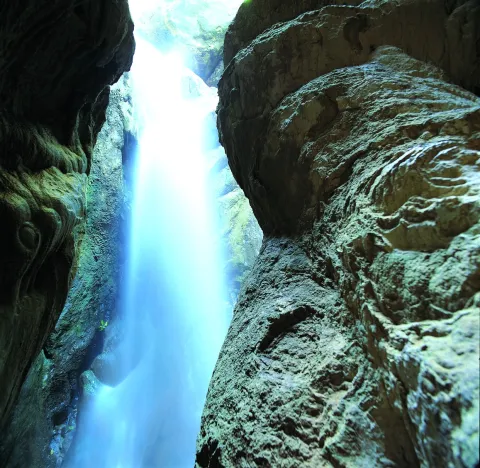
One of the places we can't stop visiting is the Water Cave. It is one of the first natural clusters of limestone formations discovered in Spain, in which the water of the Tícar River and the Roca del Monte de Caballo are combined.

He is also known by the names of the Cave of Wonders, for the spectacular waterfalls in the melting season and their stalactic formations, and Cave of the Virgin of Tícar, because according to the tradition there the Virgin appeared in 1391 to the king of Tiscar, Mohamad Abdon. Near the cave is the Sanctuary of the Virgin of Tícar.

Access to the cave is made through a tunnel about 10 meters long and 1 meter high. Inside, concerts are organized for the fantastic acoustics it has. This cave is 13 kilometres from Quesada.

In addition, Quesada has the following areas of environmental interest:

The Chorro.They highlight their impressive rocky cuts, places where it is very easy to observe how large carrion birds like the leonate vultures or the aloches fly over us.

  • Location: To the west of the town, in the natural park of Cazorla, Segura and Las Villas.
  • Distance: 11 km.
  • Medium: Tourism vehicle.
  • Access route: By the A-315 in the direction of Peal de Becerro; after a few km, we will turn right by the A-322 in the direction of Cazorla; after 1.5 km, we will take the JV-7.107 in the direction of the birth.

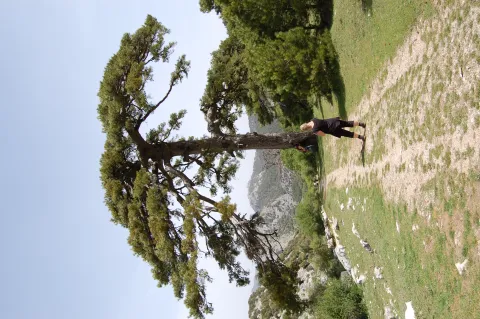
The birth of Guadalquivir.Impressive landscape, belonging to the Natural Park of Cazorla, Segura and Las Villas, characterized by the abundance of large formations of larice pine trees associated with rake juniper.

  • Location: To the west of the town, next to the Cañada de Las Fuentes, in the natural park of Cazorla, Segura and Las Villas.
  • Distance: 27 km.
  • Medium: Tourism vehicle.
  • Access route: By the A-315 in the direction of Peal de Becerro; after a few km, we will turn right by the A-322 in the direction of Cazorla; after 1.5 km, we will take the JV-7.107 in the direction of the birth.

Valley of the Tejos.It is a unique forest of tejos, among which one millenarian, with over 3,000 years of age, stands out.

  • Location: To the west of the town, in the natural park of Cazorla, Segura and Las Villas.
  • Distance: 27 km.
  • Medium: Tourism vehicle.
  • Access route: On the A-315 towards Peal de Becerro; a few km, we will turn right through the A-322 in the direction of Cazorla; after 1.5 km, we will take the JV-7.107 towards the birth of the Guadalquivir.
Fiestas y Eventos

The following parties are held in Quesada:

  • San Sebastián. Between 19 and 21 January, the parties are held in honor of San Sebastián, patron of Quesada. On the 19th, the saint is brought from his hermitage to the people, so that the next day the three banners and the drummer, bound in ancient suits, will make five feuds of flag during the procession of the image that takes place in the afternoon. The day ends with the luminaire raised in front of the City Hall door, where the products of slaughter and wine are tasted. The parties end on the 21st, which only differs from the previous one because the flags are danced three times.
  • Saint Anton. The 17 January, pattern and protector of animals. On the eve the lounges are lit in some streets and squares are made crumbs, morcilla, chorizos, bacon... Always accompanied by dances and singers of the participants and by the "crow."
  • Celebrations in honor of Patrona La Virgen de Tícar. The summer are held between the 23 and 29 August. During these days activities of all kinds are alternating until the moment when the Patron leaves the church of St. Peter and St. Paul to return to the Tiscar Sanctuarywhere you will stay until the first Saturday of May of the following year in which you will recelebrate the rosemary to take you back to Quesada.
  • Fiesta de los Cargos or Fiesta del Dios Chico. They are celebrated in the pedany of Belerda and is a tradition that dates back to the 16th century. The party begins on December 25. The five "Charges," First and second captain, the flag, guinche and the small charge, accompanied by the drummer and a very fervent comitiva leave on the 26th until the Sanctuary of Tiscar where they prosecute the Virgin. The return is made from corriada to corrijada, testing the products of the slaughter and the good wine with which they are made. The party ends with the renewal of the, "Charges."
Gastronomía

Quesada's kitchen is serrana, and therefore it is strong. Among the dishes we highlight:

  • Talarines. It is the most unique, similar to the manchego gazpacho and the andrajos. It consists of a stew of meat (rabbit, hare, pig) with vegetables and mushrooms in which wafers of mass are cooked that are made of strips, that look like rags of fabric. Hence his name.
  • Pipirrana. It is salad whose basic ingredients are onion, tomato, green pepper and cucumber.
  • Migas with chorizo, peppers, pancake and grapes.
  • Garlic flour. It consists of red peppers, niscalos, natural pancette, potatoes, garlic, pepper and flour. Cod is also sometimes used.
  • Gachurrene. Potatoes, oil, flour, salt and water for the mass, which is added to the fries

The pastry shop is also important and prepare: Sweet fig bread, papajotes, florites, drunks, bathrobes.

Historia

In the quesada saw there are caves with rock paintings, ceramic and lytic remains that allow us to give the first human occupation of the area in the third millennium BC

During Bronze age, With the arrival of the first argaric populations these same caves and others, such as the village and necropolis of the "Corral de Quiñones," were again occupied.

Of his Roman past, Villa de Bruñel It's a clear example. It is made up of a Roman necropolis from the 1st to the 4th century, a third century villa, with patios, peristilos, impluvium and an interesting collection of mosaics. From the 4th century the remains of a Paleocrist basilica. In addition to this villa, others have been located, such as Voladero, Aguas Calientes, Allozar and the Rosales.

The current location of the city centre is attributed to the Visigoths, according to the many remains that appear in the town, such as the capitals that pull access to the garden.

It was in the cunado Arab era it acquired entity as a population core becoming within the ten most important populations of Jaén. In its texts it appears as Madinat, a fortress at the foot of a mountain with markets, bathrooms, inns and arrabal village. At this time, its industry of dishes and wooden vessels were sold throughout Al-Andalus and the Maghreb.

Since the first Christian conquest in 1157, by King Alfonso VI, he has changed several times from Christian to Arab and vice versa. In 1310 it was finally recovered by Fernando IV, and in 1331 it became part of the advance of Cazorla, and was later given to Ubeda by King Alfonso XI.

In the 19th century, Queen Elizabeth II granted him the title of city.

In the early years of the 20th century they visited the city, Antonio Machado and Manuel Cigues Aparicio, which based some of their works in Quesada. The painter Rafael Zabaleta was born in 1916 and Josefina Manresa, wife of Miguel Hernández, was born.


Otra información

The Zabaleta Museum

Rafael Zabaleta was born in Quesada in 1907. After studying at the Madrid School of Fine Arts he travels to Paris, where he studies the teachers of contemporary painting, such as Picasso. In 1942 he made his first individual exhibition and since then there will be many successes. He won the UNESCO Prize for the Third Latin American Biennial in 1956. In their painting, light, color, family objects, the fields of Quesada will be immortalized and hang in many museums around the world. He died in Quesada in 1960.
The Zabaleta Museum was created in 1963 with the important legacy donated by the heirs of the painter. All the works exposed are of great interest and constitute their most complete exhibition.

Museum of Miguel Hernández and Josefina Manresa

Located on the ground floor of the Zabaleta Museum, it contains much of Miguel Hernández's legacy. It offers a tour of the work and life of the poet and his wife, the quesadeña Josefina Manresa, a story of love full of passions and emotions.

Quesada Archaeological Heritage Interpretation Center, CIPAQ

The Center for the Interpretation of the Archaeological Heritage of Quesada, CIPAQ, opens its doors in September 2015 to join the extensive cultural offer of this picturesque jiennense villa, cradle of the Guadalquivir. The aim is to show the extraordinary legacy, prehistoric and Roman, which treasures Quesada. Thus, the first floor is dedicated to one of the most important sets of rock, eulin and schematic art in the province of Jaén, declared World Heritage by UNESCO in 1998. On the ground floor the theme revolves around the Roman villa of Bruñel, with an amazing group of mosaics in excellent conservation. The tour is set with the exhibition of interesting objects, recreations, audiovisual, interactive and a teaching classroom for small visitors to learn by playing. "
Loading map
Preparing points of interest and routes...
Imagen principal
imagen
Image
08dafa1a-7a1f-a656-cb9f-1064faa23eca?t=1603979598255
Imagen principal
Activado
Literatura

An excellent way to get to know one of the most beautiful and historic villages in this Natural Park is to follow in the footsteps of two illustrious poets: Antonio Machado and Miguel Hernández.

Quesada's connection with Antonio Machado stems from the fact that it is one of the places the poet visited during some of his frequent excursions to the source of the Guadalquivir river. You can follow in Machado's footsteps in a park where you'll find ceramic tiles bearing a fragment of one of his poems, and the same is true at the Sanctuary of the Virgen de Tíscar. Once there, be sure to visit the incomparable Cueva del Agua.

Quesada's link with Miguel Hernández, on the other hand, comes from the fact that his wife was born in the town. You can see how the people of Quesada cherish the poet's legacy through the Miguel Hernández-Josefina Manresa Museum and pay tribute to him through various corners linked to his memory.
Baeza

Submitted by brandcode_deweloper on
Id
725103
Perfil de redes sociales
Facebook
https://www.facebook.com/aytobaeza/
Twitter
https://twitter.com/AytoBaeza
Instagram
https://www.instagram.com/aytobaeza/
Descripción
Breve descripción

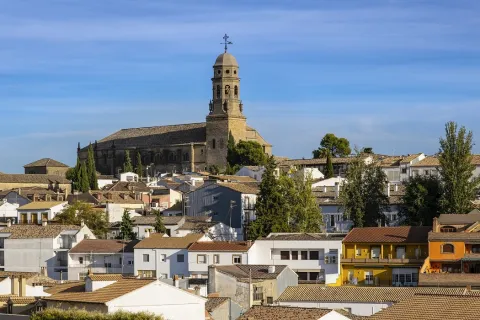
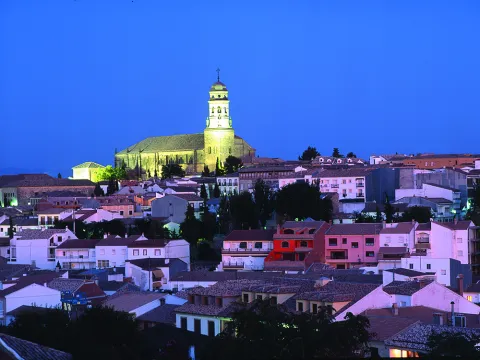
Baeza is located in the same geographical centre of the province of Jaén, located in the region of the Loma of which its western capital is considered.

Located near the Guadalquivir River, in a landscape of fertile land of orchards, olive groves and cereal. The absence of non-agricultural land reduces the areas of natural interest to the Guadalquivir River and the wetlands of the Lagoon Grande, of great ecological wealth and the largest in the province.

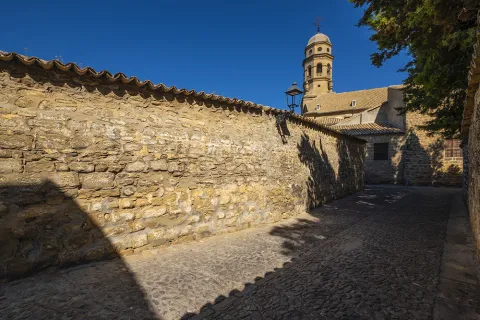
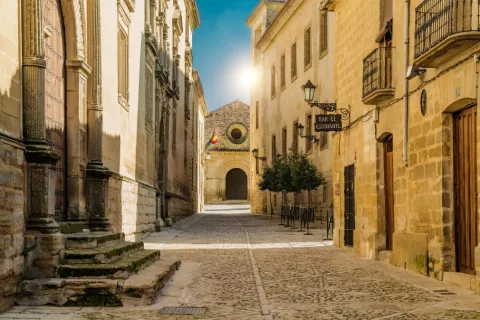
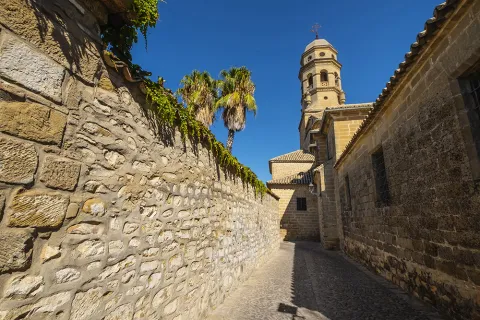
Baeza is a city where the Renaissance is shown in all its splendor, in both civil and religious monuments: palaces and churches that alternate with white houses, portades, porticos, towers, squares and fountains.

Its period of splendor dates back to the 16th and 17th centuries, although the city has been outstanding since remote times.

Telecomunicaciones
Teléfono
953 740 150
Sitio web
www.baeza.net
Correo electrónico
sac@baeza.net
Ubicación
Nombre
Baeza
Latitud
37.995930
Longitud
-3.474130
Municipio
Ubicación en el mapa
POINT (-3.47413 37.99593)
Imágenes
imagen
Image
6b113f25-c234-0491-af2f-c149a865afa8?t=1603923180029
Imagen principal
Desactivado
imagen
Image
a65f89b4-654e-e046-fdbd-d44fa6641988?t=1603922557103
Imagen principal
Desactivado
imagen
Image
6310a5e2-e849-e7b1-582a-468d48f758f0?t=1586171131274
Imagen principal
Desactivado
imagen
Image
1f236e61-7713-a025-2f0d-35391af76a7d?t=1603922557227
Imagen principal
Desactivado
imagen
Image
8a202e8f-385a-5f9e-3afe-569acec987a4?t=1616522299103
Imagen principal
Desactivado
imagen
Image
795a0c33-4ee3-408e-1c13-b816123adc64?t=1586171132490
Imagen principal
Desactivado
imagen
Image
b6010740-bf62-6b8e-ab23-6d9f76897f5b?t=1586171132143
Imagen principal
Desactivado
imagen
Image
750eeda9-773d-709d-2383-372d10701650?t=1586171130098
Imagen principal
Desactivado
imagen
Image
a78c862d-3c74-cde9-6ff9-b69630560ce4?t=1586171131756
Imagen principal
Desactivado
imagen
Image
beac10cd-9668-0c22-7db3-9966e5eda5b3?t=1586171132006
Imagen principal
Desactivado
imagen
Image
479bc6c3-babf-eaef-7fb3-b4ad8b635e5b?t=1616522299289
Imagen principal
Desactivado
imagen
Image
f361a4e0-b515-6e7c-a7dc-ff14c67688ec?t=1616522299347
Imagen principal
Desactivado
imagen
Image
81e8d636-ef0d-91e5-2750-3f56d6d04808?t=1616522299408
Imagen principal
Desactivado
imagen
Image
b1ddae0a-a5ee-4323-53d3-54bc68526d9a?t=1616522299473
Imagen principal
Desactivado
imagen
Image
0dee5670-1fe0-cbf4-5867-9147345e2afe?t=1616521131504
Imagen principal
Desactivado
imagen
Image
81d1e198-9d29-279e-149f-081024b27891?t=1586171130396
Imagen principal
Desactivado
imagen
Image
39a7fbfd-9aa2-1cac-c7d3-238c006f5a28?t=1616522299547
Imagen principal
Desactivado
imagen
Image
e016a9da-4297-fc04-4d3c-dfa579da9552?t=1586171130697
Imagen principal
Desactivado
imagen
Image
2b452c6d-15df-a819-aa50-e54921bbd0de?t=1616522299619
Imagen principal
Desactivado
imagen
Image
805356f8-60e7-d8f0-2e25-1edd5ebffa4d?t=1602694728132
Imagen principal
Desactivado
imagen
Image
7172efae-cdfc-d5aa-a347-037b6d6b16aa?t=1616522299688
Imagen principal
Desactivado
imagen
Image
36d285cc-5d64-d9a0-6e84-7ad58f539a76?t=1616522299749
Imagen principal
Desactivado
imagen
Image
bc9f53d4-3a83-f0a9-e1da-c486d747724b?t=1616522299815
Imagen principal
Desactivado
imagen
Image
0da7acd2-1162-bbf8-8c3d-d3a3d8140eaa?t=1603105398568
Imagen principal
Desactivado
imagen
Image
f1c392af-765a-3f53-d9a0-c0b6b9acfb77?t=1603105767022
Imagen principal
Desactivado
imagen
Image
2c724b20-61d7-99b1-e423-f4292a646491?t=1603106229722
Imagen principal
Desactivado
imagen
Image
eaa9f592-f374-8747-0f22-1cadb4e98585?t=1603106434496
Imagen principal
Desactivado
imagen
Image
02cdf257-dfc8-6b82-5816-a0ba6ba51dc1?t=1603106654931
Imagen principal
Desactivado
imagen
Image
8791fed9-36c1-40e4-b1a6-95e267986d8d?t=1603106857711
Imagen principal
Desactivado
imagen
Image
62bf1f22-afbd-c0da-1f93-ce52788b8636?t=1603107417445
Imagen principal
Desactivado
imagen
Image
79f98f41-2429-b937-f94c-827a88cb386c?t=1603107482920
Imagen principal
Desactivado
imagen
Image
086c140f-fab0-c0f1-595b-9eeda08b0616?t=1616522299958
Imagen principal
Desactivado
imagen
Image
59d90e88-c35f-3adb-7dbd-d51422bb9b63?t=1644243699085
Imagen principal
Desactivado
Información adicional
Curiosidades

Oficina de Turismo
Plaza del Pópulo, s/n, 23440
953 779 982
otbaeza@andalucia.org

Imágenes cabecera
imagen
Image
catedral-de-baeza176-2-jpg
Imagen principal
Desactivado
Datos de interés

Tourist area: Ubeda / Baeza
Distance to the capital (km): 48
Altitude over sea level (m): 769
Extension (Km2): 194
Number of inhabitants: 16012
Gentilicon: Baezanos
Postal code: 23440

Videos
Video file
Cultura

To understand today's Baeza, we have to go back to the first inhabitants who settled in the place known as the Alcázar hill, in the Bronze Age, evolving to the Iberian city Viatia or Vivatia, passing to the Roman era, when Biatia was one of the most important cities.

It would be the Muslims who made up the city's murary limits, some of which were remade in the 16th century. After the Christian conquest the epoch of splendor of Baeza begins. The new Christian Baeza begins to grow out of the world, where religious buildings are the most representative.

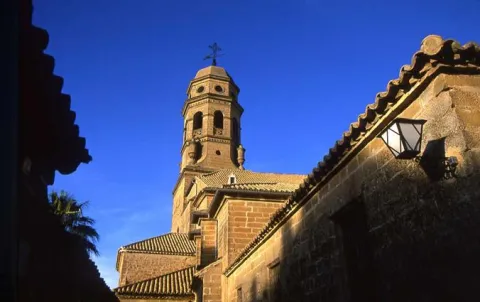
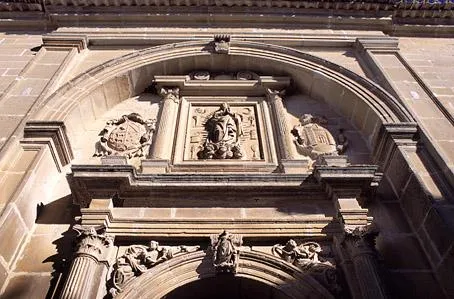
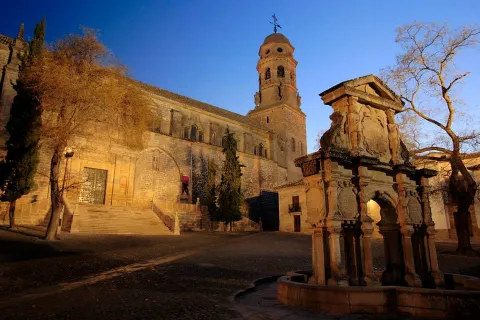
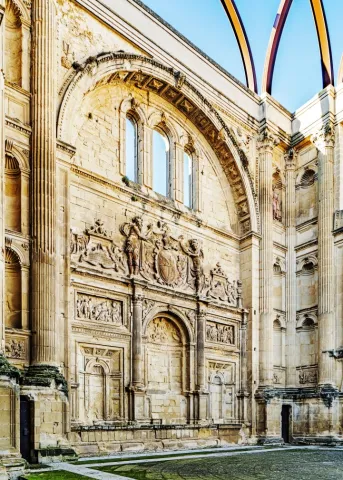
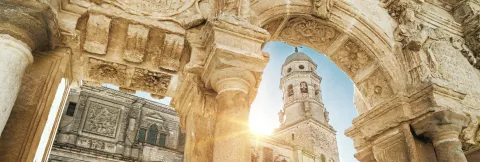
  • The Cathedral. It is the most representative building in the square. In this enclave there could have been a Roman temple, over which Muslims raise a mosque and, in 1227, under the Marian advocation of the "Nativity", the cathedralicia headquarters is erected. In the 16th century, a reform is carried out, which will be the one that prints the Vandelvirian Renaissance seal to the building. The cover was drawn in 1587 by Juan Bautista Villalpando with "relief of the Nativity of the Virgin." The base of the tower is believed to be the mosque's miner, adding in time of Vandelvira the body of the bells and the deck.
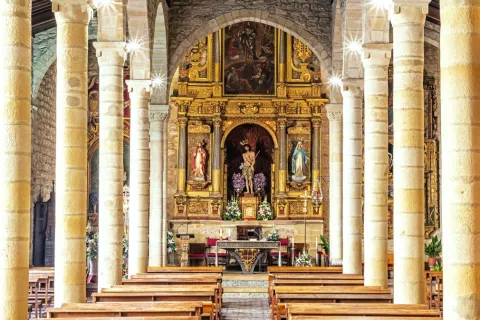
  • Church of Santa Cruz. This work dates from 13th century, of late Romanesque style and preserved after the Christian conquest. The exterior is austere, highlighting its two covers with half-point arquivolts. The interior consists of three ships.
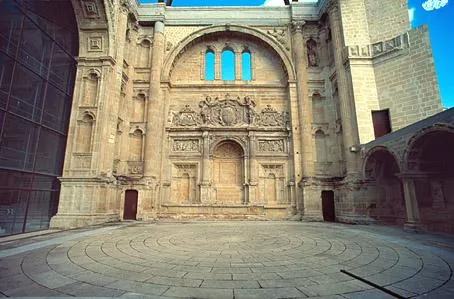
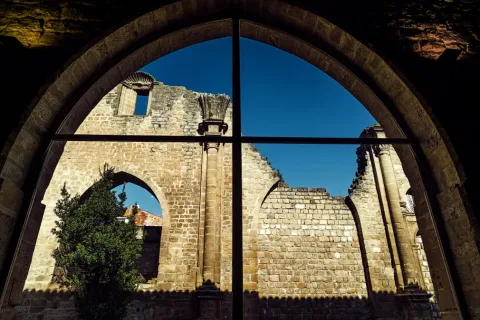
  • Ruins of the convent of San Francisco(extracamides). This work could have been one of the most important of the Andalusian Renaissance, but a number of misfortunes have prevented it, among these, the Lisbon earthquake of 1775 that brought down the vault of the major chapel. In this funeral and conventual complex, Vandelvira developed all its genius. The Latin cross church, which is accessed by a half-point arch that frames the entire cover, still remains with the relief of San Francisco and a tondo with the Virgin, which now give way to a large auditorium.
  • Old House of Correction and Prison, current City Hall(extracamides). It was built in 1520 as a prison at the request of Charles I. Since 1867 it has been home to the City Council. It is composed of the prison, with a more sober cover on which Justice and Charity are represented, and the house of the corridor with rich silver decoration. On the upper floor we find tripartite balconies with the shields of Philip II, the corridor and the city. It is topped with cornice decorated with membranes highlighted with figures. The Salon de Plenos has a Renaissance potter (horizontal and intertwined wooden ceiling) from the convent of San Antonio.
  • Church of St. Andrew. Building from the early 16th century, which held the title of a schoolgirl from 1764 to 1852. The silver-style cover, next to the square tower, stands out. The interior is a large main ship made up of arches pointed with side chapels.
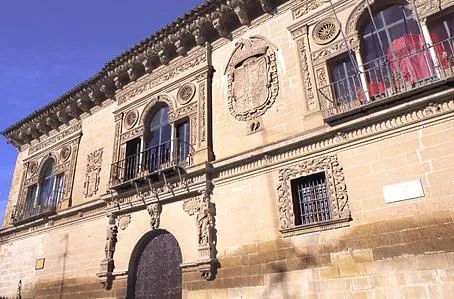
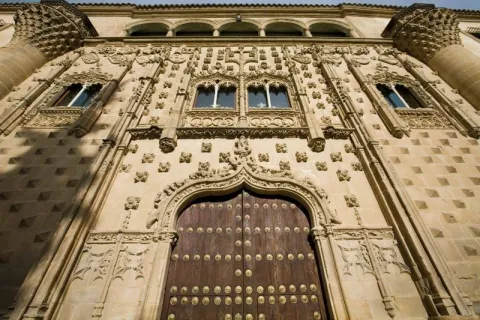
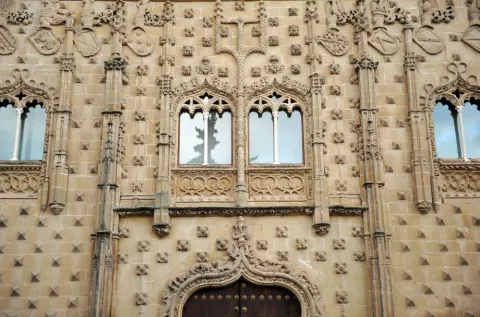
  • Jabalfifth Palace.In front of the church of Santa Cruz, the Jabalfifth palace, one of the highest exponents of the isabelin Gothic style, was built in the late 15th century. The isabelin Gothic We find it on the outside, with decoration based on diamond tips, pineapple nails, fronts, florons, ties, pinacles, mocaronas and heraldic shields. The facade it is overcome with five arches of half-point Renaissance period, as well as the courtyard of the late 16th century. Today it is the seat of the Antonio Machado International University.
  • The St. Mary's Square, Baezan monumental heart, concentrates the largest number of monuments: the cathedral, the conistorial houses, the fountain of Saint Mary; the seminary of St. Philip Neri, with its picturesque facade plagued with cheers, current headquarters of the International University of Andalusia or the house-palace of Rubin de Ceballos, behind the cathedral.
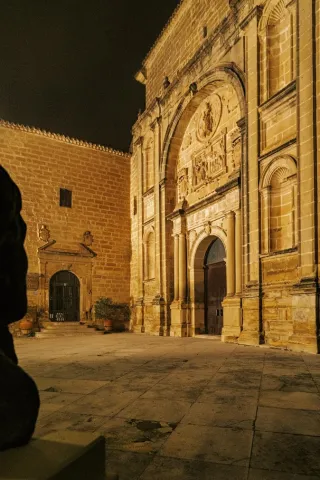
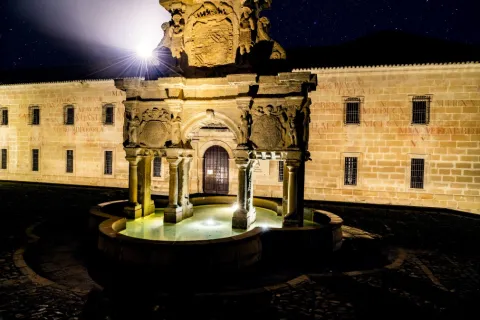
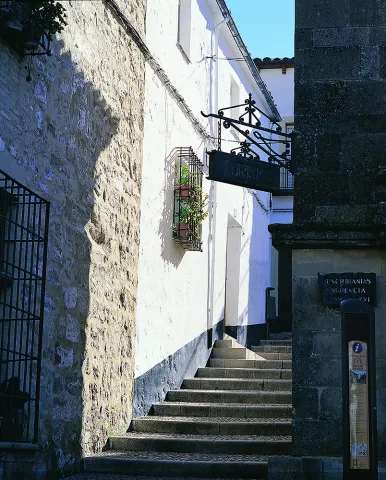
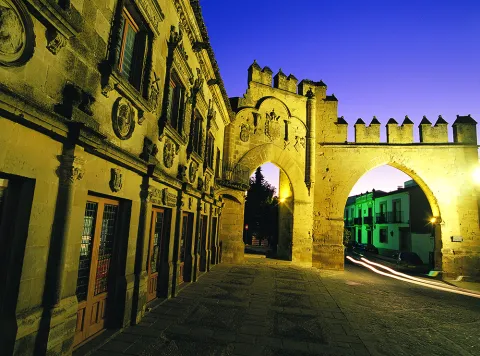
  • The Populo Square, framed by the door of Jaén and the arch of Villalar, is one of the most emblematic squares of the city, where we find the plateresque cover building of the old Escribanías, today the headquarters of the tourist office of the Junta de Andalucía, the old Carnicerías and the source of the Lions in the center.
     
Naturaleza

Baeza is located in a dominant place in the region of the Loma and on the right bank of the Guadalquivir River. The city is located on three hills and the small valley that remain in the middle, in a rather high position over the Guadalquivir valley, a situation conducive to being a very important square in ancient times. It is surrounded by the Guadalquivir rivers to the south and Guadalimar to the north.

A site that as we walk through the walls allows us to contemplate the immense sea of olive trees that is presented to us all around us. From the sights of this walk, you can see the beautiful picture of the Guadalquivir valley, the extensive olive trees, the Cazorla saw, the Segura and Sierra Mágina saw, with the villages of Jimena, Mancha Real, Bedmar and Garciez in the distance.

The predominant vegetation is the olive tree, but next to the river and the lagoon Grande we find what we call the gallery forest: white, mimberas, tarais, black, and other species of bushes. A vegetation that with the change of the seasons draw a color brush in the landscape, especially in the autumn season.

The fauna of the town is the one of the Jienese countryside: hares, rabbits, deer, foxes, parrots, quail... They are also easy to see the storks and a wide variety of prey birds. Without forgetting the fauna that lives next to the river line and in the vicinity of the lagoon Grande.

The absence of non-agricultural land reduces areas of natural interest to the river margins and to the wetlands of the Great Lagoon with a special ecological interest.

  • Laguna Grande: This permanent lagoon that suffers significant level fluctuations, is fed from the Torres River through irrigation channels. Precisely for maintaining water during summers, this wetland is particularly important for waterbirds, it is an ideal place for food and shelter. Around the water, in addition to the vegetation of carrizos, spadañas and juncos stands out the presence of tarajes, alamos, fresnos and zarzas, where there is plenty of the visitor and I shelter the fauna of the place, among which we can mention: common fence, real anade or common porron, highlighting the fly bird, where we can see the nests of this small bird, hanging from the trees of this natural place. The locals of both the Bishop's Bridge and Baeza are willing to visit this beautiful natural site.


Fiestas y Eventos

Among the parties with the most roots among the neighbors of Baeza, we highlight:

  • La Candelariaon February 2. On the eve of the feast of the Holy One celebrates the Candelaria, typical of the blessing of the donuts of Saint Blas, protector of the throat, in the parish of El Salvador.
  • Holy Week. Between Andalusian and Spanish, the Holy Week of Baeza, declared of National Tourist Interest, stands out for the artistic richness of its steps. About 20 cofradies process through its streets and squares, in this jewel of the Andalusian Renaissance. Its creation dates back to the 16th century, when the co-fradia of the Vera Cruz, one of the oldest in Andalusia and Spain, emerged. One of the most beautiful moments of Baezan Holy Week, occurs on the morning of Good Friday, with the departure of the fellowship of Our Father Jesus Nazarene and the Cross of St. Helena, better known by the name "El Paso"; when the Nazarene Christ gives the blessing to his mother, through an articulated mechanism, when the images are crossed.
  • May CrossesMay 1. In different plazoletas and neighborhoods of the old town, altars are covered with the only theme of the exaltation of the Holy Cross.
  • Annual city fair. It is celebrated on August 15, the feast of its patron saint, Santa María del Alcázar.
  • Romeria de la Yedra. It is celebrated around the feast of the Nativity of the Virgin (8 September).
  • The Yedra, a pastry of Baeza, located 7 km. to the north of this, and where there is the Marian sanctuary of Our Lady of the Rosel and the Holy Christ of the Yedra. The Romeria itself is celebrated on Saturday day 7, the day when the Virgin travels through the city of Baeza and goes back to her shrine of La Yedra, accompanied by horses, carriages, reels and carrots, all covered with flowers.
  • Corpus Christi. With reminiscent of the 15th and 16th centuries. Procedural custody is certainly the goldsmiths of the city.

The annual calendar of celebrations is completed with the festivities of San Isidro Labrador, the pattern of farmers, Saint Christopher, pattern of the driving industry,Our Lady of Carmen and Council parties of Baeza in honor of San Andrés.


Gastronomía

The gastronomic culture is based on its history and geography. In many of its dishes you can find cultivated influences of Roman, Jewish, Islamic, Moorish and Mudejar cuisine.

The traditional cuisine is merged with the seasons and with the festivities, as well as the basic raw materials of the earth and all irrigated with the liquid gold of the olive fields of Baeza.

Among the indigenous dishes are:

  • The orza loin. It is a typical dish of the slaughter, which is used as a preservative, frying the fresh back on a slow heat in its own butter to which different spices, nails, cinnamon, pepper... are added... and then introduced into the orza. It is also done with the chorizos of the slaughter and thus are preserved all winter.
  • Cod to the baezan. In a saffrito of onion, tomato, peas and roasted peppers made from strips, you will add the already fried cod.
  • Pipirrana. In which peppers, tomatoes, garlic, onions and olive oil are used. A refreshing dish that can't be missed in summer.
  • Andrajos. Red pepper, green pepper, onion, garlic, laurel, olive oil, pepper, white wine, vegetables and hare or rabbit. All flavoured with peppermint. For the dough, flour and water.
  • "Sick-cooked"or" dizzy chickpeas, "a dish that tries to take advantage of the remains of another meal. In a pan with oil we chopped onion and added the chickpeas, which when mixed with the spoon are broken. It is added fried tomato and eggs that are mixed and cut.
  • "Eyes." or "Masoil". It consists of a bread of extra virgin oil, pepper and anise. The name comes from being the eighth part of the mass of a bread.

Warehouse:

  • Virolos, typical pebbles.
  • Butter cakes with nuts.
  • Torrijas, a way to take advantage of the bread left over.
  • Fried milk: It's about bounced and fried milk.
  • Papajotes, It's a frying pan. A mass of fried flour and bounced with sugar and cinnamon.
  • Oil ice cream, with milk, sugar, egg yolks and oil ingredients.


Historia

Atalaya over the Guadalquivir valley, its alcázar assured the Spanish rear in the constant threat of the Islamic kingdoms located to the west and south of Guadalquivir.

Baeza is now known for its olive production, its abundant monumental legacy (declared World Heritage by Unesco in 2003) and for hosting the International University of Andalusia.

Its main economic activity is agriculture, linked to the olive and the olive industry, although monumental tourism has developed the activity of the hotel.

Its churches, palaces and towers are a monumental set in which the different architectural styles take place, although the Renaissance and the Gothic isabelin are of particular importance. From its rich architectural heritage, it stands out the cathedral (16th century), the church of Santa Cruz (13th century), the convent of San Francisco, the City Hall and the church of San Andrés, all of the 16th century.

In short, the historic centre of Baeza is one of the most important monumental ensembles of the world renaissance.


Culture

To understand today's Baeza, we have to go back to the first inhabitants who settled in the place known as the Alcázar hill, in the Bronze Age, evolving to the Iberian city Viatia or Vivatia, passing to the Roman era, when Biatia was one of the most important cities.

It would be the Muslims who made up the city's murary limits, some of which were remade in the 16th century. After the Christian conquest the epoch of splendor of Baeza begins. The new Christian Baeza begins to grow out of the world, where religious buildings are the most representative.

  • The Cathedral. It is the most representative building in the square. In this enclave there could have been a Roman temple, over which Muslims raise a mosque and, in 1227, under the Marian advocation of the "Nativity", the cathedralicia headquarters is erected. In the 16th century, a reform is carried out, which will be the one that prints the Vandelvirian Renaissance seal to the building. The cover was drawn in 1587 by Juan Bautista Villalpando with "relief of the Nativity of the Virgin." The base of the tower is believed to be the mosque's miner, adding in time of Vandelvira the body of the bells and the deck.
  • Church of Santa Cruz. This work dates from 13th century, of late Romanesque style and preserved after the Christian conquest. The exterior is austere, highlighting its two covers with half-point arquivolts. The interior consists of three ships.
  • Ruins of the convent of San Francisco(extracamides). This work could have been one of the most important of the Andalusian Renaissance, but a number of misfortunes have prevented it, among these, the Lisbon earthquake of 1775 that brought down the vault of the major chapel. In this funeral and conventual complex, Vandelvira developed all its genius. The Latin cross church, which is accessed by a half-point arch that frames the entire cover, still remains with the relief of San Francisco and a tondo with the Virgin, which now give way to a large auditorium.
  • Old House of Correction and Prison, current City Hall(extracamides). It was built in 1520 as a prison at the request of Charles I. Since 1867 it has been home to the City Council. It is composed of the prison, with a more sober cover on which Justice and Charity are represented, and the house of the corridor with rich silver decoration. On the upper floor we find tripartite balconies with the shields of Philip II, the corridor and the city. It is topped with cornice decorated with membranes highlighted with figures. The Salon de Plenos has a Renaissance potter (horizontal and intertwined wooden ceiling) from the convent of San Antonio.
  • Church of St. Andrew. Building from the early 16th century, which held the title of a schoolgirl from 1764 to 1852. The silver-style cover, next to the square tower, stands out. The interior is a large main ship made up of arches pointed with side chapels.
  • Jabalfifth Palace.In front of the church of Santa Cruz, the Jabalfifth palace, one of the highest exponents of the isabelin Gothic style, was built in the late 15th century. The isabelin Gothic We find it on the outside, with decoration based on diamond tips, pineapple nails, fronts, florons, ties, pinacles, mocaronas and heraldic shields. The facade it is overcome with five arches of half-point Renaissance period, as well as the courtyard of the late 16th century. Today it is the seat of the Antonio Machado International University.
  • The St. Mary's Square, Baezan monumental heart, concentrates the largest number of monuments: the cathedral, the conistorial houses, the fountain of Saint Mary; the seminary of St. Philip Neri, with its picturesque facade plagued with cheers, current headquarters of the International University of Andalusia or the house-palace of Rubin de Ceballos, behind the cathedral.
  • The Populo Square, framed by the door of Jaén and the arch of Villalar, is one of the most emblematic squares of the city, where we find the plateresque cover building of the old Escribanías, today the headquarters of the tourist office of the Junta de Andalucía, the old Carnicerías and the source of the Lions in the center.
     

Nature

Baeza is located in a dominant place in the region of the Loma and on the right bank of the Guadalquivir River. The city is located on three hills and the small valley that remain in the middle, in a rather high position over the Guadalquivir valley, a situation conducive to being a very important square in ancient times. It is surrounded by the Guadalquivir rivers to the south and Guadalimar to the north.

A site that as we walk through the walls allows us to contemplate the immense sea of olive trees that is presented to us all around us. From the sights of this walk, you can see the beautiful picture of the Guadalquivir valley, the extensive olive trees, the Cazorla saw, the Segura and Sierra Mágina saw, with the villages of Jimena, Mancha Real, Bedmar and Garciez in the distance.

The predominant vegetation is the olive tree, but next to the river and the lagoon Grande we find what we call the gallery forest: white, mimberas, tarais, black, and other species of bushes. A vegetation that with the change of the seasons draw a color brush in the landscape, especially in the autumn season.

The fauna of the town is the one of the Jienese countryside: hares, rabbits, deer, foxes, parrots, quail... They are also easy to see the storks and a wide variety of prey birds. Without forgetting the fauna that lives next to the river line and in the vicinity of the lagoon Grande.

The absence of non-agricultural land reduces areas of natural interest to the river margins and to the wetlands of the Great Lagoon with a special ecological interest.

  • Laguna Grande: This permanent lagoon that suffers significant level fluctuations, is fed from the Torres River through irrigation channels. Precisely for maintaining water during summers, this wetland is particularly important for waterbirds, it is an ideal place for food and shelter. Around the water, in addition to the vegetation of carrizos, spadañas and juncos stands out the presence of tarajes, alamos, fresnos and zarzas, where there is plenty of the visitor and I shelter the fauna of the place, among which we can mention: common fence, real anade or common porron, highlighting the fly bird, where we can see the nests of this small bird, hanging from the trees of this natural place. The locals of both the Bishop's Bridge and Baeza are willing to visit this beautiful natural site.


Celebrations and Events

Among the parties with the most roots among the neighbors of Baeza, we highlight:

  • La Candelariaon February 2. On the eve of the feast of the Holy One celebrates the Candelaria, typical of the blessing of the donuts of Saint Blas, protector of the throat, in the parish of El Salvador.
  • Holy Week. Between Andalusian and Spanish, the Holy Week of Baeza, declared of National Tourist Interest, stands out for the artistic richness of its steps. About 20 cofradies process through its streets and squares, in this jewel of the Andalusian Renaissance. Its creation dates back to the 16th century, when the co-fradia of the Vera Cruz, one of the oldest in Andalusia and Spain, emerged. One of the most beautiful moments of Baezan Holy Week, occurs on the morning of Good Friday, with the departure of the fellowship of Our Father Jesus Nazarene and the Cross of St. Helena, better known by the name "El Paso"; when the Nazarene Christ gives the blessing to his mother, through an articulated mechanism, when the images are crossed.
  • May CrossesMay 1. In different plazoletas and neighborhoods of the old town, altars are covered with the only theme of the exaltation of the Holy Cross.
  • Annual city fair. It is celebrated on August 15, the feast of its patron saint, Santa María del Alcázar.
  • Romeria de la Yedra. It is celebrated around the feast of the Nativity of the Virgin (8 September).
  • The Yedra, a pastry of Baeza, located 7 km. to the north of this, and where there is the Marian sanctuary of Our Lady of the Rosel and the Holy Christ of the Yedra. The Romeria itself is celebrated on Saturday day 7, the day when the Virgin travels through the city of Baeza and goes back to her shrine of La Yedra, accompanied by horses, carriages, reels and carrots, all covered with flowers.
  • Corpus Christi. With reminiscent of the 15th and 16th centuries. Procedural custody is certainly the goldsmiths of the city.

The annual calendar of celebrations is completed with the festivities of San Isidro Labrador, the pattern of farmers, Saint Christopher, pattern of the driving industry,Our Lady of Carmen and Council parties of Baeza in honor of San Andrés.


Gastronomy

The gastronomic culture is based on its history and geography. In many of its dishes you can find cultivated influences of Roman, Jewish, Islamic, Moorish and Mudejar cuisine.

The traditional cuisine is merged with the seasons and with the festivities, as well as the basic raw materials of the earth and all irrigated with the liquid gold of the olive fields of Baeza.

Among the indigenous dishes are:

  • The orza loin. It is a typical dish of the slaughter, which is used as a preservative, frying the fresh back on a slow heat in its own butter to which different spices, nails, cinnamon, pepper... are added... and then introduced into the orza. It is also done with the chorizos of the slaughter and thus are preserved all winter.
  • Cod to the baezan. In a saffrito of onion, tomato, peas and roasted peppers made from strips, you will add the already fried cod.
  • Pipirrana. In which peppers, tomatoes, garlic, onions and olive oil are used. A refreshing dish that can't be missed in summer.
  • Andrajos. Red pepper, green pepper, onion, garlic, laurel, olive oil, pepper, white wine, vegetables and hare or rabbit. All flavoured with peppermint. For the dough, flour and water.
  • "Sick-cooked"or" dizzy chickpeas, "a dish that tries to take advantage of the remains of another meal. In a pan with oil we chopped onion and added the chickpeas, which when mixed with the spoon are broken. It is added fried tomato and eggs that are mixed and cut.
  • "Eyes." or "Masoil". It consists of a bread of extra virgin oil, pepper and anise. The name comes from being the eighth part of the mass of a bread.

Warehouse:

  • Virolos, typical pebbles.
  • Butter cakes with nuts.
  • Torrijas, a way to take advantage of the bread left over.
  • Fried milk: It's about bounced and fried milk.
  • Papajotes, It's a frying pan. A mass of fried flour and bounced with sugar and cinnamon.
  • Oil ice cream, with milk, sugar, egg yolks and oil ingredients.


History

It's in the Copper age, 3rd millennium BC, when they appear the first villages. Most of them were walled and their economy was based on agriculture and livestock.

In the Iberian period, 7th century BC, the hill of the Alcázar is considered a consolidated town.

During the 2nd and 1st centuries BC, in full Roman Empire, appears in several sources as Vivatia or Biatia. It acquires great importance due to its location, as it is a mandatory step on the commercial route Catulo - Málaga.

The territory of Biatia would be occupied in the second decade of the eighth century by Muslim troops. This time the city is known as Bayyasa.

Christian kings will take the city and lose it again on several occasions. But it will be Fernando III "the Holy One" who finally conquered it in 1227, and considered it as a bridge head in the reconquest of Al-Andalus, for this reason it is given to the city of privileges and a court, the "Fuero de Cuenca."

The presence of the Catholic Church is restored, establishing in Baeza the episcopal seat in the 13th century. From this date on, the most important religious and conventual orders were present in the city.

It will be in the 16th century when Baeza reaches its maximum architectural splendor with the foundation of the University, among other public buildings of interest. The apogee will continue in the 17th century, is the century of the greatest conventional apogee.

The 18th century will be of decline. With the war of Baeza Independence, he suffers considerable human and economic losses. Excessive demands and contributions would also help. The deamortization of Mendizábal, which brought the disappearance of the convents, was very remarkable.

The mainly agricultural economy, increases production and increases the area dedicated to olive trees to the detriment of other arable crops.

In 1966Baeza was declared "Historical-Artistic Set", which was a take-off in tourism services, increased by the Declaration in 2003 by UNESCO, in Baeza as World Heritage.

University tradition is recovering with headquarters Antonio Machado of the International University of Andalusia.
 

Otra información

Other monuments that form part of their heritage are:

  • Old college.
  • Old Seminary of San Felipe Neri.
  • Casa Estudio de Manuel Garrido.
  • Museum of Baeza.
  • Casa-studio Diego Lozano, Father Sifon.
  • Antonio Moreno Museum.
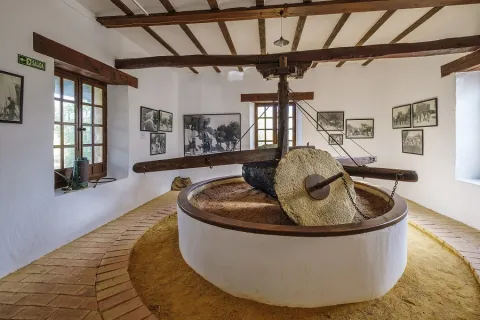
  • Museum of the Olivo Culture.
  • Old Carniceries.
  • Civil Audience and Public Writings 16th Century.
  • Gaspar Becerra Exhibition Room.
  • Church of El Salvador
  • Church of St. Paul
  • Forgiveness door and streets adjacent to the Cathedral.
     
Loading map
Preparing points of interest and routes...
Imagen principal
imagen
Image
c1150e7f-a3ee-92c6-f4dd-7d7b9b44728d?t=1603979507918
Imagen principal
Activado
Literatura

The city has had a great influence on distinguished authors such as Antonio Machado and Federico García Lorca, who had a momentous meeting here.

Not forgetting the important presence of San Juan de la Cruz in Baeza and the family ties linking Jorge Manrique to this town.

Roman Villa of Bruñel

Submitted by brandcode_deweloper on
Id
919543
Descripción
Descripción larga

Most of these buildings are based as a second residence during the High Empire, although with the crisis of the third century and the insecurity of the cities many great aristocrats withdraw to their villages. As the residence becomes, the luxury and refinement of which the rich mosaics and the beginning of the walls of the different rooms are preserved as a testimony. Next to the Palaciega area there were other units with stables, with forges, alfares and, ultimately, everything necessary to be self-sufficient away from the city. Over time, the cities lost their importance, had to wafer to avoid dangers and the cultural spotlights that had gone out.

If we know nothing about the inhabitants of these luxurious rooms, we know less about those people who left the city to take refuge in these villas. They helped defend property in exchange for being able to cultivate a piece of land with which to get what is necessary to feed. Here is the origin of what would be the vasalage in the Middle Ages. Nor do we know how the craftsmen made these great mosaics, nor their living conditions, would they know that they represented the images they reproduced with the tesels? and the last inhabitants at the end of the fourth century?

Breve descripción

The villa of Bruñel represents the typical model of Roman villa that begins to extend during the Lower Empire.

Ubicación
Latitud
37.842982
Longitud
-3.066921
Municipio
Ubicación en el mapa
POINT (-3.066921 37.842982)
Tipos de punto de interés
Imágenes carrusel
imagen
Image
Mon167.jpg
Imagen principal
Desactivado
imagen
Image
quesada.jpg
Imagen principal
Desactivado
Imágenes cabecera
imagen
Image
DQxszNiU8AAV39W.jpg
Imagen principal
Activado
Loading map
Preparing points of interest and routes...
Marcas de calidad

Shaded Hillside of Cabeza Gorda

Submitted by brandcode_deweloper on
Id
660013
Descripción
Descripción larga

Traditional constructions have only been modified, although the most rewarding is the view that you can enjoy from the village that really constitutes a natural balcony open to an overwhelming landscape in which stands out on the whole Calar del Cobo with the Puntal of the Mass.

If you like them, you can't stop visiting the Umbria, as it's a very good area for the collection of these mushrooms. In addition, a delicious unmarked road leads to the nearby village of Cabeza Gorda, located on the opposite side of a mountain, which is naturally called Morro de Cabeza Gorda.

Breve descripción

Despite being called the Umbria de Cabeza Gorda we are in front of a village located on a solana, with vegetation typical of the Mediterranean forest. You can see an isolated house around an explanade belonging to the ancient era, next to which there are some cherry trees and a fountain that welcome us.

Ubicación
Latitud
38.183050
Longitud
-2.626130
Distrito
Ubicación en el mapa
POINT (-2.62613 38.18305)
Tipos de punto de interés
Imágenes carrusel
imagen
Image
1137903Master.jpg
Imagen principal
Desactivado
imagen
Image
unnamed%20%281%29.png
Imagen principal
Desactivado
Imágenes cabecera
imagen
Image
8.jpg
Imagen principal
Activado
Loading map
Preparing points of interest and routes...
Marcas de calidad

Square de Santa María

Submitted by brandcode_deweloper on
Id
918485
Descripción
Descripción larga

The Church of Santa Maria was the most important monument of the advance of Cazorla. As a Renaissance, his inspiration is attributed to Andrew of Vandelvira or one of his disciples. It is built on the Cerezuelo River, taking advantage of the vault that covers the river and crosses the entire Plaza.

It is not the only unique building we find there: the House of the Clérigos, the Thematic Center of Threatened Species, the old Conistorial Houses (in an alley above the square) or the Fountain of the Chain (built in 1605) are some of the many visits we can make here.

In the square we also find nice restaurants that offer a great sample of local cuisine. To enjoy these dishes in the quiet dusk is one more reason to often go to this suggestive square.

We suggest:

  • Visit the ruins of Santa Maria, know its history and its curious construction. You can order information from the tourist office (953 71 01 02).
  • Up by the river Cerezuelo, passing the ruins of Santa María in the direction of the castle of La Yedra, and walking along one of the small routes that begin in this area. An information panel will help you to better know this area of the city.

In Cazorla, we leave the Plaza de la Constitución, in the center of the village. From here follow Doctor Muñoz Street to La Corredera Square. At the end of this, we turn right and immediately left, following the signs to the Castle of La Yedra. After passing by the balcony of Zabaleta and crossing the street José Salcedo Cano - a narrow and steep street with numerous pots in its balconies - we reached the Plaza de Santa María.

Breve descripción

Reaching the Old Square or Santa Maria Square through the old town of Cazorla is a surprise for the walker. The open space with the high slopes of the Peña de los Halcones, the Gilillo peak or the castle of La Yedra make it difficult for you to see what you have at your height. But at your height there is a beautiful square full of history and charm, where the ruins of the Church of Santa Maria demand the attention of the many travelers who come to this place.

Ubicación
Latitud
37.912893
Longitud
-3.003887
Municipio
Ubicación en el mapa
POINT (-3.003887 37.912893)
Tipos de punto de interés
Imágenes carrusel
imagen
Image
6%20%282%29.jpg
Imagen principal
Desactivado
Imágenes cabecera
imagen
Image
7%20%281%29%20%281%29.jpg
Imagen principal
Activado
Loading map
Preparing points of interest and routes...
Marcas de calidad

Jabalquinto Palace

Submitted by brandcode_deweloper on
Id
2275703
Descripción
Descripción larga
The Palace belongs to the Elizabethan Gothic style (15th century). It was ordered to be built by Juan Alfonso de Benavides, a relative of King Ferdinand the Catholic. His eldest son married Doña Luisa, daughter of the poet Jorge Manrique. This family bond is the fact that links Jorge Manrique with this Baeza space. When the author visited the city he was a guest at the Palace on more than one occasion. A family relationship that “forced” him to participate in the fight against Diego Fernández de Córdoba, Baeza being defeated and imprisoned for a time.
Breve descripción
The palacio de Jabalquinto is a civil architecture building located within the walls of the Spanish city of Baeza, in the province of Jaén. It is one of the most prominent heritage symbols of the town and of the Lordship and later Marquisate of Jabalquinto. It is currently occupied by a headquarters of the International University of Andalusia. It is part of the Renaissance monumental complex of Baeza, which, together with that of Úbeda, was declared a World Heritage Site by UNESCO in 2003. Its façade, decorated with diamond points, nails, pinnacles and shields, is crowned by a Renaissance gallery and its interior features a sober Renaissance patio with two floors of galleries and a monumental Baroque staircase. Until 1720 it was a stately residence.
Ubicación
Código Postal
23440
Latitud
37.991430
Longitud
-3.468810
Dirección
C/ Conde Romanones, 1
Municipio
Ubicación en el mapa
POINT (-3.46881 37.99143)
Tipos de punto de interés
Imágenes carrusel
imagen
Image
shutterstock_1215612649.jpg
Imagen principal
Desactivado
imagen
Image
shutterstock_1214620720.jpg
Imagen principal
Desactivado
imagen
Image
Mon145.jpg
Imagen principal
Desactivado
imagen
Image
Mon110.jpg
Imagen principal
Desactivado
imagen
Image
Mon086.jpg
Imagen principal
Desactivado
imagen
Image
Mon040.jpg
Imagen principal
Desactivado
Imágenes cabecera
imagen
Image
172085.jpg
Imagen principal
Activado
Microsite al que pertenece
Loading map
Preparing points of interest and routes...

Moralejos

Submitted by brandcode_deweloper on
Id
919022
Descripción
Descripción larga

Lacquered walls and old wooden windows resist the passage of time miraculously. The gardens, which remain active, are arranged next to the houses alternating with some meadows. On the other side of the Trujala River is the Mount Navalhora and to the far away we see the unmistakable silhouette of the Navalperal.

Through the path PR-A 198 you will enjoy the landscape and you can approach Segura la Vieja, the settlement prior to the current Segura de la Sierra, which has an impressive view of the area.

Breve descripción

A serpenteous road leads us to the bottom of the valley in which the village of Moralejos is located, consisting of two groups of houses. A spectacular house of stone view welcomes us.

Ubicación
Latitud
38.302980
Longitud
-2.624380
Distrito
Ubicación en el mapa
POINT (-2.62438 38.30298)
Tipos de punto de interés
Imágenes carrusel
imagen
Image
moralejos.jpeg
Imagen principal
Desactivado
Imágenes cabecera
imagen
Image
00007371.jpg
Imagen principal
Activado
Loading map
Preparing points of interest and routes...
Marcas de calidad

Monument to Jorge Manrique

Submitted by brandcode_deweloper on
Id
657289
Descripción
Descripción larga

These lines correspond to the Treaty of the Mountain, studied by the Duke of Almazan, a document that some researchers attribute to Jorge Manrique. To talk about the 15th century in the Sierra de Segura is to talk about the Manrique family and the border period. A situation in which attacks and responses by Christians and Muslims were frequent. This danger and the border situation can only be seen by entering Segura de la Sierra: remains of walls, towers, entrance doors and on top of the hill, the watchful castle.

The Visits Books of the Order of Santiago described in the late 15th century the castle of Segura de la Sierra as a military compound with weapons to face a siege or, if necessary, to organize a village to attack the enemy. We cannot forget that in 1434 Rodrigo Manrique organized a village to conquer Huécar in the Altiplano granadino.

In Segura de la Sierra, taking advantage of this privileged position and under the security offered by its walls is where Jorge Manrique was raised under the care of his mother, Mrs. Mencía de Figueroa, in the house that still today is preserved five hundred years later.

Breve descripción

A candle on an oak table, a tintero with a pen and a half-write piece of paper. A figure draws attention to the rest of the room dedicated to the Manrique family on the second floor of the tower of tribute in the castle of Segura. Jorge Manrique is a character closely linked to Segura de la Sierra. If we were to imagine the poet in front of the paper, we might think that the text might start like this: "remind me to be very noble, Mr. Brother, having once said, in they are closer to mockery, you will see if you wanted me to write something about the work of the Montaria."

Ubicación
Latitud
38.298857
Longitud
-2.651877
Distrito
Ubicación en el mapa
POINT (-2.651877 38.298857)
Tipos de punto de interés
Imágenes carrusel
imagen
Image
6%20%283%29.jpg
Imagen principal
Desactivado
imagen
Image
10633135523_4ee3bea4f5_b.jpg
Imagen principal
Desactivado
imagen
Image
Segura_de_la_Sierra_PM_091668_E.jpg
Imagen principal
Desactivado
Loading map
Preparing points of interest and routes...
Marcas de calidad

Monastery of Montesión

Submitted by brandcode_deweloper on
Id
918965
Descripción
Descripción larga

This is evident in the lack of materials and in the lack of furniture. Only the chapel with a Latin cross floor and a dome in which some frescoes are still preserved stand out.

The difficulties of the 17th century may have motivated the foundation of this monastery especially at a time when bad crops, hunger and bad weather caused the emergence of epidemics of the feared plague. The order of San Antonio Abad was dedicated to the healing of the sick and the fear of contagion caused these buildings to be far from the populations. Along with the plague, the economic crisis, the rise in prices, wars and in general the hardships led to an increase in the clergy and religious foundations in a context in which the Monarchy offered a contradictory vision that oscillated from splendor and misery or boom and decline.

Breve descripción

Soledad and remoteness are the adjectives that come to mind when we are next to the Monastery, in Cazorla. Every year, on the last Sunday of September a rosemary makes Montesión come back to life, as during the year there was only one person in it, the danger of ruin in the building being constant. The visitor can appreciate different stages in its construction although its foundation dates back to 1625. The monasteries under the advocation of St. Paul and St. Anthony Abad highlighted for their poverty and austerity as you can see if you approach Montession.

Ubicación
Latitud
37.912893
Longitud
-3.003887
Municipio
Ubicación en el mapa
POINT (-3.003887 37.912893)
Tipos de punto de interés
Imágenes carrusel
imagen
Image
maxresdefault.jpg
Imagen principal
Desactivado
imagen
Image
857187Master.jpg
Imagen principal
Desactivado
Imágenes cabecera
imagen
Image
2%20%283%29%20%281%29.jpg
Imagen principal
Activado
Loading map
Preparing points of interest and routes...
Marcas de calidad

Marchena

Submitted by brandcode_deweloper on
Id
918937
Descripción
Descripción larga

A spectacular rise in which we gain height in a dizzy way, elevation curves and great precipities that make them as natural glances: this is what you can find in Marchena. You can't miss the houses attached to the rock known as the Mound right in the village of the same name on the way to Marchena. We find the olive tree, fruit trees and orchards next to oak and pine trees.

In Marchena you can make three small paths PR-A 107 known as "Arab Alquerías," the PR-A 101 that goes from the Picachos to the Tutubiero Age and the PR-A 102 known as the Mirabete road.

Breve descripción

Marchena sits on a hillside next to a small valley. Streets, stairs, up and down. Rinses surrounded by silence and tranquility only broken by the sound of water. It is surprising the number of orchards, whose survival is explained by the remoteness from trading populations. Recovecos, windows and doors for statures of another time, calmed and dazzling alleys that contrast with the green of the forest surrounding the village.

Ubicación
Latitud
38.188620
Longitud
-2.498080
Ubicación en el mapa
POINT (-2.49808 38.18862)
Tipos de punto de interés
Imágenes carrusel
imagen
Image
fuente_1_7736.jpg
Imagen principal
Desactivado
Imágenes cabecera
imagen
Image
800px-Marchena%2C_Ja%C3%A9n_24J_01.jpg
Imagen principal
Activado
Loading map
Preparing points of interest and routes...
Marcas de calidad