San Francisco de Asís Park
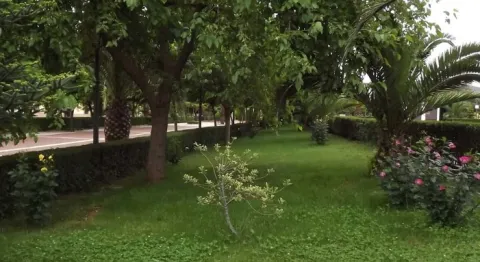
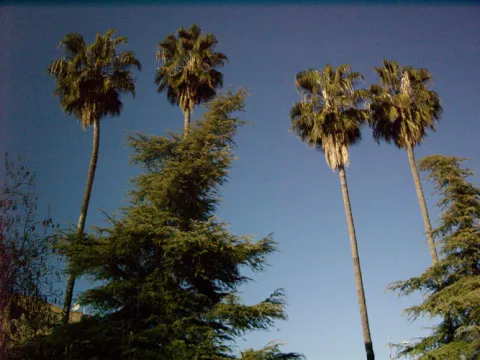
The main park has a large walk space surrounded by banks and gardens. Inside we can observe the monument to San Francisco de Assisi and the pond.
This park has large shade areas, rest banks, a children's recreation area and a delimited picnic area.
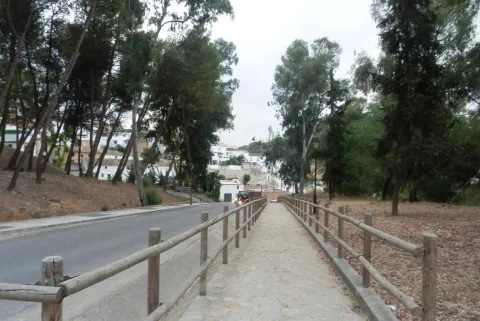
Frondosa grove in the old town of Torredonjimeno where there is an area conditioned for leisure and free time consisting of a children's park and a picnic area.
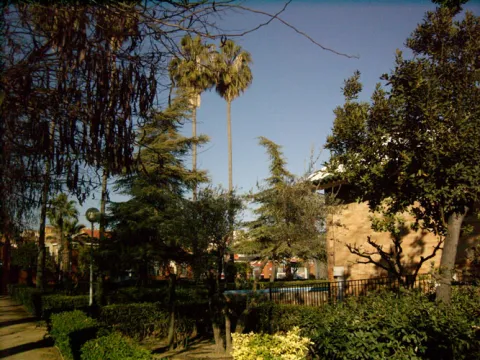
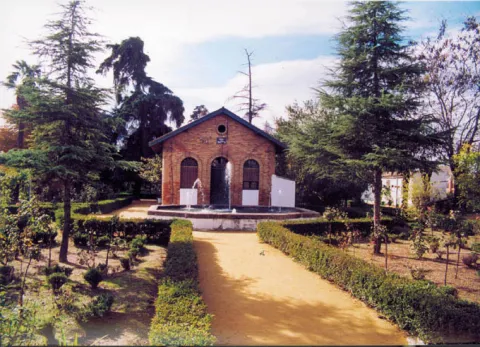
This park of extraordinary botanical wealth, popularly known as "El Vivero," is worked between 1893 and 1895, when Mr Eduardo Carvajal would be mayor of Bailén and from whom he has inherited his name. This garden will be one of its first views as you enter Bailén from the south on the Avenue del Parador. Inside you will find a wide variety of floral and arborea like the acacia of three thorns, the tree of love, rosals, American cane, cypress, alhelis, cineraria, carraspiques, sage, rosemary...
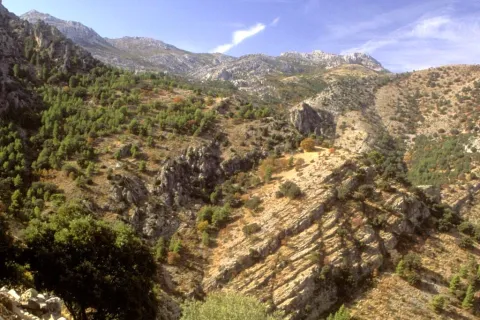
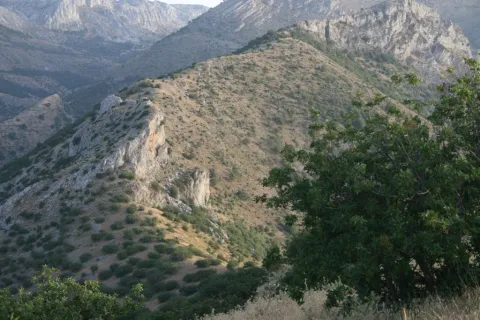
In the central region of Sierra Morena, on a substrate of slate and sandstone, this protected space is located characterized by its accidental relief.
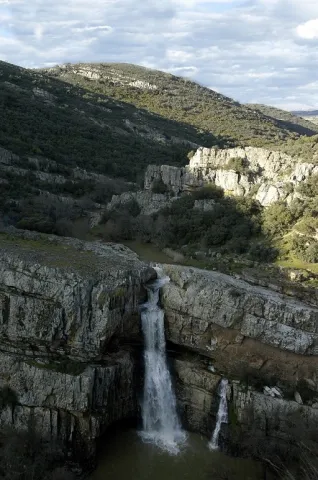
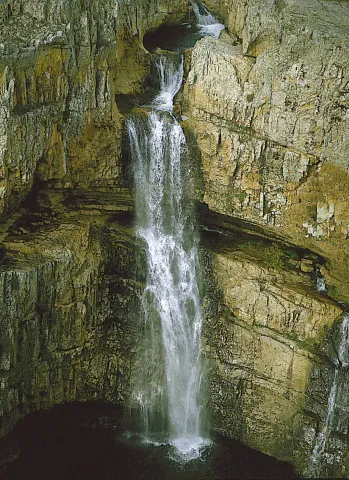
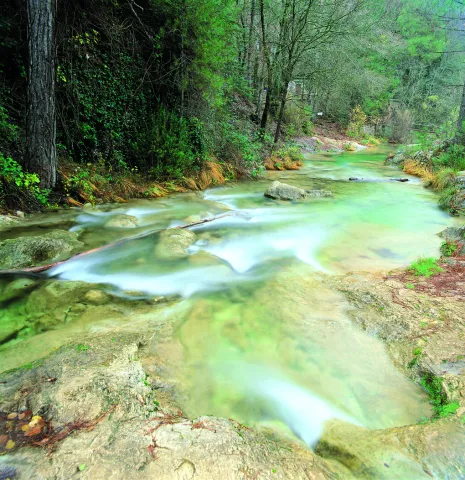
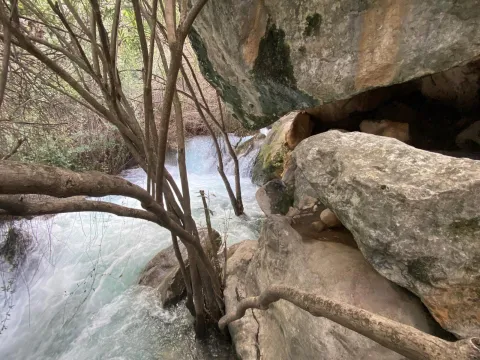
On the south-west side the river Guarrizas appears, creating strong slopes. On the contrary, the declives on the southeast side are softer. The napping of the river forms waterfalls, the most spectacular and beautiful being that of Cimbarra.
The flora is characterized by its heterogeneity. It abounds the mixed forest of oak and alcornoques, with an abundant Mediterranean bush. There is also an area of oak and repopulations of pineapple and black pine. The fauna is also rich and varied.
Among the medium-sized predators the fox and the gin abound, while numerous rapaces fly over the skies of this natural area of 534 hectares of extension, highlighting the royal eagle and the eagle.
If for anything it is known Aldeaquemada is precisely for La Cimbarra. This spectacular waterfall, about 40 meters high, is located about two kilometres from the village in the south direction and has the category, as a protected natural space, of Natural Park. The access path is in good condition and efforts to improve it have been important in recent years.
The whole area of this artificial wet area - with an increasingly important water vegetation belt - is surrounded by crops.
The palustre vegetation of these swamps is basically made up of eneas and canes, accompanied by beets and tarays and on their shores are mainly developed the alms.
While, as far as fauna is concerned, an abundant and varied community of aquatic birds is concentrated in these reservoirs of Alto Guadalquivir, highlighting the colony of squid (species catalogued as threatened at community level), royal ducks and spoons, as well as imperial porrones and garzas.
The total area of this natural area, whose reference locations are Ubeda and Jódar, is 663 hectares.
To the south of the famous hills of Ubeda, the Guadalquivir River was repressed in the 1950s in a succession of three small reservoirs: Doña Aldonza (301 hectares), Pedro Marín (240 hectares) and Puente de la Cerrada (122 hectares).
Also known as "Senda de los Adelfares," it is a forest in a gallery made up of adelfas that develops along the birth of the Cuadros River, in the Natural Park of Sierra Magina. It is the most extensive formation in southern Spain with a high degree of conservation.
Next to the shrine of the Virgin of Cuadros, south of the city centre, about 4 km. of Bedmar; access directly by the road JV-3.222.
Area of pastures traditionally dedicated to pasture, so the fountains, pilares- abrevadero and huts or pastor's cabins abound. The altitude of the saw allows the presence of birds that nedify above 1,500 meters, such as the Red Roquer, the Grey Collalba and the Royal Eagle.
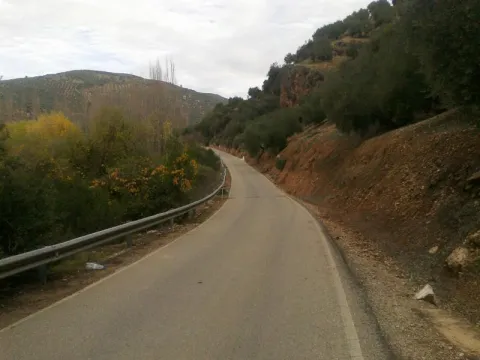
Access by land lane from the nearby town of Bedmar.
13 Km tour, then walk routes.
Water birth at 1,800 meters of altitude in a high mountain environment.
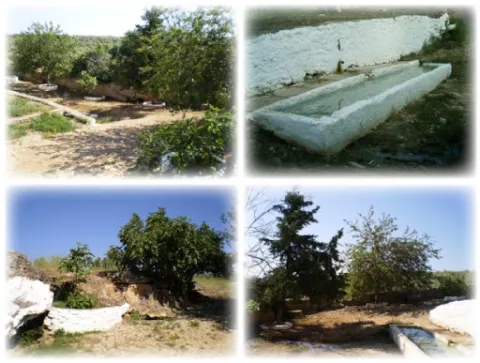
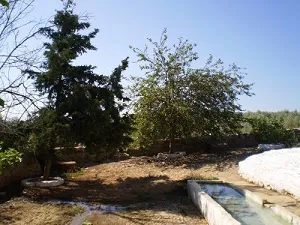
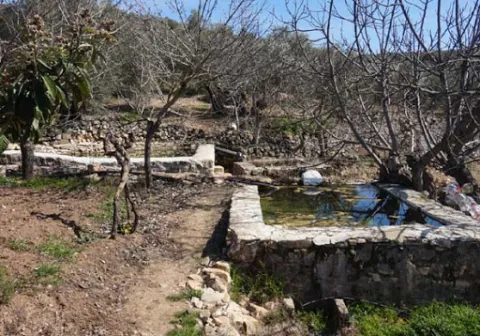
The fountain is accessed by Ayozar Street, located about 800 metres from the town. This source may be the most appreciated by the citizens, has a very good reputation for their water for use in the kitchen. It was formerly a place where the elders went with their grandchildren to take walks and make clay castles.
The route from Castellar to the Pilar del Ayozar is ideal for hiking; since it is a small area, biodiversity is scarce. However, among the fauna of the area, we can highlight some frogs, creams, lizards and birds, while of their flora we can mention the fig trees, morale and alamos.
The Cañada de la Madera has access to this natural setting, with good views of the park and a well-equipped road with drinking water and a hermitage. In this same place stands the Fuente del Avellano.
It affects the municipal terms of Ibros, Vilches, Rus, Canena, Ubeda, Navas de San Juan and Sabiote, in the skirts of theNatural area La Lambrain Rus. It is of the compaction type (80% of land).
The swamp collects the waters of the Guadalimar River, which belongs to the Guadalquivir watershed.