Navalcán
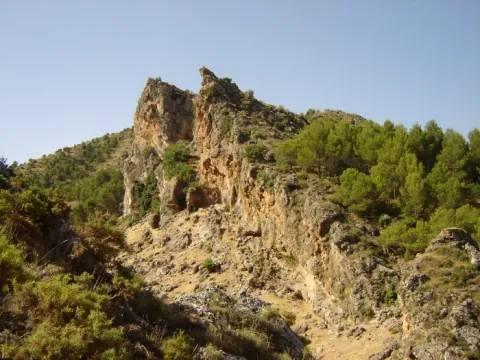
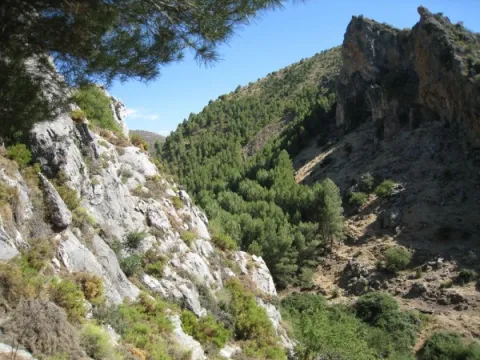
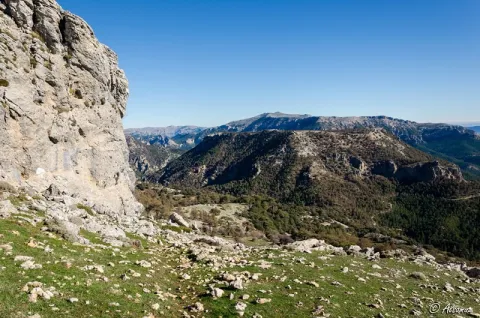
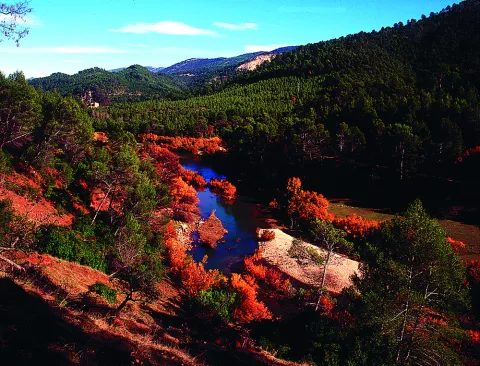
Depression of karmic origin that belongs to the typical landscape of the Mediterranean mountain. At the same time, we will be able to see a large number of sections, caves, river courses, Mediterranean flora and fauna.
From the Nava del Espino there are roads that lead you to the highest peaks of the Sierra de Cazorla, among which are the Poyos de la Mesa. It is a very recommended route by the views on the Guadalquivir that from this plancie you can reach.
If you stop your way in this place you can enjoy the landscape and if you are at the right time it will be easy to see some go feeding on their meadows.
About 2 km from the Navy following the track you brought, and on the left there is a recreational area next to the Fountain of the Garganta. An ideal place to rest and restore strength.
In Cazorla take the Sierra road (A-319) until the crossing known as the Empalme del Valle. Turn right on the JF-7092 road and after passing the bridge over the Guadalquivir River (4 km from the Empalme) follow the left track (JF-7091). In the km 21 of the road signs is the Nava del Espino.
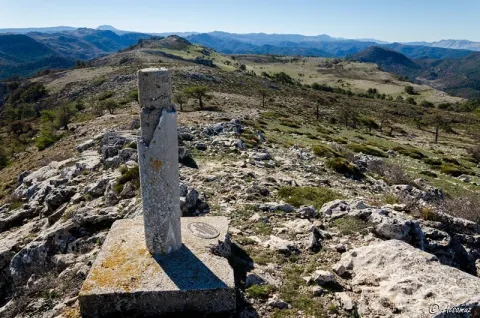
By going up the way of the Navas we come to this place which is surprising by its breadth. At 1430 m of altitude you will find high mountain grasslands, some pine-covered areas and an old abandoned forest house that indicate that we have reached the destination. Around you, high hills that seem like we can almost touch with our hands like the Tejo Head, from where it is possible to contemplate the Sierra Nevada summits.
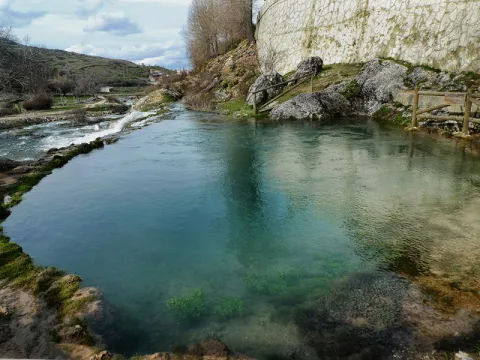
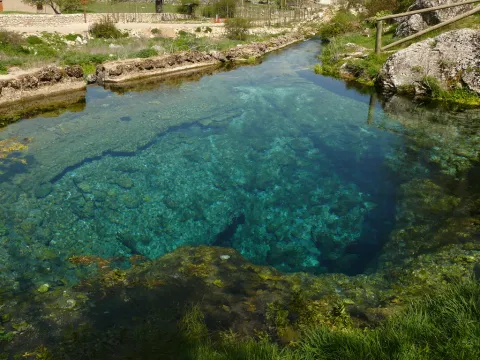
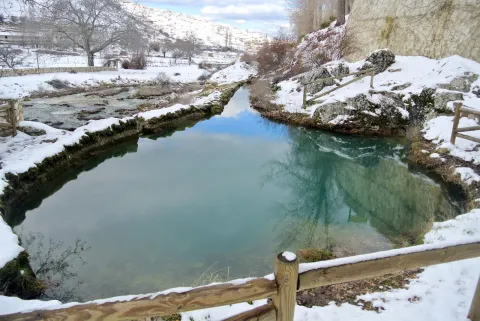
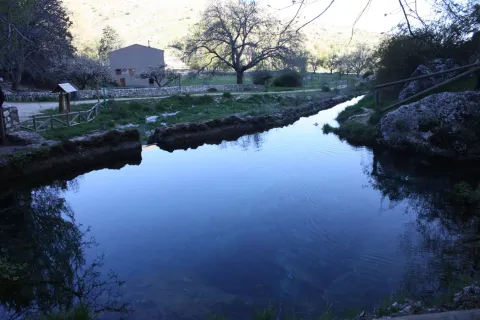
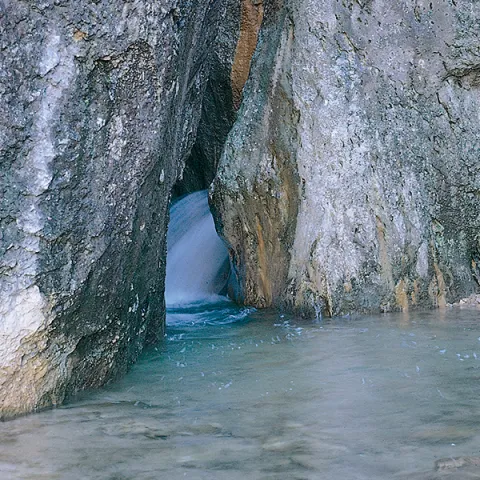
The birth of the Segura River is a penetrable siphon, with an explored length of 354 meters and a 17 meters gap. The exploration of this cavity was carried out by spelebuchers of the Madrid Standard Group during the 1979 and 1980 years, carrying out an important work of disobstruction within the siphon. (G.E. STANDARD, 1980) The emergence is located at the bottom of a blind valley in the foothills of the Sierra de Segura near the population of Pontones. It is a flooded gallery where three air bubbles are located at about 100, 160 and 255 m from the mouth.
Source: Inventory of Georresources of Andalusia. Environmental Council. Junta de Andalusia.
This is a karmic surgence located at the entrance of a circular cavity of several meters in diameter. This is associated with the aquifer of higher Cretaceous dolomies and limestone. It is located in the vicinity of the inverse failure contact between the carbonates of the Upper Cretaceous and the waterproof margas of the Middle Myocene. It is a cavity that could in origin correspond to a small dolin, developed on subhorizontal layers.
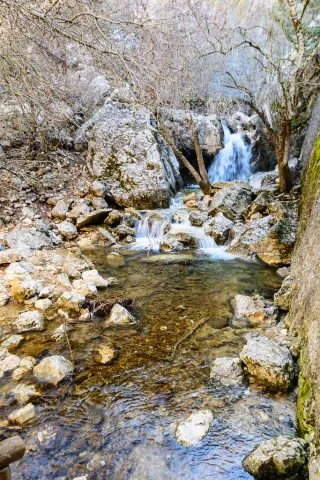
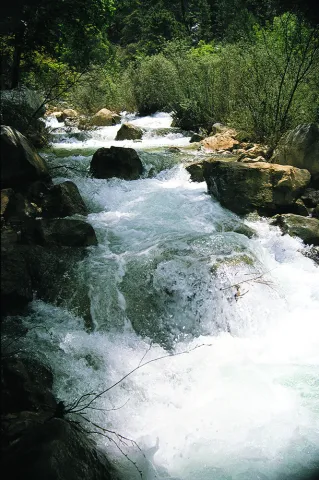
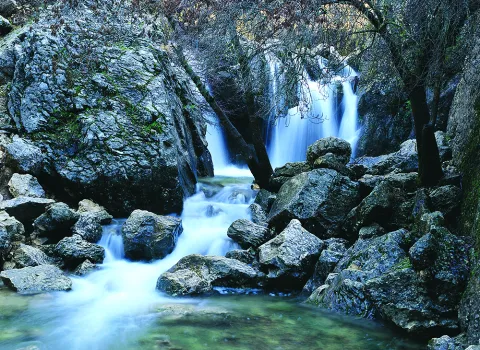
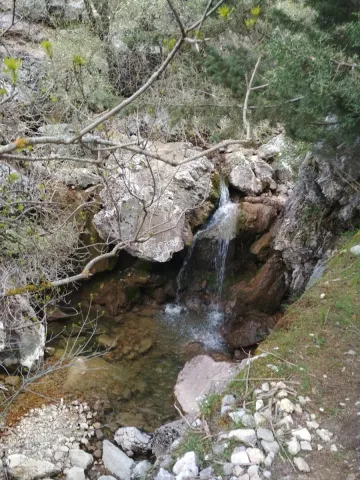
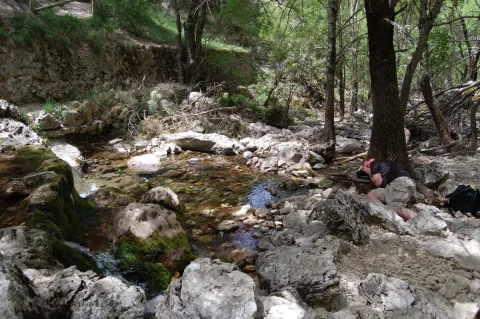
The "official" birth of the Guadalquivir River has been placed under a plaque that reproduces a poem by the brothers Alvarez Quintero. But, in the strict sense, the sources of Guadalquivir are found in the spacious honnada of the Cañada de las Fuentes. In this place there are several streams that come down from the nearby mountains: that of the Teatines, that of the Cold John or the stream of Light among others.
The place has overcome moments of intense tourist pressure and today, with a more appropriate public use order, we are presented with clean and sensitive, so our visit must be at all times silent and respectful.
From the Cañada de las Fuentes you are a step away from enjoying some of the most striking routes in the area.
We suggest...
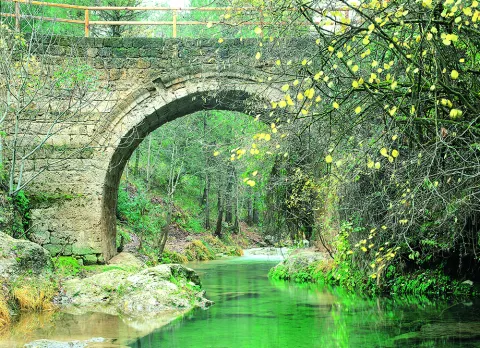
From Cazorla you can reach the Sierra road, A319. In the Empalme del Valle we will see an indication of the birth to the right, and follow that direction for 4 km until you find a bridge over the Guadalquivir. As we pass the bridge we turn right to the Bridge of Herrerías. From here, without leaving the main road, there are 11 km to the Birth.
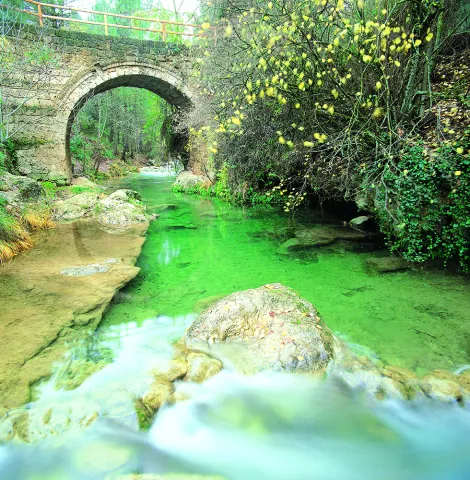
The birth of the most important river of Andalusia occurs in an area of great ecological value within Natural Park. It is a cool and pleasant place, where strawberries, maples and majuelos accompany the "Rio Grande," as the Arabs called it, in these first steps. Around it we find curious geological formations with dense pine pineapples and black. About a hundred meters above is the forest house of the Cañada de las Fuentes where there is a recreational area that often come to go and deer in small groups.
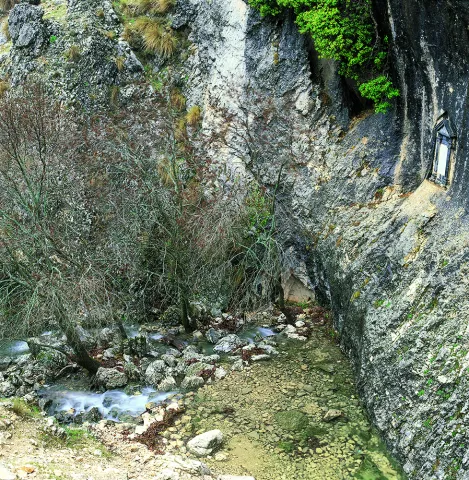
This is a set of karmic developments, among which is the one located on a vertical wall of a river cannon excavated in jurassic limestone. The latter is the one historically considered "the birth of the Guadalquivir River." However the river is fed by all the streams and births that are located somewhat above in the so-called "Cañada de las Fuentes."
Source: Inventory of Georresources of Andalusia. Environmental Council. Junta de Andalusia.
Birth of the Guadalquivir
The Torreon, on its three floors, consists of a "honey room" and souvenir and beekeeping shop, an audiovisual room and workshop, the generic museum space, common areas for temporary exhibitions and a room dedicated specifically to the Bronze Age, in the Rumblar River Basin.
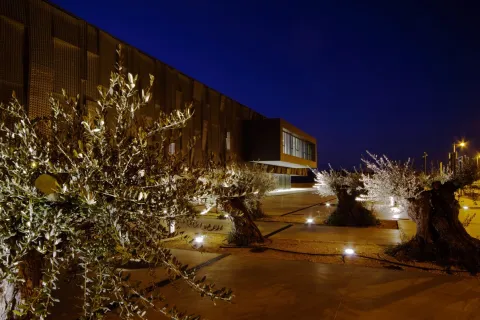
Selected as a reference centre by the European Union for the dissemination of the culture of Olive Oil, the space of knowledge and museum Terra Oleum is spread over an area of more than 11,000 square meters. The largest area of knowledge planned in the Mediterranean basin for a food product.
The Museum, promoted by the Diputación de Jaén, Consejeria de Agricultura de la Junta de Andalucía, and developed by the Fundación del Olivar, is located within the Geolit Technological Park in Mengíbar, the heart of the Andalusian olive tree.
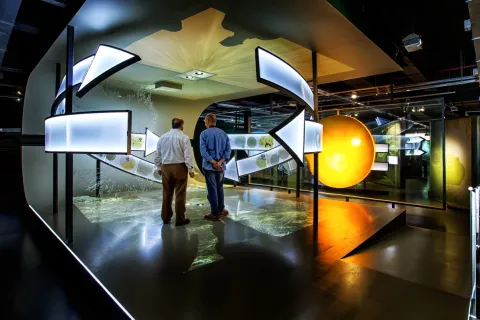
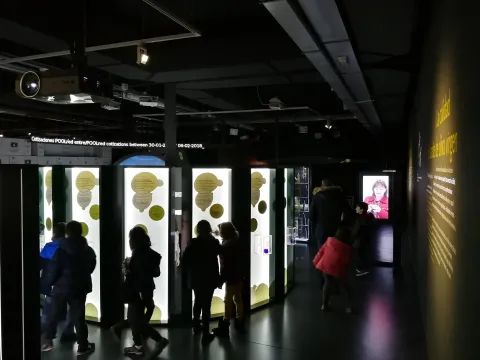
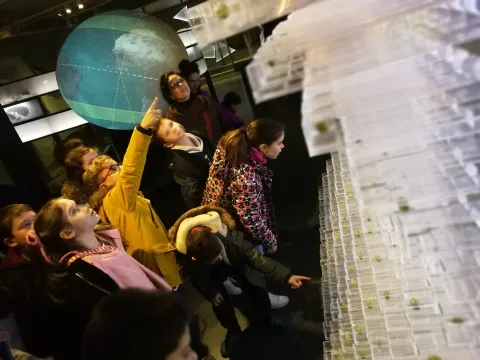
It has a permanent exhibition of modern interactive, audiovisual, machinery and other types of scenography, on olive, olive oil and sustainability. A revolutionary 3D video-aping system makes the visitor a true master of almazara able to direct all processes for obtaining olive juice.
Terra Oleum is framed within the wet area of the Quebracántaros tributary, whose spring is born within the same Olivos Centenarios Forest of the Museum. The outdoor activities, from the collection of the olive, to the recognition of indigenous species in this natural space, are part of the essence of the center: harmony with a humanized forest.
The auditorium becomes the central space of the events that take place in the Museum. It has the most advanced technology in image and sound, equipped with electronic systems of participation that allows a fluid exchange of knowledge with the visitor.
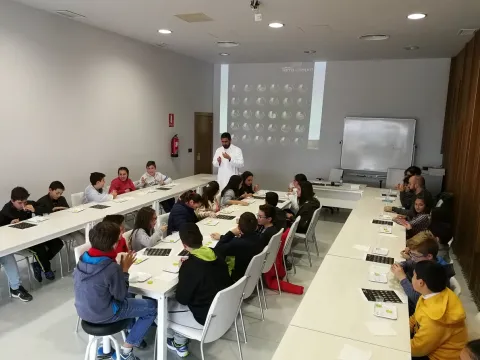
Terra Oleum also offers an extensive programme of parallel activities that combines visits to the permanent exhibition with workshops, courses and seminars through proposals for all audiences. The field and the mill become the central axis of our dialogue with the visitor. An immersion into the world of virgin olive oil by the hand of experts in this science that becomes an authentic art.
The selection of extra virgin olive oils Terra Oleum brings together the best oil in practice all of the jiennese, Andalusian and Spanish olive trees. The green and mature fruits evoke the aromas of nature, in a permanent exhibition that allows the tasting and tasting of all of them in a relaxed environment: the Museum's Oleoteca.
Before the end of the visit we cannot forget Oleaginus, a space for art and culture, located in the area of quality promotion: Denominations of Origin, olive bookstore, contemporary painting and oleary art, demand the attention of the visitor in an atmosphere of light sipped by the solar courts that are born on their terraces.
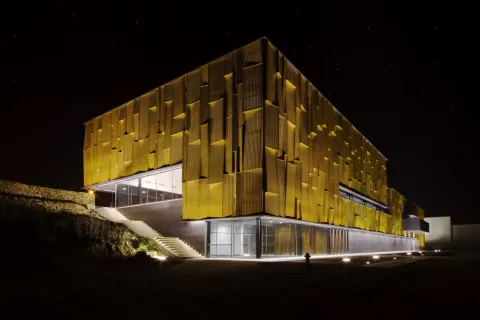
The avant-garde architecture and its modern proposals for communication with the visitor make Terra Oleum a unique place to feel the culture of virgin olive oil from the first step.

The Active Museum of Olive Oil and Sustainability is home to a modern exhibition space composed of unique architectural spaces, including its Aurea Box and a natural environment formed by the Centennial Olive Forest. For the dissemination of knowledge related to olive cultivation, olive oil production technology and Mediterranean cuisine, its contents cover the practice of the whole world of olive and virgin olive oil.
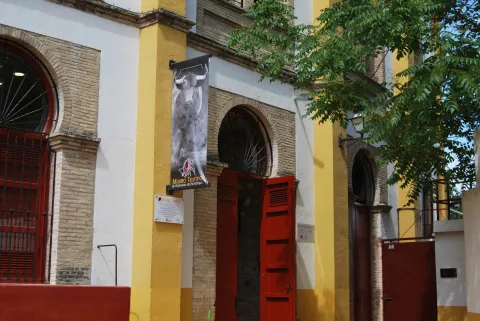
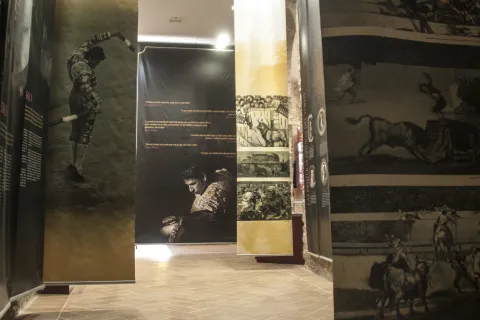
The museum is divided into two sections: In the first one is made a pleasant introduction to the bullfighting for the people of Novels on this theme and the second section speaks of the relationship that Villanueva of the Archbishop has with this world, from the beginning of the municipality going through the reasons why the current bullring square was built and making special mention of the most famous bulldozers who have stepped on this bullring.
This taurino museum is located in the old blocks of the Plaza de Toros de Villanueva del Archbishop. Its rooms are home to texts, photographs and audiovisual collected throughout the more than 90 years of the history of that coso where some of the most prominent figures of the bullfighting, from Manolete to Curro Romero to the brothers Rivera Ordoñez, El Cordobés or Fandi, have performed. One part of the exhibition is dedicated to providing information about tauromacia in general, while another important part of the collection refers to local taurina history. For example, it is possible to see the story of the rejonador Antonio Cañero that opened the sign on the day of the opening of the square in 1928 and also to watch videos, models, publications and other materials.
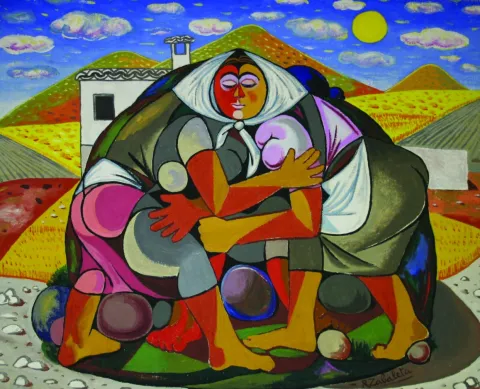
The museum's collection consists of numerous oils, watercolors and drawings, and other collections of modern art. Artists of the prestige of Miró, Percébal or Tapies donated their works for the museum. Rafael Zabaleta was linked to the Paris school. His painting is mainly nourished by the avant-garde, impressing into his landscape an air of metaphysical solitude. Picasso and Modigliani will also be of great influence in their entire career, collecting from the first that robustness in the nudes and the Parisian outdoor scenes. They will be the images of their native land with which the one of Quesada is most easily identified at the end of their career, both for its easy and true drawing and for its bright handling of the color in rural and customary scenes, in accordance with the times it has had to live.
Around the figure of Zabaleta, a prestigious international painting and sculpture competition has been held in Quesada since 1970. The award-winning works complete the museum's collection.
Located in the beautiful village of Quesada, this museum has a valuable collection of works by Rafael Zabaleta. In his biography he highlights the passion that the painter felt for his native people, for his people and for his landscapes and this is demonstrated by his work.