Saltar al contenido principal

Antonio Machado's Literary Route

Submitted by brandcode_deweloper on
Breve descripción

When you follow the Antonio Machado Literary Route in Baeza, you enter one of the deepest and most silent chapters of his life. Here you discover the poet who arrived wounded by Leonor's death and found in our land a refuge of calm, study, and contemplation. For seven years, Baeza was his home, his inner landscape, and the stage where his poetry matured toward a deeper, more philosophical perspective.

On this route, you walk through the places that marked his daily life: the Hotel Comercio, where he lived his early years; the social clubs and gatherings where he listened more than he spoke; the narrow streets he strolled on his meditative walks; and the Santísima Trinidad Institute, where he taught French and where you can still enter his classroom, preserved as a small literary sanctuary.

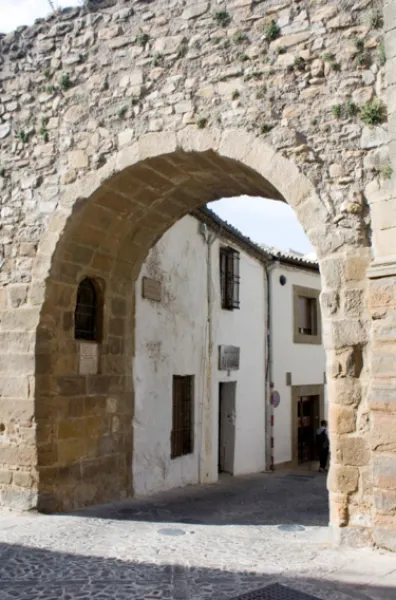
You also visit the Plaza de Santa María, the Cathedral, the Paseo de las Murallas (Walk of the Walls), and the spots from which he contemplated Mágina, a landscape that ultimately captured his poetry. At each stop, you feel how Baeza healed his grief, restoring the slow rhythm of life and offering him a space to think, write, and rediscover himself.

This route encourages you to walk slowly, to see as he saw, and to discover Jaén from the serenity that inspired some of the most intimate verses of the Generation of '98.

Imagen principal
Desactivado
Puntos del trazado
Latitud
37.99343
Longitud
-3.46924
Latitud
37.84338
Longitud
-3.06561
Desactivado

Route card

Baeza

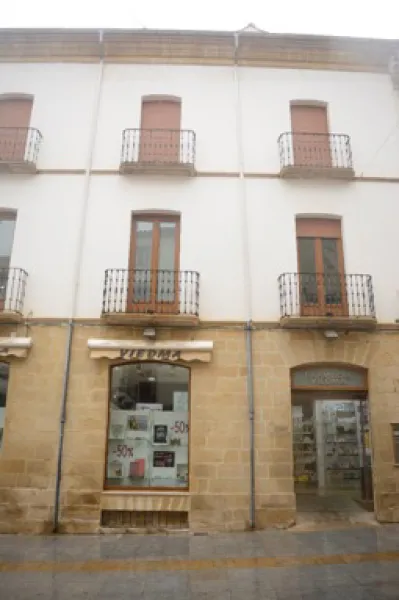
Old Hotel ComercioMachado's first home in Baeza. He lived here alone for his first two years, in a room overlooking the Sierra de Mágina mountains.

New CasinoA key space in his social life. In its hall of mirrors, he would hold long conversations, and today his inscription as a transient member remains.

Casino de ArtesanosA place of memorable encounters, such as his famous meeting with a young Lorca. Although no longer there, it forms an essential part of his life's journey.

Don Adolfo Almazán's PharmacyThe corner for afternoon gatherings where he listened to talk about politics, the countryside, and the weather. A humble but crucial space in his integration into the city.

Residence on Gaspar Becerra StreetThe house where he lived with his mother, bright and modest, from which he could see the old prison—now the City Hall—and where he found a more stable routine.

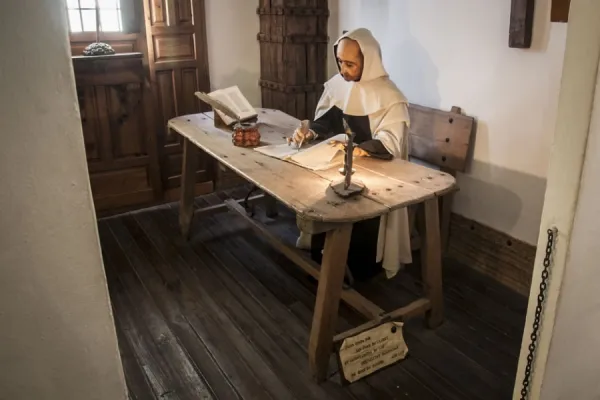
“Santísima Trinidad” InstituteHis workplace and one of the most emblematic spaces on the route. The classroom where he taught French is preserved intact as a museum-classroom.

Headquarters of the International University of Andalusia (UNIA)The Jabalquinto Palace and the Old Conciliar Seminary, now the headquarters of UNIA, pay homage to the poet by giving the institution his name.

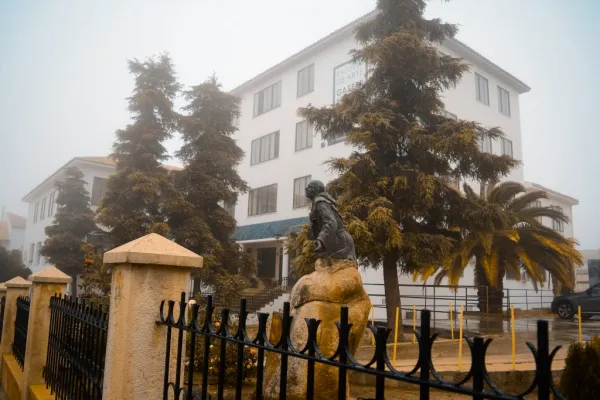
Santa María Square and CathedralOne of his favorite places to stroll. A solemn and silent space that appears in his meditations and in the reconstruction of his daily itineraries. Paseo de las Murallas The place where Machado meditated while contemplating the landscape beyond the city walls. Today, a plaque and a monument commemorate his presence.
Imagen

Quesada

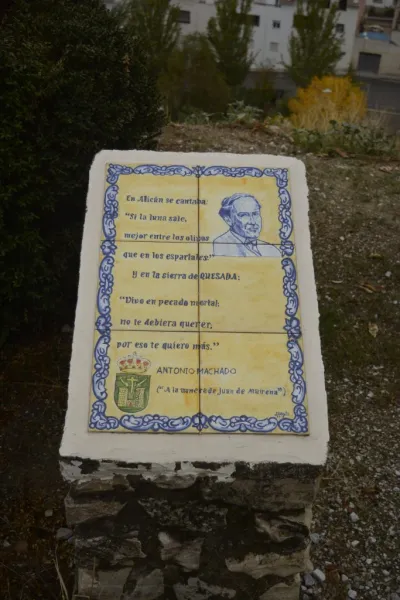
Park on the Road to the Port of Tíscar. A tribute to Machado with ceramics reproducing verses from Notes for an Emotional Geography of Spain.

Sanctuary of the Virgin of Tíscar: A place Machado visited on his excursions to the sources of the Guadalquivir River, a spiritual enclave at the foot of Peña Negra.

Website “Machadian Cities Network”
www.redciudadesmachadianas.org

Imagen

Literary Route of Saint John of the Cross

Submitted by brandcode_deweloper on
Breve descripción

With Saint John of the Cross, you begin an intimate journey through the places in Jaén where the mystic found refuge, inspiration, and silence. Here you discover the legacy of a poet who transformed spiritual experience into one of the pinnacles of world literature.

Your journey begins in Villanueva del Arzobispo, where Saint John arrived in 1578, ill and weakened after his captivity. In the Convent of Calvary, you will find the space where he served as prior and where, amidst confessions and spiritual direction, he began to outline the grand schemes of his thought. You will stroll through the Plaza Mayor and around the Sanctuary of Fuensanta, where he visited the new Carmelite convent.

The route continues towards Baeza, a university city and Renaissance center. Here he founded the Discalced Carmelite College, served as its first rector, and you feel the serenity of a place that fostered his formative work and contemplative life. Further on, you arrive at La Peñuela, in La Carolina, where he lived his last months as a simple subject following internal disputes within the Order. From there, he was transferred to Úbeda, where he died at the age of 49. In this city, you can visit the Museum of Saint John of the Cross, the only one in the world dedicated to him. The itinerary is completed with other essential sites: the Monastery of the Discalced Carmelites and the Center for the Interpretation of Mysticism in Beas de Segura, and the autograph manuscripts preserved in Andújar and Jaén, true literary treasures.

On this route, you'll discover Jaén through the depth, beauty, and silence that shaped the life and work of Saint John of the Cross. A journey where landscape, spirituality, and literature converge.

Imagen principal
Desactivado
Puntos del trazado
Latitud
38.012689
Longitud
-3.371985
Latitud
37.99343
Longitud
-3.46924
Latitud
38.25268
Longitud
-2.89087
Latitud
37.76633
Longitud
-3.78925
Latitud
38.0392362
Longitud
-4.0505603
Latitud
38.16859
Longitud
-3.00783
Desactivado

Route card

Úbeda

In Úbeda, you enter the final chapter of the mystic's life. Here you will discover the places where he spent his last days, where he wrote, where he was cared for, and where his legacy became forever linked to the city.

Convent of San Miguel / Former Convent of the Discalced CarmelitesHe spent his final days here after being transferred from La Peñuela. Here he was cared for by the friars and here he died on December 14, 1591. Although the original building no longer exists, the space preserves the memory of that serene and luminous end.

Museum of Saint John of the CrossIt is the only museum in the world dedicated entirely to him. Here you can explore his life, his work, and his spirituality through manuscripts, objects, recreations, and historical pieces that allow you to understand the depth of his thought.

Church and Convent of San Miguel (current location of the museum) The complex houses the museum and keeps the saint's presence alive.

Historic Surroundings of Úbeda This Renaissance city, a World Heritage Site, offers a perfect setting to understand the poet's spiritual dimension. Its quiet streets, squares, and churches invite you to walk slowly, as if following the echo of his verses.

Imagen

Baeza

When you arrive in Baeza, you are immersed in one of the most luminous chapters of his life. Here you discover the city where the mystic served as a formator, rector, and spiritual guide, in a university environment that fostered his thought and work.

Convent-College of Our Lady of Mount Carmel – San Basilio This is the heart of the route in Baeza. Here, in the former Convent of Our Lady of Mount Carmel, Saint John of the Cross founded the first University Residence of the Discalced Carmelite Order, intended to train young men with a vocation and academic pursuits.

Vicar's House An enclave linked to the Carmelite presence in Baeza. Although it is not preserved as a space open to the public, it forms part of the historical itinerary that helps you understand the context in which Saint John carried out his formative work.

Imagen

Beas de Segura

Monastery of San José del Salvador Your journey begins here. Saint John of the Cross arrived in Beas as Prior of the Convent of Calvary, sent by Mother Ana de Jesús, who wished to have the spiritual guidance of the Discalced Carmelites closer at hand. In this monastery—one of the most important Carmelite convents for women—the Saint heard confessions, offered spiritual guidance, and wrote, finding an environment conducive to organizing his mystical thought.

Interpretation Center of the Town of Beas, the 16th Century, and Mysticism Located next to the Sanctuary of Our Lady of Peace, this space allows you to understand the historical and spiritual context of the era. Here you can explore the history of Beas, its castle-fortress, the presence of the Order of Santiago, and, above all, the mystical universe shared by Saint Teresa of Ávila and Saint John of the Cross.

Way of St. John of the Cross A pilgrimage route that begins in Beas and ends in Caravaca de la Cruz. It traverses the landscapes the Saint visited as vicar and confessor, a 151 km itinerary that unites spirituality, nature, and memory.

Hospice of the Discalced Carmelites Built in 1659, after the Saint's stay, but intimately linked to his legacy. Located next to the main church and very close to the Monastery of San José, it is now part of private property on San Juan de la Cruz Street, historically known as Hospice Alley.

Imagen

Jaén

Length of the route: 0m.

Estimated duration: 1h.

Type of route: On foot.

Places that make up the route:

Imagen

Andújar

Length of the route: 0m.

Estimated duration: 1h.

Type of route: On foot.

Places that make up the route:

Imagen

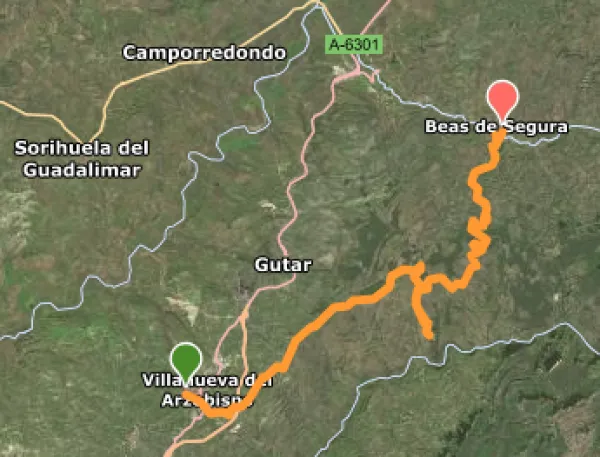
Villanueva del Arzobispo

Length of the route: 29.63km.

Route: SANJUANISTA VILLANUEVA DEL ARCHOBISPO A BEAS POR CALVARIO Y PRIMITIVE

Imagen

Jorge Manrique Literary Route

Submitted by brandcode_deweloper on
Breve descripción

When you follow the Jorge Manrique Literary Route, you delve into the landscapes that shaped the life and work of one of the great poets of the 15th century. In Jaén, you discover the land where he was born, grew up, and found inspiration for one of the most universal works of our literature: the Coplas a la muerte de su padre (Stanzas on the Death of His Father).

Along the route, you stroll through places that still preserve his memory: Segura de la Sierra, where he was born; the castles and fortresses where I have served as a man of arms; as well as the roads that accompanied him throughout his family and political life. Each place allows you to better understand the poet's sensitivity and the depth of his perspective on time, life, and death.

When you follow in the footsteps of the warrior-poet, you journey through three essential places in his life. Each one brings you closer to his story, his work and the landscapes that accompanied him from childhood to maturity.

Puntos del trazado
Latitud
38.2980
Longitud
-2.6521
Latitud
38.312
Longitud
-3.043
Latitud
37.994
Longitud
-3.472
Desactivado

Route card

Segura de la Sierra

The journey begins in this historic town, one of the most beautiful in Spain and the birthplace of the poet. Here you can visit:

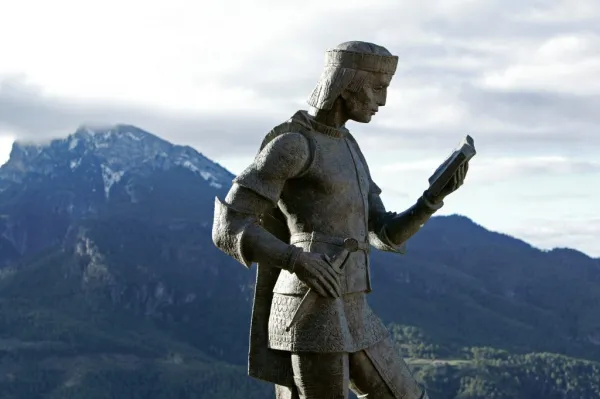
Jorge Manrique Viewpoint and Monument: next to the New Gate, with a sculpture representing his two facets: man of arms and writer.

Manrique Family House: the house linked to his lineage, with the coat of arms of the House of Feria still visible on the façade.

Segura de la Sierra Castle: an interpretive center dedicated to the author, with spectacular views over the entire mountain range.

Imagen

Chiclana de Segura

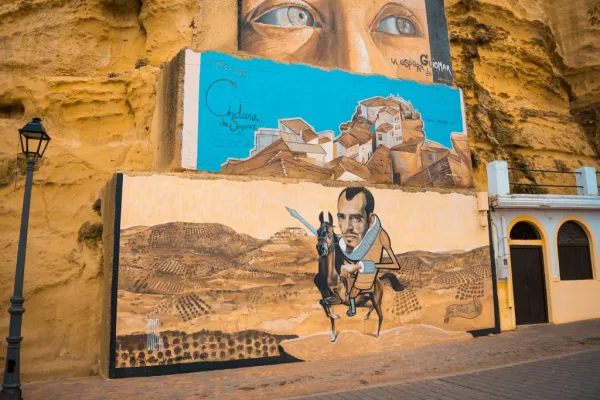
He lived much of his life in the castle of this town. From its walls, you can contemplate a vast horizon that spans four provinces. It is a key location for understanding his role as a military man and his connection to the Order of Santiago.

Imagen

Baeza

The route ends in this World Heritage city, a jewel of the Andalusian Renaissance. Here, Manrique suffered one of his few military defeats and was imprisoned for a time. Strolling through its streets allows you to connect with one of the most intense episodes of his life.

Imagen