Monument to Félix Rodríguez de la Fuente
Built in 1980
| Source dedicated to the memory of Félix Rodríguez de la Fuente, a lover of nature. It has a tile plate where the honorado and the year of construction are named. |
Built in 1980
| Source dedicated to the memory of Félix Rodríguez de la Fuente, a lover of nature. It has a tile plate where the honorado and the year of construction are named. |
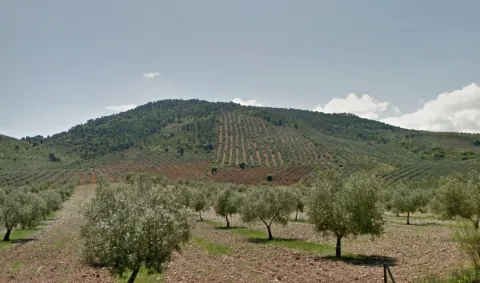
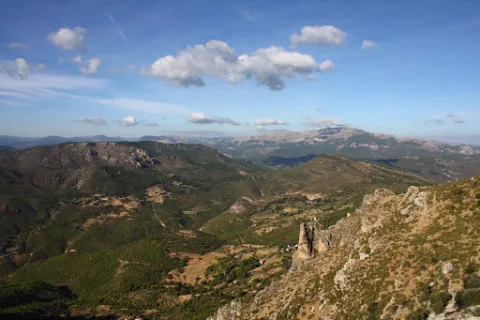
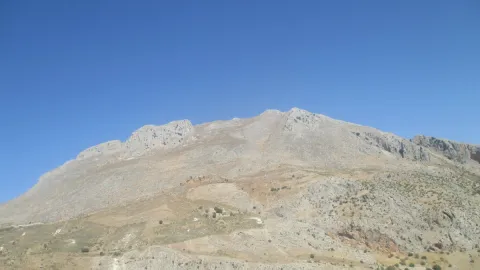
The elevation of Salfaraf is a residual relief of the tectonic unit of the tabular shed of the plateau which, as a witness hill, is independent from the surrounding area, causing a landscape milestone, with a large visual basin.
The topographic contrast with the surrounding terrain and the altitude above 1000 m make it easily identifiable.
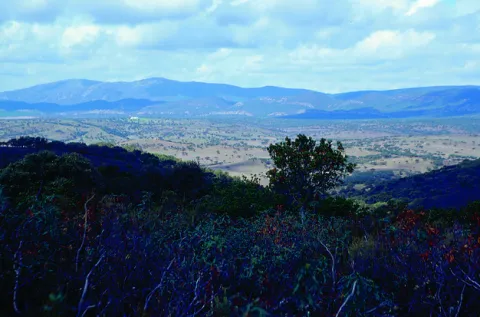
Coronado by shrubs and isolated feet of oak and cashew, it is occupied almost until its summit by olive groves that constitute the main use, also being remarkable the minor hunting. From its peak there are interesting views of other milestones such as the Guadalmena reservoir, the Yelmo or Segura de la Sierra.
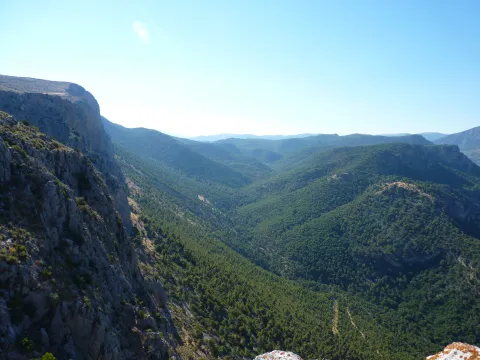
The mountain is surrounded by two convergent valleys: that of the Quibrajano River (where the Protected Species Recovery Centre is located) and the Hazadillas Canyon, with a recreational fit equipped with grills, tables, banks, recreational furniture, fountains, kiosk, etc., as well as other facilities.
This natural space is used as a place of leisure and leisure by the people of Jaén, given its proximity to the city.
The Monte la Sierra peri-urban park conforms to the mountain of the same name, of 2,720 hectares and property of the City of Jaén, consonated with the Council of Environment of the Junta de Andalucía, which is located in the municipal term of Jaén.
At 1440 m high is the MONTE ARDAL, which can be accessed by the road that reaches San Bartolomé, to the crossing that is moving to the left. It is a classroom of nature located in a forest shelter, with views of the village, the surrounding mountains,... in addition to the shelter, there is also a recreation area, adapted don barbecues, tables, and covered by a porch.
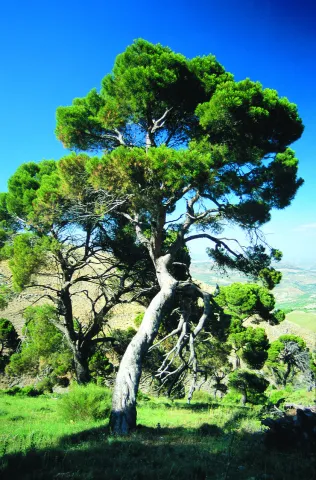
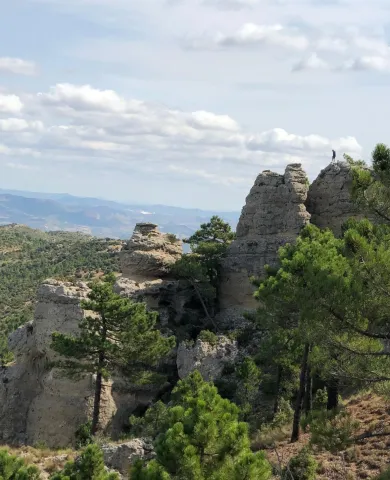
Northof the term, there is a mountain, theArdal Room, in which the oaks, together with the retama, predominate, the albar thorn, wild rosals, juniper, ivy and madreselva. An ideal ground for the cicnetic species of major hunting (boar, deer, corzo...), and also of pastures, especially for the cattle of ligia.
In the Aznaitín, some plant endemisms typical of Sierra Magina are maintained. At its summit the municipal terms of Jimena, Torres and Albanchez de Mágina, whose populations are located at their feet, as do the prehistoric caves, where the former inhabitants left their mark for posterity. Not in vain the Aznaitin impregnated the pupil of Antonio Machado from the far Baeza and incorporated him into his poetry.
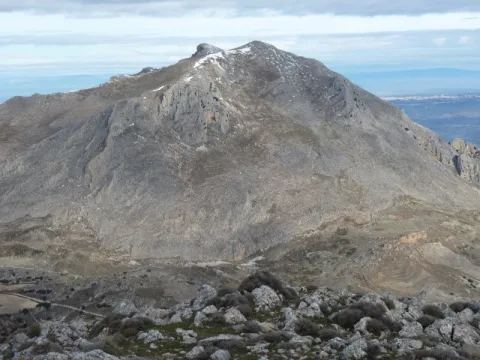
The Az-Naitín (Nathin in local dialect) is a mountain located in Sierra Magina, Jaén, Spain. The origin of the toponymy in Arabic would be Isnatin or Asnatin, and it is noted that it can come from its ancient name in ibero as Neitin, which refers to the great iberous god Neton, the god of Thunder and fire, which according to the legend dwells in the mountain. It has a special visual appeal, especially from the East side or from the Guadalquivir valley. It has a considerable altitude, 1745 m, which allows to see much of the province of Jaén.
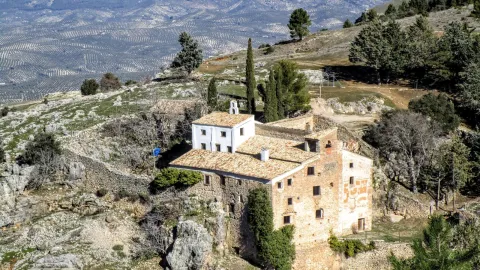
This is evident in the lack of materials and in the lack of furniture. Only the chapel with a Latin cross floor and a dome in which some frescoes are still preserved stand out.
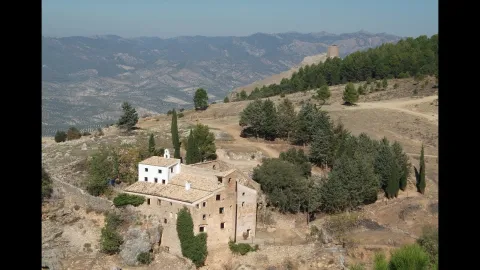
The difficulties of the 17th century may have motivated the foundation of this monastery especially at a time when bad crops, hunger and bad weather caused the emergence of epidemics of the feared plague. The order of San Antonio Abad was dedicated to the healing of the sick and the fear of contagion caused these buildings to be far from the populations. Along with the plague, the economic crisis, the rise in prices, wars and in general the hardships led to an increase in the clergy and religious foundations in a context in which the Monarchy offered a contradictory vision that oscillated from splendor and misery or boom and decline.
Soledad and remoteness are the adjectives that come to mind when we are next to the Monastery, in Cazorla. Every year, on the last Sunday of September a rosemary makes Montesión come back to life, as during the year there was only one person in it, the danger of ruin in the building being constant. The visitor can appreciate different stages in its construction although its foundation dates back to 1625. The monasteries under the advocation of St. Paul and St. Anthony Abad highlighted for their poverty and austerity as you can see if you approach Montession.
It was the first, and therefore oldest, to operate in Valdepeñas. It began to ground the day on August 15, 1540 and had two milling stones. Its owner, Juanín LeClerque, called it the Upper Mill of Santa Ana and also built a second mill, called the Bajo of Santa Ana, which also had two stones. Both mills were the only ones in Valdepeñas until the 18th century.
In 1787, the batan, used until then to cast wool, was transformed into a mill, and was built in the area of El Ejido de San Sebastián by Catherine González de Medina.
It is currently dedicated to the museum and divided into three sections: Portal, dedicated to the historical part; Molino, dedicated to the mill, its parts and operation; and Hoorno, which hosts a small sample of objects and techniques specific to the popular arts and customs of Valdepeñas and its region.
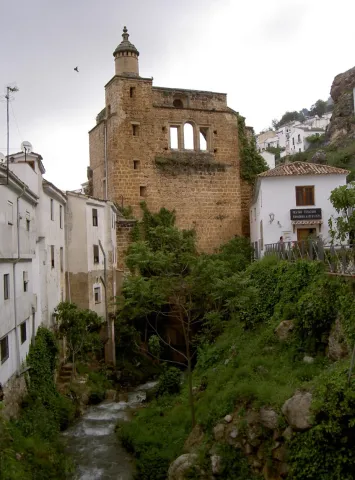
3-storey Arab-origin hydraulic flour mill. The construction is in bankruptcy, adapting to the skirt of a hillside. In its interior are presented useful and tools of the 19th century.
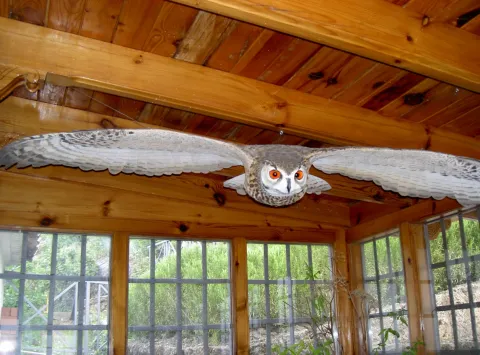
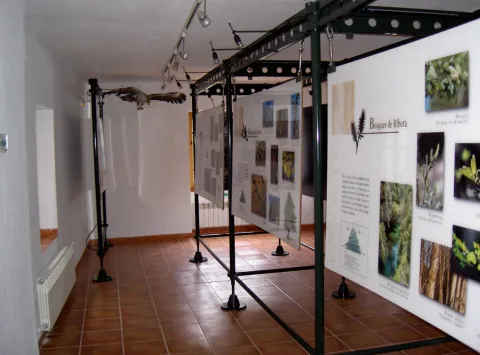
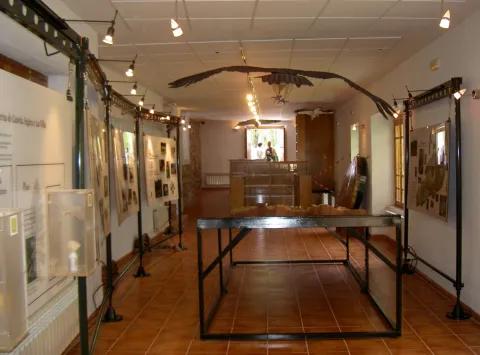
Frondosa Nature contains, among other elements, audiovisual, olfactory panels, images and sounds of the flora and fauna of this protected natural space, bird reproductions and a model of the Natural Park of Cazorla, Segura and the Villas.
Dated between 1950 / 1959. Electric flour mill with elevators and threads that carry wheat and flour from one machine to another. It has atrojes for the storage of wheat, atroje for the damp, alfanje, milling stay and machine stay. The chunks are built in tapial and spun, the function being to store the grain. The alfanje, built in brick and wood, is where you will find the set of milling stones. Inside is the gear that moves the stone. The stay of the milling is where the process of milling the grain is carried out. The machine stay is the second floor where you will find the trickle, the clean and the fender.
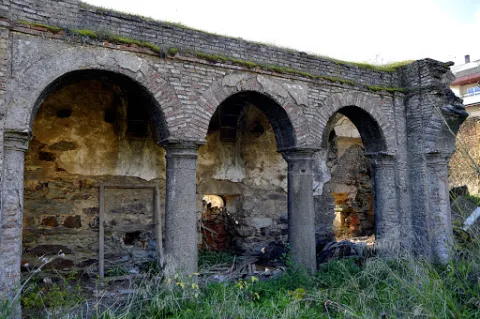
Located in the Hutar or Hutar Birth. It's the next mill to the Trinity Mill. He took advantage of the strength of the Hutar Arroyo water. The mill is within a newly built building. The waterfall remains with its blinded arches that brought water to the mill. In the surroundings are its mill stones
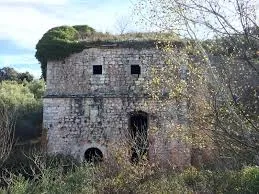
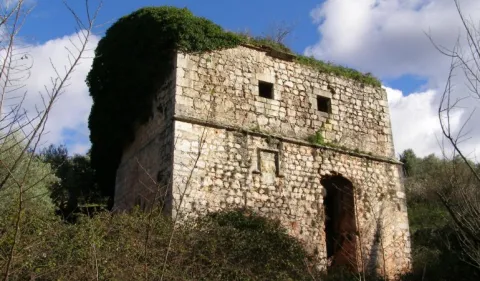
It is a fortified flour mill that takes the name of the stream of the cube, is built by the Order of Calatrava in 1437. It is the largest and best preserved fortified mill built by the South Peninsular Military Orders. In this place, down to the river of the Cube, we find an area of high ecological and landscape value.