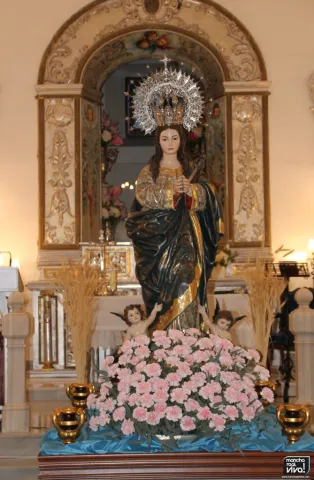
La Inmaculada Concepción
Patron saint of Mancha Real
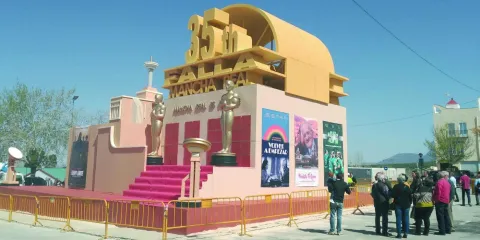
Over the years, the falla of Mancha Real has become an attractive tourist destination thanks to the uniqueness of a tradition that has earned it the designation of Andalusian Festival of Tourist Interest. Around this celebration, driven by the town's carpenters' guild, a wide range of cultural and sporting activities takes place, usually concluding with the “cremá” (burning).
Marked by one of the oldest traditions: the Canto de la Aurora, or simply La Aurora. This involves a group of people, the “auroros”, setting out at dawn accompanied by musical instruments to walk the streets of La Guardia singing, calling the brotherhood's members to prayer.
Its origins are linked to farming and the blessing of harvests and crops.
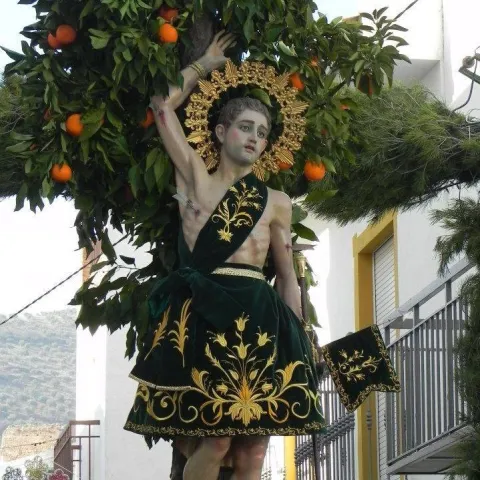
He is the patron saint of La Guardia, and this is the most cherished festival among residents, especially those who once emigrated and return to be with their families during these celebrations. Held on 20 January, running from the 19th to the 22nd. It is a festival of agricultural origin, and tradition once involved carrying the saint's image out to the threshing floors, where the grain harvest was threshed.
Held since the start of this century in honour of the Santísimo Cristo de la Misericordia, Patron Saint of the city. Monumental floral arches are erected, fireworks displays are held, along with popular altars featuring crosses of flowers. The Brotherhood stalls are a tradition, where sevillanas are danced and delicious tapas enjoyed. The Holy Christ, accompanied by thousands of people, travels through most of the town, with residents making offerings of firecrackers, fireworks, and offerings of flowers or wheat.
On Corpus Christi Day, following the solemn religious service held each year in a parish church, the 17th-century Monstrance is carried in procession on a magnificent silver platform with gold finishes, donated by the Nocturnal Adoration in 1972, the work of the Ángulo brothers of Lucena. The platform is adorned with hundreds of red and white carnations, representing the children who have made their first communion. The procession is opened by these boys and girls, followed by the Tarsicios section led by their banner, and behind them the Nocturnal Adoration, also led by its own banner. Countless people surround the Blessed Sacrament, carrying candles and singing, accompanied too by the city's brotherhoods, which set up altars.
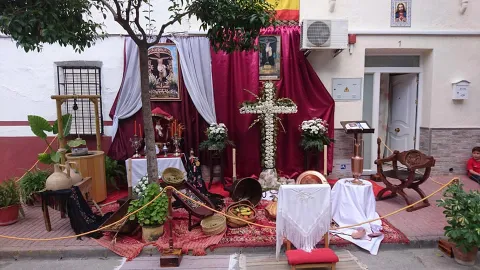
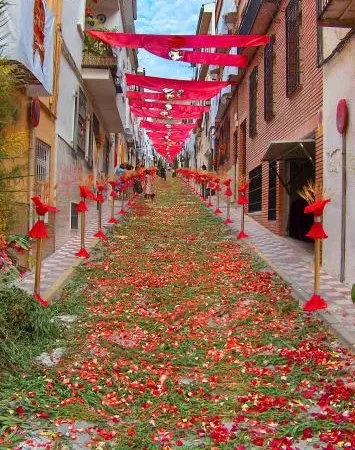
Along the traditional route, there are stops decorated with beautiful altars. The ground is covered with sedge and pennyroyal.
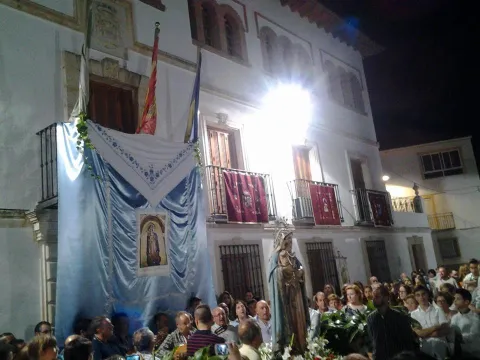
The altars designed by local residents deserve special mention. Every year, neighbours take great care in decorating their streets as best they can, resulting in a good-natured rivalry. Balconies are decked out with flags, shawls, tapestries... and the streets are filled with potted plants.
As early as the 16th century, there was a brotherhood dedicated to the Blessed Sacrament, and in earlier times its octave was held on the Sunday following Corpus Christi Day, in the afternoon, around the square. The Monstrance was carried by hand by the priest.
The altars used to be set up at the door of the town hall, on the corner of Calle San Fernando behind the fountain, and on the corner of Calle Juan de Mata, with the blessing given to the town from the altar at the church door.
The Jódar Fair was granted by Royal Decree of Isabella II in 1837. As Jódar had no set date for traders and livestock breeders to gather to sell and negotiate all kinds of goods, it was decided that the fair would be held on 2, 3 and 4 September. The fair was set up along the so-called Carrera del Pelotero (Calle General Fresneda). Food stalls and stands were placed in the open space between Calle Antonio Nieto and Lope de Vega, where large trees once stood. The swing rides, ferris wheels and carousels were set up in the old small square next to the church door facing the Carrera de San Marcos (Calle Juan Martín), where the priest's house now stands, built in 1927.
Later, the Fair moved to Plaza de la Constitución (Plaza de España) and Calle Los Morales (Calle San Fernando), where the Roma community would set up. A typical feature were the amateur bullfighting displays held in this square, surrounded by wooden stands.
History of the Fair
The origins of bullfighting in Jódar are documented as far back as the mid-17th century. Following the collapse of a wooden stand, these amateur bullfights were discontinued, and the current bullring (opened in 1926 on private initiative) was built by the entrepreneur Basilio Lahoz. Some of the greatest names in bullfighting have appeared in our bullring right up to the present day.
In the 1940s, the fair moved to Paseo de José Antonio (Paseo Primero de Mayo) and Calle Joaquín Galván, with the livestock fair set up in the surrounding streets. There were major shows at the cinemas and cafés, such as at Andrés's, where the so-called "animadoras" (hostesses) performed.
There were two open-air dances, one in the market square and another in the casino gardens, popularly known as "the poor people's dance" and "the rich people's dance". Feature films were shown — in the 1910s, using a large sheet in front of the church façade to screen silent films — and later at several cinemas: the Gran Cinema, the Plaza de Toros, and first at the Teatro Arroquia and later the Teatro Principal. Between the 1960s and 1970s, the fairground was set up in El Ejido, and by the mid-1970s in the Barriada de Fátima.
It later moved to Calle Luis Carvajal, Sanabria and the Camino de la Leña, extending to what is now Avenida de San Miguel de Fluviá. When the new fairground was built in "El Caballo", the fair gained in size and comfort, becoming one of the largest fairgrounds in the province.
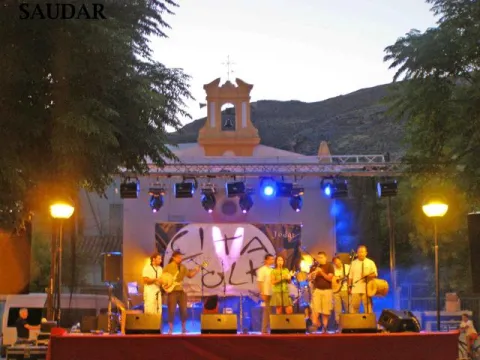
Worth highlighting at the Jódar fair is the Flamenco Art Festival (founded in 1972), long-established and steeped in tradition, one of the oldest in the province; the Cita con la Música Folk (founded in 1972), organised by the folk music group "Andaraje", featuring groups of great national renown, and considered the oldest non-competitive folk gathering in southern Europe; among the fair's events, the opening address is also worth noting, given by a locally prominent person or someone linked to Jódar, delivered from the town hall balcony, along with the cultural and sporting activities of the "Pórtico de Feria", notably the Ciudad de Jódar Football Trophy, the motocross championship, and greyhound races... Concerts are also held at the Caseta Municipal of the Palomares Municipal Auditorium, as well as well-attended bullfights at the bullring, competitions and children's rides. Today, the fair is held from 31 August to 5 September.

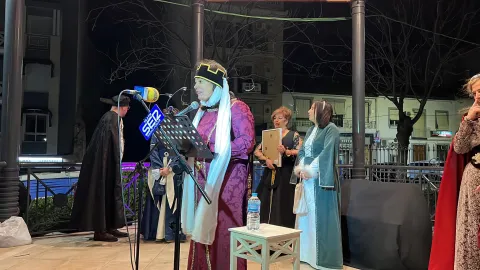
Jódar, located in the heart of the Sierra Mágina Natural Park, celebrates its Carnival and Fiestas Medievales de la Embajada with particular splendour, recalling beautiful 15th-century love stories sung by troubadours and recounted by historians.
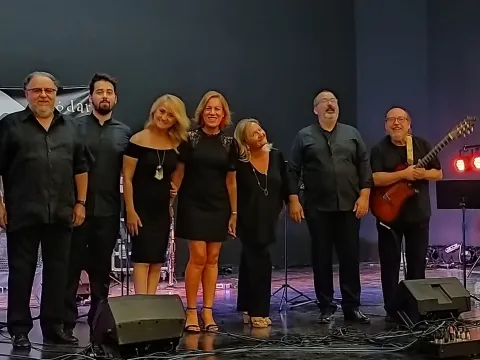
The oldest folk festival in southern Europe, organised since its inception by the musical group Andaraje de Jódar.