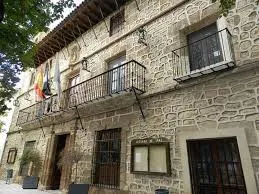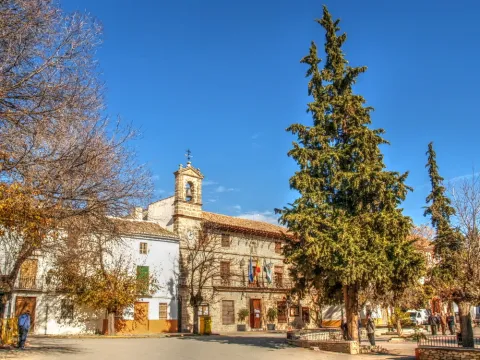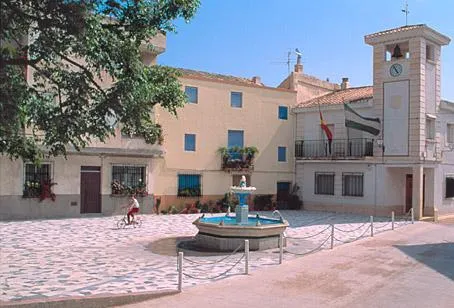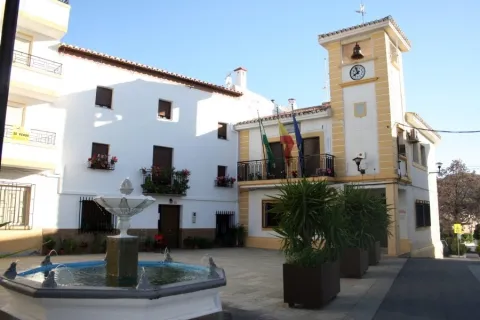
Town Hall and Hall of the Old Mayor's Office
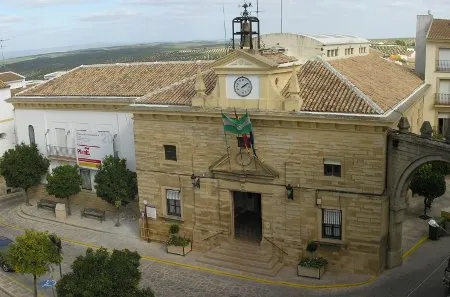
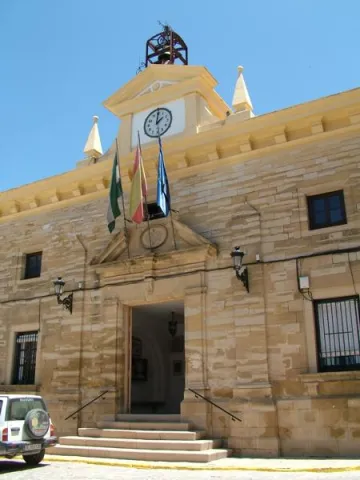
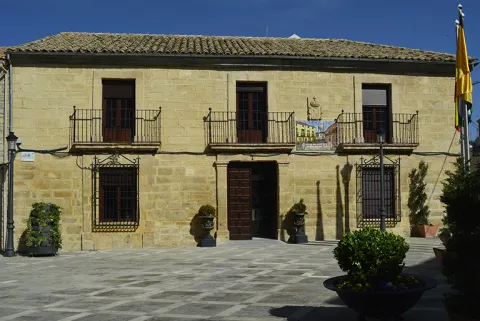
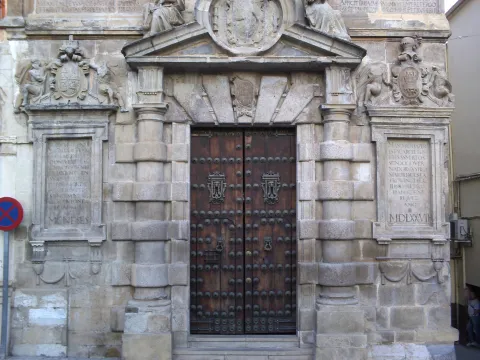
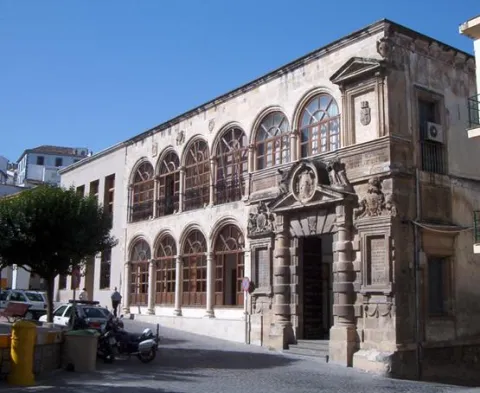
It has a basilica plant and is made of carved local stone silery. The façade presents in the center a cover with staircase and door flanked by Tuscan pilasters on podiums.
Inside are the rooms 3 A and 3 B, of the Archaeological Museum, dedicated to the presentation of the Prehistory, Ibera and Roman culture of the city.
Old Royal Posite, neoclassical, was built by Charles IV in 1798.
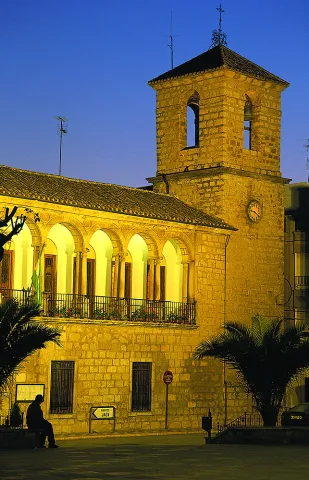
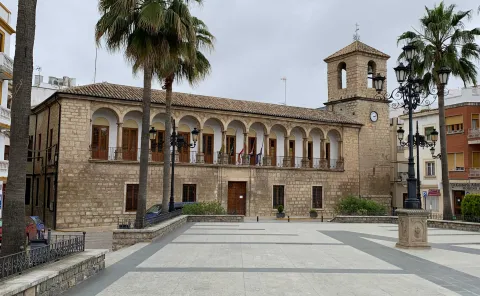
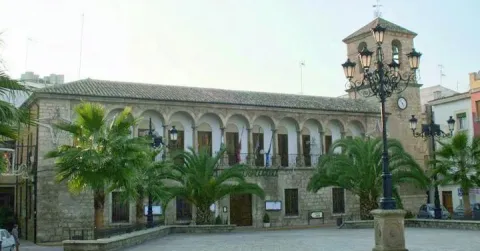
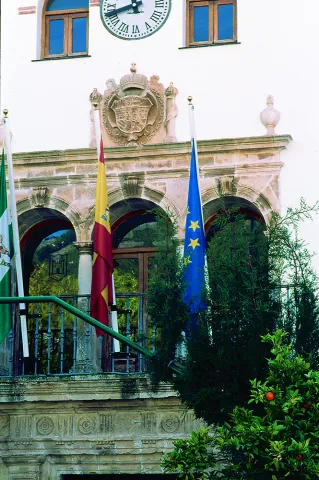
With an elegant and proportionate facade, it is typical of the classicism of the 17th century. The facade is divided into two floors, the one below has in the center a cover and on the double sides of the rectangular windows intellized. The superior features a gallery with 11 half-point arches supported on double columns. The open character of the gallery contrasts with the solid and sober underfloor in the style of the Italian palaces of Quatrocento. The building housed the Casas de los Cabildos, which occupied the top, the prison, on the lower right and the Posite on the left, and was completed by 1,642. In 1983 it was declared Good of Cultural Interest.
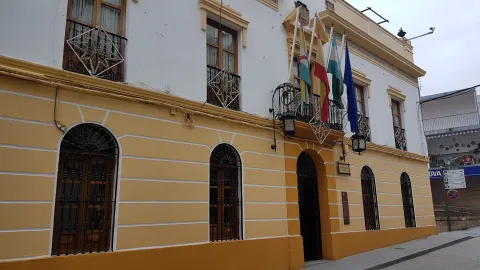
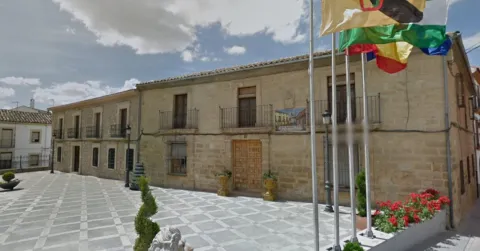
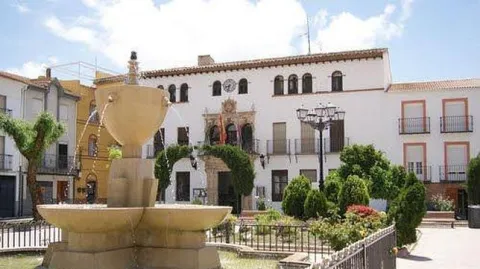
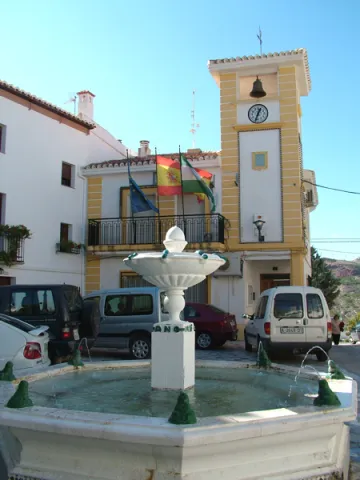
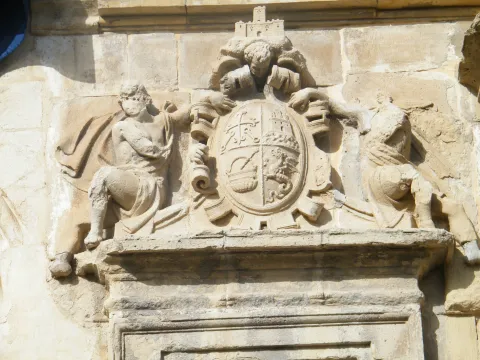
The City Hall, a building of the 20th century silery, of a classic air, is the president of the Plaza de la Constitución. It has a door flanked by pilassas, intellized and recercated holes and, in the upper part, the shield of the municipality.
Its construction is linked to the repopulation of the southern part of Jaén in the time of Charles V. It preserves the18th century facade. It is fully rebuilt and only maintains its original track, the two-story cover of the 17th century.
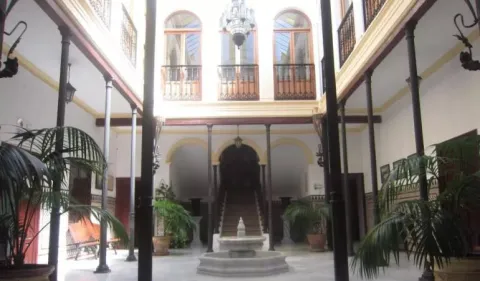
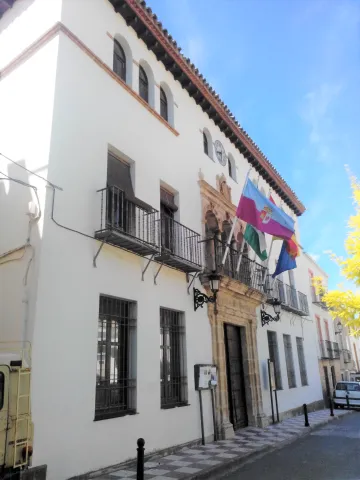
Building built at the end of16th century. At first it was a convent under the title of Our Lady of the Assumption, and this is the reason for the small image that presides over the facade. In the 18th century it became for the first time the House of the Council. The original construction corresponds to athree-storey building and swordsmanI had a bell with three crunches. It had different units anda central courtyard.A big ladderimperial two meters, immense and majestic, raised us to the second floor. On the third floor the schools were installed.
With three heights and bounds, the most outstanding is that of the balcony on the first floor, in a vertical line with the access door, and crowned by a small attic with a watch that imitates that of the municipalities colonized in the 18th century, but which is located not in the center but on one of the sides of the building, and on which a small bell is installed.
The other significant building of Hinojares is the City Hall, also in the same line of architectural austerity and without concessions to decoration and aesthetics.
The construction is part of an ambitious plan for the beautification of the city of Martos, seeking to create a capital worthy of the Endowment according to its Roman legacy. Urbanistically the façade of the Cárcel would vertebrate the space of the main square of the city (current Plaza de la Constitución), also remodeling the nearby church of Santa Marta and the Sanctuary of Nuestra Señora de la Villa, and having in the central part of the square the Fuente de Neptuno, disappeared work of which we have references in the History of the Peña de Martos de Diego de Villalta. In addition to this intervention in the main square, new roads and spaces would be built, such as the street and the square of the Fuente Nueva, the district of the Heras, the street of the Albollón, etc., and a series of convents and churches were also founded.
The main façade of the Prison is structured as a double gallery of half-point arches supported by dogrous columns (four arches on the lower floor and six on the upper floor), the cover being located in a decentralized way on the right side (on which a blind balcony is available as a temple, topped with a straight fronton). In the jets of the central part of the upper arcade we find heraldic shields, killing the whole facade with a large cornice.
The building was built by the architect Francisco del Castillo between 1557- 1577 on behalf of Governor Pedro Aboz Enríquez and Mr Antonio de Padilla Meneses, Justice Mayor of Calatrava in the Kingdom of Jaén.
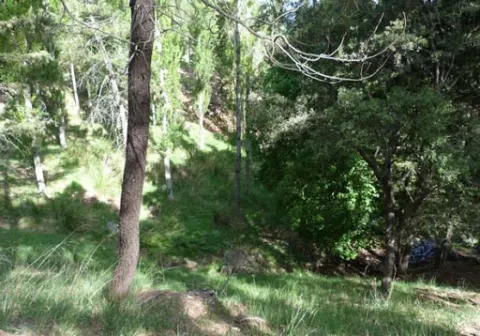
The hazelnut is presented in several places in the Park, usually in the area of Segura and in it we will see it. In the high valley of Segura, between Pontones and the Utrera Strike, one of the most extensive hazelnuts of the Park is spread, presenting a good state of conservation, as it has preserved it from the transformation of the area by the human being.
In the recommended area the hazelnut (Corylus avellana) is abundant, forming an extensive plant community, in which we find lanthanes (Viburnum lantana), worlds (Viburnum opulus), vidars (Clematis vitalba), liver, (Hepatia nobilis), parnasias (Parnassia palustres), wild strawberries (Fragaria vesca), orchids (Listera ovata, Dactyliorhiza elata), cardos (Cirsium pyrenaucas and several sagulis (S.), and Sallicola (S.). We also found repopulation choperas with the Populus x canadensis hybrid. This whole set forms a thick and wide forest in gallery, where hazelnut is the protagonist.
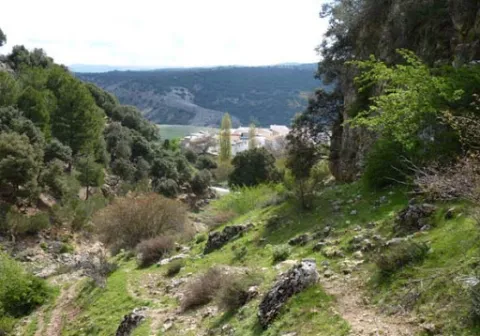
For our visit to the hazelnut we choose the head of the Segura River. We will go to Pontones and from there we will take the track that passes to the side of the Segura River, downstream, in the direction of the Masegoso cortijo. We can make it walk or by vehicle, but we will enjoy more of the walk, as it does not reach 5 km to the end.
When we have talked about the "North in the South" we invite to discover the hazelnuts in the area of Las Azebeas, but there are them in many other places, forming exceptional exceptional plant communities, authentic more northern plant shelters that live in the South.
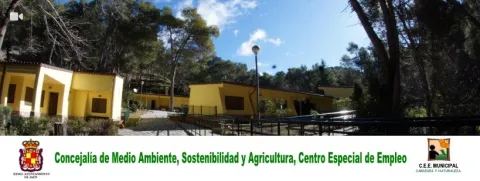
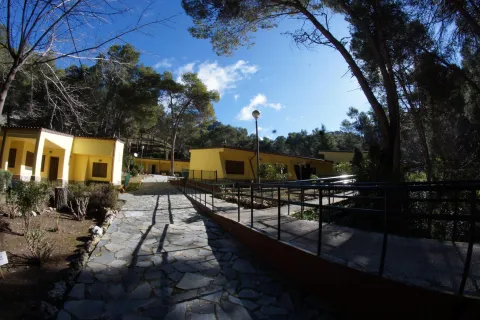
These municipal facilities are located in the Parque Periurbano Monte La Sierra, 23 km from Jaén, with an extension of 2,720 Hectareas, a mountainous terrain and an average altitude of 1000-1200 meters, make it a natural space of high botanical, faunistic and geological interest, which make it part of the Network of Protected Natural Spaces of Andalusia (RENPA). The Hall offers mainly environmental awareness activities, environmental programs, day, camps... not to mention the playful sports facet.
The Nature Hall of the "Cañada de las Hazadillas" is an Environmental Education Centre run by the Special Employment Centre since 1999.