Saltar al contenido principal
icon-intereses-viajar-solo

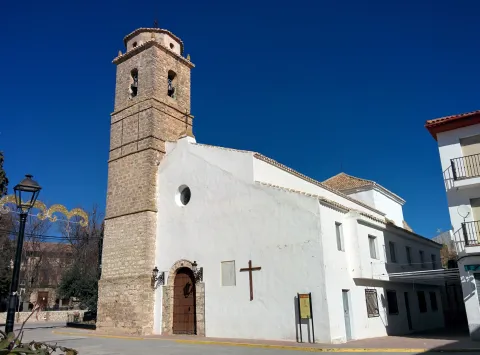
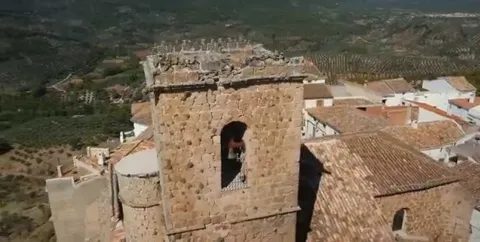
Church of Nuestra Señora de la Asunción (Hornos de Segura)

Submitted by brandcode_deweloper on
Id
4651646
Descripción
Descripción larga

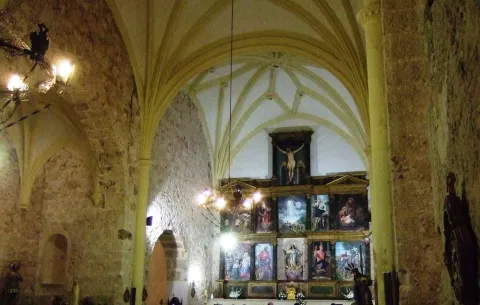
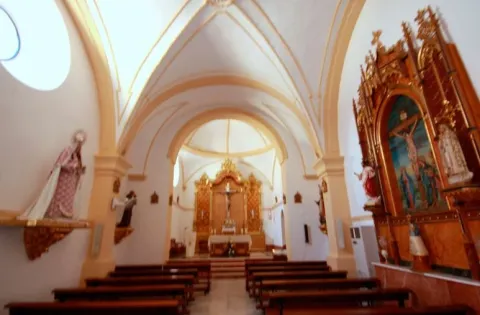
It has a single ship and two bodies attached to both sides by penetrating them through two half-point arches with Renaissance moulds; one serves as a sacristy with intellized cover while the other, apparently ancient Baptisteria, is covered with a Gothic vault crashed with its diagonal and tercelets.

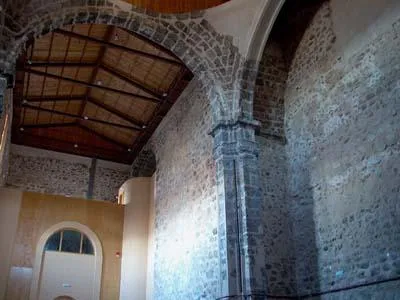
The ship is covered all with three simple starry gothic vaults with its tercelets, highlighting that of the presbyterium for its greater wealth of composition, for if all have its diagonal, tercelette and ligation, here appear straight combates; the nervations fall into a perpiaños arches of half point that have continued on a high half-columns attached to the walls that end up in basements with Gothic moldings; in the header they do it in a kind of ménsula as in the feet, where it opens in the thick of the wall in a similar way to an anal-venterium that exists in the right.

On both sides of the ship are opened two chapels, covered the four with gothic vaults with their tercelets and diagonal resting in mends; the second on the left makes the times the entrance to the temple and is where the gate that gives exit to the plateresque cover on the north side of the square of the Wheel is located. The current location of the cover is different from the original one that was located two chapels on the left.

The bank is very modified as well as the front coverings of the central street entrecelle and side streets, which house modern saints and improper decorations (note that the church was looted and burned in part during the first days of the Civil War). From the end of the 16th century it is composed on its first floor by columns with Ionic capitals, the second by columns of Corinthian capitals, ending the side streets with triangular fronts with classic entrenamento. In the attic a modern Christ replaces what must have been a Calvary; in him and at the feet of Christ we have the following inscription that informs us of its builders, materials and of the year.

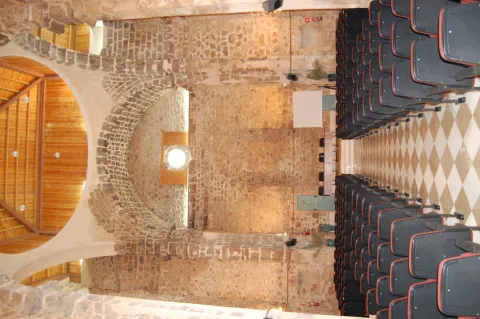
After all, it has good proportions to which the bodies of the sacristy and ancient Baptistery and the chapels contribute. The whole temple is covered by a goth-drop-eater (ship-eater). It has two counterstrengths that exercise the function of holding the push of the vault of the major chapel.

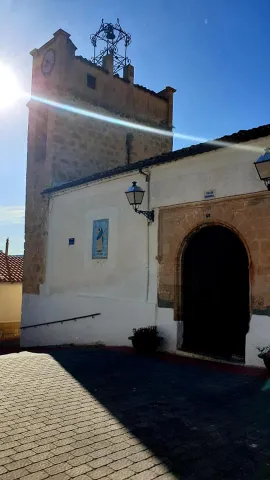
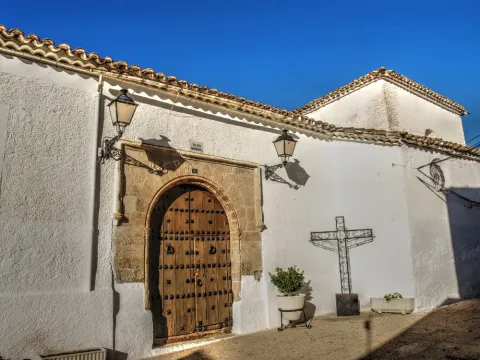
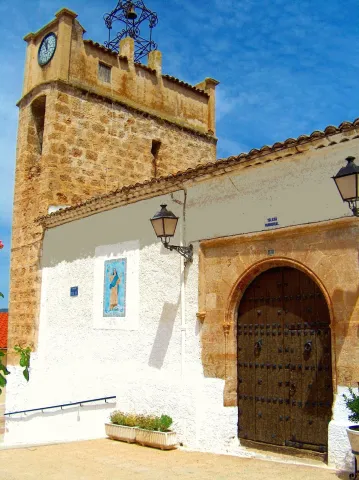
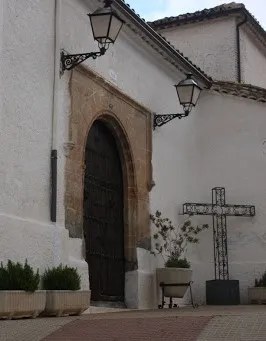
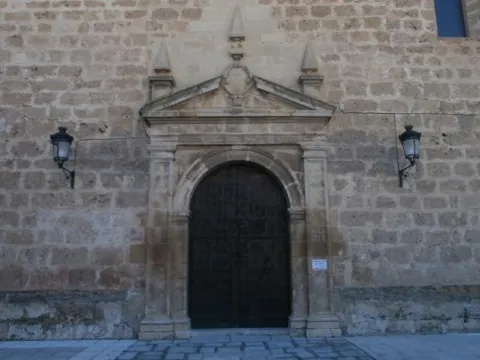
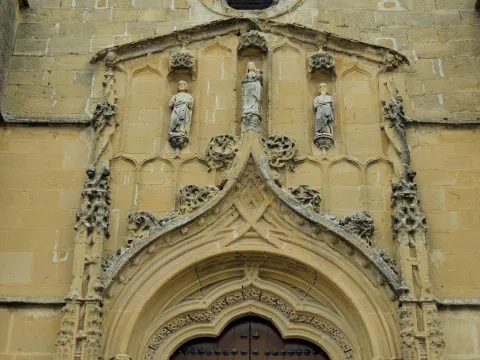
On its side of the roof we have the only entrance cover to the parish, very mutilated by physical and human agents. It is one of the first samples of the plateresque in the province of Jaén connected to the plateresque in the area of Albacete. It is composed of a half-point arch whose dovels are decorated with Renaissance moulds and as a central motif in each of them by cherubim. It is framed by very spent pillars in which a baking is preserved. In the gears we have two splendid and very classic Renaissance medallions with human relics of profile.

Breve descripción

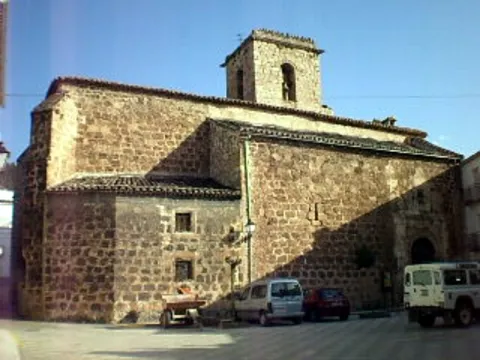
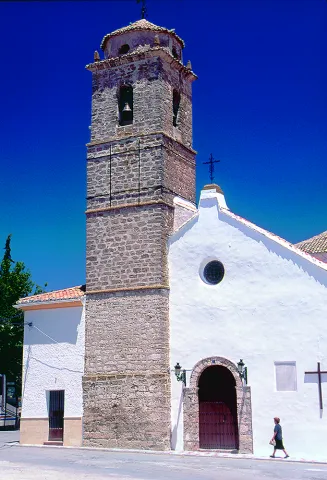
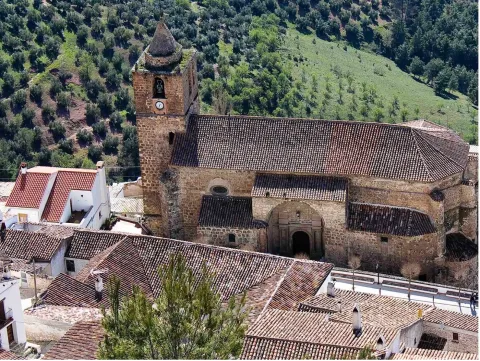
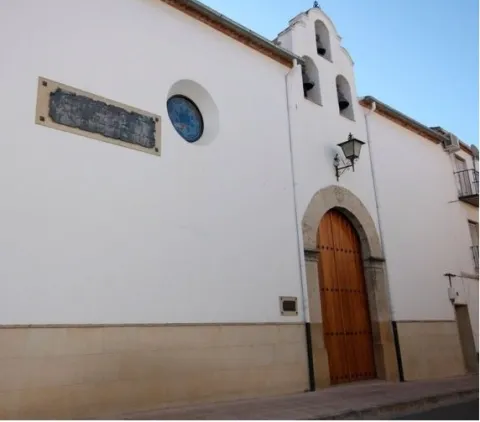
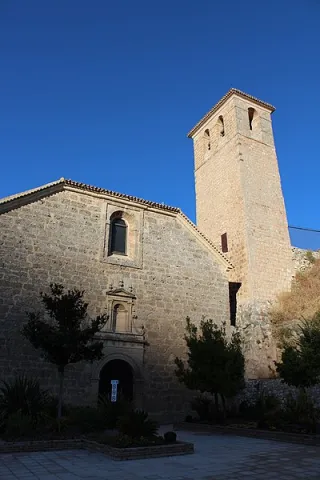
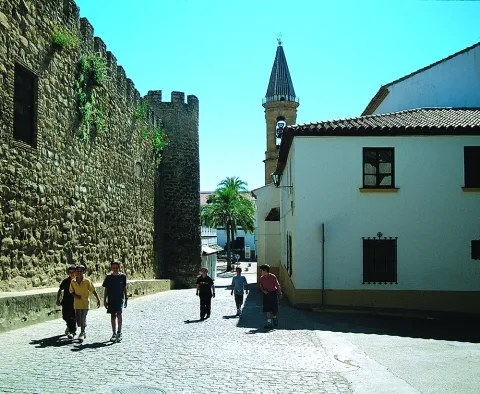
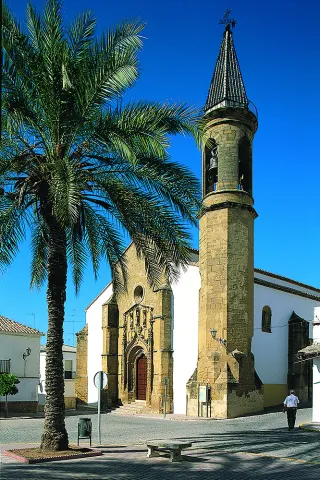
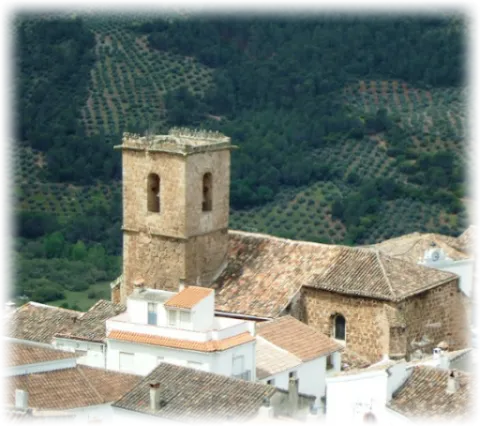
The Villa de Hornos de Segura has a parish under the title of Nuestra Señora de la Asunción belonging to the Arcipregamiento de Orcera. The parish church rises in the square of the City Hall, being drowned in a certain way by some buildings that prevent it from going through the outside in all its dimensions.
Telecomunicaciones
Sitio web
www.hornos.es
Teléfono de contacto
953 495 053
Correo electrónico
hornos@promojaen.es
Ubicación
Latitud
38.216560
Longitud
-2.720060
Dirección
C/ Iglesia, 2
Distrito
Municipio
Ubicación en el mapa
POINT (-2.72006 38.21656)
Tipos de punto de interés
Imágenes carrusel
imagen
Image
Iglesia%20de%20Nuestra%20Se%C3%B1ora%20de%20la%20Asunci%C3%B3n%20%28Hornos%20de%20Segura%29.png
Imagen principal
Desactivado
imagen
Image
Iglesia%20de%20Nuestra%20Se%C3%B1ora%20de%20la%20Asunci%C3%B3n%20%28Hornos%20de%20Segura%292%20%281%29.jpg
Imagen principal
Desactivado
imagen
Image
Iglesia%20de%20Nuestra%20Se%C3%B1ora%20de%20la%20Asunci%C3%B3n%20%28Hornos%20de%20Segura%293.JPG
Imagen principal
Desactivado
Imágenes cabecera
imagen
Image
43.jpg
Imagen principal
Activado
Microsite al que pertenece
Loading map
Preparing points of interest and routes...

Church of Nuestra Señora de la Asunción

Submitted by brandcode_deweloper on
Id
918675
Descripción
Descripción larga

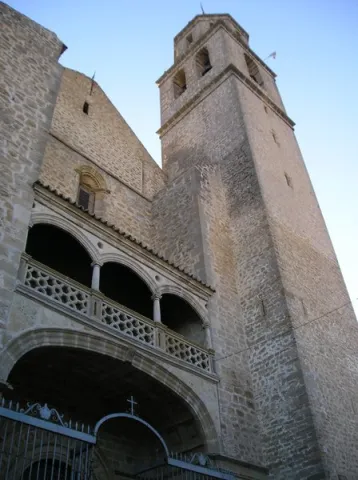
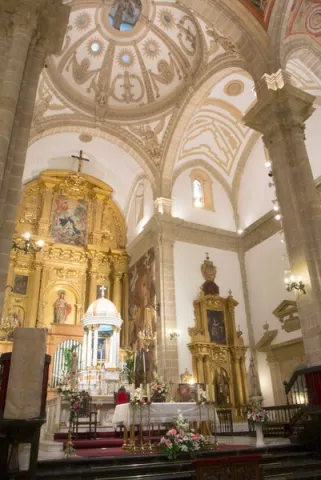
The church, beginning in 1534, is the first great church built by Vandelvira and from here he left two years later to Ubeda where Francis of the Cobos had commissioned him to perform the Sacred Chapel of El Salvador. The church was completed during the 18th century although the shrimp of the Christ of the Veracruz dates from the 18th century.

In the lightness of the domes and in their composition, elements are intuited that will be present in their most representative architectural element, the vanish dome. The paintings that cover the domes of the central ship date from 1575, the work of Pedro Raxis representing scenes of the Old Testament and the Passion of Christ.

We can imagine Vandelvira and his assistants during the first years of the construction of this church, large wooden scaffolding, the noise of the quarries, piles of stone to be turned into armchairs and the caleros selling lime for the argamase. Without a doubt, the most curious image should be the perplexity of the elderly, seeing such thin pillars on the sides of a great central ship, nothing to do with the churches of the area, or the recite Sanctuary of the Virgin of Fuensanta, in the nearby Villanueva of the Archbishop.

Breve descripción

The church of Nuestra Señora de la Asunción sits on the site that occupied the castle of the place known as the Tower of Mingo Pliego. On the floor, Andrés de Vandelvira draws a new temple and during his stay in Villacarillo will meet Luisa de Luna, with whom he married and had seven children. In the church of the Assumption we see some elements that are typical of the buildings projected by the architect, such as its basilical plant of three ships separated by high and slender pillars that complete the sense of monumental of the whole. There are still some tarootic elements in the building, which is a sample of that time of changes that represent the first decades of the 16th.

Ubicación
Latitud
38.114995
Longitud
-3.086348
Dirección
Plaza Juan XXIII
Municipio
Ubicación en el mapa
POINT (-3.086348 38.114995)
Tipos de punto de interés
Imágenes carrusel
imagen
Image
asun2.jpeg
Imagen principal
Desactivado
imagen
Image
asun3.jpeg
Imagen principal
Desactivado
imagen
Image
asun4.jpeg
Imagen principal
Desactivado
Imágenes cabecera
imagen
Image
asun1.jpeg
Imagen principal
Activado
Loading map
Preparing points of interest and routes...

Church of Nuestra Señora de la Asunción

Submitted by brandcode_deweloper on
Id
4485926
Descripción
Descripción larga

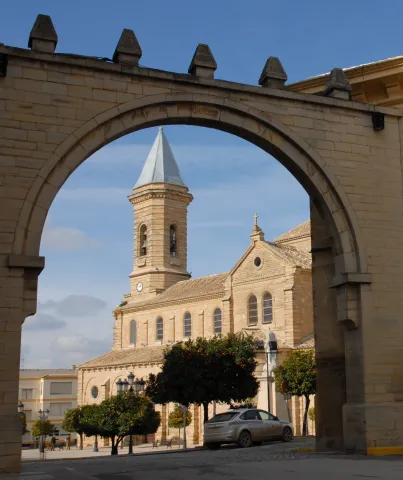
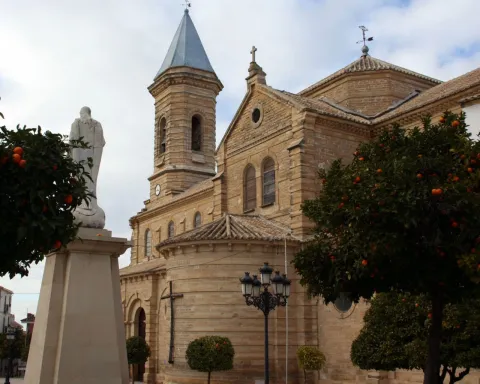
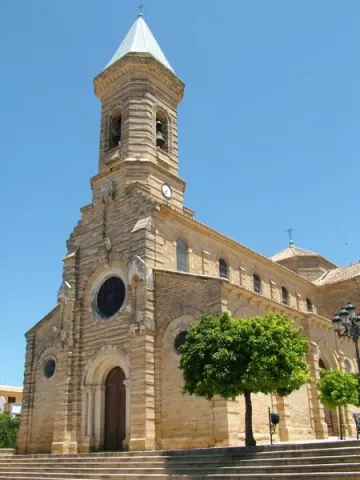
The present parish church of Our Lady of the Assumption, although incorporating the sacristy, which had been reformed in the 17th century by the Mannerist Benito del Castillo, rose after its collapse on the site of the ancient Gothic church of Santa Maria the Mayor. Justino Flórez projected it, between 1872 and 1910, not in a neo-Gothic style - the de Viollet le Duco - as its initial purpose, but in a Byzantine Neorromanic, due to the scarcity of resources, despite the generous contribution of the people. In addition to the mural paintings of Julio Romero de Torres, the broad portico or nártex, the cruciform pillars and, on them, the fajon arches and formers that alternate with cross vaults, the dome on the cruiser's pechines or that of the fourth sphere in the chapel of the transept, all this shows the architectural eclecticism and the historical "revival." On the outside, a single high-rise tower with arquivolta and roseton that emphasize the medieval of the whole, counterstrong, piled chairs, bones and wide steps to solve the problem of levels.

Telecomunicaciones
Sitio web
www.redjaen.es/francis/?m=c&o=13733&letra=&ord=&id=25168
Teléfono de contacto
953 544 186
Ubicación
Código Postal
23790
Latitud
37.871200
Longitud
-4.185180
Dirección
Plaza de Andalucía, 3D
Distrito
Municipio
Ubicación en el mapa
POINT (-4.18518 37.8712)
Tipos de punto de interés
Imágenes carrusel
imagen
Image
Iglesia%20de%20Nuestra%20Se%C3%B1ora%20de%20la%20Asunci%C3%B3n2.jpg
Imagen principal
Desactivado
imagen
Image
Iglesia%20de%20Nuestra%20Se%C3%B1ora%20de%20la%20Asunci%C3%B3n3.jpeg
Imagen principal
Desactivado
imagen
Image
Iglesia%20de%20Nuestra%20Se%C3%B1ora%20de%20la%20Asunci%C3%B3n4.jpg
Imagen principal
Desactivado
Imágenes cabecera
imagen
Image
Iglesia%20de%20Nuestra%20Se%C3%B1ora%20de%20la%20Asunci%C3%B3n.jpg
Imagen principal
Activado
Microsite al que pertenece
Loading map
Preparing points of interest and routes...

Church of Nuestra Señora de la Asunción

Submitted by brandcode_deweloper on
Id
4867441
Descripción
Breve descripción

Religious temple located in the heart of the villa. It was ordered to be built by the founder of the municipality, Dña. Mencia of Salcedo, rising in 1536 and blessed the following year. The great master of the quarry of Basque origin and neighbor of Alcalá la Real Juan de Lizarza Vizcadno, who resided in Noalejo and also participated in the construction of the Casa-Palacio and the Convent of Ntra, took part in the work. Mrs. of Victory. The tower, raised at the north-west angle, is posterior, of quarry and, despite the simplicity of forms, is the most valuable element of the whole. The church had valuable ornamental pieces that have been disappearing.

Telecomunicaciones
Sitio web
www.noalejo.es/el-municipio/patrimonio-historico.html
Teléfono de contacto
953 306 073
Ubicación
Código Postal
23140
Latitud
37.528890
Longitud
-3.653650
Dirección
C/ 18 de Julio, 6
Distrito
Municipio
Ubicación en el mapa
POINT (-3.65365 37.52889)
Tipos de punto de interés
Imágenes carrusel
imagen
Image
Mon473.jpg
Imagen principal
Desactivado
Imágenes cabecera
imagen
Image
iglesia-asuncion.jpg
Imagen principal
Activado
Microsite al que pertenece
Loading map
Preparing points of interest and routes...

Church of Nuestra Señora de la Asunción

Submitted by brandcode_deweloper on
Id
5630906
Descripción
Breve descripción

It's the most important of Benatae's buildings. The temple responds to the sacred Levine architecture, which could be due to the fact that, during the period of configuration of its factory, it belonged to the kingdom of Murcia, a situation that lasted until the suppression of the Military Order of Santiago.Constructionstarted in the 15th centuryand ends in the XVII, which causes architectural elements of the Gothic, Renaissance and Baroque styles to exist.The cover, next to the epistle, isof sillery,with a half-point arcwith convexa molding through the intrados. It is framed in a potter that rests on Gothic moldings.The towerof irregular silery has a characteristic form: it is quadrangular andthree times longer than widewith holes at the ends for the bells. The plant is ofa central shipin the form of a rectangle divided into three sections. The presbyterium appears behind a pointed chest arc.The altarpieceIn the wood, it is organized in three streets and in the central one is found the image of the Immaculate in a furnace.

Telecomunicaciones
Sitio web
www.andalucia.org/es/benatae-turismo-cultural-iglesia-parroquial-de-nuestra-senora-de-la-asuncion/
Teléfono de contacto
953 482 096
Ubicación
Código Postal
23390
Latitud
38.353620
Longitud
-2.650780
Dirección
C/ Reyes Católicos, 1
Distrito
Municipio
Ubicación en el mapa
POINT (-2.65078 38.35362)
Tipos de punto de interés
Imágenes carrusel
imagen
Image
Iglesia%20de%20Nuestra%20Se%C3%B1ora%20de%20la%20Asunci%C3%B3n_Benatae.jpg
Imagen principal
Desactivado
imagen
Image
benatae2%20%281%29.jpg
Imagen principal
Desactivado
imagen
Image
Iglesia%20de%20Nuestra%20Se%C3%B1ora%20de%20la%20Asunci%C3%B3n%20benatae.%202.jpg
Imagen principal
Desactivado
Imágenes cabecera
imagen
Image
Iglesia%20de%20Nuestra%20Se%C3%B1ora%20de%20la%20Asunci%C3%B3n%20benatae%20ret%20%281%29.jpg
Imagen principal
Activado
Loading map
Preparing points of interest and routes...

Church of los Jesuitas

Submitted by brandcode_deweloper on
Id
918621
Descripción
Descripción larga

Thanks to this father's work, we know many things about the College of the Society of Jesus in Segura de la Sierra. The buildings that are preserved today in Segura de la Sierra are the result of one of its neighbours' efforts to make a religious foundation. His name was Cristóbal Rodríguez de Moya and, in the face of his wife's death, he understood that he would have a problem with his heritage of not marrying one of his three daughters. By choosing his daughters for religious life, he founded a College.

To observe the interior of the Church of the Jesuits is not to do so in the key of the history of art or to analyze the restoration that the building has suffered, it is to have a vision of society from the end of the 16th century to approach its fears and a religiosity that permeated all aspects of life, of fear of the devil or to die in sin. An approach to daily life in a small mountain community, with the poor of solemnity to which the Society of Jesus attended with its pastoral missions.

In short, it is about knowing one more episode of the history of the end of the 16th century in Segura, the plague of 1596, the famine of 1605, the charity, the fears and poverty of a large part of the population and the collective sadness of the death of Francisca de Avilés, the last daughter of Cristóbal Rodríguez de Moya. To mentally recite the passage of this woman's death puts the hairs at the top, with a mass attended by all the people and even the Franciscans of Santa María de la Peña, of Orcera, to give the last farewell to the foundress.

Breve descripción

Let's imagine for a moment an afternoon of 1606. A priest named Manuel de Arceo is finishing writing the last chapter of the history of the foundation of the College of Segura. He does not want to take the lead, nor to go into history, but only fulfils the orders he has received from Rome to record the Jesuits foundations and to prevent their process from falling into oblivion. A few days later, Father Arceo received a new assignment, to go to New Granada to take over the new Jesuit province.

Ubicación
Latitud
38.298550
Longitud
-2.652490
Distrito
Ubicación en el mapa
POINT (-2.65249 38.29855)
Imágenes carrusel
imagen
Image
segura-de-la-sierra-iglesia-2-jpg
Imagen principal
Desactivado
imagen
Image
jesuitas.jpg
Imagen principal
Desactivado
Imágenes cabecera
imagen
Image
Iglesia%20de%20los%20Jesuitas%20%28Segura%20de%20la%20Sierra%29-1%20%283%29.jpg
Imagen principal
Activado
Loading map
Preparing points of interest and routes...
Marcas de calidad

Church of the Vera Cruz

Submitted by brandcode_deweloper on
Id
4639987
Descripción
Breve descripción

The Church of the Vera Cruz was built annexed to the old hospital of the Vera Cruz between 1575 and 1605, in the late 16th and early 17th century. The facade is sober, adorned with a half-point bow on the main door and a bell-like swordsman. A single-ship plant, divided into two sections covered with an arista vault and two chapels in each section. It houses the sculptural jewel of Villanueva del Archbishop, The Christ of the Vera Cruz, the patron of the town, the work of the sculptor Mariano Benlliure, and the Virgin of the Incarnation of the imaginary Domingo Sánchez Mesa.

Telecomunicaciones
Sitio web
www.andalucia.org/es/villanueva-del-arzobispo-turismo-cultural-iglesia-de-la-vera-cruz
Teléfono de contacto
953 450 848
Ubicación
Código Postal
23330
Latitud
38.170400
Longitud
-3.007320
Dirección
C/ Vera Cruz, 7
Ubicación en el mapa
POINT (-3.00732 38.1704)
Tipos de punto de interés
Imágenes carrusel
imagen
Image
Iglesia%20de%20la%20Vera%20Cruz%20en%20Villanueva%20del%20arzobispo.jpeg
Imagen principal
Desactivado
Imágenes cabecera
imagen
Image
Iglesia-vera-cruz.jpg
Imagen principal
Activado
Loading map
Preparing points of interest and routes...

Church of the Santa Cruz

Submitted by brandcode_deweloper on
Id
4658364
Descripción
Breve descripción

The church dedicated to the Holy Cross is a Renaissance temple of the 16th century built by Alonso Barba. The two covers, of austere decoration, are mannerist style. The interior has an interesting silver altarpiece from which only the top remains. Built in the castle's enclosure, the bell tower is the castle's ancient Tribute Tower.

Telecomunicaciones
Sitio web
http://pegalajarnatural.ayto-pegalajar.org/historia-y-patrimonio/monumentos/
Teléfono de contacto
953 360 035
Ubicación
Código Postal
23110
Latitud
37.739580
Longitud
-3.649240
Dirección
Santa María, 4
Distrito
Municipio
Ubicación en el mapa
POINT (-3.64924 37.73958)
Tipos de punto de interés
Imágenes carrusel
imagen
Image
Santa%20Cruz%20en%20Pegalajar%20%281%29.jpg
Imagen principal
Desactivado
Imágenes cabecera
imagen
Image
400px-Iglesia_Santa_Cruz_Pegalajar_24J_03.jpg
Imagen principal
Activado
Microsite al que pertenece
Loading map
Preparing points of interest and routes...

Church of the Santa Cruz

Submitted by brandcode_deweloper on
Id
2293118
Descripción
Descripción larga

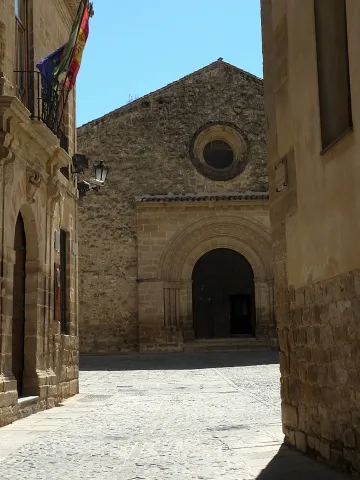
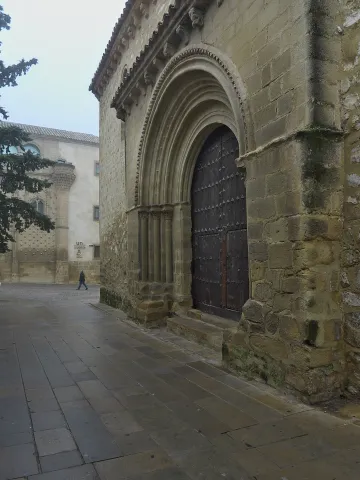
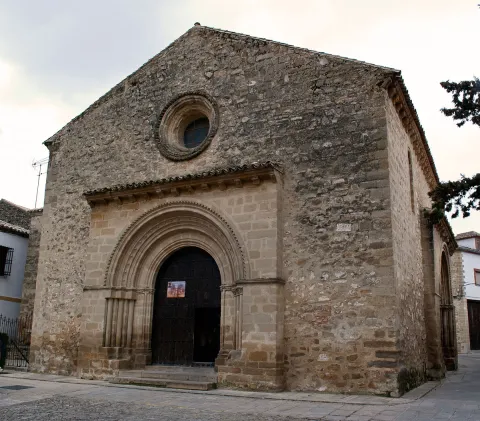
This building has undergone numerous changes, both outside and inside. In the 15th century, due to an expansion, the northern cover of the church, on which a chapel is built, disappears. The current main cover comes from the church of St. John the Baptist.

It's worth a look at his facade, as it was covered by neoclassical structures. This can be seen very well in the decoration of the capital columns. In its interior, the Mudejar cover was replaced by the present one due to its poor state and in the 20th century the primitive structure was restored and stripped of its classic decoration by the General Directorate of Fine Arts.

You can see that its walls and the apse are of masonry, and that they are topped by a moulded cornice. The main cover, of silery, has a outgoing body composed of a half-point vanity with smooth archivoltas, which is supported on columns with capitals of acanto leaves. Like the other facade, it is overcome with a moulded cornish.

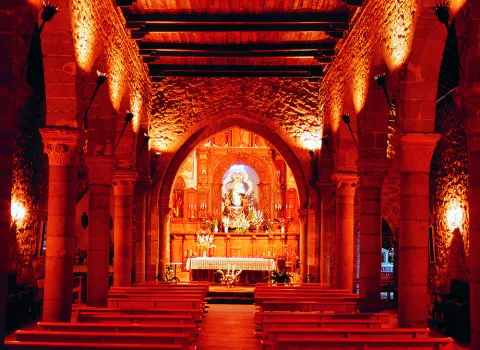
Inside you can differentiate three ships, covered by wooden craft, supported by stone columns. Highlights the central ship, as it ends in a barrel vault. There you will find a semicircular apse that is covered by fresco paintings from the early 16th century.

Breve descripción

Right in front of the Palace of Jabalfifth you will find the Church of Santa Cruz. This church is characterized because it is one of the few Romanesque style that has been preserved in perfect condition until today. Dated in the late 13th century, it was built on the occasion of the conquest of Baeza by Fernando III.

Telecomunicaciones
Teléfono de contacto
674 740 424
Ubicación
Código Postal
23440
Latitud
37.991310
Longitud
-3.468140
Dirección
Plaza Santa Cruz, s/n
Municipio
Ubicación en el mapa
POINT (-3.46814 37.99131)
Tipos de punto de interés
Imágenes carrusel
imagen
Image
CazBaezaSantaCruz.jpg
Imagen principal
Desactivado
imagen
Image
Iglesia_de_la_Santa_Cruz_%28Baeza%29._Portada.jpg
Imagen principal
Desactivado
imagen
Image
Mon164%20.jpg
Imagen principal
Desactivado
Imágenes cabecera
imagen
Image
1200px-Iglesia_santa_cruz_baeza.jpg
Imagen principal
Activado
Horario
Monday to Sunday: 11: 00 - 13: 00 and 16: 00 - 18: 00.
Microsite al que pertenece
Loading map
Preparing points of interest and routes...

Church of the Purísima Concepción

Submitted by brandcode_deweloper on
Id
6223928
Descripción
Breve descripción

It is a 16th-century final Gothic building. The cover of the church corresponds to the Flemish or isabelin Gothic and is made up of two great contrasts and a trilobulated arch topped by the images of St. John, the Virgin and St. Peter. From the interior of the church stand out the ojial or nerve vaults, whose nerves are arranged in the form of a star on the side ships and of a rhombo on the central. The central altarpiece is made of baroque-style chromed poly wood (18th century). Next to the altarpiece we find the tomb of the Pursima, a Renaissance work of John de Reolid, dating back to 1547. It also has a magnificent Parish Museum in which we can find corals, paintings, ornaments, sacred vessels etc.

Telecomunicaciones
Sitio web
www.lopera.es
Teléfono de contacto
953 516 414
Correo electrónico
lopera@promojaen.es
Ubicación
Código Postal
23780
Latitud
37.943960
Longitud
-4.214150
Dirección
Plaza de la Constitución
Distrito
Municipio
Ubicación en el mapa
POINT (-4.21415 37.94396)
Tipos de punto de interés
Imágenes carrusel
imagen
Image
Mon002.jpg
Imagen principal
Desactivado
imagen
Image
Mon005.jpg
Imagen principal
Desactivado
Imágenes cabecera
imagen
Image
DSCN1088.JPG
Imagen principal
Activado
Loading map
Preparing points of interest and routes...