Saltar al contenido principal

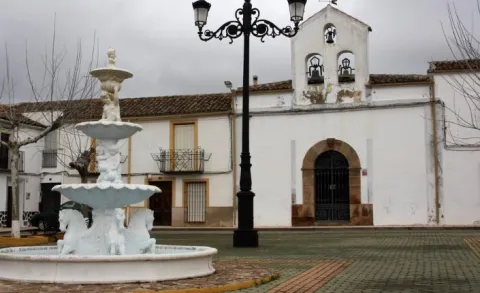
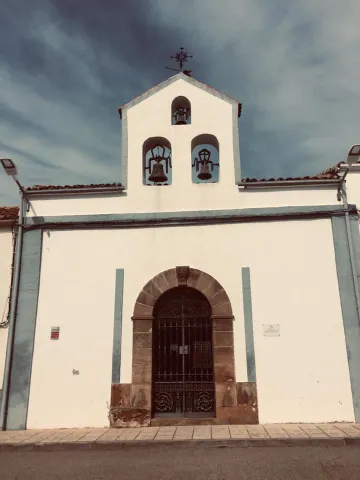
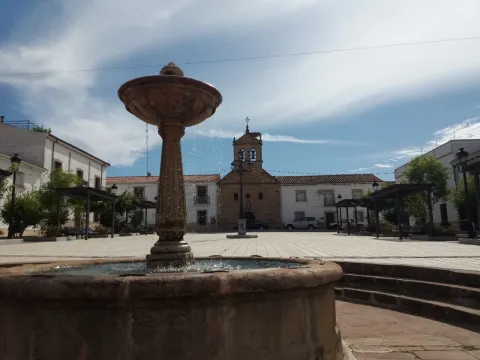
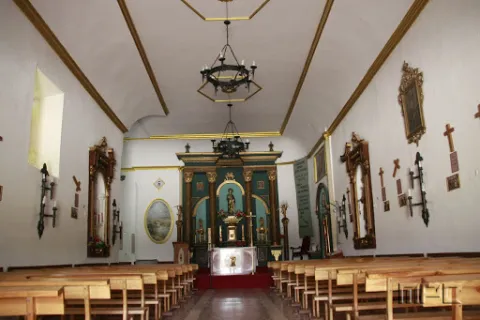
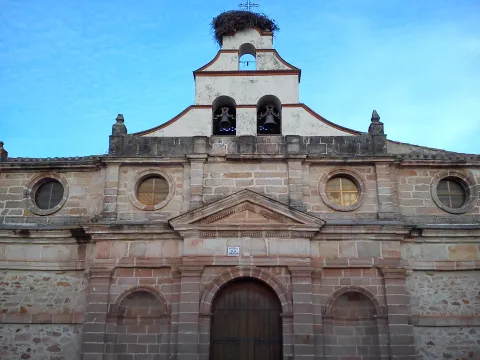
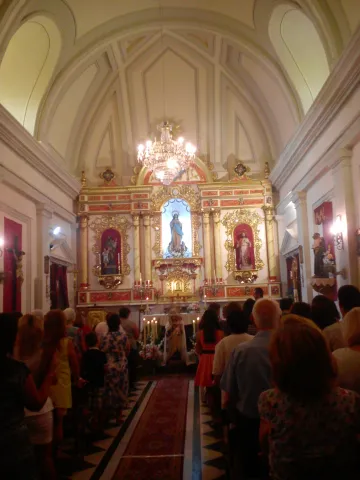
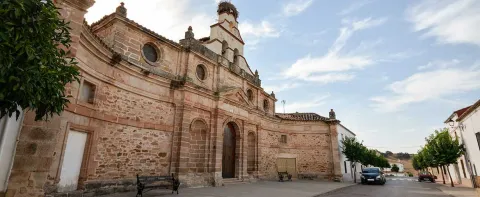
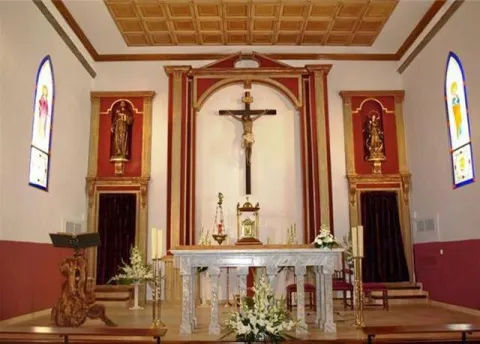
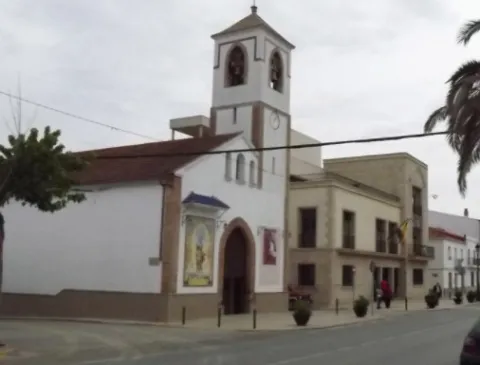
Church of the Purísima Concepción

Submitted by brandcode_deweloper on
Id
6549415
Descripción
Descripción larga

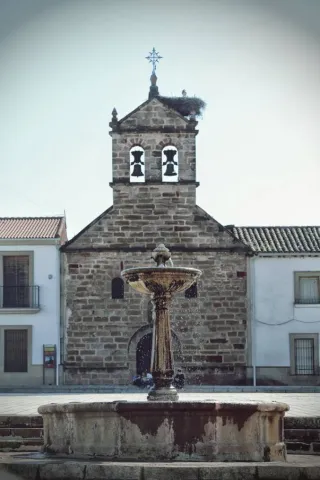
There are two houses on both sides of the church, corresponding to the old house of the priest and the post commander.

Breve descripción

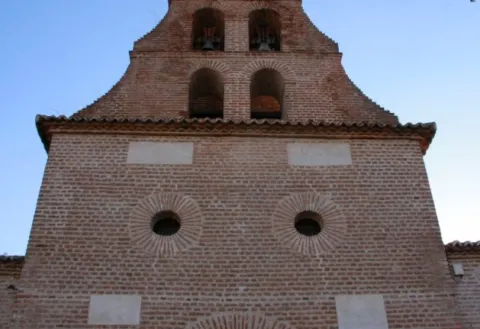
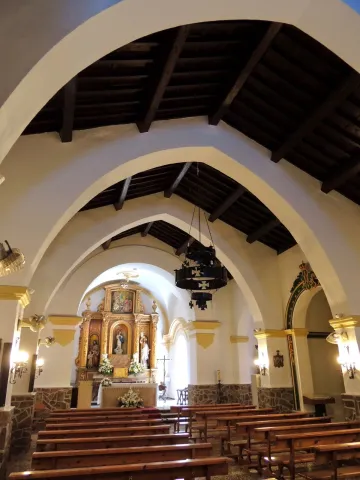
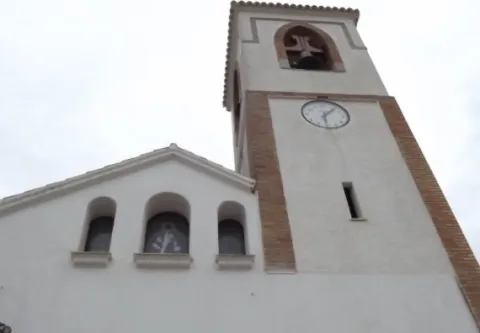
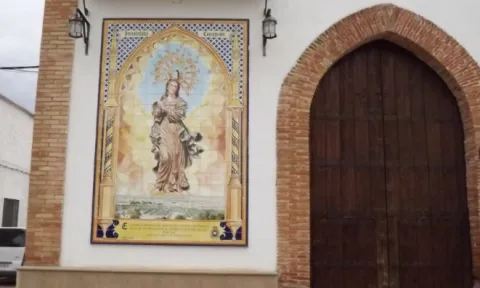
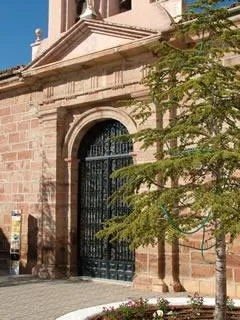
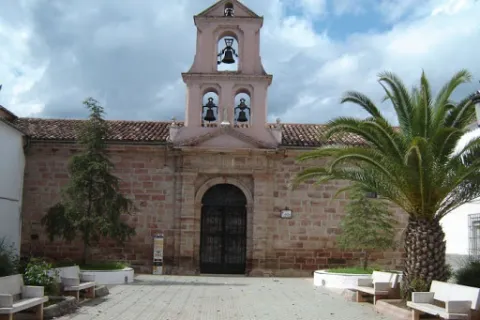
One-ship colonial-type church of the 18th century. Its facade is made of brick and is articulated in two bodies, in the first, in a rectangular way, the only differentiated elements are a narrow cover with a half-point arch and above, two lunetes that keep the line of horizonality; in the second body, a swordsman body with a bell tower that culminates in a small front.

Telecomunicaciones
Sitio web
http://www.aldeaquemada.com/historia/arquitectura/index.html
Teléfono de contacto
680 104 199
Correo electrónico
turismo.aldeaquemada@gmail.com
Ubicación
Código Postal
23215
Latitud
38.412050
Longitud
-3.371720
Dirección
C/ Miguel Hernández, 4
Distrito
Municipio
Ubicación en el mapa
POINT (-3.37172 38.41205)
Tipos de punto de interés
Imágenes carrusel
imagen
Image
aldeaquemada_3.jpg
Imagen principal
Desactivado
imagen
Image
2%20%281%29.jpg
Imagen principal
Desactivado
Imágenes cabecera
imagen
Image
3.jpg
Imagen principal
Activado
Loading map
Preparing points of interest and routes...

Church of La Magdalena

Submitted by brandcode_deweloper on
Id
2275595
Descripción
Descripción larga
The church, built in Gothic style, has four naves, one wider than the others, separated by irregular non-aligned pillars. From pillar to pillar, pointed arches are turned, covered by lizard-shaped rib vaults, recalling the neighboring legend of the rapid, which rest on corbels on the capitals. Among the works of interest, the polychrome carvings of the Calvary stand out, attributed to Jacobo Florentino or Jerónimo Quijano; that of Cristo de la Clemencia, by Salvador de Cuéllar, made in 1593, and that of La Magdalena Arrodillada, by Mateo Medina, cataloged in 1572. Remains of Christian painting remain, in an irregular state of conservation. Finally, you should not miss the two-leaf door on the main façade, ordered to be made by Bishop Diego Tavera in 1555, still magnificent despite the passage of time. On November 24, 1925, Federico García Lorca dated another collective postcard, which shows a second trip by the poet after the one that occurred at the beginning of November and which expresses his interest in the city, which has left him with pleasant memories. On this new visit, where Lorca acts as Guide, he is accompanied by José Segura Soriano, Alfonso García Valdecasas, Miguel Pizarro Zambrano and Adelina Bello. From this brave city where I came by car, your friends hug you and greet you. I hope to answer your letter. Tell me what you thought of the gentleman Paquito. Bye bye. Frederick. This new postcard has the image of the old Arab minaret of the Iglesia de la Magdalena (the city's primitive aljama mosque and converted into a church after the Christian conquest), located in the neighborhood of the same name. The neighborhood, the fountain, the lizard and, of course, the Iglesia de la Magdalena are constant literary resources in the work of Juan Eslava Galán. (…) and they took him to a house that is near the said Magdalena church (…) The Templars and Solomon's Table. Chapter 22
Breve descripción
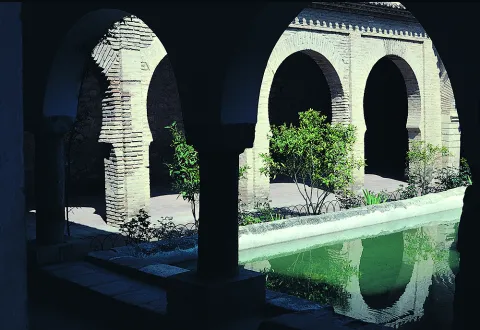
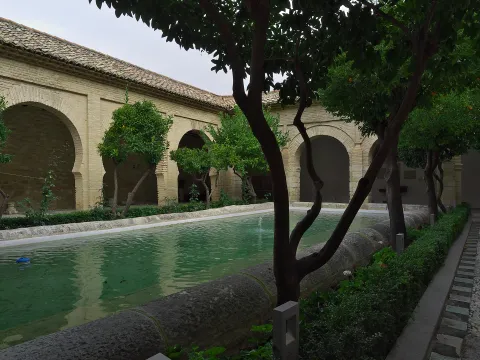
The Iglesia de la Magdalena is surely the oldest in the city of Jaén, at least of the existing ones, since it is not in vain that it was built using a previous mosque ordered to be built by Abd al-Rahman II (825). From that period, the patio and the minaret stand out.
Ubicación
Código Postal
23071
Latitud
37.771830
Longitud
-3.796530
Dirección
Plaza de la Magdalena, s/n
Distrito
Municipio
Ubicación en el mapa
POINT (-3.79653 37.77183)
Tipos de punto de interés
Imágenes carrusel
imagen
Image
Mon094.jpg
Imagen principal
Desactivado
imagen
Image
Iglesia_de_la_Magdalena_%28Ja%C3%A9n%29._Patio.jpg
Imagen principal
Desactivado
imagen
Image
Mon239.jpg
Imagen principal
Desactivado
Imágenes cabecera
imagen
Image
image_217470.jpeg
Imagen principal
Activado
Horario
Tuesday, Wednesday, Thursday and Saturday: 10:00 - 13:00 and 17:00 - 20:00. Friday: 18:00 - 20:30. Sundays: 09:00 - 13:30.
Microsite al que pertenece
Loading map
Preparing points of interest and routes...

Church of the Inmaculada Concepción de Huelma

Submitted by brandcode_deweloper on
Id
5857399
Descripción
Descripción larga

In front of the works in this constructive phase were Francisco del Castillo "El Viejo" and Domingo de Tolosa. In 1547 Andrés de Vandelvira and Juan de Maeda assessed the works carried out by Castillo and Domingo de Tolosa, focusing primarily on the lifting of the major chapel and the first section of the temple. It is the first documented news about the intervention of Andrés de Vandelvira in this church, whose initial approach will be changed by this teacher by 1559. The changes introduced by Vandelvira affected the remaining sections: the ships are equal in width and height, among the counterstrong are chapels, the initial nervations of the vaults are changed by bays, the pillars, with semi-columns and Corinthian backpilars, are now cruciforms and with a more classical modulation, similar to those employed in the cathedrals of Baeza and Jaén.

The work on foot was, among other teachers, under the direction of Castillo "El Viejo," but in 1564 the contract that this master had signed with the church was transferred to his son Francisco del Castillo "el Joven," related since 1555 to the construction. "El Joven" Castle followed the guidelines marked by Vandelvira, which visited Huelma in 1569 and 1570 to assess the works. In 1575, the year of the death of Andrés de Vandelvira, the factory was quite advanced, but some vaults and exteriors were to be finished with the covers, the sacristy and the bell tower. He now appears as a master of the Francisco del Castillo "El Joven" factory, which will be in charge of it until his death in 1586. The central vault, with a sculptural program completed by Marcos Hernández in 1584, and five other decorated with geometric motifs of the mannerism, were worked under its supervision, highlighting the third decorated with the weapons of the Giennese prelate Francisco Sarmiento de Mendoza (1580-1595).

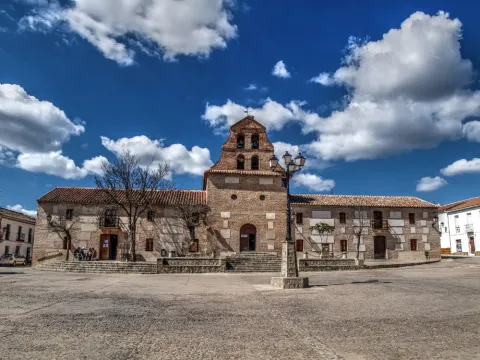
The last three vaults are no longer of stone, but of brick, and were removed after the death of Castillo along with the sacristy, whose disposition in "L" reminds us of the solution proposed by Vandelvira in the dependencies of the Jaén Cathedral. The exteriors, a work of Castillo "el Joven," present one of the most elegant heights built in the 16th century within the Andalusian religious architecture. Castillo "El Joven" introduces in these exterior models of civil architecture taken from the architectural treaties of Sebastián Serlio. The rhythm of this plateau is marked by the Corinthian pilasters placed on the two floors, by the windows adintered with triangular frontons and by the cover, highlighting that of the south, equally adintered and crowned by large triangular fronton and flanked with hornadoes. Heraldic, mascara, garlands, masked cornels and other elements of the mannerist repertoire complete the beauty of the whole, finally finished already within the 17th century with a large tower of bells, in whose second body the shield of Bishop Moscoso and Sandoval (1619- 1646) appears. The temple of Huelma - as Rafael López Guzmana points out - "perfectly shows the aesthetic evolution that occurs in the Kingdom of Jaén during the 16th century; in addition to having, in its realization, the most outstanding teachers of the moment."

OTHER ARTISTICAL MANIFESTIONS

Of the important set of movable goods that this magnificent temple was acquiring over the centuries, there is nothing left, as they were completely destroyed in the last Civil War (1936-1939). We know that in the major chapel there was a good altarpiece drawn at the end of the 16th century by Sebastián de Solís, which was supported by the sculptor Cristóbal Téllez and the assembler Blas Briñón. Today, the chapel is painted by Juan Almagro (Pegalajar, 1886-1965), and a size of a Risen one is worth it. Of some value is a canvas of granadine school of the Immaculate Conception, anonymous work of the last third of the 17th century.

Breve descripción

Declared a Monument on June 5, 1981, this 16th century temple in the province of Jaén is one of the most notable examples of the religious architecture of the time. Under the direction of Diego de Siloe, the master master of the cathedral of Granada, an initial floor was built with a rectangular major chapel, three ships with Gothic vaults and square pillars on basements crowned with entrenches. Featured artists such as Francisco del Castillo el Viejo, Andrés de Vandelvira and Francisco del Castillo, the Mozo, also participated in his execution. In the middle of the century, classical elements of the Renaissance were incorporated, and the southern and northern facades follow a similar scheme, with a four-body tower attached to the western facade. This temple has been declared Good of Cultural Interest.

Ubicación
Latitud
37.650440
Longitud
-3.460970
Dirección
C/ Ancha, 6
Distrito
Municipio
Ubicación en el mapa
POINT (-3.46097 37.65044)
Tipos de punto de interés
Imágenes carrusel
imagen
Image
2340286_orig.jpg
Imagen principal
Desactivado
Imágenes cabecera
imagen
Image
igleisa-huelma.jpg
Imagen principal
Activado
Loading map
Preparing points of interest and routes...

Church of the Inmaculada Concepción

Submitted by brandcode_deweloper on
Id
4745524
Descripción
Breve descripción

It dates from the 18th century, raised in the times of colonization. It has a simple cover with a narrow arch entrance of half-point peralted and over a sword- bell that closes in hastial.

Ubicación
Latitud
38.342640
Longitud
-3.106389
Dirección
Plaza Dr. Rey Martínez, 4
Distrito
Municipio
Ubicación en el mapa
POINT (-3.106389 38.34264)
Tipos de punto de interés
Imágenes carrusel
imagen
Image
16.jpg
Imagen principal
Desactivado
Imágenes cabecera
imagen
Image
Iglesia%20de%20la%20Inmaculada%20Concepci%C3%B3n_montizon.jpg
Imagen principal
Activado
Microsite al que pertenece
Loading map
Preparing points of interest and routes...

Church of the Inmaculada Concepción

Submitted by brandcode_deweloper on
Id
4483116
Descripción
Descripción larga

It dates from the 18th century and was the first parish built in the New Populations. Its simple-drawn facade is built of red sandstone. It has a small cover with a half-point arch, three small gaps at half-height and a colonial-looking swordsman.

Inside, it stands out the size of the Immaculate Conception made by the Jiennese sculptor Jacinto Higueras (father), as well as its main altar, which was brought from the Church of St. Nicholas in Ubeda.

Breve descripción

It dates from the 18th century and was the first parish built in the New Populations.

Telecomunicaciones
Sitio web
www.guarroman.es
Teléfono de contacto
953 615 054
Ubicación
Código Postal
23210
Latitud
38.181390
Longitud
-3.686700
Dirección
C/ Iglesia, 14
Distrito
Municipio
Ubicación en el mapa
POINT (-3.6867 38.18139)
Tipos de punto de interés
Imágenes carrusel
imagen
Image
Iglesia%20de%20la%20Inmaculada%20Concepci%C3%B3n.jpg
Imagen principal
Desactivado
imagen
Image
Iglesia%20de%20la%20Inmaculada%20Concepci%C3%B3n2.jpg
Imagen principal
Desactivado
Imágenes cabecera
imagen
Image
Iglesia%20de%20la%20Inmaculada%20Concepci%C3%B3n.jpg
Imagen principal
Activado
Microsite al que pertenece
Loading map
Preparing points of interest and routes...

Church of the Inmaculada Concepción

Submitted by brandcode_deweloper on
Id
4536746
Descripción
Descripción larga

It began in the 13th century with the semantic of the Gothic, in the following centuries the majority of the factory was configured according to the artistic lexicography of the Renaissance and finished the works in the 18th century in Baroque style.

Its ship is rectangular, structured in five sections that separate hard arches pointed over semi-pillars, and is covered with a pair and row wood roof in two waters. The right side has four chapels covered with half a barrel.

The one that welcomes the patron, the Virgin of the Field - the sculptural group that form Mary and the Child is from the 20th century - has its access through a half-point arch on pillars with pilasters curved with capitals with ovens and darts. On the left side there is a capilla-hornina with a half-point arc.

The presbyterium has flat tester, is covered with a half-barrel with lunetes and is accessed through a half-point spinal arch on pillars with artefacts. At the foot of the temple are the tower, the choir high and the door. The tower is Renaissance, built with silery, with a square base, has bell holes and is covered in four waters.

They also deserve to stand out their two Renaissance covers, one, the most valuable, on the side of the Gospel, and the other at their feet. Its porch, of very later construction, is significant as it involves the insertion of an element of popular architecture.

Breve descripción

The most significant of Génave's cultural properties is the parish church of the Immaculate Conception.

Telecomunicaciones
Sitio web
www.genave.es/el-municipio/patrimonio-historico.html
Teléfono de contacto
953 615 054
Ubicación
Código Postal
23210
Latitud
38.429490
Longitud
-2.732900
Dirección
C/ Iglesia, 14
Distrito
Municipio
Ubicación en el mapa
POINT (-2.7329 38.42949)
Tipos de punto de interés
Imágenes carrusel
imagen
Image
2.JPG
Imagen principal
Desactivado
imagen
Image
4.jpg
Imagen principal
Desactivado
Imágenes cabecera
imagen
Image
1.jpg
Imagen principal
Activado
Loading map
Preparing points of interest and routes...

Church of the Inmaculada Concepción

Submitted by brandcode_deweloper on
Id
4399141
Descripción
Descripción larga

Its cover is not in line with the street, but it moves back, encouraging a false elliptical square as an urban space of respect. The facade, which does not make concessions to ornamentation, is of magnificent silvery and features pilasters in the corners. With a perfect symmetry, the central body consists of a half-point arch emphasized by a diric-Tuscan inlet crowned by fronton and two large niches also flanked by pilasters. On the second floor there are four large bones. The late-incorporated swordsman stresses that the church must be the highest official building in the municipality. Inside its one-ship plant is rectangular and covered with a half-barrel vault that rests on false half-point arches with geometric moulds. The header is flat and the choir is at the foot.

Breve descripción

The most significant building of Carboneros is its parish church, dedicated, as many others of the same time, to the advocation of the Immaculate Conception. The temple, built in the last third of the 18th century, has a large architectural packaging within the purest neoclassical style. It therefore represents the new typology of the architecture of reason, which has as its reference the adequacy between the pure functionality and the geometry of the form. The functional severity of its forms is also perfectly suited to the taste for naked volumetric.

Telecomunicaciones
Sitio web
www.carboneros.es
Correo electrónico
ayuntamiento@carboneros.es
Ubicación
Código Postal
23211
Latitud
38.229350
Longitud
-3.631180
Dirección
C/ Constitución, 23
Distrito
Municipio
Ubicación en el mapa
POINT (-3.63118 38.22935)
Tipos de punto de interés
Imágenes carrusel
imagen
Image
Iglesia%20de%20la%20Inmaculada%20Concepci%C3%B3n%20carboneros.jpg
Imagen principal
Desactivado
imagen
Image
Iglesia%20de%20la%20Inmaculada%20Concepci%C3%B3n%20carboneros2.jpg
Imagen principal
Desactivado
Imágenes cabecera
imagen
Image
Carboneros-Iglesia-min-1170x480%20%281%29.jpg
Imagen principal
Activado
Microsite al que pertenece
Loading map
Preparing points of interest and routes...

Church of the Inmaculada Concepción

Submitted by brandcode_deweloper on
Id
6612223
Descripción
Descripción larga

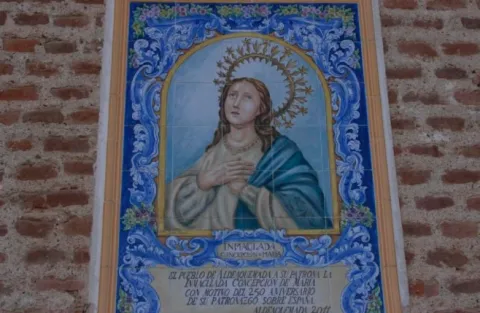
It is accessed through a pointed arch framed in brick seen and on it we find three vains of half-point arches. On the façade we can find a tile with the image of The Immaculate covered with a glazed ceramic weave.

The bell tower is divided into two bodies, the first one houses the clock and the second one is occupied by the bell tower framed by a mold and covered with a roof in four waters.

Breve descripción

Its construction dates back to the 20th century, although it was restored in the mid-1950s. On the main altar are the two patrons of the village, San Francisco and La Immaculada and, on a side, a size of the Holy Family.

Telecomunicaciones
Sitio web
www.facebook.com/Parroquia-Inmaculada-Concepción-Arroyo-del-Ojanco-100134158073250
Teléfono de contacto
620 483 238
Correo electrónico
parroquiainmaculadaarroyo@gmail.com
Ubicación
Código Postal
23340
Latitud
38.320850
Longitud
-2.895080
Dirección
C/ Carretera, 123
Distrito
Municipio
Ubicación en el mapa
POINT (-2.89508 38.32085)
Tipos de punto de interés
Imágenes carrusel
imagen
Image
71738440_100135914739741_7932927642230063104_n.jpg
Imagen principal
Desactivado
imagen
Image
Captura%20de%20pantalla%202020-10-29%20133320.jpg
Imagen principal
Desactivado
imagen
Image
Captura%20de%20pantalla%202020-10-29%20133336.jpg
Imagen principal
Desactivado
imagen
Image
Captura%20de%20pantalla%202020-10-29%20133400.jpg
Imagen principal
Desactivado
imagen
Image
122823267_355432302543433_3628829521744492596_o.jpg
Imagen principal
Desactivado
imagen
Image
72525048_100135324739800_6034320817704140800_n.jpg
Imagen principal
Desactivado
Imágenes cabecera
imagen
Image
122850496_355590409194289_8333497911470093095_n.jpg
Imagen principal
Activado
Microsite al que pertenece
Loading map
Preparing points of interest and routes...

Church of the Inmaculada Concepción

Submitted by brandcode_deweloper on
Id
911625
Descripción
Breve descripción

Built in 1769, it has a typical facade of the 18th century colonized villages. It has a simple neoclassical front-crowned cover that maximizes its straight lines. On it is raised an angry swordsman that has the particularity of articulating in two bodies: on the bottom two twin holes are opened to blow up bells, while the upper body, with a single bell hole, is losing thickness to culminate in a triangular front that, in turn, hosts a tiny bell.

Telecomunicaciones
Sitio web
www.arquillos.es
Teléfono de contacto
953 390 708
Correo electrónico
ayuntamiento@arquillos.es
Ubicación
Código Postal
23230
Latitud
38.182020
Longitud
-3.431500
Dirección
C/ Jaén
Distrito
Municipio
Ubicación en el mapa
POINT (-3.4315 38.18202)
Tipos de punto de interés
Imágenes carrusel
imagen
Image
Iglesia%20de%20la%20Inmaculada%20Concepci%C3%B3n%20Arquillos2.jpg
Imagen principal
Desactivado
imagen
Image
Iglesia%20de%20la%20Inmaculada%20Concepci%C3%B3n%20Arquillos3.jpeg
Imagen principal
Desactivado
Imágenes cabecera
imagen
Image
Iglesia%20de%20la%20Inmaculada%20Concepci%C3%B3n%20Arquillos.jpg
Imagen principal
Activado
Loading map
Preparing points of interest and routes...

Church of the Encarnación

Submitted by brandcode_deweloper on
Id
4540597
Descripción
Descripción larga

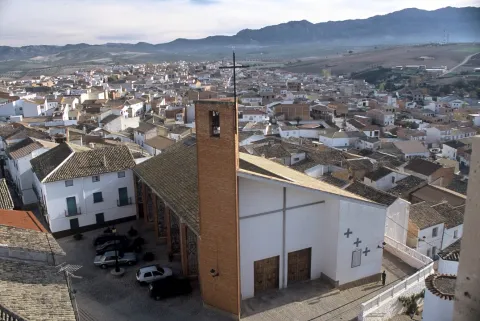
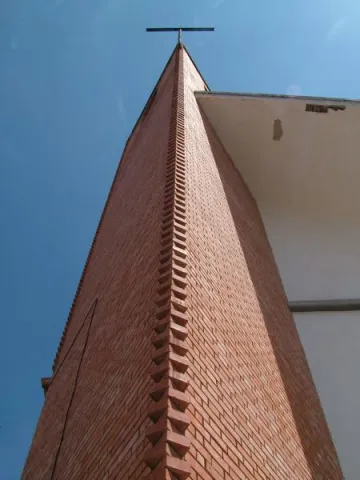
The novelty of the temple lies in the fact that the sides of the rectangle of its plant are broken in the form of a saw tip on its sides - with iconographic windows with human and holy figures - while on the front they alternate the straight lines with the circular lines and at the entrance a triangle is formed for the tower to stand on it.

The floor is of terraced; the altar is of granite; the tower is of brick seen; the wood has a presence in the roof; and a large cross presides over the main facade.

Breve descripción

To complete the medieval aspect given to Peal de Becerro its mocha and watch towers, the remains of the walls of the fence and the historical center of organic urbanism, with cobbled streets and single-family two-storey and asymmetric holes with pots and flowers, it would have been desirable for its original temple to be preserved. But it disappeared and the parish church of the Incarnation was built in 1969 with a project designed and directed by Francisco Gutiérrez de Cabiedes.

Telecomunicaciones
Sitio web
http://parroquiapealdebecerro.blogspot.com/
Teléfono de contacto
953 730 433
Ubicación
Código Postal
23460
Latitud
37.912120
Longitud
-3.126830
Dirección
C/ Poeta Miguel Hernández, 18
Municipio
Ubicación en el mapa
POINT (-3.12683 37.91212)
Tipos de punto de interés
Imágenes carrusel
imagen
Image
iglesia-de-la-encarnacion-y-ciudad-peal-de-becerro-jpg
Imagen principal
Desactivado
Imágenes cabecera
imagen
Image
Monumentos5IglesiadelaEncarnacixnTorre.jpg
Imagen principal
Activado
Loading map
Preparing points of interest and routes...