Saltar al contenido principal

La Caracola Country House

Submitted by brandcode_deweloper on
Id
2796305
Redes sociales
Facebook
https://www.facebook.com/La-Caracola-CASA-RURAL-114635671906144/
Instagram
https://www.instagram.com/caracolarural/
Descripción
Breve descripción

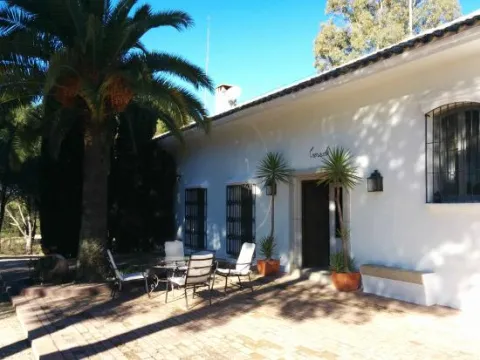
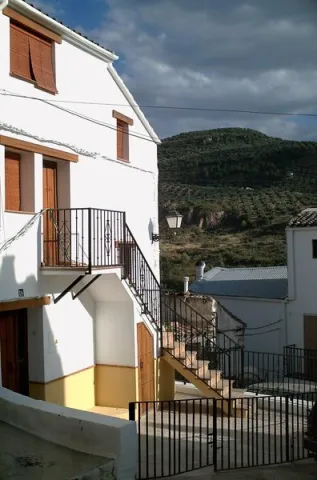
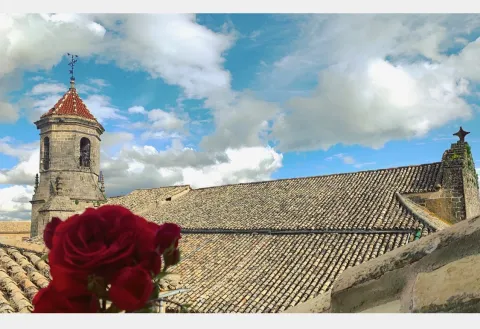
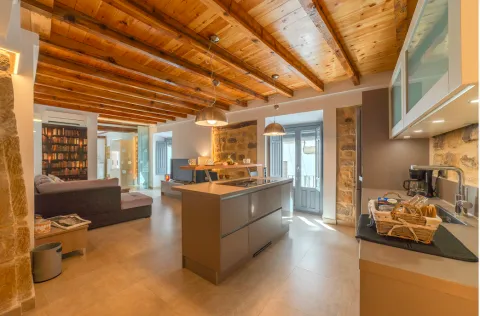
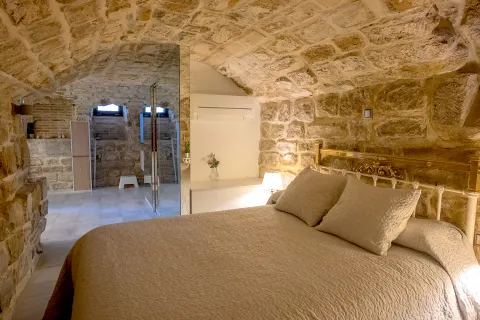
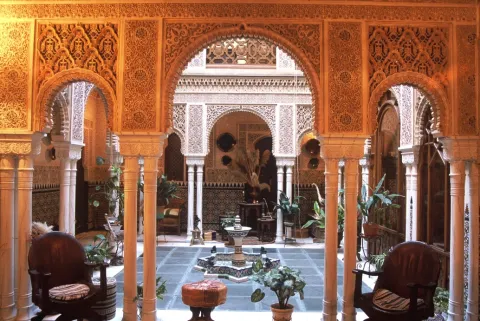
Located in a privileged area, in the vicinity of the Sierra de Andújar Natural Park, you will find our rural accommodation. La Caracola, a 19th century house in Andújar, fully renovated and adapted to make your stay as comfortable as possible.

Información de contacto
Teléfono
953 331 924 / 640 777 325 / 640 758 273
Sitio web
www.lacaracolahotelrural.com
Correo electrónico
info@lacaracolahotelrural.com
Ubicación
Código Postal
23740
Latitud
38.126347
Longitud
-3.949837
Dirección
Ctra. del Santuario, km. 13,800
Distrito
Municipio
Ubicación en el mapa
POINT (-3.949837 38.126347)
Tipo de alojamiento
Imágenes
imagen
Image
la-caracola-hotel-rural.jpg
Imagen principal
Activado
imagen
Image
caracola.jpg
Imagen principal
Desactivado
Aforo
16
Horario
Entry: from 13: 00. Exit: from 12: 00. Breakfast: 08: 00 - 11: 00.
Las habitaciones

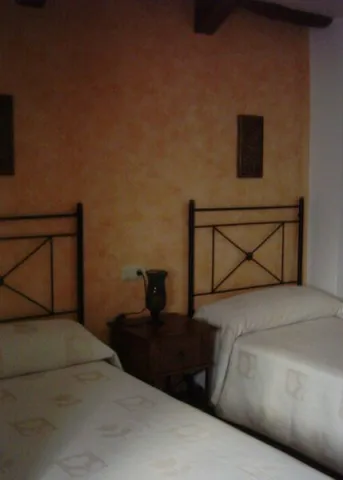
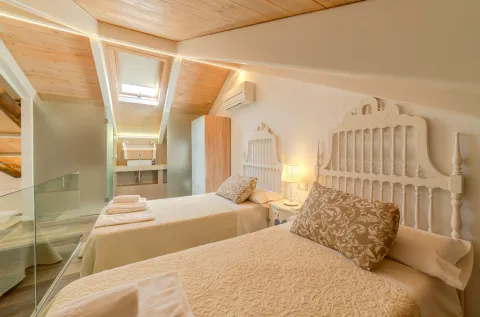
The rooms are double, you can choose with double bed or two beds. The rooms can be made triple or quadruple depending on the need of the moment.

Qué ofrece

Swimming pool and garden area

Otros servicios

Restoration service

Loading map
Preparing points of interest and routes...
El Hotel

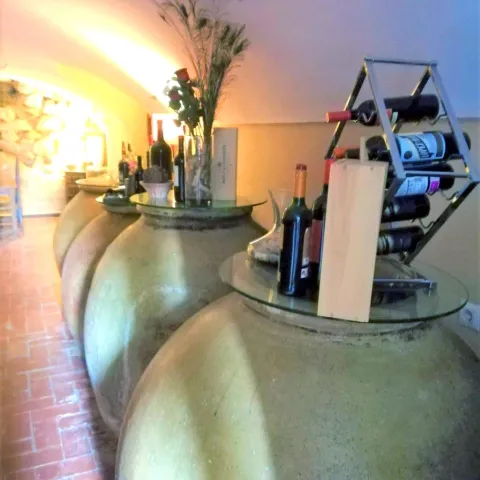
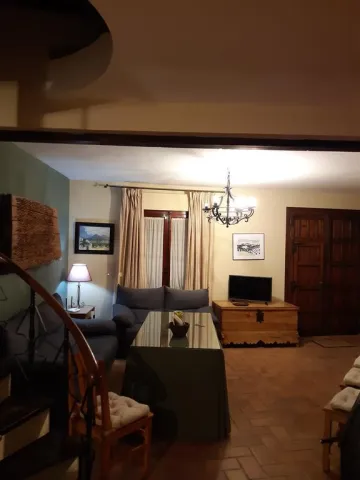
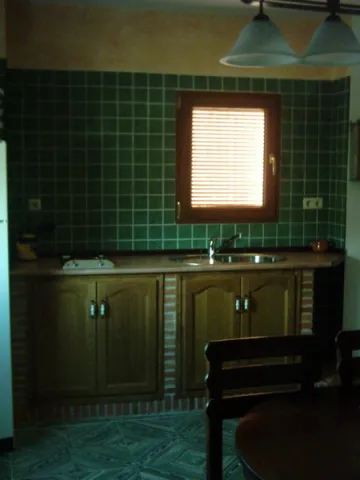
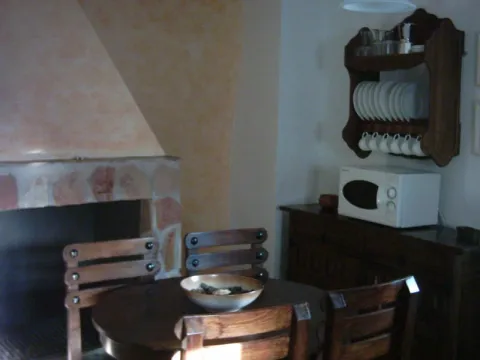
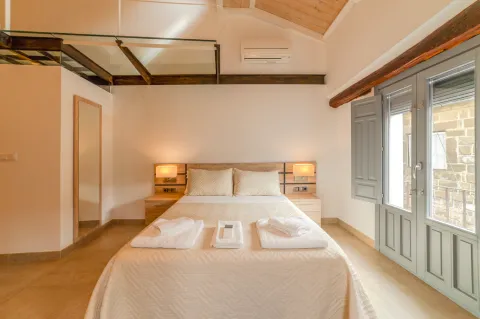
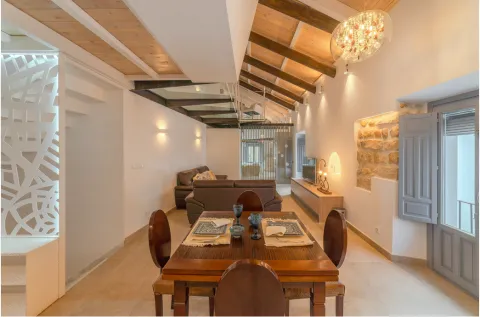
The house has capacity for 16 people + 2 extras, has 7 rooms, 6 of them with bathroom, two living rooms with fireplace, equipped kitchen, dining room and wineries-bar. Swimming pool and garden area, where you can enjoy spectacular landscapes.

El Arcediano Country House

Submitted by brandcode_deweloper on
Id
2796855
Descripción
Breve descripción

The Rural Accommodation El Arcediano is located in the heart of the historic town of Baeza, one of the most beautiful cities in Spain, declared a World Heritage Site by UNESCO since 2003.

Información de contacto
Teléfono
963 744 370 / 677 461 206
Sitio web
www.populo.es
Correo electrónico
populo@populo.es
Ubicación
Código Postal
23440
Latitud
37.989277
Longitud
-3.469164
Dirección
Plaza el Arcediano, 12
Municipio
Ubicación en el mapa
POINT (-3.469164 37.989277)
Tipo de alojamiento
Imágenes
imagen
Image
Casa%20Rural%20El%20Arcediano.jpg
Imagen principal
Activado
imagen
Image
casarural_28.jpg
Imagen principal
Desactivado
Aforo
6
Horario
Entry: 15: 00 - 21: 00. Departure: until 12: 00.
Las habitaciones

It has 3 double rooms, two with a double bed. It has air conditioning in all rooms.

Otros servicios

Reception, cleaning and laundry services

Loading map
Preparing points of interest and routes...
El Hotel

The house is composed of three double bedrooms (two of them with double bed), fully equipped kitchen, living room with TV and fireplace, two full bathrooms and terraced lookout. The property provides towels and bed linen for an extra fee. The House is designed and dedicated to rest and tranquility so it is not allowed to hold events or parties.

Damajuana Country House

Submitted by brandcode_deweloper on
Id
2796170
Descripción
Breve descripción

Farm house located in the village of Beas de Segura, Jaén.

Información de contacto
Teléfono
629 786 385 / 625 136 070
Sitio web
www.casaruraldamajuana.es
Correo electrónico
info@casaruraldamajuana.es
Ubicación
Código Postal
23280
Latitud
38.251322
Longitud
-2.885865
Dirección
C/ Fuente del Toledillo, 18
Distrito
Municipio
Ubicación en el mapa
POINT (-2.885865 38.251322)
Tipo de alojamiento
Imágenes
imagen
Image
image_143582.jpeg
Imagen principal
Activado
imagen
Image
image_143587.jpeg
Imagen principal
Desactivado
imagen
Image
image_143584.jpeg
Imagen principal
Desactivado
imagen
Image
image_143583.jpeg
Imagen principal
Desactivado
Aforo
6
Las habitaciones

One room with double bed and cradle, two rooms with two single beds each.

Otros servicios

Home, staff and catering service (Van with supplement)

Loading map
Preparing points of interest and routes...
El Hotel

Typical Single house, 2 floors, private entrance. Inside you can find: 3 bedrooms, 1 bathroom, 1 toilet, living room 14? m ², large separate kitchen, dining room, corner fireplace, laundry room, patio, fireplace, T.V., DVD player, plug-in antenna t.v., wardrobe, partially heated, electric heating, curtains, double glazing, blinds, roll-in blinds and a kitchen with the following appliances: Kitchenware / decks, kitchen utensils, coffee maker, toaster, squeezer, grill, electric plate, oven, microwave, extractor bell, fridge, freezer, washing machine, iron and ironing board. On the outside we find a terrace and a private patio.

Quotidianum Apartments

Submitted by brandcode_deweloper on
Id
4019720
Redes sociales
Facebook
https://www.facebook.com/ubeda.apartamentosquotidianum.7
Descripción
Breve descripción

Located in the historic center of the city. Apartamentos Quotidianum has numerous facilities including elevator and parking and are fully equipped with full kitchen, toilet, and balconies that facilitate ventilation and natural light.

Información de contacto
Teléfono
722 544 077
Sitio web
https://apquotidianum.com/
Correo electrónico
apartamentosquotidianum@gmail.com
Ubicación
Código Postal
23400
Latitud
38.010105
Longitud
-3.367990
Dirección
C/ Roque Rojas, 13
Municipio
Ubicación en el mapa
POINT (-3.36799 38.010105)
Tipo de alojamiento
Imágenes
imagen
Image
IMG_0927.jpeg
Imagen principal
Activado
imagen
Image
D%C3%9APLEX%202%20%281%29.png
Imagen principal
Desactivado
imagen
Image
D%C3%9APLEX%201%20%282%29.png
Imagen principal
Desactivado
imagen
Image
D%C3%9APLEX%203.png
Imagen principal
Desactivado
imagen
Image
APARTAMENTO%202.png
Imagen principal
Desactivado
imagen
Image
DOS%20NIVELES%203%20jpg.jpg
Imagen principal
Desactivado
imagen
Image
ESTUDIO%202.png
Imagen principal
Desactivado
Aforo
4
Horario
Entry: 14: 00 - 22: 00. Departure: until 12: 00.
Marcas de calidad
Las habitaciones

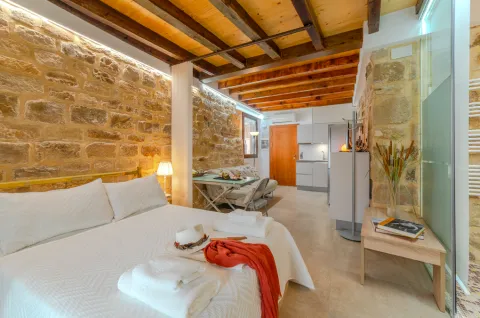
All rooms have orthopedic mattresses and hypoallergenic pillows, while the kitchen offers microwave oven, fridge, dishwasher and washing machine. The bathroom, with a shower adapted to the floor, and as extras: hairdryer, towels and hygiene products.

Otros servicios

    Special facilities for children and persons with reduced mobility.

    Loading map
    Preparing points of interest and routes...
    El Hotel

    Quotidianum Apartments are located in the historic centre of Ubeda, Jaén. It is a complex building with four apartments. It consists of two entrances, one located in Calle Roque Rojas, 13, which gives access to one of the four apartments, and another entrance by Ohorno de San Pablo to access the remaining three.

    Perfect for a cozy and presonalized stay. After a comprehensive reform of the building, the apartments were inagitated in December 2018.

    Villanueva del Arzobispo

    Submitted by brandcode_deweloper on
    Id
    787624
    Perfil de redes sociales
    Facebook
    https://www.facebook.com/villanuevadelarzobispo/
    Twitter
    https://twitter.com/ayuntvillanueva
    Instagram
    https://www.instagram.com/turismo_vva_del_arzobispo/?hl=es
    Descripción
    Breve descripción

    Villanueva del Archbishop is a population in the the eastern end of the region of the Villas. Part of its term is included in the Natural Park of the Sierras de Cazorla, Segura and Las Villas, where there are many areas of extraordinary environmental and landscape value.

    The geographical situation of the municipality should be noted, as it is the meeting area of four comarcas: County and their red lands, the Loma and its extensive olive fields, Safe with the largest natural park of Jaén of extraordinary beauty and that of Las Villas, made up of four municipalities, Villanueva being one of them. The Conistorio also includes the localities of Gútar and Montesina Barrio.

    An important area is irrigated by the rivers Guadalquivir and Guadalimar, which leads to fertile lands that favour agricultural crops, including large olive fields.

    Its economy is based primarily on the olive cultivation and obtaining olive oil. It also has an industry mineral water bottling machine.

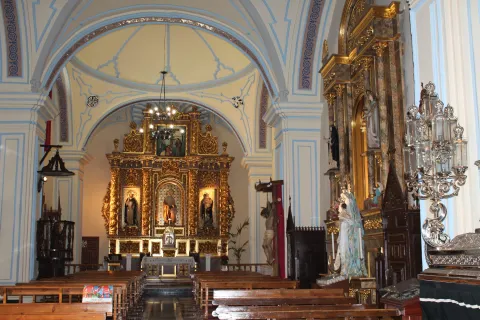
    Its monumental heritage is important. Among others are the church of San Andrés, the church of the Vera Cruz, the Convent of Sana Ana, the bullring, the Calvary Sanctuary, the House of Arcos and, on the outskirts, the Sanctuary of the Virgin of the Fuensana.

    Telecomunicaciones
    Teléfono
    607 184 628 
    Sitio web
    www.villanuevadelarzobispo.es
    Fax
    953 451 278
    Correo electrónico
    turismovillanuevadelarzobispo@gmail.com
    Ubicación
    Nombre
    Villanueva del Arzobispo
    Latitud
    38.168770
    Longitud
    -3.007650
    Ubicación en el mapa
    POINT (-3.00765 38.16877)
    Imágenes
    imagen
    Image
    532806cd-619f-7cc9-44c2-092f56943a53?t=1599779812435
    Imagen principal
    Desactivado
    imagen
    Image
    7990b2d2-d948-48a8-a614-11375318478c?t=1599779812524
    Imagen principal
    Desactivado
    imagen
    Image
    738190d2-92fe-d42a-cd21-dee89312ab66?t=1621521463540
    Imagen principal
    Desactivado
    imagen
    Image
    fccf37b3-51ea-0d40-d2d3-208d29d4b0fb?t=1599779812628
    Imagen principal
    Desactivado
    imagen
    Image
    98803030-2a13-91ec-885d-33c12edb2ac3?t=1599779812669
    Imagen principal
    Desactivado
    imagen
    Image
    ab294870-3b1c-2c43-c6d9-d9e82cd58348?t=1621521463664
    Imagen principal
    Desactivado
    imagen
    Image
    fa16b75d-5183-daa9-6ae1-50f481dec7f2?t=1621521463705
    Imagen principal
    Desactivado
    imagen
    Image
    4ead314e-cf27-6335-e563-707c37a36d70?t=1621521463848
    Imagen principal
    Desactivado
    imagen
    Image
    80863fbc-ff97-c637-eddd-c388f63d4e11?t=1599779812778
    Imagen principal
    Desactivado
    imagen
    Image
    660ffa23-8ba0-ab1e-b463-727ca59414bb?t=1621521463960
    Imagen principal
    Desactivado
    imagen
    Image
    52d201af-c51c-763e-9c0c-8ef4115edc82?t=1599780126028
    Imagen principal
    Desactivado
    imagen
    Image
    88ddd9fb-5893-6275-8058-a9c69b5ed6e2?t=1621521464134
    Imagen principal
    Desactivado
    imagen
    Image
    73c4d06c-c93d-e031-dd46-d8ed1d675189?t=1599780126074
    Imagen principal
    Desactivado
    imagen
    Image
    69c1c5b9-c705-6242-ea11-b4458d3a582b?t=1599780267391
    Imagen principal
    Desactivado
    Información adicional
    Curiosidades
    • Punto de información en el Ayuntamiento: Avda. de la Constitución 5, lateral derecho del edificio.

    • https://villanuevadelarzobispo.es/turismo/  

    • OFICINA DE TURISMO 
      Avenida de la Constitución Nº5. Tel. 607 184 628


    Imágenes cabecera
    imagen
    Image
    Villanueva del Arzobispo
    Imagen principal
    Desactivado
    Datos de interés

    Tourist area: Serras de Cazorla, Segura and the Villas
    Distance to the capital (km): 99
    Altitude over sea level (m): 688
    Extension (km2): 177
    Number of inhabitants: 7,703
    Gentillo: Villanovens
    Postal code: 23330

    Videos
    Video file
    Cultura
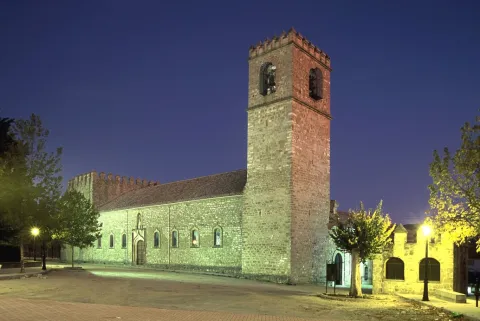
    • The Church of St. Andrew. It dates from the 16th century and is located in the historical center of the town. It rose on the pillars of the ancient medieval fortress, from which two of the four original towers, attached to the temple, are preserved, perfectly synthesizing the military and religious architecture. It has a mixture of different architectural and artistic styles: the Renaissance, Gothic baroque and classicist, due to its long construction. On top of the main door, which is of a classicist style, we observe a hornaine that contains the image of St. Andrew and that crown a half-point arch. Inside it consists of a single ship with side chapels that are linked through half-point arches on a ledge that runs through the temple. The major altarpiece is baroque. It has been declared Good of Cultural Interest and Spanish historical heritage.

    • Convent of Santa Ana. It is located in the old town. It was founded in 1540 and from the beginning became one of the most important of the Four Villas. In the walls of the refectory, the 16th century wall paintings and the shield of Santo Domingo are preserved. Inside is the church of Santa Anawith baroque altarpiece and a courtyard with Renaissance arches.

    • The church of the Vera Cruz. Built in the 16th century, with a Renaissance style façade. It consists of one ship in two sections, with chapels on each side. In its interior we find an extraordinary size of the Christ of the Vera Cruz, work of Mariano Benlliure, which replaced the primitive image stolen during the civil war. Rest on an extraordinary 1899 silver cross. The Christ of the Vera Cross is the patron of the town.

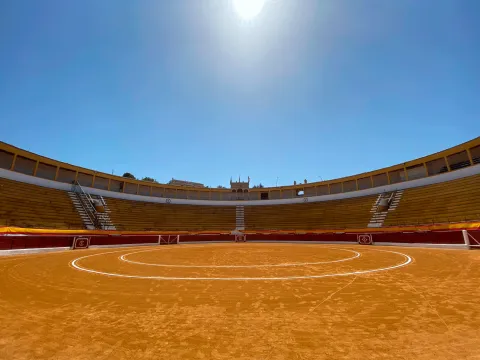
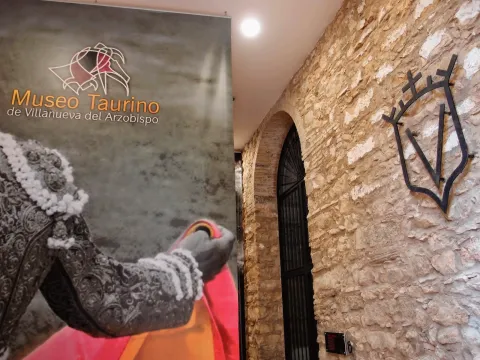
    • Toros Square. Built in 1928 it is neomudéjar style, where the use of brick and horseshoe arches that provide originality and elegance stands out. It is one of the largest bulls in the province, has all the necessary services and capacity for 6,000 people. The interior of the square houses the Taurino Museum of Villanueva del Archbishop.

    • Sanctuary of the Fuensana. It is of Romanesque style and was founded in the 13th century. It has subsequently been reformed. Because of its construction and the existing matacans it is considered that it was first a defensive fortress. Here is the image of the patron of Villanueva of the Archbishop, the Virgin of the Fuensanta. It has been governed by the Trinitarian religious order since 1884. The patron's holiday is held on September 8.

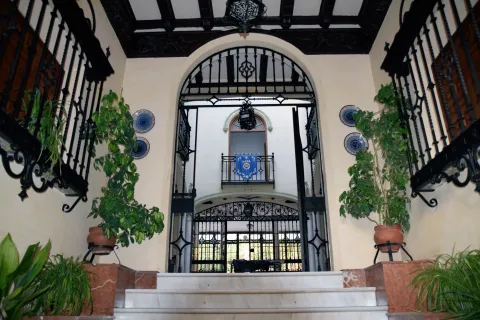
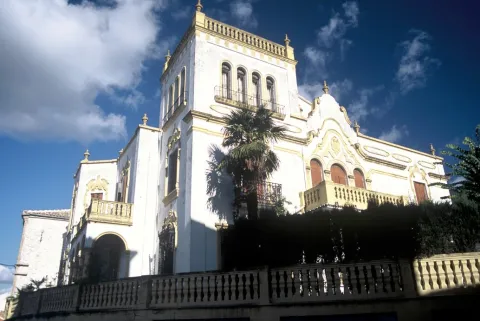
    • House of the Arches. It was built in 1928. With Renaissance lines on the fronts, they are combined with the baroque filiggranes of the bars and the Andalusian ceramics that kill the facade. It is chaired by six arches crowned by so many other ceramic vases. Its courtyard is a Nazi replica that imitates the palaces of the Alhambra. This building received the provincial beautification award.

    Other heritage monuments: Hermitage of Jesus of the Mount, Hermitage of Saint Blas, Viaducto / Old railway way. The municipality is splashed with lordship houses like the Palacete de la Familia Cosano, Old Casino or Commercial Circle, House of the Arches, House of the Vélez Family or Sagrada Familia Palaceamong others.

    Naturaleza

    Villanueva del Archbishop is one of the four villas that, together with Villacarillo, Iznatoraf and Sorihuela del Guadalimarthey make up the region called Las Villas.

    A town where there are many sites of extraordinary environmental and landscape value that are the gateway to the fascinating Sierra de las Cuatro Villas.

    By its municipal term the rivers run Guadalquivir and Guadalimarwhich add beauty to the landscape, wealth to both vegetation and fauna. Surrounded by a sea of olive trees and cereal fields, part of its territory is included in the Natural Park of the Serras de Cazorla, Segura and Las Villas.

    It is one of the localities where the vegetation has a greater variety, along with the species of the Alta mountain, such as the laricio pine or the acebo, coexist with other species that develop at a lower height, such as the black pine, the tejo or the boj and with those that develop in the lower area: melojo oak, the oak, the oak, the cucumber, olive trees, and other endemic and aromatic plants.

    To this vegetation we will add the one that develops on the banks of the rivers: chopos, willows, mumberas, tarais...

    The fauna, in line with the plant variety and the many habitats in the term, is also abundant and diverse.

    To the raptures and scavengers of the mountains, eagles, broken bones, lethonated vultures, are joined the species, both of major hunting, deer, maflon, boar; as of minor hunting, rabbit, hare, parrots, gits, badges, kernels...

    Without forgetting the typical birds of the olive tree, which either live in it, or feed on the migratory movements: curuca, verderon, zorzal, petirroja... Nor fail to mention the fauna of the rivers of crystal waters in their high courses: trout, barbo, nutrites, salamandra... Just like reptiles and amphibians.

    A privileged world where Nature is the main attraction of these lands. Nothing better than to discover it in one of the many places in municipal terms, we will point out two recreational areas and have good accessibility:

    • The Charco of the Pringue or Charco of the oil. Located about 20 km. of the city centre, is a recreational area that has a water remnant in the same river Guadalquivir. It has a wall and a gate, which allows to empty it completely. The water outlet is a roundabout, which in addition to continuously renewing the water from the remnant, serves to allow us to pass from one side to the other of the river. The name so curious, is because they tell that a donkey loaded with pear of oil precipitated from the narrow upper path and fell into the remnant, stained with oil water.
    • Cueva del Peinero. It is one of the most abrupt and steep places in the park. Its natural exit is the impressive throat where the river runs Avocados Grande, cThe crystal clear waters descend into successive waterfalls. On the contrary, in the recreational area, the river is sorely and silently spread between the thick vegetation of willows, chopos and nozzles. The huge lanterns that close the site rise more than 600 meters, forming scalated poyos covered with fully virgin vegetation by the difficult access. It tells the tradition that this cave was inhabited in the summer by a craftsman who was dedicated to making boj wood utensils, very abundant material in the area, and among other objects, made hair combs.

    Fiestas y Eventos

    The main parties in Villanueva del Archbishop are:

    • San Antón. January 17. They turn on "luminaires" in different places and the neighbors gather around drinking the traditional artisan wine.
    • San Blas. It is held on February 3. This day the villanovens come to the hermitage of the Holy, lighting a lumnaria around it and celebrating the tradition of passing the garrot through the throat so that San Blas will protect their health throughout the year.
    • Holy Week. Living representations are held dating back to the 17th century. They stand out for their realism and expressiveness. The different cofradies and cofrades process throughout the week. It has a great heritage in sizes and images that represent the passion of Christ.
    • Festivals of the Christ of the Vera Cross. These parties are held in the days before and after May 3. On that day, the Christ goes out in procession through some streets of the town and blesses the fields in the era of the Virgin of the Head. Verbenas and cultural activities accompany religious acts.
    • San Isidro. It is celebrated on May 15 and is the patron of farmers. In the parish of San Andrés The Eucharist is celebrated, followed by a procession with the Holy one on the streets, accompanied by tractors, agricultural machinery, horses... And at the end of the day a sisterhood meal is held.
    • San Fernando. It is held in Gútar May 30 with a traditional Eucharist, meals, drinks and verbena.
    • Corpus Cristi. The streets of the procession tour are embellished with flowers, carpets, paintings, plants to magnify the passage of Corpus Cristi. End of May, early June.
    • The Night in White. In July, with increasing demand and participation, a cultural night is celebrated: theatre, guitar, music bands, little children, dances... A very cultural and emotional night.
    • Festivals of Our Lady of the Fuensana. Between 7 and 11 September, the great days of Villanueva del Archbishop take place. On the 7th and 8th, in the morning, the procession and the traditional Romeria are held in the vicinity of the Sanctuary. From that day on the party is moved to the city centre with taurino shows, concerts and lots of activities. The final clasp put it, the last day, the fireworks.
    Gastronomía

    The gastronomy is traditional and varied, highlighting these dishes:

    • Cod onions, Cod stew, potatoes and onion.
    • Ajoharina, tomato saffrito, potatoes and eggplants with red pepper, garlic, cumins and water. Add flour to thinner.
    • Whites, salty, hard and crispy cakes accompanied by tomato and raw beans.
    • Garlic, rice with chopped onion, pig blood, butter and fences.
    • Gachamita, potatoes, garlic, oil, flour and water.
    • Other: Pipirrana, crumbs, gachas, "sleeping" cakes.

    Warehouse:

    • Drunk, mass of flour, roasted olive oil, spirits, lemon, cinnamon and sugar.

    Typical drinks:

    • Membile or fig liquor, crow, misteland traditional came from San Antón.

    Historia

    In the Arab era, Villanueva del Archbishop, was one of the fortresses that reinforced the village of Iznatoraf. It was a village like a few inhabitants, called "La Moraleja." The Arabs who lived in those places chose it as a leisure area, where horse races were organized and the artisans set up their workshops.

    After the conquest by Fernando III of Iznatoraf, the village of "La Moraleja" was donated by the king, in the early 13th century, to Cazorla's advance.

    The town as such in 1396, thanks to the request made by the Archbishop of Toledo to King Henry III, who granted him a Letter from Privilegio which is preserved in the Town Hall of the Villa. By this Charter the city was founded with all the privileges possible at that time: market, police and cessation of the payment of taxes to Iznatoraf. But an obligation was imposed on him: to lift a wall with two doors and to close the city in five years.

    The municipality became the most important core of Señorío de Cazorlawith several flour mills on the Guadalquivir River.

    Miguel de Cervantes lived for some time in this village as a tax collector.
    Why did the municipality get this name? Villa, for the title given; new, because until that moment it did not exist as such and Archbishopin honor of Mr Pedro Tenorio, who was called the ecclesiastical office.

    The city was moving forward and Philip II granted him criminal jurisdiction in 1573.

    During War of IndependenceThe people became a refuge for guerrillas who harassed the French troops. As a result of these events, some convents were damaged and the Charter of Privilegio disappeared. After many years she appeared in Linares, she was restored and kept well guarded in the City Hall because she is the oldest document we have.

    In 1920 he received the title of City from King Alfonso XIII.

    Loading map
    Preparing points of interest and routes...
    Imagen principal
    imagen
    Image
    Villanueva del Arzobispo
    Imagen principal
    Activado

    Úbeda

    Submitted by brandcode_deweloper on
    Id
    785118
    Perfil de redes sociales
    Facebook
    https://www.facebook.com/pages/Turismo-de-%C3%9Abeda/173591095987915
    Twitter
    https://twitter.com/Turismodeubeda
    Descripción
    Breve descripción

    This important city, settled on the hills of its own name, is located in the centre of the province of Jaénand is the capital of the region called La Loma.

    Surrounded by a landscape of an extraordinary natural beautyin which the flat grounds for the cultivation of the cereal are alternated, with the smooth slopes of olive trees, seems to summarize the essence of the province of Jaén.

    It is very important, within its varied economy, the crafts, with numerous workshops of pottery and ceramics, of forge, size, glass, tapestries, spartum, singing, etc.

    As we walk through its lordship streets to admire the monuments, churches, palaces and lordship houses, we move virtually to the times of the historical splendor of this city.

    Ubeda is known as "the city of the Andalusian Renaissance"for the quantity and quality of the monuments of this artistic age.

    Together with Baeza, it has been declared World Cultural Heritage by Unesco on 3 July 2003.

    Telecomunicaciones
    Teléfono
    953 779 204
    Sitio web
    www.turismodeubeda.com
    Correo electrónico
    promocion@ubeda.es
    Ubicación
    Nombre
    Úbeda
    Latitud
    38.012640
    Longitud
    -3.371590
    Municipio
    Ubicación en el mapa
    POINT (-3.37159 38.01264)
    Imágenes
    imagen
    Image
    4799c128-4243-ddbe-4c6c-d5f7ee6541a5?t=1603983703047
    Imagen principal
    Desactivado
    imagen
    Image
    b990224c-93ea-e0df-74c2-b7e6183a3016?t=1603984517266
    Imagen principal
    Desactivado
    imagen
    Image
    751f0349-5ec0-e737-56cf-235536e32ce7?t=1603983703075
    Imagen principal
    Desactivado
    imagen
    Image
    6ddd0085-05f6-e8ef-366a-1963e112a78f?t=1603983703173
    Imagen principal
    Desactivado
    imagen
    Image
    079eab40-54b9-462f-9652-50503cdb19b9?t=1585914434000
    Imagen principal
    Desactivado
    imagen
    Image
    658dab1d-a8b7-6142-60d7-be18c41b4400?t=1620124630064
    Imagen principal
    Desactivado
    imagen
    Image
    783f65fe-f295-0ac3-a5f1-c8a445f97f9d?t=1603987184323
    Imagen principal
    Desactivado
    imagen
    Image
    a1c2cc59-155f-b35e-3797-8753b948883f?t=1603987072290
    Imagen principal
    Desactivado
    imagen
    Image
    d514a2f2-df93-6914-23d0-4a2d3d8def54?t=1585914433864
    Imagen principal
    Desactivado
    imagen
    Image
    96a361d6-abc7-8d8a-ac2d-39d7b956fb9a?t=1585914432211
    Imagen principal
    Desactivado
    imagen
    Image
    34223fac-9819-3cc8-ab77-1ea66239de9c?t=1585914433058
    Imagen principal
    Desactivado
    imagen
    Image
    897fc220-a1c5-8dc7-21a7-f794bb4b5ab1?t=1585914432869
    Imagen principal
    Desactivado
    imagen
    Image
    fd162935-02a3-19d4-6d0a-e70d45e30088?t=1585914432724
    Imagen principal
    Desactivado
    imagen
    Image
    c31acbfe-c818-2117-4875-2a38f23fdadd?t=1585777415890
    Imagen principal
    Desactivado
    imagen
    Image
    a3df8019-f7c4-818f-49a7-812719c7627e?t=1585914432622
    Imagen principal
    Desactivado
    imagen
    Image
    d66bcf17-80e3-b88c-1e2b-9e0c440410ed?t=1602853416998
    Imagen principal
    Desactivado
    imagen
    Image
    ac732a47-55b6-b0eb-e42d-53cde4d8d4b5?t=1602853581698
    Imagen principal
    Desactivado
    imagen
    Image
    5f1448d6-c40c-9c82-d042-dffbb558575d?t=1602853977830
    Imagen principal
    Desactivado
    imagen
    Image
    8e10cba1-a64b-07b1-57ea-fa3bbbc174a1?t=1602854679588
    Imagen principal
    Desactivado
    imagen
    Image
    a370e5d1-865a-9977-a663-e2feb66503c8?t=1602854760846
    Imagen principal
    Desactivado
    imagen
    Image
    8f29648a-eadd-6fcc-1d1c-72ed12871101?t=1602858438953
    Imagen principal
    Desactivado
    imagen
    Image
    d91d519d-ed0d-52aa-15a1-d61aeea22169?t=1602858557129
    Imagen principal
    Desactivado
    imagen
    Image
    ec2bae3a-6a55-0359-e557-f51383218c1d?t=1602858895450
    Imagen principal
    Desactivado
    Información adicional
    Curiosidades

    Oficina De Turismo De Úbeda
    Plaza Andalucía, 5, 23400 Úbeda, Jaén
    http://turismodeubeda.com/index.php/es/

    Imágenes cabecera
    imagen
    Image
    f6f7b606-a62a-fa14-8ad1-f8933a23bfde?t=1611066284336
    Imagen principal
    Desactivado
    Datos de interés

    Tourist area: Ubeda / Baeza
    Distance to the capital (km): 56
    Altitude over sea level (m): 757
    Extension (km ²): 404
    Number of inhabitants: 34345
    Gentilicon: Ubetens
    Postal code: 23400

    Videos
    Video file
    Cultura

    Ubeda has a beautiful monumental and cultural heritage that makes it a fundamental destination for those interested in the Renaissance architecture.

    From its heritage we will highlight the excellent degree of conservation of many of its buildings, which still keep details of the time as can be the doors of claveted wood, the iron aldabas, the lanterns and the bars.

    It covers such a number of monuments, churches, palaces and master houses, that it would be difficult for us to list them here to the full. Among its most notable monuments of Ubeda are the following:

    Historical center:

    • Plaza Vázquez de Molina
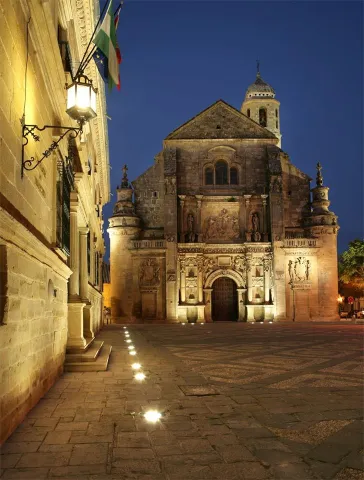
    • Sacra Capilla Funeraria de El Salvador del Mundo
    • Basilica of Santa Maria de los Reales Alcázares
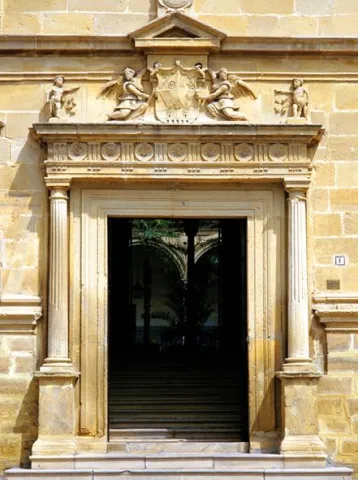
    • Palace of Vázquez de Molina or Palace of the Chains. Current City Hall and houses the Andrés de Vandelvira Interpretation Center
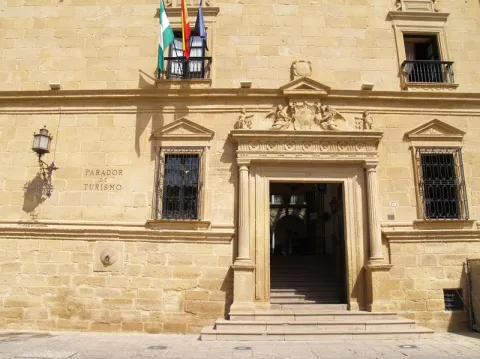
    • Deán Ortega Palace. Current National Tourism Parator
    • Hospital de los Honrados Viejos de El Salvador
    • Palace of the Marquis de Mancera
    • Vela de los Cobos Palace
    • Church of San Pedro
    • Church of St. Paul. Located at 1 May.

    Barrio del Alcázar, San Lorenzo and Santo Domingo:

    • Casa de Las Torres
    • Palace of the Medinilla
    • Church of San Lorenzo
    • Church of Santo Domingo

    San Isidoro district:

    • Santiago Hospital
    • Palacio del Marqués de la Rambla
    • Church of San Isidoro
    • Church and Convent of the Most Holy Trinity

    Barrios de San Pablo y San Nicolás:

    • Church of San Nicolás de Bari
    • Convent of the Immaculate Conception. It houses a museum.
    • Casa de la Tercia - Olivar and Oil Interpretation Center

    Barrios de San Millán y Santo Tomás:

    • Valencia Street. Numerous craft workshops to visit.
    • Church of San Millán
    • Palacio Francisco de los Cobos

    Route of San Juan de la Cruz:

    • Convent of San Miguel and Oratorio of San Juan de la Cruz

    In addition to these interesting attractions, we suggest a visit to the walls to contemplate the extraordinary panorama obtained from them.

    Naturaleza

    It is the main center of the region called La Loma. Ubeda is located on a hill at 750 m of altitude, and is surrounded by the valleys of the Guadalquivir and the Guadalimar.

    Very close, around it, are the Natural Parks of Despeñacolos, Sierra Magina and Sierras de Cazorla, Segura and Las Villas.

    The landscape is very characteristic because it is composed of a "sea of olive trees," as the poet Antonio Machado wrote.

    Fiestas y Eventos

    The city of Ubeda presents a mosaic of cultural activities, festivals, fairs, romanias... Events all very deeply rooted in the population and with a very consolidated organization, which makes visitors from all parts of Spain participate.

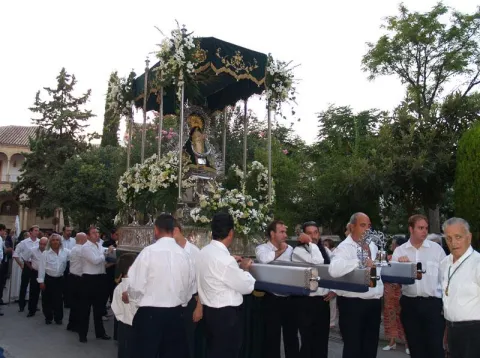
    It is worth the celebration of the Holy Week, one of the most popular parties in Andalusia, being declared a National Tourist Interest Party.

    On May 1, the Romeria de la Virgen de Guadalupe, patron of Ubeda and known as the "Great Romery." That day the Virgin moved from her sanctuary to the village of Santa Eulalia.

    Typical are also the San Antón fires"the lumbres." On January 16, fires are made in the different neighborhoods, where sardines are roasted or the cobbled.

    Special emphasis party of San Isidro Labradoron 15 May, farmers' employers and who enjoy much devotion among the olive workers.

    Together with the neighbouring city of Baeza, the Festival of Ancient Music. And in the last months of the year, the puppet and tale festivals take place.

    And we cannot stop quoting the San Miguel Fairon September 29, the city's patron party. And during the days of this fair the Autumn Theatre Show takes place, as well as high-quality musical activities and children's activities for all ages.

    Other relevant events highlight theFlamenco and Mestizo Festival "City of Ubeda" or Exhibition of Autumn Theatre of Ubeda.

    + INFO

    Gastronomía

    The ubetense cuisine is basically Mediterranean, with influences both manchegas, alumina and Andalusian root.

    The table includes legumes, game meat and products derived from the "slaughter of the pig," and, of course, virgin olive oil and table olives. Among the most outstanding dishes would be:

    • The crumbs (reminiscent of the shepherds in transhumanism).
    • The ointment, an olive oil cake.
    • The slick.
    • Potage of beans with eggplants.

    The bars and canteens are the traditional meeting point of the ubetens. If you visit the city in September you can attend the Fiesta de la Tapa.

    We cannot forget the "Gourmet days of the Renaissance". They take place from January to March in the most emblematic restaurants, where both lunch time and dinner are accompanied by shows.

    Historia

    The latest archaeological research shows that the first settlements of Ubeda date back to the Copper and Bronze Age (III and II millennium A.C), being the "oldest city in Europe" scientifically documented.

    In search of product exchanges the Greeks will arrive and later the Carthaginians, who would be defeated by the Romans. It is under the Roman Empire, from the battle of Llipa in 206 BC, when the old city is romanized and will be known as the Betula.

    The city takes on importance with the arrival of the Arabs, in particular with Abdeleran II, in the S. IX, who overlooks it with the name of Ubbada or Ubbadat Al-Arab (Ubeda "of the Arabs"). As a Muslim city it was surrounded by walls and became one of the most important cities of Al- Andalus, due mainly to its crafts and trade.

    In the S. XI it will be conquered by the alparavids. And the definitive Christian conquest was carried out in 1234 by King Fernando III.

    A number of factors, such as the geographical location, its extensive and rich jurisdiction, as well as the presence of an increasingly powerful nobility, would lay the foundation for the splendor that Ubeda reached in the 16th century.

    The economic development of the city based on agriculture and on the feral livestock, the rotations of the forests that represented an increase in the land of cultivation, and having a mesta of its own, will base the greatest splendor of the city, which was a demographic increase to reach 18,000 inhabitants.

    In addition to the ubetense nobility and the Orders of Cavalry, we found a group of neighbors who have prospered (doctors, tailor, scribes, bots...) that will lead to an incipient bourgeoisie.

    To highlight the role of Francisco de los Cobos, secretary of Charles I, who, with his interest in art and under the advice of the architect Andrés de Vandelvira, fills the city with palaces. In Ubeda, take root the humanist currents of the Renaissance. It will be Juan Vázquez de Molina, Secretary of Charles I and Philip II, who will continue with the planning initiated by his predecessor.

    Declive:
    The 17th and 18th centuries are of decline for the city, as Spain is in a general crisis. The bad crops, the unfair pressure of taxation to cover the cost of wars, corruption, the power of the clergy, the expulsion of the Moorish, will be factors that contribute to the loss of that splendor that characterized this city.

    Later, in 1820 and 1836, ecclesiastical disamortizations, Carlist wars, Civil War and post-war will come.

    Recovery:
    It will be in the 1960s and 70s of the last century, thanks to the development pull, when slowly it was the "Florence of Alta Andalucía" go to the present place and become a provincial reference point, head of the region of La Loma and a centre of industry and services of increasing importance.

    Otra información

    Known people born in Ubeda:

    • Antonio Muñoz Molina, writer and member of the Royal Academy of Language.
    • Joaquín Sabina, singer.

    In Ubeda dies San Juan de la Cruzon 14 December 1591.

    The popular saying of leaving or "walking on the hills of Ubeda," has its origin in the conquest of the Almohades of the Jienese city of Ubeda in 1234. It seems that one of the most important captains of King Fernando III "the Holy," disappeared moments before entering into combat, and that he appeared after the city was conquered. Asked where he had been, he replied that he had been lost by the hills of Ubeda.

    Loading map
    Preparing points of interest and routes...
    Imagen principal
    imagen
    Image
    9bbdff4c-5e18-d227-f40c-7c89c56fd0d7?t=1603979510184
    Imagen principal
    Activado
    Literatura

    These reasons are further enriched by the fact that San Juan de la Cruz died here, having been brought to the city to recover from a slight fever, and by the fact that it is the birthplace of Antonio Muñoz Molina, winner of the Premio Planeta and the Princess of Asturias Award for Literature.

    You must come to Úbeda and venture into its streets and monuments, discovering them through the eyes of these authors. Without doubt, a different way to enjoy this monumental city.

    Segura de la Sierra

    Submitted by brandcode_deweloper on
    Id
    751057
    Perfil de redes sociales
    Facebook
    https://www.facebook.com/ayuntamiento.segura/
    Youtube
    https://www.youtube.com/channel/UC0tAxfUQ5z6fv74Z3R6BrGg
    Instagram
    https://www.instagram.com/seguradelasierra_/
    Descripción
    Breve descripción

    Segura de la Sierra is a beautiful villa located in the heart of the Sierra de Segura, located in the northeast of Andalusia. It is certainly one of the most beautiful peoples in Andalusia and, as such, is part of the most beautiful Peoples Network in Spain.

    Segura gives name to a river, to a region and is synonymous with history. Visiting this town we can pack history and heritage in its urban centre or taste nature in its maximum expression in the many villages of its large municipal territory.

    From its castle, of Muslim origin, you can see impressive panoramic views of the whole area, which is distinguished by its wide serrania, with an enormous natural and forest wealth. It is part of the Natural Park of the Sierras de Cazorla, Segura and Las Villas, the largest protected area in Spain.
    This wonderful environment, its streets and historical corners make Segura de la Sierra has been declared a Historical-Artistic Set and Pintoresque Park.

    Segura de la Sierra and its high peaks served to illuminate the best literature of the Renaissance, by the hand of Jorge Manrique, author of the "Cops to the death of my father."

    Telecomunicaciones
    Teléfono
    953 480 280
    Sitio web
    www.seguradelasierra.es
    Fax
    953 481 012
    Correo electrónico
    administracion@seguradelasierra.es
    Ubicación
    Nombre
    Segura de la Sierra
    Latitud
    38.298850
    Longitud
    -2.651870
    Distrito
    Ubicación en el mapa
    POINT (-2.65187 38.29885)
    Imágenes
    imagen
    Image
    18670190-05e7-df1b-a17a-e92e0d671cef?t=1603979935869
    Imagen principal
    Desactivado
    imagen
    Image
    despegue-el-yelmo-jpg
    Imagen principal
    Desactivado
    imagen
    Image
    84676aeb-bfa8-a851-5550-3b4d15c74706?t=1621445408264
    Imagen principal
    Desactivado
    imagen
    Image
    6fde7b00-3201-46c4-e6c3-528a9d11093d?t=1595353573804
    Imagen principal
    Desactivado
    imagen
    Image
    a66e4f4c-435d-565a-2c1d-47799e04c4ce?t=1595353573833
    Imagen principal
    Desactivado
    imagen
    Image
    4e21d820-8e51-89a4-0274-af8aeb2894f0?t=1621445408309
    Imagen principal
    Desactivado
    imagen
    Image
    8668c55e-f4f0-0979-0f1b-fbd53f037c7e?t=1621445408354
    Imagen principal
    Desactivado
    imagen
    Image
    78496ace-41be-4e6a-cd26-a6097356a63d?t=1621445408397
    Imagen principal
    Desactivado
    imagen
    Image
    d1c73291-0577-d6d3-7c68-b4cea6f8ac35?t=1595353574079
    Imagen principal
    Desactivado
    imagen
    Image
    5a350abd-951a-6543-e791-3a83e2a39938?t=1621445408446
    Imagen principal
    Desactivado
    imagen
    Image
    307ca2fa-ccf4-8ce0-302a-896577682bb1?t=1595353574160
    Imagen principal
    Desactivado
    imagen
    Image
    4d621b1f-d10e-8b22-6bc0-9c2c2c218615?t=1621445408494
    Imagen principal
    Desactivado
    imagen
    Image
    b5bce32c-dbd5-c32b-b191-af98ea79ea34?t=1621445408543
    Imagen principal
    Desactivado
    imagen
    Image
    aeb6f7e7-dfc2-de87-6f7f-daaaadba363b?t=1621445408593
    Imagen principal
    Desactivado
    imagen
    Image
    49a44de3-3e7c-ef37-cfb0-56a999ea436d?t=1602789076574
    Imagen principal
    Desactivado
    Información adicional
    Imágenes cabecera
    imagen
    Image
    segura-de-la-sierra1-jpg
    Imagen principal
    Desactivado
    Datos de interés

    Tourist area: Serras de Cazorla, Segura and the Villas
    Distance to the capital (km): 160
    Altitude over sea level (m): 1145
    Extension (Km2): 224
    Number of inhabitants: 1986
    Gentillo: Segureños
    Postal code: 23379

    Videos
    Video file
    Cultura

    The villa offers the physiognomy of past times, preserving its steep and silent streets. From its rich and varied heritage, we highlight:

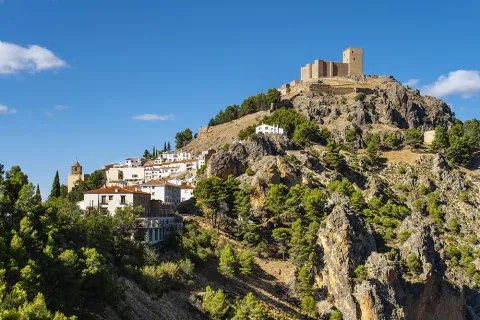
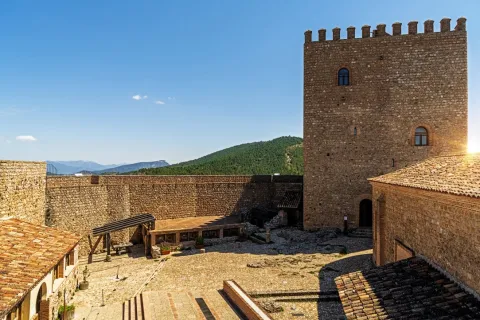
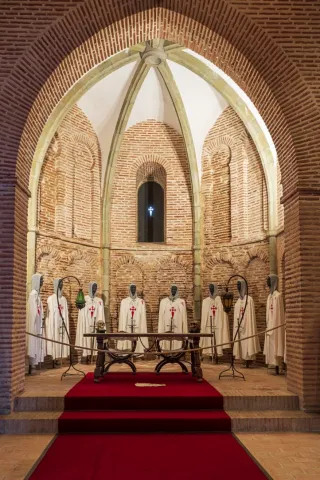
    • Castle.Of Mudejar origin, eternal vigil located in the highest of the village and surrounded by an old wall that still retains some turreons. The tower of tribute, which reaches 18.50 m in height and from which you can see impressive panoramic views of the Segura saw. Inside the castle we find: chapel, adarves, covered with wood and roofed in two waters, aljibe and Arab baths.
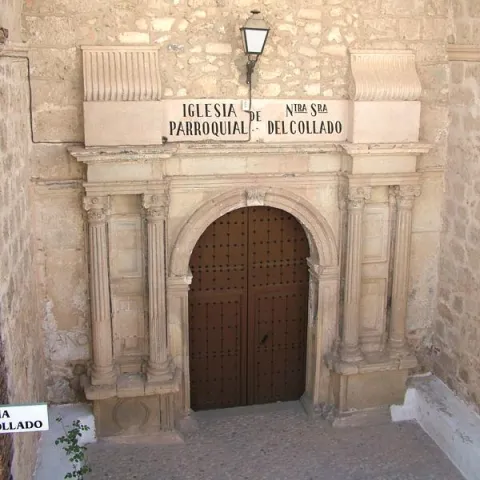
    • Parish Church of Saint Mary of the Collado. It was built in the 16th century on the site of the old Romanesque temple. The Napoleonic troops set it on fire and would be restored between 1814 and 1817. Its only ship is rectangular and of vaulted roof. On the outside, his tower built with masonry. With a quadrangular plant, it has its first body with a flask and a second body covered with an octagonal pyramid on which a forged iron cross goes. He has accumulated a rich religious iconography during his history.
    • City Hall. Other Renaissance paradigm, old house of the Society of Jesus. It opens with an arched arch of highlighted keys, to which they flank crate pilastras and dotal column. The second body is embellished by a curved balcony, a triangular fronton decorated with tacos and noble oval shields with plucked helmets.
    • Imperial source. A monument that reflects the transition between the Gothic and the Renaissance. It is built in front of the church and dates from the year 1517. Presents a large fronton divided into three streets separated by Ionian columns. A large shield with the weapons of Carlos V. is displayed on the central street
    • Casa de Jorge Manrique. The façade has a half-point arch decorated with vegetable motifs, flanked by crate pilasters and complemented by small Ionian columns. The nobility shield of arms of the Figueroa, the mother family of Jorge Manrique, was carved in stone.
    • Church of the Jesuit. It is built in the last quarter of the 16th century. It has Renaissance decoration, with a half-point arch with reliefs of the apostles. This building has now been remodeled and turned into an event and exhibition room.
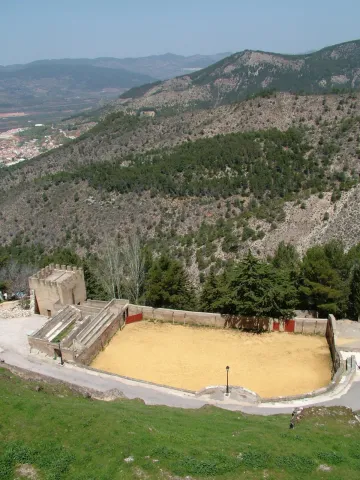
    • Bull's Square. It is located on the outskirts of the village in the old courtyard of weapons and chivalry. It's one of the oldest and most curious, being quadrangular.
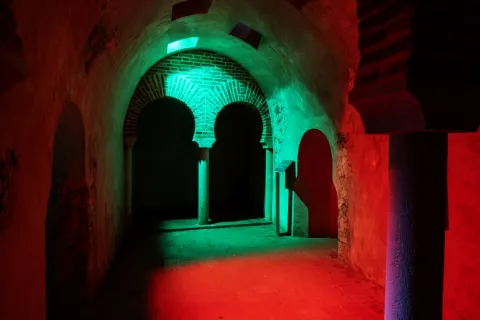
    • Arab baths (hammam). Used not only for hygiene and toilet, but also as social assembly centres. They were used by both men and women, but at different times. They consist of three longitudinal ships, corresponding to thecold room, the most external,tempered and hot, the innermost. They were tied with double horseshoe arch and canyon vault with skylights. It is estimated to be built between the 11th and 12th centuries.
    • Wraith and defense. Many sections of the local walls can still be observed. One of the best preserved is the water tower, It is called that because its mission was to protect a water spring that supplied the plateau. Other still preserved are: The Era tower, the School tower and the Snow well. The latter space was used to store water and snow during the winter period and then to use them through drains that existed at the bottom.
    • Access doors. The way to access the Segura de la Sierra fortification was 4 doors: The New, the Gontar, the Catena and the Orcera.


    Naturaleza

    Segura de la Sierra is located in the center of the mountains to which it gives name, the entire municipal term is part of the PN Sierras de Cazorla, Segura and the Villas.

    The flora, when there is such a great difference in height in the municipal term, it is different: high mountainLet's find the pino laricio, flexible and resin-rich wood, and lacquer; half mountain live the black pine, whose wood is very resistant to rot and can reach 45 m in height and tejoof slow growth, but of a longevity that can reach the age of 5,000; low mountainthe Pine carrasco, complaining, melojo oak, the oak, the oak, the coscoja, olive and other endemic and aromatic plants.

    The fauna is also, like the flora, very diverse. So, we'll meet. Rapist birds and scavengers(eagles, lethand vultures, alimoche vultures...), animals of major game(deer, muflon, gamo, boar...) and minor hunting (perdiz, rabbit, hares, crow, crows, tortoises, doves and foxes).

    They also live in various species of fish, like trout, barbo, boga, etc., andmammals,Like bat, mountain cat, chickenpox, badger, otter, fox and gin.

    An area with enormous natural and forest wealth, place to feel that nature is alive.
     

    Fiestas y Eventos

    The Segureños celebrate the following parties:

    • Patrons of the Virgin of the Rosary. They have a place of 4-8 Octoberand are celebrated in honor of the patron. On the 8th the most emotional act takes place: the procession of the Virgin on the shoulders of the women of Segura. During these days there are taurine celebrations, which are held in the peculiar square of quadrangular bulls, and serrano bolus competitions.
    • Saint Vincent. It is the patron saint of the town and is celebrated the January 22. In his honor fire is on in the extramides of the villa. It is a custom that is very rooted in the saw that the winter festivities turn on "Luminaires"(bonfires). This is the day of" La Pura "(8 December), in Saint Lucia (13 December), Christmas Eve, New Year's Eve, San Antón (17 January), in San Vicente (22 January) and ending at the Candelaria (2 February).
    • Romeria de San Isidro. It is the pattern of the New cuts, the most important pedany of the many that Segura has. It is held in the area of the Lomilla, by the village The Ojuelo.
    Gastronomía

    The gastronomy of Segura de la Sierra is rich and full of tradition, has been able to combine the agricultural customs with those of the pastors or those dedicated to the works of the wood, carried out by the cut of pine trees in this saw.

    The diversity of the dishes that we find in the town is characterized by the use of the products we find in the area: olive oil, mountain meat in hunting season (boar, perdiz, rabbit, soybean sheep) and, in concrete seasons, mushrooms and niscalos (guízcanos) or asparagus that are so well given in the saw.

    • Galians, bread cakes, rabbit and spices.
    • Andrajoswith flour, meat and spices.
    • The Migasof bread, to which is added chorizo, torrezos...
    • The Gachamita, flour and potato that is accompanied by all kinds of dressing, both sweet and salty.
    • Lamb to the young shepherd, pastoralist chard, lamb in cabañil garlicIn all these dishes, the base is the same: the following sheep's meat.
    • Pisto gandul, made of goat, lamb or rabbit and is to then consume in fairs or evenings. Hence the name of the gangul.
    • Cecinaof sheep's or goat's meat that has been cured.
    • Ajopringueis consumed in the massacres and is made with the pig liver It's a bit.

    In pastry, the bake, a dessert of oil cake that carries a hard egg in the middle.

    Historia

    The history of the term Segura de la Sierra dates back to the 4th millennium BC, according to the many archaeological sites that testify to the human presence in those times.

    Very close to the city centre is the settlement called The Old Onea few kilometres from the village of Moralejos and that it has always been attributed to peoples as Iberians and Phoenicians, being later the scene of wars between Romans and Carthaginians.

    But it is, no doubt, with the Islamic people (781) when the population they call Saqura lived the golden era as a strong square in the area. In the 9th and 10th centuriesAfter the collapse of the Cordoba caliphate, Segura de la Sierra has several periods of independence that make it important.

    It will be conquered by the Christian troops, becoming dependent on the Order of Santiago by the donation of Alfonso VIII. In 1243, with King Fernando III, he passed to the crown of Castile and within the kingdom of Murcia until 1833, the year in which the current province of Jaén was created.

    In 1517, after the visit by Carlos I to the square, the fountain is built in his honor. A Renaissance source, though clearly of transition. In 16th century had a a time of great splendor, provided by the large amount of wood produced in its territory and which, transported by the Guadalquivir River, supplied all of Andalusia.

    In 18th century, the State has converted the saw, under the name of saw of Segura, Maritime Province, No doubt you need wood for the construction of your ships. The Napoleonic invasion (1810) turned the population into a huge stake, destroying the files and taking part of its history.

    illustrious characters:

    • Jorge Manrique (1440-1479), a Spanish poet and author of "Cops for my father's death," considered one of the capital works of Spanish literature. The origin of his birth is discussed with Paredes de Nava (Palencia)
    Otra información

    We want to place on record two traditions that are very deep-rooted in Segura de la Sierra:

    • The serrana jack. Of the popular dances of Segura de la Sierra, no doubt, the serrana jota is the one with the greatest personality. It is interpreted alone or with whole or half-ways, usually, in popular parties.
    • Via living crucis. It is interpreted by the neighbors of the village and is developed in different places of the town, with excellent views of the Segura saw.
       
    Loading map
    Preparing points of interest and routes...
    Imagen principal
    imagen
    Image
    53a920a5-6491-8831-30ac-3d989e48192e?t=1603979644641
    Imagen principal
    Activado
    Literatura

    This town may have been the birthplace of the warrior-poet, since his father was Commander of Segura de la Sierra, the most important commandery of the Order of Santiago. In fact, the Manrique family home is still preserved today.

    Segura de la Sierra pays tribute to the poet not only by marking the Manrique family home, but also by building part of its tourism offer around Jorge Manrique, dedicating several rooms of the castle to interpretation spaces devoted both to the poet and to the Order of Santiago.Segura de la Sierra also pays tribute to the illustrious writer with a statue-monument and with a magnificent viewpoint offering sweeping views of the Natural Park from the village itself.

    The tribute to Jorge Manrique culminates with the biennial Jornadas Manriqueñas, an event combining academic and leisure activities as a way of honouring this illustrious figure.

    Quesada

    Submitted by brandcode_deweloper on
    Id
    750095
    Perfil de redes sociales
    Facebook
    https://www.facebook.com/ayuntamientoquesada
    Youtube
    https://www.youtube.com/user/AyuntamientoQuesada
    Instagram
    https://www.instagram.com/ayuntamiento_de_quesada/
    Descripción
    Breve descripción

    Quesada is a municipality in the Sierra de Cazorla region, south-east of the province of Jaén. The east and south of its territory are part of the Natural Park of the Sierra de Cazorla, Segura and Las Villas.

    This municipality is made up of Quesada and the villages of Belerda, Don Pedro, Collejares, Los Rosales and Tícar, as well as El Cortijuelo.

    This is one of the most beautiful and historic villages in the park. Built around a hill, the streets and squares present the curved and heterogeneous physionomy of the medieval route.

    In its municipal term is the birth of the Guadalquivir River, in La Cañada de las Fuentes.

    In agriculture the olive grove dominates. It has an olive cooperative that is part of the designation of origin "Sierra de Cazorla." It is also very important to have sheep. The cultivation of the cereal is residual and has been replaced by the olive tree.

    Its surroundings are splashed with places of environmental and heritage interest, such as the Roman villa of Bruñuel and the venerated shrine of the Virgin of Tícar.

    Among its heritage is the Parish Church of San Pedro and San Pablo, the Atalaya del Infante Don Enrique, the Arc of the Saints and the rock paintings of the style of the Levine, declared World Heritage and located in the Cave of the Encashier; and finally the Museum of Rafael Zabaleta, a native painter of Quesada, and that of Miguel Hernández, whose wife was born in this town.

    Telecomunicaciones
    Teléfono
    953 733 025
    Sitio web
    www.quesada.es
    Fax
    953 733 707
    Ubicación
    Nombre
    Quesada
    Latitud
    37.842980
    Longitud
    -3.066920
    Municipio
    Ubicación en el mapa
    POINT (-3.06692 37.84298)
    Imágenes
    imagen
    Image
    8bd2037d-3371-a447-c462-f23bb08238ba?t=1621356088703
    Imagen principal
    Desactivado
    imagen
    Image
    b19dc278-a564-d320-1b28-83f48077c0be?t=1621356088757
    Imagen principal
    Desactivado
    imagen
    Image
    915ef1cf-917d-c03a-a168-b51a2e548138?t=1621356088805
    Imagen principal
    Desactivado
    imagen
    Image
    3bfc6c96-084a-ed27-97c6-8687538dd6dc?t=1621356088943
    Imagen principal
    Desactivado
    imagen
    Image
    9ee5d02b-d843-108d-1f27-14997322ea39?t=1603724928275
    Imagen principal
    Desactivado
    imagen
    Image
    1556b6e2-6b04-b9cc-c61b-9487ac687d36?t=1603747428216
    Imagen principal
    Desactivado
    imagen
    Image
    ec921ab0-540a-0430-4cb0-0cf4c14bdd15?t=1621356089164
    Imagen principal
    Desactivado
    imagen
    Image
    9b35f320-001f-6702-e3e2-b9000cbeea31?t=1621356089364
    Imagen principal
    Desactivado
    imagen
    Image
    7f7a9beb-08e0-9187-90f8-061c87d37ef0?t=1621356089555
    Imagen principal
    Desactivado
    imagen
    Image
    cazorla-pinar-jpg
    Imagen principal
    Desactivado
    imagen
    Image
    nacimiento-del-gadalquivir-jpg
    Imagen principal
    Desactivado
    Información adicional
    Curiosidades

    Oficina de Turismo de Quesada
    Plaza de la coronación, 5
    https://admin.dipujaen.es/municipios/Quesada/turismo.html

    Imágenes cabecera
    imagen
    Image
    431db42c-0322-5342-0307-bd339c5a9014?t=1606405219719
    Imagen principal
    Desactivado
    Datos de interés

    Tourist area: Serras de Cazorla, Segura and the Villas
    Distance to the capital (km): 99
    Altitude over sea level (m): 676
    Extension (Km2): 328
    Number of inhabitants: 5,944
    Gentillo: Quesadeños
    Postal code: 23480

    Videos
    Video file
    Cultura

    From the abundant and rich historical-artistic heritage, we highlight:

    • Tiscar Castle. It was raised in the Arab era and located in a rocky area of easy defense. The first news of the castle dates back to 876. It is a small complex with a small tower of tribute. Built in apial cane, with parts of bulkhead and the wall cloth attached to the rock. In the center there is a great rosehold called "Black Peña." In 1949 it was declared Good of Cultural Interest.
    • Sanctuary of the Virgin of Tícar. It is certainly the center of Marian devotion of the region, both for its tradition and for its location, under the "Black Peña Castle."The present construction of the Sanctuary of the Virgin of Tiscar dates back to the mid-20th century, although it retains architectural remains of previous times, such as the great entrance door with pointed bow and decorated jambas, remains of the plywood of the Granadine in the sacristy of the 14th century and others that can place us at the end of the Gothic of the 16th century. The exterior of the Sanctuary maintains the original trail and on the facade the two-high swordsman. Above the main door is an image of the Virgin between two trees sculpted in relief. During the Civil War he suffered great damage, which is why the Sanctuary has been reformed.
    • Parish Church of St. Peter and Paul. It dates from the 18th century, in a neoclassical style and built on the site that had previously occupied another Gothic church of which a chapel is preserved. It has a cross floor with three ships covered with half-canyon vaults with lunetes. The entrance door with 18th-century bronze carnation and the bell tower built on an ancient medieval tower are outside.
    • Atalaya del Infante Don Enrique. The spectacular cylindrical tower of More than 10 m. of height is in the Tiscar port. Its role was to monitoring the movement of troops of the Nazari kingdom of Granada. It was built in the late 13th century by order of the Infante Don Enrique, son of Fernando III. After its restoration, a metal staircase allows us to access its interior by the original door, located about three meters in height. From its privileged situation, we can see a very important extension of the territory.
    • The Arc of Saints. Gothic door that gave entrance to the walled enclosure, built in the 14th century. The exterior shows an arch pointed with a quarry, with two novels whose right hamba is a Roman funeral stele of the third century. At the bottom is a half point brick arch with a half-barrel vault. The double arcade that it presents today could be due to the fact that the arch of half-point interior was the original of the Andalusian enclosure, remade in Christian times.
    • Roman Villa of Bruñel. This villa is a magnificent testimony of Roman domestic architecture linked to agricultural exploitation. The exceptional wealth and magnitude of Bruñel makes it a scarce model among the rural houses of this time. Originally there must have been a rather modest construction that was reformed during the second century after Christ to build an extensive complex of great decorative wealth. An urban building was designed around a large central courtyard around which the rooms are distributed, mostly with splendid mosaics and covered walls. In the fourth century, part of the house was destroyed to overcome it another with a porticated central courtyard, with a large double room to the north and another wing with a central courtyard to the east. In this last phase, although a great decorative wealth is still maintained, there is already a great ruralization of life in the villa. Their abandonment and ruin had to take place gradually during the VI and VII centuries. This villa was declared Good of Cultural Interest in 2005.

    Other monuments are: The Church of Purification, known as the Chica Church, built in the 17th century with Baroque-style features and the Hermitage of San Sebastián.

    Naturaleza

    It is surrounded by mountains of considerable height, such as the Gilillo peak (1899 m.), Rayal (1884 m.), or Magdalena (1219 m.), which is located in the surroundings of the Guadiana Menor River, with streams that serate along its slopes, it is an invitation to travel one of the many paths to let us be surprised by the botanical and faunistic wealth of its territory.

    Part of its municipal term is included in the Natural Park of the Serras de Cazorla, Segura and Las Villas, the largest protected space in Spain. An orographic labyrinth of valleys, calares, slices, mountains, high-rise hydrological importancebecause of the large number of rivers and streams that run by their end; botany (larix pine, carrasco pine, tejos and a wide variety of endemic species; pheasant-cynetic and landscape.

    In the mountains of Quesada there are numerous coats with rock paintings including the Cave of the Encarejo, the coat of the Cerro Vitar, the cave of the ivy and the Cave Cabrera, in which in addition to the rock paintings were found ceramics and lytics that have allowed to give the first human occupation of these lands in the third millennium BC

    The variety of ecosystems also makes the number of animal species living in these areas very diverse. In the higher and more steep areas the major hunting speciesand muflons, and deer, and we, and boars, Rapes and scavengers like, eagles, broken bones and lethargy vultures. And in the areas of lower height, the cynetic species of minor hunting: badges, foxes, hares, rabbits or gines. Without forgetting fauna living in crystalline waters of these rivers: Trout, barbos, otters, salamanders. No the birds who either live in olive trees, or feed on their fruits in their migratory movements: carboneros, abbullas, jilgueros, petriroreds, ratoneros...

    One of the places we can't stop visiting is the Water Cave. It is one of the first natural clusters of limestone formations discovered in Spain, in which the water of the Tícar River and the Roca del Monte de Caballo are combined.

    He is also known by the names of the Cave of Wonders, for the spectacular waterfalls in the melting season and their stalactic formations, and Cave of the Virgin of Tícar, because according to the tradition there the Virgin appeared in 1391 to the king of Tiscar, Mohamad Abdon. Near the cave is the Sanctuary of the Virgin of Tícar.

    Access to the cave is made through a tunnel about 10 meters long and 1 meter high. Inside, concerts are organized for the fantastic acoustics it has. This cave is 13 kilometres from Quesada.

    In addition, Quesada has the following areas of environmental interest:

    The Chorro.They highlight their impressive rocky cuts, places where it is very easy to observe how large carrion birds like the leonate vultures or the aloches fly over us.

    • Location: To the west of the town, in the natural park of Cazorla, Segura and Las Villas.
    • Distance: 11 km.
    • Medium: Tourism vehicle.
    • Access route: By the A-315 in the direction of Peal de Becerro; after a few km, we will turn right by the A-322 in the direction of Cazorla; after 1.5 km, we will take the JV-7.107 in the direction of the birth.

    The birth of Guadalquivir.Impressive landscape, belonging to the Natural Park of Cazorla, Segura and Las Villas, characterized by the abundance of large formations of larice pine trees associated with rake juniper.

    • Location: To the west of the town, next to the Cañada de Las Fuentes, in the natural park of Cazorla, Segura and Las Villas.
    • Distance: 27 km.
    • Medium: Tourism vehicle.
    • Access route: By the A-315 in the direction of Peal de Becerro; after a few km, we will turn right by the A-322 in the direction of Cazorla; after 1.5 km, we will take the JV-7.107 in the direction of the birth.

    Valley of the Tejos.It is a unique forest of tejos, among which one millenarian, with over 3,000 years of age, stands out.

    • Location: To the west of the town, in the natural park of Cazorla, Segura and Las Villas.
    • Distance: 27 km.
    • Medium: Tourism vehicle.
    • Access route: On the A-315 towards Peal de Becerro; a few km, we will turn right through the A-322 in the direction of Cazorla; after 1.5 km, we will take the JV-7.107 towards the birth of the Guadalquivir.
    Fiestas y Eventos

    The following parties are held in Quesada:

    • San Sebastián. Between 19 and 21 January, the parties are held in honor of San Sebastián, patron of Quesada. On the 19th, the saint is brought from his hermitage to the people, so that the next day the three banners and the drummer, bound in ancient suits, will make five feuds of flag during the procession of the image that takes place in the afternoon. The day ends with the luminaire raised in front of the City Hall door, where the products of slaughter and wine are tasted. The parties end on the 21st, which only differs from the previous one because the flags are danced three times.
    • Saint Anton. The 17 January, pattern and protector of animals. On the eve the lounges are lit in some streets and squares are made crumbs, morcilla, chorizos, bacon... Always accompanied by dances and singers of the participants and by the "crow."
    • Celebrations in honor of Patrona La Virgen de Tícar. The summer are held between the 23 and 29 August. During these days activities of all kinds are alternating until the moment when the Patron leaves the church of St. Peter and St. Paul to return to the Tiscar Sanctuarywhere you will stay until the first Saturday of May of the following year in which you will recelebrate the rosemary to take you back to Quesada.
    • Fiesta de los Cargos or Fiesta del Dios Chico. They are celebrated in the pedany of Belerda and is a tradition that dates back to the 16th century. The party begins on December 25. The five "Charges," First and second captain, the flag, guinche and the small charge, accompanied by the drummer and a very fervent comitiva leave on the 26th until the Sanctuary of Tiscar where they prosecute the Virgin. The return is made from corriada to corrijada, testing the products of the slaughter and the good wine with which they are made. The party ends with the renewal of the, "Charges."
    Gastronomía

    Quesada's kitchen is serrana, and therefore it is strong. Among the dishes we highlight:

    • Talarines. It is the most unique, similar to the manchego gazpacho and the andrajos. It consists of a stew of meat (rabbit, hare, pig) with vegetables and mushrooms in which wafers of mass are cooked that are made of strips, that look like rags of fabric. Hence his name.
    • Pipirrana. It is salad whose basic ingredients are onion, tomato, green pepper and cucumber.
    • Migas with chorizo, peppers, pancake and grapes.
    • Garlic flour. It consists of red peppers, niscalos, natural pancette, potatoes, garlic, pepper and flour. Cod is also sometimes used.
    • Gachurrene. Potatoes, oil, flour, salt and water for the mass, which is added to the fries

    The pastry shop is also important and prepare: Sweet fig bread, papajotes, florites, drunks, bathrobes.

    Historia

    In the quesada saw there are caves with rock paintings, ceramic and lytic remains that allow us to give the first human occupation of the area in the third millennium BC

    During Bronze age, With the arrival of the first argaric populations these same caves and others, such as the village and necropolis of the "Corral de Quiñones," were again occupied.

    Of his Roman past, Villa de Bruñel It's a clear example. It is made up of a Roman necropolis from the 1st to the 4th century, a third century villa, with patios, peristilos, impluvium and an interesting collection of mosaics. From the 4th century the remains of a Paleocrist basilica. In addition to this villa, others have been located, such as Voladero, Aguas Calientes, Allozar and the Rosales.

    The current location of the city centre is attributed to the Visigoths, according to the many remains that appear in the town, such as the capitals that pull access to the garden.

    It was in the cunado Arab era it acquired entity as a population core becoming within the ten most important populations of Jaén. In its texts it appears as Madinat, a fortress at the foot of a mountain with markets, bathrooms, inns and arrabal village. At this time, its industry of dishes and wooden vessels were sold throughout Al-Andalus and the Maghreb.

    Since the first Christian conquest in 1157, by King Alfonso VI, he has changed several times from Christian to Arab and vice versa. In 1310 it was finally recovered by Fernando IV, and in 1331 it became part of the advance of Cazorla, and was later given to Ubeda by King Alfonso XI.

    In the 19th century, Queen Elizabeth II granted him the title of city.

    In the early years of the 20th century they visited the city, Antonio Machado and Manuel Cigues Aparicio, which based some of their works in Quesada. The painter Rafael Zabaleta was born in 1916 and Josefina Manresa, wife of Miguel Hernández, was born.


    Otra información

    The Zabaleta Museum

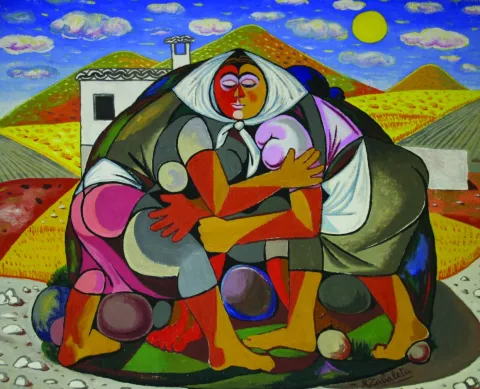
    Rafael Zabaleta was born in Quesada in 1907. After studying at the Madrid School of Fine Arts he travels to Paris, where he studies the teachers of contemporary painting, such as Picasso. In 1942 he made his first individual exhibition and since then there will be many successes. He won the UNESCO Prize for the Third Latin American Biennial in 1956. In their painting, light, color, family objects, the fields of Quesada will be immortalized and hang in many museums around the world. He died in Quesada in 1960.
    The Zabaleta Museum was created in 1963 with the important legacy donated by the heirs of the painter. All the works exposed are of great interest and constitute their most complete exhibition.

    Museum of Miguel Hernández and Josefina Manresa

    Located on the ground floor of the Zabaleta Museum, it contains much of Miguel Hernández's legacy. It offers a tour of the work and life of the poet and his wife, the quesadeña Josefina Manresa, a story of love full of passions and emotions.

    Quesada Archaeological Heritage Interpretation Center, CIPAQ

    The Center for the Interpretation of the Archaeological Heritage of Quesada, CIPAQ, opens its doors in September 2015 to join the extensive cultural offer of this picturesque jiennense villa, cradle of the Guadalquivir. The aim is to show the extraordinary legacy, prehistoric and Roman, which treasures Quesada. Thus, the first floor is dedicated to one of the most important sets of rock, eulin and schematic art in the province of Jaén, declared World Heritage by UNESCO in 1998. On the ground floor the theme revolves around the Roman villa of Bruñel, with an amazing group of mosaics in excellent conservation. The tour is set with the exhibition of interesting objects, recreations, audiovisual, interactive and a teaching classroom for small visitors to learn by playing. "

    Loading map
    Preparing points of interest and routes...
    Imagen principal
    imagen
    Image
    08dafa1a-7a1f-a656-cb9f-1064faa23eca?t=1603979598255
    Imagen principal
    Activado
    Literatura

    An excellent way to get to know one of the most beautiful and historic villages in this Natural Park is to follow in the footsteps of two illustrious poets: Antonio Machado and Miguel Hernández.

    Quesada's connection with Antonio Machado stems from the fact that it is one of the places the poet visited during some of his frequent excursions to the source of the Guadalquivir river. You can follow in Machado's footsteps in a park where you'll find ceramic tiles bearing a fragment of one of his poems, and the same is true at the Sanctuary of the Virgen de Tíscar. Once there, be sure to visit the incomparable Cueva del Agua.

    Quesada's link with Miguel Hernández, on the other hand, comes from the fact that his wife was born in the town. You can see how the people of Quesada cherish the poet's legacy through the Miguel Hernández-Josefina Manresa Museum and pay tribute to him through various corners linked to his memory.

    Lopera

    Submitted by brandcode_deweloper on
    Id
    741414
    Perfil de redes sociales
    Facebook
    https://www.facebook.com/aytolopera/
    Twitter
    https://twitter.com/aytolopera
    Descripción
    Breve descripción

    Municipality located to the northwest of the province of Jaén, in the region of the Jienese countryside. It's the most western urban core of the province, limiting to the west with villages of Córdoba.

    Geographically it is characterized by a soft orography, typical of the olive countryside. Its economy is based on agriculture, being the cultivation of olive trees the most prominent, although there are others like cotton, sunflower, sugar beet, corn... that are sown in the vegas of the Salado stream. There are still some reductions of white grape and cereal vineyard, which were important at the time. It has a long wine tradition, but at present there are very few hectares of wine planted.

    Its economy is complemented by the wood furniture industry, the service sector and construction, among other activities.

    The river Guadalquivir crosses the municipal term in the north and its tributary Salado stream that runs from north to south with low flow rate.

    Among its rich heritage is the Castle of Lopera, the parish church of the Immaculate Conception, the Casa de la Tercia, the City Hall and the hermites of Jesus El Nazarene, the Humilladero Christ and San Roque.

    Telecomunicaciones
    Teléfono
    692 190 335
    Sitio web
    https://www.loperaturismo.es/
    Fax
    953 516 275
    Correo electrónico
    info@loperaturismo.es
    Ubicación
    Nombre
    Lopera
    Latitud
    37.945550
    Longitud
    -4.214220
    Distrito
    Municipio
    Ubicación en el mapa
    POINT (-4.21422 37.94555)
    Imágenes
    imagen
    Image
    56866ff2-22f5-568f-f643-5fb1a0a9424c?t=1585684397066
    Imagen principal
    Desactivado
    imagen
    Image
    9c5819e8-fb86-f1a5-339f-8c4ec83e12a4?t=1585684398702
    Imagen principal
    Desactivado
    imagen
    Image
    ff14aacb-0c29-32e1-56d7-2726cc528538?t=1585684398444
    Imagen principal
    Desactivado
    imagen
    Image
    e9030804-e601-1a3c-eae6-d402ed5ff0f3?t=1621261041691
    Imagen principal
    Desactivado
    imagen
    Image
    006a5946-133d-54ac-0b05-f1859dde001b?t=1621261041810
    Imagen principal
    Desactivado
    imagen
    Image
    a8f92b1e-344d-c428-c2ea-be5f59c06d6c?t=1621261041890
    Imagen principal
    Desactivado
    imagen
    Image
    c2cd706e-56a0-e2f0-bd34-3480a8c8ba88?t=1621261042027
    Imagen principal
    Desactivado
    imagen
    Image
    c226e437-67f2-1204-2d87-ed3744baf796?t=1585684397884
    Imagen principal
    Desactivado
    imagen
    Image
    1c44ce87-14e0-d860-4414-d7194f29b26c?t=1585684397588
    Imagen principal
    Desactivado
    imagen
    Image
    039ef38e-7424-2f61-46f8-a72839ddd988?t=1621261042106
    Imagen principal
    Desactivado
    imagen
    Image
    a0eb714a-09d6-7447-2157-c6953e231d95?t=1621261042199
    Imagen principal
    Desactivado
    Información adicional
    Imágenes cabecera
    imagen
    Image
    ad1e8a5c-0a8e-53d3-eb04-9a0b21da55a8?t=1659630640074
    Imagen principal
    Desactivado
    Datos de interés

    Tourist area: countryside of Jaén
    Distance to the capital (km): 54
    Altitude over sea level (m): 276
    Extension (km ²): 67
    Number of inhabitants: 4,028
    Gentilicon: Loperans
    Postal code: 23780

    Videos
    Video file
    Cultura

    Of the ancient artisan trades in Lopera, only two activities related to the ebanistía have been maintained to this day: the silery and the tortería. In both cases work is done following a classic Spanish line, of Renaissance air and close to the furniture that characterized Granada in the first half of the 20th century. Among the different wood used are those of beech and chestnut.

    Other craft works, carried out today only by hobby, are reluctant to disappear. This is the case of the "guarines," made with olive pods, which were used to transport water pitchers or agricultural utensils to the loins of the beasts; or the anea works, especially those made for the "asses" of the traditional chairs.

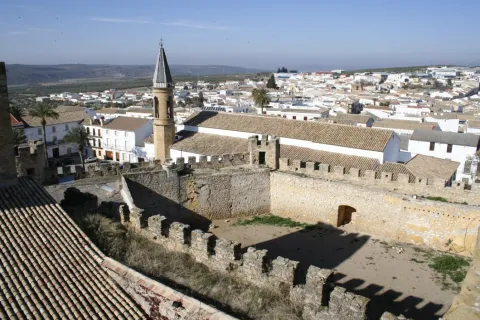
    In the Plaza Mayor of Lopera we find the three factual powers: the military power, represented by the castle-fortress of the Order of Calatrava; the religious power, represented by the Church of the Immaculate Conception and the civil power, represented by the City Council.

    • The Castle of Lopera. The castle is located in the centre of this town. It was built by the Order of Calatrava, to whom this population was given after its conquest in 1242. It has irregular pentagonal plant, defending its corners with cylindrical and prismatic towers or cubes. The interior of the fortress has a large courtyard of weapons, with a magnificent almost rectangular alcazar in the center formed by two towers joined by two wall canvases that form a large aspired adarve, supported by half-point arches on counterstrengths. The tower of San Miguel, which controls the main door, houses two vaulted rooms, one of which later became a curious palomar as witnessed by the dozens of ceramic cubes that cover its walls. The tower of Santa María is rectangular, with two overlapping rooms. The one on the ground floor was completely remodeled in 1535 after the works undertaken by the Comandador D. Juan Pacheco for the construction of an oratory, a small chapel that completed the significant transformation carried out in the castle to make it a nobility residence. These works also affected the skate between the two towers, transformed into the palace yard. The Lopera Castle belongs to the promotional database and has complete information sheet.
    • The tower of Santa Maria or of the Tribute, keeps in its interior remains of a Gothic chapel, made in the 16th century, when the castle became a nobility residence. We can now enjoy a centre of interpretation dedicated to the Order of Calatrava.
    • Our Lady of the Immaculate Conception. The date of its construction is not exactly known, some historians place the beginning of its construction at the beginning of the 14th century. There is a clear succession of styles ranging from the Gothic, the Order of Calatrava, to the Baroque. The basic plant is divided in three ships, highlighting the centre as being wider and higher than the sides. These ships are separated by cylindrical pillars that support the vaults of the deck, warheads and multiple nerves. The altarpiece It's neoclassical. On its outside stands the tower with a square base on which rests an octagonal body and a circular third, with four moons and half-point arches for the bells. Finishing with a pointed polygonal needle chapitel with glazed tile.
    • Casa de la Tercia. It was the old posite that is currently called "Casa de la Tercia." The building that was to be built in the 16th century is made of brick in its thick interior and thick tapial in its external walls, with quarry stones that reinforce the corners of the building. It has no decorative elements except two crosses at the top of the deck horse. It was used to store grain in the Modern Age and as a winery in the Contemporary. Don Miguel de Cervantes passed by in order to raise funds for the Invincible Navy.
    • The hermitage. It has several and very interesting hermitage, among which we highlight: The Hermitage of the Christ of the Humiliaderoof the 18th century and of Baroque style; the Hermitage of San Roqueof the 16th century, also baroque; Hermitage of Jesus Nazarene, where the 18th century cover is again baroque.
    Naturaleza

    Lopera, located in the area called the lower countryside and the Andújar valley, is the westernmost core of the Jienian municipalities. The Guadalquivir River crosses its municipal border on the north side, while the Salado stream, tributary to the east, serpents from south to north, forming fertile vegas.

    The orography is soft, with wavy hills, the typical olive countryside, which has other irrigation crops located in the lower vegas of the Salado stream, such as cotton, sunflower, corn or sugar beet.

    The vegetation, with a clear predominance of the olive tree, presents next to the channels of the rivers what we call the gallery forest: willows, strawberries, tarais, mimberas, white chopos and black alms.

    The fauna is composed, among others, by Rape: a brine eagle, black millano, close it; carnivores: fox, rabbit, hare, weasel, chickpea, gineta, badger; reptiles: the lizard, snakes, and the fauna own of the riverside forests: the imperial garza, the martinete, or the aquilucho lagoon.

    Lopera, due to its soft orography, is an ideal place to travel in direct contact with nature. Among the areas of the area we highlight the New Pilar site.

    A short mile from the village of Lopera, along the way of the Spinillas, is the location of the New Pilar, true environmental lung of this area. The site has a pilar-abrevadero dating from 1875, and a meadow populated with trees and chaired by the hermitage of the farmers' pattern, San Isidro Labrador. No doubt an ideal place to spend a day in the field.

    Fiestas y Eventos

    Throughout the year, many and many different parties are held in Lopera.

    • La Candelariais celebrated since the 17th century on the night of February 1 around the typical "candelas" of olive thrones, which each group of neighbors organizes in their neighborhood. Next to these fires there will be games, songs and dances.
    • Romeria of the Virgin of the Head. On the penultimate Sunday of April, the image comes in procession through the streets of the town. The following weekend the rosemary moves to the Cerro del Cabezo (Andújar) to participate there in the Romeria de la Virgen de la Cabeza.
    • Romeria de San Isidro. On the 15th of May, in the place called "Pilar Nuevo," where the hermitage of the saint is located, this deep-rooted feast of farmers is celebrated. The image is processed, and behind it are the carts and chained cavalry, a show of color, songs and joy.
    • The Mayans. They are a kind of wooden frame, which is supported on a few sides and is covered with colored paper, ribbons, flowers... and decorated with wind thighs. In the center of the frame are two or more floors, and in them are placed biscuit cakes. It is used to honor someone, child or older, on their birthday or onomastic... The May is taken to the house of the honorado and along the way songs are sung. After the procession all together taste the rosses and sweets.
    • Tunas de Lopera competition, is one of the most expected events of Lopera's neighbours. The last weekend of July is held. There are young and not so young tunes from many parts of the world. It's all those days it's all joy, good humor, round songs... Tradition that has been transmitted from generation to generation.
    • Corpus Christi, for the celebration of this day's procession, Lopera's neighbors adorn their streets with pots, small altars, flags, flowers and junks that adorn the ground. The children who have made communion that year participate, and when it ends, they are in charge of collecting the jungle from the ground and preparing small whips.
    • Celebrations in honor of San Roque. The saint was named patron of Lopera in 1644. The parties are held between August 14 and 16, the day 16 being the big day. Start this day with a major Diana, in charge of the Band of Tambores and Corneto. In the parish the religious feast is celebrated in honor of the patron and there is the blessing of bread threads that will be distributed among the devotees. But the most striking thing is that children light up San Roque with lights made from watermelons and melons that have previously been emptied.
    • Feria de los Cristos. Fiesta Mayor, Fiesta Real or Feria Grande are appeals that mention the same celebration: the Feria de los Cristos which, after having undergone several changes of date and by popular referendum, takes place during the last Sunday of August. In Lopera, there are two crucified Christos that are venerated: that of the Vera Cross or the Great Christ and that of the Humiliadero or the Chico Christ; qualifications that refer to the size of the sizes of the Divinity. On Sunday, the image of the Great Christ is processed, first in receiving worship and whose fellowship dates back to the 16th century; the next day, there is the raging of the Chico Christ: the shooting of saved ones made at dawn by the cofrades. The religious feast is closed on Tuesday with the procession of the image of the Christ of the Humiliadero accompanied by his soldadesque that was founded in the 18th century. In the festivities of this town, known for its canned wine, they stand out: the race of the Galgos (tradition lost and recovered today), the leagues of two vaguels each day tasting their flesh on the last day of the feast on the Paseo de Colón and the animation of the Municipal Caseta with a verbena is extended until the early hours of the morning.
    • Medieval fair, which has been held over the last few years in the Castle, within the program of the route of the Castles and the Battle.
    Gastronomía

    The gastronomy of Lopera follows the common denominator of the villages of the region, uses virgin olive oil on all its dishes, in addition to the products obtained on its land, whether they are vegetables, fruits or game meat.

    Among its most traditional dishes, we highlight:

    • "Pelao wheat", to different vegetables of the orchard like tomato, onion, garlic... are added bowels, clams and wheat grains. The wheat, you have to put it in water, peel it and let it cook for about 20 minutes, before bringing it together to the rest of the ingredients.
    • Chickpeas, to which cod and spinach are added.
    • Bread. The chopped parsley is added garlic, egg and grated bread that are milled and make balls that are then fried.
    • Trout to the mill. The trout must be put in milk for a few hours and then removed, rinsed and fried.
    • Maimons. Milk, sugar and pieces of bread will be the basic ingredients of this dish.
    • Pest in Doraillo, previously a saffrito of vegetables is made, to which must be added the chopped perdiz.

    From the pastry shop a dish with much roots in Lopera:

    • CordialAlmonds, water and sugar should be added to egg whites.
    Historia

    The first data go back to the Bronze Age by the remains found in some cortijos. From the Iberian era there are several deposits in the municipal term, the Cerro de San Cristóbal one of the most important of Alta Andalucía.

    There are remains of the Roman era in various areas of the municipality. His name was "Polesi." Many of the Roman settlements remained occupied in the Visigodic era. The most studied site is that of the Roman-Visigoda city of the "Morrones" which had a Visigoda basilica.

    The current population core would probably emerge around the X and XI centuries in a small house that gradually consolidated the population. In 1240, Fernando III the Holy, conquered Lopera to the Muslims and from then until the 16th century it was under the jurisdiction of the Order of Calatrava.

    Philip II decides in 1559, declare it villa that was materialized by the payment that the neighbors made to the coffers of the Royal Hacienda.

    As early as the 19th century, with the decriminalization of the Church's property, the bourgeois people increased their heritage. It is worth noting the purchase of the Castle by a deputy and mayor of Lopera.

    It has been a great wine center, reaching ten wineries. At present there is only one left.

    The Spanish Civil War was held in the municipality from 27 to 29 December 1936. Battle of Loperabetween the Nationals and the XIV International Brigade. The result of this historic event, there are now two important nests of machine guns popularly known as "trenches".

    It has a Museum dedicated to the civil war in the tower of San Miguel, and there is also a monument to the International Brigadists in the Old Pilar.

    The town commemorates the confrontation on the third weekend of April, in which a "living museum" in the courtyard of the castle, a military passageway through the village and closes the day with a time dance in the town square.
     

    Loading map
    Preparing points of interest and routes...
    Imagen principal
    imagen
    Image
    1192d1af-0a67-bb54-0858-e023eebdf0e3?t=1603894063798
    Imagen principal
    Activado
    Literatura

    Discover Lopera through Miguel Hernández: visit the space dedicated to the poet and take the opportunity to learn more about the epic Battle of Lopera, one of the most important confrontations of the Civil War in Andalusia, knowledge of which would go on to profoundly influence the poet's work.

    Jaén

    Submitted by brandcode_deweloper on
    Id
    735516
    Perfil de redes sociales
    Facebook
    https://www.facebook.com/Turjaen-880368115409952
    Twitter
    https://twitter.com/turismodejaen
    Instagram
    https://www.instagram.com/turismodejaen/?hl=es
    Descripción
    Breve descripción

    Jaén is an extensive municipality located in the south-west centre of the province, and in which the capital is located.

    In its term two areas are distinguished: the countrysidewhich is located to the north and another, smaller, located to the south, which is the mountain.

    As we go through its historical centre, in streets, corners and monuments we discover the richness of the coexistence of three cultures: Christian, Jewish and Muslim. We will walk through the narrow streets of the Jewish Quarter, we can visit the Arab baths of the 11th century in the basements of the palace of Villardompardo and admire the rosary of churches, some of them raised over ancient mosques and numerous convents. And visible from all points of the historical center is the Cathedrala true jewel of the Spanish Renaissance.

    On the hill of Saint Catherine the imposing castle of the same name, from where you can admire extraordinary panoramic views over the Guadalquivir valley, the countryside and the Sierra Sur behind your back.

    Jaén, the world's capital of olive oil, is today a modern city as its squares, gardens and large avenues testify.

    Telecomunicaciones
    Teléfono
    953 313 281
    Sitio web
    https://www.jaencityofgastronomy.com/ www.culturayturismojaen.es
    Correo electrónico
    otjaen@andalucia.org
    Ubicación
    Nombre
    Jaén
    Latitud
    37.772770
    Longitud
    -3.787970
    Distrito
    Municipio
    Ubicación en el mapa
    POINT (-3.78797 37.77277)
    Imágenes
    imagen
    Image
    565c6eb4-5942-2554-4006-8ceab143b8db?t=1619526386769
    Imagen principal
    Desactivado
    imagen
    Image
    b424e57e-dc79-a428-daca-35eeb083bea1?t=1619526386986
    Imagen principal
    Desactivado
    imagen
    Image
    55d454b0-8c1d-d414-0b1e-e823a8ec112e?t=1603985313163
    Imagen principal
    Desactivado
    imagen
    Image
    7715a631-5b75-15b6-5980-62fd2f46d2e7?t=1603985472695
    Imagen principal
    Desactivado
    imagen
    Image
    01dc3f35-ff78-28a9-7c8e-35e481da450c?t=1619526387099
    Imagen principal
    Desactivado
    imagen
    Image
    0fa84b0a-05ed-c54d-7d4b-22183bb3e3a6?t=1619526387156
    Imagen principal
    Desactivado
    imagen
    Image
    14937a6a-998e-3821-a140-fd3fd1ca419f?t=1603985313279
    Imagen principal
    Desactivado
    imagen
    Image
    d06ab30b-57dd-c08d-06c5-3ede89eecc14?t=1585768371068
    Imagen principal
    Desactivado
    imagen
    Image
    e6950987-2c4d-dd30-5a67-62a547b05db3?t=1619526387274
    Imagen principal
    Desactivado
    imagen
    Image
    3540dc4f-fdd4-e549-c395-e4da63d47419?t=1619526387340
    Imagen principal
    Desactivado
    imagen
    Image
    bfd586f4-48bc-d3aa-18ee-68705b3b0e19?t=1619526387391
    Imagen principal
    Desactivado
    imagen
    Image
    144298d6-85db-03e9-e4c2-49526aac5889?t=1619526387572
    Imagen principal
    Desactivado
    imagen
    Image
    0c7d68e7-f21d-8966-856c-2e62cd746a9f?t=1619526387623
    Imagen principal
    Desactivado
    imagen
    Image
    48b3d107-5960-f7f2-e080-3c725a30800c?t=1619526387677
    Imagen principal
    Desactivado
    imagen
    Image
    e1522135-9be2-ee72-37d1-29d49c34f935?t=1603115329866
    Imagen principal
    Desactivado
    imagen
    Image
    7cae4916-09df-b35e-2986-f704ed193a4f?t=1619526387748
    Imagen principal
    Desactivado
    imagen
    Image
    30754f84-6bf0-8bce-d131-7832dd6a306b?t=1619526387799
    Imagen principal
    Desactivado
    imagen
    Image
    d5a8b2be-e7d6-1b7a-01b8-f4412b3d1e07?t=1603117566668
    Imagen principal
    Desactivado
    imagen
    Image
    32ae96fb-7f94-4623-2b3d-b7fac51e241a?t=1619526387876
    Imagen principal
    Desactivado
    imagen
    Image
    fcb67e8f-ebc1-467f-7b33-183b53cf1e8f?t=1619526387922
    Imagen principal
    Desactivado
    imagen
    Image
    fedd54a5-2237-fd6e-425e-7237a8d0f26b?t=1619526388085
    Imagen principal
    Desactivado
    imagen
    Image
    ec4ce20b-7984-d4fe-3bdf-d035228f9528?t=1619526388368
    Imagen principal
    Desactivado
    imagen
    Image
    a3a10c78-37e3-21bd-b9d8-813f1849eefc?t=1619526388625
    Imagen principal
    Desactivado
    Información adicional
    Curiosidades

    Horarios de visita


    Oficina de información turística de Jaén.
    C/ Carrera de Jesús, 2.
    23002 Jaén
    Tel. 953 190 455

    Imágenes cabecera
    imagen
    Image
    b963ff18-ff49-21ea-0900-3e68f5e313be?t=1606405214909
    Imagen principal
    Desactivado
    Datos de interés

    Tourist area: Jaén and surroundings
    Altitude over sea level (m): 573
    Extension (km ²): 424
    Number of inhabitants: 120,021
    Gentilicon: Jiennenses
    Postal code: 2300x

    Videos
    Video file
    Cultura

    Jaén's architecture bears witness to the many civilisations that have inhabited the city and its surroundings throughout the centuries, resulting in an outstanding monumental heritage that includes both religious and civil buildings. Its historical and artistic legacy showcases a variety of architectural styles, including Gothic, Mudéjar, Renaissance, Baroque, and Neoclassical.

    Among its most important monuments are the following:

    • Cathedral of the Assumption of the Virgin, a masterpiece by one of the greatest Renaissance architects, Andrés de Vandelvira, and the inspiration for the construction of many cathedrals throughout Latin America. It is regarded as one of the finest examples of Renaissance architecture in Andalusia, which is why the process to obtain UNESCO World Heritage status for the cathedral began several years ago. The city's first cathedral was built on the foundations of the former Great Mosque following the conquest of Jaén by King Ferdinand III of Castile, known as Saint Ferdinand, in 1246. Later, during the 14th century, Bishop Nicolás de Biedma brought to the city the relic of the Holy Face (Santa Faz or Santo Rostro), believed to be one of the three cloths that, according to Christian tradition, Saint Veronica used to wipe the sweat and blood from Jesus' face on his way to Calvary. The presence of this relic in the first Christian cathedral transformed it into an important pilgrimage destination, making its expansion necessary in the Gothic style. Elements of this Gothic phase can still be seen in the apse of the present cathedral. Due to structural problems that arose during the 14th century, a new Renaissance cathedral was commissioned from the architect Andrés de Vandelvira. Although construction continued for nearly three centuries, Vandelvira's original design remained largely faithful throughout the project, resulting in what is considered the most architecturally balanced, harmonious, and proportionate cathedral in Andalusia, with one of the most solemn and majestic interiors in the region.
    • Basilica of Saint Ildefonsus. After the Cathedral, it is the largest church in the city. The earliest records of the original building date back to 1248, when it was established as a chapel serving the Cathedral. Two centuries later, in 1430, it became the setting for the famous miracle of the descent of the Virgin Mary to the city of Jaén. Following this event, it became a sanctuary dedicated to the image of the Virgin housed inside, under the title of Our Lady of the Chapel. In the 16th century, the Virgin of the Chapel was proclaimed the patron saint of Jaén. Finally, in 2010, Pope Benedict XVI granted the church the status of Minor Basilica. The building features three entrances: the oldest, in Gothic style, is located at the rear of the church. The side entrance, in Renaissance style, displays a relief depicting the Chasuble Bestowal upon Saint Ildefonsus. The last to be built was the Neoclassical main façade, crowned by a statue of the saint to whom the basilica is dedicated.
    • Santa Catalina Castle. An ancient Caliphal fortress stood on the summit of Santa Catalina Hill as early as the 9th century. Centuries later, following the conquest of the city by King Ferdinand III in 1246, the Christian castle that survives today was built. During the 19th century, the castle underwent several modifications to strengthen its defensive structures in response to the Napoleonic invasion. Close to the castle, the building that now houses the National Parador was constructed in the 1960s. From the summit there are spectacular panoramic views of the city and its surroundings, especially from the Cross Viewpoint. The fortress also houses an Interpretation Centre that explores the history of the castle.
    • The Arab Baths. They are the largest and best-preserved Arab baths in Spain. Built in the 11th century during the reign of Abd al-Rahman II, they are located beneath the Villardompardo Palace in the heart of the city's historic centre. Covering an area of 450 square metres, they still preserve Almohad decorative elements, suggesting that they were restored towards the end of the 12th century. Between the 14th and 15th centuries, after they ceased functioning as public baths, the rooms were converted into tanneries. Later, at the end of the 16th century, Fernando de Torres y Portugal, Count of Villardompardo and Viceroy of Peru, built his palace above them. At the beginning of the 20th century, together with several adjoining buildings, they became part of a women's hospice. A section of the baths was rediscovered in 1913 and, a few years later, they were declared a National Monument. Today, following a restoration project that received the Europa Nostra Award, they form part of the "Arab Baths" Cultural Centre, which also houses the Museum of Popular Arts and Customs and the International Museum of Naïve Art.
    • Chapel of Jesús (Camarín de Jesús). The chapel and the convent church of Saint Joseph are the only surviving remains of the former Convent of Saint Joseph of the Discalced Carmelites, founded in the 16th century. The recently restored church, with its characteristic Carmelite façade featuring a niche, houses both the chapel and the Camarín de Jesús, created in the 17th century to enshrine the celebrated Renaissance sculpture of Nuestro Padre Jesús Nazareno ("El Abuelo"). The image belongs to the brotherhood founded in this very convent in 1588 and is carried in procession during the early hours of Good Friday before thousands of worshippers and pilgrims. The façade is adorned with a beautiful terracotta sculpture of Saint Joseph by the renowned ceramic artist Paco Tito.
    • Church of La Magdalena. Originally the city's Great Mosque during the Islamic period, it was converted into a parish church following the Christian conquest. Its main façade and interior are Gothic in style, while one of its towers still preserves the former Arab minaret. The church contains several important works of art, including Calvary by Jacobo Florentino "El Indaco", a panel of Our Lady of the Pillar attributed to Pedro Machuca, the 16th-century Christ of Clemency by Salvador de Cuéllar, and the 18th-century image of Saint Mary Magdalene by Mateo de Medina. The courtyard of the former mosque, with its rectangular ablution pool, served various public purposes during the Christian era and was landscaped with gardens and ornamental fish during the 20th century.
    • Church of Saint Bartholomew. It is one of the oldest churches still standing in the province of Jaén. Dating back to the medieval period, this religious monument features a Baroque exterior and a Mudéjar interior. Among its highlights is a green glazed ceramic baptismal font decorated with 15th-century Gothic inscriptions.
    • Provincial Council Palace. This palace was built in the mid-19th century by architect Jorge Porrua. Originally, the site was occupied by the Convent of Saint Francis, commissioned by King Ferdinand III in the 13th century. A century later, King Peter I of Castile ("Peter the Cruel") granted it to the Franciscan friars. Following the ecclesiastical confiscations, the building became public property and was eventually converted into the headquarters of the Provincial Council. Today, visitors can explore its central courtyard and the lower galleries.
    • Oppidum of Puente Tablas. The fortified Iberian settlement of Puente Tablas is located just 4 kilometres from Jaén. Over more than thirty years of archaeological research, the site has revealed its outstanding historical importance through evidence of continuous human occupation from the Bronze Age to the Islamic period. However, its most significant phase dates from the Iberian period, particularly the 4th century BC. Visitors can discover how the Iberians of the Upper Guadalquivir lived while exploring one of the most impressive defensive systems of the period, with more than 300 metres of preserved walls standing over 5 metres high. Visitors can enter the settlement by following the same route once used by its ancient inhabitants, passing through the famous Sun Gate.
    Naturaleza

    Half of the municipality of Jaén lies within the Baetic Mountain Range. This impressive landscape can best be appreciated from Santa Catalina Castle, an exceptional viewpoint overlooking both the city and the surrounding countryside.

    To the south stretch rugged mountains and rocky peaks, forming the peri-urban parks of Santa Catalina and Monte La Sierra, where visitors can enjoy a wide variety of hiking trails and mountain routes just a short distance from the city centre.

    To the north lies the fertile countryside, with gently rolling hills covered by centuries-old olive groves. Further afield, the landscape gradually gives way to pine forests, terebinths and holm oaks, announcing the arrival of the mountains.
    Activities such as hiking, cycling, rock climbing and via ferrata are all within easy reach for both residents and visitors, only minutes from the city centre.

    Fiestas y Eventos

    The Bonfires and the San Antón International Urban Night Race, declared a Festival of National Tourist Interest, is held on the weekend closest to 17 January. More than 12,000 runners enjoy a unique atmosphere along the route, with music, flaming torches and enthusiastic crowds cheering them on. Afterwards, bonfires are lit in neighbourhoods and squares throughout the city. Around these fires, people gather to sing, dance and enjoy the traditional "melenchones", while sharing local cured meats, regional wines and rosetas (popcorn), creating a warm and festive atmosphere where unforgettable moments are shared.

    Carnival. Carnival celebrations in Jaén have a history spanning more than 700 years. For over a month, comparsas, chirigotas and other carnival groups parade through the streets to the Darymelia Theatre, where they perform humorous, satirical and socially critical songs as part of the competition organised by the City Council. Local groups and individuals also take part in the fancy-dress competition, delighting spectators during the colourful parade through the city centre.

    Holy Week in Jaén is a religious, cultural and tourist event of outstanding importance. Its brotherhoods and confraternities preserve a legacy dating back to the 16th century, renowned for the beauty and artistic quality of their religious sculptures. Holy Week has been declared both a Festival of National Tourist Interest and of Andalusian Tourist Interest. Twenty-one brotherhoods take part in the processions from Palm Sunday to Easter Sunday, with one of the most moving moments taking place during the early hours of Good Friday, when El Abuelo is carried through the streets.

    The International Olive Oil and Related Industries Fair (Expoliva), held every two years at Jaén's Exhibition and Conference Centre, is recognised as one of the world's leading events in the olive oil sector. Over four days, it brings together farmers, machinery manufacturers, transport companies, olive oil producers from around the world, scientific symposiums and conferences, making Jaén the international capital of the olive-growing and olive oil industry.

    San Lucas Fair. This fair originated in the 14th century through a privilege granted to the city by King Henry IV of Castile. Originally held in August to coincide with the harvest season, it was moved to October during the 19th century to coincide with a livestock fair. From 12 to 18 October, the city hosts numerous events including bullfights, concerts and theatre performances. At the Alfonso Sánchez Fairground, visitors can enjoy open festival tents serving traditional cuisine, live music, dancing and fairground attractions, as well as the traditional tents at the "La Vestida" fairground.
    Music plays an important role in the city's cultural life. Jaén hosts the Autumn Festival, the prestigious Jaén International Piano Competition, Oleosónica, Jaén Sounds Like Opera, the Bolero and Latin American Music Festival, many other music festivals throughout the year, and the internationally recognised Jaén International Jazz Festival: "Jazz Among the Olive Trees".

    Other Festivals and Events:

    The Bonfires of Saint Anthony, held on 17 January. Amid singing and dancing, the traditional "melenchones" are performed while people share laughter, conversations and "rosetas" (popcorn). This festival has been declared a Festival of National Tourist Interest.

    May Crosses Festival. A tradition in which local residents decorate crosses beside churches, in squares and other iconic places throughout the city. Both locals and visitors tour the crosses, enjoying the festive atmosphere, gastronomy and community spirit that surrounds them. Children also take centre stage on Friday afternoon, parading through the city centre with small floats decorated with crosses, Christs and Virgins of their devotion. They are dressed in traditional mantillas and accompanied by civil, religious and military representatives, delighting everyone who watches the procession.

    Corpus Christi.

    Festival in Honour of the Virgin of the Chapel, co-patron saint of the city. These festivities take place in the popular San Ildefonso district, combining religious devotion to the patron saint with celebrations in Jaén's best-known gastronomic quarter, where bars and restaurants extend their terraces into the streets to offer their finest dishes. The City Council also organises a wide programme of cultural and tourist activities throughout the festival. Every 11 June, the Lola Torres Choirs and Folk Dance Association holds a floral offering to the Virgin. Participants parade dressed in the traditional pastira costume (for women) and chirri costume (for men), joined by many other residents of Jaén. The celebration concludes with the performance of the traditional Bolero de Jaén before the Virgin's image. In the afternoon, the Virgin is carried in procession through the city centre to the cathedral.

    25 November – Saint Catherine's Day. The feast day of Jaén's co-patron saint is celebrated on Santa Catalina Hill. After the procession climbs to the castle, a religious service is held inside. Afterwards, visitors enjoy food from the stalls and bars set up around the castle, where grilled sardines, barbecued meats, patatas a lo pobre and paella are among the traditional dishes served in a wonderful atmosphere of celebration and togetherness.

    From the beginning of December, the city enjoys a wonderful Christmas atmosphere with the switching on of the festive lights and the start of an extensive programme of activities, including concerts, street music and theatre for all ages. The popular central street, Calle Carrera, is beautifully decorated and welcomes everyone who wishes to share moments of joy and celebration with the people of Jaén.


    Gastronomía

    Jaén's gastronomy is varied and is based on the Mediterranean diet, in which extra virgin olive oil gives dishes their distinctive aroma and flavour.

    Among the city's most traditional dishes are:

    • Pipirrana, made with finely chopped ripe tomatoes and dressed with a mixture of extra virgin olive oil, green pepper, garlic, egg and salt. It is often topped with grated boiled egg and, optionally, tuna.
    • Homemade partridge pâté.
    • Migas with traditional accompaniments.
    • Scrambled eggs with broad beans and Iberian ham.
    • Broad beans, campion greens or spinach with pine nuts, showcasing the quality of Jaén's vegetable gardens.
    • Roast kid goat, chicken, young goat or lamb.
    • Trout from the rivers of Jaén.
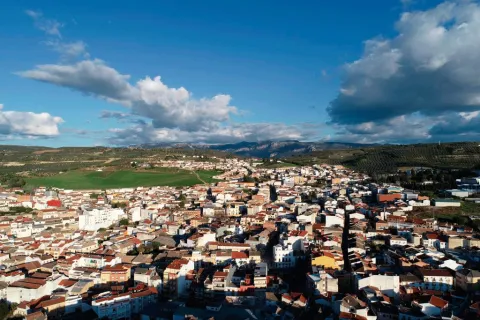
    Among the desserts, we should mention gachas dulces (sweet porridge), fried milk, and, of course, the traditional pastries made in the local convents (the Bernardas, Santa Clara and the Carmelite nuns).

    If you would like to enjoy a unique culinary experience, the San Ildefonso district is home to two Michelin-starred restaurants: "Bagá" and "Dama Juana".
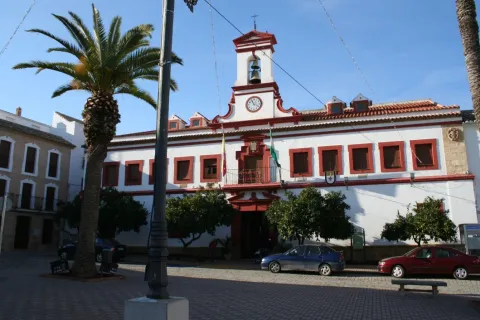
    Historia

    The human presence in the present city is seen from the calcolitic stage, also called the Copper Age, when there were several villages scattered around the area. In the surroundings of the city, rock paintings and remains of megalithic architecture have been found.

    Otra información

    Jaén is a city that houses a large number of legends very imbricated in the soul of its people. Maybe the most famous of them is the "Maline lizard"or"Jaén lizard. "The influence is such that it has become one of the symbols of the city, being present in its architecture, rides and concerts. It is based on the existence of a dragon (lizard) that had the population afraid and that with ingenious tactics its inhabitants managed to get rid of it.

    Loading map
    Preparing points of interest and routes...
    Imagen principal
    imagen
    Image
    a4c3eb80-f7b7-801d-a6f0-4d01416611b6?t=1603979481525
    Imagen principal
    Activado