Palace of the Encomienda
The first reliable constancy of documentary sources dates from 1,371, year of creation of the lord of Santisteban by Henry II in favor of Men Rodríguez Biedma, later last name Benavides. The lordship included the Villa de Santisteban del Puerto, along with the places of Castellar and the Navas. Later in 1,473, Henry IV made the title of Count by Sánchez de Benavides and Dávila with the same name. It is at this time that the construction of the walled enclosure that is still preserved begins.
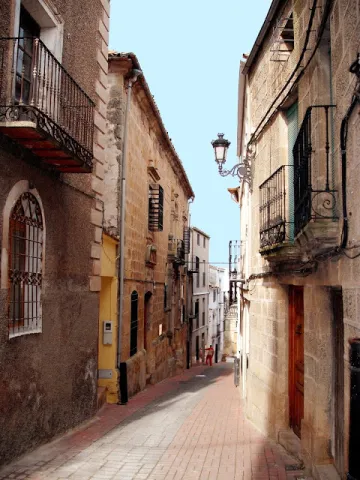
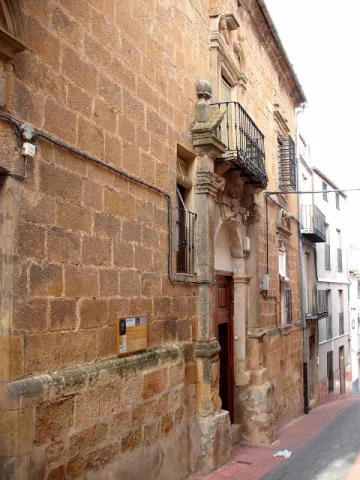
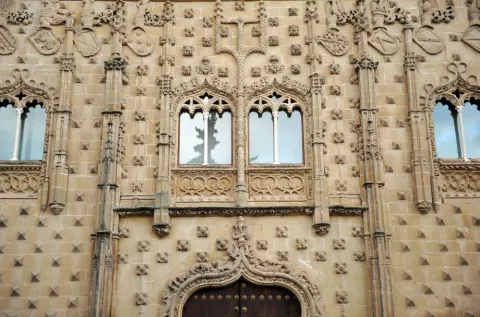
After the Christian Reconquest, the Castle loses its military function. The Dukes of Medinaceli, the last feudal lords of the place, kept within them the tower of the fourteenth century tribute, called Pallarés, and the courtyard of arms of the old fortress, raised a palace of good silery. In line with the Spanish stylistic fashion, the cover presents a robust half-point arc and blasphemous shields in the outgoing key and in the shrouds, framed by stylized columns and flaminers.
His name as the Palace of Medinaceli is due to the second half of the 18th century, when Louis Mary, Duke of Medinaceli, son of Pedro Alcántara and Maria Javiera of Gonzaga, obtained the title of Duke of Santisteban for his marriage to Joaquina de Benavides, daughter of Antonio Benavides and Ana Maria, sister of Pedro Alcántara.
At the end of the last century the Palace became a Liberal Casino, after the civil war it was the seat of the Labradores Circle and is currently the Casa Consistorial de Castellar, restored following the original guidelines.
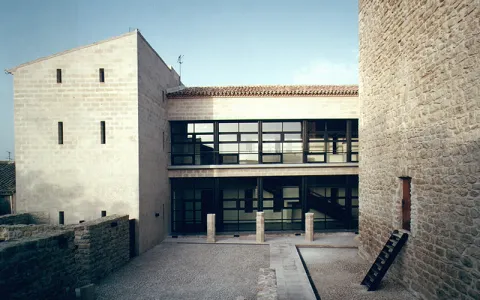
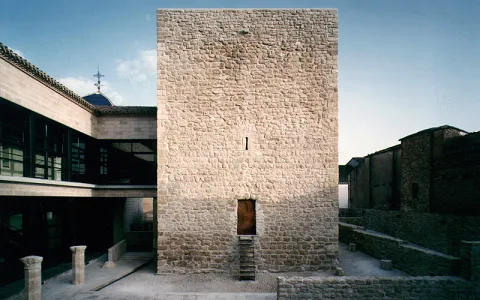
As for the tower, called Pallarés, of a square floor, it consists of two floors with ten meters of width and fifteen meters of height. From its first floor it is worth noting its beautiful pointed bow, and from its second floor, it is worth admiring its dome on the breast as well as its unrelenting steaks or saetries. In 1996 it was registered in the General Catalogue of the Andalusian Historical Heritage and since 1998 it has been hosting the Iberian Museum of Castellar, where you can see some of the important archaeological pieces found in the town, mostly bronze exvotes, as well as arrow tips, axes or ceramic containers.
The double personality of the whole, Castle and Palace, Palace and Castle is visible, with the refined and crude, civil and military, rustic and urban, naive and sophisticated concepts appearing in one and the other, both of which are the protagonists of this unique conglomerate.
The Palace of the Ducal House of Medinaceli and the Castle of Don Men Rodríguez, known by Castillo de Pallarés, overlap in a single monumental set.
The new building was the result of the aggregation of several houses, in which the body of the façade was transformed and unified. This mansion remained in use until 1851, when the Abbey of Alcalá la Real is abolished. After years of uncertain destination, he became an abacial archive and residence of Mr. Arcitara of the Ecclesiastical Territory.
In 1927 the building became municipal property; school classrooms and other services were installed. The Civil War caused major damage to the building that was restored by the Directorate General of Devastated Regions to give it new uses. In 1959 it was the seat of the Official Center for the Patronate of Secondary Education, which would then be the Institute of Baccalaureate "Alfonso XI." In 1995 the City Council and the Public Works Council of the Junta de Andalucía began their rehabilitation for uses more in line with the cultural demand of the city.
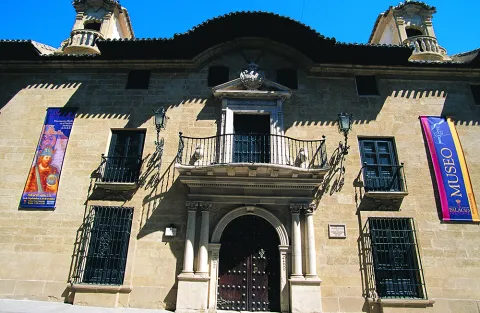
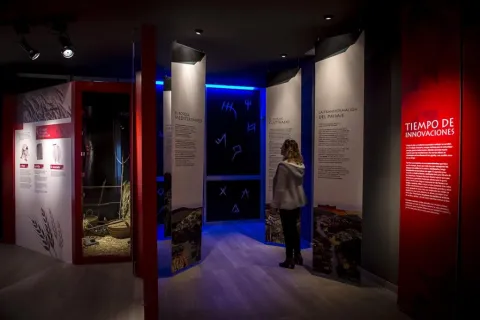
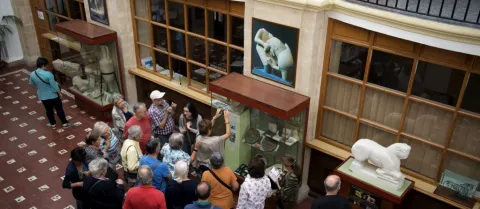
At present, after four years of rehabilitation, the Abacial Palace is the seat of the Municipal Museum. This new museum has been created with the intention of hosting for its exhibition, conservation and dissemination, funds of archaeological, ethnic, anthropological, paleontological and scientific type. All this heritage is organized in different exhibition spaces using new technologies. The visit to the museum makes it possible to know in an innovative way the heritage and vestiges of the past and the history of Alcalá la Real and offers the visitor a global vision to know the unique and attractive features of the city and its surroundings.
The Municipal Museum of Alcalá la Real is located in the old Abacial Palace. This was reconstructed in 1781 by the abbot Esteban Lorenzo de Mendoza and Gatica, due to the ruinous state in which the primitive palace was located within the Mota.
This diversity is conditioned by its irregular topography from the 400 m of Fuente Álamo to the 1.553 m of the peak of La Martina, as well as by the pronounced dominant climatology, with temos peratures that ascend to the 35 ° C du rante the months of vera no and descend to the -6 ° C in winter.
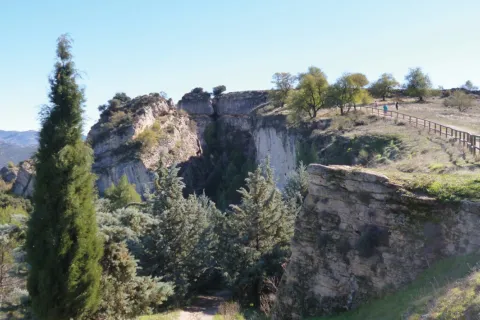
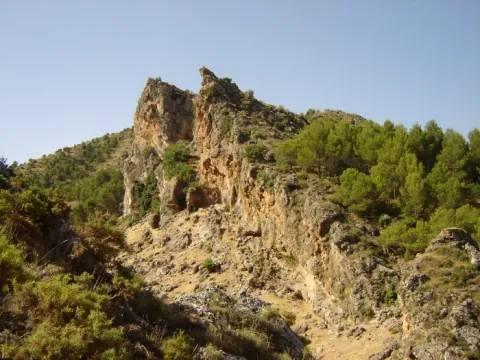
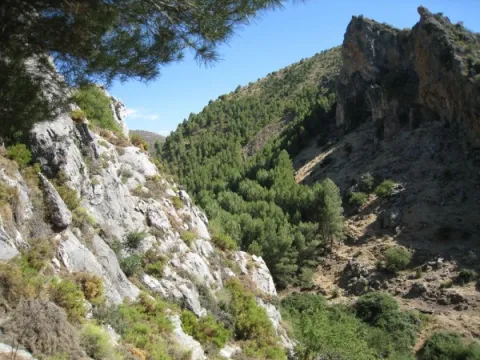
It is important to highlight forms such as Los Tajos, impressive cut and rocky, under which the natural vegetation is served, as a sign of what at one time were the Mediterranean bays of the southern Iberian Peninsula, species such as the oak (Quercus rotundifolia) and the whim (Quercus faginea) dominate the arboreum stratum and others like the peonies (Poeoni broteroi), madreselvas (Lonicera implexa), majuelos (Crataegus monogytoo, or the forest, etc.).
In these enclaves, and developing on the limestone walls, we can find an ende- same plant from the south of the Iberian Peninsula from which only 22 populations of Andalusia have been found and is listed as in danger of extinction, the Saetica Sarcopacnos subsp. Baetica.
As for the fauna that we can find in this ecosystem, from birds such as the vulgar cernicalo (Falco tinnunculus), gratilla (Corvus mone-du / o), piquirroja (Pymhocorax pyrrohocorax), crows (Corvus corax), red roquero (Monticola saxatilis), etc. We can also observe the occasional passage of some perdicular eagle couple (Hieraaetus fasciatus), the migration of the leonate vultures (Gyps fulvus) and other birds found in the forest area such as the boy owl (As / o otus), the real red colirar (Phien / curus phoen / curus), the oropen (On'o / us or / us), etc.
There is also a great diversity of wild mammals in this area that seek refuge in this enclave, although they are species that are difficult to observe, we can detect their presence based on prints and other records, species such as the Garduña (Tuesday foina), Gin (Genettagenetta), badger (Meles meles) and a large number of microfuels that act as the basis of the trophic chain.
It is also interesting to discover the area of Los Llanos, a large plateau where the tree vegetation is absent and where the number of stone or majano accumulations that give the territory a lunar look stand out.
Despite their yerma appearance, the Llanos have high biodiversity and possibilities for observing wildlife. The flora is characterized by the abundance of aromatic species such as lavandas (Lavandula), rosemary (Rosamrinus officinalis), tomi llos (Thymus) etc and fauna, we find a large number of birds linked to this type of large and unequipped ecosystems of arboreal vegetation such as the common cogujada (Calerida cristata), the montesina cogujada (Calenda íeck / oe), the chitovia (Lullulina arbórea), the calandria (Melanocorypha cala), the common (Saxacarus), the (Saguluus párama), the (La páribana (Párárágina), the (La párágina), the (Página), the common (La página), the
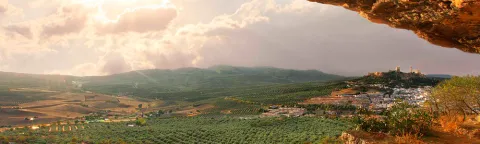
Alcalá la Real is located within the betico territories of the Andes, characterized by a great diversity of landscapes and ecosystems.
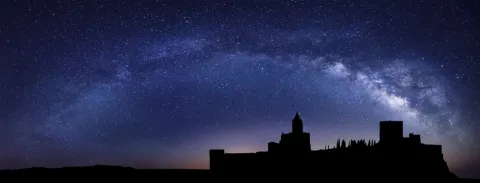
The South Sierra de Jaén, which obtained the Starligth Reserve certificate in 2014, retains the natural lighting and nocturnal conditions of the night sky intact. It is also a space where a commitment has been made to the defence of the quality of the night sky, access to the light of the stars and the different associated values.
The main building, about 70 square meters, houses the multi-purpose room and library, observatory control room, small kitchen, toilet and archive.
To the north of the main building and completely independent, is the observatory itself. The lower floor serves as a storage room for the various instrumentation and accessories of the telescopes and has a small workshop for the repairs.
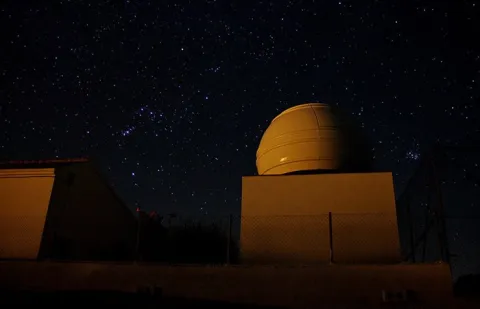
The 4-meter-in-diameter Scope Dome dome, installed on the top, has a Meade S / C LX200-ACF GPS telescope of 0.30 meters of opening at f / 10, in an equatorial fork mount, supported by an independent rigid column.
The whole of the Andalusian Observatory of Astronomy: Dome, telescope as well as its battery of accessories and instrumentation can be operated remotely from anywhere.
On the terrace of the control room there is a weather station specially designed for use in an astronomical observatory and an AllSky automatic camera for meteor detection.
In the village of La Pedriza, 8 km from Alcalá la Real with an impressive dark sky, the Einstein Society of Astronomy, with the collaboration of the Alcalá la Real City Council, has first-class facilities for astronomical observation and dissemination: the Andaluz Observatory of Astronomy.
In this necropolis was buried in the 5th century BC the most important impressive sculptural ensemble of all Iberian culture and that can now be seen in the Museum of Jaén.
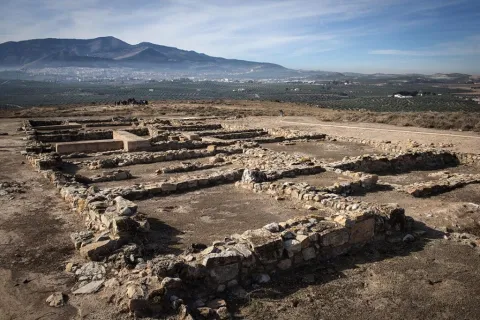
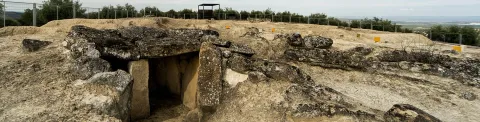
In the archaeological site and in its Visitors Center you will find the keys to understanding this sculptural group and the meaning of death in the Iberian world. Cerrillo Blanco is a funerary tumulum of the Tartesic era (7th century BC) with 24 individual graves in pits and 1 megalytic in which two individuals were buried. Towards the 5th century BC, it was buried in ditches covered with large slabs, an Iberian sculptural set intentionally destroyed. Both by the amount of pieces (approximately 1400 fragments) and by their artistic quality is the most important of Iberian sculpture. This set tells us and tells us the story of how a group of aristocrats became powerful and came to rule the important city of Obulco in Porcra.
The visit to the site is complete with the Porcra Museum which is located in the 15th century Boabdil Tower, in the historic center of the town. This museum has an important collection of Ibero-Roman sculptures. The museum offers guided tours with prior appointment and activity programming throughout the year that you can find on your website:www.museoatocuna.com
Cerrillo Blanco is one of the most emblematic places of Iberian culture. Walking through this site, you will know an inhumation necropolis dating back to the 7th century BC.
According to the research, it is a necropolis whose extension would surround the entire town, making it one of the most important at the national level.
In 1954, the first archaeological excavation was carried out, 22 tombs of which only 7 remained intact. The inspected tombs had an ovoid and excessively elongated form, not keeping a certain orientation.
Next to this visigoda necropolis - just 30 metres - is another Muslim era.
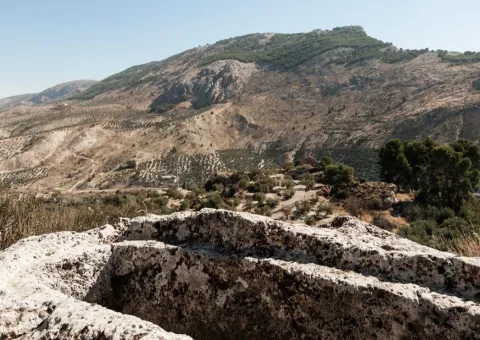
Located in the municipality of La Guardia, just 500 metres from the urban core, is this Visigoda period site whose tombs are excavated in the rock.
Depression of karmic origin that belongs to the typical landscape of the Mediterranean mountain. At the same time, we will be able to see a large number of sections, caves, river courses, Mediterranean flora and fauna.