Saltar al contenido principal
icon-intereses-senior

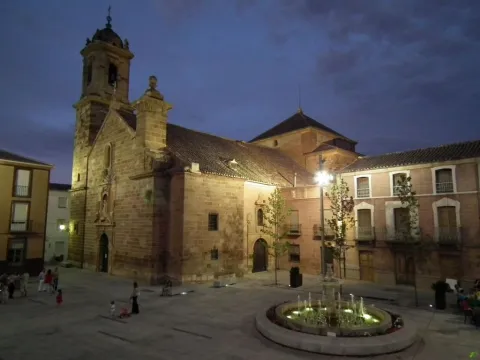
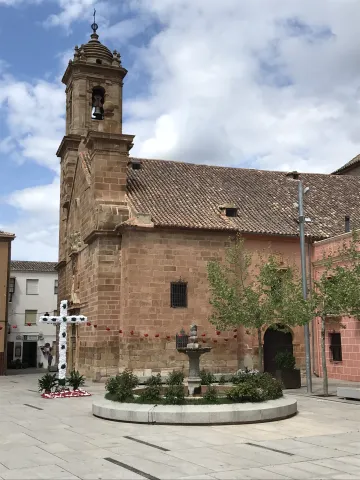
Parish Church of Nuestra Señora de la Paz

Submitted by brandcode_deweloper on
Id
8088298
Descripción
Descripción larga

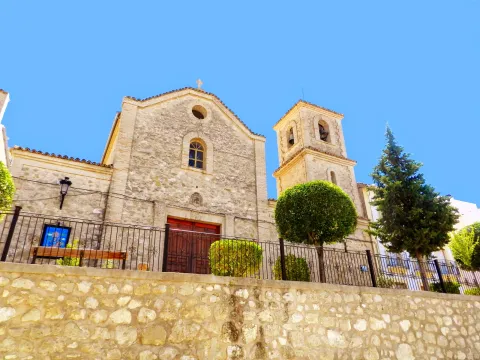
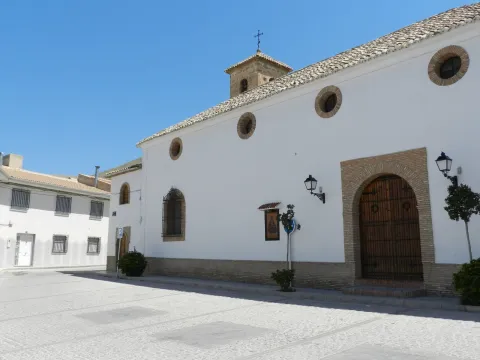
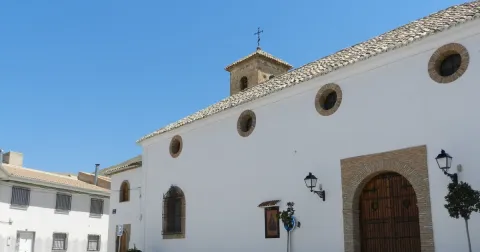
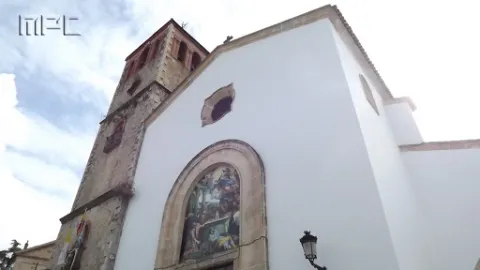
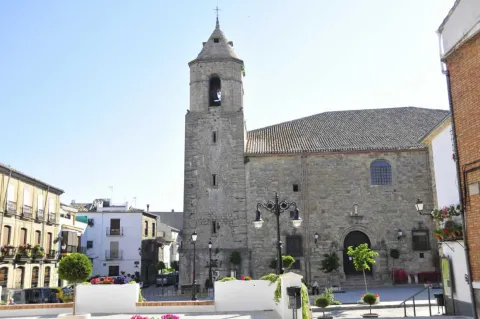
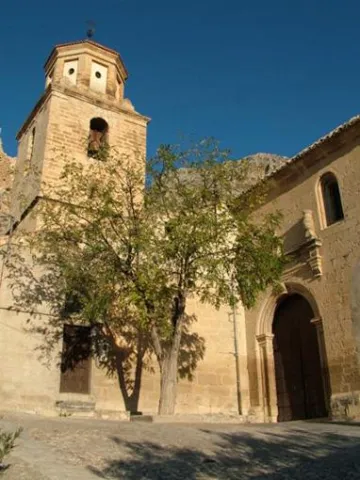
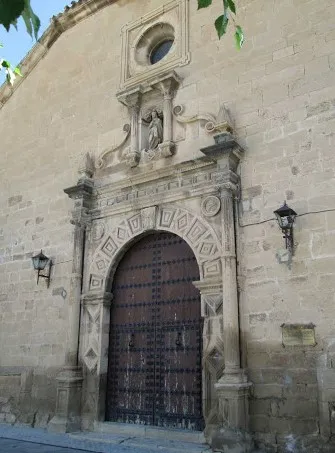
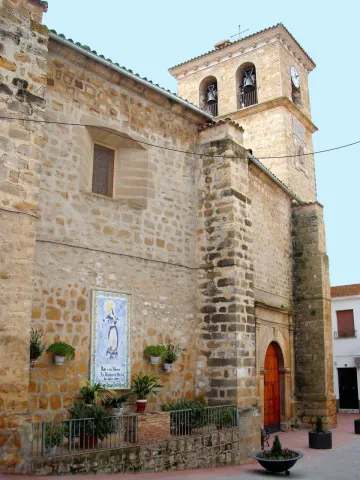
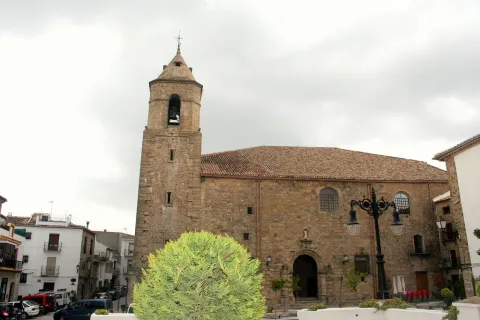
Its cover that coincides with the central ship is raised vertically with an intellized door that is preceded by a few steps, and, on it, on the same axis, a stylized window with a half-point arch. It also presents another circular window also highlighted with respect to the wall, and, closing on top of the main facade, a small stone cross, which marks the central axis. It is above the tower, with a square base, located on the right of our view, with three bodies separated by two strands and reinforced corners, and in the bell tower, large gaps with half-point arches and four-water tiles. To visit: time of worship.

Breve descripción

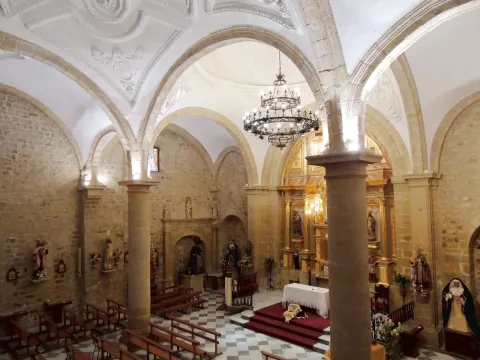
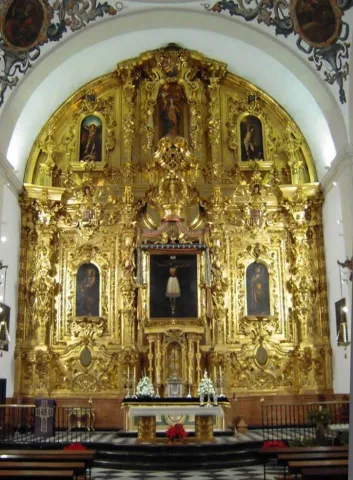
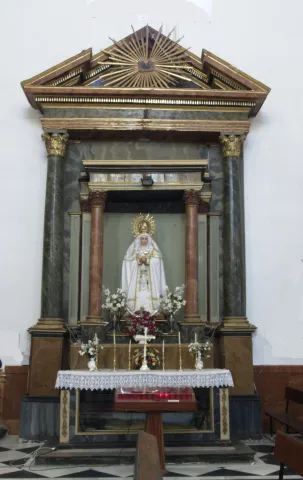
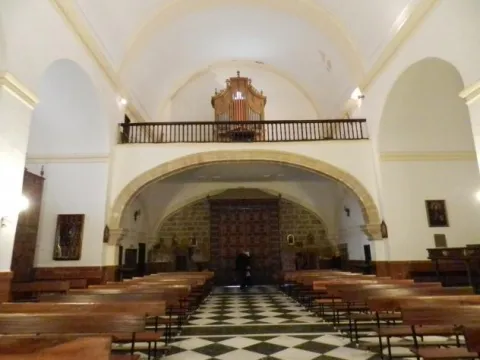
The current church was completely rebuilt in the 1970s. The old one was ordered to be built by Cardinal Lorenzana, Archbishop of Toledo in 1787, and from it are preserved the shield on the outside, which shows the imposition of the casulla to San Ildefonso (remember the religious affinity with Toledo, a city to which this saint is linked) and which comes from the hermitage of "Chillúevar Vieja"; the baptismal pile, dated in the 18th century, and the ancient crown of the Virgin.

Telecomunicaciones
Sitio web
www.chilluevar.es
Teléfono de contacto
953 717 712
Ubicación
Código Postal
23477
Latitud
38.003627
Longitud
-3.030800
Dirección
Av. de Andalucía, 50
Municipio
Ubicación en el mapa
POINT (-3.0308 38.003627)
Imágenes carrusel
imagen
Image
Iglesia%20Parroquial%20de%20Nuestra%20Se%C3%B1ora%20de%20la%20Paz2.jpg
Imagen principal
Desactivado
Imágenes cabecera
imagen
Image
Iglesia%20Parroquial%20de%20Nuestra%20Se%C3%B1ora%20de%20la%20Paz.JPG
Imagen principal
Activado
Loading map
Preparing points of interest and routes...

Parish Church of Nuestra Señora de la Natividad

Submitted by brandcode_deweloper on
Id
4853796
Descripción
Descripción larga

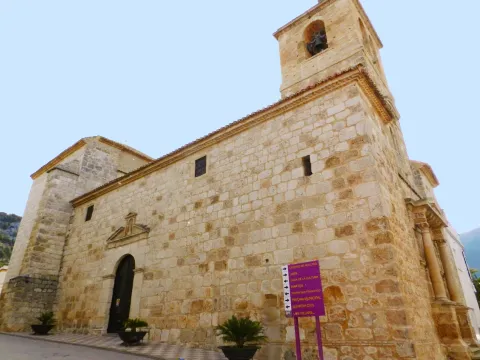
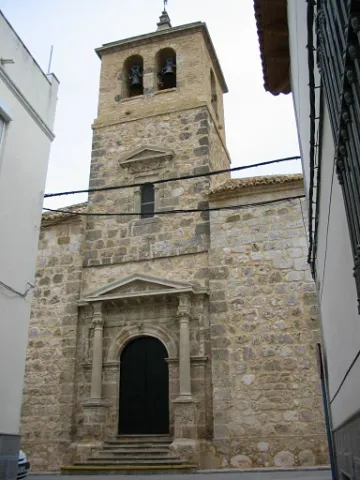
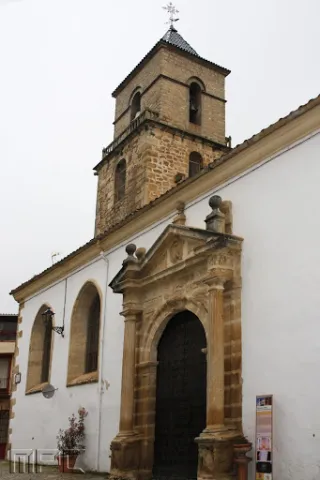
On its outside it exhibits a commendable dignity and uniqueness despite the constructive simplicity and budgetary constraints. The main cover rises on a small staircase and is emphasized by the tower of the church bell tower, on which it is curiously located in its first body. Its disposition is, however, the traditional: a half-point arch with fillets on the imposts, framed by symmetrically modulated Corinthian columns that rise on pedestals that, in turn, give perspective of depth to the cover and support the empleamento, whose frieze contains an epigraphic text. It is topped by a triangular fronton with a salient held by mends. The most significant thing, without a doubt, is the Mannerist of the second body of the tower, a kind of ornamental mask with garlands, inspired by the drawings of Serlio, which denotes very clearly the authorship of Francisco del Castillo. The third body welcomes the bells and ends up in the form of a chapitel. It has another cover on a wall of scarcely decorated masonry on the west side, with terraced pilasters and half-point arch with triangular front. Repeat the scheme in a second body, on a small scale, to host a baking with the stone image of the Virgin. The church was declared in 1994 Good of Cultural Interest.

Breve descripción

It was built in the second half of the 16th century by the express desire of the Emperor Charles V. The traces were made in 1559 no less than by Francisco del Castillo "El Mozo," the prestigious Italian-formed architect, who led the works until his death, after which his brother Benito continued them. The factory made slow progress due to a lack of financial resources and was not yet completed in 1600. The temple was raised, as the customs of the Order of Calatrava established, over the place occupied by the ancient hermitage of Our Lady of the Star, and again it should be left under the name and protection of the Virgin. A single ship, with rectangular floor and drawer structure, which was covered by a false canyon and wood vault, has on its side niche chapels, opened by half-point arches, to host small altars. The dome near the presbytery retains in its breast the paintings of the 17th century, while those that can be observed in the intrados are from the second half of the 20th century.

Telecomunicaciones
Sitio web
www.jamilena.es
Teléfono de contacto
953 566 078
Ubicación
Código Postal
23658
Latitud
37.746730
Longitud
-3.911430
Dirección
C/ Iglesia, 0
Distrito
Municipio
Ubicación en el mapa
POINT (-3.91143 37.74673)
Tipos de punto de interés
Imágenes carrusel
imagen
Image
Iglesia%20Nuestra%20Se%C3%B1ora%20de%20la%20Natividad.JPG
Imagen principal
Desactivado
Imágenes cabecera
imagen
Image
209020-iglesia%20%281%29.jpg
Imagen principal
Activado
Microsite al que pertenece
Loading map
Preparing points of interest and routes...

Parish Church of Nuestra Señora de la Encarnación

Submitted by brandcode_deweloper on
Id
4485607
Descripción
Descripción larga

The tower is projected to the outside by a volume of square floor attached to the temple's feet. This one has a basic plant of three ships separated by arches pointed with a bone on its vertices, located in polygonal supports with capitals of great diversity and wealth in its labra, of protoromanic inspiration. The cover of the central ship is flat, made up of jácenes that fade over canes. This same cover is seen on the side ships, although with a soft inclination towards the perimeter walls. On the left there is the addition of two bodies, one of a quadrangular and one of a rectangular. In the Gospel wing, two capillas- hornaces are opened, the closest to the presbytery area is rectangular and covered by a half-canyon vault with false fajon arches that are used in mends. After a pointed bow, the shrimp covered by a half-orange dome is accessed on the breast. The cruise and part of the sacristy were reformed in the 17th.

In 1952 it was remade its deck, raising its walls about two meters. The presbyterium, of flat tester, is linked by the basilical plant through three arches, supported by powerful pillars of square-section stone, whose central vain offers greater height and light than the sides. Parallel to the presbyteral area is the Sacristy covered by canyon vault with four lunetes and in which the only existing shield of the moment is preserved, whose heraldic reflects the weapons of Bishop Don Baltasar Moscoso and Sandoval (1619- 1646).

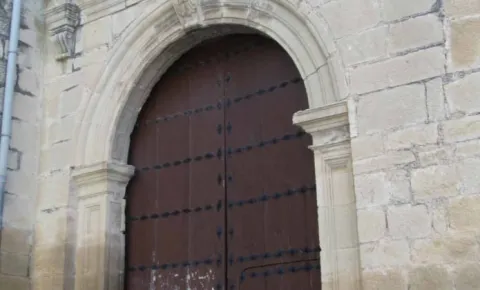
On the main façade, the church has a baroque cover (carved from the 17th century) with a half-point arch, a flormold and a key highlighted with acanto. On the sides, the flanking of two columns is free of diamond-point-decorated plates. It is overcome by a broken fronton where its vertices are crowned by pinacles with balls. At the foot of the temple there is a posterity of the primitive Arab castle made up of a half-point frame of large dovels, framed by rectangular scones.

It was declared Good of Cultural Interest (B.I.C), with the category of monument, by Decree 226 / 1992 of 30 December 1992, under the protection of the generic Declaration of the Decree of 22 April 1949, and Law 16 / 1985 on the Spanish Historical Heritage.

Breve descripción

The tower, the most ancient monument of the town, served as a defense of a primitive visigoda and later Arab, protagonic fortification, initiated in the 14th century, raised in the old defensive enclosure, taking advantage of earlier elements such as the tower turned into a bell tower, passing after the reconquest to play the emblematic role of torre-bell of the church erected between the XIII-XIV centuries.

Telecomunicaciones
Sitio web
www.castellar.es/iglesia-nuestra-senora-la-encarnacion
Teléfono de contacto
953 460 051
Ubicación
Código Postal
23260
Latitud
38.257320
Longitud
-3.129550
Dirección
Pasaje la Iglesia, 2
Distrito
Municipio
Ubicación en el mapa
POINT (-3.12955 38.25732)
Tipos de punto de interés
Imágenes carrusel
imagen
Image
Mon276.jpg
Imagen principal
Desactivado
imagen
Image
Iglesia%20parroquial%20de%20Nuestra%20Se%C3%B1ora%20de%20la%20Encarnaci%C3%B3n.jpg
Imagen principal
Desactivado
Imágenes cabecera
imagen
Image
Iglesia%20parroquial%20de%20Nuestra%20Se%C3%B1ora%20de%20la%20Encarnaci%C3%B3n3.jpg
Imagen principal
Activado
Microsite al que pertenece
Loading map
Preparing points of interest and routes...

Parish Church of Nuestra Señora de la Cabeza

Submitted by brandcode_deweloper on
Id
4535554
Descripción
Breve descripción

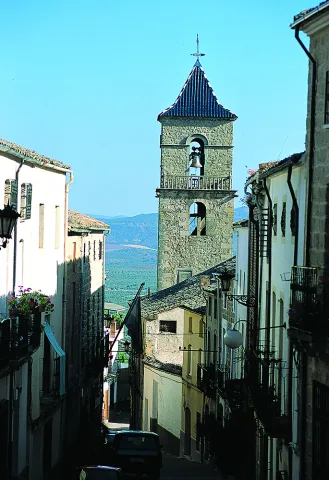
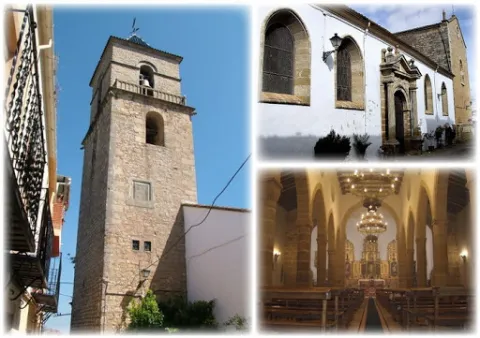
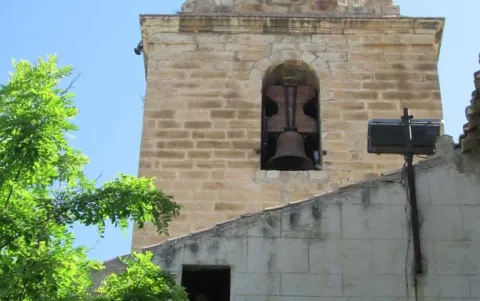
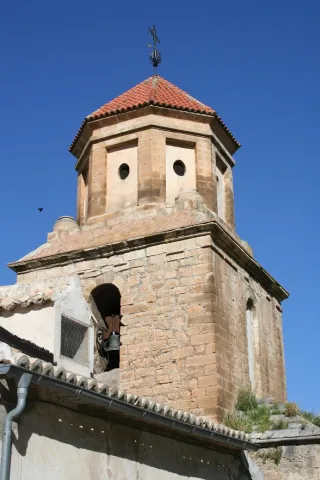
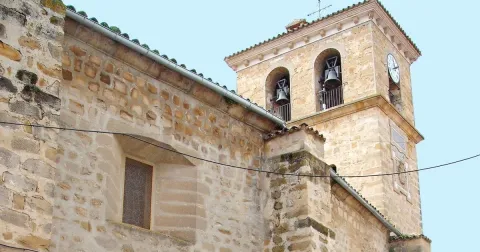
This Church was ordered to be built by the Archbishop of Toledo Don Francisco Antonio de Lorenzana and Buitron in 1778. Its most characteristic element is its tower, which is a visual reference point for the entire population and the only vestige of the 18th century, although like the church, it has been restored in different times. The square-based tower has a bell body with four holes covered with half-point arch and four-water roof.

Telecomunicaciones
Sitio web
www.huesa.es/el-municipio/patrimonio-historico.html
Teléfono de contacto
953 715 542
Ubicación
Código Postal
23487
Latitud
37.765520
Longitud
-3.075180
Dirección
C/ Ramón y Cajal, 9
Municipio
Ubicación en el mapa
POINT (-3.07518 37.76552)
Tipos de punto de interés
Imágenes carrusel
imagen
Image
Nuestra%20Se%C3%B1ora%20de%20la%20Cabeza%20en%20Huesa.JPG
Imagen principal
Desactivado
imagen
Image
Nuestra%20Se%C3%B1ora%20de%20la%20Cabeza%20en%20Huesa2.jpg
Imagen principal
Desactivado
Imágenes cabecera
imagen
Image
DSCN0271.JPG
Imagen principal
Activado
Loading map
Preparing points of interest and routes...

Parish Church of Nuestra Señora de la Asunción. Beas de Segura

Submitted by brandcode_deweloper on
Id
7968015
Descripción
Descripción larga

Inside there is a painting on the wall covering the wide absidal space. His iconography contains three main themes: The Coronation of the Virgin, The Ascension of the Lord and The Visitation.

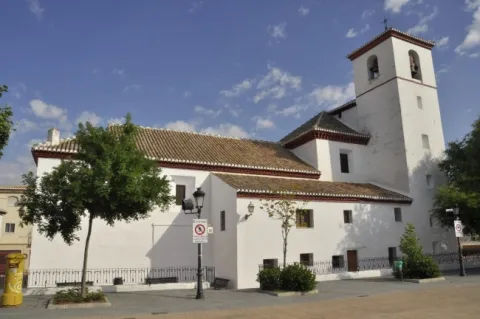
On the facade of the Church you can see an impressive fresco. From its exterior stands the bell tower with a square base in a tile pinnacle.

Breve descripción

This medieval church, formerly under the title of Santa Maria de Gracia, has suffered several percans, the most serious of which the French troops have given in their flight after the defeat of Bailén. From 1825 a long period of works was started for its restoration.

Telecomunicaciones
Sitio web
https://www.facebook.com/iglesia.ntra.sra.asuncion/
Ubicación
Código Postal
23280
Latitud
38.250740
Longitud
-2.887280
Dirección
Plaza Iglesia, 1
Distrito
Municipio
Ubicación en el mapa
POINT (-2.88728 38.25074)
Tipos de punto de interés
Imágenes carrusel
imagen
Image
parroquia%20beas2.jpg
Imagen principal
Desactivado
Imágenes cabecera
imagen
Image
parroquia%20beas.jpg
Imagen principal
Activado
Loading map
Preparing points of interest and routes...

Parish Church of Nuestra Señora de la Asunción

Submitted by brandcode_deweloper on
Id
4868894
Descripción
Descripción larga

The entrance to the second factory is made through a pointed diaphragm arc. It has a Renaissance altarpiece presided over by the Virgin of the Assumption.The two covers are protected with wooden ranger between counterstrengths. They're Renaissance.At the foot is the 16th century tower, which has three bodies, the last one with bell holes and a pyramidal chapel finish.

Breve descripción

Built between the 14th and 15th centuries and reformed in XVIII. It consists of a single central body and several side chapels. Two factories are distinguished: the 18th century section that is covered with a half-canyon vault, with fajon arches supported by a classic molding on crate pilasters.

Ubicación
Latitud
38.386610
Longitud
-2.582280
Dirección
Callejón Iglesia, 1
Distrito
Municipio
Ubicación en el mapa
POINT (-2.58228 38.38661)
Tipos de punto de interés
Imágenes carrusel
imagen
Image
Iglesia%20parroquial%20de%20Nuestra%20Se%C3%B1ora%20de%20la%20Asunci%C3%B3n_siles.jpg
Imagen principal
Desactivado
Imágenes cabecera
imagen
Image
main_image_94251.jpg
Imagen principal
Activado
Loading map
Preparing points of interest and routes...

Parish Church of Nuestra Señora de la Asunción

Submitted by brandcode_deweloper on
Id
6621478
Descripción
Descripción larga

Its covers are of simple structure but of great ornamental interest. The main one, of the XVII, opens with a half-point arch, between Ionian columns, geometrically decorated with mannerist-style breaks. In the center a hornadine houses a sculpture of the Immaculate. It has two other covers, both with half-point bow, the northern cover of 1570, with flamboyant care at the ends of the cornice, which is attributed to Francisco del Castillo "el Mozo" and his brother Benito; and the southern cover, dated 1620, with oval shield, aletons and pinnacle.

Breve descripción

The Parish Church of Nuestra Señora de la Asunción, near the castle, is built on a rift of the land and has magnificent silery and remarkable covers. The oldest, Gothic part, are the header and the cruise, with starvaults of tercelets. The three ships have docile columns and half-point arches Renaissance. Its quadrangular tower, with four half-point arches to locate the bells, is made octagonal in the second body. It has two magnificent 18th-century pulpits and a baptismal 16th-century pile.

Telecomunicaciones
Sitio web
www.bedmargarciez.es
Teléfono de contacto
953 760 032
Ubicación
Código Postal
23537
Latitud
37.822800
Longitud
-3.410190
Dirección
Av. Virgen de Cuadros, 9
Distrito
Municipio
Ubicación en el mapa
POINT (-3.41019 37.8228)
Tipos de punto de interés
Imágenes carrusel
imagen
Image
30.jpg
Imagen principal
Desactivado
imagen
Image
20.jpg
Imagen principal
Desactivado
imagen
Image
Img%20083.jpg
Imagen principal
Desactivado
imagen
Image
main_image_44011.jpeg
Imagen principal
Desactivado
Imágenes cabecera
imagen
Image
unnamed.jpg
Imagen principal
Activado
Microsite al que pertenece
Loading map
Preparing points of interest and routes...

Parish Church of la Asunción

Submitted by brandcode_deweloper on
Id
914472
Descripción
Descripción larga

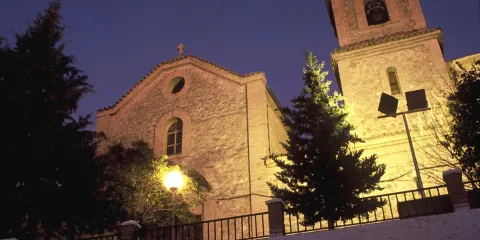
Professor Pedro Galera includes this temple in the artistic production of Andrés de Vandelvira, as this is the basis for certain data discovered by him in the Diocesan Historical Archive of Jaén. The opinion is Diego Angulo, expressed in the report of the Royal Academy of History for the declaration as a historical-artistic monument.

Under the episcopate of Don Francisco Delgado (1566-1576), a large part of the factory had to be carried out, placing its shield on the arch of the major chapel. Several years ago, a chapel on the side of the Gospel, dated 1561, was erected. According to V. M. Ruiz Fuentes, in 1572 the church is still to be completed, in this year the cantero Pedro Hernández of Cantabrana being forced to "(...) remove the stone that was necessary to make two pillars in the yglesia of Santa Maria from the place of Rus with certain arches and labrallos on my coast (...)." The following chronological data is on the Gospel side access cover, dated 1583. The tower, of a rectangular floor, appears to have been raised under the command of Bishop Sancho Dávila (1600-1615), whose shield appears on it. In 1820 there were serious problems, which led to the drafting of a project for its reconstruction.

In 1950, other works were carried out, as recorded in an inscription carved around the blasphon of Bishop Dávila. The plant is of living room, with external contrasts (those of the baked feet), of almost quadrangular proportions, which increases the sense of centralization, not highlighting to the outside its flat header, but in the interior with a powerful arc of half point. It is divided into three ships with two sections and supports columnated on half-point arches; the space in front of the presbyterium is covered with an orange half, with the Evangelists, with a baroque bill, on the breast; the central vault is decorated with a mixtilineum rhyme combined with triangular frames at the angles; with bays are covered the rest of the covers, except the cor- located at the feet on a trib- that is made with a half-barrel. The access covers, as well as the capillas-hornacinas and other constructive elements denounce a simple, but clearly classical, aesthetic.

Andrés de Vandelvira in this case traces a church according to the economic conditions of its factory, but the result is not exempt from some elegance thanks to the columnated supports provided, to the cornices, arqueries and vaults laid. The architectural joint shows a clearly vandelvirian environment.

OTHER ARTISTICAL MANIFESTIONS NOT ARCHITECHANIC.

The main altarpiece, a piece of little merit, houses the image of Our Lady of the Assumption, a size made in 1964 by the Malagasy sculptor Francisco Palma Burgos. Of interest is the set of pieces that make up the museum of goldsmiths, installed in a small room at the foot of the church.

Breve descripción

Monument, Good Cultural Interest. Incoado 08 / 02 / 1983. On the ancient Gothic church, of which some remains are preserved on the feet, the present temple was carved in a quarry stone throughout the 16th century. There are few documentary news about the constructive process, but some inscriptions and the heraldic episcopal preserved in its factory can mark the pace of the works.

Telecomunicaciones
Sitio web
www.parroquiarus.blogspot.com
Teléfono de contacto
953 770 031
Ubicación
Código Postal
23430
Latitud
38.047230
Longitud
-3.461670
Dirección
Callejón de la Iglesia, 4
Municipio
Ubicación en el mapa
POINT (-3.46167 38.04723)
Tipos de punto de interés
Imágenes carrusel
imagen
Image
Iglesia%20parroquial%20de%20la%20Asunci%C3%B3n%20de%20rus4.jpg
Imagen principal
Desactivado
imagen
Image
Iglesia%20parroquial%20de%20la%20Asunci%C3%B3n%20de%20rus3.JPG
Imagen principal
Desactivado
imagen
Image
Iglesia%20parroquial%20de%20la%20Asunci%C3%B3n%20de%20rus.JPG
Imagen principal
Desactivado
imagen
Image
Iglesia%20parroquial%20de%20la%20Asunci%C3%B3n%20de%20rus2.JPG
Imagen principal
Desactivado
Imágenes cabecera
imagen
Image
DSCF4342.JPG
Imagen principal
Activado
Microsite al que pertenece
Loading map
Preparing points of interest and routes...

Parish Church of la Asunción

Submitted by brandcode_deweloper on
Id
4584953
Descripción
Descripción larga

The church is composed of a living room (in German Hallenkirchen) three ships separated by four solid pillars, being the largest central ship, is covered with vaulted vaults in the center and in the corners, being the remaining vaults of arista, all consist of a remarkable and delicate mannerist decoration that augurs the end of the renaissance and the beginning of the baroque. The major chapel, which stands out for its great breadth, is a rectangular space that is covered with a half-orange vault on the breast with the shield of the bishop of Jaén, Sancho Dávila Toledo. You can see the image of the head of the parish in a temple of the 1960s that replaces the former altarpiece lost by the religious persecution of the Civil War, and paintings from the early years of the 20th century. At the foot of the temple is the chorus silery, in Baroque style, of great beauty and quality and one of the best in the province. The sacristy stands out with its drawers linked to Esteban Jamete, beautiful ternos of the Xvi century and Eucharistic vessels

Breve descripción

The first denomination of this temple was that of Santa Maria de Iznatoraf, whose existence is already documentary evidence at the beginning of the xiv century, specifically in 1311. It is very likely that this ancient church is the largest mosque of the Muslim medina that was sacraalized after the conquest of Bishop Rodrigo Jiménez of Rada together with Fernando III El Santo. In the 11th century the present church was erected whose works began in 1583 and ended in 1591, with small additions that were completed in 1602. He is in front of the Alonso Barba factory, disciple of Andrés de Vandelvira. It was used in its construction white stone brought from neighbouring Sorihuela del Guadalimar and pine wood from the Segura saw, contributing to the construction of Philip II.

Telecomunicaciones
Sitio web
www.facebook.com/Parroquia-Iznatoraf-Ntra-Sra-de-la-Asunción-356862361377293/
Teléfono de contacto
953 451 151
Ubicación
Código Postal
23338
Latitud
38.157660
Longitud
-3.032220
Dirección
C/ San Fernando, 0
Municipio
Ubicación en el mapa
POINT (-3.03222 38.15766)
Tipos de punto de interés
Imágenes carrusel
imagen
Image
Iglesia%20de%20la%20Asunci%C3%B3n.jpeg
Imagen principal
Desactivado
Imágenes cabecera
imagen
Image
10174098886_bf964ab530_b.jpg
Imagen principal
Activado
Loading map
Preparing points of interest and routes...

Church of Our Lady of Expectation

Submitted by brandcode_deweloper on
Id
4571223
Descripción
Descripción larga

The canvas, owned by D. Jerónimo de Sanvitores and de la Portilla, accidentally arrives in this villa after being named, this noble burgalés, corridor of Guadix. It was a copy of the Christ of Burgos, which was sold today in the cathedral of that city. The story of a series of miraculous events, spread through Eastern Andalusia, and once the canvas is donated to this parish, there will be many pilgrims who approach it, generating a high number of donations that, well managed, accelerated the pace of construction.

The process of building and furnishing the temple is very wide, not ending until the beginning of the 19th century with the construction of the sacristy. The works began at the feet; thus, already advanced in the 17th century, the main facade and the first two bodies of the tower, the choir and the first two lateral chapels had been raised. In the 18th century, the header (where the altar is located), the bell body and the two remaining side chapels are erected. For Lázaro Gila Medina, to which we follow in this text, we are facing an interesting example of the Andalusian baroque, although in some specific details, the neoclasicism abounds.

The plant is a Latin cross inscribed in a rectangle, called "drawer," which is typical of the baroque. He rose up under the title of the Expectation of Mary, and since 1637 he was also a sanctuary of the Holy Christ of Burgos. Throughout the 20th century he suffered the loss of many of his movable goods, much of the paintings and the altarpieces of the side chapels, which are not preserved. However, the church was declared a historical - artistic monument of a national character (Real. D. 3306 / 1981); today, Good of Cultural Interest. The documentation of the parish archive, since the same 16th century, has been kept in full.

Breve descripción

In 1587 the works began; although they would slowly advance until 1637, the year from which the rapid devotion that he raised in the town, the canvas of the Most Holy Christ of Burgos, encouraged the then prior of the parish, Dr. Francisco Palomino of Ledesma, to promote a project of greater magnitude.

Ubicación
Latitud
37.704890
Longitud
-3.285616
Dirección
Plaza de la Constitución, 9
Distrito
Ubicación en el mapa
POINT (-3.285616 37.70489)
Tipos de punto de interés
Imágenes carrusel
imagen
Image
6.jpg
Imagen principal
Desactivado
imagen
Image
7.jpg
Imagen principal
Desactivado
imagen
Image
Iglesia%20Cabra%20de%20Santo%20Cristo2%20%281%29.jpg
Imagen principal
Desactivado
imagen
Image
Iglesia%20Cabra%20de%20Santo%20Cristo%20%281%29.jpg
Imagen principal
Desactivado
Imágenes cabecera
imagen
Image
Iglesia%20Cabra%20de%20Santo%20Cristo3%20%281%29.jpg
Imagen principal
Activado
Microsite al que pertenece
Loading map
Preparing points of interest and routes...