Saltar al contenido principal
icon-intereses-senior

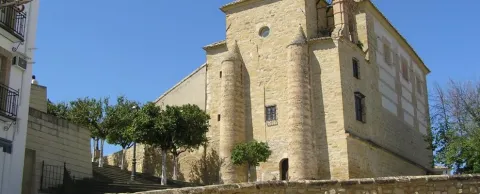
Church of the former San Francisco convent

Submitted by brandcode_deweloper on
Id
915123
Descripción
Descripción larga

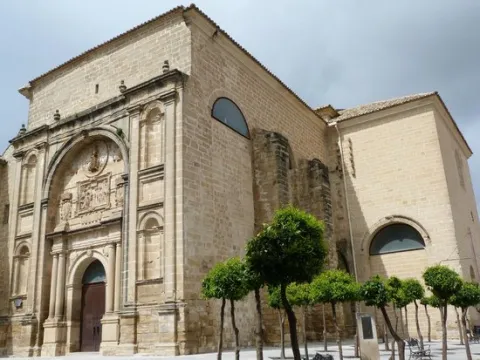
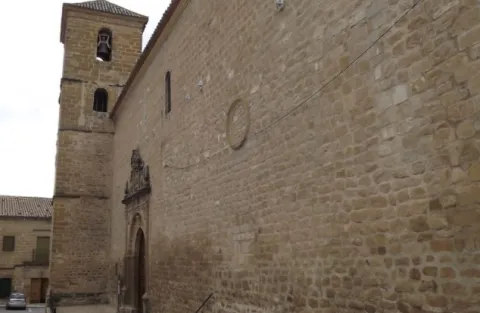
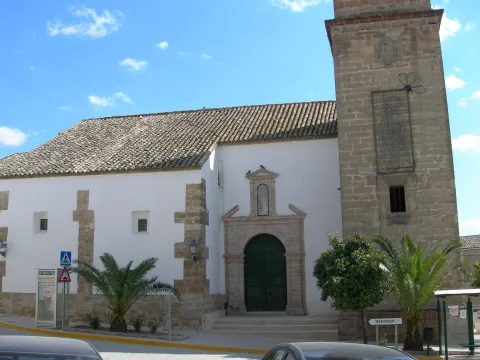
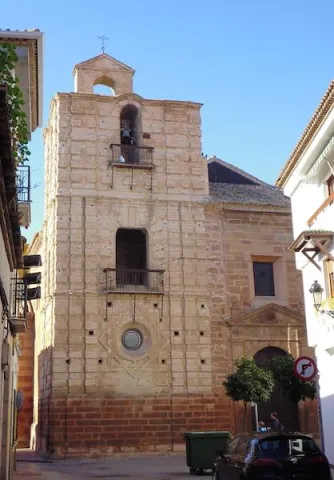
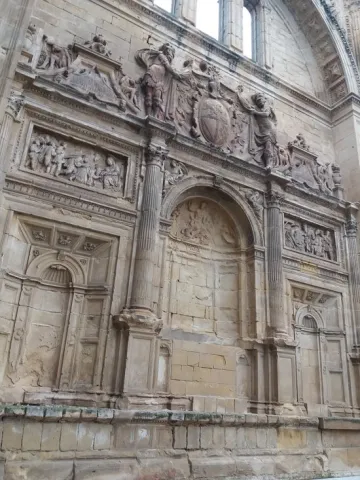
The election was in the Baezan noble family of Los Benavides. The transfer of the patronate was made in Valencia de Benavides, being its descendants and, after solving various disputes, the promoters of such an important company, which certainly intended to emulate the funeral chapel of the Saviour of Ubeda, built by the secretary of the Emperor Charles V, Francisco de los Cobos. The will of Valencia de Benavides, granted in 1538, requires the endowments to complete the factory, which is obviously intended for its burial and descendants. The work of the new church had to begin at the beginning of the 1540's, and it was extended for many years, since the major chapel had not yet been completed in 1563.

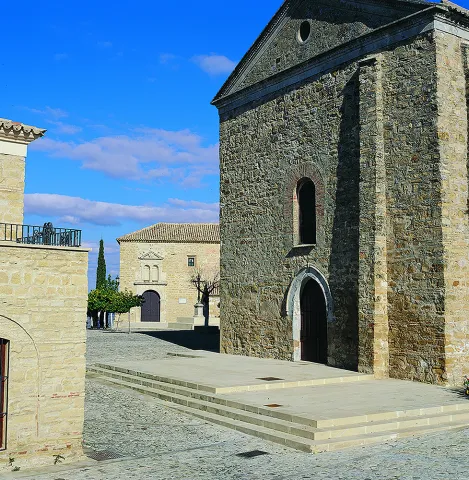
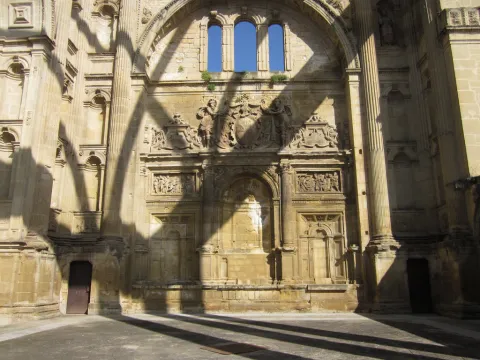
In the visit of Philip IV to the city of Baeza in 1624 the chapel is finished, not so the rest of the body of the temple, whose construction was extended until well into the 17th century. But the misfortune is going to pursue this great work, because in the mid-17th century it already needed to be repaired. In the early 19th century the header was ruined by a seismic movement, which forced the disassembly of what was left of it. In the 1850 Parcerisa engraving, the romantic aspect it presents is total ruin and abandonment. The rest of the church and the convent also underwent numerous transformations throughout the 19th and 20th centuries to adapt the architectural complex to new uses: flour factory, theatre and housing. The restoration and consolidation of the whole was carried out, not without criticism, between 1986 and 1988 for its preparation as an auditorium, leaving the main chapel discovered and separated from the rest of the body of the church by a large glass. The cloister and other units were transferred to the Vandelvira Restaurant in 1990.

The one chosen to raise such a monumental chapel was Andrés de Vandelvira, master barber, already well known for his great projects in other populations of the Loma. Although the contract of works between the Benavides, the friars of San Francisco and Vandelvira has not yet been discovered, his authorship is given by the testimony of his son Alonso by referring to the "cross chapel" in his famous Treaty of Architecture: "This chapel in San Francisco in the city of Baeza by my father and I understand is the best particular chapel and more well ordered and adorned in our Spain, it has sixty feet of hollow without the inings that has 8 feet."

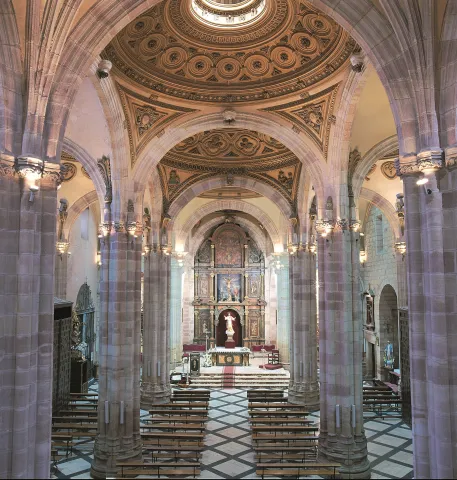
In this factory Vandelvira works freely, out of impositions as in the Salvador of Ubeda. It sheds the Gothic cruises and the grotesques, incorporating the ornament more clearly in relation to the architectural elements. In his conception he also moves away from what is to be realized in the Saviour, as he proposes a great square space covered by a vase reinforced by cruises that come to coincide with the pairs of columns of the toral arches, rising on the funerary altards, of which only the Gospel has been preserved. These serlian tread stables are framed by large arcosols and double columns of elongated canon. At the header is the main altar above three acasetonated arcosols.

The breadth of the iconographic program developed was to follow a plan perfectly conceived and determined by the funerary character of the whole: Evangelists, Fathers of the Church, Saints; in the preserved petreous altarpiece we have funerary and heraldic symbols, the Epiphany on the left, the worship of the pastors on the right (with the date of 1560), in the center of the Resurrection (eardrum) with the Tetramorphs. Of excellent quality are also the heads of the craftsmen of the arcosoles of the main altar, as well as their eardrums of mythical inspiration and the semicircle with a Dolored Mater with the lying Christ, recurring with the funerary theme of the project. The fundamental sculptors of this extraordinary iconographic program, in a regular state of conservation, were Esteban Jamete and Juan de Reolidgen.

Breve descripción

In 1538 the Franciscan community of Baeza agreed to carry out the construction of a new temple, due to the poor state of the primitive. At that time, he was a patron of his major chapel, "Day Sanchez of Quesada," Mr. de Garcíez, who showed little interest in the new major chapel to build, which forced the Franciscan monks to seek other masters.
Telecomunicaciones
Sitio web
www.turismodeubeda.com/index.php/es/
Teléfono de contacto
953 740 444
Ubicación
Código Postal
23440
Latitud
37.993670
Longitud
-3.468720
Dirección
C/ San Andrés, s/n
Municipio
Ubicación en el mapa
POINT (-3.46872 37.99367)
Tipos de punto de interés
Imágenes carrusel
imagen
Image
5812038249_7307aa7e81_b.jpg
Imagen principal
Desactivado
imagen
Image
iglesia.jpg
Imagen principal
Desactivado
Imágenes cabecera
imagen
Image
convento-de-san-francisco.jpg
Imagen principal
Activado
Microsite al que pertenece
Loading map
Preparing points of interest and routes...

Church of Santo Tomás Apóstol

Submitted by brandcode_deweloper on
Id
4869667
Descripción
Breve descripción

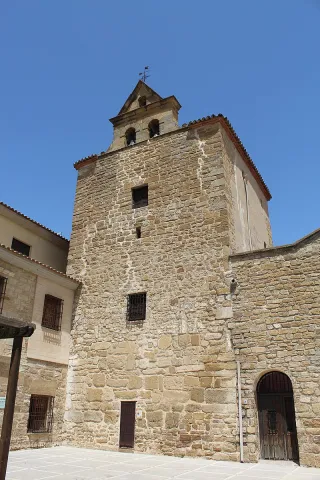
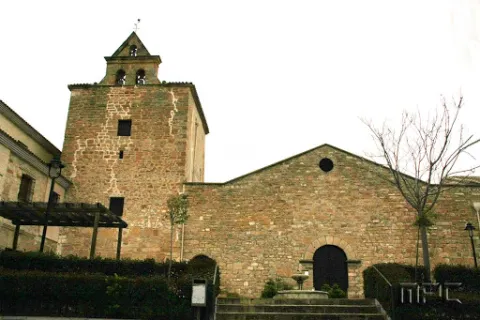
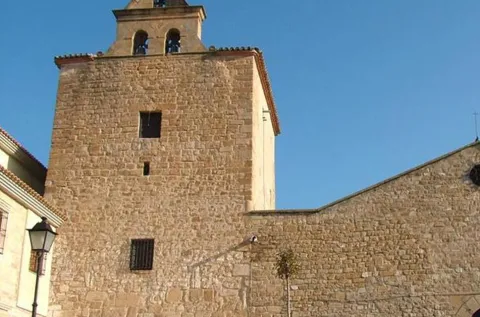
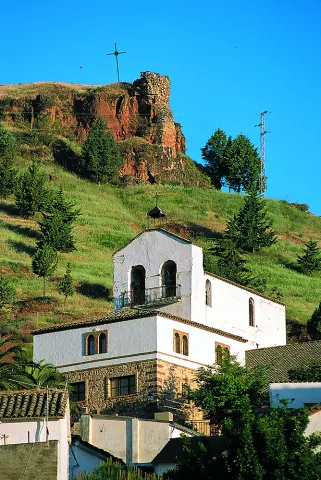
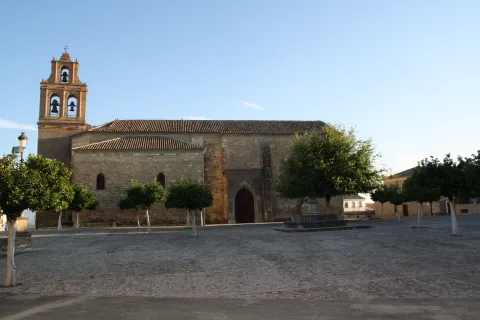
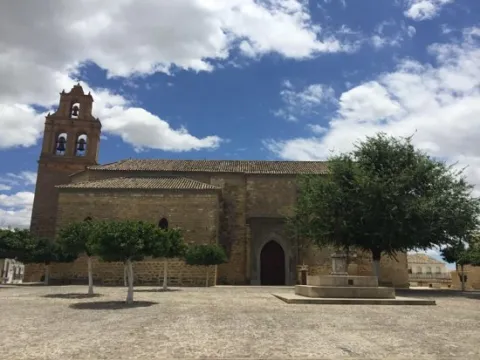
Restored in 1966. The façade is located at the foot of the temple, finished in a hastial with small circular window entangled, and retains a simple cover with a half-point arch on a chair jambas.The bell towerIt corresponds to the tower of homage of the old castle.

Ubicación
Código Postal
23311
Latitud
38.028710
Longitud
-3.101740
Dirección
C/ Montemar, 8
Municipio
Ubicación en el mapa
POINT (-3.10174 38.02871)
Tipos de punto de interés
Imágenes carrusel
imagen
Image
Iglesia%20de%20Santo%20Tom%C3%A1s%20Ap%C3%B3stol1.jpg
Imagen principal
Desactivado
imagen
Image
iglesia-san-tomas-tome.jpg
Imagen principal
Desactivado
Imágenes cabecera
imagen
Image
iglesia-san-tomas-tome-ok.jpg
Imagen principal
Activado
Horario
Monday to Sunday: 08: 00 - 18: 00.
Loading map
Preparing points of interest and routes...

Church of Santiago el Mayor

Submitted by brandcode_deweloper on
Id
5691523
Descripción
Breve descripción

Its name is due to the holiday of the day when Fernando III won Jimena to the Arabs in 1234. It was built in the late 15th and early 16th century over the mosque of Islamic times. The general distribution of the temple and the header of its three Gothic-style ships belong to the first period of construction, during the 15th century. This time stands out the cruise vault that covers the Major Chapel. The columns of the interior and the cover of the Allejón de la Audiencia are from the 16th century in Renaissance style The interior, Gothic style, has three ships, more wide and higher than the central ones. He suffered a great restoration in 1960.

Telecomunicaciones
Sitio web
www.facebook.com/iglesiajimena/
Teléfono de contacto
953 357 009
Ubicación
Código Postal
23530
Latitud
37.842020
Longitud
-3.476250
Dirección
C/ Audiencia, 1
Distrito
Municipio
Ubicación en el mapa
POINT (-3.47625 37.84202)
Tipos de punto de interés
Imágenes carrusel
imagen
Image
3.jpg
Imagen principal
Desactivado
imagen
Image
5%20%281%29.jpg
Imagen principal
Desactivado
imagen
Image
4.jpg
Imagen principal
Desactivado
Imágenes cabecera
imagen
Image
2.jpg
Imagen principal
Activado
Horario
Monday to Saturday: 09: 00 - 14: 00 and 17: 00 - 21: 00. Sunday: 10: 00 - 13: 00.
Microsite al que pertenece
Loading map
Preparing points of interest and routes...

Church of Santiago Apóstol

Submitted by brandcode_deweloper on
Id
6622490
Descripción
Descripción larga

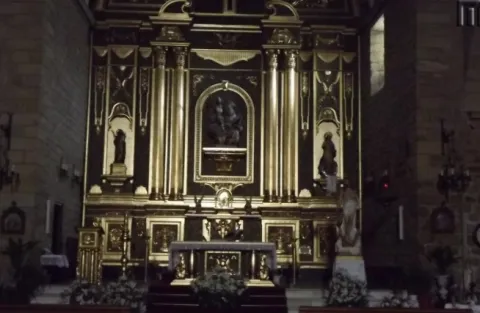
Its interior consists of a large ship with sections of fajon arches, while the presbytery is covered with canyon vault with cassettes. The Baroque shrimp of the Christ of the Vera Cruz stands out.

Breve descripción

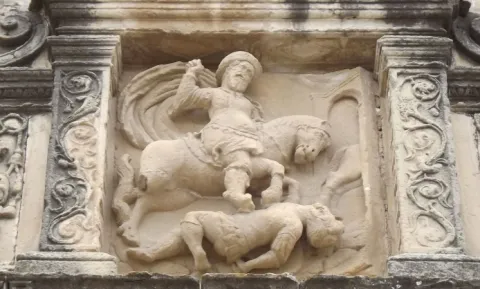
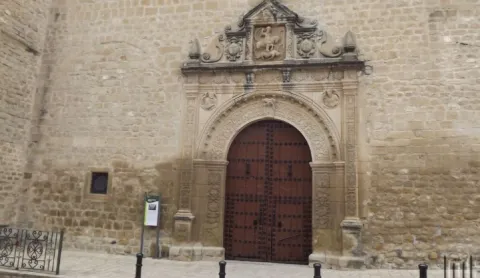
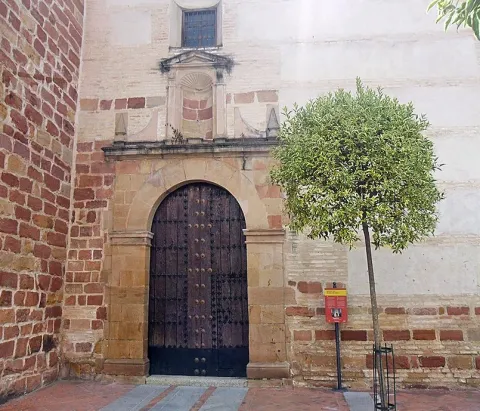
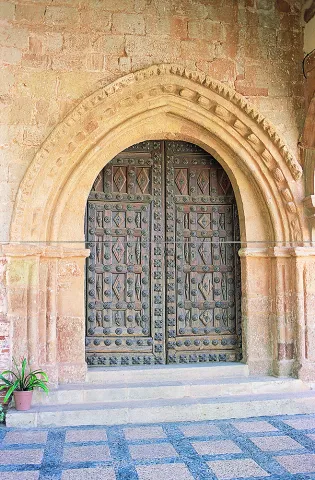
The church began its construction in the 13th century and was concluded in the 17th century, although the primitive factory has almost disappeared as a result of the multiple restorations. One of the most characteristic elements is the cover, from the end of the 16th century, with a half-point arch with decoration of grotesque, medallions of St. Peter and Paul and episcopal shields, and topped by a relief of Santiago Matamoros in hornacina with a triangular fronton that contains, in turn, another relief that represents God the Father.

Telecomunicaciones
Teléfono de contacto
953 763 303
Ubicación
Código Postal
23520
Latitud
37.985320
Longitud
-3.534540
Dirección
C/ Patrocinio de Biedma, 9
Municipio
Ubicación en el mapa
POINT (-3.53454 37.98532)
Tipos de punto de interés
Imágenes carrusel
imagen
Image
60.jpg
Imagen principal
Desactivado
imagen
Image
40.jpg
Imagen principal
Desactivado
imagen
Image
30.jpg
Imagen principal
Desactivado
imagen
Image
70.jpg
Imagen principal
Desactivado
Imágenes cabecera
imagen
Image
50.jpg
Imagen principal
Activado
Microsite al que pertenece
Loading map
Preparing points of interest and routes...

Church of Santiago

Submitted by brandcode_deweloper on
Id
885826
Descripción
Descripción larga

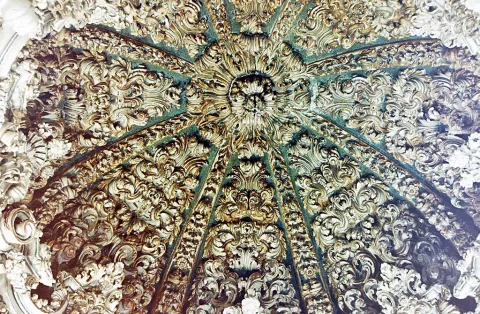
The oldest piece is the southern cover, of Gothic style and of such a trace to that of San Miguel; the north is from the 17th century, with the shields of the Valenzuela family, raising on it an angry swordsman, which came to replace its primitive tower located at the head and from which there are no remains. The plant that has reached this day includes a division in three ships and five sections, with greater proportions being the section of the header and the central ship. Today it has no apse, its head being a wall running and flat. The oldest remains correspond to the first section, covered by three gothic vaults of complex trace and a great constructive stretch (starry the sides, of tercelets the central), which are based on two pillars free of square section, with four half Tuscan columns attached, and on a series of mends on the walls. It is in this part of the temple that we can relate the few documentary data that have been published about it. The Gothic vaults according to Domínguez Cubero can be attributed to the Sunday of Tolosa. In 1559, the bishop Don Diego Tavera (1555-1560) ordered in the visit of this temple: "(...) that the altarpiece of Miguel Ruiz be finished. They say that the altarpiece is finished and that the work of singing that is in charge of Maese Domingo (...)." In the same year I know "(...). They discharge a thousand four hundred and ninety-six maravedis that I pay to Baldenvira because he came from Jaén to give the trace of the work that to do the said Sunday master who came three times to see the work (...)." From this documentation it seems to be inferred that the temple initiated by Maese Domingo is visited by Vandelvira, which would give new traces to follow the factory based on pillars of siloesque tradition and boned vaults. This new church project must have had problems years after the intervention of Andrés de Vandelvira, as it appears from the will of the beneficiary Juan de Mestanza of 1585, in which he orders to deliver ten ducats "(...) for the work of the postcards of Lord Santiago (...)," in the opinion of Domínguez Cubero. As a result of this situation, the project drawn up by Vandelvira, in which a church of living room with exempt pillars and its traditional vaults (with the exception of the gots of the first stretch) were most likely to be radically structured in the mid-17th century. The three resulting ships are now built with half-point arches on quadrangular pillars, covering the whole of the three resulting ships with half-barrel vaults with lunts and fajon arches. In the 18th century, specifically around the year 1733, the Chapel of the Christ of the Column was built, embellished with rich decoration of Baroque yeseries of Cordoba inspiration. The headline sculpture, a high-quality Renaissance size, is now sold in the parish of Santa Maria.

OTHER ARTISTICAL MANIFESTIONS

This temple has come to our days very busy in relation to its movable goods, but it had them and of high artistic quality. Some of them were lost forever, but others have been replaced in other churches in the city. To the parish of Santa Maria they took away the famous Renaissance size of the Christ of the Column, a beautiful prayer of about 1575 (placed in the chapel of the Reinous) and a canvas representing the adoration of the Eucharist, of Baroque style, attributed to Bernabé de Ayala.

Breve descripción

Monument included in the Artistic Historical Set. Incoated on 09 / 07 / 82. Old Bajomieval parish. It presents in its constructive process such evolution to the close of Santa Maria, keeping in the temple architectural and decorative elements Gothic, Renaissance and Baroque

Telecomunicaciones
Sitio web
www.turismodeandujar.com/antigua-parroquia-iglesia-santiago
Teléfono de contacto
953 519 056
Ubicación
Código Postal
23740
Latitud
38.037400
Longitud
-4.057350
Distrito
Municipio
Ubicación en el mapa
POINT (-4.05735 38.0374)
Tipos de punto de interés
Imágenes carrusel
imagen
Image
22.jpg
Imagen principal
Desactivado
imagen
Image
23.jpg
Imagen principal
Desactivado
Imágenes cabecera
imagen
Image
24.jpg
Imagen principal
Activado
Horario
Visit to Camarín Baroque: Tuesday and Thursday 17: 30 - 19: 00.
Microsite al que pertenece
Loading map
Preparing points of interest and routes...

Church of Santa María Magdalena

Submitted by brandcode_deweloper on
Id
4444380
Descripción
Descripción larga

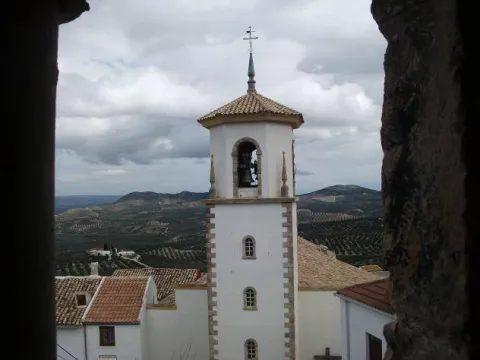
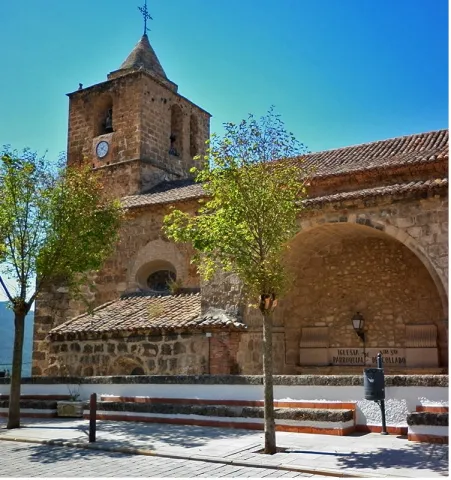
It is composed of an extended body in which a vain of ear molding is opened and, aligned with it, but in height, an episcopal shield. A ledge separates it from the bell tower. In this one they open holes with a half-point arch that rest on imposts, which are extended as a list throughout the perimeter. A dial watch has been placed on the foreground of a hole. A narrow body receives the cover. The painted facade at the foot of the church and its cover are also interesting.

Breve descripción

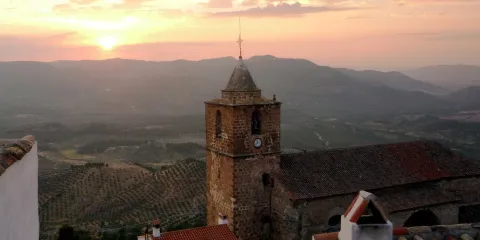
In the centre of Cazalilla is its most significant building, the parish church of Santa María Magdalena, which stands out both for its volumetric and height and for the quality of its constructive materials and its artistic beauty. Special attention is drawn to the providence of its tower, which is located on a ptreo base, of a square floor, with the stylized hollow bells with a half-point arch, which is closed with a pyramidal chapitel, and whose construction must have been carried out by the end of the 17th century.

Telecomunicaciones
Sitio web
https://www.facebook.com/Parroquia-Santa-Mar%C3%ADa-Magdalena-de-Cazalilla-110610333672829
Teléfono de contacto
953 537 090
Ubicación
Código Postal
23628
Latitud
37.984140
Longitud
-3.881970
Dirección
Plaza Constitución, 5
Distrito
Municipio
Ubicación en el mapa
POINT (-3.88197 37.98414)
Tipos de punto de interés
Imágenes cabecera
imagen
Image
Santa%20Mar%C3%ADa%20Magdalena%2C%20Cazalilla.jpg
Imagen principal
Activado
Microsite al que pertenece
Loading map
Preparing points of interest and routes...

Church of Santa María la Mayor

Submitted by brandcode_deweloper on
Id
5867824
Descripción
Breve descripción
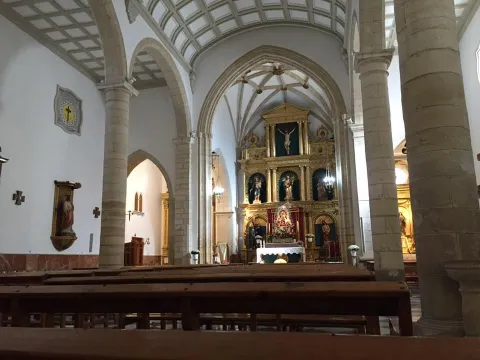
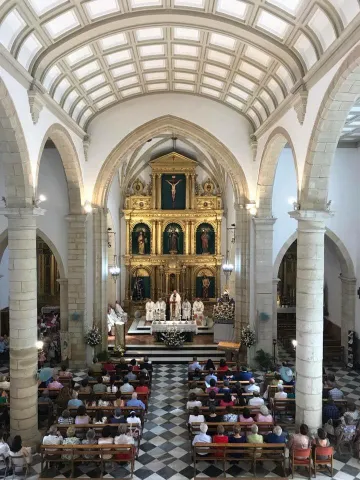
The Iglesia de Santa Marina de Andújar, one of the oldest and most representative temples in the city, is presented as a setting of great heritage value for the celebration of cultural events, institutional presentations or unique events. Its sober and elegant architecture creates a solemn and evocative atmosphere that adds a unique character to any gathering. Capacity: Old Church Room: 125 Location: Andujar Available services: Television, sound table, recording, projector and public address system
Ubicación
Código Postal
23740
Latitud
38.037410
Longitud
-4.055990
Dirección
Plaza Sta. María, s/n
Distrito
Municipio
Ubicación en el mapa
POINT (-4.05599 38.03741)
Tipos de punto de interés
Imágenes carrusel
imagen
Image
Iglesia%20de%20Santa%20Mar%C3%ADa%20Andujar2.jpg
Imagen principal
Desactivado
Imágenes cabecera
imagen
Image
INTERIOR_IGLESIA_DE_SANTA_MARIA.jpg
Imagen principal
Activado
Horario
Winter: Tuesday to Sunday 11:30 - 13:30 and 17:30 - 20:00. Summer: Tuesday to Sunday 11:30 - 13:30 and 18:00 - 21:30.
Loading map
Preparing points of interest and routes...

Church of Santa María del Collado

Submitted by brandcode_deweloper on
Id
4763780
Descripción
Descripción larga

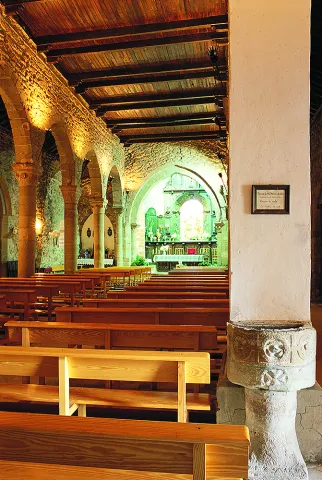
In the 13th century, during the reign of Fernando III (1217-1252) or that of his son Alfonso X (12122-1284), the columns were used to make a fully Romanesque church of three ships and head of three semicircular apses.

The portico is also of Romanesque trace, although in it you can see the point of the outer arches, characteristic this from the time of transition to the Gothic period. The columns inside the temple are cylindrical and base by imitating the old attic with the circular molding and he painted it square. The capitals are primordial and have a wide variety of motifs, from geometric figures and vegetable ornaments of leaves, rosetons and fruits, to animal figures such as lions, bulls, fish, goats and human figures.

The arches are pointed and the roof presents in the part corresponding to the cruise, a large vault of stone edge and in that of the ships a wooden craft. At the entrance of the presbytery there are two half columns with capitel with saw tooth ornaments, which support a large opival arc.

By the 16th century the church's enclosure was extended on the old trail, surely for greater needs of worship. The 16th century also brought together the artistic altarpiece of the Altar Mayor, which serves as an armour to the shrimp of the Virgin.

Another point to be highlighted is the chorus gate and silery both of a silver style. The gate of this, is adorned by a series of columns where there are carved various ornamental motifs, such as human and animal heads as well as fruit clusters.

The capital of these columns is Ionian. At the top door of the entrance door to the choir there is a large shield with the weapons of Don Francisco Delgado, which was preached in Jaén from 1566 to 1576. The chorus's silery is kept in good condition and all its chairs over half a shell and separated by columnites, where there are carved the same themes of the columns of the gate and as in this and on the central chair, are the weapons of the Bishop of Jaén indicated above.

The bottom of the seats is also finely worked, presenting geometric motifs. On both sides of the choir there are so many other chapels that have the wooden gate following that of the choir and with the same ornamental sizes.

Breve descripción

It was originally a visionary temple, as can be seen in the medallions that adorn the back of the temple and some that are preserved in the apse. Also visigoda epoch belongs a pile of holy water.

Ubicación
Latitud
38.248231
Longitud
-3.208180
Dirección
C/ Sta. María, 11
Distrito
Ubicación en el mapa
POINT (-3.20818 38.248231)
Tipos de punto de interés
Imágenes carrusel
imagen
Image
Mon273%20%281%29.jpg
Imagen principal
Desactivado
imagen
Image
Mon274%20%281%29.jpg
Imagen principal
Desactivado
imagen
Image
Mon275%20%281%29.jpg
Imagen principal
Desactivado
Imágenes cabecera
imagen
Image
6.jpg
Imagen principal
Activado
Microsite al que pertenece
Loading map
Preparing points of interest and routes...

Church of Santa María del Collado

Submitted by brandcode_deweloper on
Id
913898
Descripción
Descripción larga

It is through the visit of October 9, 1525 that we know that the parish church of Santa María del Collado is being made again, at the head of the factory, the bartender Maese Rodrigo. Through the description made by the visitors in the visit to the temple on January 19, 1537 it seems that the temple was finished.

On this occasion with the visitors, the master singers Francisco de Luna and Andrés de Vandelvira travelled to Segura de la Sierra, without a doubt to inspect what was built by Maese Domingo, which apparently presented certain problems; Luna and Vandelvira made a statement "(...) for the security repair of the yglesia desta villa e de la nesçaña that çerca dello has and what in it they contenydo make haber in the yglesia that they do from here two years first that they verge (...)."

The documentation silences the detailed content of this statement and, therefore, we do not know the level of intervention of both teachers, but they had to give orders to solve the defects of the Gothic factory built by Maese Rodrigo, but also to end, among other works, the tower chapitel, the chorus stairs or the vaulted chapel of baptism. However, the most clearly vandelvirian piece preserved in the temple is its main cover, covered by a large arcosolio with a half-canyon vault of Spanish-manchega tradition; it was ordered to work by the visitors in 1554, although the order was not carried out until the end of the century.

Vandelvira died in 1575 and, therefore, was not able to take care of it, but in any case the piece responds to a clear compositional scheme developed by it in the covers of the churches of San Miguel de Jaén, San Juan Evangelista de Mancha Real, or that of San Nicolás in Ubeda, but with a greater constructive and ornamental dryness not without classical correction; it is formed by the consabid arch of half-point on impostes with jambos and threaded, which is flanqué by two pairs of columns of compound and transphizon the same, with the two-and-a-a-a-a-a-a-a-a-a-a-a-a-a-a-a-a-a-a-a-a-a-a-a-a-two-a-a-a-a-a-a-a-a-a-a-a-two-a-a-a-a-a-a-a-a-a-a-a-a-a-a-a-a-a-a-a-a-a-

The data provided and the consequences that can be derived from them suggest a direct intervention by Andrés de Vandelvira in the church of Segura de la Sierra and a fluid relationship with the sanctiaguists responsible for his factory. This relationship was initiated thanks to his father-in-law Francisco de Luna, a singing teacher whose professional activity from the beginning was closely linked to the Order of Santiago on Spanish-manchegas lands.

Breve descripción

Monument of the Historical-Artistic Set. Declared 05 / 07 / 1962 The practical visits by the visitors of the Order of Santiago to the populations dependent on the Encomienda de Segura de la Sierra, provide us with numerous data on the situation of their parish factories, some of them built on a new floor, others with important works of consolidation, expansion or reform.

Telecomunicaciones
Sitio web
www.seguradelasierra.es/patrimonio/iglesia-de-santa-maria-del-collado.html
Teléfono de contacto
953 480 280
Correo electrónico
administracion@seguradelasierra.es
Ubicación
Código Postal
23379
Latitud
38.298300
Longitud
-2.652100
Dirección
Plaza de los Jesuitas, 1
Distrito
Ubicación en el mapa
POINT (-2.6521 38.2983)
Tipos de punto de interés
Imágenes carrusel
imagen
Image
ntra_sra_collado.jpg
Imagen principal
Desactivado
imagen
Image
segura-de-la-sierra-iglesia-1-jpg
Imagen principal
Desactivado
Imágenes cabecera
imagen
Image
Iglesia%20de%20Santa%20Mar%C3%ADa%20del%20Collado%201.jpg
Imagen principal
Activado
Microsite al que pertenece
Loading map
Preparing points of interest and routes...

Church of Santa María del Alcázar

Submitted by brandcode_deweloper on
Id
5619802
Descripción
Breve descripción
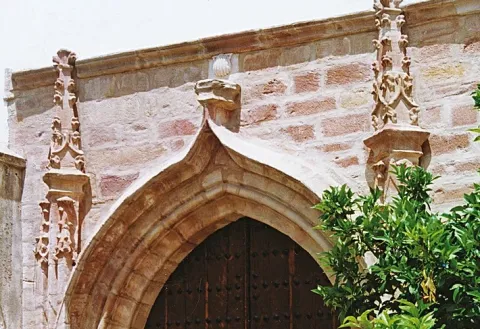
It is an Elizabethan style temple (16th century), with a single nave and transept with short arms. Located on a sacred place since ancient times (Roman, Visigoth and Muslim remains), it was built on the remains of the primitive Arab mosque. Since 1843, the church has guarded the images of the town's patron saints: San Bonoso y San Maximiano, along with that of Santa María del Alcázar, who was also the patron saint of the city. The temple is built as a church with a military or fortress appearance, surrounded by buttresses. In 1936, the Church was burned and suffered serious damage: doors, chapels... (a fact that the author captures in the work The Templar Tombstone). The current appearance of the Church is due to the reforms it underwent after this destruction. The Iglesia de Santa María has been guarding the images of the Patrons of the San Bonoso y San Maximiano town since 1843 to protect them since the confiscation of Mendizábal. (…) (…) They crossed the esplanade of the orange trees and headed to the Santa María church. The side doorway, with a beautiful Gothic arch, reproduced the original lost when the fire of 1936, which completely destroyed the temple, leaving only four walls. Fortunately, the Bafomet from the old photographs still persisted on the main façade (…)
Ubicación
Código Postal
23760
Latitud
37.935360
Longitud
-4.054290
Dirección
Plaza Sta. María, s/n
Distrito
Municipio
Ubicación en el mapa
POINT (-4.05429 37.93536)
Tipos de punto de interés
Imágenes carrusel
imagen
Image
Mon291.jpg
Imagen principal
Desactivado
imagen
Image
250px-Arjonasantamaria05.jpg
Imagen principal
Desactivado
imagen
Image
Iglesia%20de%20Santa%20Mar%C3%ADa%20del%20Alc%C3%A1zar2.jpg
Imagen principal
Desactivado
imagen
Image
Iglesia%20de%20Santa%20Mar%C3%ADa%20del%20Alc%C3%A1zar.jpg
Imagen principal
Desactivado
Imágenes cabecera
imagen
Image
iglesia-de-santa-maria.jpg
Imagen principal
Activado
Microsite al que pertenece
Loading map
Preparing points of interest and routes...