Saltar al contenido principal
icon-intereses-senior

Church of San Bartolomé

Submitted by brandcode_deweloper on
Id
7970469
Descripción
Descripción larga

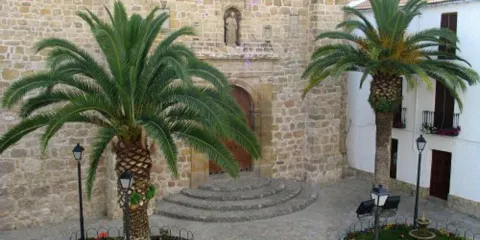
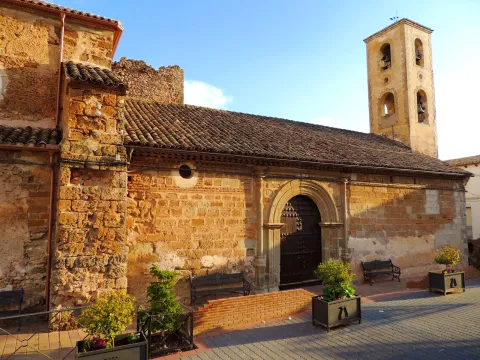
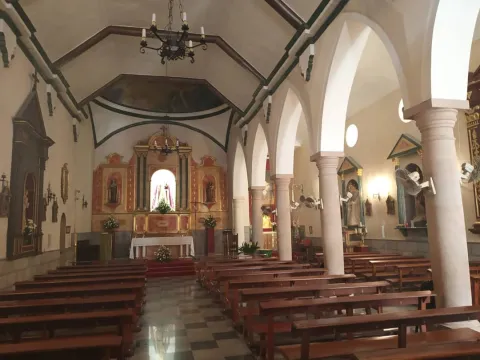
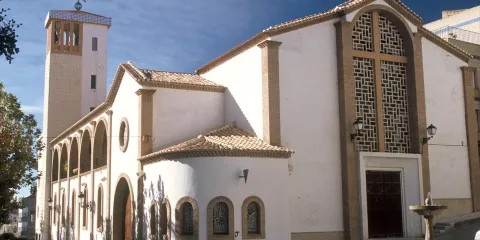
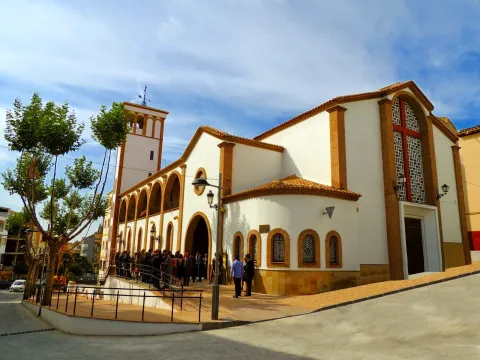
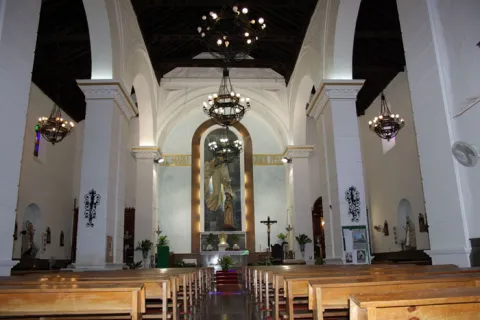
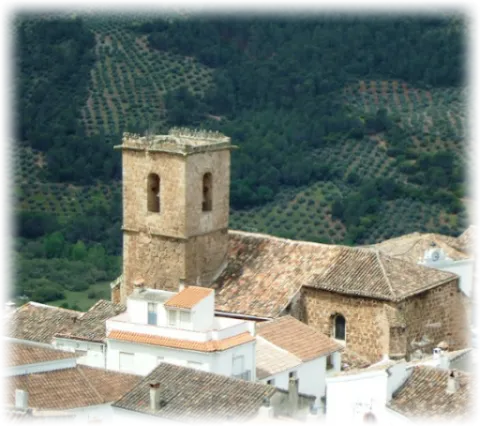
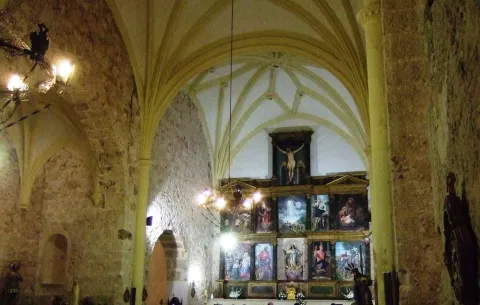
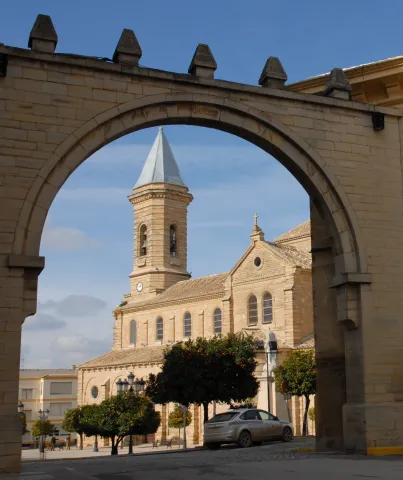
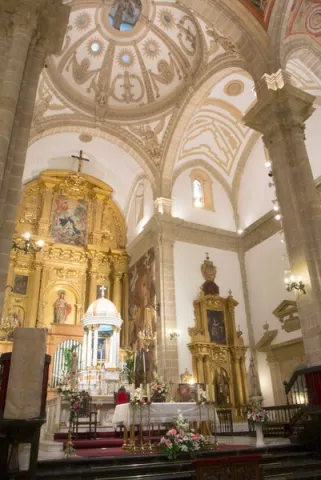
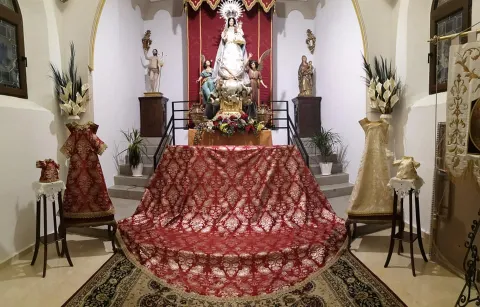
Its plant, basilical, has a wide and deafan space structured on three ships covered with flat roof. The ships are divided by five half-point arches that stand on pillars of unequal size, the lines being greater with the central ship. Both sides are located chapels. The architectural element that volumetrically stands out on the whole is the presbyterium, covered by a half-orange vault on pechines ornamented with trapezoidal geometric elements, to which it is accessed through a large half-point spinal arch. At the foot of the temple and raised on pillars is the choir.

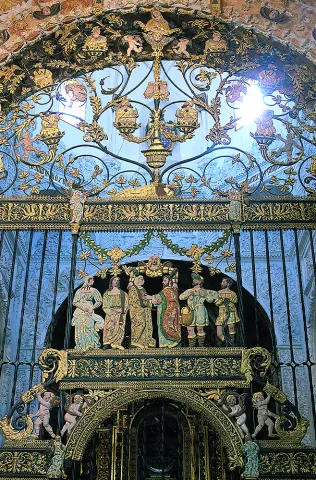
From the artistic point of view the most valuable element is the altarpiece, inspired by the Italian model of Vignola, more specifically in his masterpiece, "the Gesu" of Rome, of great interest not only for its structure and the colossal use of the classical orders, but also for the richness and complexity of the iconographies both sculptural and pictorial that it houses.

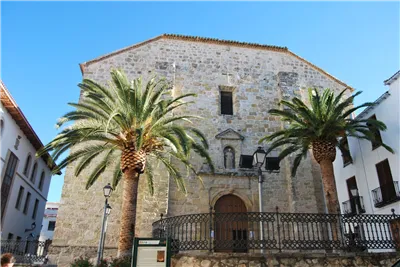
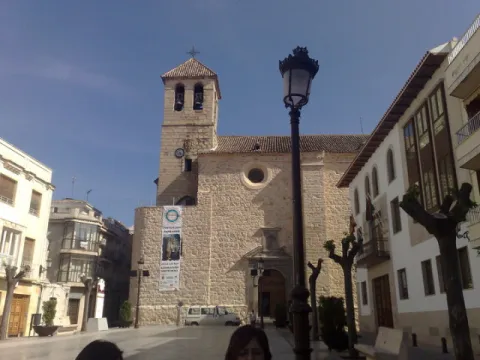
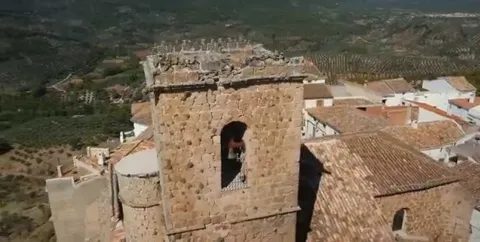
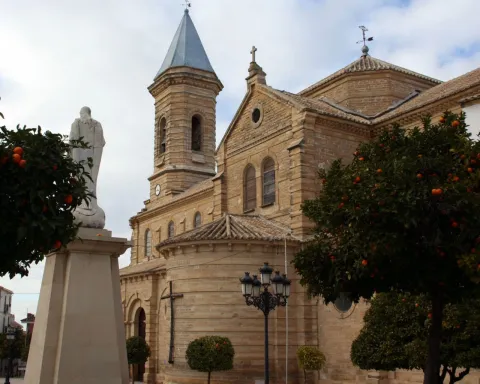
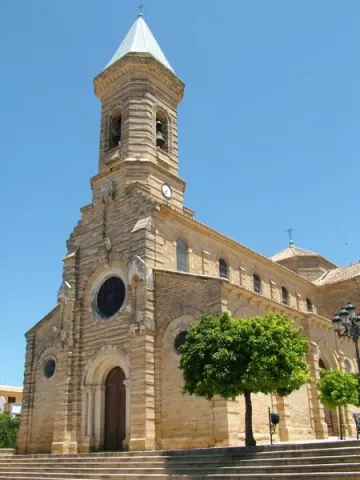
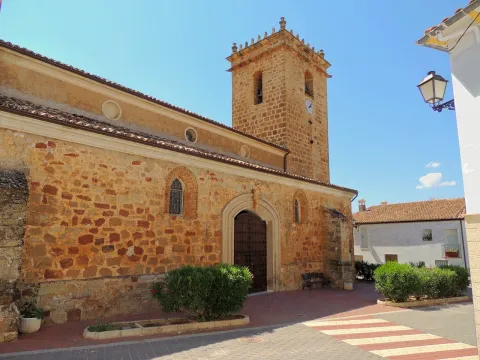
The factory, which alternates the regular with the irregular, differentiates the basic plant and the head of the presbytery, and both the cover and the window voids of the first facade body are pointed and aboculated. The central body, of higher height, has three circular voids laterally to give light to its interior. The tower is a unique element due to the quality of the silo, the amplitude of its dimensions, the first of the small half-point voids arranged to axis with the wider window of the bell tower, the successive well-cared cornels - one adorned with gargolas, another long-lasting molding - and the four vases that crown its angles, work of the brothers John and Iñigo Mojica (1,553)

Breve descripción

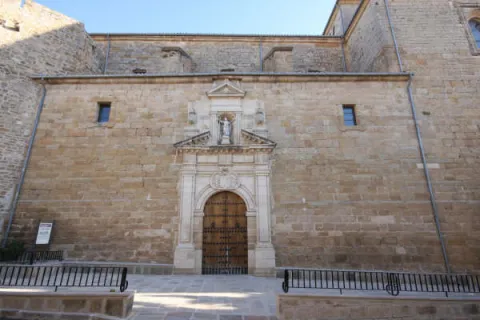
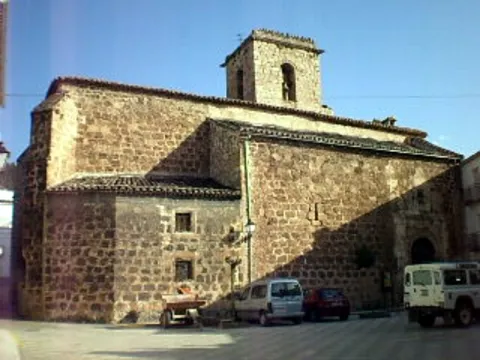
The parish church of San Bartolomé was built between the 15th and 16th centuries with constructive schemes that respond to both the Renaissance and Baroque.
Telecomunicaciones
Sitio web
http://www.villarrodrigo.es/el-municipio/patrimonio-historico.html
Ubicación
Código Postal
23393
Latitud
38.485880
Longitud
-2.635110
Dirección
C/ Iglesia, 53
Distrito
Municipio
Ubicación en el mapa
POINT (-2.63511 38.48588)
Tipos de punto de interés
Imágenes carrusel
imagen
Image
san-bartolome-villarodrigo%20%281%29.jpg
Imagen principal
Desactivado
Imágenes cabecera
imagen
Image
bartolome_Villarrodrigo.jpg
Imagen principal
Activado
Microsite al que pertenece
Loading map
Preparing points of interest and routes...

Church of San Bartolomé

Submitted by brandcode_deweloper on
Id
4873484
Descripción
Breve descripción

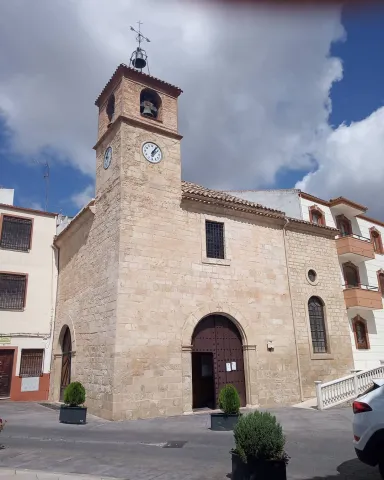
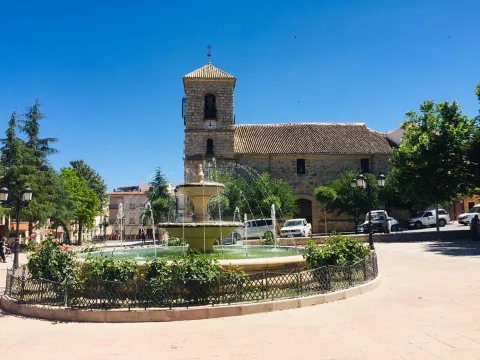
It responds to a medieval project, still visible in the sacristy and major altar. Most of its current configuration takes place in the 16th century, involving the architects, Francisco del Castillo "El Viejo" and Francisco Castillo "El Mozo." In its bell tower is located the shield belonging to the bishop of the Diocese of Jaén. Inside it houses the Christ of the Vera Cross (16th century).

Telecomunicaciones
Sitio web
www.torredelcampo.es/index.php?option=com_content&task=view&id=115&Itemid=135
Teléfono de contacto
953 567 086
Ubicación
Código Postal
23640
Latitud
37.770410
Longitud
-3.896550
Dirección
C/ Cruces, 2
Distrito
Municipio
Ubicación en el mapa
POINT (-3.89655 37.77041)
Tipos de punto de interés
Imágenes carrusel
imagen
Image
Iglesia%20de%20San%20Bartolom%C3%A9.jpeg
Imagen principal
Desactivado
imagen
Image
Iglesia%20de%20San%20Bartolom%C3%A9%202.jpg
Imagen principal
Desactivado
Imágenes cabecera
imagen
Image
torredelcampo%20%281%29.jpg
Imagen principal
Activado
Microsite al que pertenece
Loading map
Preparing points of interest and routes...

Church of San Andrés

Submitted by brandcode_deweloper on
Id
4639682
Descripción
Breve descripción

The church of San Andrés de Villanueva del Archbishop is located in the historical center of this town of the province of Jaén. The present temple, dating back to the 16th century, was erected on a previous one that had to occupy the courtyard of weapons of the medieval fortress, of which still today two of the four original towers are preserved, attached to the temple factory. This building ensemble perfectly synthesizes military and religious architecture.

Telecomunicaciones
Sitio web
www.villanuevadelarzobispo.es
Teléfono de contacto
953 452 454
Ubicación
Código Postal
23330
Latitud
38.169570
Longitud
-3.011640
Dirección
C/ Puerta del Sol
Ubicación en el mapa
POINT (-3.01164 38.16957)
Tipos de punto de interés
Imágenes carrusel
imagen
Image
Mon140.jpg
Imagen principal
Desactivado
Imágenes cabecera
imagen
Image
San_andres.jpg
Imagen principal
Activado
Loading map
Preparing points of interest and routes...

Church of Nuestra Señora del Carmen

Submitted by brandcode_deweloper on
Id
5621126
Descripción
Breve descripción

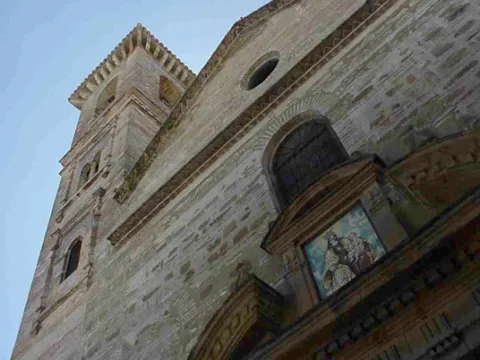
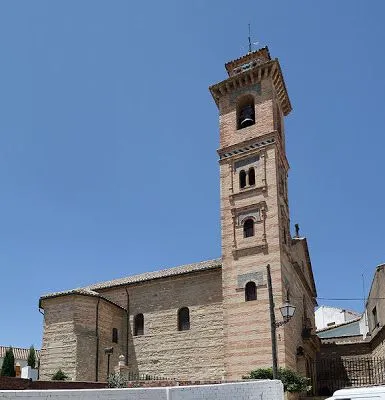
It began to be built in 1898. A historical style, with a gothic tardo plant on its only central ship. Neo baroque on its stone cover, with tile for the image of its headline in curved front. The presbytery welcomes in its central altarpiecea magnificent image of the Virgin of Carmen.TheNeo-mudejar tower, slender and elegant, with brick and tile masonry.

Telecomunicaciones
Sitio web
www.portalarjonero.com/pagina/ElCarmen.html
Teléfono de contacto
669 968 626
Ubicación
Código Postal
23760
Latitud
37.934790
Longitud
-4.057540
Dirección
Plaza del Carmen, s/n
Distrito
Municipio
Ubicación en el mapa
POINT (-4.05754 37.93479)
Tipos de punto de interés
Imágenes carrusel
imagen
Image
Iglesia%20de%20Nuestra%20Se%C3%B1ora%20del%20Carmen_ARjona.jpg
Imagen principal
Desactivado
Imágenes cabecera
imagen
Image
89eb830f27a00b3df69c1e509b97f76c.jpg
Imagen principal
Activado
Microsite al que pertenece
Loading map
Preparing points of interest and routes...

Church of Nuestra Señora de la Presentación

Submitted by brandcode_deweloper on
Id
4979309
Descripción
Breve descripción

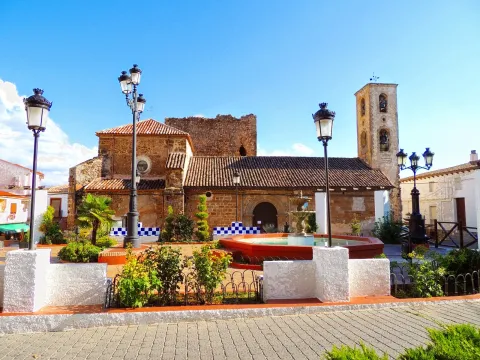
Its construction began in the centuryXVIand rises in the square of the municipality. Its plant is rectangular and one-ship, divided into four sections covering half-barrel vaults with pseudo-fajon arches. Thesquare base headerwas added in the 17th century.The towerbuilt in the 20th century, it is the least valuable and is not integrated into the whole.

Telecomunicaciones
Sitio web
https://www.facebook.com/parroquiatorresdealbanchez
Teléfono de contacto
953 494 003
Correo electrónico
parroquiatorresdealbanchez@gmail.com
Ubicación
Código Postal
23391
Latitud
38.414770
Longitud
-2.677400
Dirección
Plaza Iglesia, 7
Distrito
Ubicación en el mapa
POINT (-2.6774 38.41477)
Tipos de punto de interés
Imágenes carrusel
imagen
Image
Nuestra%20Se%C3%B1ora%20de%20la%20Presentaci%C3%B3n%20en%20Torres%20de%20Alb%C3%A1nchez.JPG
Imagen principal
Desactivado
Imágenes cabecera
imagen
Image
DSCN0867.jpg
Imagen principal
Activado
Loading map
Preparing points of interest and routes...

Church of Nuestra Señora de la Fuensanta

Submitted by brandcode_deweloper on
Id
4518526
Descripción
Descripción larga

Its interior consists of a single floor of drawer - or of what is also known as contender - divided into three ships that hold columns of smooth fuse with docile capitals and poorly decorated eye arches.

Outside, the church has two bodies separated by molding with two leftovers covered by half-point arches. The side facade, which looks at the Fuente de la Negra, is of greater proportions than the side that is located in the perspective with the street of access to the town center.

The most unique element of the church factory is its tower, located laterally in the corner between the two covers. It is not exempt, but integrated into the building, to which it overcomes and adds a third body for bell tower, with holes covered by half-point arches.

Breve descripción

The most valuable cultural good of this industrious town, from a strictly architectural point of view, is the parish church of Our Lady of the Fuensana. Its origin dates back to the 16th century and its artistic lexicography is Renaissance, although without stylistic elongations or great pretensions as to its proportions or constructive solutions.

Telecomunicaciones
Sitio web
www.fuensantademartos.es/el-municipio/patrimonio-historico.html
Teléfono de contacto
953 565 000
Ubicación
Código Postal
23610
Latitud
37.647420
Longitud
-3.905840
Dirección
Plaza de la Constitución, 13
Distrito
Ubicación en el mapa
POINT (-3.90584 37.64742)
Tipos de punto de interés
Imágenes carrusel
imagen
Image
Iglesia%20de%20Nuestra%20Se%C3%B1ora%20de%20la%20Fuensanta1_Fuensanta%20de%20martos.jpg
Imagen principal
Desactivado
Imágenes cabecera
imagen
Image
Iglesia%20de%20Nuestra%20Se%C3%B1ora%20de%20la%20Fuensanta_FuensantaMartos.jpg
Imagen principal
Activado
Microsite al que pertenece
Loading map
Preparing points of interest and routes...

Church of Nuestra Señora de la Encarnación

Submitted by brandcode_deweloper on
Id
4673834
Descripción
Breve descripción

This church was raised in the mid-sixties of the 20th century over another previous temple, with the same advocation, whose origin went back to the seventeenth century. Its cover features a vain intellized access, Latin cross and hastial, and it stands out for its volume the tower, with a square base, decorated with geometrical elements.

Telecomunicaciones
Teléfono de contacto
953 738 105
Ubicación
Código Postal
23485
Latitud
37.705440
Longitud
-2.933670
Dirección
Plaza del Ayuntamiento, 3
Municipio
Ubicación en el mapa
POINT (-2.93367 37.70544)
Tipos de punto de interés
Imágenes carrusel
imagen
Image
DSCN4095.JPG
Imagen principal
Desactivado
imagen
Image
igleisa-pozo-alcon-2.jpg
Imagen principal
Desactivado
Imágenes cabecera
imagen
Image
iglesia-pozo-alcon.JPG
Imagen principal
Activado
Loading map
Preparing points of interest and routes...

Church of Nuestra Señora de la Encarnación

Submitted by brandcode_deweloper on
Id
4555129
Descripción
Descripción larga

The project is carried out by Mr Manuel Sancho Sánchez, a master of the quarry, in charge of the construction of a large mason called Mr Benito el Santo. The conditions are established among which the realization of two arches dances to separate the three ships of the temple, having each dance three arches, resulting in a total of nine sections. The main cover and the bell tower were carried out by the master of the quarry Mr Manuel Sancho Sánchez. The construction of the church had to be completed on a provisional basis in order to celebrate the Holy Offices. In 1618 the Major Retablo was built, destroyed in the Spanish Civil War, occupied the whole tester of the presbytery raised on pedestal with reliefs on two very high floors, was topped with an attic finished in a broken fronton with eardrum where the figure of the Eternal Father was holding the sphere of the world in his right hand.

Both floors and the attic marked three streets, being the largest central than the sides and separated with Corinthian columns even and advanced on the general plane of the altarpiece. On the side streets, reliefs were framed with scenes of the life of Jesus Christ and of the Virgin. The central street was occupied by a great Sagrario-manifestator on the second floor, a relief with the mystery of the Incarnation. The attic was presided over by a calvary with figures of Christ Crucified, the Virgin Ruins of a glorious past in and St. John. The figure of the Eternal Father closed the whole set that also had sculptures of Saints on the capitals and cornels. The side streets were topped with shields from Bishop D. Baltasar of Moscoso and Sandoval who ruled the Diocese in 1618. Its style was Renaissance in transition to Baroque, and it was decorated with elements of the time, but without too many ornaments. The presbytery was completed on its side walls, with two large oil-painted paintings.

The organ was placed in the choir in the middle of the 18th. The bells were installed in 1858. On the façade of the tower that gives to the main square and under the main bell, if it installed in 1906, a time clock with dial in Roman numbers, costed by the Board of repair of the temple and assigned to the City Council for its conservation; it is of the so-called "round system" with compensating pendulum. It was acquired from Mr Lorenzo Redondo, a neighbour of Cuenca.

He had a hammer that gave the hours in the bell. In the 1980s, the clock machinery was cancelled and an electronic device was placed in place to keep the hours and bells marked. In 1996, the old machinery was withdrawn, restored and is currently in an exhibitor in the Hall of Plenos of the City Hall.

Breve descripción

On the site marked to this effect, 120 feet long and the same wide, the Parish Church was built in the place occupied by a small chapel dedicated to the Most Holy Sacrament. The construction contract is dated 24 March 1579.

Ubicación
Código Postal
23130
Latitud
37.555590
Longitud
-3.635190
Dirección
Plaza de Andalucía, 13
Distrito
Municipio
Ubicación en el mapa
POINT (-3.63519 37.55559)
Tipos de punto de interés
Imágenes carrusel
imagen
Image
IMG_1151.JPG
Imagen principal
Desactivado
Imágenes cabecera
imagen
Image
Iglesia%20de%20Nuestra%20Se%C3%B1ora%20de%20la%20Encarnaci%C3%B3n_Campillo.jpg
Imagen principal
Activado
Microsite al que pertenece
Loading map
Preparing points of interest and routes...

Church of Nuestra Señora de la Asunción (Hornos de Segura)

Submitted by brandcode_deweloper on
Id
4651646
Descripción
Descripción larga

It has a single ship and two bodies attached to both sides by penetrating them through two half-point arches with Renaissance moulds; one serves as a sacristy with intellized cover while the other, apparently ancient Baptisteria, is covered with a Gothic vault crashed with its diagonal and tercelets.

The ship is covered all with three simple starry gothic vaults with its tercelets, highlighting that of the presbyterium for its greater wealth of composition, for if all have its diagonal, tercelette and ligation, here appear straight combates; the nervations fall into a perpiaños arches of half point that have continued on a high half-columns attached to the walls that end up in basements with Gothic moldings; in the header they do it in a kind of ménsula as in the feet, where it opens in the thick of the wall in a similar way to an anal-venterium that exists in the right.

On both sides of the ship are opened two chapels, covered the four with gothic vaults with their tercelets and diagonal resting in mends; the second on the left makes the times the entrance to the temple and is where the gate that gives exit to the plateresque cover on the north side of the square of the Wheel is located. The current location of the cover is different from the original one that was located two chapels on the left.

The bank is very modified as well as the front coverings of the central street entrecelle and side streets, which house modern saints and improper decorations (note that the church was looted and burned in part during the first days of the Civil War). From the end of the 16th century it is composed on its first floor by columns with Ionic capitals, the second by columns of Corinthian capitals, ending the side streets with triangular fronts with classic entrenamento. In the attic a modern Christ replaces what must have been a Calvary; in him and at the feet of Christ we have the following inscription that informs us of its builders, materials and of the year.

After all, it has good proportions to which the bodies of the sacristy and ancient Baptistery and the chapels contribute. The whole temple is covered by a goth-drop-eater (ship-eater). It has two counterstrengths that exercise the function of holding the push of the vault of the major chapel.

On its side of the roof we have the only entrance cover to the parish, very mutilated by physical and human agents. It is one of the first samples of the plateresque in the province of Jaén connected to the plateresque in the area of Albacete. It is composed of a half-point arch whose dovels are decorated with Renaissance moulds and as a central motif in each of them by cherubim. It is framed by very spent pillars in which a baking is preserved. In the gears we have two splendid and very classic Renaissance medallions with human relics of profile.

Breve descripción

The Villa de Hornos de Segura has a parish under the title of Nuestra Señora de la Asunción belonging to the Arcipregamiento de Orcera. The parish church rises in the square of the City Hall, being drowned in a certain way by some buildings that prevent it from going through the outside in all its dimensions.

Telecomunicaciones
Sitio web
www.hornos.es
Teléfono de contacto
953 495 053
Correo electrónico
hornos@promojaen.es
Ubicación
Latitud
38.216560
Longitud
-2.720060
Dirección
C/ Iglesia, 2
Distrito
Municipio
Ubicación en el mapa
POINT (-2.72006 38.21656)
Tipos de punto de interés
Imágenes carrusel
imagen
Image
Iglesia%20de%20Nuestra%20Se%C3%B1ora%20de%20la%20Asunci%C3%B3n%20%28Hornos%20de%20Segura%29.png
Imagen principal
Desactivado
imagen
Image
Iglesia%20de%20Nuestra%20Se%C3%B1ora%20de%20la%20Asunci%C3%B3n%20%28Hornos%20de%20Segura%292%20%281%29.jpg
Imagen principal
Desactivado
imagen
Image
Iglesia%20de%20Nuestra%20Se%C3%B1ora%20de%20la%20Asunci%C3%B3n%20%28Hornos%20de%20Segura%293.JPG
Imagen principal
Desactivado
Imágenes cabecera
imagen
Image
43.jpg
Imagen principal
Activado
Microsite al que pertenece
Loading map
Preparing points of interest and routes...

Church of Nuestra Señora de la Asunción

Submitted by brandcode_deweloper on
Id
4485926
Descripción
Descripción larga

The present parish church of Our Lady of the Assumption, although incorporating the sacristy, which had been reformed in the 17th century by the Mannerist Benito del Castillo, rose after its collapse on the site of the ancient Gothic church of Santa Maria the Mayor. Justino Flórez projected it, between 1872 and 1910, not in a neo-Gothic style - the de Viollet le Duco - as its initial purpose, but in a Byzantine Neorromanic, due to the scarcity of resources, despite the generous contribution of the people. In addition to the mural paintings of Julio Romero de Torres, the broad portico or nártex, the cruciform pillars and, on them, the fajon arches and formers that alternate with cross vaults, the dome on the cruiser's pechines or that of the fourth sphere in the chapel of the transept, all this shows the architectural eclecticism and the historical "revival." On the outside, a single high-rise tower with arquivolta and roseton that emphasize the medieval of the whole, counterstrong, piled chairs, bones and wide steps to solve the problem of levels.

Telecomunicaciones
Sitio web
www.redjaen.es/francis/?m=c&o=13733&letra=&ord=&id=25168
Teléfono de contacto
953 544 186
Ubicación
Código Postal
23790
Latitud
37.871200
Longitud
-4.185180
Dirección
Plaza de Andalucía, 3D
Distrito
Municipio
Ubicación en el mapa
POINT (-4.18518 37.8712)
Tipos de punto de interés
Imágenes carrusel
imagen
Image
Iglesia%20de%20Nuestra%20Se%C3%B1ora%20de%20la%20Asunci%C3%B3n2.jpg
Imagen principal
Desactivado
imagen
Image
Iglesia%20de%20Nuestra%20Se%C3%B1ora%20de%20la%20Asunci%C3%B3n3.jpeg
Imagen principal
Desactivado
imagen
Image
Iglesia%20de%20Nuestra%20Se%C3%B1ora%20de%20la%20Asunci%C3%B3n4.jpg
Imagen principal
Desactivado
Imágenes cabecera
imagen
Image
Iglesia%20de%20Nuestra%20Se%C3%B1ora%20de%20la%20Asunci%C3%B3n.jpg
Imagen principal
Activado
Microsite al que pertenece
Loading map
Preparing points of interest and routes...