Saltar al contenido principal

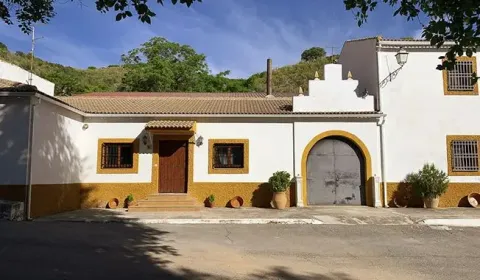
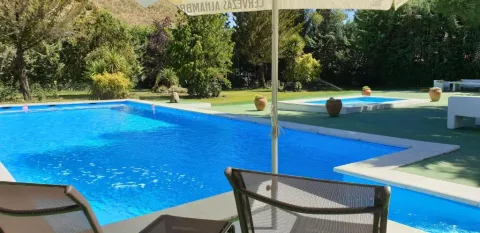
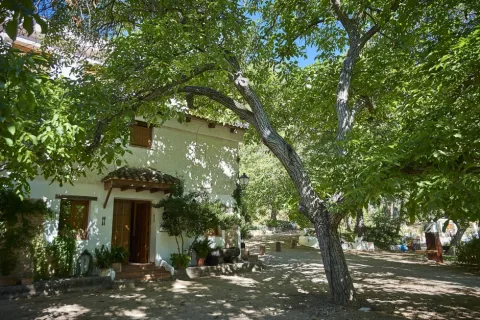
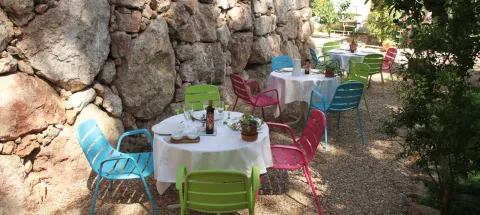
Cortijo Spiritu Santo Olive Estate Country House

Submitted by brandcode_deweloper on
Id
920896
Descripción
Breve descripción

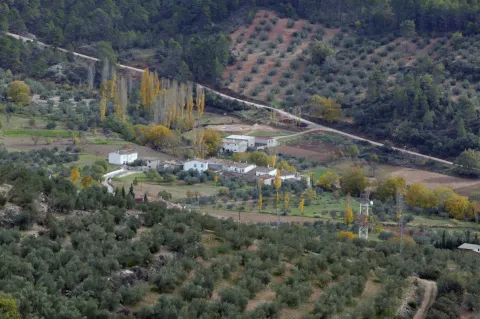
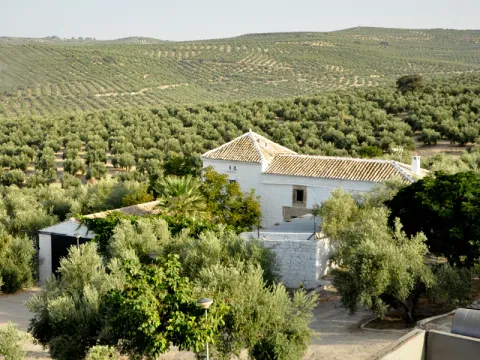
On the estate Cortijo SpiritHolylocated in the municipality ofUbedayou can enjoy a unique rural accommodation. Here it is possible to spend a few days between olive trees at the foot of the city of Ubeda, in direct contact with the producer.

Información de contacto
Teléfono
611 063 159
Sitio web
www.cortijoespiritusanto.com
Correo electrónico
info@cortijoespiritusanto.com
Ubicación
Código Postal
23400
Latitud
37.987620
Longitud
-3.314201
Dirección
Cortijo Espíritu Santo, s/n
Municipio
Ubicación en el mapa
POINT (-3.314201 37.98762)
Tipo de alojamiento
Imágenes
imagen
Image
spiritu.jpeg
Imagen principal
Activado
imagen
Image
spiritu1.jpeg
Imagen principal
Desactivado
Aforo
12
Loading map
Preparing points of interest and routes...
El Hotel

The cortijo, which dates from the 17th century, is rehabilitated as rural accommodation to offer the visitor everything necessary to spend a few days of rest enjoying the countryside and nature.

It has an almazara located in the heart of the estate Cortijo Espíso Santo, so its particular location allows to show the traveller the cultivation and process of making extra virgin olive oil, ending with a comment tasting of the oils of the almazara.

The house has a capacity for 12 people
Cortijo Salido Bajo Country House

Submitted by brandcode_deweloper on
Id
923233
Redes sociales
Facebook
https://www.facebook.com/salidobajo/
Descripción
Breve descripción

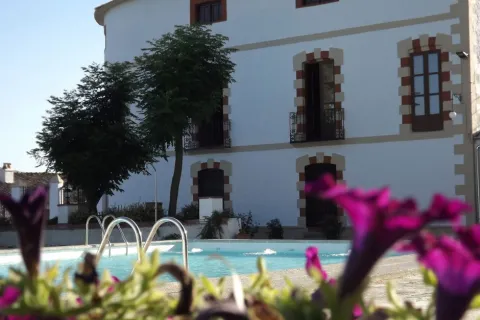
Built in the 19th century, and after a careful and exquisite remodeling that keeps intact the essence of the olive farm, it is an ancient and lordful house that offers two accommodations: Casa Grande and Casa del Manjero. The first, built by General Contreras and with capacity to accommodate eleven people, has a large living-dining room, spacious kitchen with fireplace, five comfortable bedrooms and two full bathrooms.

Información de contacto
Teléfono
600 512 076
Sitio web
www.cortijosalidobajo.es
Correo electrónico
salidobajo@gmail.com
Ubicación
Código Postal
23240
Latitud
38.202287
Longitud
-3.384781
Dirección
Lugar Salido Bajo, 0
Distrito
Municipio
Ubicación en el mapa
POINT (-3.384781 38.202287)
Tipo de alojamiento
Imágenes
imagen
Image
0c758c944f0062609b2677e28107bc5e_XL.jpg
Imagen principal
Activado
imagen
Image
10277171_597807793659389_6626109669133996745_n.jpg
Imagen principal
Desactivado
imagen
Image
10340071_908483559258476_4613269369356419426_n.jpg
Imagen principal
Desactivado
imagen
Image
13076571_976155779157920_2183185845356532448_n.jpg
Imagen principal
Desactivado
imagen
Image
14368838_1080769415363222_475180009956381435_n.jpg
Imagen principal
Desactivado
imagen
Image
462994_209366759170163_1902924314_o.jpg
Imagen principal
Desactivado
imagen
Image
1975022_564020453704790_811311675_n.jpg
Imagen principal
Desactivado
imagen
Image
963746_413071098799727_544413470_o.jpg
Imagen principal
Desactivado
Loading map
Preparing points of interest and routes...
El Hotel

The second has been adapted for people with disabilities and has a living room with fireplace, kitchen-dining room, two spacious double rooms and a full bathroom. In the surroundings, surrounded by olive trees, you can enjoy the areas and courtyards where the tasks and trades of the farm were developed, as well as a large garden, a sketch of eucalyptus, swimming pool and solarium.
Cortijo las Huertas Country House

Submitted by brandcode_deweloper on
Id
10632027
Redes sociales
Facebook
https://www.facebook.com/tierrasdejaen
Instagram
https://www.instagram.com/tierrasdejaen/
Descripción
Breve descripción

Cortijo las Huertas we can give it with writings of 1808, where we know that it belonged to the heritage of the cathedral of Jaén, which after some disamortizations becomes the title of our ancestors in the 1990s.
Fernando and Mª Eugenia create the company Tholuma S.L., being one of the few companies that made olive oil manufacture and packaging after 5 generations of farmers and olive oil manufacturers are born land of Jaén, Olive Oil sl. as a company of oleoturism, specialized in offering oleoexperiences and oleoadventures since 2017.

Información de contacto
Teléfono
658 961 053
Sitio web
https://www.thuelma.es/
Correo electrónico
info@thuelma.es
Ubicación
Código Postal
23560
Latitud
37.663571
Longitud
-3.418094
Distrito
Municipio
Ubicación en el mapa
POINT (-3.418094 37.663571)
Tipo de alojamiento
Imágenes
imagen
Image
slider-08-02-jpg
Imagen principal
Activado
imagen
Image
las%20huertas%202.jpg
Imagen principal
Desactivado
imagen
Image
las%20huertas%203.jpg
Imagen principal
Desactivado
imagen
Image
las%20huertas%204%20%281%29.jpg
Imagen principal
Desactivado
Idiomas
Loading map
Preparing points of interest and routes...
El Hotel

This is how the rural house "Cortijo las Huertas" is born, a house that forms part of the original cortijo.

Our visitors will be able to be part of these millennial experiences, an experience that will allow them to know the roots of the world of olive oil.

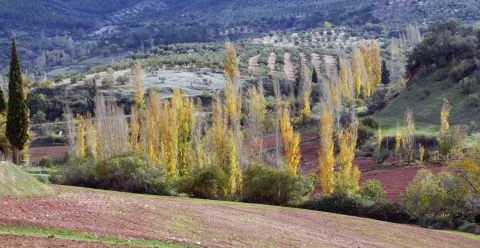
In our location Sierra Magina, it has one of the largest protected nature reserve areas in Spain. This natural park has almost 20,000 hectares, composed of an isolated massif in which are the highest peaks of the province of Jaén. This territory is a valuable refuge of Mediterranean flora that includes very rare species in the south of the Iberian peninsula. In addition, 27 different species of mammals such as the montane goat, boar, montés cat, badger or jineta can also be found.

On the other hand, you can find numerous caves with rock paintings such as "La cave de la graja" (Jimena) or "La cave del morron" (Torres), as well as castles of great interest such as that of Albanchez de Magina and phenomena of great appeal The faces of Belgium, which have their own center of interpretation...

Cortijo de Ramón Country House

Submitted by brandcode_deweloper on
Id
920733
Redes sociales
Facebook
https://www.facebook.com/CortijoDeRamon/
Descripción
Breve descripción

The Cortijo de Ramón is an old house of rehabilitated pastors, in an exceptional place of lush pine and walnuts and on a fertile valley of olive trees of the Sierra del Segura. Its owner Amparo is in charge of taking care of the palate of its guests by developing a dedicated kitchen based on traditional dishes. In your drink card you will find a varied and select offer of local, national and international wines. Its breakfast is made with fresh products of closeness and the extra virgin olive oil, with D.O. Sierra de Segura, is the vertebrating ingredient of its gastronomic proposal. The lunches and dinners can be enjoyed on its terrace fully integrated into the pine tree surrounding this sustainable shelter where you can disconnect and relax in its huge pool. The cortijo also has a small shop where you can buy some local products that you use in your kitchen.

Información de contacto
Teléfono
619 073 925
Sitio web
www.cortijoderamon.com/es
Correo electrónico
info@elcortijoderamon.com
Ubicación
Código Postal
23293
Latitud
38.259451
Longitud
-2.747413
Dirección
Ctra. de Beas a Cortijos Nuevos, km. 23,5
Distrito
Cómo llegar (URL de Google Maps)
https://www.google.com/maps/embed?pb=!1m18!1m12!1m3!1d2977.8528883370736!2d-2.749988424283061!3d38.25945067186725!2m3!1f0!2f0!3f0!3m2!1i1024!2i768!4f13.1!3m3!1m2!1s0xd6f6a4dcf8062fd%3A0x6faa566b0391bbb3!2sCortijo%20de%20Ram%C3%B3n%20-%20Casa%20Rural!5e1!3m2!1ses!2ses!4v1734021395452!5m2!1ses!2ses
Ubicación en el mapa
POINT (-2.747413 38.259451)
Tipo de alojamiento
Imágenes
imagen
Image
f60a47f7792630a3a86bc14c0657e89c_XL.jpg
Imagen principal
Activado
imagen
Image
9.jpg
Imagen principal
Desactivado
Aforo
22
Las habitaciones

5 double and 3 duplex

Qué ofrece

Cortijo de Ramón maintains a serious and responsible commitment so that their holidays have no negative impact on the environment and help to preserve the environment and tranquility of the place.

The wood to heat the common rooms of the house comes from the pruning of its olive trees. As for the heating of the house as well as hot water, it has a biomass boiler of olive bones, an excellent local fuel.

They receive all containers, glass and organic waste separately. The water used comes from a spring of its own, but they promote the reuse of towels among guests to reduce the excessive consumption of water and detergents.

The pool is saltwater to not use chlorine and offer a more pleasant and healthy skin bath.
The parking lot is not paved on trees to give shadows and away from the house to reduce the noise of the vehicles. The whole hotel is a smoke-free space and for smokers there are colliers all over the estate. The external lighting is LED and directed to the ground to reduce light pollution. The hotel's corridors have automatic lighting and all light bulbs are LED.

Enabling comfortable outer spaces to promote activities such as reading or simply rest. There's no TV to disconnect. They thus encourage tertulia among guests. They have no wild animals caged except hens that feed on the restaurant's waste to supply themselves with fresh eggs of exceptional quality.

Otros servicios
  • Terrace
  • Library
  • Game room
  • Fax / photocopier
  • Take-away lunches
  • Laundry service (surcharge)
  • Bar in the pool
  • Salt water pool
  • Pool toys
Loading map
Preparing points of interest and routes...
El Hotel

The rooms are rustic and have tile floors, wooden beams, heating and views of the countryside or garden. The private bathroom has a bathtub and toiletries. Some rooms have air conditioning. The farmhouse Ramón has a restaurant with garden terrace and a bar. In addition, it prepares take-away lunches and special diets on request.

The property also has a library and a living room with a large fireplace. The common areas are decorated with ancient farming tools. It offers laundry and ironing service, tourist information service and free on-site parking. In the surroundings there are many hiking routes.

Balneario de San Andrés ***

Submitted by brandcode_deweloper on
Id
799662
Descripción
Breve descripción

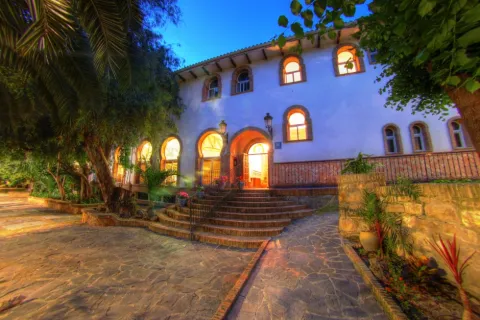
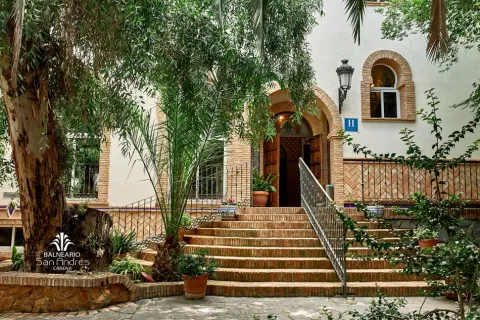
Officially declared as Balneario in 1853, the waters were declared of public utility in 1948, currently being the only one in operation within the province of Jaén.

Información de contacto
Teléfono
953 770 062
Sitio web
http://www.balneariosanandres.com/
Correo electrónico
reservas@balneariosanandres.com
Ubicación
Código Postal
23420
Latitud
38.047807
Longitud
-3.489632
Dirección
Ctra. Córdoba-Valencia, km. 137
Municipio
Ubicación en el mapa
POINT (-3.489632 38.047807)
Tipo de alojamiento
Imágenes
imagen
Image
ebe9ac202a3149b75a8ae8adb2e1d8a7_XL.jpg
Imagen principal
Activado
imagen
Image
ebe9ac202a3149b75a8ae8adb2e1d8a7_3_XL.jpg
Imagen principal
Desactivado
imagen
Image
9-Balneario-Canena.jpg
Imagen principal
Desactivado
imagen
Image
hotel.jpg
Imagen principal
Desactivado
imagen
Image
ebe9ac202a3149b75a8ae8adb2e1d8a7_2_XL.jpg
Imagen principal
Desactivado
imagen
Image
_MG_0037.jpg
Imagen principal
Desactivado
imagen
Image
DSC_0072.JPG
Imagen principal
Desactivado
Aforo
130
Horario
Information: 09: 00 - 14: 00 and 17: 00 - 20: 00. Reservations: 07: 00 - 23: 00.
Precio por noche
80.00
Marcas de calidad
Número de estrellas
3
Loading map
Preparing points of interest and routes...
El Hotel

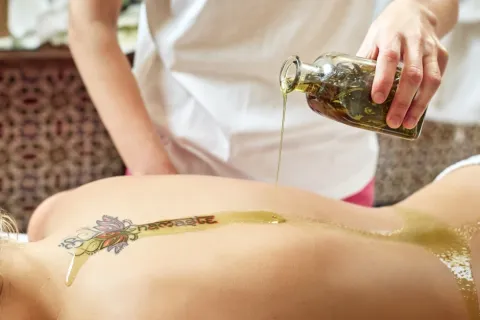
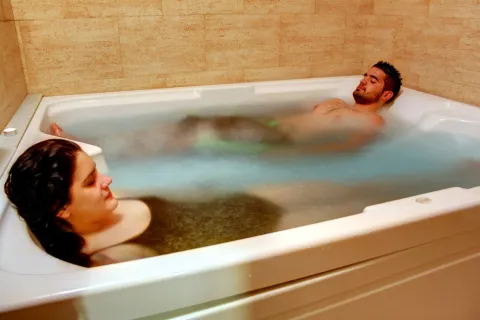
Located in an area of authentic beauty, surrounded by pine and olive groves, it offers the visitor with extensive facilities with more than 45,000 square meters in which you can enjoy a quiet and relaxed atmosphere, ideal for rest and to discover olive oil.

The spa is located in the beautiful town of Canena, in which its imposing castle-Renaissance palace of the 16th century stands out. The proximity of the Ubeda and Baeza World Heritage Cities offer a perfect complement to your stay.

Úbeda RV Parking Area

Submitted by brandcode_deweloper on
Id
11767010
Redes sociales
Facebook
https://www.facebook.com/ubeda.turismo
Descripción
Breve descripción

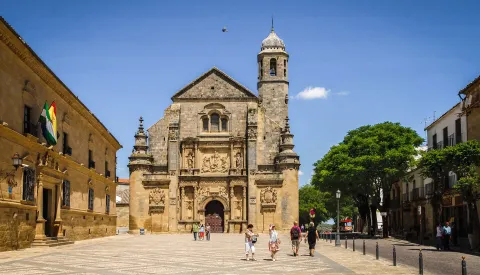
The city (World Heritage) has 48 notable monuments and over a hundred buildings of interest (Renaissance, Arab, Baroque and Gothic). Very important your Holy Week. A must visit to the Museum of the pottery and the Centre for the interpretation of the olive and oil.

Información de contacto
Teléfono
953 779 204
Sitio web
www.turismodeubeda.com
Correo electrónico
promocion@ubeda.es
Ubicación
Código Postal
23400
Latitud
38.006390
Longitud
-3.379440
Dirección
Travesía del Comendador Messía, s/n
Municipio
Ubicación en el mapa
POINT (-3.37944 38.00639)
Tipo de alojamiento
Imágenes
imagen
Image
visita-ubeda-baeza-individuales.jpg
Imagen principal
Activado
Horario
24 h
Qué ofrece

Ubeda has a beautiful monumental and cultural heritage that makes it a fundamental destination for those interested in the Renaissance architecture.

From its heritage we will highlight the excellent degree of conservation of many of its buildings, which still keep details of the time as can be the doors of claveted wood, the iron aldabas, the lanterns and the bars.

Loading map
Preparing points of interest and routes...
El Hotel

Free parking. Maximum stay, 48 hours. It is not allowed to remove chairs, tables, or other camping elements. All services and the historic centre are about 800 m away.

Number of places: 10 places.

Maximum permanence:Two nights.

Services included:

  • Empty of grey water

  • emptying of black water

  • Water filling

Cortijo Peñardera Apartment

Submitted by brandcode_deweloper on
Id
10614116
Redes sociales
Facebook
https://es-la.facebook.com/Cortijopenardera/
Instagram
https://www.instagram.com/penardera/
Descripción
Breve descripción

It connects with the authenticity of nature, let yourself be hypnotized by the rumor of water and disconnect to reconnect. Cortijo Peñardera is an old Cortijo Jienense surrounded by olive trees converted into a Nature Accommodation composed of ten unique and fully updated apartments.

Peñardera will allow you to enjoy the privileged environment in which we are. In the heart of the natural park of Cazorla, Segura and the Villas you can escape from the noise and learn to value the silence without leaving any kind of luxury behind.

Información de contacto
Teléfono
686 959 863
Sitio web
www.cortijopenardera.com/
Teléfono de contacto
686 959 863
Correo electrónico
info@cortijopenardera.com
Ubicación
Código Postal
23380
Latitud
38.381781
Longitud
-2.592550
Dirección
Ctra. de Puente Honda
Distrito
Municipio
Cómo llegar (URL de Google Maps)
https://www.google.com/maps/embed?pb=!1m18!1m12!1m3!1d3127.596810250139!2d-2.5950652238265013!3d38.381447676982!2m3!1f0!2f0!3f0!3m2!1i1024!2i768!4f13.1!3m3!1m2!1s0xd6f5da8a57d98b7%3A0xb0838fae3e60edc9!2sApartamentos%20Cortijo%20Pe%C3%B1ardera%20-%20Tu%20refugio%20de%20Monta%C3%B1a!5e0!3m2!1ses!2ses!4v1742833766664!5m2!1ses!2ses" width="600" height="450" style="border:0;" allowfullscreen="" loading="lazy" referrerpolicy="no-referrer-when-downgrade"
Ubicación en el mapa
POINT (-2.59255 38.381781)
Tipo de alojamiento
Imágenes
imagen
Image
cortijo%20pe%C3%B1ardera.jpg
Imagen principal
Activado
imagen
Image
cortijo%20pe%C3%B1ardera%204.jpg
Imagen principal
Desactivado
Idiomas
Las habitaciones

The apartments have a large living room and a clear kitchen to enjoy long conversations while preparing a tasty dinner. They are distributed in two bedrooms and a private bathroom. It also has a comfortable Italian-type sofa bed where you will rest better than at home.

Loading map
Preparing points of interest and routes...
El Hotel

Cortijo Peñardera is born of our family's commitment to stay close to our roots. After a complete remodeling, we have succeeded in modernizing all our facilities, always trying to respect their own Essence. Cortijo Peñardera is for us a return to the origins.

We ourselves form the team of professionals who will try to bring you the luxury of simple rural life. By accompanying you during your stay, you will find a young, fresh, energy-filled team, conscious of the environment around you and committed to society. We love nature, that's why we live as close to her and take care of her as anyone takes care of her house. In addition, we love animals and that is why we openly declare ourselves a petfriendly and sustainable accommodation.

Villarrodrigo

Submitted by brandcode_deweloper on
Id
787864
Perfil de redes sociales
Facebook
https://www.facebook.com/Villarrodrigo/
Instagram
https://www.instagram.com/villarrodrigofficial/?hl=es
Descripción
Breve descripción

Villarrodrigo is a municipality in the Sierra de Segura region at the north-eastern end of the province of Jaén, on the border of the province of Albacete. The Pedanía of Onsares also belongs to this municipality. Despite its location in this region, it is not part of the Natural Park of the Sierras de Cazorla, Segura and Las Villas, since it does not bring any municipal term to the said protected space.

Located in the foothills of the Sierra de Segura, the quality of the landscape, olive village, cereal fields, pasture area for livestock and forest land, makes its natural values no different from anyone.

The economy is basically based on agriculture. More than half of the total surface of the term is dedicated to the monoculture of the olive tree, mainly of the dry. It is an important area of bravo cattle and some of these cattle deal with their cattle in important squares, such as the cattle of Samuel Flores' leadership cattle.

Among its cultural properties is the parish church of San Bartolomé and the Medieval Torreon.

Telecomunicaciones
Teléfono
953 484 126
Sitio web
www.villarrodrigo.es
Fax
953 484 129
Correo electrónico
villarrodrigo@promojaen.es
Ubicación
Nombre
Villarrodrigo
Latitud
38.487250
Longitud
-2.636360
Distrito
Municipio
Ubicación en el mapa
POINT (-2.63636 38.48725)
Imágenes
imagen
Image
92860a53-e6a1-df54-1968-cc362bf674a6?t=1610976941798
Imagen principal
Desactivado
imagen
Image
0fe8cb7c-cbe8-49ec-31e9-e57f50200b7c?t=1621527911153
Imagen principal
Desactivado
imagen
Image
4e5d2c06-d2ea-b58c-7860-d0b2682ce4b2?t=1621528188977
Imagen principal
Desactivado
imagen
Image
c69bd7a1-2c54-6ba7-53a9-0f33c72664d1?t=1592843609909
Imagen principal
Desactivado
imagen
Image
3cde3fed-105f-7047-a8d8-8a063cee88ea?t=1621528189029
Imagen principal
Desactivado
imagen
Image
6df7c897-f1bf-ff05-0794-17cc410ec127?t=1621528809530
Imagen principal
Desactivado
imagen
Image
13c96cfa-ccc7-b415-e681-25791a58dd46?t=1621528877680
Imagen principal
Desactivado
imagen
Image
c745acd1-44e0-d90f-25b2-316af8c4f2c6?t=1621528928797
Imagen principal
Desactivado
imagen
Image
a7aae091-75a6-c843-b2ef-d1bfb74fd191?t=1621528928845
Imagen principal
Desactivado
imagen
Image
a085730f-7cb5-4107-fbef-8b8d573fd080?t=1621528928980
Imagen principal
Desactivado
Información adicional
Curiosidades

Ayuntamiento
Plaza de Ntra. Sra. de Albanchez
 

Imágenes cabecera
imagen
Image
Villarrodrigo
Imagen principal
Desactivado
Datos de interés

Tourist area: Serras de Cazorla, Segura and the Villas
Distance to the capital (km): 171
Altitude over sea level (m): 872
Extension (km ²): 79
Number of inhabitants: 588
Gentillo: Villarrodrigueños
Postal code: 23393

Videos
Video file
Cultura

From its artistic heritage, we highlight:

  • The parish church of San Bartolomébuilt between the 15th and 16th centuries, which mixes in its construction the rebirth and the baroque. With a basic floor, it has a wide and deafan space structured on three ships, covered with flat roof. To separate the ships, five half-point arches that are based on pillars of unequal size, the closest to the central ship being greater. Both sides are located chapels. The most valuable element It's the altarpiece., inspired by Vignola, the highest exponent of the transition period from Renaissance to Baroque. The choir is at the foot of the temple and is raised on pillars.The tower the quality of his syllable, the amplitude of its dimensions, the careful cornels, one gargola adorned, another with molding and finally the four vases that crown with angles.
  • Medieval turret. This extraordinary turret dates from the end of the 14th century, with a square floor and good masonry covered by large irregular armchairs. Its main façade of 13.60 m presents a door with an arch made up of striking carved candles. The set responds to the Gothic military architecture.
    Currently its height is the same as that of the houses in its surroundings, although it continues to arouse interest in its architectural typology and the medieval scenography it reproduces in the center of the village.
Naturaleza

Although Villarrodrigo does not belong to the Natural Park of the Sierras de Cazorla, Segura and the villas, its municipal term is in the same foothills of the park, and has a variety and a landscape wealth that we want to highlight:

  • Via Verde Sierra de Segura.The route of the old Baeza Railway - Use its steps in the province of Jaén in the region of the Sierra de Segura. Camino de la provincia de Albacete is developed in a landscape of lomas and hills dominated by the olive grove. And one of its sections goes through the natural park Sierras de Cazorla, Segura and Las Villas.

The best option to know the fauna and vegetation of this town is to travel some of the many paths that exist in the term. One of the most representative would be the path from Siles to Villarrodrigo, which links these two localities and can be taken on foot.

It is characteristic of a varied landscape of low and half mountain, between olive groves and pineapples of carrasco and black pine, with abundant Mediterranean sotoforested, splashed with beautiful walnuts, complaints and pineapples.

We can also observe well-preserved river vegetation.

We highlight the Recreative area of the Bear Dehesa, with fountains and large walnuts, from where you can start the rise to Cambrón by a signposted path.

The Bayona Recreative Area is also close, where we can take a bath in the summer.

Between the Dehesa del Oso and Villarrodrigo, there are two sections from which we can enjoy a wide view of the Natural Park and where the summits of the Banners, the Lies, The Spot and Yelmoand the albaceteñas Alcaraz saws and Calar of the World.

In the vicinity of Villarrodrigo you can see the last eastern foothills of Sierra Morena and the transition landscape formed by dehesas.

The corvids are abundant, like the lard and the corneja, as well as the boar. In the area of the Cambrón there is a colony of leonate vultures.

Fiestas y Eventos

Many of their traditions are preserved in Villarrodrigo, making them the best of their cultural heritage.

  • San Antonio, January 17. That day the fires on the streets around which roast potatoes are eaten and the calls are distributed "charities of San Antón", great roses that are delivered in the parish church. It is customary to walk home animals around the church in a sign of thanksgiving for the protection provided to them throughout the year.
  • By Santa Ana, there are also popular celebrations in which fires are lit and a bread of charity is distributed among the neighbors.
  • San Marcos the day is celebrated 25 April. This day goes out to the field to "Tie the devil."which consists of making a knot in a handful of green sows of the seed without breaking the rods of the mine. On this same date a bake is prepared which is known as "San Marcos rosco."
  • Romeria de la Virgen de Fatima. The most near Sunday to the 13th of May is the pilgrimage in honor of the Virgin of Fatima. The Romeo carry to shoulders over 5 km. the image of the Virgin to the place known as El Losal. There is currently a hermitage in this place built in 1993. In the afternoon the image returns in procession to the parish of San Bartolomé.
  • Romeria de San Bartolomé, August 24. It is celebrated in honor of the pattern, under whose advocation is the Parish Church. After the religious trades the patron is processed through the streets of the town.
  • Patrons in honor of the Virgin of Albanchezheld on 24 September. In that morning, the image of Our Lady comes out in procession and then there is a solemn Eucharist that brings together a large number of devotees.
  • Romeria of the Virgin Miraculous. The neighbors of Onsares have celebrated the last Sunday of May for almost a century, in an incomparable framework between pine and olive trees, the rosemary of the Virgin Miraculous. She was proposed by a teacher from this village to the civil and religious authorities, so that children could celebrate their first communion. The parish priest of Villarrodrigo donated a size of the Virgin, building a hermitage where it is venerated today.
Gastronomía

Villarodrigo's gastronomy preserves all the uses and forms of the region's cuisine.

Among the products of the massacre are the "white bruises," who do not carry blood and "black bruises," they do. With the pig's liver, the "jopringa".

Another dish, inherited from the pastoral cuisine, are the Galians.

Owner of the serrana cuisine is the dish called "Gachamita," made with potatoes and flour. The "garlic atao," It's a serrana sauce. The "sweet gazhas," that are very typical of all Saints' day food.

All these meals are usually accompanied by traditional drink, "crow," a mixture of wine, water, sugar and fruits.

Historia

From the Roman era, several rock inscriptions have been found in the area known as the Higuericas and identified as an ancient necropolis.

A lawsuit held in 1238 between the Order of Santiago and the Archbishop of Toledo for the ecclesiastical jurisdiction of the then Albadalejo de la Sierra (now Villarrodrigo) and other populations, indicates the existence of churches and a stable Christian population, assisting the disappearance of the Muslim population.

In the 13th century, the emir of the taifa of Murcia signed the capitulations of Alcaraz with King Fernando III. The territory of Villarrodrigo is thus integrated into the Corona de Castilla within the Kingdom of Murcia.
Since the mid-13th century, the Sierra de Segura remained under the Lord of the Order of Santiago, being divided into four ensembles (socio-economic institutions).

Villarrodrigo is located within the geographical space that maintains the Segura de la Sierra, in the so-called Levante corridor characterized by a soft relief that augurs a good agricultural land.

Until 1568 it was known as Albadalejo de la Sierra. On that date, King Philip II granted him the privilege and civil and criminal jurisdiction of first instance, in addition to the change of name, to be called Villarrodrigo, as a tribute to Jorge Manrique's father, Don Rodrigo master of the order of Santiago who conquered and lived in this population.

Loading map
Preparing points of interest and routes...
Imagen principal
imagen
Image
Villarrodrigo
Imagen principal
Activado

Villanueva del Arzobispo

Submitted by brandcode_deweloper on
Id
787624
Perfil de redes sociales
Facebook
https://www.facebook.com/villanuevadelarzobispo/
Twitter
https://twitter.com/ayuntvillanueva
Instagram
https://www.instagram.com/turismo_vva_del_arzobispo/?hl=es
Descripción
Breve descripción

Villanueva del Archbishop is a population in the the eastern end of the region of the Villas. Part of its term is included in the Natural Park of the Sierras de Cazorla, Segura and Las Villas, where there are many areas of extraordinary environmental and landscape value.

The geographical situation of the municipality should be noted, as it is the meeting area of four comarcas: County and their red lands, the Loma and its extensive olive fields, Safe with the largest natural park of Jaén of extraordinary beauty and that of Las Villas, made up of four municipalities, Villanueva being one of them. The Conistorio also includes the localities of Gútar and Montesina Barrio.

An important area is irrigated by the rivers Guadalquivir and Guadalimar, which leads to fertile lands that favour agricultural crops, including large olive fields.

Its economy is based primarily on the olive cultivation and obtaining olive oil. It also has an industry mineral water bottling machine.

Its monumental heritage is important. Among others are the church of San Andrés, the church of the Vera Cruz, the Convent of Sana Ana, the bullring, the Calvary Sanctuary, the House of Arcos and, on the outskirts, the Sanctuary of the Virgin of the Fuensana.

Telecomunicaciones
Teléfono
607 184 628 
Sitio web
www.villanuevadelarzobispo.es
Fax
953 451 278
Correo electrónico
turismovillanuevadelarzobispo@gmail.com
Ubicación
Nombre
Villanueva del Arzobispo
Latitud
38.168770
Longitud
-3.007650
Ubicación en el mapa
POINT (-3.00765 38.16877)
Imágenes
imagen
Image
532806cd-619f-7cc9-44c2-092f56943a53?t=1599779812435
Imagen principal
Desactivado
imagen
Image
7990b2d2-d948-48a8-a614-11375318478c?t=1599779812524
Imagen principal
Desactivado
imagen
Image
738190d2-92fe-d42a-cd21-dee89312ab66?t=1621521463540
Imagen principal
Desactivado
imagen
Image
fccf37b3-51ea-0d40-d2d3-208d29d4b0fb?t=1599779812628
Imagen principal
Desactivado
imagen
Image
98803030-2a13-91ec-885d-33c12edb2ac3?t=1599779812669
Imagen principal
Desactivado
imagen
Image
ab294870-3b1c-2c43-c6d9-d9e82cd58348?t=1621521463664
Imagen principal
Desactivado
imagen
Image
fa16b75d-5183-daa9-6ae1-50f481dec7f2?t=1621521463705
Imagen principal
Desactivado
imagen
Image
4ead314e-cf27-6335-e563-707c37a36d70?t=1621521463848
Imagen principal
Desactivado
imagen
Image
80863fbc-ff97-c637-eddd-c388f63d4e11?t=1599779812778
Imagen principal
Desactivado
imagen
Image
660ffa23-8ba0-ab1e-b463-727ca59414bb?t=1621521463960
Imagen principal
Desactivado
imagen
Image
52d201af-c51c-763e-9c0c-8ef4115edc82?t=1599780126028
Imagen principal
Desactivado
imagen
Image
88ddd9fb-5893-6275-8058-a9c69b5ed6e2?t=1621521464134
Imagen principal
Desactivado
imagen
Image
73c4d06c-c93d-e031-dd46-d8ed1d675189?t=1599780126074
Imagen principal
Desactivado
imagen
Image
69c1c5b9-c705-6242-ea11-b4458d3a582b?t=1599780267391
Imagen principal
Desactivado
Información adicional
Curiosidades
  • Punto de información en el Ayuntamiento: Avda. de la Constitución 5, lateral derecho del edificio.

  • https://villanuevadelarzobispo.es/turismo/  

  • OFICINA DE TURISMO 
    Avenida de la Constitución Nº5. Tel. 607 184 628


Imágenes cabecera
imagen
Image
Villanueva del Arzobispo
Imagen principal
Desactivado
Datos de interés

Tourist area: Serras de Cazorla, Segura and the Villas
Distance to the capital (km): 99
Altitude over sea level (m): 688
Extension (km2): 177
Number of inhabitants: 7,703
Gentillo: Villanovens
Postal code: 23330

Videos
Video file
Cultura
  • The Church of St. Andrew. It dates from the 16th century and is located in the historical center of the town. It rose on the pillars of the ancient medieval fortress, from which two of the four original towers, attached to the temple, are preserved, perfectly synthesizing the military and religious architecture. It has a mixture of different architectural and artistic styles: the Renaissance, Gothic baroque and classicist, due to its long construction. On top of the main door, which is of a classicist style, we observe a hornaine that contains the image of St. Andrew and that crown a half-point arch. Inside it consists of a single ship with side chapels that are linked through half-point arches on a ledge that runs through the temple. The major altarpiece is baroque. It has been declared Good of Cultural Interest and Spanish historical heritage.

  • Convent of Santa Ana. It is located in the old town. It was founded in 1540 and from the beginning became one of the most important of the Four Villas. In the walls of the refectory, the 16th century wall paintings and the shield of Santo Domingo are preserved. Inside is the church of Santa Anawith baroque altarpiece and a courtyard with Renaissance arches.

  • The church of the Vera Cruz. Built in the 16th century, with a Renaissance style façade. It consists of one ship in two sections, with chapels on each side. In its interior we find an extraordinary size of the Christ of the Vera Cruz, work of Mariano Benlliure, which replaced the primitive image stolen during the civil war. Rest on an extraordinary 1899 silver cross. The Christ of the Vera Cross is the patron of the town.

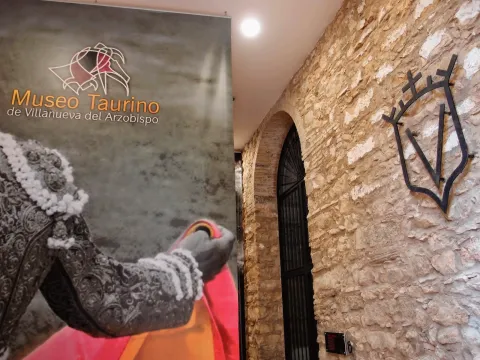
  • Toros Square. Built in 1928 it is neomudéjar style, where the use of brick and horseshoe arches that provide originality and elegance stands out. It is one of the largest bulls in the province, has all the necessary services and capacity for 6,000 people. The interior of the square houses the Taurino Museum of Villanueva del Archbishop.

  • Sanctuary of the Fuensana. It is of Romanesque style and was founded in the 13th century. It has subsequently been reformed. Because of its construction and the existing matacans it is considered that it was first a defensive fortress. Here is the image of the patron of Villanueva of the Archbishop, the Virgin of the Fuensanta. It has been governed by the Trinitarian religious order since 1884. The patron's holiday is held on September 8.

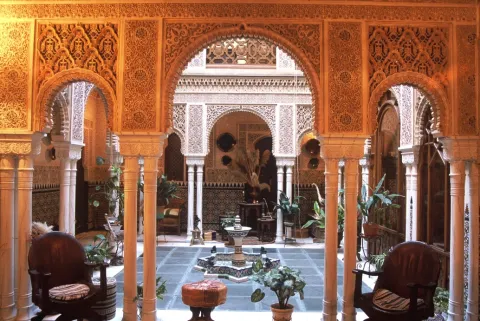
  • House of the Arches. It was built in 1928. With Renaissance lines on the fronts, they are combined with the baroque filiggranes of the bars and the Andalusian ceramics that kill the facade. It is chaired by six arches crowned by so many other ceramic vases. Its courtyard is a Nazi replica that imitates the palaces of the Alhambra. This building received the provincial beautification award.

Other heritage monuments: Hermitage of Jesus of the Mount, Hermitage of Saint Blas, Viaducto / Old railway way. The municipality is splashed with lordship houses like the Palacete de la Familia Cosano, Old Casino or Commercial Circle, House of the Arches, House of the Vélez Family or Sagrada Familia Palaceamong others.

Naturaleza

Villanueva del Archbishop is one of the four villas that, together with Villacarillo, Iznatoraf and Sorihuela del Guadalimarthey make up the region called Las Villas.

A town where there are many sites of extraordinary environmental and landscape value that are the gateway to the fascinating Sierra de las Cuatro Villas.

By its municipal term the rivers run Guadalquivir and Guadalimarwhich add beauty to the landscape, wealth to both vegetation and fauna. Surrounded by a sea of olive trees and cereal fields, part of its territory is included in the Natural Park of the Serras de Cazorla, Segura and Las Villas.

It is one of the localities where the vegetation has a greater variety, along with the species of the Alta mountain, such as the laricio pine or the acebo, coexist with other species that develop at a lower height, such as the black pine, the tejo or the boj and with those that develop in the lower area: melojo oak, the oak, the oak, the cucumber, olive trees, and other endemic and aromatic plants.

To this vegetation we will add the one that develops on the banks of the rivers: chopos, willows, mumberas, tarais...

The fauna, in line with the plant variety and the many habitats in the term, is also abundant and diverse.

To the raptures and scavengers of the mountains, eagles, broken bones, lethonated vultures, are joined the species, both of major hunting, deer, maflon, boar; as of minor hunting, rabbit, hare, parrots, gits, badges, kernels...

Without forgetting the typical birds of the olive tree, which either live in it, or feed on the migratory movements: curuca, verderon, zorzal, petirroja... Nor fail to mention the fauna of the rivers of crystal waters in their high courses: trout, barbo, nutrites, salamandra... Just like reptiles and amphibians.

A privileged world where Nature is the main attraction of these lands. Nothing better than to discover it in one of the many places in municipal terms, we will point out two recreational areas and have good accessibility:

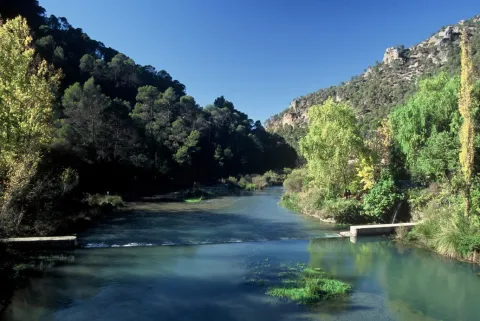
  • The Charco of the Pringue or Charco of the oil. Located about 20 km. of the city centre, is a recreational area that has a water remnant in the same river Guadalquivir. It has a wall and a gate, which allows to empty it completely. The water outlet is a roundabout, which in addition to continuously renewing the water from the remnant, serves to allow us to pass from one side to the other of the river. The name so curious, is because they tell that a donkey loaded with pear of oil precipitated from the narrow upper path and fell into the remnant, stained with oil water.
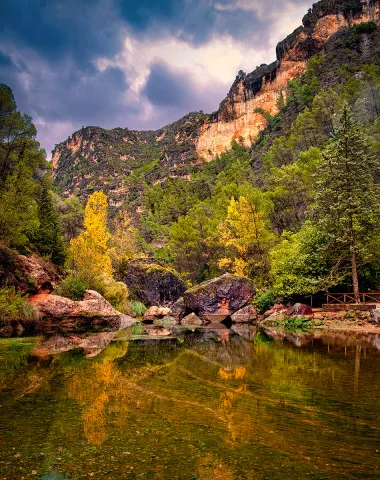
  • Cueva del Peinero. It is one of the most abrupt and steep places in the park. Its natural exit is the impressive throat where the river runs Avocados Grande, cThe crystal clear waters descend into successive waterfalls. On the contrary, in the recreational area, the river is sorely and silently spread between the thick vegetation of willows, chopos and nozzles. The huge lanterns that close the site rise more than 600 meters, forming scalated poyos covered with fully virgin vegetation by the difficult access. It tells the tradition that this cave was inhabited in the summer by a craftsman who was dedicated to making boj wood utensils, very abundant material in the area, and among other objects, made hair combs.

Fiestas y Eventos

The main parties in Villanueva del Archbishop are:

  • San Antón. January 17. They turn on "luminaires" in different places and the neighbors gather around drinking the traditional artisan wine.
  • San Blas. It is held on February 3. This day the villanovens come to the hermitage of the Holy, lighting a lumnaria around it and celebrating the tradition of passing the garrot through the throat so that San Blas will protect their health throughout the year.
  • Holy Week. Living representations are held dating back to the 17th century. They stand out for their realism and expressiveness. The different cofradies and cofrades process throughout the week. It has a great heritage in sizes and images that represent the passion of Christ.
  • Festivals of the Christ of the Vera Cross. These parties are held in the days before and after May 3. On that day, the Christ goes out in procession through some streets of the town and blesses the fields in the era of the Virgin of the Head. Verbenas and cultural activities accompany religious acts.
  • San Isidro. It is celebrated on May 15 and is the patron of farmers. In the parish of San Andrés The Eucharist is celebrated, followed by a procession with the Holy one on the streets, accompanied by tractors, agricultural machinery, horses... And at the end of the day a sisterhood meal is held.
  • San Fernando. It is held in Gútar May 30 with a traditional Eucharist, meals, drinks and verbena.
  • Corpus Cristi. The streets of the procession tour are embellished with flowers, carpets, paintings, plants to magnify the passage of Corpus Cristi. End of May, early June.
  • The Night in White. In July, with increasing demand and participation, a cultural night is celebrated: theatre, guitar, music bands, little children, dances... A very cultural and emotional night.
  • Festivals of Our Lady of the Fuensana. Between 7 and 11 September, the great days of Villanueva del Archbishop take place. On the 7th and 8th, in the morning, the procession and the traditional Romeria are held in the vicinity of the Sanctuary. From that day on the party is moved to the city centre with taurino shows, concerts and lots of activities. The final clasp put it, the last day, the fireworks.
Gastronomía

The gastronomy is traditional and varied, highlighting these dishes:

  • Cod onions, Cod stew, potatoes and onion.
  • Ajoharina, tomato saffrito, potatoes and eggplants with red pepper, garlic, cumins and water. Add flour to thinner.
  • Whites, salty, hard and crispy cakes accompanied by tomato and raw beans.
  • Garlic, rice with chopped onion, pig blood, butter and fences.
  • Gachamita, potatoes, garlic, oil, flour and water.
  • Other: Pipirrana, crumbs, gachas, "sleeping" cakes.

Warehouse:

  • Drunk, mass of flour, roasted olive oil, spirits, lemon, cinnamon and sugar.

Typical drinks:

  • Membile or fig liquor, crow, misteland traditional came from San Antón.

Historia

In the Arab era, Villanueva del Archbishop, was one of the fortresses that reinforced the village of Iznatoraf. It was a village like a few inhabitants, called "La Moraleja." The Arabs who lived in those places chose it as a leisure area, where horse races were organized and the artisans set up their workshops.

After the conquest by Fernando III of Iznatoraf, the village of "La Moraleja" was donated by the king, in the early 13th century, to Cazorla's advance.

The town as such in 1396, thanks to the request made by the Archbishop of Toledo to King Henry III, who granted him a Letter from Privilegio which is preserved in the Town Hall of the Villa. By this Charter the city was founded with all the privileges possible at that time: market, police and cessation of the payment of taxes to Iznatoraf. But an obligation was imposed on him: to lift a wall with two doors and to close the city in five years.

The municipality became the most important core of Señorío de Cazorlawith several flour mills on the Guadalquivir River.

Miguel de Cervantes lived for some time in this village as a tax collector.
Why did the municipality get this name? Villa, for the title given; new, because until that moment it did not exist as such and Archbishopin honor of Mr Pedro Tenorio, who was called the ecclesiastical office.

The city was moving forward and Philip II granted him criminal jurisdiction in 1573.

During War of IndependenceThe people became a refuge for guerrillas who harassed the French troops. As a result of these events, some convents were damaged and the Charter of Privilegio disappeared. After many years she appeared in Linares, she was restored and kept well guarded in the City Hall because she is the oldest document we have.
In 1920 he received the title of City from King Alfonso XIII.

Loading map
Preparing points of interest and routes...
Imagen principal
imagen
Image
Villanueva del Arzobispo
Imagen principal
Activado

Villanueva de la Reina

Submitted by brandcode_deweloper on
Id
787504
Perfil de redes sociales
Facebook
https://www.facebook.com/VillanuevaDeLaReina/
Descripción
Breve descripción

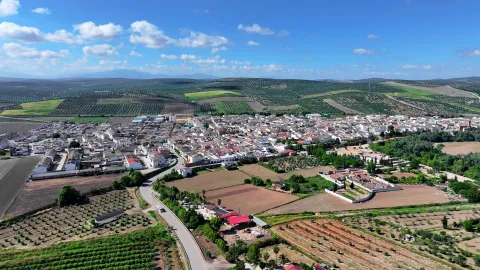
Villanueva de la Reina is located in a privileged area to the north-west of the province and belongs to the region of la Campiña.

Its municipal term forms an elongated strip occupying the medium region of Guadalquivir and has a flat and unhighlighted orography. La ribera del Guadalquivir, as it crosses the municipality, is conducive to the existence of orchards and irrigation olive groves.

The northern part of the term is occupied by the Mediterranean forest landscape of Sierra Morena, which in turn forms part of the Natural Park of the Sierra de Andújar.

The economic activity of the municipality is basically based on agriculture, mainly olive, promoted by the excellent fertile land of the Vega. The cultivation of the asparagus and in general the fruit and fruit crops are important. In recent years this activity tends to diversify, looking like the handling industry, mainly asparagus for export and under-coat cultivation.

Its municipal term includes the pedanities of: La Countess, La Crujía, La Quintería and Rincón de San Ildefonso.

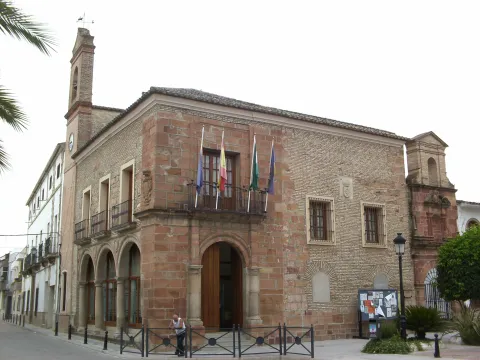
Among its historical-artistic heritage is the Church of Our Lady of Nativity, the City Hall, the Chapel of the Cortijo of San Nicolás and the Press of the Tower, a press of oil mill from the 18th century.

Telecomunicaciones
Teléfono
953 537 110
Sitio web
www.vreina.com
Fax
953 537 502
Correo electrónico
vreina@promojaen.es
Ubicación
Nombre
Villanueva de la Reina
Latitud
38.005160
Longitud
-3.914690
Distrito
Imágenes
imagen
Image
9eec0947-4e96-d628-ff1f-09b1e45ed344?t=1594823444734
Imagen principal
Desactivado
imagen
Image
3e0c8147-c039-1d1f-0819-d526b9e3abb0?t=1610978789230
Imagen principal
Desactivado
imagen
Image
bdcbb137-926c-d3ae-13a5-4a906409f681?t=1594823444071
Imagen principal
Desactivado
imagen
Image
3bae9ce7-6b92-c6b0-d516-a9b56578601e?t=1594823448503
Imagen principal
Desactivado
imagen
Image
e4c67879-5466-d96f-c5a8-a9d913f664b0?t=1594823460914
Imagen principal
Desactivado
imagen
Image
03488039-8206-0b72-029e-ad2dd5e2a914?t=1595431570981
Imagen principal
Desactivado
Imágenes cabecera
imagen
Image
Villanueva de la Reina
Imagen principal
Desactivado
Datos de interés

Tourist area: Sierra Morena / Sierras de Andújar and Despeñacolos
Distance to the capital (km): 35
Altitude over sea level (m): 220
Extension (km ²): 209
Number of inhabitants: 3,081
Gentillo: Villanovens
Postal code: 23730

Videos
Video file
Cultura

From its heritage we highlight the following monuments:

  • Church of Our Lady's Nativity. It dates from the 15th to the 18th century. It is made up of a three-ship plant. A previous one is preserved Mudejar chapel from the 13th century, at the foot of the temple with an outside entrance door. The current altarpiece was made in 1961, as the previous one was burned in the Civil War. There was a major altarpiece of the school of Alonso Berruguete attributed to Sebastián Solís, which was burned during the Spanish civil war. The present one was performed in 1961 by the talented master Mariano Piñar Ferrer. The chapel of the Rosary, located in the northern part of the left ship of the temple, stands out the plaster of its vault as an example of the Andalusian rock art of the 18th century.
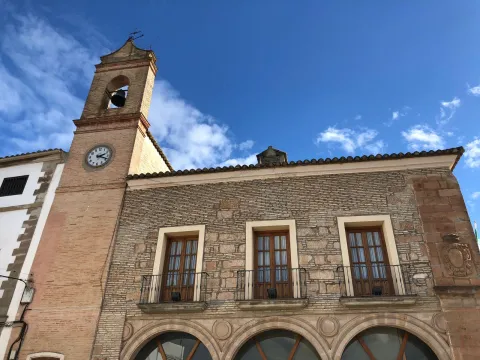
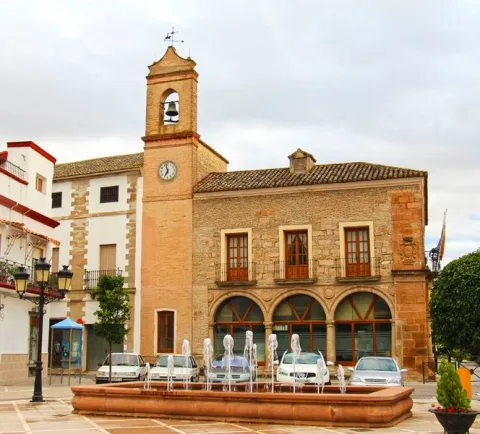
  • City Hall. The building of the Conistory House dates from the 18th century, and it is located in the corner with two facades. It is a large building and presents its two facades with silery stone, on two floors high. In the main facade shows its cover, where a half-point arch-finished hole opens, framed in two-fold semi-columns. A ledge separates it from the top floor where a balcony opens. The left side is composed of three half-point arches on ground-floor columns, and intoned holes on the upper floor. Next to it is a tower, on the upper body it shows a watch and above it is a bell.
  • Fachada from the chapel of the cortijo of San Nicolás. It is attached to the City Hall building. Baroque style, It consists of a cover of silery with a half-point arch flanked by two double pilasters, a second body with baking and a third one that overcomes with swordwork.
  • Press of the Tower old oil mill press. Possibly from the 17th century, currently located in the park of Guadalquivir.
  • It has a archaeological site of the Roman era in the Hermitage of Santa Potenica, next to the Guadalquivir River, as well as two hermites, that of San Marcos and that of the Holy Christ of the Humiliadero.
  • The parish church of theImmaculate Conception, shows in its arches and Gothic pillars that origin, although it is transformed in the first decade of the 17th century. Hence its elegant classic cover and the tower with a beautiful chapiel.
Naturaleza

The municipal term of Villanueva de la Reina is an elongated strip that occupies the middle region of the Guadalquivir River, and in it we can distinguish the following areas:

  • In the north From the term, the landscape is mountainous. This area belongs to the Natural Park of the Sierra de Andújar. A half mountain area with a varied morphology and altitude. It has a rich and varied fauna in which the Iberian lince stands out. The vegetation of this area is made up of: oaks, alcornoques, pines, oaks, cornicabres and bushes such as rosemary and thyme. In his fauna We find: deer, we go, lynches, boars, imperial eagle, black vulture and the leonate vulture.
  • Area of the countryside, in which the cultivation of the olive tree predominates, which also serves as a shelter and sustenance for species that live in this ecosystem: insect birds, parrots, codornices, clumsy pigeon... and mammals such as rabbit, hare, fox or badger.
  • In the central area, the quiet course of the Guadalquivir River determines the Vega, where fertile land is dedicated to the cultivation of orchards and fruit trees. The cultivation of asparagus is of great importance. The forest called gallery, which grows next to the river's riverside is the predominant vegetation, and is made up of chopos, allies, strawberries, mimberas, willows... With a fauna characteristic of this place: storks, storks, tents, trout, salamanders, frogs... as well as the fauna of these areas.
  • To hisr, it's a dry area, where cereals are especially grown.

A territory with areas of different characteristics and that each of them provides the vegetation and fauna that characterizes it, and that makes Villanueva de la Reina a municipality with a privileged natural wealth.

A place very visited by the neighbors of Villanueva de la Reina is, The Battle. It is located next to the Guadalquivir River and is a recreational area that is populated by a lot of eucalyptus, fountains, children's playground, ideal for spending the day with the family.

Here it is preserved a Batan, machine that was composed of thick wooden mocks moved by a shaft to hit, unfat and sharpen the cloth.

In this place is celebrated the Romeria of Santa Potencio.

Fiestas y Eventos

The following parties are held in Villanueva de la Reina:

  • Saint Anton. It is held on January 17. The night before are done "lumbres" with olive branches in different parts of the village. Around the lumbres you sing, dance, drink and roast chorizos, cheeks...
  • Carnivalwhich is held on Saturday after ash Wednesday. A party with a lot of roots and in which the neighbors come out to see the comparsas and the people dressed in "mask."
  • Holy Week. During the Holy Week processions, the "armed," typical Roman soldiers who walk in front of the steps, dressed in the typical Baroque suits and sing the traditional ones "Passion Cups" and "Questions.", songs that sing without musical accompaniment.
  • Romeria in honor of Santa Potentena. It takes place the second weekend of May, in the place called the Batanejo. It starts on Friday with the traditional paellaon Saturday with the walk through the streets of the village of Brotherhood of Santa Potenica accompanied by the authorities and people dressed in typical flamenco suits, who are followed by beautifully gilded carrots. The party will end on Sunday with the procession of Santa Potentian to the Batanejo.
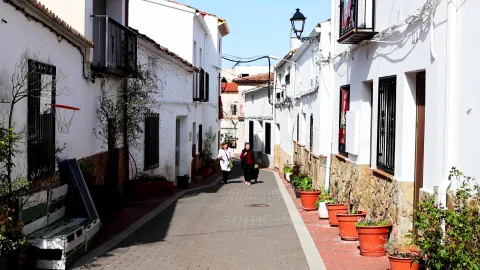
  • San Isidro. It is the pattern of the village of The Quinteria and is held on May 15. On that day, activities are organized for children and older people and the Holy One is processed.
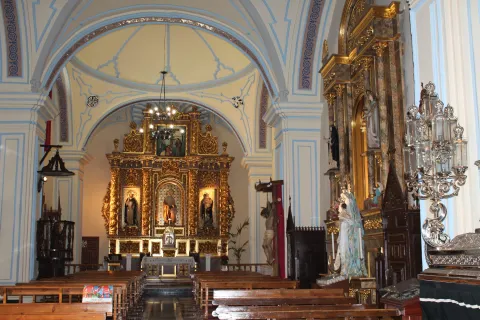
  • Patronal parties in honor of Santa Potentena. Which take place on the first weekend of August, from Thursday to Sunday. On Saturday the tasting of the "Singing" eggplants in vinegar and in the afternoon the procession in honor of Santa Potencio.
  • Romeria de Santa María de la Cabeza. It takes place on the last Sunday of April in the sanctuary of the Virgin of the Head which is found in the middle of Sierra Morena. It is the oldest rosemary in Spain, and there come neighbors of the surrounding villages, dressed as rosemary and with the gilded carrots, which look like rivers of color that climb up the mountain. A very bright and emotional romance.
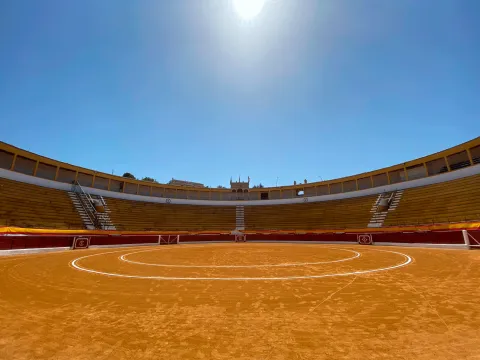
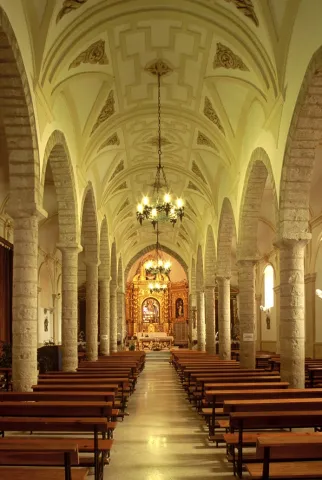
  • The "Monones", are native songs / Coplas of Villanueva de la Reina that maintain the tradition of going out alone or in group on the streets to sing them at Christmas. The content is jumpy, loving or spicy. Contests are organized and the number of participants is increasing each year.
Gastronomía

There are two ideas that are present in all the dishes that make up the gastronomy of Villanueva de la Reina: The first is that the virgin olive oilproduced in their fields, will be present in all their dishes; and the second is that they will be used as ingredients those products on the ground, vegetables, fruit or mountain meat during the hunting season.

Among the most traditional dishes, we highlight:

  • "Old clothes." or the rest of the cooking: cooked chickpeas, onions, garlic, egg, salt and oil.
  • "Lent power": chickpeas, olive oil, flour, cinnamon and lemon scrapes.
  • "Tyruabuzas": eggs, olive oil, flour, cinnamon and lemon scrapes.
  • "Pipirrana", is a salad in which tomatoes, cooked eggs, green peppers, onions and tuna are chopped.
  • Monkey stew. (Rabbit, hare, perdiz)

In pastry shops:

  • "Bienmesabe", a dessert with clear Arab reminiscent, which carries almonds, sugar, water, egg yolks, lemon shell and cinnamon in stick. It is in the form of a pasty cream with an exquisite taste.
  • "Pestiños", rosy types passed through the frying pan, to which sugar is added.
Historia

Vestiges located on the terraces of Guadalquivir confirm its paleolithic origins; the settlement of The Crujia is one of the archaeological sites already of the Neolithic. The human presence during the Iberian era is evident in other settlements and in the discovery of abundant ceramics.

These lands were very moved by being located on the way from Cástulo to Iliturgi, from the Via Augusta. In the Vasos of Vicarello, the route from Cadiz to Rome by Cattulo appears, and a stop is mentioned. Ad Noulas or Nobia, identified with the Vega Baja site, close to the current city centre. It was the old one. Ipra where findings reveal systems of Roman parcelation, in places such as the Garden of Enmedio, Arroyo del Tesoro, the Crafts or in the surroundings of the pedanea The Quinteria. The most emblematic is the villa of Santa Potencio.

In Muslim times it was a small alquería, given to Andújar after his conquest by Alfonso X. In the 15th century, it was the scene of the battle of San Bernabé, in which when the Andújar of his battle against Don Juan de la Cueva in Baeza, led by the Constable Iranzo, returned, were surprised by Don Fabrique and those of Córdoba with 500 horses and 800 children.

In 1628 Bishop Moscoso and Sandoval began a process on the miracles of Santa Potenica, weaver whose martyrdom consisted of pairing; ten years later he was beatified by Urban VIII.

During the French invasion, General Castaños organized here the column that he defeated at the Battle of Bailén. On July 22, 1808, the French capitulation was signed at the Casa de Postas de Villanueva de la Reina.

The old one Villanueva de Andújar was segregated from this city in 1790 and took the name of Villanueva del Río, until later, for aid received from Queen Elizabeth II, he changed his name to the current one.

Imagen principal
imagen
Image
Villanueva de la Reina
Imagen principal
Activado