Saltar al contenido principal

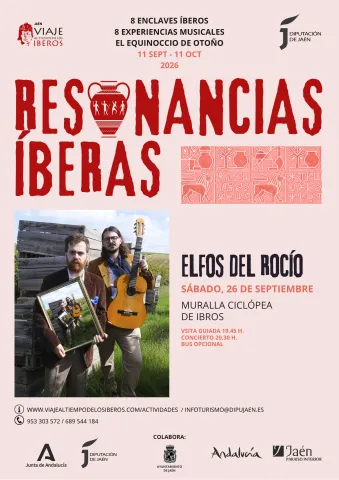
Iberian Resonances: Elfos del Rocío

Submitted by brandcode_deweloper on
Id
14326775
Redes sociales
Twitter
https://reservas.jaenparaisointerior.es/EVT-2026-149 | https://reservas.jaenparaisointerior.es/EVT-2026-150
Instagram
Reservas de plazas SIN AUTOBÚS | Reservas de plazas CON AUTOBÚS
Descripción
Descripción larga
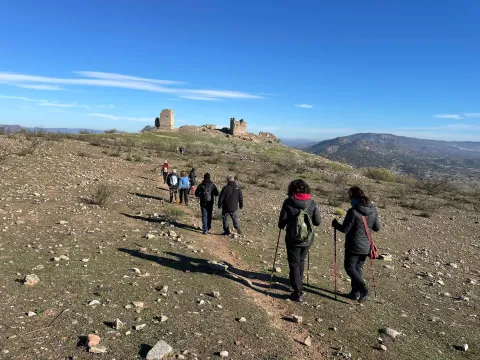
The Journey Back to Iberian Times programme, on its route through the province's major archaeological sites, stops on Saturday 26 September at the Cyclopean Wall of Ibros, where the group Elfos del Rocío will perform, known for their acoustic sensitivity and their ability to engage in dialogue with the natural surroundings.
Telecomunicaciones
Sitio web
https://www.jaenparaisointerior.es/documents/d/dipujaen2/bg_agenda_original-png-1-
Ubicación
Código Postal
44132
Latitud
38.023
Longitud
-3502
Municipio
Ubicación en el mapa
POINT (-3.502182 38.022404)
Imágenes
imagen
Image
elfos-del-rociio-png
Imagen principal
Desactivado
Evento de diputación
Desactivado
Microsite al que pertenece
Solo menores (Sí/No)
Desactivado
Evento anual (=Periodicidad)
Desactivado
Loading map
Preparing points of interest and routes...
Evento cancelado
Desactivado

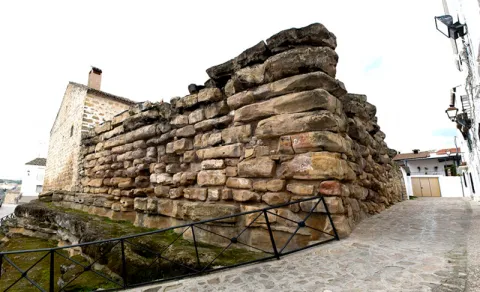
Muralla Ciclópea de Ibros

Submitted by brandcode_deweloper on
Id
308824
Descripción
Descripción larga
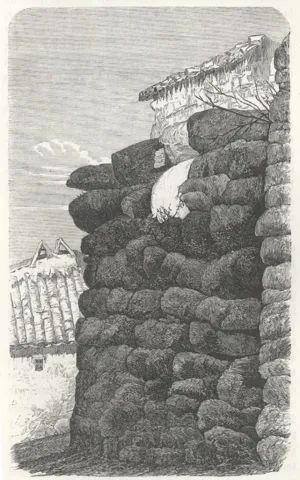
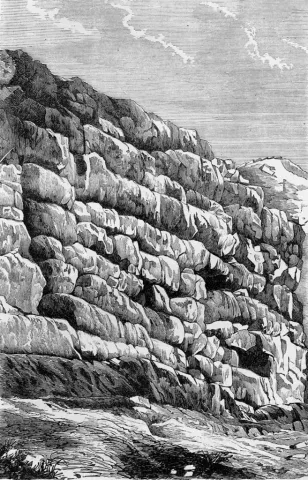
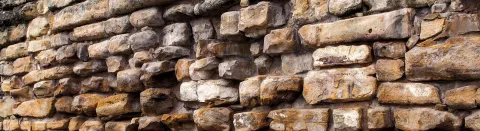
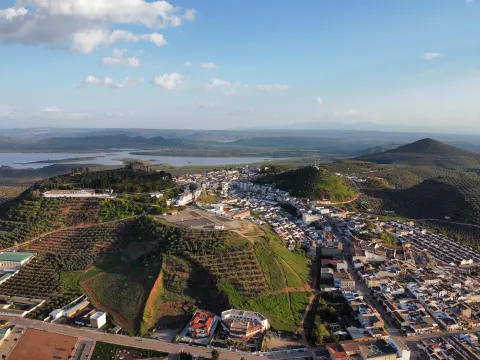
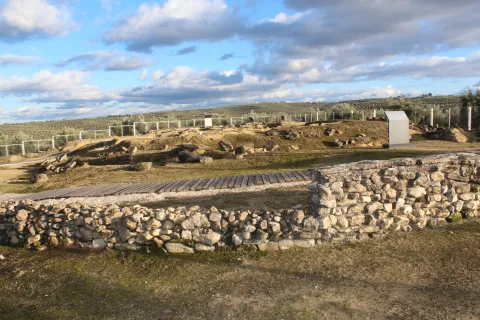
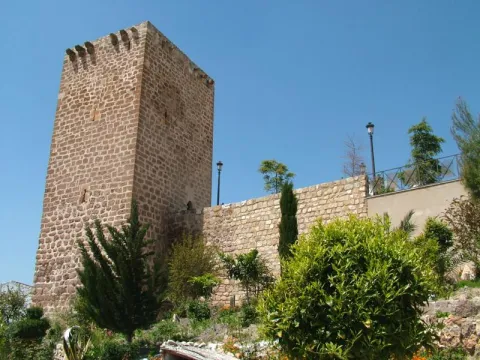
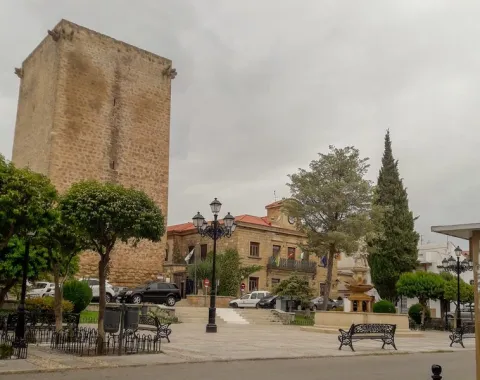
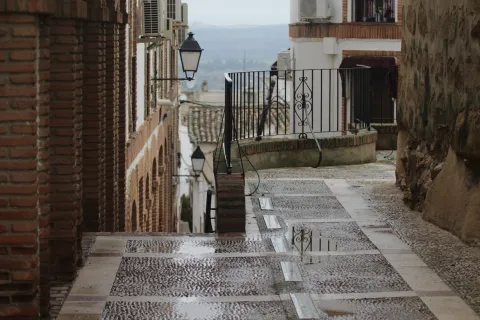
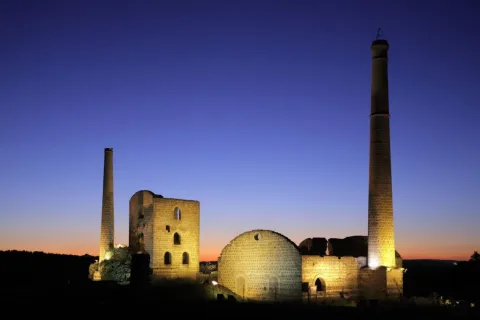
It was Manuel de Góngora, during his journey through the province of Jaén around 1860, who discovered this magnificent wall, stating for the first time that it was of Iberian construction. This Professor of Universal History and Inspector of Antiquities made a spectacular discovery: he was the first to identify the Iberian peoples of the Upper Guadalquivir. More recent studies have identified this type of cyclopean structure with towers and fortified enclosures dating from between the 2nd and 1st centuries BC. In these later stages of Iberian culture, the Romans had already reached the lands of the Guadalquivir, imposing new models of land occupation in which these great defensive structures appear to correspond to strategic sites that delimit and control territories, roads, water sources and even farmland. The cyclopean wall of Ibros, today integrated into the townscape, has survived to the present day as an important architectural element of Iberian culture. Its huge stones, originally joined without mortar, teach us much about those people: their fears, technological advances, struggles and wars, conquests, social transformations… It is located in the northern part of the historic centre, in the district known as "el señorío". Its location makes strategic sense, as it defended the most vulnerable area, closest to the riverbed. It is one of the most celebrated prehistoric monuments in the province of Jaén. A large structure, originally formed by a quadrangular enclosure surrounding the perimeter of the settlement, of which today only a corner measuring 12 to 13 metres long survives. Its enormous ashlar blocks are fitted together without mortar and measure 3.60 metres in length by 1.70 metres in width. We hear nothing more of the town until Christian times, when it was taken in 1157. It later fell once again into Arab hands, until it was definitively conquered by Ferdinand III the Saint. During the reign of Philip IV, the town's defence consisted of a small castle and a wall in which the Ibero-Roman cyclopean wall was reused. The old castle of Ibros must have gradually fallen into disuse, like the rest of the region's fortresses, since after the fall of Granada in 1492 there was no immediate external threat, and advances in artillery made such fortifications unnecessary.
Breve descripción
The Cyclopes were mythological beings with only one eye, members of a race of giants — strong, hot-tempered and prone to sudden emotions. Mythology tells us they were great builders and craftsmen, and this is why, during the Middle Ages, walls made of large worked blocks — like this one in Ibros — began to be discovered and came to be called "cyclopean structures", leading to the conclusion that only the Cyclopes possessed the skill and strength needed to build them.
Telecomunicaciones
Teléfono
Visita exterior, no precisa reservar para su visita.

*Consejos para la visita

Se aconseja comenzar la visita desde la Plaza del Ayuntamiento, dirigiéndonos hacia la calle Gradas llegaremos a la calle del Pilar donde se localiza la muralla.
Sitio web
www.ayunibros.es
Ubicación
Código Postal
23450
Latitud
38.02357
Longitud
-3.50342
Dirección
C/ Pilar, 1
Municipio
Ubicación en el mapa
POINT (-3.50342 38.02357)
Tipos de punto de interés
Imágenes carrusel
imagen
Image
murralla.png
Imagen principal
Desactivado
imagen
Image
muralla_ciclopeda_5.jpg
Imagen principal
Desactivado
imagen
Image
muralla_ciclopeda_4.jpg
Imagen principal
Desactivado
Imágenes cabecera
imagen
Image
Ibros_cab%20%281%29.jpg
Imagen principal
Activado
Horario
Abierto 24 horas
Microsite al que pertenece
Loading map
Preparing points of interest and routes...

Renaissance of the South

Submitted by brandcode_deweloper on
Id
6739302
Breve descripción

The province of Jaén has the most important Renaissance legacy in Spain, thanks to the work of the master of works Andrés de Vandelvira. Its Renaissance is unique; it comes from Muslim inspiration. Discover an unforgettable route, full of rich monuments, customs, legendary legends, cathedrals that rise between olive trees, palaces full of history, fortresses, urbanism, etc. In short, everything that the traveller needs to discover an indelible footprint of centuries of history.

South Renaissance

Municipio
imagen
Image
Cabecera-renacimiento%20sur.jpeg
Imagen principal
Activado
imagen
Image
a9db8a3328ff7a4f7ae308c2d6a95a5a.jpg
Imagen principal
Desactivado

Friends

icon-intereses-amigos

Adventure

icon-intereses-aventura

Sport

icon-intereses-deporte

Eco-friendly

icon-intereses-eco-friendly

For couples

icon-intereses-en-pareja

Family

icon-intereses-familia

Gastronomy

icon-intereses-gastronomia

Nature

icon-intereses-naturaleza

Low-cost tourism

icon-intereses-turismo-low-cost

Solo travel

icon-intereses-viajar-solo
Desactivado

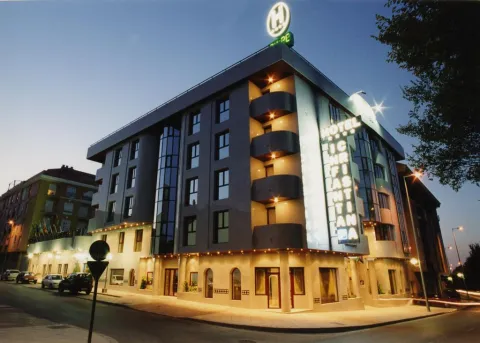
Hotel Infanta Cristina

Submitted by brandcode_deweloper on
Id
12830696
Redes sociales
Facebook
https://www.facebook.com/pages/Hotel-Infanta-Cristina/162253890483830?rf=139963242747894
Instagram
https://www.instagram.com/explore/locations/241412410/hotel-infanta-cristina/
Descripción
Breve descripción

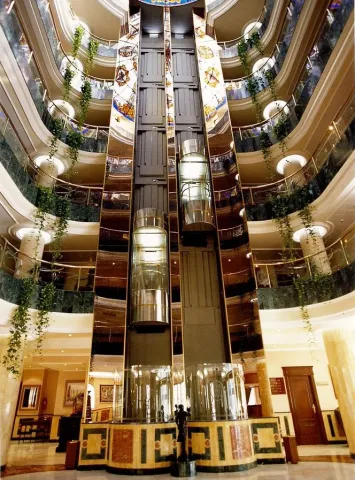
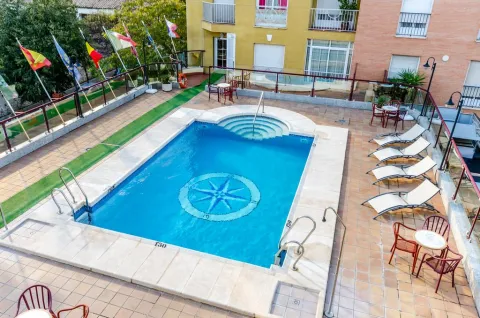
The 4-star Hotel Infanta Cristina is the choice of choice among the most demanding travelers. An exquisitely decorated space characterized by the quality of the services and the excellent attention of its staff as main notes, recently recognized with the "Q" of Quality.

Información de contacto
Teléfono
953 263 040
Sitio web
www.hotelinfantacristina.com
Teléfono de contacto
953 263 477
Correo electrónico
reservas@hotelinfantacristina.com
Ubicación
Código Postal
23009
Latitud
37.781407
Longitud
-3.785994
Dirección
Ctra. de Madrid, 3
Distrito
Municipio
Ubicación en el mapa
POINT (-3.785994 37.781407)
Tipo de alojamiento
Imágenes
imagen
Image
55087765-3-jpg
Imagen principal
Activado
imagen
Image
30c-jpg
Imagen principal
Desactivado
imagen
Image
30b-1-jpg
Imagen principal
Desactivado
imagen
Image
30a-jpg
Imagen principal
Desactivado
imagen
Image
30e-jpg
Imagen principal
Desactivado
Aforo
130
Idiomas
Las habitaciones

All our spacious double rooms are soundproofed and equipped with a full private bathroom, with 3 suites, 58 double rooms and 10 single rooms.

Número de estrellas
4
Loading map
Preparing points of interest and routes...
El Hotel

Spaces with a dedicated decoration, designed for an unforgettable stay, serving with mime to the last detail. Private parking is available on site for an extra charge. The tour desk can provide you with information about Jaén. The Infanta Cristina also has a traditional restaurant, a coffee bar and a 24-hour reception. There is also a TV room and large multi-purpose rooms.

Vilches

Submitted by brandcode_deweloper on
Id
787264
Perfil de redes sociales
Facebook
https://www.facebook.com/profile.php?id=100068958337736
Descripción
Breve descripción

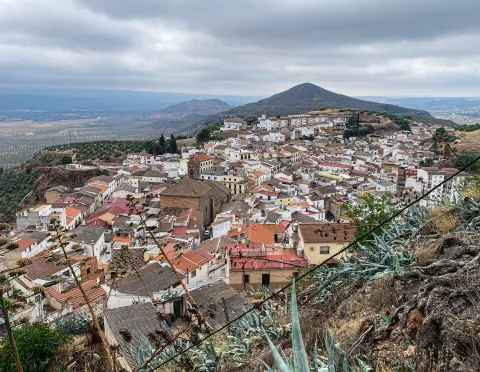
Vilches is a municipality located in the north of Jaén, in the district of El Condado, located in the foothills of Sierra Morena. The pedanias of Guadalén and Miraelrio are also part of it.

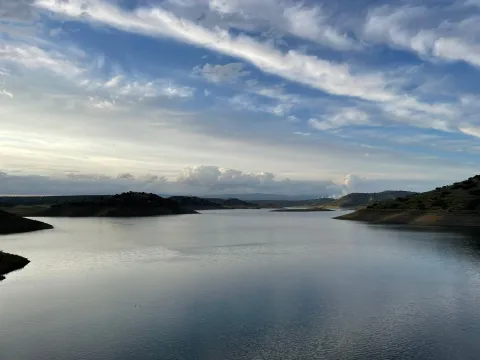
Its municipal term is crossed by the Guadalén, Guarrizas and Guadalimar rivers, which pour their waters in the reservoirs of Guadalén, La Fernandina and Giribola, respectively.

Its varied landscape has great tourist potential, highlighting its areas of environmental interest, reservoirs, oak dehesas, extensive olive trees, farmland, not forgetting its cynetic and fish resources.

The historical-artistic heritage is relevant. The church of San Miguel, the hermitage of the Virgin of the Castle, the remains of the castles of Vilches and Giribola, belonging to the Route of the Castles and the Battle of Jaén, and archaeological sites such as Giribola, of Iberian times, are highlighted.

Telecomunicaciones
Teléfono
953 63 00 75
Sitio web
www.turismovilches.com
Correo electrónico
turismo@vilches.com
Ubicación
Nombre
Vilches
Latitud
38.211660
Longitud
-3.512960
Distrito
Municipio
Ubicación en el mapa
POINT (-3.51296 38.21166)
Imágenes
imagen
Image
c4eb1866-6864-211d-8b8d-5d6240b72c0e?t=1687277240860
Imagen principal
Desactivado
imagen
Image
e203e5aa-0c7b-55bc-bb18-7f2ad2a50893?t=1687277240664
Imagen principal
Desactivado
imagen
Image
36f5d348-3269-39d2-d70f-6d5b005c43c2?t=1687277240761
Imagen principal
Desactivado
imagen
Image
61e83072-e72e-55d4-da7b-2cbab669b212?t=1585852470283
Imagen principal
Desactivado
imagen
Image
b8aaede2-095b-503f-349d-1f204fe0ddee?t=1687277240934
Imagen principal
Desactivado
imagen
Image
de02a0ed-f04e-7e2f-c703-d8c7d6baea37?t=1687277240590
Imagen principal
Desactivado
Imágenes cabecera
imagen
Image
Vilches
Imagen principal
Desactivado
Datos de interés

Tourist area: Sierra Morena / Sierras de Andújar and Despeñacolos
Distance to the capital (km): 80
Altitude over sea level (m): 543
Extension (Km2): 273
Number of inhabitants: 5086
Gentillo: Vilcheños
Postal code: 23220

Videos
Video file
Cultura

Its artistic heritage includes:

  • Church of San Miguel Archangel, This church dates back to the last third of the 16th century. The main cover is simple and with a half-point arch. It appears decorated with a stone shield made of quarry, typical of the Renaissance and Spanish mannerism. On a side it has a cover with a tile image of the Virgin of the Castle. The tower is of rectangular floor, which is unusual, and with relief decoration of the bell tower, similar to work in brick. The interior is one-ship and at the bottom is a half-barrel vault with the arms shields of Bishop Calderón. The majestic baroque altarpiece of the 18th century, the work of sculptor Diego de Briones, the chapel in which the so-called "trophies" of the battle of the Navas de Tolosa are kept (1212) and, in another chapel, a canvas of the Final Judgment are kept.
  • Ermita- shrine of the Virgin of the CastleHe rose in the 18th century on the ancient church of Santiago, at the top of the hill of the castle. It houses the image of the patron of Vilches, who every August 14, on the occasion of the holidays in his honor, is brought down in procession to the parish of San Miguel.
  • Vilches Castlelocated on a high hill to which it gives name and from where you can enjoy a wonderful view, is the castle of Vilches. A fortress castle that played a very important role as a point of defense of the high Guadalquivir, served as a refuge for the inhabitants of the environment in the face of the advance of Christian troops during the Reconquest and starred in famous war episodes, in the Middle Ages, between Arabs and Christians. Although we know that the hill has been populated since the time of the Iberians, the origins of the castle are uncertain. There are only a few remains of the fortress: a esquinero turret, known as "Cube de la Villa," part of another turret and a passage with a slightly pointed vault of armchair. With the passage of the years and the consolidation of Christian culture, much of the towers and parts of the walls of the castles were used to build small churches and hermitage. In the courtyard of arms the church of Santiago was built, on which the hermitage of the Virgin of the Castle was later built. It was declared Good of Cultural Interest in 1985.
  • Archaeological site of Giribola. It is an archaeological site of great importance located in the confluence of the Guadalimar and Guadalén rivers, from where you can enjoy excellent panoramic surroundings. From what has been known so far, it is known that it was home to an Iberian city, which some scholars associate with Orisia, which was destroyed in the Second Punio War, a prehistoric sanctuary, a Paleocrist or Visigode cenobium and a Almohad castle built after the battle of the Tolosa Navas.
Naturaleza

TheNorthfrom the term Vilches extends through Sierra Morena, with altitudes reaching 800 m. The vegetation in this higher part is very varied and is associated with the Mediterranean forest: encinars, alcornocals, complaints. There are also shrubs and areas of wood pine plantations.

More to Southin the foothills of Sierra Morena, with altitudes between 400 and 500 m., the adhesitated surfaces and pastures predominate. With a soft orography of constant undulations, where the olive grove predominates and we also find low mountain with acuchals and madroños.

Here live numerous animal species, such as birds, mammals and arthropods, easily observable in their natural habitat.

Thewet areass are around the reservoirs(Guadalén, Girirbola and Fernandina), in theriver banksGuadalén, Guadalimar and Guarrizas. The banks of the rivers and streams welcome mimberas, tarays, adelfas and other tree species such as the white chopo or the black Alamo.

The reptiles abound, highlighting the populations of theleprous galapagoin the rivers Guadalén and Guarrizas, as well as theViper de Latastein the Sierra. They will also be easily observable fishing and real eagles, common and black vultures, royal owls, lynches, gines, badges, etc.

Fiestas y Eventos

Vilches is a municipality of deep-rooted traditions, with popular celebrations, both religious and profane, that take place throughout the year and with activities for all ages.

  • San Antónwhich is held on 17 January. The streets are filled with bonfires of olive branches, which come from the pruning of these trees, to honor the pattern of the animals.
  • San Sebastián, Vilches pattern, which is held on January 20. That day the saint leaves his hermitage to process the streets.
  • Carnival parties, in which the neighbors participate, in which they dress up and sing mockery cokes (the City Council awards the best). They take place in the Caves del Zahaní district.
  • Holy Week. A week marked by religious acts and processions from Palm Sunday to Resurrection Sunday.
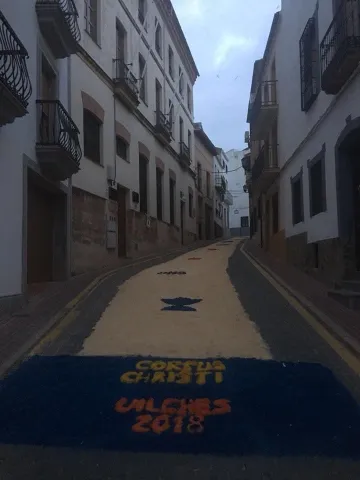
  • Festival of Corpus Christi. After Mass, in the church of St. Michael, the Lord will take a tour of the people accompanied by children of first communion. It is tradition to paint the streets using multi-color sawdust to reproduce allegorical drawings to the day of Corpus.
  • Saint GregoryOn May 9, in the neighborhood of the Mesones, a mass is held in the church of St. Gregory. At the end of the day, the rosses of blessed bread are distributed and the image of the saint is moved to the church of San Miguel.
  • Patrons in honor of the Virgin of the Castleon the 14th of August the transfer of the patron from her hermitage to the parish is carried out, remaining there until 8 September. The next day, on the 15th, the Holy Mass is celebrated in his honor and the floral offering. The festivities will last five days, in which there will be sports events, enclosures, capeas, gastronomic samples and popular verbenas.
  • The Vilches bell-bearers, they are a gang of Vilcheños who, when Christmas comes, go through the streets, singing their stanza. They sing ancient and villain senses. It is a tradition in which Arab reminiscent is observed, both in its melodies and in its stanza. The song is initiated by a soloist and the chorus chorus. The accompaniment is very unique: guitar, bandurry, laud, bell, triangle, Spartan alpargata, plow, wooden drawer, almirez and saucers.
Gastronomía

Vilches is a municipality very fond of its traditions and this is also reflected in its gastronomy. Meat obtained from hunting is often used to make its dishes.

We highlight among the best known:

  • The harls, a hare stew, flour, tomato, onion, olive oil and pepper.
  • The countrysideA stew with hare and potatoes.
  • The brain, on this dish is cod, with onion, tomato and olive oil, which takes the lead.
  • The crumbswhich consists of bread, garlic, olive oil, all accompanied by some products from the slaughter of the pig.

From the pastry shop we want to highlight:

  • PapajotesIt's traditional sweet. This dessert is consumed at breakfast or at snack, and is one of the most widespread sweets in the province.
  • Sweet peas for the Day of All Saints.
  • Tickles, drunks and flowersHoly Week.
  • Bake and bread with matalauva in San Gregorio.
Historia

In the municipal term of Vilches, about a hundred archaeological sites have been invented. From the Copper age the field of Santagon. The occupation of this settlement had to end at the beginning of the Bronze Age, when the consolidation of metallurgical activity and the fertility of the surrounding lands involved the emergence of small villages in the area, some of them fortified, such as the Cañada de Malaguo, Giribola or Cerro Santo. This settlement has the novelty of having a large defensive tower.

In the Iberian stage, GiridanceThe metallurgical centers were controlled from here. The town has an urban layout defined by streets, houses and public areas, delimited by a large wall. From this Iberian period, many settlements and small fortifications have been invented, including the first occupation of the castle hill.

In the Roman times Vilches is identified as BaesucciAccording to a stone located on the hill of the castle. The Emperor Vespasian granted him the title of municipality. In Santagon, remains of ancient villas with mosaics have been found in the noble areas.

Also the people Visigode He settled in Vilches. A visigode architrabe has been found and is preserved in the Jaén Provincial Museum.

It's in the Islamic period when the current Vilches site is consolidated, being occupied from 711. It was part of al- Andalus for five centuries, from the first years of the 8th to the 13th century. This long period makes Vilches a typical Muslim cityfrom which we can guess vestiges today. As the 12th century progressed, the castle of Vilches became very vulnerable by the proximity to Despeñacolos, where the Spanish-Latvian troops practiced acts of harassment over the possessions of al- Andalus.

In 1212, the Christian kings of Castile, Aragon and Navarra, beat the Muslims in the the battle of the ships of Tolosa. Three days later, the castle is conquered and the population exterminated, which will force this area to be repopulated with inhabitants from beyond Sierra Morena. The Christians will stay in the Vilches castle And the Muslims will return to Giribola.

It will be King Fernando III who gives up the territory of Vilches to the Council of Baeza, until Felipe IVin 1627, release him and grant him the The title of Villa.

The number of Vilches with railway station, already in 1900.

Loading map
Preparing points of interest and routes...
Imagen principal
imagen
Image
e2fdf917-2e2c-2a08-49fc-21c32566e218?t=1687277240494
Imagen principal
Activado

Porcuna

Submitted by brandcode_deweloper on
Id
749735
Perfil de redes sociales
Facebook
https://www.facebook.com/AyuntamientoDePorcuna/
Twitter
https://twitter.com/aytoporcuna
Instagram
https://www.instagram.com/ayuntamientoporcuna/
Descripción
Breve descripción

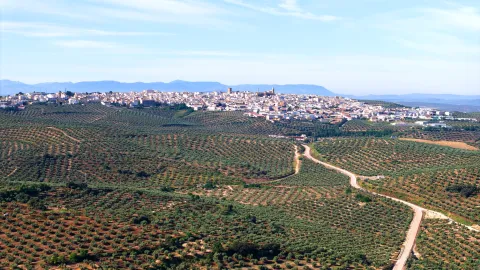
Among large plains of green olive trees is a noble atalaya in which is found Porcra, a universe in stone carved through its six thousand years of history.

Canteros of all times recorded in their walls the mark of an illustrious past, leaving for eternity the echo of their master's. In it the sculptural set of Cerrillo Blanco was modeled; the solid foundations of the Roman Obulco were raised; it served as the custody of an Andalusian bulwark and was the site of matres and calatraves.

Its golden stone carved by hand looks majestic in monuments and squares that open to the astonishment of those who contemplate it.

Our earth, changing in appearance, but unchanging spirit, has traveled through time wrapped in names that narrate the same essence: Ipolca, Obulco, Bulkuna... Porcella.

Today, Porcilla invites you to enter into its charms, to lose you through its serene streets, to feel the closeness of its people and to taste, without haste, the truth of its gastronomy. Because here, every stone tells a story and every story awaits you.

Telecomunicaciones
Teléfono
953 544 004
Sitio web
www.porcuna.es
Fax
953 544 606
Correo electrónico
ayuntamiento@porcuna.es
Ubicación
Nombre
Porcuna
Latitud
37.871140
Longitud
-4.183990
Distrito
Municipio
Ubicación en el mapa
POINT (-4.18399 37.87114)
Imágenes
imagen
Image
img_5364-jpg
Imagen principal
Desactivado
imagen
Image
2531-0120-1-jpg
Imagen principal
Desactivado
imagen
Image
2438-1439-jpg
Imagen principal
Desactivado
imagen
Image
_mg_3740-jpg
Imagen principal
Desactivado
imagen
Image
img_9531b-jpg
Imagen principal
Desactivado
imagen
Image
2241-0082-jpg
Imagen principal
Desactivado
imagen
Image
04-1-jpg
Imagen principal
Desactivado
imagen
Image
img_7925-jpg
Imagen principal
Desactivado
imagen
Image
02-1-jpg
Imagen principal
Desactivado
imagen
Image
img_6720-2-jpg
Imagen principal
Desactivado
imagen
Image
foto-parroquia-jpg
Imagen principal
Desactivado
imagen
Image
img_9364-jpg
Imagen principal
Desactivado
imagen
Image
1657-0934-jpg
Imagen principal
Desactivado
Información adicional
Curiosidades

Oficina de Información Turística

Plaza de Andalucía, 3

Tlf.: 953 545 130

oficinaturismo@porcuna.es


Imágenes cabecera
imagen
Image
Porcuna
Imagen principal
Desactivado
Datos de interés

Tourist area: Sierra Sur and Campiña de Jaén

Distance to the capital (km): 42

Altitude over sea level (m): 427

Extension (km ²): 174.5

Number of inhabitants: 7,055

Gentilicon: Porcunenses

Postal code: 23790

Videos
Video file
Cultura

Ibero site of White Crow

The pale tone of its rocks gives meaning to the name of this small hill located two and a half kilometres from the urban core of Porcra: White Crow.

Archeologically involved during the 1970s of the last century, the process of human use of the field is delimited in three moments.

First, during the tartesic period, there is a distinction between an inhumation necropolis dated around the 7th century BC. There are twenty-four individual graves and a double-chamber grave.

From a second epoch, around the 5th century BC, is the largest Iberian sculptural ensemble of the national territory. A thousand three hundred fragments among which are more than thirty sculptures. The warrior of double armor, symbol by anthonomasia of the Iberian world in general, stands out.

Finally, necropolis continued to be used for such purposes from the 5th century BC to the 1st century BC, changing the first rite of imhumation to the rite of incineration.

Roman Amphitheatre of Obulco

The Roman Amphitheatre of Obulco was one of the largest show buildings of the Roman Hispania, an example of the enormous magnitude of the ancient Ibolca-Obulco police. It was the largest of the cities of the Protohistoric and Roman Iberia in the time of Julius Caesar.

This amphitheater shows the imposing archaeological reality of Municipality Pontificensis Obulconensis in the 1st century BC, when it was raised about five hundred meters from the walls.

After the last great intervention of this colossal amphitheatre, its monumental remains, of more than one hectare of surface, have been managed to size and integrate in harmony with the existing neighborhood, allowing its visitors to walk through a large section of the southern façade with its imposing counterstrong of piled chairs in the Hellenistic style, see the doors and volitories, the outer access routes and the large falls of cyclopeia blocks, then be able to enter the cavies or steps, and come down from the wall of the podium to the space of the sand and carcerwhere to appreciate the dimensions and panorama that the old gladiators who fought in the seaweed or games.

Cisterna Romana de La Calderona

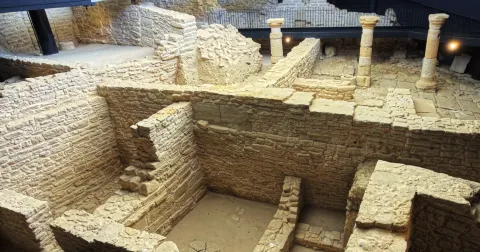
The Roman Cistera de La Calderona is a colossal underground hydraulic complex of the Pontifical Municipality of Obulco, intended to store water, which has been in use for more than two millennia and has arrived to this day in exceptional state of conservation.

It was accidentally rediscovered by one of the neighbors of the three contemporary houses that are available over it and intended for air-raid in the Spanish War of 1936. It was originally a large public water tank with several years of rainwater collection and three catchment wells.

The project has been completed by building a contemporary building of access through ramps to the complex and with the excavation of approximately 500 m ² of the large Roman neighborhood of the poniente, where part of a cross-sectional enlisted street have been exhumed, three houses organized around patios, a shop and a butcher-carnage, which allow to qualify this block of the neighborhood as a handicraft and commercial sector of the city.

Boabdil Tower

In an era of invasions and conquests, during the Middle Ages, two names express the same reality. The Muslim Bulkūna and the Christian Porcella live together and share the same territory.

On the remains of an Andalusian bulwark, which in turn was erected on Roman vestiges, the Castle of Porcra is fortified with new defenses to become a Christian alcazar.

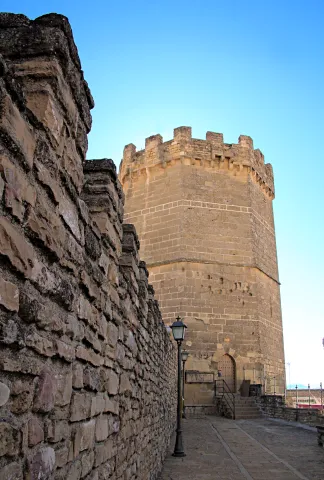
Ten are the towers that make up the castle's walled enclosure and one of them, the last to be built, which is maintained until today. The New Tower was raised during the first half of the 15th century by the precept of the Calatravo gentleman Don Luis de Guzmán.

It is also called the Tower of Boabdil for what happened in 1483 when the last sultanate of the Nazarí Kingdom of Granada, Boabdil, was taken as a prisoner to that tower after being arrested in the Battle of Lucena.

The tower is octagonal base, is 28 meters high and has an ochavada shape. Its interior, of two floors and a terrace, will house the medieval rooms of the Archaeological Museum Municipal Obulco.

Church of Santa Ana

The first data that are held from the hermitage of Santa Ana are from the late 15th century although its exact origin is unknown, being able to be reassembled at the end of the 13th century.

Santa Ana is drawn like a hermitage of a ship, with several adjacent dependencies such as the house of the santera and some corrals. During the later centuries the whole is spread and consolidated until in the 19th century it is closed to worship. In the 20th century, the property is sold to the Juárez family for use as a bread oven.

The recent intervention carried out by the City of Porcra has involved the restoration and recovery of the original building. These works have brought to light important findings: unique pavements, numerous burial or wall paintings in the altar area.

Today, the ancient church of Santa Ana has become the Visitors' Reception Centre.

Royal meat stores

This is one of the most modest buildings, which was mentioned in the 15th century, next to the organization of the square: the carnage of the villa, the Church Mayor and the Cabildo.

The Royal Carniceries, called for the Crown's control over meat, supplied the population with beef and sheep for more than five hundred years, from the Middle Ages to the Second Republic.

From this moment on, the city's library is located in the building and, in addition, the work-bag functions are performed there, to be, before its restoration, the Comarcal Court.

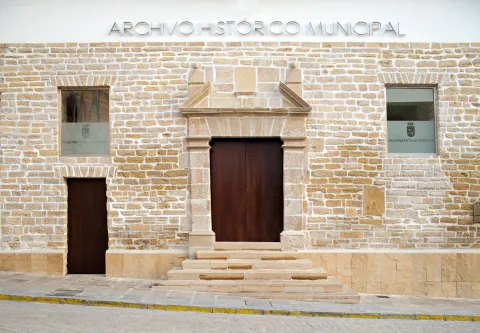
In 2015 this space was opened after the rehabilitation and value that the City Council of Porcilla carried out, hosting, there, the municipal services of Historical Archives and Tourist Information Office.

There are some of the vestiges that can be seen inside the building. It is also worth the attention to stop and observe its inclinated facade witness to the Lisbon earthquake of 1755.

The Royal Posite of Charles IV. City Council

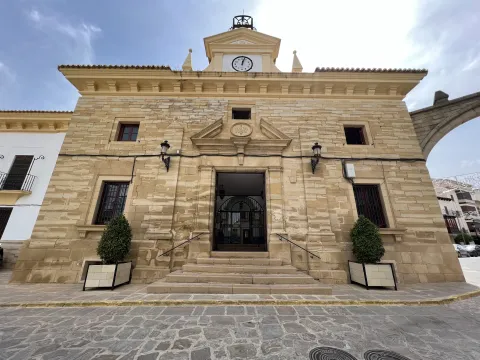
In the square of Andalusia was built in the Enlightenment of the King Charles IV in 1798 the Royal Po'sito, that is, a public warehouse of grain for consumption and sowing. It is a functional building offacade of silleri ́ a with beautiful classic cover, which consistsof three ships, one main and two lateral, separated by stone arches on which the deck rests. The building is accessed after climbing a step, an element that allows to generate a lower level or ventilation gallery.

After the Civil War contest, the building was ruined and a major reform had to be made.Although the works were directed by Ramón Pajares Pardo, the project is due to the architect and National Architecture Prize José Luis Fernández del amo, the first project he signed.

The building currently houses the headquarters of the City of Porcra. The large "glass yard" is a bright space that acts as a distributor of the entire ground floor and also functions as a main public service room.

Galleries of the Royal Posite of Carlos IV. Municipal Archaeological Museum of Porcilla

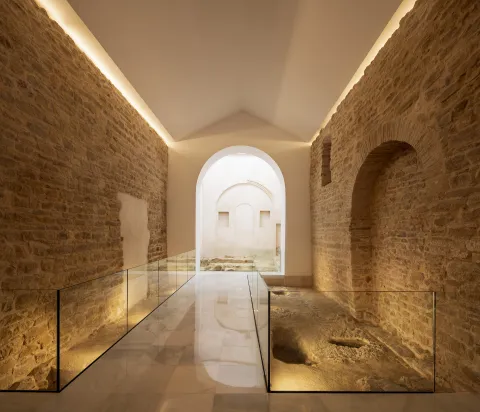
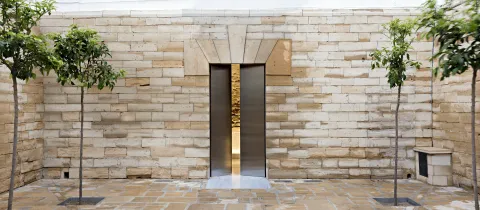
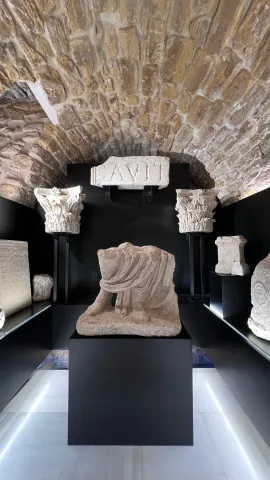
This is abouta space located under the building of the Royal Posite, current City Hall.In its day were the ventilation galleries and prevented the moisture from reaching the grain store. In origin they had no direct access from the outside, only one registration trap. Over time, several entry doors were opened, allowing this place to take different uses, from construction materials storage to dungeon or hardware shop.

Following the major reform in 2017, the space was restored and opened to the public. During the intervention, archaeological remains of Roman and medieval times, now integrated into the journey, came to light. The vaults system used in its construction is particularly noteworthy.

In 2023, two museum rooms were incorporated into the whole, which greatly enrich the understanding of the past of Porcra: one dedicated to the world of the Turdulum and the other to the Roman period. Both offer a clear and accessible journey through the cultures that left a deep mark on the ancient Obulco.

Ntra Parish. Sra. de la Asunción

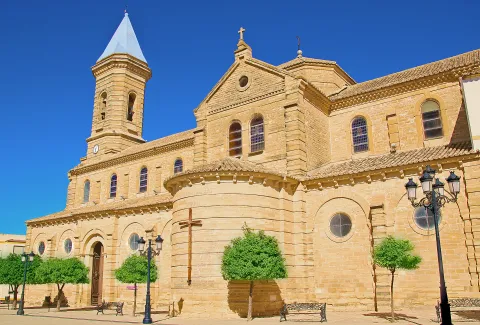
The Parish Church of Our Lady of the Assumption of Porcilla, concluded in the early 20th century thanks to a popular subscription, rises on the site of the ancient Church of Santa Maria la Mayor. The building, wide and bright, has a Neo-Byzantine style and is articulated in three ships covered with cross vaults. The sacristy, attached to the head, belongs to the temple of the 17th century and is connected to the rectoral house, which houses the residence of the parish priest, the archive, the office and the parish hall.

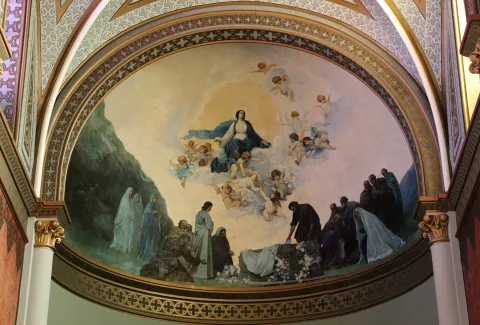
After the construction of the new temple, Julio Romero de Torres was commissioned to paint the vault of the apse, where the artist represented the Assumption of the Virgin, surrounded by a chorus of angels. The work was so impressed that he was asked for two new murals for the capels of the cruise. In one of them he made the Holy Supper, showing the apostles attentive to the moment when Jesus instituted the Eucharist. On the other, he represented The Holy Family in a serene sunset, with the Child Jesus in Mary's arms and the silent presence of St. Joseph. In addition, the temple retains five more works of the painter: an oil of St. John the Baptist in prayer and four canvases of the evangelists located in the pechines of the cruise.

House of the Stone

Summary of the millennial craftsmanship of the stone in Porcra. The bartender and marmolist Antonio Aguilera Ruedas (1896-1980) built it in the middle of the 20th century for 30 years with considerable personal effort and firm mastery.

Its extravagant and eclectic combination of solutions, techniques and decorations exalt the work of the stone. Their personal and unusual explanations that portray in an unusual way the complex parallel trajectory between building and author draw attention.

In August 2018 it was reopened following the reforms that the City Council of Porcilla made. After an important work of cleaning and restoring the stone a sophisticated lighting system is chosen to bring all the beauty to the craftsmanship of the stone. At the same time, an extensive set of ramps, built in marble concrete, gives access to a glass elevator, a unique dissonant element but that will allow access to the entire building.

Naturaleza

The natural environment of Porcilla forms a unique environmental heritage, modelled by thousands of years of history, a marked Mediterranean climate and the constant presence of the olive tree as an identity element of the landscape.

Geological description

The municipality is based on extensive margous formations of the Mioceno Medio-Superior, shaping a homogeneous and gently undulating relief, characterized by rounded hills and looms. In a timely way, the spurs and rocky outflows of sand-calcareous litology, more resistant to erosion.

Edaphology

The soils of the municipal term are mostly limestone and little or medium-evolved. Clear margas, with shallow but fertile profiles, and a slightly basic pH that promotes the development of crops characteristic of the countryside, predominate.

Climate

The climate of Porcilla is continental-temperate Mediterranean. The average annual temperature is around 17 ° C and precipitation is 563 mm, with marked annual irregularities and long periods of drought. Winters are temperate, with diurnal peaks close to 13 ° C, while in summer they are easily reached 40 ° C, with few rains.

Hydrogeology and hydrology

The municipality is located on two aquifers: the Porcra aquifer, which occupies almost the entire municipal area, and the Aluvial aquifer of Guadalquivir, located to the north. The term is integrated into the Guadalquivir watershed, and its main channels are the Salado stream, which crosses the municipality from southwest to northwest to the Guadalquivir, and the Saladillo stream, its main tributary.

Flora and vegetation

Porcula is integrated into the Mediterranean region, and has a dry climate with mild temperatures in winter and hot summers.

The olive tree is today the dominant agrosystem and a true monoculture that occupies almost the entire territory, although there are also areas with natural herbaceous species. Porcilla also houses four endemic species of great biological value: Hispanic, Betic, Ibero-Atlantic Mediterranean-Maghreb and Bético-Maghreb.

Fauna

Agricultural activity conditions the availability of habitats, but the olive tree offers a plant cover that allows the presence of a diverse fauna. Birds, small mammals, reptiles and invertebrates find in this ecosystem an enabling space for their food and shelter.

In it we can observe species such as: the green and the green; and in winter the capirate curved, the red petrored and the common zorzal.

The biodiversity of the olive tree is very much increased when, together with it, streams with riverbank forests or Mediterranean bushes, made up of carrizos, adelfas and tarajes. And so we find: sparrows, pinches, jilgueros, nightingale, cogs, cordnices and cornejas. Amphibians: common toad, green frog, salamander; reptiles: rib, lizard and lizards; mammals: hares, rabbits, foxes, badges, jinetas...

Some areas are highly recommended where we can look at the nature we have described in that paragraph:

  • Jesus' walk. We're in front of the big garden of Porcra. It is an extensive public park with a large grove built in the late 19th century. It is the center of the city's playful and social life as it brings together the important parties of Porcra, from the Real Fair to the Oil Fair. This important green space with countless botanical species is populated by monuments or unique elements of the city's heritage, such as the church of Jesus, the house of the Stone or the important viewpoint of the round, a place from which you can see the beautiful landscape of the olive tree, as well as various villages neighbouring the countryside to the Subbetic Sierra of Córdoba and Jaén.
  • Llano de Alharilla. The village of the Alharilla located just 4 km from Porcilla is characterized by a large plain surrounded by ancient olive houses, many of them today become cozy recreational houses. A lush tree offers shade and freshness, creating an ideal environment for rest and coexistence. In addition, the space has a road, making it an ideal place for family recreation or to enjoy a field day in full nature.
  • Pillars and aljibes.The current pillars have their origin in the fountains or springs whose waters were channeled in time and date, perhaps protohistoric, to collect it in receptacles, the pillars, in order to have it available so that the cattle could easily be watered, for use in laundry or in pools for the irrigation of the many gardens that were established in their way. Taking as a driving thread the pillars and sources, you can make a hiking and visiting route: the pillar of La Galga, María Cotilla, the Great Source, the Girl Fountain, Uncle Pago and the Fuenhot, among others.

Fiestas y Eventos

Ride de Reyes (5 January).On the night of January 5, the streets of Porcra are filled with magic and illusion for the coming of His Majesties the Kings of the East. A variety of carrots, parades and musics make it shine, au ́ n ma's if it fits, tonight so special.

Day of Andalusia (28 February). The City Hall of Andaluci ́ a, an autonomous festival, is held in Porcra an institutional event in which the City Council holds the Concession of Honours and Distinctions to different personalities related to this city.

Carnival (February).Its tradition in this town dates back to the dawn of the 20th century, although it has been more recently when it has become particularly relevant. On the one hand, in the Cine- Teatro "Mari ́ a Bellido" a Carnival Gala takes place in which the letters and chords of different carnival groups intermingle with the rhythms of three by four of the local murgas. On the other hand, during the afternoon of the carnival season, there is a spectacular passage in which hundreds of people gather to show the elaborate work carried out for months. The color, music and dance flood everything, and the diversity takes hold of all those who encourage themselves to contemplate it.

San Benito, Patron de Porcilla (21 March).The devotional to San Benito in Porcra dates back to the 13th century and we have been aware that such religious functions have been carried out since the 16th century. It is therefore not to be removed that the veneration of the Holy Patro is so rooted among its neighbours. On March 21 of each year, a solemn celebration of the Eucharist takes place in its honor and subsequent process of the image, which is accompanied by the local music bands.

Holy Week.During Lent, Porcella is filled with tradition and solemnity. The streets of Porcra make up an exceptional framework for the processing of their cofradi'as that, with their knowledge of being, they move us to an environment or a nico of sobriety, devotion and beauty. Ten are the cofradi ́ as and hermandades that process in Porcra from Palm Sunday to Resurreccio Sunday.

San Marcos (25 April).In honor of this evangelist, a religious and later process is held to end with a popular verbena from the same neighborhood to which it gives name. It is worth noting the curious tradition of the "Spark of San Marcos." This is the realization of fires that traditionally light up in squares and high places, with wood and old things that were discarded and that the young people stacked for their subsequent burning. This tradition was carried out in order to invoke San Marcos Evangelista to bring rain beneficial to agriculture. At present, one of these fires continues to be made next to the hermitage.
May Crosses (first weekend of May).In various squares, streets and neighborhoods of the village, gilded with care for the occasion, the traditional Cruces de Mayo, a holiday that inundate each rinco with a festive air full of color, are raised. The streets are dressed in floral motifs and personal details, self-reflective of the life and traditions of the place, while the neighbors, with dedication and pride, compete to create the most beautiful and striking cross.

Romeria de Alharilla. Tourist interest party of Andalusia.The second Sunday of May takes place in Porcra one of the most important romeri's of Andaluci, which is celebrated in honor of the Santi-sima Virgen de Alharilla, Patrona and Alcaldessa Perpetua of the town. The previous week, the municipality is set up and its streets are filled with people to celebrate the holiday in honor of its patron. Among others, they highlight the spectacular ride of horses, in the afternoon of the evening, with riders and carriages that spread through the main streets. On Sunday, say great, thousands of devotees and rosemary gather to live a day of deep faith, culminating in the longed process of the Virgin, carried in paths between the two and the prayers.

Bervena de San Benito (11 July).San Benito de Nursia, patro ́ n de Porcra and de Europa, has a second holiday in July in which, following the religious feast, a popular verbena takes place in the neighborhood with its same name.

MiaqueFest (first weekend of August).This is one of the largest music festivals in the province of Jae'n. With an open and diverse spirit, the festival does not focus on a specific musical style, but rather accommodates a wide range of ideas in which consolidated figures from the national musical landscape are combined with others that begin to unpoint.

San Lorenzo (10 August).Following the celebration of the Holy Mass, the San Lorenzo process takes place on the main streets of the town. Subsequently, one of the popular verbenas is held with the most raigambre of Porcilla.

Real Fair (September).The so-called "Real Fair" unio ́ la devocio ́ n by San Benito and the Virgin of Soledad, miraculous intercesors in the face of a great storm, with the tradition of holding an annual cattle fair granted by Queen Elizabeth II to the City of Porcra. At present, these parties are held in the first days of September and it is worth noting its Flamenco Besana, Porcra Electronic Night, the young night with musical performances or the parade of giants and heads.

Oil Fair (last weekend of October). This is a holiday celebrated around olive oil, the main economic engine of the town, which had its orien in 2007. At the Porcilla Oil Fair there is a wide exhibition of agricultural machinery, numerous places where to taste the gastronomy, to you, crafts, conferences, oil tasting... All this closed on Sunday with the taste of the traditional hole of bread with extra virgin olive oil and olive harvested in our land.

Gastronomía

On horseback between Jaén and Córdoba, Porcella brings together in its kitchen the best of each of these provinces, always with its star ingredient: extra virgin olive oil. This liquid gold, the fruit of the extensive olive trees surrounding the municipality, not only permeates its recipes of an unmistakable taste, but also becomes the symbol of a tradition that defines its culinary essence.

At the table of Porcilla, the piirranas and the jiennese sparragados with the flaminquins and the Cordobese salmorejo live together in a perfect balance that enriches its gastronomic heritage. However, it is in his native recipes that the true essence of this land is found.

Among its most peculiar dishes are the rape, a small square cake that is formed by folding a wafer over a spicy minced meat filling. This craftsmanship dish becomes an essential for those who seek to taste something unique and authentic.
On the other hand, chicken in milk It surprises both his name and his history. This typical sweet, similar to the mazapan and the alfajor, evokes with its almond aroma an Andalusian past that has been recorded in the gastronomic memory of Porcella.

For lovers of the good table, the visit to Porcra would not be complete without testing these specialties, which represent a bridge between the past and the present, between tradition and innovation. In addition, local restaurants and bars offer the opportunity to enjoy these delights in a welcoming atmosphere, surrounded by the hospitality that characterizes the porcunenses.

Historia

The origins of Porcra go back to a group of villages of the Final Neolithic located in its surroundings. In the Copper Age (3rd millennium BC) the area becomes a nuclear centre of the countryside. Archaeological research has discovered on the hill of the Alcores one of the oldest fortifications documented in the Alto Guadalquivir, with double walled fence surrounded by circular cabins. Another similar village is located on the hill of Albalate and both remained during the Bronze Age (II millennium BC).

In the 7th and 6th centuries BC the Iberian culture was formed on these lands and so, on the hill of the Alcores, there appears a new urban planning, of geometric layout, with rectangular houses of adobe walls that are raised on stone zócalos, sometimes covered with mud. The area maintained its status as a great center of the countryside and in this Iberian era an aristocracy emerged with heroic political models, as did other Mediterranean regions. This elite, to perpetuate its stretch, represented its exploits and its origins, by passing on to us the wonderful sculptural ensemble of the warriors of Cerillo Blanco, who are already emblem of this culture. These sculptures were in a sacred enclosure on the hill of the Alcores, but shortly after their erection they were buried in the necropolis of Cerillo Blanco.

The Roman Obulco was the origin of the current Porcula, confirmed by the epigraphic findings and texts of Plinio, Ptolomeo and Estrabón. During the republic and the first Empire the city was of great importance and enjoyed some autonomy, as it coined its currency.

When the second civil war between Caesar and Pompey was about to end, a uprising led by the children of Pompey broke out on the Peninsula. In the face of this situation, Caesar was forced to quickly mobilize his legions towards the rebel areas. The chronicles report that it took only 27 days to travel the distance between Rome and Obulco, an example of the impressive logistics capacity of the general.

Once in Obulco, Caesar reorganized and concentrated his troops there before marching towards Córdoba, where the famous battle of Monda would take place. The triumph in this confrontation definitely consolidated its power.

Otra información

Water Footprint

The Water Hole is a road through Porcra and its surroundings, whose main thread is the water, that is, the water system in Porcra from early times to the present. It is proposed, therefore, a tour of the missing water tank of San Cristóbal and the current one of the street of the Cross; the so-called El Albercón street; Maria Bellido and his role in the Battle of Bailén (1808); the Roman Cisterna de la Calderona, as well as the different pillars and aljibes located, these already, outside the urban town of the Pilar, the Pilar, the Pilar and the Pilar, the Pilar, the Pilar, the Pilar, the Pilar and the Pilar.

Route of the Stone

The Route of the Stone proposes a tour of one of the most unique and defining elements of Porcilla: its golden sandstone. This rock, which has been taken from the local quarries for over 6,000 years, has been the leading thread in the history of the municipality, since with it the most emblematic monuments have been raised from the Iberian era to the present.

The quarry in Porcra is a millennial trade that has never been interrupted. Already the Iberians of the ancient Ipolca-Obulco used this stone for their sculptures, such as the well-known pieces of the set of White Cerrillo, which show an extraordinary technical domain. In Roman times, the local sandstone was again a protagonist in public buildings, foundations, decorative elements and hydraulic conductions. Later, during the Middle Ages and Modernity, it continued to be used in walls, churches, noble houses, civil spaces and hydraulic works, becoming the material identity of the city.

The route invites you to know the historical quarries, where still today the stone is extracted in a artisanal way, maintaining techniques that have passed from generation to generation. There you can see how you cut, size and prepare this material that has shaped Porcra for millennia.

Loading map
Preparing points of interest and routes...
Imagen principal
imagen
Image
Porcuna
Imagen principal
Activado

Peal de Becerro

Submitted by brandcode_deweloper on
Id
749482
Perfil de redes sociales
Facebook
https://www.facebook.com/ayuntamiento.pealdebecerro/
Twitter
https://twitter.com/pealdebecerro
Youtube
https://www.youtube.com/channel/UCRo597Z-lgcrLF1Xzvee0Mg/videos
Instagram
https://www.instagram.com/ayto_pealdebecerro/
Descripción
Breve descripción

Municipality located to the east of the provincein the Sierra de Cazorla region.

It has an enclave in the middle of the mountain area. The main territory of the municipal term is to the west of the region on land of olive countryside. The original administrative division thus allowed this municipality to have forest resources, pastures in communal mountain areas.

It is part of the Guadalquivir watershed, a river that crosses the municipal territory, as well as its tributary Guadiana Minor, Guadaltiín and Toya.

In its landscape, the large olive groves and cereal fields. In addition of the main population centre, Peal de Becerro, the villages of Toya, Peal Furnaces and the enclave of The Almicaran, integrated within the mountain area of the Sierra de Cazorla.

In Toya exists a burial chamber of Iberian origin, declared a National Historical Monument in 1918. Inside it was found "La Bicha de Toya" which is a sculpture and is currently in the National Archaeological Museum of Madrid.

The local economy is based on olive cultivation, processed metal, construction, olive industry and meat products.

Within Historical Heritage We highlight: Toya Chamber, the Clock Tower, the Mocha Tower, the Toya Castle and the Peal Furnace Aqueduct.

Telecomunicaciones
Teléfono
953 730 075
Sitio web
www.pealdebecerro.es
Fax
953 730 901
Correo electrónico
ayuntamiento@pealdebecerro.es
Ubicación
Nombre
Peal de Becerro
Latitud
37.912130
Longitud
-3.124050
Municipio
Ubicación en el mapa
POINT (-3.12405 37.91213)
Imágenes
imagen
Image
36ed687c-6781-2c15-a6ca-96c10df24791?t=1621272389278
Imagen principal
Desactivado
imagen
Image
a1255b7a-25c1-49d8-c70f-54d9311fb045?t=1621272389327
Imagen principal
Desactivado
imagen
Image
0c495f3f-a175-bd80-6af1-b5a640307452?t=1595435156186
Imagen principal
Desactivado
imagen
Image
f46b1747-cb7f-6d40-a908-654d4eeffccd?t=1621272389373
Imagen principal
Desactivado
imagen
Image
687d48bc-006b-017f-12ea-4600ed60245b?t=1621272389419
Imagen principal
Desactivado
imagen
Image
a4e805f6-b189-49a7-3cfd-d274f4eef1ca?t=1621272389595
Imagen principal
Desactivado
imagen
Image
e876c399-4357-b1e3-3d9d-421dba5e1d2d?t=1595435254911
Imagen principal
Desactivado
Imágenes cabecera
imagen
Image
peal de becerro
Imagen principal
Desactivado
Datos de interés

Tourist area: Serras de Cazorla, Segura and the Villas
Distance to the capital (km): 87
Altitude over sea level (m): 550
Extension (km ²): 147
Number of inhabitants: 5,277
Gentillo: Pealeños
Postal code: 23460

Videos
Video file
Cultura
  • The Toya House. Discovered in the early 20th century, it is one of the most important funeral monuments of Iberian culture on the Peninsula, not only because of its conservation status, but also because of the monument itself. Some consider it the first great architectural work of the Iberian Peninsula. This is a underground burial chamber built with large "in situ" carved stones, placed one on the other without any type of argamase. The interior impacts, because it is a three-ship enclosure, the sides in turn, divided into two, made of carved chairs to fit perfectly on each other. Banks, bakers and a table appear. The roof is also closed with stone slabs. The construction work of the camera is very interesting for its high level of execution. The "Toya's jousting." It is characteristic of an Iberian prince and his family, of it we highlight: the wheels of a warrior car, dishes, vessels, remains of a sword, an iron helmet, beads of silver necklace, glass of marine blue and yellow....Declared Historical Artistic Monument in 1918.
  • The Clock Tower:In the heart of the urban core are two towers that formed part of an ancient medieval fortress, One of them, The Clock Tower raised at the end of the 14th century, sits on a stone socket, is quadrangular, of silery not always regular. It is internally distributed on four levels, maintains the almenate and also on two sides of its matacan-function balconies, in the third, matacan menulas, and in the latter a watch that gives it name has been placed.Declared Good of Cultural Interest in 1985.
  • The Mocha Tower: It is about the second tower of the fortress Medieval, it is of masonry concerted in some of its parts has corners reinforced to rope and sawn and topped with skimmed canes. It must have been built between the 13th and 14th centuries, it was restored at the end of the last century.It has been declared Good. of Cultural Interest in 1985. Among the towers is a wide space, in which an Auditorium has been established, for the celebration of cultural and playful activities in the open air.
  • The Castle of Toya: In Toya, near the Iberian tomb, an impressive tower of the Toya castle is maintained. It has a square floor, it is demochada and in its interior are preserved half-barrel vaults that covered the rooms and on its outside the arrangement of the masonry goes to soga and tizon, also showing structure of calicanto. It has been declared Good of Cultural Interest since 1949.
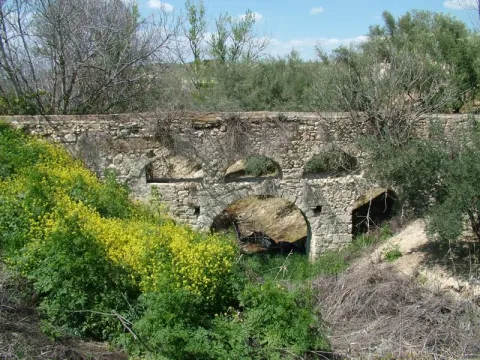
  • Aqueduct of Peal Furnaces: In this pedany, there is an old and damaged aqueduct, considered as of Roman construction. It defies the passage of time and erosion caused by the river that crosses it below.

Naturaleza

Peal de Becerro with a surface of 147 km2, belongs to the region of Sierra de Cazorla. Posee two pedanities, Toya and Peal Furnacesand an enclave, The Almicaran, integrated in the Sierra de Cazorla, 55 km. of the municipality.

It is part of the Guadalquivir watershed, river that crosses the municipality, as well as its tributary the Guadiana Menor, the Guadaltiín and other minor water streams.

The land of olive countryside and in a more secondary way, east of the region, a mountain areaincluded in the Natural Park of the Sierras de Cazorla, Segura and Las Villas.

The agricultural land are divided between arable crops (wheat, barley) and olive in similar extensions.

The enclave of The Almicaran, part limit with the province of Granada. In these saws there is a large variety of tree species. Up to 900 m of altitude are the pine forests carrasco, accompanied by Madroños and lentils. Up in altitude, we found oats, complaints and Pine rodenum.

In more humid areas we can find millennia tejos and copies of steels, both very few in Andalusia. On the margins of the rivers appear strawberries, willows, choposas well as and eneas where water birds and small mammals are covered.

The Natural Park has one of the richest flowers in the entire Mediterranean basin.

With the declaration of the National Cazorla and Segura Coto in 1960, some new species were introduced, such as: the muflon, boar or gamo. There are currently 51 species of mammals in the Park. The remaining include: Monkey goat, deer, gamo, fox, garduña and badger. In the fish fauna, the common trout, rainbow trout and barb. Several types of reptiles and amphibians.

Among the most interesting areas of the municipality we will mention:

  • Loma de los Castellones. From this abrupt enclave we can see the impressive rocky cliffs and stone blocks that rise in their surroundings. It is located south of the town in the natural park of the Sierras de Cazorla, Segura and Las Villas, 19 km. of the municipality.
  • Pico Crico. Impressive peak of 1,847 m., from which we can enjoy spectacular views of the Natural Park.
  • Gualay screws. It is a beautiful place where you can see the coastal vegetation surrounding the Arroyo Tornillos de Gualay.

Fiestas y Eventos
  • Saint Anton, 17 January: in honor of the holy protector of the animals. The tradition of burning fires is preserved, the night before.
  • La Candelaria February 2: The current custom is to bring the children who were born and baptized the year before the Church for presentation. The Pealeans carry offerings that are the typical roses and the popcorn of bread that are blessed and accompanied by the Virgin of the Incarnation. In the procession the image and the throne instead of being adorned with flowers and cirios are adorned with the rosches of the candlestick.
  • Celebrations of Our Lady of the Incarnation: the parties in honor of their patron are celebrated twice in the year. In the days close to March 25 and between August 17 and 21, dates on which the Peal de Becerro fair is held with a multitude of both playful and festive events, among which the loft of loops stands out.
  • Romeria dedicated to San Marcos in Toya: the last Sunday of April is celebrated in honor of San Marcos. In its course the image is moved to the river Toya, where it is wet as a symbol of purification of the fields and livestock, so that the year is fruitful.

Gastronomía
  • Gachamas: Cook flour and potatoes together, then turn a lot in the pan to get a golden cake, eat with chorizo, pancake, fried peppers and even some pieces of melon.
  • Talarines. Tomato, garlic, onion, a dry red pepper and minor game meat, rabbit or hare.
  • Beet: Made with olive oil, flour, potatoes, green pepper, tomato, crushed garlic and sweet pepper.
  • Rin-Ran:Mashed potatoes with choriceros peppers, sanded with olive oil, vinegar, salt, garlic and cumin. This dish is decorated with hard egg, cod strips and onion or onions.

In the pastry shop:

  • Cattle cake: The size of a cookie and made with a flour and water paste that is amassed with oil and canals that once fermented is cooked in the oven.
  • The "twists," punched for Christmas, white bath rosches for important parties, oil rosches for the Candelaria....

Historia

From Bronze Age settlements have been documented in the municipality of Peal de Becerro, with an intense population in the Toya and Guadiana Minor Rivers courses.

The connection of the province of Jaén with Iberian archaeology is important, but the municipality of Peal de Becerro is certainly an exceptional place. Since the 5th century of C., Tugia was a important centre in route control that through the Guadiana Menor put the Alta Andalucía in contact with the coast of the Levina. Between the 5th and 2nd century of C.the city was linked to development of the Iberian aristocracy as shown by many other remains found in the area, the location of an incineration necropolis presided by an extraordinary burial chamber, the most monumental and best preserved that has provided the Iberian Archaeology, the House of Toya.

From the Roman and Visigoda stage have been found various elementslike a funerary stele with a touch relief, a gravel stele, a quail, a visigode column and in the Cerro de la Horca a visigode necropolis with eight tombs.

In medieval times Peal is not mentioned so in that period it must have been a small population dependent on the fortified centre of Toya. Your castle, according to the chronicles by Fernando III. A few years later the king bestows on the archbishop of Toledo, Quesada and Toya, who incorporated the advance of Cazorla, passing by in 1,310 the jurisdiction of the Ubeda.

After the Spanish conquest Peal de Becerro became an independent population. The Spanish strengthened their defenses and They raised the towers. which we now know as the Clock and Mocha. It has belonged to the advance of Cazorla until its dissolution by the Cortes de Cadiz in 1812.

Then by Royal Order of King Fernando VII was declared villa in 1822.

Loading map
Preparing points of interest and routes...
Imagen principal
imagen
Image
peal de becerro
Imagen principal
Activado

Mengíbar

Submitted by brandcode_deweloper on
Id
747223
Perfil de redes sociales
Facebook
https://www.facebook.com/aytomengibar
Twitter
https://twitter.com/aytomengibar
Descripción
Breve descripción

Mengibar is located to the north of the Jiennense capital, between the Guadalquivir, Guadalumillon and Guadalimar rivers, land covered with olive trees and cereal and fruit fields. Its location next to the E-902 or A-44 motorway (Bailén-Motril) has helped to maintain a balance between the dedication to agriculture, industry and services. When you reach Mengíbar el Guadalquivir, your flow rate is amused, and you start a quiet middle course, allowing for better use of the water. Mengibar was highlighted river port, on the banks of the Guadalquivir, for its good geographical location, especially for the transport of wood from the Sierra de Segura.

The city centre, which is located on a soft hill of fertile lands, both dry and irrigated, has in its interior buildings and monuments of interest, such as the Renaissance Church dedicated to Saint Peter the Apostle, a beautiful and slender Christian Tower, the Conistory House and the House of the Palace.

The Iberian oppidum of Iliturgi, located in Cerro La Muela, and the famous Roman city of Iliturgi, in Cerro Machiz, have been discovered nearby.

The centre of Mengibar, of irregular layout and Arab influences, has expanded in the east, west and north direction, crystallizing in a wide and rectilinean road, with apples of considerable size in the ensanches closest to the old town and with smaller apples on the periphery of the core.

Telecomunicaciones
Teléfono
953 370 025
Sitio web
www.aytomengibar.com
Fax
953 372 535
Correo electrónico
info@aytomengibar.es
Ubicación
Nombre
Mengíbar
Latitud
37.968410
Longitud
-3.809080
Distrito
Municipio
Ubicación en el mapa
POINT (-3.80908 37.96841)
Imágenes
imagen
Image
bd9dd7c4-7f1e-0dba-0fd2-8ac8158bc6af?t=1676572188698
Imagen principal
Desactivado
imagen
Image
edb57e81-d17d-24a3-406b-ca287562ea61?t=1676572793978
Imagen principal
Desactivado
imagen
Image
8040c949-bac6-38f8-6440-6aa202fca8a5?t=1676572794051
Imagen principal
Desactivado
imagen
Image
e78df582-3ef0-8b51-20e5-ca72c6a31f77?t=1585758946143
Imagen principal
Desactivado
imagen
Image
36f6f987-4a88-2b73-e598-6e017b5c9459?t=1676572794144
Imagen principal
Desactivado
imagen
Image
c584628f-6dbd-68b3-3ad6-64da50dbc967?t=1676572863592
Imagen principal
Desactivado
imagen
Image
3d0828e3-c321-a256-617e-56fbfc9c1992?t=1676899290872
Imagen principal
Desactivado
Información adicional
Curiosidades

Por teléfono: 677 222 285

Por correo electrónico:

turismo@aytomengibar.com

https://mengibarturismo.com/

Imágenes cabecera
imagen
Image
men
Imagen principal
Desactivado
Datos de interés

Tourist area: Campiña and Jaén
Distance to the capital (km): 25
Altitude over sea level (m): 315
Extension (km ²): 62,3
Number of inhabitants: 10,068
Gentillo: Mengibarians or Mengibarians
Postal code: 23620

Videos
Video file
Cultura
  • Mengibar Tower, is the tower of homage of the old castle of Mengibar raised in the 13th century, being the only thing that has been preserved from it. It was restored in 1982. Its height is higher than 25 meters and has vaulted rooms inside. In 1985 she was registered as BIC.
  • Arc de Jano Augusto (Ianus Augustus), a milestone in the landscape, which marked the border between the Roman provinces Betica and Tarraconense. Declared Good of Cultural Interest, the Arc de Jano Augusto (1st century BC and 1st century AD) had dimensions of 14.80 meters in length, almost 5 meters in width and a single central vain of 5.15 meters. The arc was the starting point of the Augusta Way in the Betica. It has been BIC since 2019.
  • House of Inquisition, property that is included in the General Catalogue of the Andalusian Historical Heritage. Located on Jaén Street, there is a very late classic cover dating back to the second half of the 17th century. The most important thing about the building is the main two-storey facade. It's interesting your forging grate.
  • Hydroelectric Central and dam on the Guadalquivir River, the work of the architect Antonio Palacios, represents a remarkable exhibition of industrial architecture. The plant and dam are part of the ambitious project for the development of the Guadalquivir River of the MENGEMOR company.
  • Parish Church of Saint Peter the Apostlenear the Tower, an architectural jewel of the Renaissance, despite the reform of 1970. Its main façade is south-facing and built in the first half of the 16th century. The other facade, facing the north, has different dependencies such as the sacristy, chapels and salons throughout the different reforms. It obeys the Vandelvirian model of three-ship temple separated by pillars and vaults. In front of its construction, Francisco del Castillo, the old man, and Alonso Barba, intervened.
  • The Hermitage of the Lord of the Rainof small dimensions, it is made up of three narrow ships. The centre is of canyon vault, while the sides are intellized. The ships are separated thanks to two large arches of half-point brick seen. The exterior, with a stone view, has a simple front front cover, as a templet, on which a circular window is located and overlooks a revered bell swordsman. It is the only one in the municipality that is preserved from the 18th century. It is now called "Lord of the Rain," for it is venerated by a crucified Christ whom the Mengibarians have traditionally entrusted in the years and periods of drought.
  • The Hermitage of Santa María Magdalena was opened and blessed on 14 July 1990 outside the municipality of Mengibar, very close to the Roman city of Iliturgi. It is located in the Cerro de Machiz, where the ancient 16th century hermitage was erected. It has a simple half-point arch cover with two small side voids, as saetas. At the top we find a hornadine with the image of Mary Magdalena and, on a side, a small body of swordsman. Since its opening, the Romeria de Santa María Magdalena is held annually.
  • Oppidum ibero de Iliturgi and archaeological site of the Roman Iliturgi. Since 2016, the University of Jaén and the City of Mengibar have been working together to rescue the past of the municipality. In Cerro de la Muela, the ibero oppidum of Iliturgi (6th and 3rd centuries BC) was located, with an area of more than 14 hectares. Here, many archaeological remains have been found, which have made it possible to document the siege and destruction of the oppidum in 206 BC by the Roman army. After this event Tiberio Sememonio Graco would founded the Roman city of Iliturgi in the area of Maquiz, about 700 metres from the city destroyed. Since the mid-19th century, a large number of remains of the Roman city have been removed, most of which now form the Iliturgi Collection, which is preserved in Casa Palacio.
  • Mengibar rolls, picotas and bakers. They are part of the history of their formation as a people with their own jurisdiction. The origin of the rolls was found in 1574, when the villa managed to emancipate itself from the city of Jaén. The title, granted by Philip II, allows him to have full jurisdiction, made symbolized by the presence of rolls and picotas. While the former reflect the new administrative and legal status, picotta is the place where the prisoners were punished. The hornaces, on the other hand, are similar to holes made in walls and crowned by a reduced arc. A votive image was placed in them, thus being a sample of the popular fervor of the municipality.
  • The House Palace is a building dating from the 15th century, located in the central area of the historical artistic complex, next to the Torre del Tribute. The property has not always been a single house. From the 13th century, houses are being built very close to the castle wall. It would be a small fortification around the large tower located inside. With the coming of the centuries Casa Palacio has had distinguished owners. It has also been the scene of important historical events. It has also had functions beyond domestic. The building has now become a hotel. One of the first to build their houses on the house occupied by the palace was Mr Pedro Méndez de Sotomayor, Lord of Mengibar and Rider of Jaén, in order to keep the cattle and the cereals of their crops. This has now become the Hotel Palacio de Mengibar, which has a unique spa built in an Arab aljibe and decorated in the style of the Roman era.
  • Interactive Museum of Olive Oil and Sustainability Terra Oleum. It offers a modern exhibition space made up of unique architectural spaces, including its Caja Aurea and a natural environment presided over by the olive forest. For the dissemination of knowledge related to olive cultivation, oil production technology and Mediterranean diet. It has been selected as a reference centre by the European Union for the dissemination of the olive oil culture. The Terra Oleum Museum extends over a total area of more than 11,000 square metres. It is the largest area of knowledge planned in the Mediterranean basin for a food product.
Naturaleza


The municipal term of Mengibar is also spread between the herbaceous crops and the olive tree, with virtually all its irrigated surface, highlighting the vegas of the Guadalquivir and those of the Guadalbullion.

The dominant crops are: the olive tree, sunflower, cotton and cereals (wheat, barley and maize). The beautiful landscape of the Mengibareña countryside is interrupted to the north with Sierra Morena, and to the south with Sierra Mágina and Jaén, passing the rest between soft and undulations without great heights. This beautiful landscape is complete by the gallery forests on the banks of the three rivers that cross its term: the Guadalquivir and two of its tributaries, the Guadalbullón and the Guadalimar. In the autumn the trees of a caduca leaf paint a color brush in the landscape.

The lands of Mengibar offer the traveller various enclaves of natural interest. Among them is the Cerro Albariza, natural lookout from which magnificent views are obtained from the Guadalquivir valley or the Guadalbullón delta located next to the Cañada Real de Torreblasphcopedro, about three kilometres from the urban centre. Its abundant coastal vegetation gives it botanical interest.

The Mengibar dam on the Guadalquivir River, opened in 1916 by King Alfonso XIII, puts a color note to the landscape. The olive tree predominates, but next to the river line we find white alms, mumberas, tarais, black alms, as well as other species of bushes. The fauna is the same as the Jienese countryside: hares, rabbits, perdices, deer, linches, boars, foxes, quails... Also, they are easy to see the storks and a wide variety of prey birds. Without forgetting the fauna that dwells next to the rivers and in the vicinity of the reservoir.

Fiestas y Eventos


In Mengibar, as in the villages of Andalusia, people look forward to popular parties because they know that they will become days of joy and fun, for both the neighbors and visitors. In addition to the Christmas, Carnival and Easter celebration, the following parties are held in Mengibar:

  • San Antónwhich is held on 17 January. The night before the streets are filled with "luminaires," where people around them sing, chorizos, chops and sardines.
  • Holy Week of Mengibarthe Holy Thursday, its preaches and the Sunday of Resurrection, stands out.
  • May Crossthe Holy Cross is celebrated on May 3. On this day Mengibar is dressed as a party, its streets and neighborhoods are covered with crosses, flowers, light and colorful. Every year more visitors come to witness them.
  • Romeria de "La Malena". In honor of Santa María Magdalena, patron of Mengibar, is celebrated on the second Sunday of May. The image is taken that day to his hermitage, accompanied by rosemary on foot, in carrots or on horseback.
  • Fair and Festival of the "Malena"from July 22 to 25, the heat of these days is faced with the joy of the parties in honor of the patron. There is no lack of religious acts but a comprehensive programming of activities for all the public.
  • The Rosaries of the aurora. Mengibar prays singing in the auroras on Sundays, from the last of August to the first of October. It's a custom dating back to the 17th century. The Brothers of each involved fellowship summon their people to rise up and go to the Rosary on their own Sunday. On the afternoon of that day the procession of the title image of the brotherhood takes place. On the first Sunday the Virgin of Fatima is processed, on the successive Sundays of September the Virgin of the Head, Jesus Nazarene, the Virgin of the Dolores and the Virgin of Carmen. It ends the feast, with the procession of the Virgin of the Rosary.
  • Historical recreation of the funeral court of Isabel I de Castilla, La Católica. On November 26, 1504, the queen died in Medina del Campo (Valladolid) and, following her wishes, took a way to the city of the Alhambra where she asked to be buried. On the banks of the Guadalquivir, on its way through Mengibar, a storm forced the funeral court to turn from its route to Granada to take refuge in the Church of St. Peter the Apostle. Since 2015, the third Saturday of November is commemorated with a theatrical historical recreation. More than 220 people participate in it (horse guards, royal guards, drummers, Franciscan monks, nobles, cars of beings and plain people, among others).
Gastronomía


In the culinary culture of Mengibar are present two aspects, one is olive oil, and the other is the use of the products of its gardens that become part of the ingredients of these dishes. From its varied gastronomy, we will highlight the following:

  • Pipirrana, which uses peppers, tomatoes, garlic, onions and olive oil. A refreshing dish that can't be missed in summer.
  • Migas of bread with chorizo, radishes, herring and cod.
  • Tomato fish and pepper (typical of fair days).
  • Cod meatballs, a typical Lent meal.
  • Panoil, on a slice of bread the oil that can be accompanied with tomato and cod is spread.
  • From their pastries are delights such as wine roses, honey flakes, pestins and bienmesabe.
Historia

The history of Mengibar begins to be written on the banks of the Guadalquivir River, approximately 6,000 years ago, in the Neolithic. The traces of this period correspond to the denominated settlement of the Vega Baja. The largest milestone of Iberian occupation of the municipal term of Mengibar corresponds to the oppidium of Iliturgi and the different necropolis associated with this important population core.

Until very recently it was considered that this town would have risen in the area known as Cerro Machiz or Las Torres, a place very close to the confluence of the Guadalbullion River with the Guadalquivir. Recent archaeological excavations demonstrate the exact location of the Iberian city in the site known as "Plaza de Armas del Cerro de la Muela."

This site would be besieged by Roman General Publio Cornelio Scipion, the African. Tito Livio narrated how the city was attacked, burned and massacred. In the 2nd century BC, Rome would founded a new Iliturgi in Cerró Maquiz, an enclave located on the opposite bank of the Guadalbullion River, 700 metres from the old ibero oppidum.

These remains are preserved in Mengibar from the Almohad period. In 1225, Fernando III, the Holy Conquest Mengibar, granted the land of Machiz to the Order of Santiago, leaving the Place under the jurisdiction of Jaén.

The word "MENXIBAR" first appears in the conquest of Jaén, which shows that there must have been a fortress that was occupied by Christian troops. Conquistada Jaén, the king anexiona to this city, on which it will depend until 1574, year in which Philip II, by paying 22,500 ducats, makes it Villa.

On July 16, 1808, a glorious event took place in Mengibar: the defeat of French troops, who fled to Bailén, where days later they would be defeated by General Castaños.

Loading map
Preparing points of interest and routes...
Imagen principal
imagen
Image
Mengibar
Imagen principal
Activado

Linares

Submitted by brandcode_deweloper on
Id
741239
Perfil de redes sociales
Facebook
https://www.facebook.com/TurismodeLinares
Twitter
https://twitter.com/TurismoLinares
Youtube
https://www.youtube.com/user/turismolinaresofi
Descripción
Breve descripción

This popular and important city is located to the north of the province of Jaén, in the first foothills of Sierra Morena and close to the depression of the high Guadalquivir. It enjoys a privileged geographical location as a road crossing close to the main roads of the south peninsular.

Linares has amining heritageof the most important and best preserved in Spain. In their lands it is common to see remains of chimneys and other industrial vestiges, silent witnesses of a past of mining splendor that left in Linares an architecture linked to industry and to bourgeois and proletarian society.

The basilica of Santa María la Mayor, a mixture of Gothic and Renaissance style, or the Marquis hospital, of a neo-Gothic style, are two good samples of its artistic heritage.

Especially interesting is the archaeological legacy of the archaeological ensemble of the Iberian city of CatulusJust five miles from the city. It was in Roman times one of the ten most important cities of the Peninsula, thanks to its mines of lead and silver, of which today there remain vestiges as important as the mosaic of the Amores, the mosaic of the Octogones, a palleocrist of glass of the 4th century or the sculpture of the Lion, of the IIa centuries. C.

On the other hand, Linares owns a remarkable monumental ensemble, as well as the owner of an accused and musical character. The bullring square of Santa Margarita, located on the side of the emblematic promenade of Linarejos, has witnessed great afternoons and tragedies such as the death, in 1947, of the right hand Manolete. In addition, the city in which the famous guitarist Andrés Segovia was born has a long musical tradition linked to the taranta, a flamenco song born around mining.
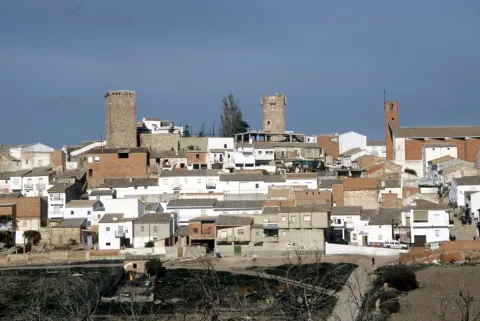
The La Garza golf course is the only one in the province of Jaén. It is located a few kilometers from the city, in a privileged enclave with the mining landscape as a backdrop.
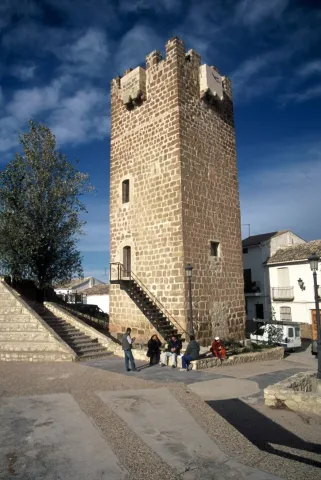
Telecomunicaciones
Teléfono
953 648 810
Sitio web
www.ciudaddelinares.es
Fax
953 648 813
Correo electrónico
ayuntamiento@aytolinares.es
Ubicación
Nombre
Linares
Latitud
38.092880
Longitud
-3.635550
Distrito
Municipio
Ubicación en el mapa
POINT (-3.63555 38.09288)
Imágenes
imagen
Image
717b4559-d8aa-43fd-4c6c-9c08a1541fd7?t=1620666050927
Imagen principal
Desactivado
imagen
Image
e4f5be42-25eb-8780-b90c-b1581819c8ba?t=1620666050609
Imagen principal
Desactivado
imagen
Image
39d78aac-4357-f5c4-91ae-a3d9d63960dd?t=1585838352419
Imagen principal
Desactivado
imagen
Image
703abb91-4bea-1ffb-3037-438af2c5bb18?t=1585838354473
Imagen principal
Desactivado
imagen
Image
42160d5d-b5b9-5fa8-da43-ff885202d248?t=1620666050784
Imagen principal
Desactivado
imagen
Image
5cb04542-9fff-58cb-7826-c022d4be2e83?t=1620666050980
Imagen principal
Desactivado
imagen
Image
278f0651-1ac2-64cb-c271-07d8e3a236e0?t=1585838353321
Imagen principal
Desactivado
imagen
Image
d28ffb7b-e8b5-2882-e0d7-b55f650ecb22?t=1620666050684
Imagen principal
Desactivado
imagen
Image
4a291902-03f8-1724-b60a-6cf3613c0eec?t=1620666050832
Imagen principal
Desactivado
imagen
Image
c7bc271c-c88c-b709-bb90-1ee3ea569ef8?t=1585777337631
Imagen principal
Desactivado
imagen
Image
de6c8ca4-32fa-3650-f257-539779c5466c?t=1603125039699
Imagen principal
Desactivado
imagen
Image
0e513dc5-1b59-8502-fbbe-4fb055c3a80f?t=1620666051035
Imagen principal
Desactivado
imagen
Image
663b4497-8d8e-f89e-2699-1b166c9c5197?t=1603138489292
Imagen principal
Desactivado
Información adicional
Curiosidades

ÁREA DE TURISMO
Iglesia, 5 – 23700 Linares, Jaén
Tel.: 953 10 01 83
http://www.turismolinares.es/
Email: turismo@aytolinares.es

Imágenes cabecera
imagen
Image
Linares
Imagen principal
Desactivado
Datos de interés

Touristic area: Sierra Morena / Jaén Toro Culture / Linares- La Carolina / Sierras de Andújar and Despeñacolos
Distance to the capital (km): 49
Altitude over sea level (m): 419
Extension (Km2): 196
Number of inhabitants: 57,414
Gentilicon: Linarians
Postal code: 23700

Videos
Video file
Cultura

Linares has a varied set of buildings (churches, palaces, solariegal houses) of different styles and times, from the simplicity of the Romanesque to the preciosism of the modernist buildings of the 19th and 20th centuries linked to their past of mining splendor.

The Basilica of Santa Maria la Mayorbuilt during the 13th to 15th centuries, with a mixture of Gothic and Renaissance styles, it has a beautiful silver altarpiece.

The city of Cástulo It has a historical trajectory of more than 4000 years, a history in which the presence and influences of Mediterranean cultures have been reflected, which have left their mark on the site and its territory. Cástulo offers us a heritage that we gradually recover from archaeological research, a legacy that we must know and protect.

The city has also not wanted to forget what its past was, good proof of it are the museums we found in it: Archaeological Museumin which the remains of previous civilizations that occupied these lands are preserved, and the Centre for the Interpretation of the Mining Landscapewhere we find samples of the mining works, pieces and videos on the location of the mining heritage in the region. And with the statue of the Miner, the inhabitants want to pay tribute to the generations who laid the foundations of the city that today is Linares.

The Casa - Museum of Andrés Segoviaor Raphael MuseumWe are reminded of illustrious people who took the name of Linares all over the world.

Naturaleza

As it is located in the first foothills of Sierra Morena, Linares has a beautiful natural location and enclaves.

The spaces of greatest landscape value are found to the north of its municipal term. The best example of this is the natural monument of "The Bat.". To the spectacular tour of the river Guarrizas during its high course, the beauty of the Roman bridge of Vadollane, which is part of the Via Augusta.

Linares enjoys an extensive network of trails of a small route duly marked that they travel part of their natural and mining heritage, and that they can be visited on foot, on horse or by bike, adding one more incentive to the visit of this area. Sendas that complement with "Green routes"whose tracks take advantage of the old railway tracks.

The set of plant species in the municipality of Linares is distributed in three well-defined spaces:

  • The countryside, on which much of the surface is intended for olive trees and dried cereals.
  • The dehesas, for livestock use and in which the tree species that stands out is the oak.
  • The pastures, little or no trees, which are used for cattle pasture or grasses or forage.

Next to the rivers Guadalimar, Guadiel and Guarrizas we find the vegetation called the riverside: strawberries, willows, white wings...

Fiestas y Eventos

Among the most rooted parties in the tradition of the Linarians, we have:

  • Holy Week, declared as the National Tourist Interest Party of Andalusia, a week with a mixture of party and veneration.
  • San Agustín Fairalong with Holy Week is Linares' most important holiday. They take place between August 27 and September 1. Among the most diverse activities, there are also bullfighting in the Santa Margarita.
  • Ibero-Roman Festivals of CatulusMay. A wide range of programming and activities immerse the city of Linares and the Archaeological Set of Catulus in its Ibero-Roman past. Historical recreations of a Roman circus, camps, workshops, parades, combat tactics, gastronomy, guided tours and gladiator struggles, among others, are the sign of identity of this tourist-cultural event.
  • Santa Barbaraon December 1. In these days Linares wants to remember his past mining with different demonstrations of trades in the mine and other activities for all ages that includes a multititling road through the mining district.

In addition to these most named, the May Crosses, Christmas, Carnival and the party of VoteIt's next to the hermitage of Linarejos.

Gastronomía

Linares has made the Tampoo a delicious sign of identity and one of the city's greatest attractions. Tabernas and bars fine-tune their ingenuity to make the exquisite tapas culinary miniatures that never fail to accompany the drink for free.

The Spanish gastronomy is very linked to the gastronomy of the province: olive oil as a common denominator of its peas and salads, not to mention sour olives, which are common as an appetizer. Among the most traditional are: gazhas, migas, gazpacho, andrajos, pipirrana and anis roses.

It also has others of clear mining descentsuch as potatoes with cod, potatoes with pimenton, mining and soaking based on orange salad, cod, olives, onions and olive oil.

In the letters of the Linarian restaurants, tradition, variety and innovation are given hand, and the most intense flavors are made of. It stands out among its local creations, the characteristic white sweet chachepol, a delicious biscuit soaked in syrup and spirit.

Historia

The history of Linares has always been very linked to the mining. The lead filons of their lands attracted different peoples and cultures to this enclave. It was a claim for the Tartessa, Greek, Phoenician, Carthaginian, Visigodic and Arab peoples. Of all of them, archaeological vestiges have been found in the area.

Within the municipal term was founded in the 6th century BC the Iberian city of Catuluswhich would later become the capital of Oretania (a large territory that also included areas of Ciudad Real and Albacete) with great mining, agricultural and flourishing trade wealth.

They would also exploit these mines for the extraction of lead and silver. To ensure control of the main mining sites, General Anibal took the Princess Ibera Homily (born in Catulus), but without success, as the Carthaginians were defeated.

The Romans will magnify this city through all kinds of privileges (such as the continued coining of their own currency), making Catulo a city with first-class infrastructure such as hot springs, aljibes and even a forum and an amphitheater. The wealth of Catulus was such that chronists of the size of Estrabón, Polibio, Plinio el Viejo or Tito Livio speak of it in their writings. With the wars, Cástulo disappeared, and the population took refuge in the atalaya of the mines, becoming dependent on Baeza. The current city owes its name to a place close to Cástulo, called Linarium.

Liners it does not appear in the historical archives until 1155, reign Alfonso VII, which at that time was a village that depended on Baeza. In the mid-16th century, thanks to agriculture and livestock, commercial activity and the population are increasing, giving Philip II the title of villa. During the 17th and 18th centuries, mining activity increases considerably and focuses on lead extraction.

As early as the 19th century, the city is considered one of the most important centers in the province of Jaén. With the arrival of the new machinery and mining techniques, as well as the development of the rail as a means of transport of the mineral, Linares reaches its further progress. The intense mining activity attracts migrants to the new jobs generated by mining and makes the population more than six-fold in a short time. In 1875, King Alfonso XII granted him the title of city.

The mining area Liners - The Carolina would become the first producer of lead of the world. The first labour movements are emerging as a result of wage inequalities between workers and employers.

But in the 20th century, mining activity is beginning to decline to the point where all mines are closed. In parallel, a powerful industry, of which Santana Motor It's the flagship.
With the arrival of the 21st century and the end of Santana Motor, the activity of the city is focused on the services as one of its main economic axes.

Otra información

There are many people born in the city of Linares who have had an outstanding career in their professional activity:

  • Andrés Segovia, guitarist and composer.
  • Raphael, singer.
  • Sebastian Palomo Linares, bulldozer.
  • Carmen Linares, flamenco singer
  • Francisco Baños, plastic artist.
  • Miguel Ángel Belinchón Bujes, Belin, plastic artist (grapher).
Loading map
Preparing points of interest and routes...
Imagen principal
imagen
Image
Linares
Imagen principal
Activado

Jaén

Submitted by brandcode_deweloper on
Id
735516
Perfil de redes sociales
Facebook
https://www.facebook.com/Turjaen-880368115409952
Twitter
https://twitter.com/turismodejaen
Instagram
https://www.instagram.com/turismodejaen/?hl=es
Descripción
Breve descripción

Jaén is an extensive municipality located in the south-west centre of the province, and in which the capital is located.

In its term two areas are distinguished: the countrysidewhich is located to the north and another, smaller, located to the south, which is the mountain.

As we go through its historical centre, in streets, corners and monuments we discover the richness of the coexistence of three cultures: Christian, Jewish and Muslim. We will walk through the narrow streets of the Jewish Quarter, we can visit the Arab baths of the 11th century in the basements of the palace of Villardompardo and admire the rosary of churches, some of them raised over ancient mosques and numerous convents. And visible from all points of the historical center is the Cathedrala true jewel of the Spanish Renaissance.

On the hill of Saint Catherine the imposing castle of the same name, from where you can admire extraordinary panoramic views over the Guadalquivir valley, the countryside and the Sierra Sur behind your back.

Jaén, the world's capital of olive oil, is today a modern city as its squares, gardens and large avenues testify.

Telecomunicaciones
Teléfono
953 313 281
Sitio web
https://www.jaencityofgastronomy.com/ www.culturayturismojaen.es
Correo electrónico
otjaen@andalucia.org
Ubicación
Nombre
Jaén
Latitud
37.772770
Longitud
-3.787970
Distrito
Municipio
Ubicación en el mapa
POINT (-3.78797 37.77277)
Imágenes
imagen
Image
565c6eb4-5942-2554-4006-8ceab143b8db?t=1619526386769
Imagen principal
Desactivado
imagen
Image
b424e57e-dc79-a428-daca-35eeb083bea1?t=1619526386986
Imagen principal
Desactivado
imagen
Image
55d454b0-8c1d-d414-0b1e-e823a8ec112e?t=1603985313163
Imagen principal
Desactivado
imagen
Image
7715a631-5b75-15b6-5980-62fd2f46d2e7?t=1603985472695
Imagen principal
Desactivado
imagen
Image
01dc3f35-ff78-28a9-7c8e-35e481da450c?t=1619526387099
Imagen principal
Desactivado
imagen
Image
0fa84b0a-05ed-c54d-7d4b-22183bb3e3a6?t=1619526387156
Imagen principal
Desactivado
imagen
Image
14937a6a-998e-3821-a140-fd3fd1ca419f?t=1603985313279
Imagen principal
Desactivado
imagen
Image
d06ab30b-57dd-c08d-06c5-3ede89eecc14?t=1585768371068
Imagen principal
Desactivado
imagen
Image
e6950987-2c4d-dd30-5a67-62a547b05db3?t=1619526387274
Imagen principal
Desactivado
imagen
Image
3540dc4f-fdd4-e549-c395-e4da63d47419?t=1619526387340
Imagen principal
Desactivado
imagen
Image
bfd586f4-48bc-d3aa-18ee-68705b3b0e19?t=1619526387391
Imagen principal
Desactivado
imagen
Image
144298d6-85db-03e9-e4c2-49526aac5889?t=1619526387572
Imagen principal
Desactivado
imagen
Image
0c7d68e7-f21d-8966-856c-2e62cd746a9f?t=1619526387623
Imagen principal
Desactivado
imagen
Image
48b3d107-5960-f7f2-e080-3c725a30800c?t=1619526387677
Imagen principal
Desactivado
imagen
Image
e1522135-9be2-ee72-37d1-29d49c34f935?t=1603115329866
Imagen principal
Desactivado
imagen
Image
7cae4916-09df-b35e-2986-f704ed193a4f?t=1619526387748
Imagen principal
Desactivado
imagen
Image
30754f84-6bf0-8bce-d131-7832dd6a306b?t=1619526387799
Imagen principal
Desactivado
imagen
Image
d5a8b2be-e7d6-1b7a-01b8-f4412b3d1e07?t=1603117566668
Imagen principal
Desactivado
imagen
Image
32ae96fb-7f94-4623-2b3d-b7fac51e241a?t=1619526387876
Imagen principal
Desactivado
imagen
Image
fcb67e8f-ebc1-467f-7b33-183b53cf1e8f?t=1619526387922
Imagen principal
Desactivado
imagen
Image
fedd54a5-2237-fd6e-425e-7237a8d0f26b?t=1619526388085
Imagen principal
Desactivado
imagen
Image
ec4ce20b-7984-d4fe-3bdf-d035228f9528?t=1619526388368
Imagen principal
Desactivado
imagen
Image
a3a10c78-37e3-21bd-b9d8-813f1849eefc?t=1619526388625
Imagen principal
Desactivado
Información adicional
Curiosidades

Horarios de visita


Oficina de información turística de Jaén.
C/ Carrera de Jesús, 2.
23002 Jaén
Tel. 953 190 455

Imágenes cabecera
imagen
Image
b963ff18-ff49-21ea-0900-3e68f5e313be?t=1606405214909
Imagen principal
Desactivado
Datos de interés

Tourist area: Jaén and surroundings
Altitude over sea level (m): 573
Extension (km ²): 424
Number of inhabitants: 120,021
Gentilicon: Jiennenses
Postal code: 2300x

Videos
Video file
Cultura

Jaén's architecture bears witness to the many civilisations that have inhabited the city and its surroundings throughout the centuries, resulting in an outstanding monumental heritage that includes both religious and civil buildings. Its historical and artistic legacy showcases a variety of architectural styles, including Gothic, Mudéjar, Renaissance, Baroque, and Neoclassical.

Among its most important monuments are the following:

  • Cathedral of the Assumption of the Virgin, a masterpiece by one of the greatest Renaissance architects, Andrés de Vandelvira, and the inspiration for the construction of many cathedrals throughout Latin America. It is regarded as one of the finest examples of Renaissance architecture in Andalusia, which is why the process to obtain UNESCO World Heritage status for the cathedral began several years ago. The city's first cathedral was built on the foundations of the former Great Mosque following the conquest of Jaén by King Ferdinand III of Castile, known as Saint Ferdinand, in 1246. Later, during the 14th century, Bishop Nicolás de Biedma brought to the city the relic of the Holy Face (Santa Faz or Santo Rostro), believed to be one of the three cloths that, according to Christian tradition, Saint Veronica used to wipe the sweat and blood from Jesus' face on his way to Calvary. The presence of this relic in the first Christian cathedral transformed it into an important pilgrimage destination, making its expansion necessary in the Gothic style. Elements of this Gothic phase can still be seen in the apse of the present cathedral. Due to structural problems that arose during the 14th century, a new Renaissance cathedral was commissioned from the architect Andrés de Vandelvira. Although construction continued for nearly three centuries, Vandelvira's original design remained largely faithful throughout the project, resulting in what is considered the most architecturally balanced, harmonious, and proportionate cathedral in Andalusia, with one of the most solemn and majestic interiors in the region.
  • Basilica of Saint Ildefonsus. After the Cathedral, it is the largest church in the city. The earliest records of the original building date back to 1248, when it was established as a chapel serving the Cathedral. Two centuries later, in 1430, it became the setting for the famous miracle of the descent of the Virgin Mary to the city of Jaén. Following this event, it became a sanctuary dedicated to the image of the Virgin housed inside, under the title of Our Lady of the Chapel. In the 16th century, the Virgin of the Chapel was proclaimed the patron saint of Jaén. Finally, in 2010, Pope Benedict XVI granted the church the status of Minor Basilica. The building features three entrances: the oldest, in Gothic style, is located at the rear of the church. The side entrance, in Renaissance style, displays a relief depicting the Chasuble Bestowal upon Saint Ildefonsus. The last to be built was the Neoclassical main façade, crowned by a statue of the saint to whom the basilica is dedicated.
  • Santa Catalina Castle. An ancient Caliphal fortress stood on the summit of Santa Catalina Hill as early as the 9th century. Centuries later, following the conquest of the city by King Ferdinand III in 1246, the Christian castle that survives today was built. During the 19th century, the castle underwent several modifications to strengthen its defensive structures in response to the Napoleonic invasion. Close to the castle, the building that now houses the National Parador was constructed in the 1960s. From the summit there are spectacular panoramic views of the city and its surroundings, especially from the Cross Viewpoint. The fortress also houses an Interpretation Centre that explores the history of the castle.
  • The Arab Baths. They are the largest and best-preserved Arab baths in Spain. Built in the 11th century during the reign of Abd al-Rahman II, they are located beneath the Villardompardo Palace in the heart of the city's historic centre. Covering an area of 450 square metres, they still preserve Almohad decorative elements, suggesting that they were restored towards the end of the 12th century. Between the 14th and 15th centuries, after they ceased functioning as public baths, the rooms were converted into tanneries. Later, at the end of the 16th century, Fernando de Torres y Portugal, Count of Villardompardo and Viceroy of Peru, built his palace above them. At the beginning of the 20th century, together with several adjoining buildings, they became part of a women's hospice. A section of the baths was rediscovered in 1913 and, a few years later, they were declared a National Monument. Today, following a restoration project that received the Europa Nostra Award, they form part of the "Arab Baths" Cultural Centre, which also houses the Museum of Popular Arts and Customs and the International Museum of Naïve Art.
  • Chapel of Jesús (Camarín de Jesús). The chapel and the convent church of Saint Joseph are the only surviving remains of the former Convent of Saint Joseph of the Discalced Carmelites, founded in the 16th century. The recently restored church, with its characteristic Carmelite façade featuring a niche, houses both the chapel and the Camarín de Jesús, created in the 17th century to enshrine the celebrated Renaissance sculpture of Nuestro Padre Jesús Nazareno ("El Abuelo"). The image belongs to the brotherhood founded in this very convent in 1588 and is carried in procession during the early hours of Good Friday before thousands of worshippers and pilgrims. The façade is adorned with a beautiful terracotta sculpture of Saint Joseph by the renowned ceramic artist Paco Tito.
  • Church of La Magdalena. Originally the city's Great Mosque during the Islamic period, it was converted into a parish church following the Christian conquest. Its main façade and interior are Gothic in style, while one of its towers still preserves the former Arab minaret. The church contains several important works of art, including Calvary by Jacobo Florentino "El Indaco", a panel of Our Lady of the Pillar attributed to Pedro Machuca, the 16th-century Christ of Clemency by Salvador de Cuéllar, and the 18th-century image of Saint Mary Magdalene by Mateo de Medina. The courtyard of the former mosque, with its rectangular ablution pool, served various public purposes during the Christian era and was landscaped with gardens and ornamental fish during the 20th century.
  • Church of Saint Bartholomew. It is one of the oldest churches still standing in the province of Jaén. Dating back to the medieval period, this religious monument features a Baroque exterior and a Mudéjar interior. Among its highlights is a green glazed ceramic baptismal font decorated with 15th-century Gothic inscriptions.
  • Provincial Council Palace. This palace was built in the mid-19th century by architect Jorge Porrua. Originally, the site was occupied by the Convent of Saint Francis, commissioned by King Ferdinand III in the 13th century. A century later, King Peter I of Castile ("Peter the Cruel") granted it to the Franciscan friars. Following the ecclesiastical confiscations, the building became public property and was eventually converted into the headquarters of the Provincial Council. Today, visitors can explore its central courtyard and the lower galleries.
  • Oppidum of Puente Tablas. The fortified Iberian settlement of Puente Tablas is located just 4 kilometres from Jaén. Over more than thirty years of archaeological research, the site has revealed its outstanding historical importance through evidence of continuous human occupation from the Bronze Age to the Islamic period. However, its most significant phase dates from the Iberian period, particularly the 4th century BC. Visitors can discover how the Iberians of the Upper Guadalquivir lived while exploring one of the most impressive defensive systems of the period, with more than 300 metres of preserved walls standing over 5 metres high. Visitors can enter the settlement by following the same route once used by its ancient inhabitants, passing through the famous Sun Gate.
Naturaleza

Half of the municipality of Jaén lies within the Baetic Mountain Range. This impressive landscape can best be appreciated from Santa Catalina Castle, an exceptional viewpoint overlooking both the city and the surrounding countryside.

To the south stretch rugged mountains and rocky peaks, forming the peri-urban parks of Santa Catalina and Monte La Sierra, where visitors can enjoy a wide variety of hiking trails and mountain routes just a short distance from the city centre.

To the north lies the fertile countryside, with gently rolling hills covered by centuries-old olive groves. Further afield, the landscape gradually gives way to pine forests, terebinths and holm oaks, announcing the arrival of the mountains.
Activities such as hiking, cycling, rock climbing and via ferrata are all within easy reach for both residents and visitors, only minutes from the city centre.

Fiestas y Eventos

The Bonfires and the San Antón International Urban Night Race, declared a Festival of National Tourist Interest, is held on the weekend closest to 17 January. More than 12,000 runners enjoy a unique atmosphere along the route, with music, flaming torches and enthusiastic crowds cheering them on. Afterwards, bonfires are lit in neighbourhoods and squares throughout the city. Around these fires, people gather to sing, dance and enjoy the traditional "melenchones", while sharing local cured meats, regional wines and rosetas (popcorn), creating a warm and festive atmosphere where unforgettable moments are shared.

Carnival. Carnival celebrations in Jaén have a history spanning more than 700 years. For over a month, comparsas, chirigotas and other carnival groups parade through the streets to the Darymelia Theatre, where they perform humorous, satirical and socially critical songs as part of the competition organised by the City Council. Local groups and individuals also take part in the fancy-dress competition, delighting spectators during the colourful parade through the city centre.

Holy Week in Jaén is a religious, cultural and tourist event of outstanding importance. Its brotherhoods and confraternities preserve a legacy dating back to the 16th century, renowned for the beauty and artistic quality of their religious sculptures. Holy Week has been declared both a Festival of National Tourist Interest and of Andalusian Tourist Interest. Twenty-one brotherhoods take part in the processions from Palm Sunday to Easter Sunday, with one of the most moving moments taking place during the early hours of Good Friday, when El Abuelo is carried through the streets.

The International Olive Oil and Related Industries Fair (Expoliva), held every two years at Jaén's Exhibition and Conference Centre, is recognised as one of the world's leading events in the olive oil sector. Over four days, it brings together farmers, machinery manufacturers, transport companies, olive oil producers from around the world, scientific symposiums and conferences, making Jaén the international capital of the olive-growing and olive oil industry.

San Lucas Fair. This fair originated in the 14th century through a privilege granted to the city by King Henry IV of Castile. Originally held in August to coincide with the harvest season, it was moved to October during the 19th century to coincide with a livestock fair. From 12 to 18 October, the city hosts numerous events including bullfights, concerts and theatre performances. At the Alfonso Sánchez Fairground, visitors can enjoy open festival tents serving traditional cuisine, live music, dancing and fairground attractions, as well as the traditional tents at the "La Vestida" fairground.
Music plays an important role in the city's cultural life. Jaén hosts the Autumn Festival, the prestigious Jaén International Piano Competition, Oleosónica, Jaén Sounds Like Opera, the Bolero and Latin American Music Festival, many other music festivals throughout the year, and the internationally recognised Jaén International Jazz Festival: "Jazz Among the Olive Trees".

Other Festivals and Events:

The Bonfires of Saint Anthony, held on 17 January. Amid singing and dancing, the traditional "melenchones" are performed while people share laughter, conversations and "rosetas" (popcorn). This festival has been declared a Festival of National Tourist Interest.

May Crosses Festival. A tradition in which local residents decorate crosses beside churches, in squares and other iconic places throughout the city. Both locals and visitors tour the crosses, enjoying the festive atmosphere, gastronomy and community spirit that surrounds them. Children also take centre stage on Friday afternoon, parading through the city centre with small floats decorated with crosses, Christs and Virgins of their devotion. They are dressed in traditional mantillas and accompanied by civil, religious and military representatives, delighting everyone who watches the procession.

Corpus Christi.

Festival in Honour of the Virgin of the Chapel, co-patron saint of the city. These festivities take place in the popular San Ildefonso district, combining religious devotion to the patron saint with celebrations in Jaén's best-known gastronomic quarter, where bars and restaurants extend their terraces into the streets to offer their finest dishes. The City Council also organises a wide programme of cultural and tourist activities throughout the festival. Every 11 June, the Lola Torres Choirs and Folk Dance Association holds a floral offering to the Virgin. Participants parade dressed in the traditional pastira costume (for women) and chirri costume (for men), joined by many other residents of Jaén. The celebration concludes with the performance of the traditional Bolero de Jaén before the Virgin's image. In the afternoon, the Virgin is carried in procession through the city centre to the cathedral.

25 November – Saint Catherine's Day. The feast day of Jaén's co-patron saint is celebrated on Santa Catalina Hill. After the procession climbs to the castle, a religious service is held inside. Afterwards, visitors enjoy food from the stalls and bars set up around the castle, where grilled sardines, barbecued meats, patatas a lo pobre and paella are among the traditional dishes served in a wonderful atmosphere of celebration and togetherness.

From the beginning of December, the city enjoys a wonderful Christmas atmosphere with the switching on of the festive lights and the start of an extensive programme of activities, including concerts, street music and theatre for all ages. The popular central street, Calle Carrera, is beautifully decorated and welcomes everyone who wishes to share moments of joy and celebration with the people of Jaén.

Gastronomía

Jaén's gastronomy is varied and is based on the Mediterranean diet, in which extra virgin olive oil gives dishes their distinctive aroma and flavour.

Among the city's most traditional dishes are:

  • Pipirrana, made with finely chopped ripe tomatoes and dressed with a mixture of extra virgin olive oil, green pepper, garlic, egg and salt. It is often topped with grated boiled egg and, optionally, tuna.
  • Homemade partridge pâté.
  • Migas with traditional accompaniments.
  • Scrambled eggs with broad beans and Iberian ham.
  • Broad beans, campion greens or spinach with pine nuts, showcasing the quality of Jaén's vegetable gardens.
  • Roast kid goat, chicken, young goat or lamb.
  • Trout from the rivers of Jaén.

Among the desserts, we should mention gachas dulces (sweet porridge), fried milk, and, of course, the traditional pastries made in the local convents (the Bernardas, Santa Clara and the Carmelite nuns).

If you would like to enjoy a unique culinary experience, the San Ildefonso district is home to two Michelin-starred restaurants: "Bagá" and "Dama Juana".

Historia

The human presence in the present city is seen from the calcolitic stage, also called the Copper Age, when there were several villages scattered around the area. In the surroundings of the city, rock paintings and remains of megalithic architecture have been found.

Otra información

Jaén is a city that houses a large number of legends very imbricated in the soul of its people. Maybe the most famous of them is the "Maline lizard"or"Jaén lizard. "The influence is such that it has become one of the symbols of the city, being present in its architecture, rides and concerts. It is based on the existence of a dragon (lizard) that had the population afraid and that with ingenious tactics its inhabitants managed to get rid of it.

Loading map
Preparing points of interest and routes...
Imagen principal
imagen
Image
a4c3eb80-f7b7-801d-a6f0-4d01416611b6?t=1603979481525
Imagen principal
Activado