Saltar al contenido principal

Museum of the Ciencia y Museo Arqueológico

Submitted by brandcode_deweloper on
Id
2343982
Descripción
Descripción larga

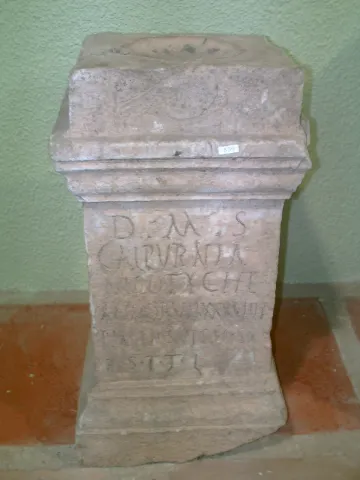
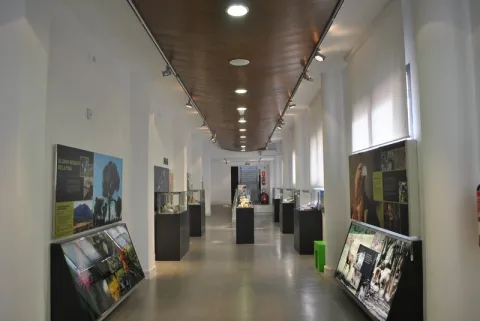
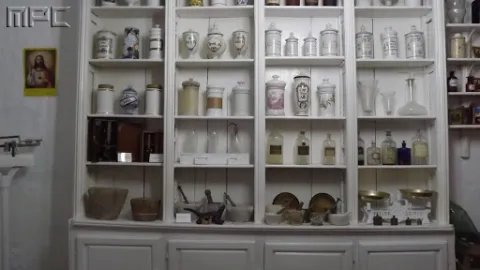
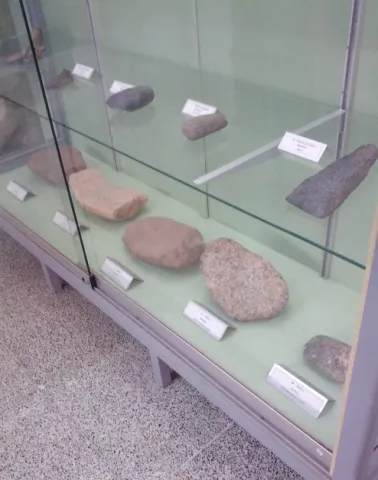
The current number of pieces is 449 and are classified in the sections of: acoustics, heat, photography, mechanics, chemistry or technology. You can also see archaeological pieces of Martos and his region that was gathered in his work as local scholar Father Alejandro Recio. Its library also includes archaeological topics from all over the town.

Breve descripción

The collection offered in the exhibition has a great scientific value, both for the number of pieces and for the quality of many of them. It is a clear exponent of the physical sciences of the late 19th century.

Telecomunicaciones
Teléfono de contacto
953 550 030
Correo electrónico
culturaymision@gmail.com
Ubicación
Nombre
Fundación Cultura y Misión
Código Postal
23600
Latitud
37.721980
Longitud
-3.972190
Dirección
C/ San Antonio de Padua, 2
Distrito
Municipio
Ubicación en el mapa
POINT (-3.97219 37.72198)
Tipos de punto de interés
Imágenes carrusel
imagen
Image
13.jpg
Imagen principal
Desactivado
imagen
Image
12.jpg
Imagen principal
Desactivado
Imágenes cabecera
imagen
Image
10.jpg
Imagen principal
Activado
Horario
Make a date.
Microsite al que pertenece
Loading map
Preparing points of interest and routes...

Museum of La Carolina

Submitted by brandcode_deweloper on
Id
4383459
Descripción
Descripción larga

On the basis of the fact that it was the Archaeological Museum of La Carolina and continuing the previous trajectory, this museum centre was opened in 2011 to gather, preserve, investigate and transmit the historical cultural heritage and the testimony of the human communities that have lived and left their mark on this territory, a land so linked to mining and to the despeñacolos parade.

An important and exceptional collection of all types of objects, together with the achievement of museum and multimedia resources, allow us to know the physical characteristics of the territory and the uniqueness of its natural environment, as well as to make a chronological journey through its history, from the first vestiges of human remains in the Paleolithic, to practically today. Highlighting stages as important as the Spanish-Roman mining, the period of creation and development of the New Populations as a colonizing project of Charles III and the intense contemporary mining activity that ended at the end of the last century, traces all so present in the collective memory of its inhabitants.

On the other hand, the Museum of La Carolina offers a wide range of temporary exhibitions and activities, both in the museum itself and in the territory.

Breve descripción

To the north of the province of Jaén and located in the city of La Carolina, capital of the "Nuevos Poblos de Sierra Morena," The Museum of La Carolina is integrated into the majestic building of the Palacio del Intendente Olavide, where it offers countless possibilities of knowledge, culture, history and research of the city. The building that houses the Museum of La Carolina has the latest technologies, an unbeatable infrastructure and a human team that make it an inescapable cultural and tourist resource when visiting the city.

Telecomunicaciones
Sitio web
www.facebook.com/Museo-de-La-Carolina-496879273669867
Teléfono de contacto
953 662 081
Correo electrónico
museolc@lacarolina.es
Ubicación
Código Postal
23200
Latitud
38.275660
Longitud
-3.617350
Dirección
Plaza de la Iglesia, s/n
Distrito
Municipio
Ubicación en el mapa
POINT (-3.61735 38.27566)
Tipos de punto de interés
Imágenes carrusel
imagen
Image
image_290287.jpeg
Imagen principal
Desactivado
imagen
Image
La%20Carolina%20-%20Museo.jpg
Imagen principal
Desactivado
imagen
Image
Sala%20Museo%20La%20Carolina.jpg
Imagen principal
Desactivado
Imágenes cabecera
imagen
Image
La%20Carolina%20086.jpg
Imagen principal
Activado
Horario
Monday's closed. Tuesday to Friday: 10: 00 - 13: 00 and 18: 00 - 21: 00. Saturday: 10: 00 - 14: 00 and 18: 00 - 21: 00. Sunday and holidays: 10: 00 - 14: 00.
Microsite al que pertenece
Loading map
Preparing points of interest and routes...
Marcas de calidad

Museum of the Batalla de las Navas de Tolosa

Submitted by brandcode_deweloper on
Id
319212
Descripción
Descripción larga

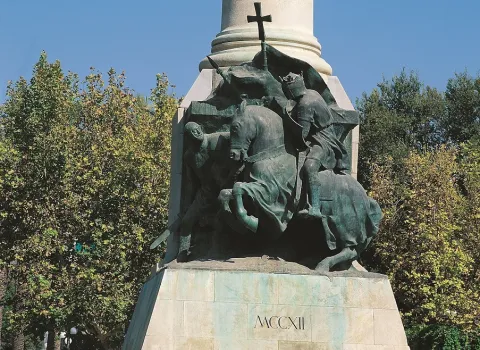
The seizure of the fortress of Salvatierra, the province of Ciudad Real, by the Almohades in September 1211, prompted Alfonso VIII of Castilla to organize a campaign for the summer of 1212 with which to destroy the Almohade military capacity, inciting Innocent III to enact a bull that turned the campaign into a crusade. This is a decisive act, as it brings them together with the company across Europe and gentlemen of the different military orders.

On June 20, 1212, three troops left Toledo: Aragonese and Catalan under the command of Peter II of Aragon; Castilians with his king Alfonso VIII; and Ultramontans; Leonese and Portuguese under the orders of Don Diego López de Haro, lord of Vizcaya. The troops of López de Haro, in their advance, take the castles of Malagon (24 June) and Calatrava (1 July), the latter by capitulation. The lack of booty and the course of events began to create unrest among foreign combatants, most of whom decided to return to their places of origin.

The Almohad Caliph Muhammad al-Nasir in whose army were integrated fighters from the Maghreb, from sub-Saharan territories and from Turkish troops, set in motion his men who leave Jaén with the aim of blocking Christian troops in Sierra Morena.

Between 4 and 6 July Alfonso VIII continued his progress by taking several fortifications, including that of Alarcos. With the arrival of Sancho VII of Navarra the total of Christian armies is gathered at the foot of the castle of Salvatierra, from where they continued in search of the Almohade army.

On July 12 advanced from Don Diego López de Haro took the Puerto del Muradal, with the fortification of Castro Ferral. Two days later, after being blocked in the passage of the Slayer, they camp in the place known as the King's Table, from where they go to the battle that took place on July 16, defeating the Alphade army that will withdraw from the fortresses that defended the entrance to the Guadalquivir Valley. On July 19 they occupied Baeza and a day later they besieged Ubeda, who would eventually capitulate.

After the campaign was completed and access to the Guadalquivir Valley was assured, Christians withdrew to their kingdoms in the north.

Archaeological investigations seem to confirm some of the sites where the written sources placed the contenders' camps. The results obtained by archaeological prospecting in Mesa del Rey corroborate the presence of a camp occupied not only by the troops, but also by higher-ranking characters of the Christian army, having identified areas within the internal organization of the camp, such as that intended to change the horseshoes of the beasts. It can be proposed that the King's Bureau be the place that occupied the troops of King Alfonso VIII of Castile, but not all of the Christian armies.

Similarly, in the surroundings of the castle of Castro Ferral, the great concentration of weapons material can be interpreted as the vestiges of the assault by Alfonso VIII's troops to the fortress. Parts related to daily life have also been documented in El Ferral and its military function (horsemen, furniture elements, garrison of clothing, tools, nails and passers).

The set of recovered pieces points to the existence of a large concentration of materials related to the battle, despite the intense expolity suffered throughout the area for more than a century.

LEYENDAS

The pastor of the Navas de Tolosa. In July 1212 the Christian hosts, on their way to the heart of al- Andalus, were to cross Sierra Morena through the natural passage of La Losa, a narrow throat in the port of Muradal, defended by the fortress of Castro Ferral. Alfonso VIII sent Don Diego López de Haro to take the castle, but despite his conquest, the road remained strongly defended.

At the Christian camp came a man from the place, a connoisseur of those border lands, who showed them an alternative path between the mountains, leading Don Diego López de Haro and his troops to a high-level, ever since known as the King's Table. In it, the Christian camp was set up to launch its offensive against the Almohad army, on July 16, 1212, a confrontation that would open the door of al-Andalus to the Christian armies. The man who showed them the way was called Martin Halaja, a shepherd for some, a hunter for others and for the most pious of the same Saint Isidro.

Breve descripción

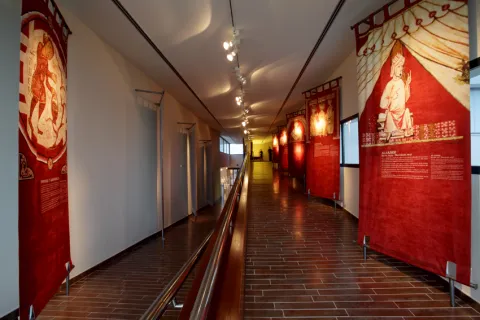
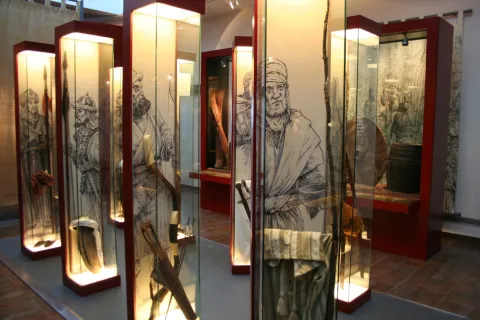
The Battle of the Saves of Tolosa of July 16, 1212 was one of the most prominent milestones in the medieval history of Peninsular, for its significance in the advance of the Christian kingdoms over al- Ándalus. Conceived as a crusade, which was preached by Pope Innocent III, he faced an army of men coming not only from the Peninsular realms, but from the other side of the Pyrenees, commanded by the Christian kings, Alfonso VIII of Castile, Peter II of Aragon and Sancho VII of Navarra, against the Almohad Caliph of Muhammad al-Nasir, in whose army were integrated fighters from the Maghreb, from sub-Saharan territories and from Turkish contingents. The Almohad defeat meant the beginning of the definitive conquest of al- Ándalus by the peninsular Christian kingdoms.
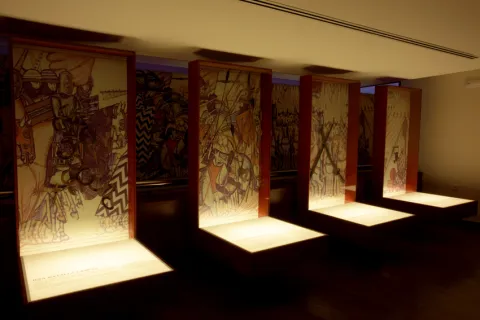
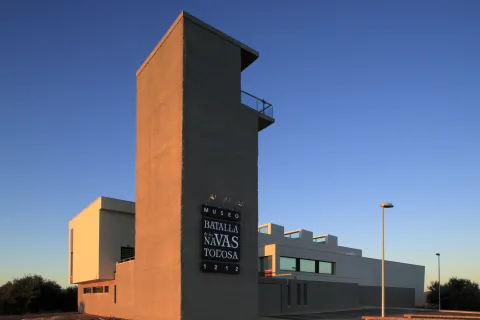
In the Park of Despeñacolos, within walking distance of the place of battle, is the Museum of the Battle of the Navas de Tolosa, in the town of Santa Elena. A centre in which visitors are guided by the history of the contest, from the prolegomens to the war, through audiovisual and scenography, teaching workshops or visits to the battlefield and the Natural Park of Despeñacolos. It is also a starting point and information of the Route of the Castles and Battle of the Kingdom of Jaén.

Telecomunicaciones
Teléfono de contacto
953 459 693
Correo electrónico
museoyturismosantaelena@gmail.com
Ubicación
Código Postal
23213
Latitud
38.342790
Longitud
-3.548910
Dirección
Carretera de Miranda del Rey, s/n
Distrito
Municipio
Ubicación en el mapa
POINT (-3.54891 38.34279)
Tipos de punto de interés
Imágenes carrusel
imagen
Image
Santa%20Elana%20-%20Museo%20Batalla%20Navas%20%281%29.jpg
Imagen principal
Desactivado
imagen
Image
PICT8132.JPG
Imagen principal
Desactivado
imagen
Image
batalla-navas-tolosa.jpg
Imagen principal
Desactivado
imagen
Image
Stoa-M%2CN%2CT020.jpg
Imagen principal
Desactivado
imagen
Image
Museo%20Navas%20039%20%282%29.jpg
Imagen principal
Desactivado
imagen
Image
Stoa-M%2CN%2CT059%20%281%29.jpg
Imagen principal
Desactivado
imagen
Image
Stoa-M%2CN%2CT024%20%281%29.jpg
Imagen principal
Desactivado
Imágenes cabecera
imagen
Image
_MG_6954%20%281%29.jpg
Imagen principal
Activado
Horario
Oct - may: Tuesday to Saturday 10: 00 - 14: 00 and 16: 00 - 19: 00, Sunday 10: 00 - 14: 00 and 15: 30 - 18: 30, Monday closed (except holidays and eve). Jun - Sept: Tuesday to Saturday 10: 00 - 14: 00 and 17: 00 - 20: 00.
Otros servicios
  • Guided tours.
  • Audio-guides.
  • Shop.
  • Coffee shop.
  • Conference and multiple-use rooms.
  • Beer area and games.
  • Parking.
  • Storage and delivery.
  • Tourist information of the province.
  • Hiking on the battlefield.
  • Routes through the Natural Park of Despeñacolos.
  • Educational workshops for schoolchildren
Loading map
Preparing points of interest and routes...
Interés

Museum of Historia Local de Jódar

Submitted by brandcode_deweloper on
Id
2343646
Descripción
Descripción larga

The Museum is divided into seven rooms:

1. "Narciso Mesa Fernández" Culture Hall with conference room, Galdurian theme library and authors and the "Saudi" Phototeca and video library since the mid-19th century.

2. City History Room.

3. "José María Balboa Ruiz" room dedicated to popular arts and customs with the reconstruction of a house and various trades.

4. Room "T.E. Traschina." Dedicated to popular arts and customs, with spaces for popular religiosity, media and historical memories.

5. Hall of the spartum crafts and olive culture.

6. Temporary exhibition room.

7. The "Brilop" Naif art museum that collects the pictorial legacy of Blas T. Rivera López.

Breve descripción

Since 1983, the "Saudar" Cultural Association has been doing a informative and research work on the historical, artistic, cultural and traditional origins of the population. We believe that we are contributing to the protection, conservation, knowledge and dissemination of it and we have materialized this in a Museum. The one we know today as the Jodar Museum, which is a "time walk" to get to know the city in close contact, "Jodar, naturally simple."

Telecomunicaciones
Sitio web
www.saudar.com
Teléfono de contacto
635 602 704
Correo electrónico
asociacion.saudar2@gmail.com
Ubicación
Código Postal
23500
Latitud
37.844560
Longitud
-3.352210
Dirección
C/ Juan de Mata Carriazo, 4, 2º, 1ª puerta
Distrito
Municipio
Ubicación en el mapa
POINT (-3.35221 37.84456)
Tipos de punto de interés
Imágenes carrusel
imagen
Image
Castillo%20de%20Jodar6.jpg
Imagen principal
Desactivado
imagen
Image
Castillo%20de%20Jodar9%20%281%29.jpg
Imagen principal
Desactivado
imagen
Image
Castillo%20de%20Jodar8%20%281%29.jpg
Imagen principal
Desactivado
imagen
Image
Castillo%20de%20Jodar10%20%281%29.jpg
Imagen principal
Desactivado
Imágenes cabecera
imagen
Image
Castillo%20de%20Jodar4.jpg
Imagen principal
Activado
Horario
Monday to Friday: 11: 00 - 13: 00.
Microsite al que pertenece
Otros servicios

Visitors' Center "Sierra Magina Natural Park" (South Tower) and "Xodar" Interpretation Center of the Castle's History (North Tower). Saturdays, Sundays and holidays, from 11: 00 to 13: 00. Friday, Saturday and holidays, from 16: 00 to 18: 00. For concerted visits by cultural groups on another schedule call 635 602 704 or email: culture and festivities The visit will have a guide from our association.

Loading map
Preparing points of interest and routes...

Museum of Escultura Jacinto Higueras

Submitted by brandcode_deweloper on
Id
2279225
Descripción
Descripción larga

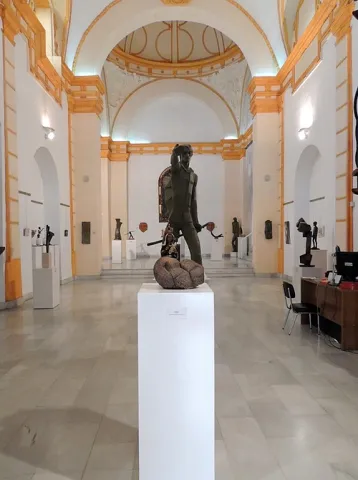
It is formed by the donation of original works and documentation made by the family of Jacinto Higueras Fuentes in 1963, in addition to the awards of the International Sculpture Competition that is held in memory of the sculptor. The exhibition spaces are articulated around the two floors with which the building has

On the lower floor we find a single room, with well-defined spaces; in it are exposed the religious sculpture, the family of the sculptor and the monuments. On the upper floor there are two rooms, in one there are portraits made by the sculptor and in the other the awards of the International Sculpture Competition. The permanent exhibition only allows to contemplate a part of the considerable volume of the work housed in the museum.

Breve descripción

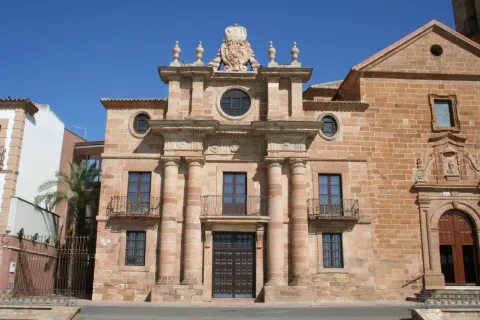
The museum is located in a building dating from 1868, where for a century municipal life was developed. The facade is made of red-toned silery stone and has very beautiful balconies made of forged iron.

Telecomunicaciones
Sitio web
www.museojacintohigueras.org
Teléfono de contacto
953 402 111 / 953 402 112
Correo electrónico
santisteban@promojaen.es
Ubicación
Código Postal
23250
Latitud
38.247890
Longitud
-3.205950
Dirección
Plaza Mayor, 8
Distrito
Ubicación en el mapa
POINT (-3.20595 38.24789)
Tipos de punto de interés
Imágenes carrusel
imagen
Image
Mon075.jpg
Imagen principal
Desactivado
imagen
Image
unnamed%20%2816%29.jpg
Imagen principal
Desactivado
Imágenes cabecera
imagen
Image
Mon684%20%281%29.jpg
Imagen principal
Activado
Horario
Monday to Sunday: 09: 00 - 14: 00 and 17: 00 - 20: 30.
Microsite al que pertenece
Loading map
Preparing points of interest and routes...

Museum of Baeza

Submitted by brandcode_deweloper on
Id
2335314
Descripción
Descripción larga

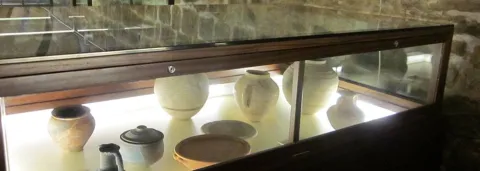
From its first occupation (Bronze Age 2500-100 BC): Ceramics and funerals, loom weights, tips or needles, among others.

From the Roman Age (Flavia Dynasty S. I d. C.): Packaging and ceramic and domestic like dishes, pot, bowls, dishes, glasses, etc.

From the Medieval Time, the distinction is made between Arab civilization (Almohad invasion) and Christian: Decorative elements and domestic life as remains of pliers, candles, jars, dishes, etc.

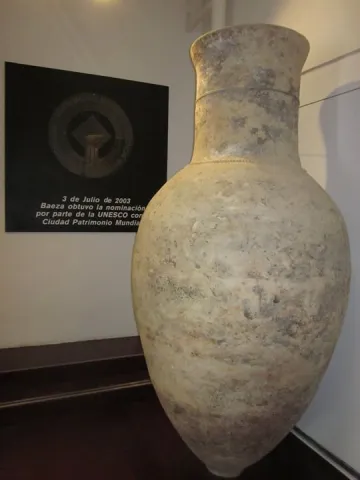
From the Modern Time, you can pick up passing doors, keys, arches, flow box, portraits, etc. From this time to highlight three very significant pieces, the first the painting of Juan de Bolaños, The old (the only preserved specimen of this author's pictorial work) that represents the scene of the Battle of the Navas de Tolosa that occurred in the vicinity of the castle of Castro Ferral. The second is the impressive tincture shown in the lobby of the Baeza Museum for oil storage. And, finally, the door known as the three keys and which in its day kept the most important documents of the city in the building of the High Concierial Houses.

They are therefore pieces that serve visitors of excellent procedure to know the life of man and brushes of the history of the city. But the main capital of the Baeza Museum is its own public, who when visiting it regains collective memory.

Breve descripción

The Baeza Museum is located in the Atarazanas building in the centre of Baeza where the history of the city is reflected. This museum reports through the pieces that shows different times of human occupation on the Baeza site, distributed in two rooms on the ground floor of the headquarters of the First University Foundation of Baeza.

Telecomunicaciones
Sitio web
www.baeza.net
Teléfono de contacto
953 741 582
Ubicación
Código Postal
23440
Latitud
37.990580
Longitud
-3.471430
Dirección
C/ Casas Nuevas, s/n
Municipio
Ubicación en el mapa
POINT (-3.47143 37.99058)
Tipos de punto de interés
Imágenes carrusel
imagen
Image
museo-baeza-3.jpg
Imagen principal
Desactivado
imagen
Image
museo-baeza.jpg
Imagen principal
Desactivado
Imágenes cabecera
imagen
Image
unnamed%20%2818%29.jpg
Imagen principal
Activado
Horario
Tuesday to Friday: 10: 00 - 14: 00. Tuesday to Saturday: 18: 00 - 20: 00. Saturdays and Sundays: 10: 00 - 13: 30.
Microsite al que pertenece
Loading map
Preparing points of interest and routes...

Museum of Artes y Costumbres Populares y Museo Internacional de Arte Naif

Submitted by brandcode_deweloper on
Id
2343802
Descripción
Descripción larga

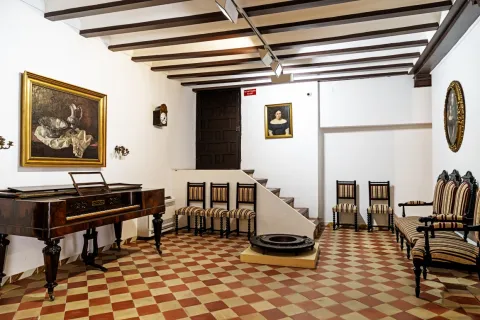
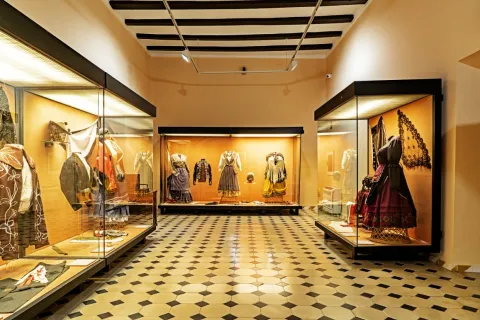
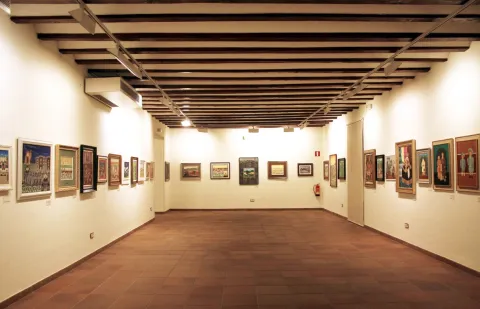
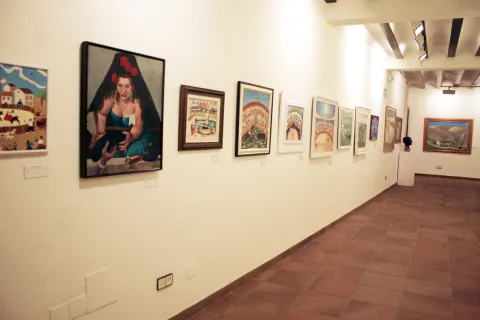
The Museum of People's Arts and Costumbres reconstructs environments specific to the ways of life of the province of Jaén of the last centuries, with pre-industrial scenarios. In their rooms are exhibited objects such as agricultural tools, ceramics, typical suits, furniture or children's toy, among others. The International Museum of Naif Manuel Moral Art is the only museum dedicated to this art in Spain. Among its many rooms are works by national and foreign artists.

Breve descripción

The building is a 16th century palace built on some Arab Baths, the largest in Europe. These bathrooms were built between the 11th and 12th centuries. The complex was rehabilitated as a cultural centre and houses the Museum of People's Arts and Costumres, the International Museum of Naif Art and an archaeological site of the 11th century.

Telecomunicaciones
Sitio web
www.bañosarabesjaen.es
Teléfono de contacto
953 248 064
Correo electrónico
ccbarabes@dipujaen.es
Ubicación
Nombre
Centro Cultural Baños Árabes
Código Postal
23004
Latitud
37.771080
Longitud
-3.793780
Distrito
Municipio
Ubicación en el mapa
POINT (-3.79378 37.77108)
Tipos de punto de interés
Imágenes carrusel
imagen
Image
Ban%C2%A6%C3%A2os%20Arabes126.jpg
Imagen principal
Desactivado
imagen
Image
Ban%C2%A6%C3%A2os%20Arabes156.jpg
Imagen principal
Desactivado
imagen
Image
Ban%C2%A6%C3%A2os%20Arabes171%20%281%29.jpg
Imagen principal
Desactivado
imagen
Image
Ban%C2%A6%C3%A2os%20Arabes186%20%281%29.jpg
Imagen principal
Desactivado
imagen
Image
30.jpg
Imagen principal
Desactivado
imagen
Image
31%20%282%29.jpg
Imagen principal
Desactivado
imagen
Image
29%20%281%29.jpg
Imagen principal
Desactivado
Imágenes cabecera
imagen
Image
Ban%C2%A6%C3%A2os%20Arabes116%20%281%29.jpg
Imagen principal
Activado
Horario
Tuesday to Saturday and holidays: 09: 00 - 21: 00. Sunday: 09: 00 - 15: 00. Closed Monday (except 28 feb, 2 may, 15 ago and 26 Dec) and 1 and 6 ene and 24, 25 and 31 Dec. Access up to 1 h before closing.
Loading map
Preparing points of interest and routes...
Marcas de calidad
Interés

Museum of Artes y Costumbres Populares de Begíjar

Submitted by brandcode_deweloper on
Id
4380756
Descripción
Descripción larga

The collection is very much related to trades (barber, doctor, blacksmith, boticario, pastor, espartero, carpenter, midwife, sewer, tendero...) that are exposed in independent units with a multitude of objects forming a wide reproduction, where you can also see a wonderful sieve of the 18th century and the textile production of flax, wool and silk at the time. Also included are the domestic spaces of a bourgeois house, such as the living room, bedroom, cupboard, etc.

The Museum of People's Arts and Costumres of Begíjar has a library of consultation, specialized in anthropological themes with special attention to Andalusian ethnography and topics related to the contents of the Museum.

In recent years, the Museum has held numerous temporary exhibitions and published various publications related to workshops and research carried out by the museum itself. It continues to cooperate in all types of cultural events, whether their own, private or public, in order to promote the study of anthropology and social history in Begíjar.

Breve descripción

The Museum of People's Arts and Costumres of Begíjar is very interesting and takes an extensive tour of the history and ethno-ology of the town. Both the continent and the content stand out for its extraordinary representative quality and the perfect harmony with regard to the staging is concerned. It is certainly a playful visit of great interest.

Telecomunicaciones
Sitio web
www.museodeartesbegijar.com
Teléfono de contacto
677 409 952
Correo electrónico
museobegijar@hotmail.com
Ubicación
Código Postal
23520
Latitud
37.984720
Longitud
-3.535780
Dirección
C/ Paso del Castillo
Municipio
Ubicación en el mapa
POINT (-3.53578 37.98472)
Tipos de punto de interés
Imágenes carrusel
imagen
Image
image_105942.jpeg
Imagen principal
Desactivado
imagen
Image
unnamed%20%286%29.jpg
Imagen principal
Desactivado
imagen
Image
Img%20039.jpg
Imagen principal
Desactivado
Imágenes cabecera
imagen
Image
Img%20034.jpg
Imagen principal
Activado
Horario
1 may - 30 sept: Saturdays, Sundays and holidays 10: 00 - 14: 00 and 17: 00 - 20: 00. 1 oct - 30 abr: Saturdays, Sundays and holidays 10: 00 - 14: 00 and 16: 00 - 18: 00. Tuesday to Friday: arrange a visit.
Microsite al que pertenece
Loading map
Preparing points of interest and routes...

Museum of Artes y Costumbres Alto Guadalquivir

Submitted by brandcode_deweloper on
Id
2335278
Descripción
Descripción larga

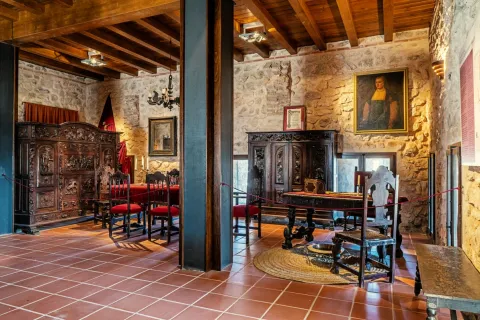
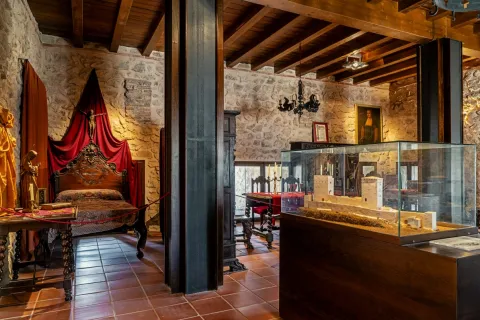
In the first room of the museum, a chapel has been installed with a natural-sized Roman-Byzantine Christ mounted on a cypress wood cross. It is surrounded by a complete collection of twelve anonymous paintings of the 17th century representing the Apostles and a baroque size of Bishop Saint Ambrosio.
In the second room (weapons room) of the Museum of People's Arts and Costumbres of Alto Guadalquivir is decorated with shield-shaped panoplias with various weapons: swords, crosses, axes, alphanxes, etc. It also has two strands and carved arches, as well as furniture from the 16th and 17th centuries.
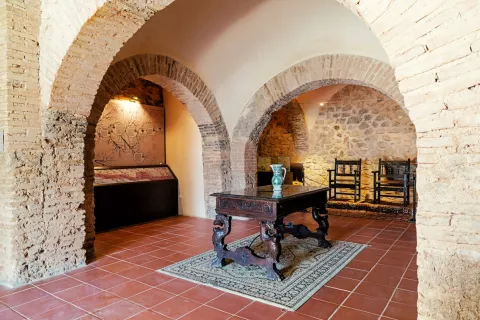
The third room (noble room), is the one that most structurically stands out for its completion in a Gothic cruise vault and its arches windows pointed with parteluz, also Gothic. It presents three flamenco tapestries of the 17th century, signed by Ian Raes and four bargueños forming together with their corresponding tables of the 18th century.

Breve descripción

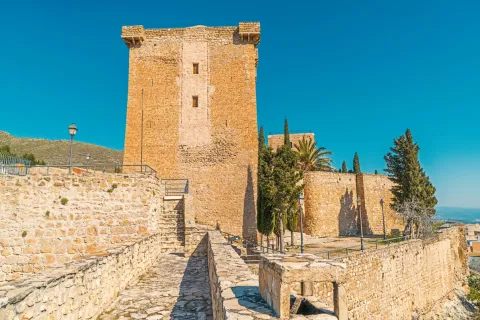
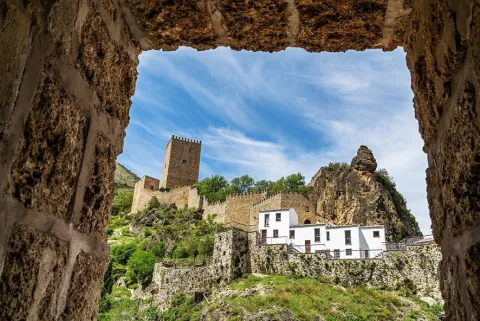
TheMuseum of Popular Arts and Costumbres of Alto Guadalquiviris housed in the Castle of the Yedra, in Cazorla, Jaén. It has two distinct sections: history and popular arts and customs.

Telecomunicaciones
Teléfono de contacto
953 101 402
Ubicación
Código Postal
23470
Latitud
37.907410
Longitud
-3.001480
Dirección
Camino de San Isicio, 45
Municipio
Ubicación en el mapa
POINT (-3.00148 37.90741)
Tipos de punto de interés
Imágenes carrusel
imagen
Image
_DSC4438.jpg
Imagen principal
Desactivado
imagen
Image
Museo%20de%20Artes%20y%20Costumbres%20Populares%20Alto%20Guadalquivir.%20Caz.jpg
Imagen principal
Desactivado
imagen
Image
Museo%20de%20Artes%20y%20Costumbres%20Populares%20Alto%20Guadalquivir-2.%20C.jpg
Imagen principal
Desactivado
Imágenes cabecera
imagen
Image
image_163780.jpeg
Imagen principal
Activado
Horario
16 sept - 31 may: Tuesday to Saturday 10: 00 - 20: 30, Sundays and holidays 10: 00 - 17: 00. 1 Jun - 15 sept: Tuesday to Saturday 09: 00 - 15: 30, Sundays and holidays 10: 00 - 17: 00. Closed Monday, 1 ene, 1 may and 25 Dec.
Loading map
Preparing points of interest and routes...

Museum of Artes Plásticas "Antonio González Orea"

Submitted by brandcode_deweloper on
Id
5871105
Descripción
Breve descripción

The Museum is located in the Old Convent of Capuchino Mothers. The building is of a conventional type, it responds to a single ship, covered by a canyon vault with lunetes in all its sections, with the exception of that of the major chapel, in which a semi-spherical vault appears on the breast.

Telecomunicaciones
Teléfono de contacto
953 505 903
Correo electrónico
museorea@gmail.com
Ubicación
Código Postal
23740
Latitud
38.041210
Longitud
-4.056820
Dirección
C/ Calancha, 19
Distrito
Municipio
Ubicación en el mapa
POINT (-4.05682 38.04121)
Tipos de punto de interés
Imágenes carrusel
imagen
Image
Museo%20G%C3%B3mez%20Orea%20%281%29%20%281%29.jpg
Imagen principal
Desactivado
imagen
Image
Museo%20G%C3%B3mez%20Orea%20%282%29.jpg
Imagen principal
Desactivado
Imágenes cabecera
imagen
Image
Museo%20G%C3%B3mez%20Orea%20%283%29.jpg
Imagen principal
Activado
Horario
Thursday to Saturday: 10: 00 - 14: 00 and 17: 00 - 20: 00.
Microsite al que pertenece
Loading map
Preparing points of interest and routes...