Saltar al contenido principal

The Heart of the Kingdom

Submitted by brandcode_deweloper on
Breve descripción

ROUTE FROM JÓDAR TO JAÉN

A BARRIER BETWEEN TWO RIVAL POWERS

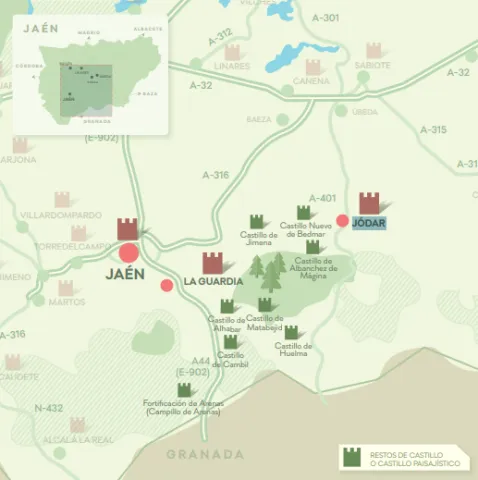
This route runs through the central area of the province of Jaén and serves as a thread for understanding how the transition from Muslim to Christian rule took place, along with the resulting changes in structure and organisation.

Following the conquest of Jaén, a Kingdom of Jaén began to take shape as a border territory with the Kingdom of Granada. The origins of Jaén as a provincial capital derive from its status as the capital of the Chora of Yayyān during the Muslim period, an era from which significant monuments have survived, such as the Arab Baths or Santa Catalina Castle. Castles such as those of Jódar, La Guardia or Huelma, although now displaying a Christian-era structure, have an important Muslim past as sites that protected the capital of the Cora of Ŷayyān, the Arabic name from which the place-name Jaén derives. Other castles the traveller can admire along the route include those of Jimena, Bedmar and Albanchez de Mágina.
imagen
Image
mapa ruta 4
Imagen principal
Desactivado
Puntos del trazado
Latitud
37.833
Longitud
-3.35
Latitud
37.74257
Longitud
-3.69371
Latitud
37.7836
Longitud
-3.7838
Desactivado

Route card

Santa Catalina Castle, Jaén

Jaén

HILL, CROSS AND PROVINCIAL CAPITAL

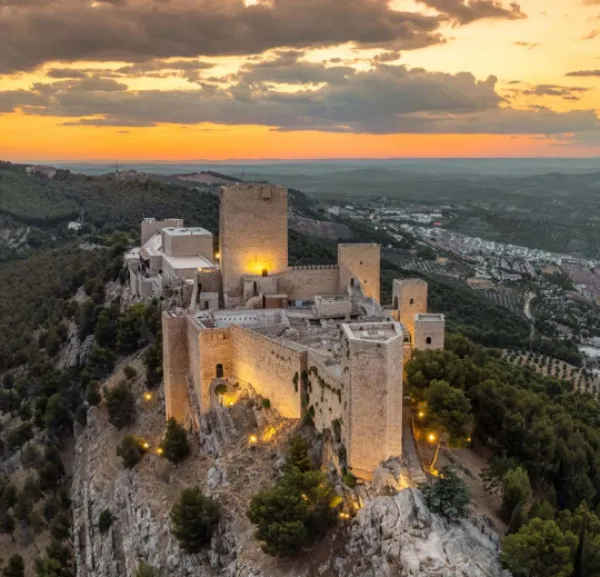
Across the summit and the northern and southern slopes of Cerro de Santa Catalina lie the defensive structures of the city of Jaén, which have undergone a complex historical and architectural evolution over the centuries.

The original fortress had two enclosures — the Abrehuí Castle and the Alcázar Viejo (Old Citadel) — but after the Christian conquest in 1246, the Castilians built a third, the Alcázar Nuevo (New Citadel), which still retains its original structure today. Its outer perimeter is defined by a walled enclosure incorporating six towers (square in plan, except for the easternmost, the Torre de Vela or de Guardia, which is pentagonal). East of the castle gate, on the northern side of the enclosure, stand two barbican towers in succession; the westernmost houses the Chapel of Santa Catalina, patron saint of the city.

Cerro de Santa Catalina witnessed various conflicts, as during the Christian conquest of the Guadalquivir valley, Jaén withstood several sieges until, in 1246, the King of Granada, Ibn al-Ahmar, surrendered the city to Ferdinand III "the Saint." Centuries later, during the War of Independence (19th century), Jaén and its defences once again played an important role in controlling the Upper Guadalquivir.

The surviving sections of the wall descend the hillside, encircling the old town below.
Imagen

La Guardia Castle

La Guardia

FROM MEDIEVAL BUILDING TO NOBLE RESIDENCE

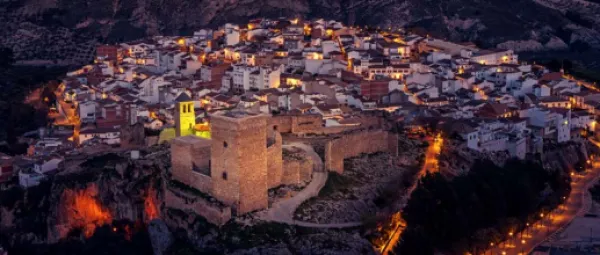
In 1244, La Guardia was conquered by Ferdinand III as a preliminary step towards the conquest of the city of Jaén. From that moment on, La Guardia became a strategically vital castle for the Kingdom of Castile. Once in Christian hands, the original citadel was transformed into a rectangular fortress with towers at its corners, one of which was set up as the Keep. For two and a half centuries, it was a decisive stronghold in defending the Jaén flank, exposed to Nasrid incursions coming from the Guadalbullón river basin.

After the Castilian Civil War of the 14th century, La Guardia became part of the possessions of the Mexía lineage. The castle was turned into a noble residence, which led to a major renovation of the medieval building, incorporating palatial features and rooms, most notably its Gothic-style doorway and the Church of Santa María.
Imagen

Jódar Castle

Jódar

WATCHTOWER OVER THREE VAST VALLEYS

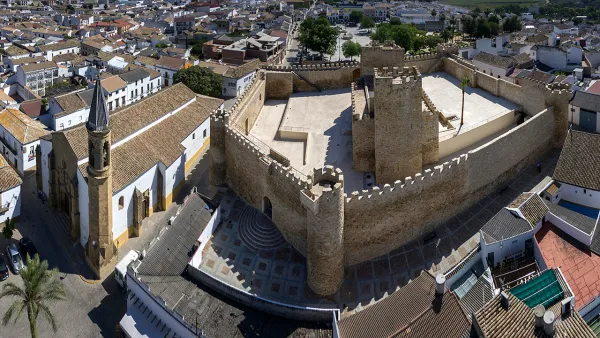
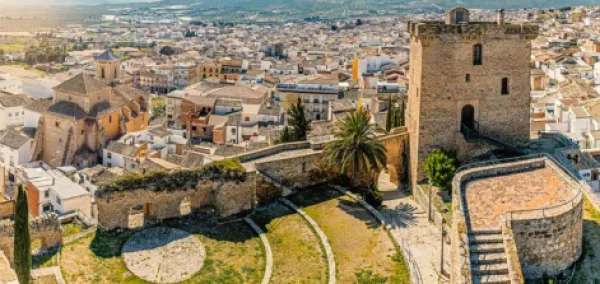
Of Muslim origin and later remodelled by the Christians, this castle is one of the oldest in Andalusia, mentioned in documents dating back to the year 860. It was set up as a double line of defence, consisting of an outer enclosure and an inner keep with two large towers of homage at either end, one of Arab origin and the other built by the Christians. Jódar was conquered by the Almoravids in 1090 and, in 1161, became part of the Almohad empire, a period to which the rammed-earth walls preserved in the castle may well belong.

After passing into Castilian hands between 1127 and 1229, it went on to become one of the most important strongholds on the border with Granada and the seat of a lordship, which led to constant clashes and changes of ownership. Later, the castle would be the scene of other conflicts, such as the Carlist Wars and the War of Independence.

Imagen

Juan Eslava Galán Literary Route

Submitted by brandcode_deweloper on
Breve descripción

Arjona is the birthplace of a storyteller who transformed Jaén into a land of legends.

Following the path of Juan Eslava Galán means discovering Jaén through the eyes of one of its greatest storytellers. Born in Arjona, the writer has made the province a recurring setting for his novels, where history, mystery, and landscape intertwine seamlessly.

In Arjona, his hometown, you'll wander through squares, churches, and hidden corners that inspired many of his works. From the ancient Alcázar to the Sanctuary of the Sacred Relics, each stop reveals fragments of a past that Eslava Galán brings to life with humor, rigor, and fascination.


His books—from *In Search of the Unicorn* to *The Templar Tombstone*—take you on a journey through Martos, Baeza, Jaén, Alcaudete, Baños de la Encina, and Úbeda, places that come alive with Templar enigmas, medieval adventures, and local legends.

This route is, in essence, a bridge between literature and the land, allowing you to enjoy the province with a curious and engaging perspective.

Imagen principal
Desactivado
Puntos del trazado
Latitud
37.9356
Longitud
-4.05447
Latitud
37.76972
Longitud
-3.78888
Desactivado

Route card

Arjona

Plaza de Santa María: A natural viewpoint overlooking the Jaén countryside, where the ancient Alcázar of Aryuna still reveals its imposing outer wall. It is the perfect starting point for the tour: spacious, bright, and steeped in history. Eslava Galán describes it with the precision of someone who knows every stone, and the traveler can contemplate it with the same fascination.

Sanctuary of the Sacred Relics: A 17th-century Neoclassical temple that incorporates the ashlars of the old Mocha Tower. Its monumental staircase and Baroque crypt surprise visitors, who discover here a solemn space full of symbolism.

Church of Santa María del Alcázar: Majestic and austere, it rises above the former Great Mosque. Hidden on one of its facades is the famous Templar Baphomet, an enigmatic face carved in stone that seems to observe the traveler and plays a key role in The Templar Tombstone.

Templar Baphomet: A sculptural detail that sparks the imagination: forked beard, double profiles, Templar mystery. A must-see for lovers of legends.

Juan Eslava Galán Museum of Arts and Customs: Located in the former Hospital of San Miguel, this museum not only exhibits ethnographic pieces but also preserves part of the writer's personal world, including the table where he wrote In Search of the Unicorn. An intimate place, perfect for understanding his creative process.

Almohad Cistern:The oldest building in Arjona, hidden beneath the old mosque. Its vaults and alabaster pedestals transport the traveler to the medieval era, evoking the daily life of ancient Aryuna. 

Church of San Juan Bautista: Built on the site of an ancient Roman temple and later a synagogue, this church is a crossroads of cultures. Its Plateresque façade and octagonal tower are architectural gems that surprise visitors. 

Crypt of the Baron of Velasco:A Neo-Byzantine space of golden tesserae, marble sculptures, and an ingenious system of rails to access the niches. A place so unique it seems straight out of a mystery novel. 

Arjona Town Hall: A 19th-century Andalusian house that Eslava Galán describes in detail: a bright courtyard, columns, tiled wainscoting, and marble staircases. Visitors can recognize in this building the atmosphere that the author recreates in his works.

The Templar Tombstone: The element that gives the novel its title appears in an unexpected place, revealed in the final section of the book. The route allows visitors to discover this exact spot, adding excitement to the journey.

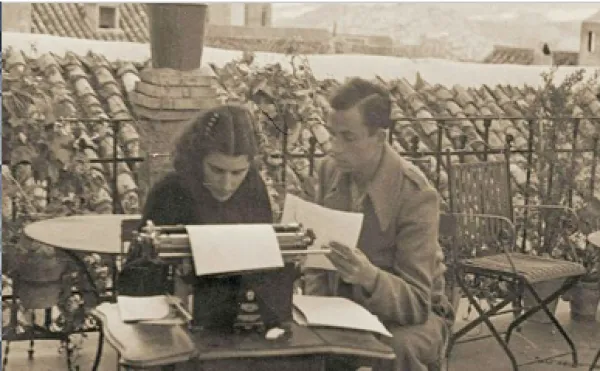
Juan Eslava's Literary Corner: In the Municipal Library, this space brings together all his works, many signed, along with his work table and typewriter. An intimate corner for those who wish to connect with the writer beyond his books.

Imagen

Jaén

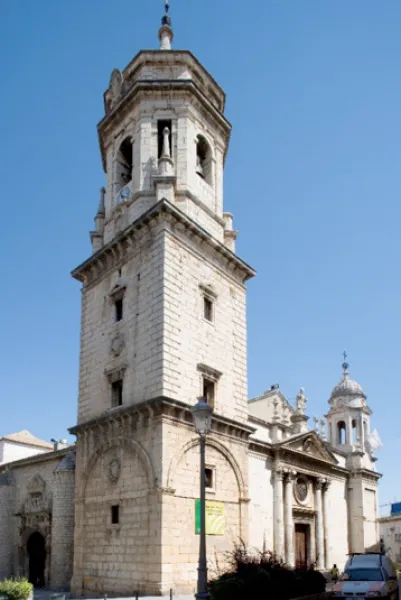
Basilica of San Ildefonso:Site of the miracle of the Descent of the Virgin in 1430. A key location in the devotion of Jaén and in the author's historical narrative.

Church of La Magdalena: Former main mosque. The neighborhood, the fountain, and the lizard are recurring literary devices in his work.

Institute of Jaén Studies (IEG): Home to the author's personal archive: more than 8,000 documents, books, and files.

Castle of Santa Catalina: Emblem of Jaén. Medieval fortress and privileged viewpoint that appears in his historical essays.

The Lizard of La Malena: The most famous legend of Jaén. A literary and cultural symbol frequently used by Eslava Galán.

Arab Baths Cultural Center – Villardompardo Palace: 11th-century Arab baths, the largest open to the public in Spain. A recurring historical setting in his popular works.

Arrabalejo Tavern: Mentioned in In Search of the Unicorn. A place steeped in popular tradition and culinary memory.

Arch of San Lorenzo: A 13th-century Gothic-Mudéjar vestige. A space steeped in history that inspires the author.

Palace of the Constable Iranzo:Direct setting in *In Search of the Unicorn*. It preserves a magnificent Mudéjar hall.

San Francisco Square:An emblematic place in the city. The Templar chapel of the old convent was located beneath it.

“El Gorrión” Tavern:Founded in 1888. It appears in his works and preserves the famous “mummified ham”.

Maestra Street:Historic thoroughfare of the old town. Setting in *In Search of the Unicorn*.

Bernabé Soriano Street (La Carrera):Site of ancient horse races mentioned in his Planeta Prize-winning novel.

Puente Tablas:Iberian oppidum of great archaeological value. Eslava Galán incorporates it into his historical narrative.

Santa María Square – Jaén Cathedral:The Cathedral is masterfully described in The Templars and the Table of Solomon.

Imagen

Miguel Hernández Literary Route

Submitted by brandcode_deweloper on
Breve descripción

A journey to encounter Miguel Hernández in the places where his words became life

Arriving in Jaén, following in the footsteps of Miguel Hernández, means immersing yourself in one of the most intense and luminous chapters of his life, even with the shadow of war surrounding it. The people's poet, barely thirty years old and with overflowing creative energy, found in these lands a human and natural landscape that left a profound mark on his work and his memory.

His stay was brief—only seventy-two days—but extraordinarily fruitful. Here he wrote some of his most vibrant texts, among them "Aceituneros," which has become the anthem of the province. In Jaén, you don't just observe the land he contemplated: you listen to it, you walk it, you feel it in your skin. And that emotion connects with the verses that still resonate in the identity of Jaén.

Assigned as commissioner of the Southern Front's public address system, Miguel traveled through streets, squares, and shelters, living among the people and narrating from within the most harrowing episodes of the conflict. Following his trail, you travel from the capital to Andújar or Lopera and discover the young and committed perspective that bore witness to a turbulent time, but also to a humanity forging its path amidst the noise of war.

Today, as you walk this route, you will find a Jaén that speaks to you and to history: squares that bear scars, shelters that hold silences, thermal baths where the poet strolled with Josefina Manresa, and corners where his clear and courageous voice still seems to echo. It is a journey that invites you to pause, to look calmly, and to feel how literature intertwines with the land.

Miguel Hernández Legacy Website

https://www.dipujaen.es/miguelhernandez

Imagen principal
Desactivado
Puntos del trazado
Latitud
37.769
Longitud
-3.790
Latitud
37.84338
Longitud
-3.06561
Latitud
37.94542
Longitud
-4.21463
Latitud
38.03924
Longitud
-4.05056
Desactivado

Route card

Jaén

Basilica of San Ildefonso: Façade with shrapnel damage; a key point for understanding the poet's arrival in Jaén.

Poet's Residence and Headquarters of the Altavoz del Frente Sur (Voice of the Southern Front): On Llana Street (now Francisco Coello, 9). Here he lived with Josefina Manresa and worked as commissioner of the Altavoz del Frente Sur.

Plaza de Santa María (Jaén Cathedral): A space from which his perspective on the bombing of Jaén, reflected in his articles for Frente Sur, can be understood.

Plaza de los Naranjos (Orange Tree Square): The only place with a ceramic plaque dedicated to the poet, featuring verses from El último rincón (The Last Corner).

Air Raid Shelter in Plaza de Santiago: Built after the 1937 bombing; it allows us to understand the wartime context in which the poet lived.

Institute of Jaén Studies (IEG): It houses the Miguel Hernández Legacy, with thousands of documents, manuscripts, and images.

Jabalcuz Hot Springs: A place where Miguel Hernández used to go for walks and bathe with Josefina Manresa.

Imagen

Quesada

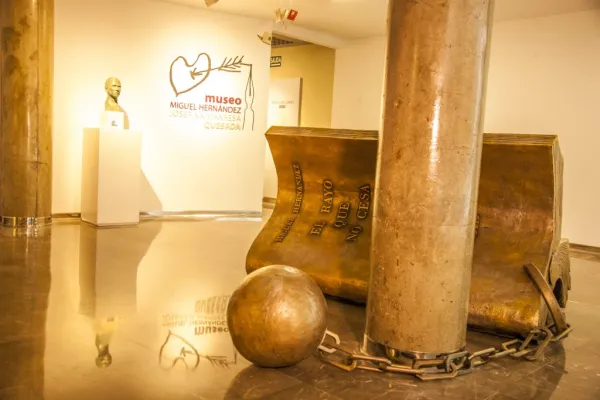
Miguel Hernández – Josefina Manresa Museum: The central space of the route in Quesada. It brings together a large part of the legacy of the poet and Josefina Manresa, with a chronological journey through their life, work, and human and social dimension.

Hernandian Corners: The historic center of Quesada becomes a literary stroll: narrow streets, white facades, and mosaics with verses, drawings, and texts by Miguel Hernández and Josefina Manresa. A vibrant and poetic way to explore the town.

Miguel Hernández Panels and Mosaics: Distributed throughout the municipality, especially in the Plaza de la Constitución, where large mosaics highlight the poet and Josefina's connection to Quesada.

Josefina Manresa's Birthplace: The house where Josefina was born on January 2, 1916. It is not open to the public, but it retains a ceramic plaque marking the location and its importance to local history.

Imagen

Lopera

Longitud del recorrido: 3km.

Duración estimada: 4h.

Tipo de ruta: A pie y en coche.

Lugares que componen la ruta:

Imagen

Andújar

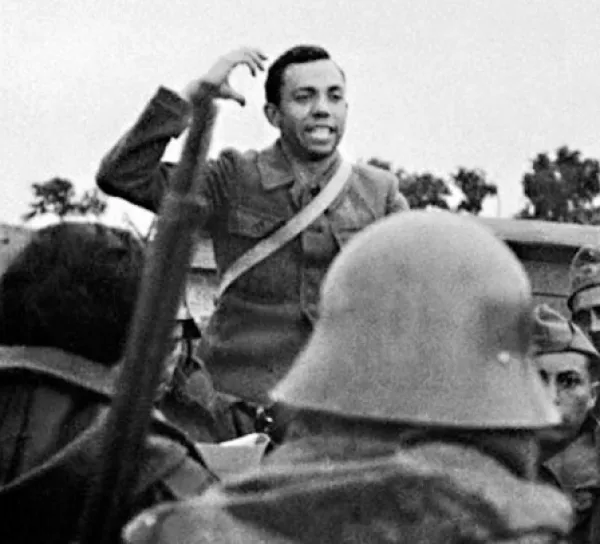
Sanctuary of the Virgin of La Cabeza was the scene of a fierce siege during the Spanish Civil War. Miguel Hernández, assigned to the Southern Front's propaganda unit, described the assault in his chronicles, narrating in detail the resistance that took place between September 1936 and May 1937. Photographs exist that confirm the poet's presence; some show him addressing the troops and others at the Republican command post.

This firsthand experience allowed him to accurately narrate the development of the siege, as he explains in On the Taking of La Cabeza. Letter and clarification, published in Frente Sur (no. 15, May 13, 1937): “I witnessed the fighting from the very beginning, although without pencil or paper… I prefer to relive it by remembering it.”

This passage reveals the poet in his most committed role: witness, chronicler, and emotional participant in one of the harshest episodes of the Civil War in Jaén.

Imagen

Literary Route of Saint John of the Cross

Submitted by brandcode_deweloper on
Breve descripción

With Saint John of the Cross, you begin an intimate journey through the places in Jaén where the mystic found refuge, inspiration, and silence. Here you discover the legacy of a poet who transformed spiritual experience into one of the pinnacles of world literature.

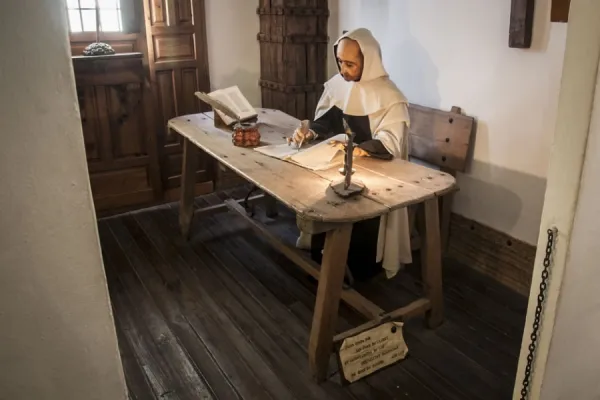
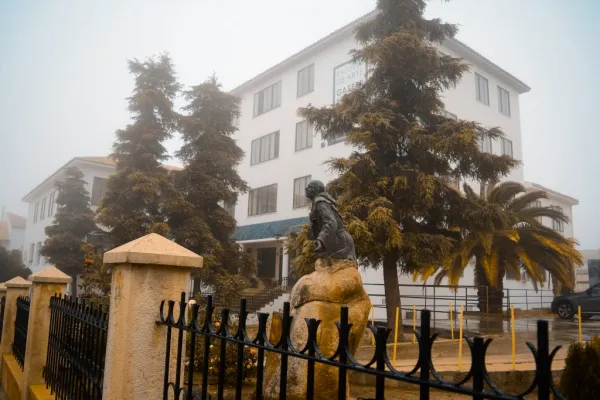
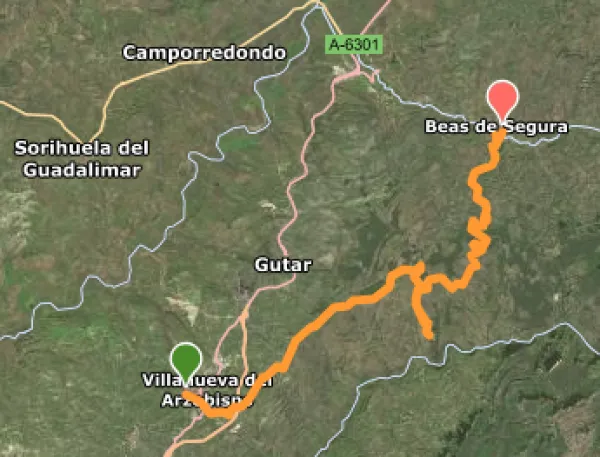
Your journey begins in Villanueva del Arzobispo, where Saint John arrived in 1578, ill and weakened after his captivity. In the Convent of Calvary, you will find the space where he served as prior and where, amidst confessions and spiritual direction, he began to outline the grand schemes of his thought. You will stroll through the Plaza Mayor and around the Sanctuary of Fuensanta, where he visited the new Carmelite convent.

The route continues towards Baeza, a university city and Renaissance center. Here he founded the Discalced Carmelite College, served as its first rector, and you feel the serenity of a place that fostered his formative work and contemplative life. Further on, you arrive at La Peñuela, in La Carolina, where he lived his last months as a simple subject following internal disputes within the Order. From there, he was transferred to Úbeda, where he died at the age of 49. In this city, you can visit the Museum of Saint John of the Cross, the only one in the world dedicated to him. The itinerary is completed with other essential sites: the Monastery of the Discalced Carmelites and the Center for the Interpretation of Mysticism in Beas de Segura, and the autograph manuscripts preserved in Andújar and Jaén, true literary treasures.

On this route, you'll discover Jaén through the depth, beauty, and silence that shaped the life and work of Saint John of the Cross. A journey where landscape, spirituality, and literature converge.

Imagen principal
Desactivado
Puntos del trazado
Latitud
38.012689
Longitud
-3.371985
Latitud
37.99343
Longitud
-3.46924
Latitud
38.25268
Longitud
-2.89087
Latitud
37.76633
Longitud
-3.78925
Latitud
38.0392362
Longitud
-4.0505603
Latitud
38.16859
Longitud
-3.00783
Desactivado

Route card

Úbeda

In Úbeda, you enter the final chapter of the mystic's life. Here you will discover the places where he spent his last days, where he wrote, where he was cared for, and where his legacy became forever linked to the city.

Convent of San Miguel / Former Convent of the Discalced CarmelitesHe spent his final days here after being transferred from La Peñuela. Here he was cared for by the friars and here he died on December 14, 1591. Although the original building no longer exists, the space preserves the memory of that serene and luminous end.

Museum of Saint John of the CrossIt is the only museum in the world dedicated entirely to him. Here you can explore his life, his work, and his spirituality through manuscripts, objects, recreations, and historical pieces that allow you to understand the depth of his thought.

Church and Convent of San Miguel (current location of the museum) The complex houses the museum and keeps the saint's presence alive.

Historic Surroundings of Úbeda This Renaissance city, a World Heritage Site, offers a perfect setting to understand the poet's spiritual dimension. Its quiet streets, squares, and churches invite you to walk slowly, as if following the echo of his verses.

Imagen

Baeza

When you arrive in Baeza, you are immersed in one of the most luminous chapters of his life. Here you discover the city where the mystic served as a formator, rector, and spiritual guide, in a university environment that fostered his thought and work.

Convent-College of Our Lady of Mount Carmel – San Basilio This is the heart of the route in Baeza. Here, in the former Convent of Our Lady of Mount Carmel, Saint John of the Cross founded the first University Residence of the Discalced Carmelite Order, intended to train young men with a vocation and academic pursuits.

Vicar's House An enclave linked to the Carmelite presence in Baeza. Although it is not preserved as a space open to the public, it forms part of the historical itinerary that helps you understand the context in which Saint John carried out his formative work.

Imagen

Beas de Segura

Monastery of San José del Salvador Your journey begins here. Saint John of the Cross arrived in Beas as Prior of the Convent of Calvary, sent by Mother Ana de Jesús, who wished to have the spiritual guidance of the Discalced Carmelites closer at hand. In this monastery—one of the most important Carmelite convents for women—the Saint heard confessions, offered spiritual guidance, and wrote, finding an environment conducive to organizing his mystical thought.

Interpretation Center of the Town of Beas, the 16th Century, and Mysticism Located next to the Sanctuary of Our Lady of Peace, this space allows you to understand the historical and spiritual context of the era. Here you can explore the history of Beas, its castle-fortress, the presence of the Order of Santiago, and, above all, the mystical universe shared by Saint Teresa of Ávila and Saint John of the Cross.

Way of St. John of the Cross A pilgrimage route that begins in Beas and ends in Caravaca de la Cruz. It traverses the landscapes the Saint visited as vicar and confessor, a 151 km itinerary that unites spirituality, nature, and memory.

Hospice of the Discalced Carmelites Built in 1659, after the Saint's stay, but intimately linked to his legacy. Located next to the main church and very close to the Monastery of San José, it is now part of private property on San Juan de la Cruz Street, historically known as Hospice Alley.

Imagen

Jaén

Length of the route: 0m.

Estimated duration: 1h.

Type of route: On foot.

Places that make up the route:

Imagen

Andújar

Length of the route: 0m.

Estimated duration: 1h.

Type of route: On foot.

Places that make up the route:

Imagen

Villanueva del Arzobispo

Length of the route: 29.63km.

Route: SANJUANISTA VILLANUEVA DEL ARCHOBISPO A BEAS POR CALVARIO Y PRIMITIVE

Imagen