Saltar al contenido principal

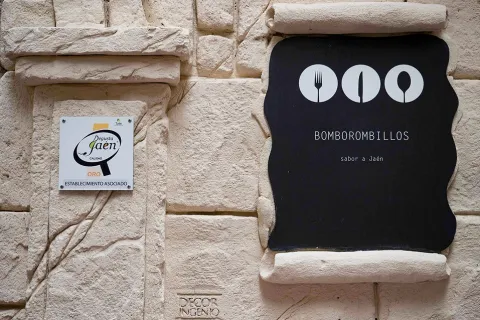
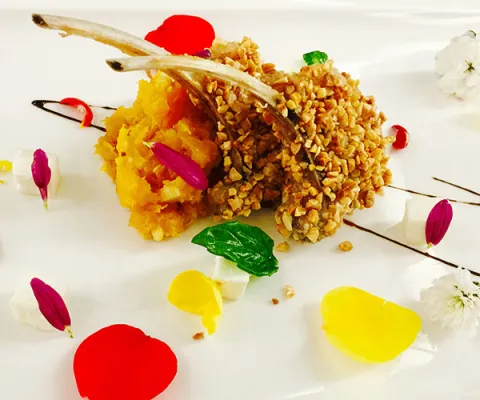
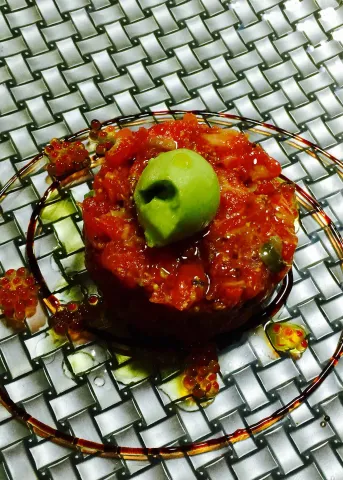
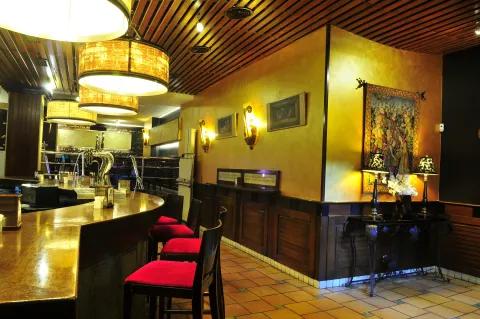
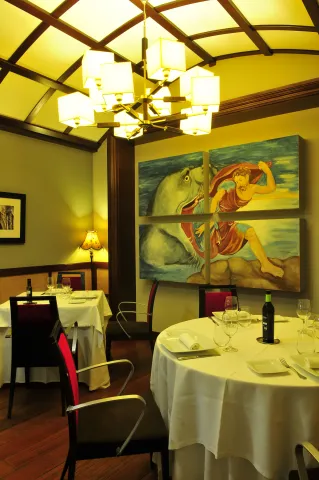
Bomborombillos

Submitted by brandcode_deweloper on
Id
10536009
Redes sociales
Facebook
https://www.facebook.com/bomborombillos/
Instagram
https://www.instagram.com/bomborombillos/
Descripción
Descripción larga

"Taste a Jaén" is our last name and with Carlos Cobo at the helm of the fire, we sail through the prowess waters of the millennial flavors inherited from the Jewish and Muslim Hispanic cuisine with the sole purpose of awakening in our customers harmonic feelings of pleasure with each of our tasting and with each drink of wine.
Try and enjoy Jaén at the table!!

Breve descripción

Bomborombillos is the name of our restaurant, in Jaén capital, which opened its doors in December 2015, initially as a bar, with the intention of making a hole in the wide-ranging cuisine of the Jiennese, using for the production of its dishes products of quality, closeness and season in a determined bet to value the great agri-food potential of the province of Jaén.

Información de contacto
Teléfono de contacto
691 941 918
Correo electrónico
bomborombillos@gmail.com
Ubicación
Código Postal
23004
Latitud
37.768961
Longitud
-3.790515
Dirección
C/ Pintor Carmelo Palomino, 12B
Distrito
Municipio
Ubicación en el mapa
POINT (-3.790515 37.768961)
Tipo de restaurante
Imágenes
imagen
Image
_CTS8732.jpg
Imagen principal
Activado
Horario
Wednesday to Saturday: 13: 30 - 16: 30 and 20: 30 - 23: 00. Sunday: 13: 30 - 16: 30.
Marcas de calidad
Loading map
Preparing points of interest and routes...

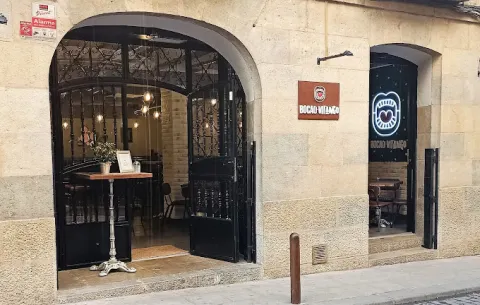
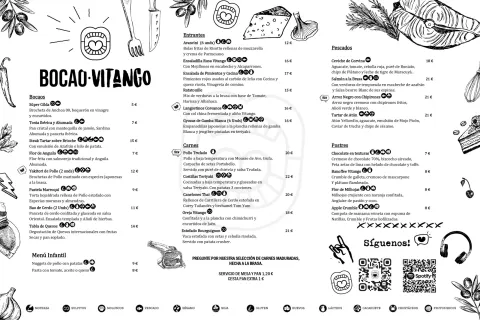
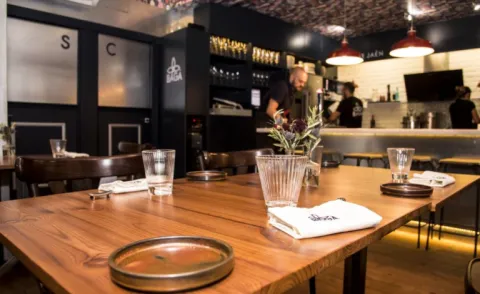
Bocao Vitango

Submitted by brandcode_deweloper on
Id
12781530
Redes sociales
Facebook
https://www.facebook.com/profile.php?id=100027194452961
Instagram
https://www.instagram.com/bocaovitango
Descripción
Descripción larga

Also Bocao Vitango is a trip with a round-trip ticket. A one-way trip for our diners. Intrepid palates, open to explore the most innovative cooking techniques, in market products of the highest quality. A trip back to our team. Accompanying José María Molina (chef) and Noelia Campillo (head of room), on their return to Jaén, after more than 10 years living in places like Mallorca, Dubai or Dublin, and developing their work in Michelín star kitchens.

The result of this trip is a fusion kitchen, in which typically Mediterranean flavors are combined, with exotic notes that move us to the gastronomy of the east.

Breve descripción

In Jaén's popular vocabulary, "vitango" means surprise or wonder that someone or something causes in a person. Hence our name, and the purpose of our project: to rediscover the flavors of our land in a home cuisine, made with mime and high doses of creativity. Bocao Vitango is a lot of things. It's revolution and tradition. It's Jaén and the world.

Información de contacto
Sitio web
www.bocaovitango.es/
Teléfono de contacto
673 522 033
Correo electrónico
bocao.vitango@gmail.com
Ubicación
Código Postal
23001
Latitud
37.768142
Longitud
-3.786785
Dirección
C/ Tablerón, 4
Distrito
Municipio
Ubicación en el mapa
POINT (-3.786785 37.768142)
Tipo de restaurante
Imágenes
imagen
Image
entrada-1-jpg
Imagen principal
Activado
imagen
Image
mantelesmarzo24_page-0001-scaled-jpg
Imagen principal
Desactivado
Horario
Wednesday to Sunday: 12: 00 - 18: 00 and 20: 00 - close.
Microsite al que pertenece
Loading map
Preparing points of interest and routes...
Interés

Bagá Espacio Gastronómico

Submitted by brandcode_deweloper on
Id
789971
Redes sociales
Facebook
https://www.facebook.com/BagaJaen/
Twitter
https://twitter.com/baga_jaen?lang=es
Instagram
https://www.instagram.com/bagajaen/
Descripción
Breve descripción

Discover something new on each visit Pedro Sánchez loves his land above all else and always wanted to put Jaén and his kitchen on the national gastronomic map, something he has achieved with effort and affection. Today, in his new and risky project, he continues to work hard to demonstrate everything a cook is able to give when he works in the space he has always dreamed of. Bagá is today the dream of a humble cook made a reality.

Información de contacto
Sitio web
www.bagagastronomico.com/
Teléfono de contacto
953 047 450
Correo electrónico
info@bagagastronomico.com
Ubicación
Código Postal
23001
Latitud
37.766850
Longitud
-3.786240
Dirección
C/ Reja de la Capilla, 3
Distrito
Municipio
Ubicación en el mapa
POINT (-3.78624 37.76685)
Tipo de restaurante
Imágenes
imagen
Image
f3b735e3300faff0e348331a5413d4d3_5_xl-jpg
Imagen principal
Activado
imagen
Image
f3b735e3300faff0e348331a5413d4d3_2_XL.jpg
Imagen principal
Desactivado
imagen
Image
baga-espacio%20%281%29.png
Imagen principal
Desactivado
imagen
Image
vinos%20%281%29.png
Imagen principal
Desactivado
imagen
Image
plato3%20%281%29.png
Imagen principal
Desactivado
imagen
Image
plato2%20%281%29.png
Imagen principal
Desactivado
imagen
Image
baga.png
Imagen principal
Desactivado
imagen
Image
rest.png
Imagen principal
Desactivado
imagen
Image
bagga.png
Imagen principal
Desactivado
Capacidad
15
Horario
Monday's closed. Tuesday to Saturday: 13: 30 - 15: 30 and 20: 30 - 23: 00. Sunday: 13: 30 - 15: 30.
Marcas de calidad
Loading map
Preparing points of interest and routes...

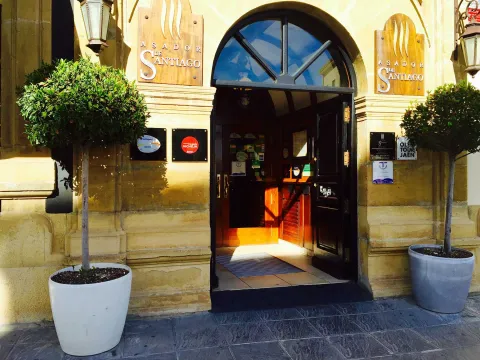
Asador / Grill de Santiago

Submitted by brandcode_deweloper on
Id
926367
Redes sociales
Facebook
https://www.facebook.com/AsadorDeSantiago
Twitter
https://twitter.com/asador_santiago?lang=es
Descripción
Breve descripción

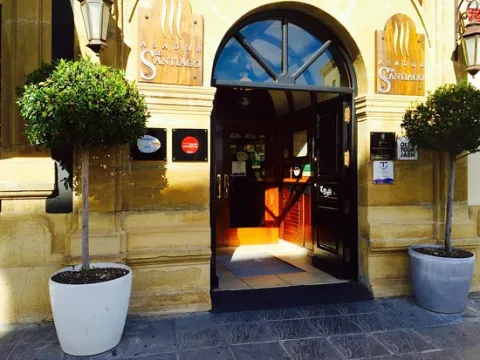
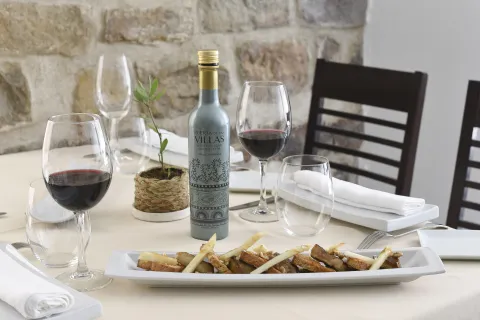
Located next to the historic Hospital of Santiago de Ubeda, it offers a creative and market cuisine with excellent raw materials and a careful olive oil production as a main ingredient.

Información de contacto
Sitio web
www.asadordesantiago.com
Correo electrónico
info@asadordesantiago.com
Ubicación
Código Postal
23200
Latitud
38.011710
Longitud
-3.377350
Dirección
Av. Cristo Rey, 4
Municipio
Ubicación en el mapa
POINT (-3.37735 38.01171)
Tipo de restaurante
Imágenes
imagen
Image
entrada-asador-de-santiago.jpg
Imagen principal
Activado
imagen
Image
2%20%281%29.jpg
Imagen principal
Desactivado
imagen
Image
5%20%282%29.jpg
Imagen principal
Desactivado
imagen
Image
1%20%281%29.jpg
Imagen principal
Desactivado
imagen
Image
5%20%283%29.jpg
Imagen principal
Desactivado
imagen
Image
9%20%282%29.jpg
Imagen principal
Desactivado
imagen
Image
7%20%281%29.jpg
Imagen principal
Desactivado
imagen
Image
3%20%282%29.jpg
Imagen principal
Desactivado
imagen
Image
10.jpg
Imagen principal
Desactivado
Tipo de cocina
Horario
Lunch: 13: 30 - 16: 00 (daily). Dinner: 20: 30 - 00: 00 (every day except Sunday).
Loading map
Preparing points of interest and routes...

Antique restaurante y tapas

Submitted by brandcode_deweloper on
Id
925353
Redes sociales
Facebook
http://www.facebook.com/pages/Restaurante-Almocaden/158059470932699
Twitter
https://twitter.com/antiqueubeda
Descripción
Descripción larga

Services:

  • American Express, Mastercard, Credit Card
  • You can book the restaurant for a private event (54 people maximum)
  • Access to PMR, Air Conditioning, Parking, English Spoken, Beautiful Winery, Privatizable, Wifi
Breve descripción

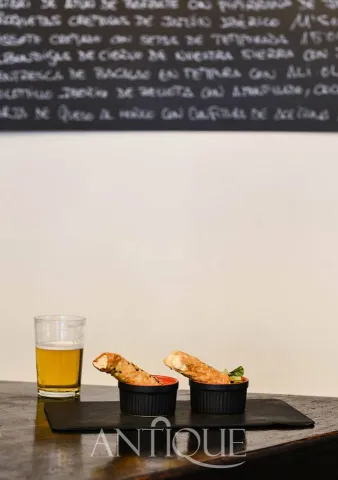
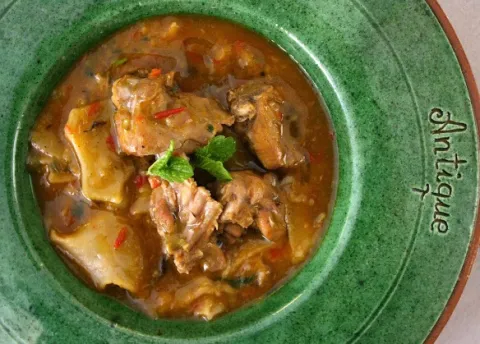
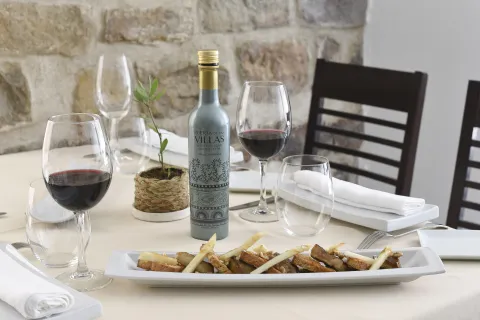
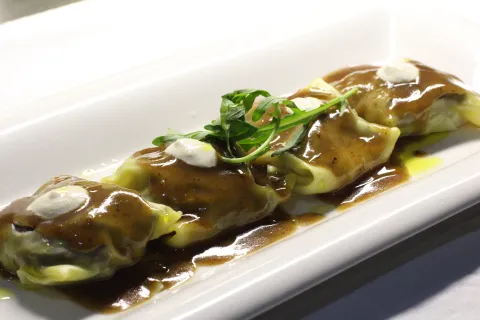
Degustar the Jaén oils to "open up" before lunch, is a recommended experience in this establishment. In ANTIQUE restaurant and tapas, it is placed in one of the most transit streets of visitors of the city. Tradition, innovation and quality are merged into it to offer a succulent card, in which the dishes with extra olive oil take a prominent place.

In the same way, it happens in the offer that this establishment has for the "tapeo," that unique aspect of the jiennese gastronomy that allows the guest a varied and complete tasting of the kitchen through appetizers, in a more informal way. His involvement in culinary research leads him to be present at the Gastronomical Days of the Renaissance that take place in Ubeda on an annual basis.

Información de contacto
Sitio web
www.restauranteantique.es
Teléfono de contacto
953 757 618
Correo electrónico
restauranteantique@gmail.com
Ubicación
Código Postal
23400
Latitud
38.010490
Longitud
-3.370150
Dirección
C/ Real, 25
Municipio
Ubicación en el mapa
POINT (-3.37015 38.01049)
Tipo de restaurante
Imágenes
imagen
Image
TRADICION%20%281%29.jpg
Imagen principal
Activado
imagen
Image
AIRBAG%20DE%20CECINA%20%281%29.jpg
Imagen principal
Desactivado
imagen
Image
TAPEAR.jpg
Imagen principal
Desactivado
imagen
Image
wok%20de%20lagarto%20ib%C3%A9rico%20%282%29.jpg
Imagen principal
Desactivado
imagen
Image
andrajos%20de%20%C3%9Abeda%20con%20Conejo%20%281%29.jpg
Imagen principal
Desactivado
imagen
Image
atun%20aove%20uno-1%20%281%29.jpg
Imagen principal
Desactivado
imagen
Image
HUEVOS%20ROTOS.jpg
Imagen principal
Desactivado
imagen
Image
TRADICION.jpg
Imagen principal
Desactivado
imagen
Image
wok%20de%20lagarto%20ib%C3%A9rico.jpg
Imagen principal
Desactivado
imagen
Image
raviolis%20de%20rabo%20de%20toro.JPG
Imagen principal
Desactivado
imagen
Image
lingote%20de%20chocolate%20y%20pistacho.jpg
Imagen principal
Desactivado
imagen
Image
flan%20de%20picual%2C%20con%20salsa%20de%20royal%20y%20helado%20de%20coco.jpg
Imagen principal
Desactivado
imagen
Image
tarta%20de%20queso%20al%20horno.jpg
Imagen principal
Desactivado
Capacidad
55
Número de tenedores
3
Horario
Food: 13: 00 - 16: 00. Dinner: 20: 00 - 23: 30.
Marcas de calidad
Loading map
Preparing points of interest and routes...

Parador de Jaén (Castillo de Santa Catalina)

Submitted by brandcode_deweloper on
Id
2162972
Redes sociales
Facebook
www.facebook.com/paradores/?__tn__=%2Cd%2CP-R&eid=ARAOyP_lLeddHLccu_ZPqv13pKVITRnT0DPz2dmWCWk4mlpsfU9H1mIaYv8CePtQoKQ9iuOZoXMo3t9a
Instagram
www.instagram.com/paradores/?hl=es
Descripción
Breve descripción

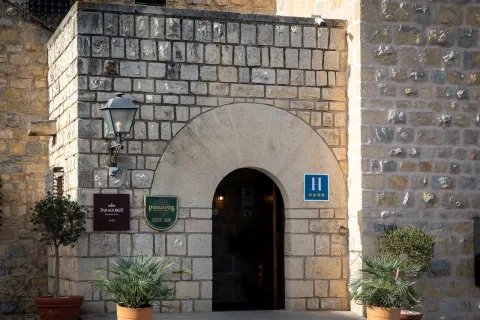
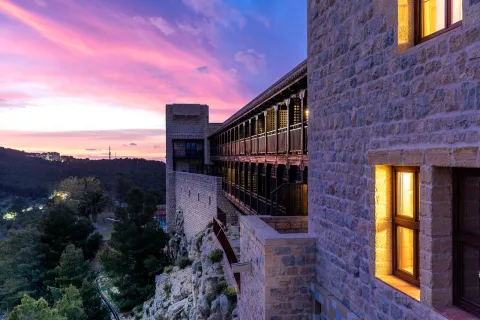
Magnificent National Parador located ten minutes from the center of the Jiennense capital, on the hill of Santa Catalina and next to a Muslim alcazar that was conquered by Fernando III the Holy in 1246.

Información de contacto
Teléfono
953 230 000
Sitio web
www.parador.es
Correo electrónico
recepcion.jaen@parador.es
Ubicación
Código Postal
23002
Latitud
37.767802
Longitud
-3.799783
Dirección
Cerro Santa Catalina, s/n
Distrito
Municipio
Ubicación en el mapa
POINT (-3.799783 37.767802)
Tipo de alojamiento
Imágenes
imagen
Image
1.jpg
Imagen principal
Activado
imagen
Image
11.jpg
Imagen principal
Desactivado
imagen
Image
10.jpg
Imagen principal
Desactivado
imagen
Image
9.jpg
Imagen principal
Desactivado
imagen
Image
8.jpg
Imagen principal
Desactivado
imagen
Image
7%20%281%29.jpg
Imagen principal
Desactivado
imagen
Image
6.jpg
Imagen principal
Desactivado
imagen
Image
5.jpg
Imagen principal
Desactivado
imagen
Image
4.jpg
Imagen principal
Desactivado
imagen
Image
3.jpg
Imagen principal
Desactivado
imagen
Image
2.jpg
Imagen principal
Desactivado
imagen
Image
12.jpg
Imagen principal
Desactivado
Aforo
96
Horario
24 h
Precio por noche
80.00
Idiomas
Las habitaciones

45 double (6 triple)

Qué ofrece

Come and taste the delights of the Jienese garden, the best olive oil and the traditional taste of our typical dishes. Discover also the unmistakable freshness of gazpachos and the popular piirranas, made with garlic, tomato, onion, cucumber, olive oil and apple.

The spoon dishes are common at our table: we prepare the popular white garlic, a soup made with garlic, oil, almonds and bread, to make the delights of your palate. Don't miss hunting recipes like the perdiz terrine, or the Baños-style deer.

In our confectionery you will perceive the Morisque influence by discovering ingredients such as nuts, almonds or olive oil in exquisite convent sweets, pebbles or biscuits. We prepared a gastronomic offer to surprise you. Come meet her.

Otros servicios

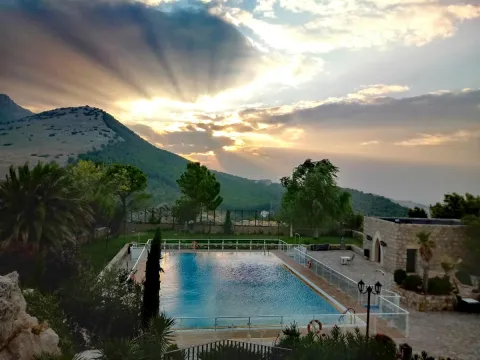
seasonal outdoor pool

Número de estrellas
4
Loading map
Preparing points of interest and routes...
El Hotel

The Parador de Jaén crown the city from the summit of the Cerro de Santa Catalina. His emblematic figure dominates the horizon so that when you approach Jaén he will always be the first to welcome you.

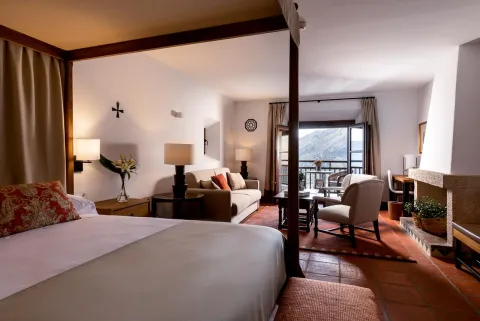
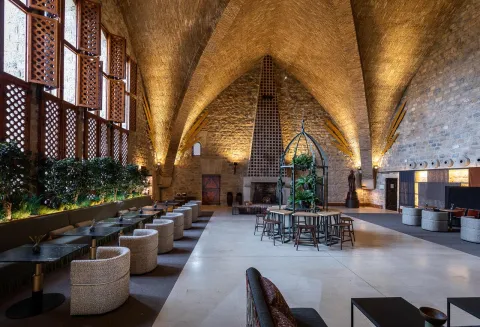
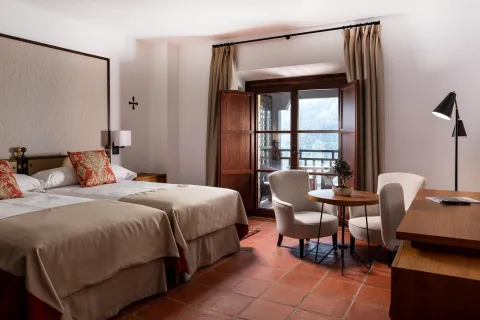
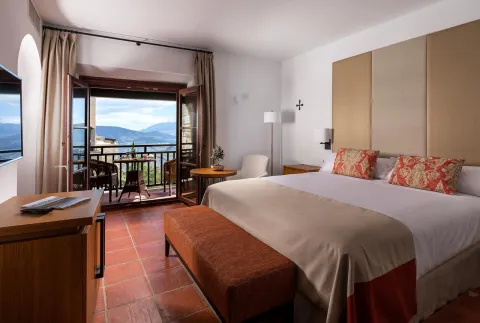
The hotel is the origin and destination to discover all the charm of the Andalusian Renaissance, the monumental aspect of its interior is maintained in the impressive cross arches 20 meters high in the main living room, the dining room and the rooms with stunning panoramic views of the city. The Old Quarter of Jaén retains the vestiges of what was a spectacular city.

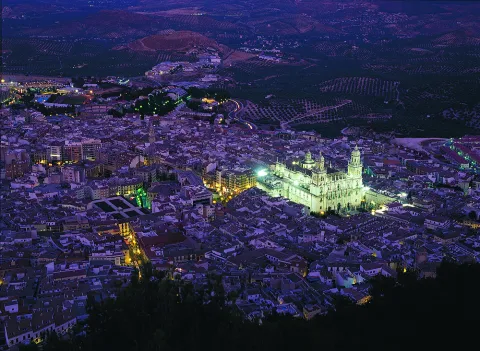
The Cathedral of Our Lady of the Assumption, the Arab Baths, the largest and most important in Europe, and the Provincial Museum of Fine Arts or the Arc of San Lorenzo, recently declared National Monument, are some of those places worth visiting. A visit to the city's surroundings is a good option to discover the Serras de Cazorla, and the Sierra del Segura, with its exceptional Natural Parks and Reservations. The olive fields and the Guadalquivir River, which crosses these lands, add a special attraction to a place where the characteristic light of Andalusia is still present.

Santa Catalina Castle

Submitted by brandcode_deweloper on
Id
321305
Descripción
Descripción larga
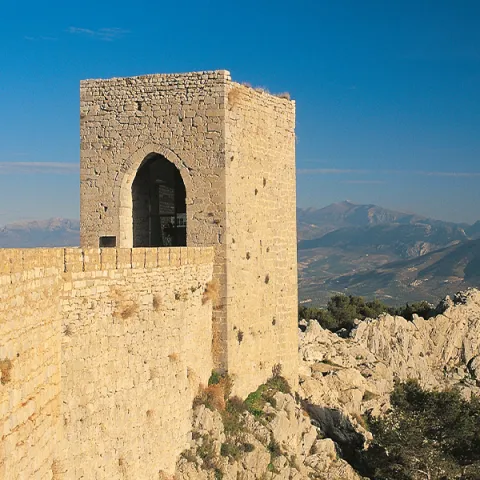
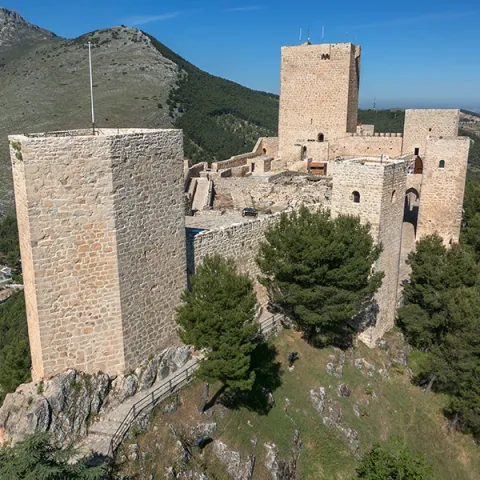
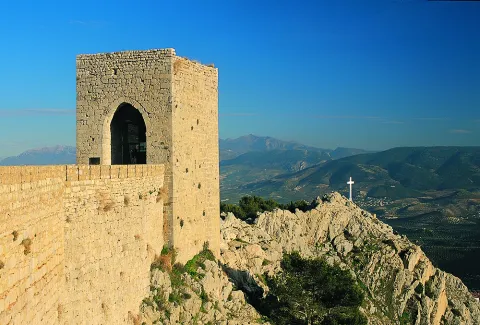
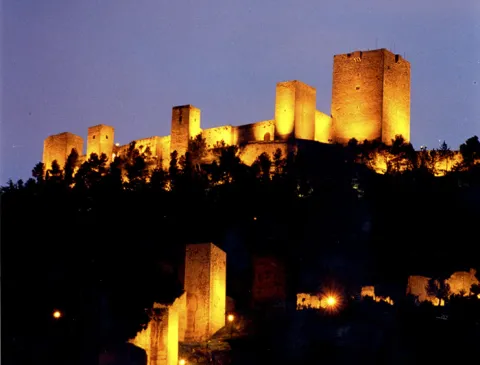
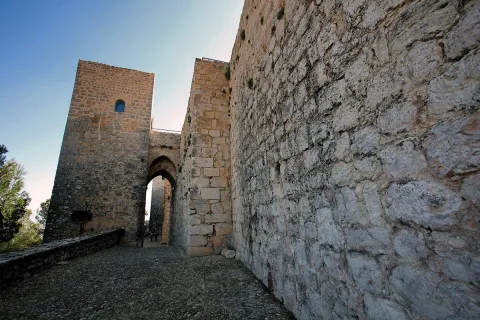
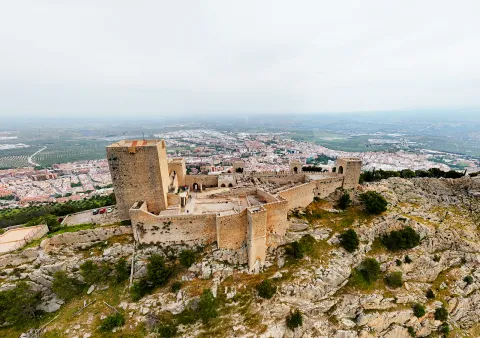
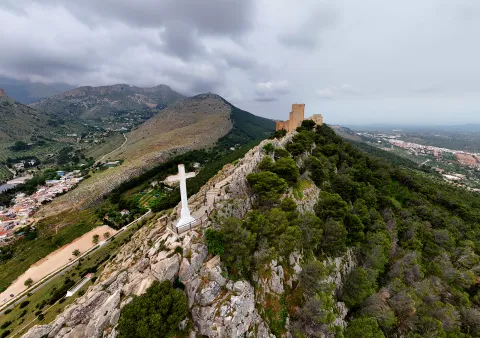
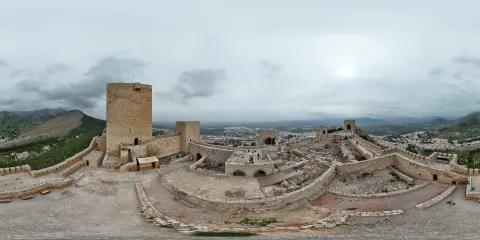
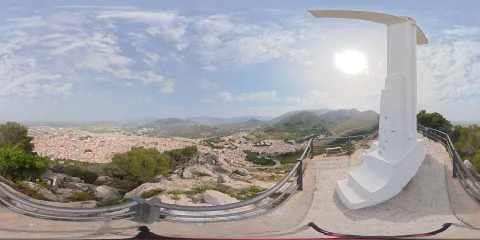
After the Muslim conquest, between the 8th and 9th centuries, a walled complex was built structured in two spaces: a large enclosure or fortress at the summit and the fortress itself, on the northern slope, which takes advantage of the remains of the Roman wall. The citadel was a large defensive-residential enclosure, in which a rectangular building with a porticoed patio has been documented, which could have been the residence of the first governors of the city during the Emiral-Califal era. The transfer of the capital from the Kura to Jayyān in the 9th century led to a strong development of the city, restoring the existing fortification structures, while new walls and towers were built. The changing political situation in al-Andalus between the 11th and 13th centuries caused an intense reform of the walls, which culminated in the transformation of the summit fortress into a large and complex fortress. Thus, a large fortified complex structured in two enclosures is configured: at the west end, a first enclosure is erected in mortar mud, with an irregular floor plan, known as Castillo de Abrehuí; To the east is the main enclosure, known as Alcázar Viejo, which was accessed through a gate protected by two parallel towers. At the same time, a new political-administrative space was built in the eastern area of ​​the Alcázar Viejo, a palace of which archaeological investigations have managed to recover various vestiges, as well as determine how its distribution was, differentiating the lower and upper rooms, in which the palace was located, adorned with a profuse and luxurious decoration of plasterwork and ornate plinths that covered its walls (part of which are exhibited in the Museo Provincial de Jaén). The conquest of Jaén in 1246 determined an important alteration of the urban fabric of the city, and its defensive structures. The rammed earth walls and towers are covered with masonry linings. The old Islamic fortification on the summit maintained its old layout, except for the construction, between the 13th and 14th-15th centuries, of a new fortress that would occupy its eastern end, called Alcázar Nuevo. Its external perimeter is delimited by a walled enclosure that incorporates 6 towers, built in masonry. The towers are square in plan, except for the easternmost one (Sailing or Guard Tower) which has a pentagonal shape at the bow, by embedding an ancient Islamic tower inside. All of them are connected to each other by crenellated walkways. The Homenaje is divided into three rooms. The first, covered with four brick vaults that converge into a single central pillar and lacks exterior lighting, would have a storage function. The second is covered by a spherical brick vault supported at each corner by a stone column. The third floor has a polygonal brick vault and would have a residential function. In the archaeological excavations, decorated plasters also appeared, dated between the 14th and 15th centuries, which would cover the walls of the Santa Catalina chapel, perhaps introduced after the reforms carried out by Constable D. Miguel Lucas de Iranzo. To the east of the castle gate, on the north side of the enclosure, there are two albarran towers, the westernmost one, solid at the bottom and with an outbuilding at the top, houses the Capilla de Santa Catalina, patron saint of the city. The eastern one, much restored, would have a military function, lacking dependency, so it would form a solid cube crowned by a crenellated roof. On the south side there is a gate or postern next to Torre de las Troneras, which houses some latrines. Within the walls there were rooms and elements for the internal functioning of the castle: cisterns, a grinding area and other rooms. In the third quarter of the 15th century, during the civil war that took place during the reign of Enrique IV, Constable Miguel Lucas de Iranzo once again reinforced the city's defenses, providing the walls with a rampart and a moat, demolishing part of the walkways and blocking off some towers of the North wall, accentuating the city's contestability against the enemies of the Castilian monarch. Between the 16th and 18th centuries, remodeling took place in some rooms of the Alcázar Nuevo, which changed their function, new ones were built and the postern in the southern sector was blinded. At the beginning of the 19th century, the war of independence caused important changes in the structure of this fortress, despite which the external appearance of the medieval fortification is maintained. The renovations, which caused the destruction of structures and outbuildings, include the repair of walls, the cancellation of gates, the construction of new defensive structures, and the erection of large buildings for various uses, stables, barracks, hospital, guard posts, magazines, etc., of which there are hardly any remains today, as a consequence of the construction of the Parador de Turismo between 1963 - 1978 and the execution of various restoration works carried out in the 80s. The Santa Catalina hill has been populated since the Copper Age, although the oldest documented structures belong to an Iberian oppidum, dated around the 9th century BC, and identified as Oringis. Between the 2nd and 1st centuries BC. The Romans transformed it into a new fortified settlement with a polygonal plan. The constitution of the Flavio Aurgitano Municipality, at the end of the 1st century AD, caused the rapid urbanization of the space currently occupied by the La Magdalena neighborhood, delimited by a walled enclosure. The abandonment and looting of buildings that formed the Roman forum or the presence of isolated tombs and garbage dumps show the progressive transformation of the city under imperialism between the 3rd and 4th centuries AD, a mutation that would continue in the Visigothic era. After the Islamic conquest, the first news about present-day Jaén (Ŷayyān) dates back to the mid-19th century. IX when the Umayyad emir Abd al-Rahman II converted the city into the new capital of the Cora, erecting the citadel, the seed of the current castillo de Santa Catalina, as well as part of the walls that linked it to the city. At this time, the first palaces were being built, which would end up forming the fortress located in the medina. From the s. XI, and especially during the Almohad period (1169-1246), the city expanded towards the south. There was also the renovation and expansion of the Umayyad and Taifa castle located in the medina itself, equipped with lavishly decorated gardens and palaces, while a residential-administrative area was created in the castle. After the Castilian conquest in 1246, the urban configuration of Jaén must not have experienced major changes until the 14th-15th centuries. Fernando III proceeded to repopulate and distribute it, remaining in the hands of the Council and becoming an episcopal see. The instability of the territory until the conquest of Granada in 1492, and the noble struggles during the reign of Henry IV caused constant repairs to the defensive elements: the Almohad wall was covered with masonry, while the construction of a New Alcázar began at the eastern end of the Cerro de Santa Catalina. For its part, the Almohad fortress located in the epicenter of the city was in the hands of the Castilian crown until 1382 when it became the Santo Domingo convent. At the beginning of the 19th century, during the invasion of Spain by Napoleonic troops, Jaén and its defenses once again played a prominent role, maintaining control of the city in the face of the attack and looting of 1808, before passing into the hands of the French in 1810. The instability prevailing between 1808 and 1814 led to important remodeling of the fortifications of the hill, converting them into a large garrison from which to exercise control of most of the province and the roads to Granada and Córdoba After the end of the war of independence, the defensive structures of the hill and the city remained standing, although suffering a progressive process of deterioration, which became even more accentuated throughout the 20th century, at the end of which various restoration works were carried out. The castillo de Santa Catalina is a symbol for the people of Gienne and Juan Eslava Galán echoes it and continually introduces it in his works, as he does in The Templars and the Table of Solomon. (…) During my stays in Jaén I had gone up to castillo de Santa Catalina several times. After glimpsing the secrets of its builder, Alfonso X, I visited it again with a different spirit (…) The Templars and Solomon's Table. Chapter 18. LEGENDS Legend of the appearance of Santa Catalina. Legend has it that during the siege of Jaén, Santa Catalina de Alejandría appeared to King Ferdinand III in his dreams and showed him the keys to Jaén, taking it as an omen. The next day, the Muslims handed over the fortress to the Christian troops and in gratitude, Fernando III named Santa Catalina patron saint of the city, naming the newly conquered fortress after her. The chamber of statues. In the Old Castle there was a secret room with a tightly closed door, to which each king added a new lock. When he was already 24, a usurper who seized the throne refused to continue the tradition, ordering the ranch to be opened. Inside he found a high relief, made of metal and wood, with fearsome Arab warriors on horseback and an inscription that prophesied "If any hand opens the door of this castle, the flesh warriors who look like the metal warriors will take over the kingdom." Before the year was over, Tarik took the fortress. Legend of the castle cross. Legend says that when King Ferdinand III entered the fortress of Jaén, after conquering the Muslims, one of his captains thrust a sword, as a sign of triumph, into a rocky promontory at the southern end of the hill, from which the lands of Jaén are dominated. The shape created by the blade and the crossbar of the weapon resembled a Christian cross. King Ferdinand III, fascinated, decided that there would always be a large cross at that same point to remember the conquest of the Christian troops. A legend that ended up becoming tradition.
Breve descripción
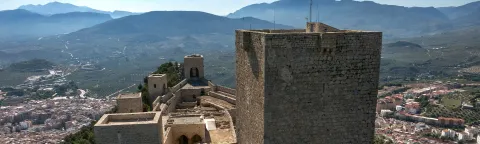
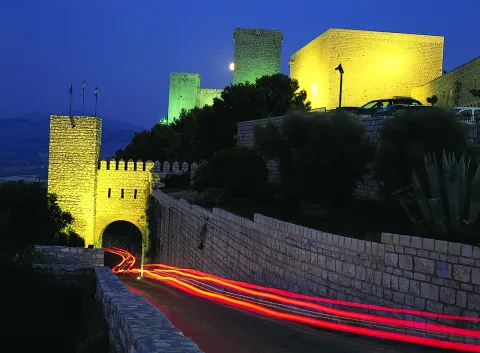
The defensive structures of the city of Jaén, which occupy the summit and southern and northern slopes of the Santa Catalina hill, have experienced a complex historical-architectural evolution. The Muslims erected a fortified complex on the summit and the northern slope of the Cerro de Santa Catalina, at the foot of which the city of Jaén extends, formed by two clearly differentiated enclosures: the castillo de Abrehuí and the Alcázar Viejo, which housed a luxurious palace building. After the Christian conquest in 1246, the Castilians built a final enclosure, the Alcázar Nuevo, which today maintains its original structure: a masonry enclosure with six towers. The preserved sections of wall descend down the slopes of the hill until they surround the ancient city. Although populated since the Copper Age, and occupied in Iberian and Roman times, it was in the Middle Ages when the most important defensive elements were erected. The transfer of the capital of the Chora from La Guardia (Mantisa) to Jaén (Jayyān) by 'Abd al-Rahman II led to the development of the city and its fortifications, which were expanded between the 11th and 12th centuries, while the main mosque, new baths, mosques and palaces were built. During the Christian conquest of the Guadalquivir valley, Jaén resisted several sieges until, in 1246, the king of Granada Ibn al-Ahmar, handed the city over to Ferdinand III. A first-rate border town, it took part in the continuous noble struggles, especially those carried out by Constable D. Miguel Lucas de Iranzo, a supporter of King Enrique IV, against the rebellious nobility. At the beginning of the 19th century, during the War of Independence, Jaén and its defenses once again played a prominent role in the control of the Alto Guadalquivir.

Ubicación
Nombre
Castillo de Santa Catalina
Código Postal
23003
Latitud
37.768384
Longitud
-3.799968
Distrito
Municipio
Ubicación en el mapa
POINT (-3.799968 37.768384)
Tipos de punto de interés
Imágenes carrusel
imagen
Image
Mon310.jpg
Imagen principal
Desactivado
imagen
Image
Castillos_Cacbecera_jaen.jpg
Imagen principal
Desactivado
imagen
Image
castillo santa catalina
Imagen principal
Desactivado
imagen
Image
castillo santa catalina
Imagen principal
Desactivado
imagen
Image
castillo santa catalina
Imagen principal
Desactivado
imagen
Image
castillo santa catalina
Imagen principal
Desactivado
imagen
Image
castillo santa catalina
Imagen principal
Desactivado
imagen
Image
castillo santa catalina
Imagen principal
Desactivado
imagen
Image
castillo santa catalina
Imagen principal
Desactivado
Imágenes cabecera
imagen
Image
CyB_Jaen_01
Imagen principal
Desactivado
imagen
Image
CyB_Jaen_02
Imagen principal
Desactivado
Horario
Winter: Monday to Saturday 10:00 - 18:00 (last access 17:30), Sundays 10:00 - 15:00 (last access 14:30). Free admission Wednesday 3:00 p.m. - 6:00 p.m. Summer: Monday to Saturday 10:00 - 14:00 and 17:00 - 21:00, Sundays 10:00 - 15:00. Free admission Wednesday 5:00 p.m. - 9:00 p.m.
Otros servicios
Parking in the vicinity of the Parador with capacity for buses. Castillo de Santa Catalina Interpretation Center.
Modelo 3D
Experiencia 360
Image
CyB_Jaen_360
Image
CyB_Jaen_360
Loading map
Preparing points of interest and routes...

Arjona Castle

Submitted by brandcode_deweloper on
Id
PUN-0052
Perfil de redes sociales
Descripción
Descripción larga
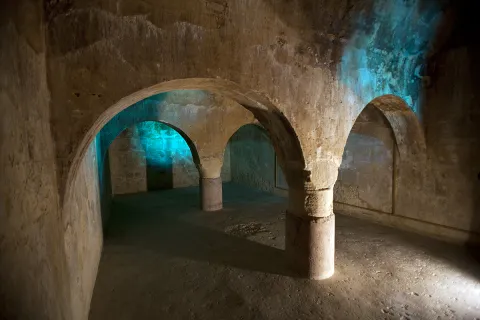
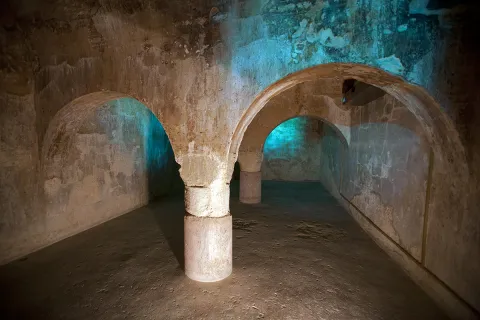
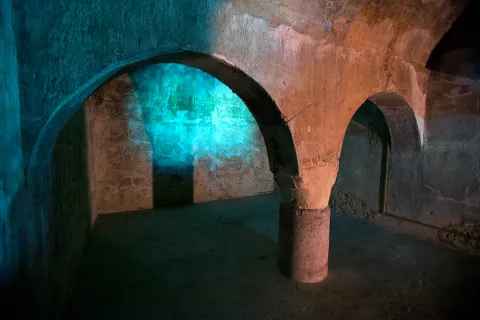
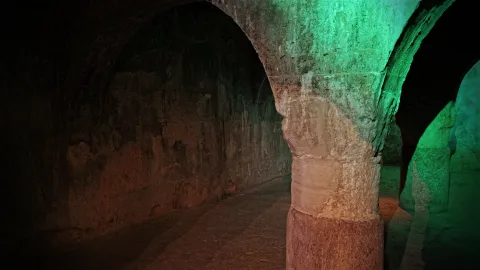
The fortified complex of Arjona, from medieval times, formed a complex and impregnable defensive system, made up of three walled enclosures: a first ring of walls marked by 24 towers that protected the city, an Alcazaba and the Alcázar. It would also have other defensive elements such as a moat, which has been documented to the south of the fortress, and a wall that would create a list or transit area. Seven gates flanked by pairs of towers would open in the walls of Arjona, except for the New Gate, which, in reality, was a gate. Most of these defensive elements were built with irregular masonry, which can be considered ashlar, joined with lime and sand mortar. The current Plaza de Santa María became the Alcazaba during the Middle Ages, located in the highest place in the area. A walled enclosure in which the palatine areas were built that housed the ruling classes and the military establishment. Occupying one end of it was the Alcázar, the political center of the city. The Iglesia de Santa María, which presides over the aforementioned square, is identified with the primitive Aljama mosque, which would be built in front of the Islamic palaces. Next to it, a large medieval cistern is preserved today, possibly Almohad, with a rectangular floor plan and covered with 3 barrel vaults supported by semicircular arches, which rest on Roman columns, some with inscriptions. Currently, some vestiges of its defenses remain standing, scattered among the hamlet, towers and canvases embedded in the backs of the houses, serving as party walls for homes located on the streets of Reloj, Belén, Sol, etc. In addition, there are fragments of the Alcazaba wall on the Paseo de los Mártires, acting as its retaining wall. Testimonies of canvases embedded in the party walls that separate Hospital de San Miguel and Alcázar Street are also preserved. The city of Arjona occupies the summit and upper slopes of a level hill, from which it dominates a large territory and the communication routes between the Guadalquivir valley and the Campiña. Due to its strategic value, it has been occupied from Prehistory to the present day.  A settlement from the Copper and Bronze Ages was located in the space now occupied by the Plaza de Santa María. Its occupation continued during the Iberian period, with the establishment of a medium-sized oppidum protected by a solid walled enclosure reinforced with bastions and towers, which would exceed the space of the current plaza. With the arrival of the Romans, the settlement became the municipium of Urgavo, one of the most important municipalities on a political level since the Augustan period and one of the first to achieve full Roman citizenship. Arjona will continue to be in the power of Rome until 412 AD, later, during the Visigothic period, the area of ​​occupation would be reduced to the highest area of ​​the hill. After the Muslim conquest, the Banu Bayla lineage settled in current Arjona, which will be known as Qal'at Aryununa. At this time the walls were reinforced and the citadel was built, occupying what was the Iberian oppidum. Arjona became the head of one of the main administrative districts (Iqlim) in which the Kura of Yayyan was structured, on which the existing rural settlements in its area of ​​influence would depend. At the end of the 9th century, the emir Abd Allah ordered Arjona and Andújar to be fortified, in order to concentrate the surrounding peasant population in these towns. The city of Arjona would be consolidated, like other towns in the Guadalquivir Valley, between the 11th and 13th centuries, as a consequence of the unstable political situation in al-Andalus after the disintegration of the Umayyad Caliphate, and due to the pressure of the Christian armies. During this period, the greatest development of the city took place, which resulted in a reinforcement of its defenses and the configuration of its medieval urban planning framework. In 1232 Muhammad ibn Yusuf ibn Nasr ibn al-Ahmar (Alhamar), originally from Arjona, proclaimed himself sultan in Jaén and six years later he founded a new kingdom with its capital in Granada. In 1244, Nuño González besieged Arjona and the Muslim authorities agreed to surrender, handing over the city without resistance. It became part of the royal lands, becoming one of the great councils of Villa y Tierra in which the kingdom of Jaén was structured. In the year 1248 it was granted the title of Villa by King Sancho. In compensation for the support provided, the city became part of the lordship of the Constable of Castile, Ruy López Dávalos, later becoming part of the possessions of D. Álvaro de Luna, who finally exchanged it to the Order of Calatrava for other possessions, which made it head of the Order's Encomienda. The disappearance of the Castilian-Nasrid border left a good part of the structures that made up the Arjona walled fence obsolete. After a restoration and musealization carried out in 2008, with sound and visual effects that imitate the sound and movement of water, it has become a tourist reference in the town. El Aljibe is part of the Route of the Castles and Battles of Jaén. Juan Eslava Galán uses the Aljibe Almohad to, once again, offer religious symbolism in his novel and remember his Iberian past. (…) On the ground, a few meters from the Baphomet, there was an iron trap. This must be the access to the Almohad cistern that the secretary of the town hall told us about -Pío deduced. "To the cistern and the spring," said Íñiguez. A spring in a high place sacralized a place in the religion of the Iberians. And here the Calatravos came to install the church and the Bafomet. (…) LEGENDS The victor's mare. Al-lushi had an excellent mare, which became so well known among the Christians of the neighboring regions that the Castilian king wanted to buy her at any price. But its owner was so in love with it that he denied it to her. For three nights he heard a voice in his dreams that told him: "Go to Arjona and take the mare with you; ask for one they call Mohammed-ben-Yusuf and as soon as you find him, sell her to him, because with her he will conquer Jaén and other cities and this conquest will be very beneficial for future generations." They told him that it must be Alhamar, so he left for Arjona. In the castle mosque he revealed his dream and they agreed on a price for the animal. A year later, Alhamar took the royal title in his hometown, Arjona, he took over the city of Jaén and later Córdoba, Seville, Granada, Málaga, Almería and many others, being the founder of the Nasrid dynasty and kingdom.
Breve descripción
The fortified complex of Arjona, from the medieval period, was a large complex composed of a citadel, a fortress and a large exterior walled enclosure dotted with towers. Although hardly any structures of the fortress have been preserved, it is worth highlighting the presence of vestiges of its defenses, towers and canvases, scattered among the hamlet, as well as the Almohad cistern, with columns from the Roman period, which can be visited next to the church. On site no. 22 of the Calle Sol, the rehabilitation of part of the wall canvas, and an attached tower, has allowed the creation of a small space for interpretation of the walls of Arjona. In the Plaza de Santa María, the highest area of ​​the town, settlements have occurred from Prehistory to the present day. It was originally a town from the Copper and Bronze Ages and then an Iberian oppidum that ended up becoming the Roman Urgavo municipium. After a sharp decrease in the population in the Visigoth era, the Muslim occupation brought with it a great development of the city, now called Qal'at Aryununa, head of one of the main administrative districts of the Cora de Jaén. Once conquered by the Christian armies, it was converted into the head of one of the great councils of Villa y Tierra of the kingdom of Jaén and head of the Commandery of the Order of Calatrava.
Telecomunicaciones
Sitio web
www.arjona.es
Teléfono de contacto
953 523 325
Correo electrónico
ayuntamiento@arjona.es
Ubicación
Código Postal
23760
Latitud
37.935619
Longitud
-4.054395
Dirección
Arjona, Jaén
Distrito
Google Maps Url
https://www.google.es/maps/dir//23760,%20Arjona,%20Ja%C3%A9n,+23760+Arjona/@37.93705,-4.06132
Municipio
Ubicación en el mapa
POINT (-4.054395 37.935619)
Tipos de punto de interés
Imágenes carrusel
imagen
Image
castillo arjona
Imagen principal
Activado
imagen
Image
castillo arjona
Imagen principal
Desactivado
imagen
Image
castillo arjona
Imagen principal
Desactivado
imagen
Image
desarrollo-tenflowers_arjona_img_3190-copia.jpg
Imagen principal
Desactivado
imagen
Image
CyB_Arjona_03
Imagen principal
Desactivado
Imágenes cabecera
imagen
Image
castillo arjona
Imagen principal
Desactivado
Horario
Prior appointment.
Otros servicios
Thematic guided tours (historical, legends, nocturnal, dramatized with costumed actors), dramatized visits with recreation of specific episodes, battlements and walkways routes, visits to areas usually closed.
Modelo 3D
Experiencia 360
Image
CyB_Arjona
Image
CyB_Arjona
Loading map
Preparing points of interest and routes...