Las Luminarias
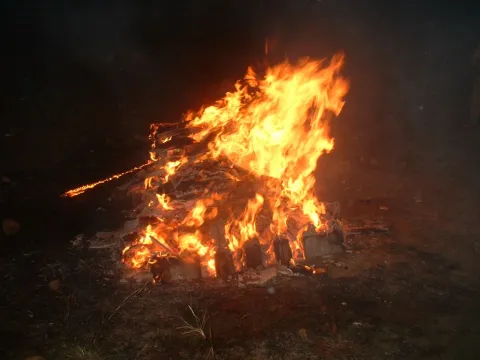
The festive calendar of Arroyo del Ojanco begins with San Antón, on 17 January, on the eve of which the luminarias (bonfires) are lit in the streets.
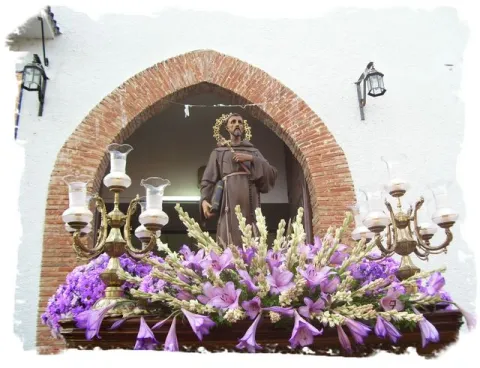
When October comes around, Arroyo del Ojanco holds a much-loved festival, eagerly anticipated and admired by all residents: the Festivities in Honour of Our Patron Saint, San Francisco de Asís, held from 2 to 5 October. The programme for these festivities is extensive and highly varied, ranging from street parades, children's entertainment, open-air dances, variety shows and dance group performances, to sporting competitions and much more.
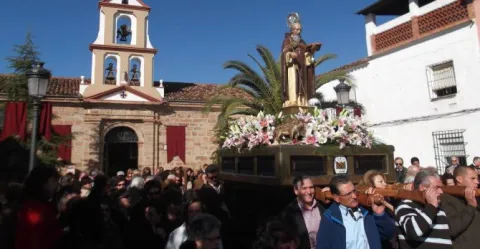
The main day of the festivities is 4 October, with a Mass and procession carrying the image of San Francisco through the town's streets.
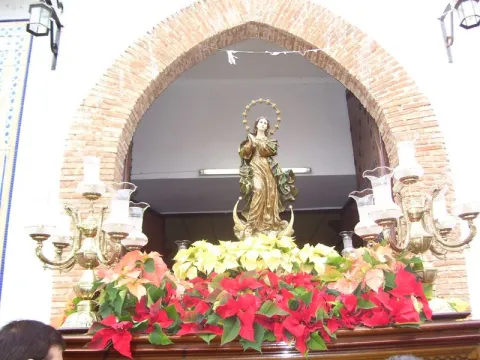
8 December is also the feast day of our Patron Saint, the Immaculate Conception, the title under which the parish church of Arroyo is dedicated.
As a brief note, on 6 July 2008 the Honorary Grant was made to the Patron Saints of Arroyo del Ojanco. Our Patron Saint, San Francisco de Asís, was presented with the Keys of the town, and our Patroness, the Immaculate Conception, was presented with the Staff of Perpetual Mayoress.
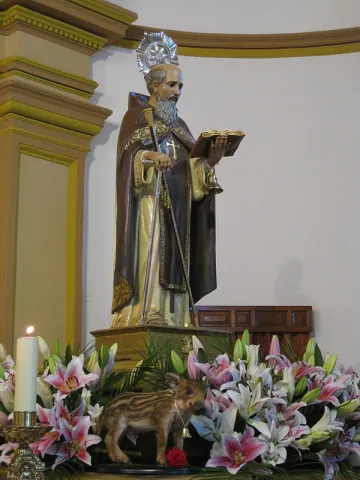
16 January marks the start of the Feast of San Antón, the main festivities in honour of Arquillos's patron saint. These are hugely important festivities for the people of Arquillos, given their devotion to the Saint. This day sees the opening address of the festivities.
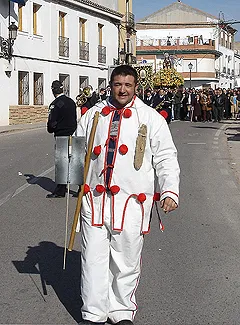
Afterwards, the last day of the Novena is celebrated, and at its close, the traditional bonfires of San Antón are lit in the Plaza de la Fuente. This Feast of San Antón features the distinctive character of "El Pelotero", one of the gems of the province's folklore, who, dressed in a comic costume, whips young and old alike with a lash that has an espadrille tied to the end of its cord.
This curious character is played by someone with a vow to fulfil, and his costume is repaired and kept throughout the year by the family of María Momblanc, a descendant of the settler Vicente Momblanc, who moved from the Alicante town of Catamarruch to settle in Arquillos with his family in the 18th century. "El Pelotero" is a mocking depiction of the devil, and his presence at the festival recalls the temptations San Antón faced in the desert.
The second patron saint festival is that of the Immaculate Conception, held on the 7th, 8th and 9th; this festival dates back to the time of Charles III. It is celebrated in a hamlet belonging to Arquillos, 5 km from the town, called El Porrosillo, home to around 200 people. For these festivities, the people of Arquillos travel to El Porrosillo, where everyone celebrates the patron saint together; likewise, for San Antón, the people of El Porrosillo travel to Arquillos for its celebration.
18 January is San Antonillo's day, as it is known in Arquillos. This is the final day of the patron saint festivities. The day begins with a Solemn Mass and procession, though along a shorter route than the procession on the 17th; after the procession, all the animals brought down to the church by the people of Arquillos are blessed.
This is followed by the traditional paella at the fairground for all the townspeople, and in the evening the festival continues depending on the programme, with its purpose being to "punish" those attending with the espadrille tied to the end of his rustic whip, while food and drink are enjoyed at everyone's expense.
On 16 January, the festivities of San Antón begin in Arquillos in honour of its patron saint. These festivities feature a distinctive character: "El Pelotero", one of the gems of the province's folklore. This character, dressed in a comic costume, whips young and old alike with a lash that has an espadrille tied to the end of its cord. "El Pelotero" is a mocking depiction of the devil, and his presence recalls the temptations San Antón faced in the desert.
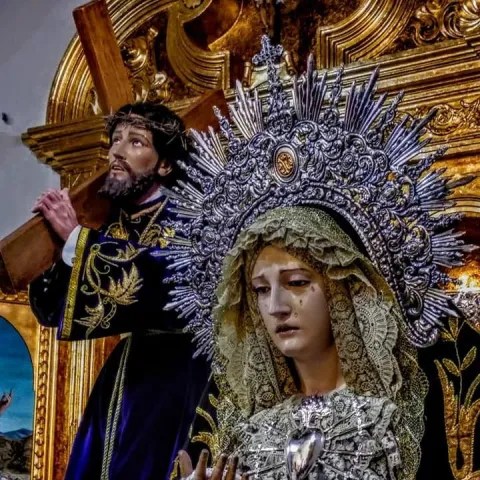
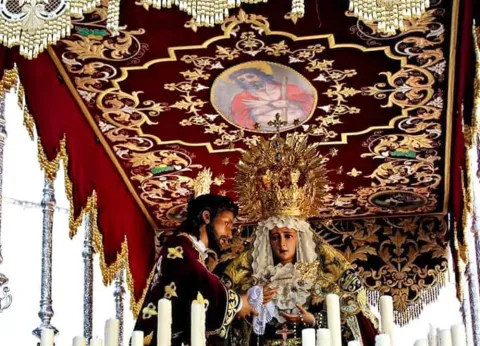
Death and resurrection of Christ. Highly striking Holy Week processional floats, with several standout events. Palm Sunday, featuring a display of palm fronds made by local people. Good Friday, the act of taking Christ down from the cross and the procession of the Santo Entierro, along with opening addresses. The "madrugá" opening address is also worth noting, famous for its horns.
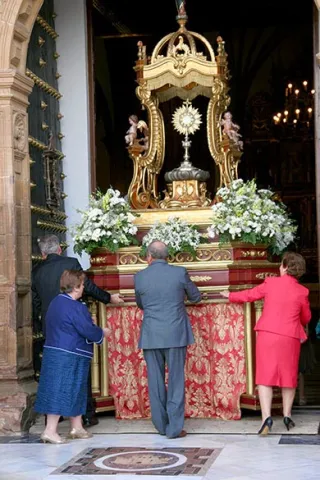
The Corpus procession passes through some of the town's streets, decorated for the occasion. Of particular note is the night before, when people often stroll around to see all the altars that have been set up.
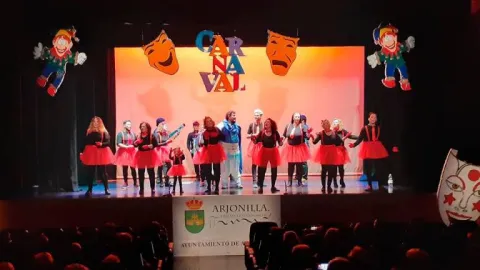
Official opening address, gathering of carnival troupes and comic groups, burial of the sardine, and Piñata Sunday.