Andalusia Day
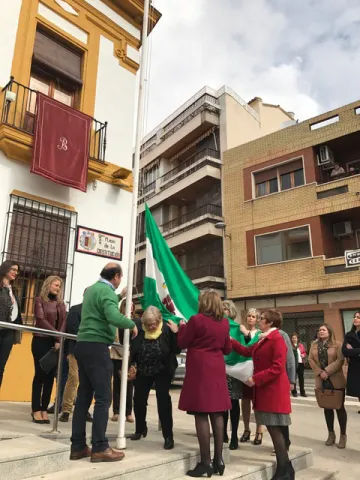
As throughout Andalusia, numerous events are held in Bailén to mark the day of the Autonomous Community, including the flag-raising ceremony to the strains of the Anthem of Andalusia.
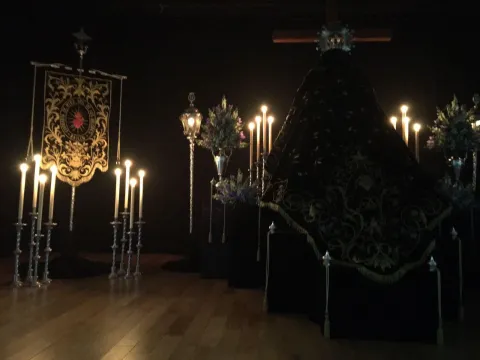
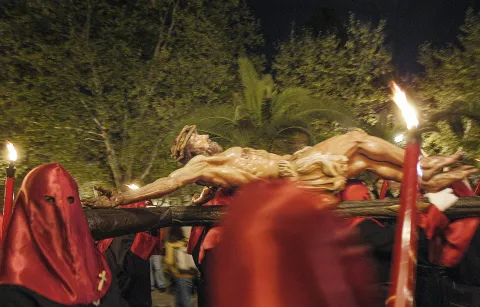
The Holy Week brotherhoods of Bailén — “Nuestro Padre Jesús Nazareno”, “Jesús a su Entrada Triunfal a Jerusalén” (or “La Mulica”), “San Juan Evangelista”, “Santa Vera Cruz” and “Virgen de los Dolores y Cristo del Buen Morir”, carry their images in procession during the Week of the Passion, Death and Resurrection of Jesus.
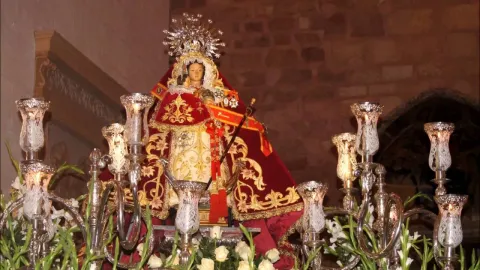
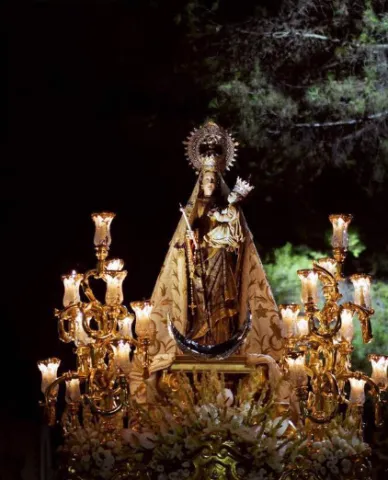
In this Pilgrimage, the people of Bailén accompany Nuestra Señora de Zocueca, “Patron Saint of Bailén”, to the Sanctuary of El Rumblar. What makes this pilgrimage unique is that it is held outside the municipal district of Bailén, so that on arriving at the area known as “El Ventorrillo”, the Mayor of Guarromán, the town to which this hamlet belongs, hands the ceremonial staff to the Mayor of Bailén, as a sign of the good relationship between the two towns. For the duration of the Pilgrimage, the Mayor of Bailén also acts as Mayor of Zocueca. The origins of the pilgrimage date back to the late 19th century, when the market gardeners of the San Vicente gardens, in El Rumblar, held a sung Mass for many years to give thanks to Nuestra Señora de Zocueca for having spared them, in 1851, from a locust plague devastating neighbouring fields. That same plague, and the same protection, led the market gardeners, from 1922 onwards, to vow to hold and fund a Pilgrimage of thanksgiving on the last Sunday of September every year.
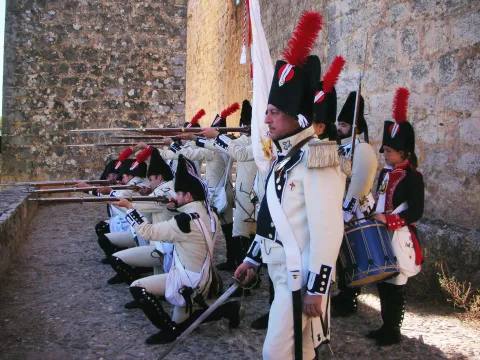
Bailén travels back to the Napoleonic era to re-enact the most iconic battle of the Peninsular War. A period encampment, guided tours, re-enactment groups taking part in skirmishes, parades, exhibitions, fun workshops and a period market are among the activities that make up this celebration, one of the most firmly established events in the Historia y Aventura en Jaén Paraíso Interior programme, held as part of the Route of the Castles and Battles.
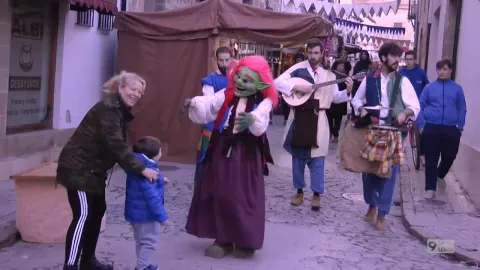
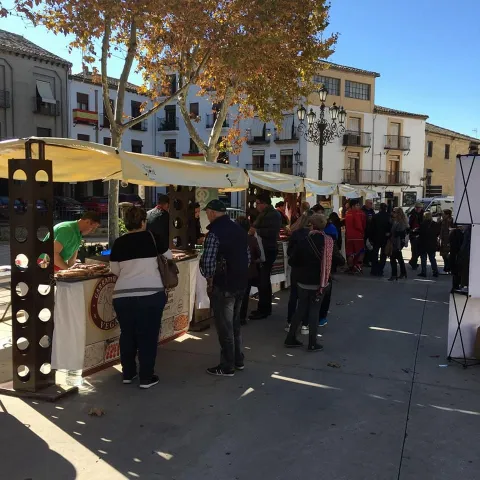
The Reales Fiestas del Concejo de Baeza, in honour of San Andrés, are held in November. These medieval festivities transform the appearance of the city, with a medieval market, various cultural, religious and festive events, street theatre, minstrel performances, music and dance shows, and much more.
Baeza holds festivities in honour of its patron saint during the second week of August. The Virgen del Alcázar, venerated by the people of Baeza since 1147, was given this name because her image was found near the fortress, and together with San Andrés, she is co-patron of the city. The city, declared a World Heritage Site, holds a wide variety of events to pay tribute to the one who, since 1941, has also been Baeza's honorary mayoress. Competitions, a daytime fair, bullfighting shows, an open-air dance, cultural events, and the day dedicated to absent citizens of Baeza are all part of this festival, which ends with the procession of the carved image of the Virgin on 15 August, carried on the shoulders of the Caballeros Horquilleros.
Baeza is an open, welcoming city at any time of year, rich in tradition and boasting a wealth of historic and artistic heritage that has earned it UNESCO World Heritage status. If there is one particularly special time to visit, get to know it and take part in its customs, it is without doubt Holy Week. In Baeza, every spring, tradition, art, history, popular fervour and devotion all come together exceptionally well, in perfect harmony with the monumental ensemble offered by its streets and squares, the processional floats, and the rich imagery of its carvings.
This is helped by the fact that it is a long-standing tradition passed down from generation to generation, with the involvement of an entire town that becomes, during this time, a religious and cultural benchmark, and which, owing to its own distinctive character, sets it apart and gives it its own particular shine. This deep-rooted brotherhood tradition is reflected in the 23 Brotherhoods and Confraternities of the Passion, which together form an extraordinary iconographic catalogue of Christs and Sorrowful Virgins. Carvings such as the Cristo de Jesús de la Caída, from the 17th century, the Cristo de la Humildad from the 16th century, or Sorrowful Virgins such as La Soledad from the 18th century, blend into beautiful processions with their surroundings, making Baeza's Holy Week one of those designated of National Tourist Interest.
Special mention deserves the performance of the Miserere composed on commission by Hilarión Eslava (1807-1878) for Baeza Cathedral, held on the night of Holy Tuesday. A choir made up of more than 100 mixed voices brings to life Psalm 50, which begins with the words Miserere mei Deus (Have mercy on me, O God). The distinctive feature of this Miserere is, as with the whole of Holy Week, its deep roots in local culture and the involvement of the people of Baeza. It is the whole town that sings, that has come to hold deep within its cultural identity this work, which each year echoes once again beneath the stone vaults of the church. Also worth noting is the ceremony known as El Paso, held on the morning of Good Friday, re-enacting Jesus's encounter, carrying the cross on his way to Calvary, with Saint Veronica and the Virgin. One of the most beautiful moments occurs when, through an articulated mechanism, the Cristo Nazareno blesses the townspeople as the images pass one another.

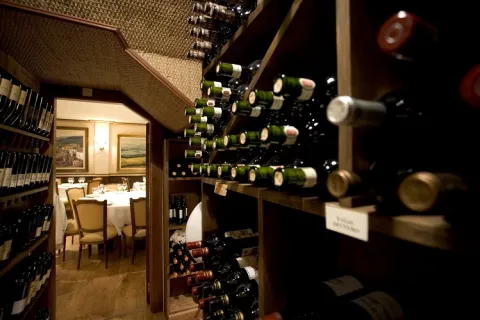
Casa Juanito (Baeza) is one of the most iconic restaurants in the province of Jaén. Its recipes bring together traditional and cutting-edge cuisine.
One of the most iconic figures of carnival across the province is the Mascarote of Torreperogil. This costume, made from rags, scraps of cloth and old clothing, symbolises the festive, mocking spirit of the celebration. Even under the Franco dictatorship, when the festival was officially banned, locals kept the tradition alive, establishing Carnival as a cultural pillar of the town. In Albanchez de Mágina, for example, the custom of throwing "bordos" at young women lives on. Bordos are the fruit of the bulrush plant. They are gathered during the summer and stored in the attics of houses, among straw, to dry out. On Carnival Sunday, they are brought out to be thrown at the girls. When peeled, they release a whitish, sticky fluff that clings to hair and clothing. It is said that the more fond a suitor is of a girl, the more bordos he must throw at her face, so that on that day the streets of the town end up carpeted with the irritating fluff, in this curious "display" of love. In La Carolina, on the other hand, the typical figures are the “mascarones”, who take over the streets and hold pride of place in the town's celebrations.
During these days, Baeza brings back its traditional flavours with the help of the city's best chefs, evoking chapters from Baeza's history and its produce, such as EVOO.