Veladas Nazaríes
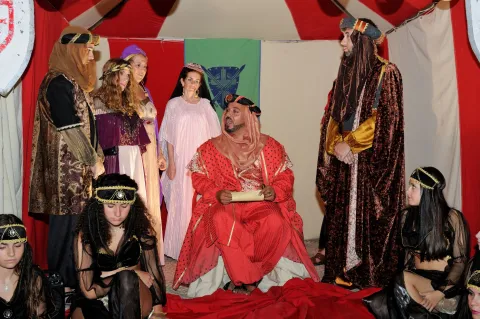
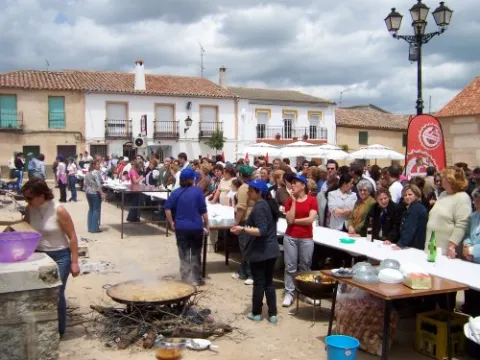
Arjona travels back to the time of the Nasrid dynasty of King Alhamar. Concerts, guided tours and a medieval market are among the activities held over three days in this Jaén town.
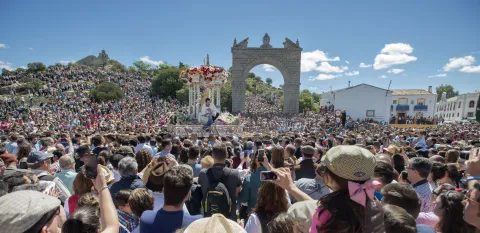
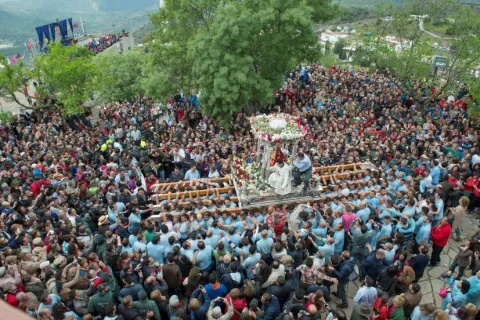
The Pilgrimage of the Virgen de la Cabeza, held right in the heart of the Sierra Morena, is an impressive display of Marian devotion, decorated with the colourful standards and flags of each of the brotherhoods arriving from all over Spain. It is considered one of the oldest pilgrimages in Spain and also one of the largest.
It is held on the last Sunday of April, with hundreds of pilgrims making a pilgrimage that weekend to the sanctuary, located on the Cerro del Cabezo, preceded by a week full of liturgical, cultural and festive events, which also allow visitors to enjoy the Andújar natural park. Sunday is the main day, with the procession of La Morenita around the sanctuary grounds.
PILGRIMAGE THURSDAY
The Pilgrimage is an impressive display of Marian devotion, beginning a week earlier with the opening address and the blessing of the pilgrimage horse, though the main events are held from Thursday to Sunday. Thursday begins with the proclamation and the flag ceremony in the morning. In the afternoon, the Virgin is moved in procession to the Plaza de España, followed by the floral offering.
PILGRIMAGE FRIDAY
In the afternoon, the affiliated brotherhoods are received in Andújar. The Real Cofradía Matriz de Andújar, together with the city's mayor, welcomes in the Jardines de Colón all those who will climb to the Sanctuary the following day, extending a warm welcome. This marks the start of a parade through the city's main streets to the Town Hall, where a Salve is sung.
PILGRIMAGE SATURDAY
On Saturday morning, the Cofradía Matriz parades through the city's streets, with riders, horsewomen, mules and pack-saddles. The festive atmosphere of the departure continues along the route to the Hermitage of San Ginés, the first stop of the day, before continuing on to "Lugar Nuevo", where lunch is taken before continuing the journey towards the Sanctuary.
At the same time, very early in the morning, the ox-carts set off towards the Sanctuary. Upon arrival at the Sanctuary, the brotherhoods take turns presenting themselves before the Image. Throughout the night, an intimate closeness with the Blessed Virgin can be felt in her chamber. Inside the church, participation in the Masses and rosaries held is massive.
PILGRIMAGE SUNDAY
Sunday is the main day, the culmination of the festival, with the solemn Eucharist of the brotherhoods held at the Sanctuary, followed by the procession of the Virgen de la Cabeza, which, after a four-hour route, returns to her chamber.
PILGRIMAGE MONDAY
Monday marks the end of the Pilgrimage. In the morning, the Cofradía Matriz holds a Mass of Thanksgiving and the farewell ceremony. Afterwards, the ox-carts and brotherhoods begin their return journey, arriving back in Andújar in the afternoon. At night, a solemn Salve of Thanksgiving is held at the Hermitage.

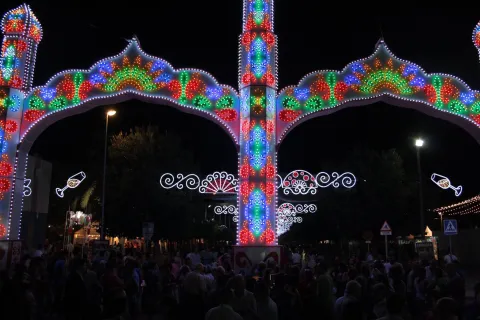
This is a popular open-air dance held to mark the feast of San Eufrasio (patron saint of the city and of the Diocese of Jaén), organised by the residents' association of the "San Eufrasio" neighbourhood in collaboration with the City Council, held on the days before 15 May, the patron saint's feast day. It features various fairground rides and stalls where visitors can enjoy good Andalusian wine and, of course, delicious local tapas.
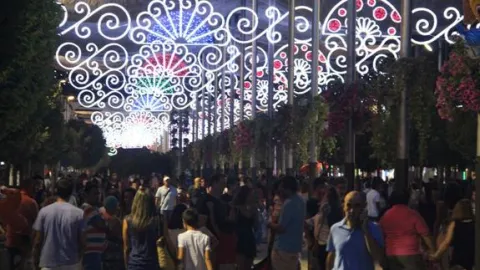
In 1801, King Charles IV granted this town of Andújar the privilege of a six-day fair, to be held in the last fifteen days of September, of which the first three would be devoted to selling clothing and goods, and the rest to the same plus all kinds of livestock.
Today it is held from 5 to 10 September, and is one of the most important fairs, both for the number of visitors it attracts and for the events linked to the world of horses.
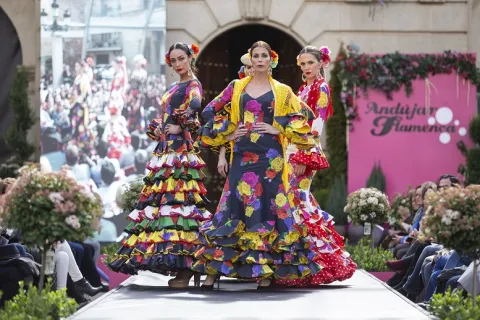
Andújar has its date with flamenco fashion every February. An essential gathering for creators and designers from across the community, and above all, an excellent showcase for the latest developments in this sector across the province.
The Pilgrimage of the Virgen de la Cabeza is considered one of the oldest in Spain. It has been held since the 13th century on the “Cerro del Cabezo”, a site of remarkable beauty located about 30 kilometres from the city of Andújar, in the heart of the Sierra Morena, where the Sanctuary stands — one of the most important Marian shrines in the country.
The procession in honour of the Virgin takes place on the last Sunday of April. In the preceding weeks, numerous events are held, including talks, exhibitions, sevillanas competitions, poster presentations, and musical performances.
In 2013, the Regional Government of Andalusia agreed to list the pilgrimage of the Virgen de la Cabeza of Andújar in the General Catalogue of Andalusian Historical Heritage as a Site of Cultural Interest (BIC), in recognition of its ethnological, historical and scenic value.
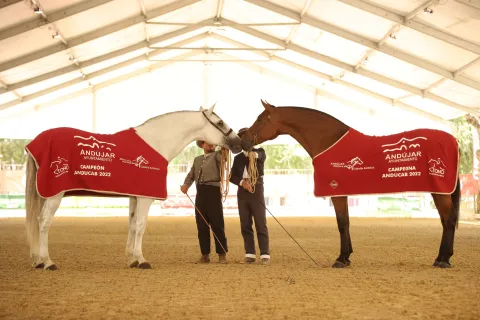
Anducab has become the most important meeting point for the leading breeders, enthusiasts and professionals of the equestrian world in Jaén and neighbouring provinces. A leading forum in the equestrian world and a near-essential event for those entering their studs in other international competitions, since points earned here can count towards those events.
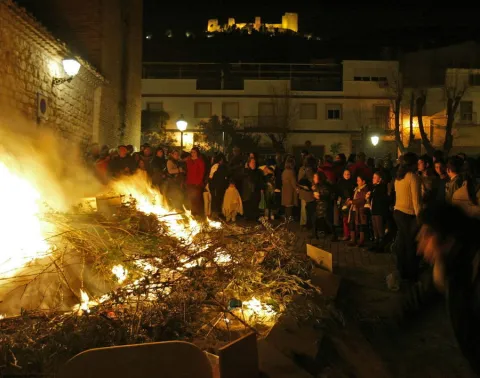
More than thirty towns across the province light up on the night of San Antón, celebrating, in their own varied ways, the feast of the saint who protects fire and animals. It is one of the most deeply rooted, ancient celebrations in Jaén, and in every one of them fire is the defining element, a symbol of unity and renewal linked to the New Year.
In the capital, it usually coincides with the 'Noche de San Antón' International Urban Race. At the end of the race, the people of Jaén gather around a bonfire to sing and dance the melenchón, quite possibly the dance most typical of Jaén. The bonfires are linked to the olive-growing cycle and the work of tending the groves, with pruning waste as the main fuel for the 'lumbres' (bonfires). In the past, worn-out esparto baskets, no longer usable after pressing the olives, were also added, making excellent fuel for the bonfires. In earlier times, these bonfires also carried magical connotations, intended to ward off illness and pests.
In addition to the traditional dances, gastronomy also takes centre stage, with tastings of sweet potato pumpkin or baked winter squash with sugar and cinnamon, morcilla or chorizo from the recent pig slaughter, and more. All of this, of course, washed down with wine or beer.
Also known as the summer visitors' festival, held during August and notable for the release of young bulls, whose meat is enjoyed on the last day of the festivities at a dinner offered by the Town Hall, as well as for the lively
night-time open-air dances.
Mass and procession for our patron saint. This is, in fact, the winter day with the most sunshine in Aldeaquemada (a pattern confirmed over the years).
The special devotion the townspeople hold for the Immaculate Conception is striking.
It's also worth noting that — although there is no written rule — the platform carrying the Virgin is always carried by women, who eagerly take turns for the position and honour of carrying the Patron Saint. Finally, after the fireworks display, the Hermana Mayor (Senior Sister) treats the whole town to refreshments. The day ends with children's games and dancing.