


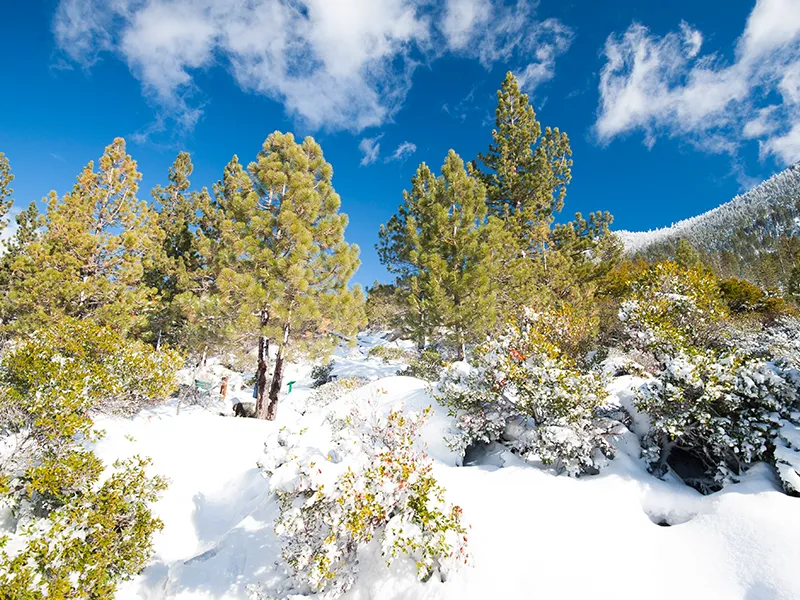
In the mountain, the snow tests the fauna, but it gives us the joyous opportunity to enjoy the clean whiteness of the landscape and to track the running of the hare, fox, deer or gin through the footprints left on the soft floor.
They hibernate in their coats the hedgehog, the chareto liron and the bats. But even though Nature seems to be adorned, many things continue to happen. The bristles stop breast-feeding and lose the nice stains of their children's fur. The demogue of the deer begins, who lose their horn, sometimes majestic, to begin to renew it immediately. And the boar, of night-time customs the rest of the year, usually roars in search of food.
Although it does not seem the most propitious moment, the breeding season for the squirrels begins, which in the tree cups make their home comfortable by covering it with lichens and moss. The couple of lethonated vultures also do not lurk at the cold, and in the sunny mornings we can enjoy the perfect synchrony of their wedding flight over the high canteens. Soon after, both will defend their only egg in the nest, defying the unbeatable winds and peas that hit the pharallions. The meat also reproduces now, and it is enough to leave the village into the forest to hear its unmistakable claim filling with magic on the cold night. And, of course, the broken bones raise new chickens - still in the center of captivity - so that they will soon fly all over Andalusia.
Towards the end of the season, there are already signs of the avalanche of life that is coming: the paused song of the myrtle is heard by attracting the female from trees and roofs, and the almonds burst into white flowers.
Serrana gastronomy
A different way to discover the culture and customs of the natural park is to know the serrana cuisine, according to the specialities of each area. The region of Segura (Hornos, Segura de la Sierra, Puente Géave, Santiago de la Sword, etc.) offers you the gachamita, the andrajos, the following lamb. The rone, trout, mountain meat are exquisite in Cazorla, La Iruela or Quesada. And in the Sierra de Las Villas the crumbs or the chubby garlic. It is the time of the massacre, which is still practised in a traditional way in many villages such as El Pelón or Riovas (Segura de la Sierra). And in almost every village you will be offered local specialties in sweets, and the well-known mistela.
Visit to peoples and their customs
During these months, some curious events and customs take place throughout the park. Fire, as in so many cultures, is linked to several winter nights. During the night of San Antón - from 16 to 17 January - they become luminaries in almost all the populations of the Park. They are also famous La Candelaria in Pozo Alcón, the Virgin of Peace in Beas de Segura and San Blas in La Puerta de Segura.
Olive collection
From December the whole province of Jaén is dedicated to the collection of the olive, and the territory of the natural park is no exception. The cultivation in the saws is different from the countryside; land accidents make the collection in these areas very unmachined. The Ecological Olivar Interpretation Center in Génave gives you the opportunity to know the importance of the Olivar in our culture by visiting one of the most successful almazaras in the entire province.
Route with snow
The practice of hiking in winter is ideal if the weather is not too adverse. Snow is an accident more that can make the steps and roads of the natural park difficult, but its vision is an added show that you must not miss. There are affordable routes that are beautiful walks and offer beautiful views of the saw. We recommend the rise of Navalperal, between Siles and Segura de la Sierra; or El Puntal de la Misa, also in the Sierra de Segura. It is essential to be well equipped, and not to forget the camera. If the weather conditions are adverse, desist. The snow, the fog, the wind and the cold can give you a bad experience. You better leave it for another day.
