

There is so much to do and see here: much more than a river, much more than a valley…
You are in the most visited part of the park, the corridor that connects its various sights. It is the natural meeting point between the north (the Sierra de Segura) and the south (the Sierra de Cazorla), and the area where the park’s first tourist facilities were traditionally set up. Here you will find places to rest, visit and stroll. And if you take it slowly, at the same pace as the Guadalquivir, you will discover a whole collection of fascinating spots on foot.
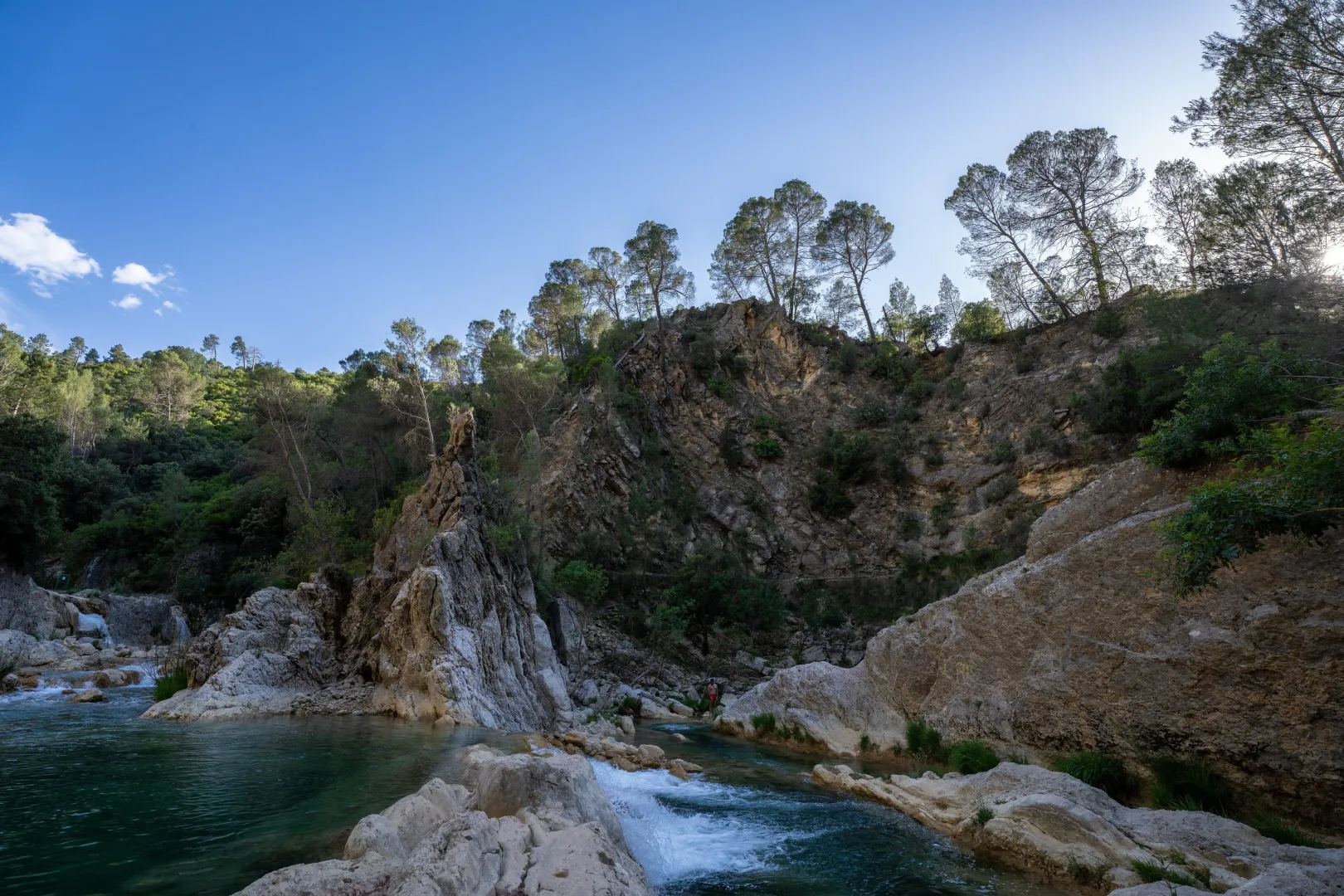
A large part of the park’s waters flow together in this valley. Dozens of mountain rivers and streams carry water down from the peaks. Two of them stand out: the Aguamulas and the Borosa, two magnificent mountain rivers that will lead you, not without effort, along tracks and paths to Las Banderillas (1,993 m), one of Andalusia’s great mountaineering peaks. If you prefer shorter walks, these valleys also offer remarkable alternatives such as the Cerrada de Elías gorge on the river Borosa.
On your first visit, especially after a rainy year, the landscape of the Tranco reservoir will be a delightful surprise. Every autumn, night after night, from the road and from the paths and tracks around the reservoir you can hear the awe-inspiring concert of the red deer rut: the bellowing of the stags during the mating season. One of these routes is the track that starts at Los Llanos de Arance and leads to the Cortijo de las Ánimas.
Near the reservoir, the Collado del Almendral Wildlife Park is a must for families and groups of friends. On a short walk through the forest you can see red deer, fallow deer and Spanish ibex in semi-freedom every evening. Félix Rodríguez de la Fuente used this spot as one of the filming locations for his famous TV series El Hombre y la Tierra (Man and Earth). The Torre del Vinagre Visitor Centre and Botanical Garden are a great place to understand the biodiversity and cultural wealth of the Natural Park.
The recent and distant history of these mountains is best understood with a visit to the Tranco dam, which has regulated the flow of Andalusia’s great river since the 1950s, or to the historic village of Hornos, inhabited since prehistoric times and the gateway to the most remote part of these mountains.
