Saltar al contenido principal

Jódar

Submitted by brandcode_deweloper on
Id
739118
Perfil de redes sociales
Facebook
https://www.facebook.com/ayuntamientodejodar/
Twitter
https://twitter.com/AytodeJodar
Instagram
https://www.instagram.com/aytodejodar/
Descripción
Breve descripción

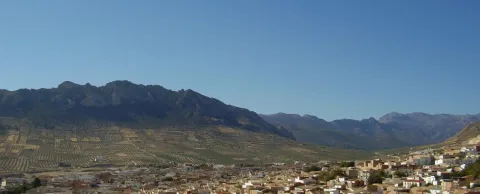
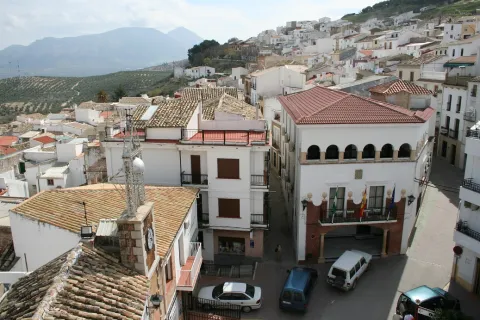
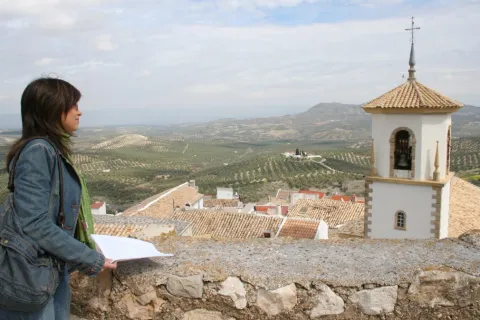
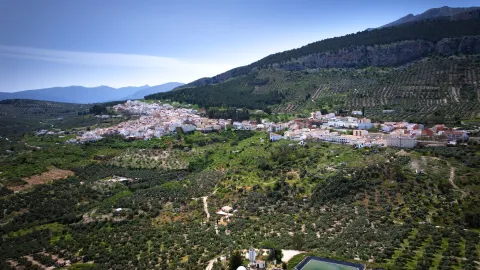
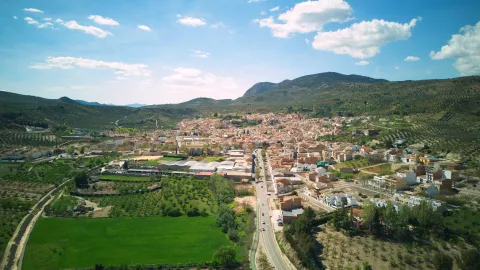
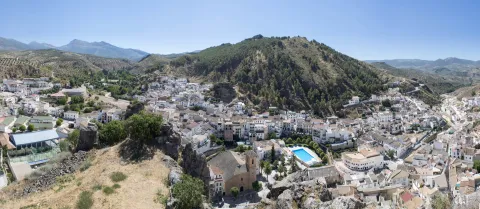
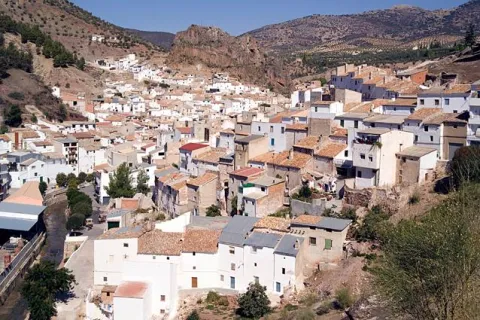
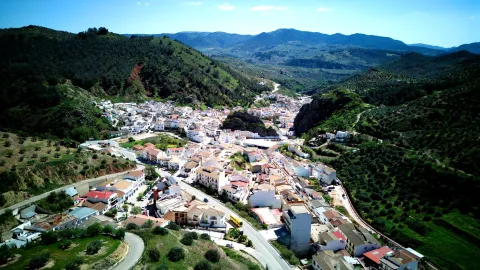
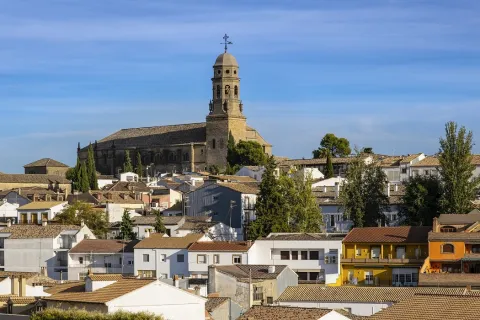
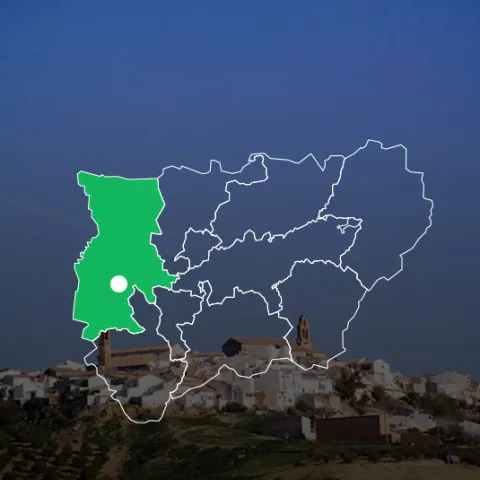
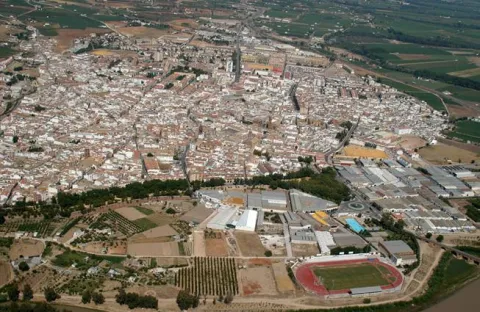
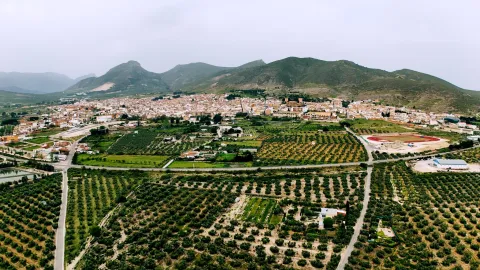
A population belonging to the Sierra Magina region, located to the north-east of it, in a landscape composed of large extensions of olive trees on one side and saws on the other.

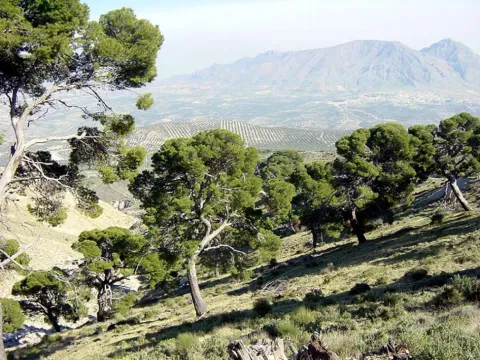
It is the most populated municipality of the region, its southwestern end is included in the Natural Park of Sierra Magina, which is part of the Subbetica and offers beautiful and spectacular landscape. The Guadalquivir, Jandulilla and the Arroyo de la Countess rivers go through their municipal term.

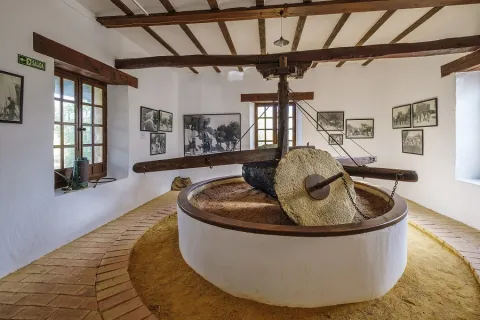
The cultivation of olive trees, asparagus and spartum-related crafts are part of their economic activity.

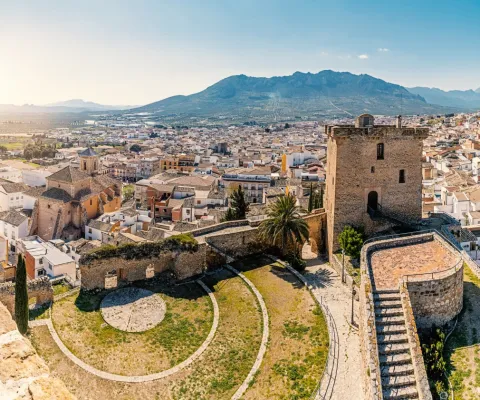
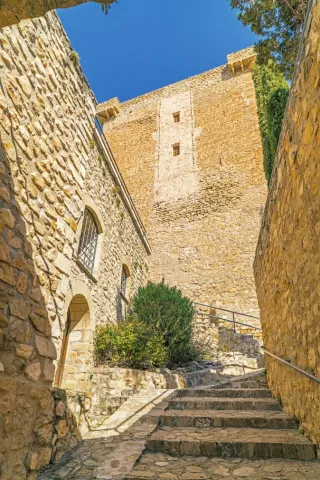
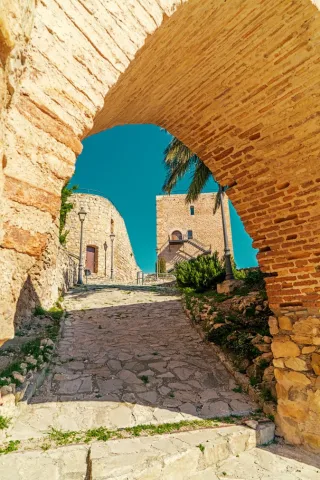
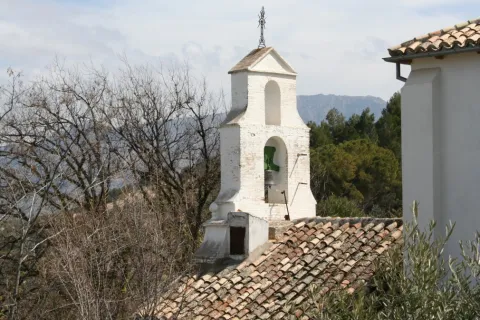
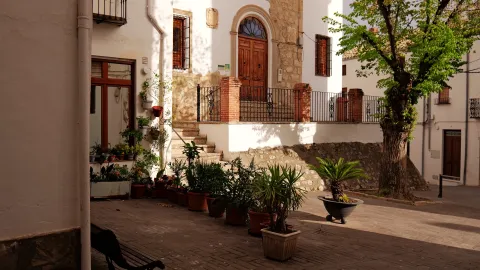
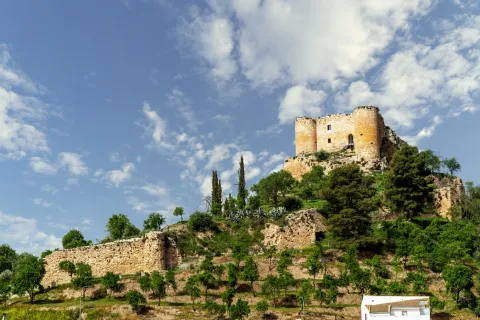
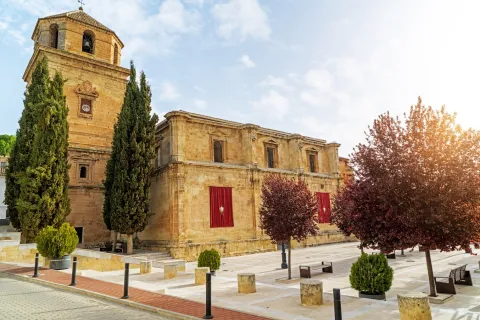
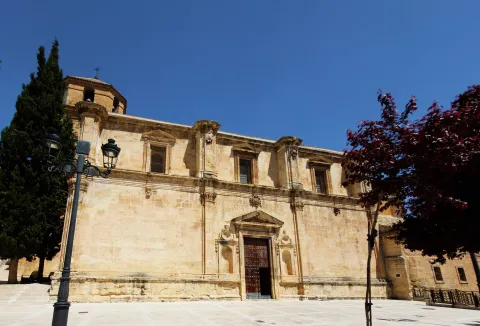
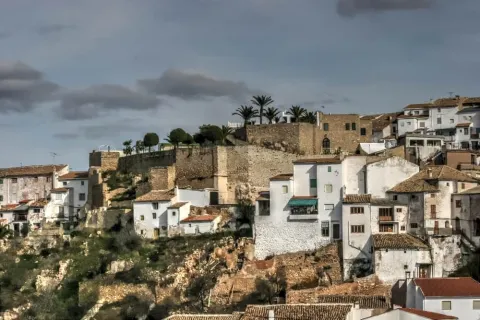
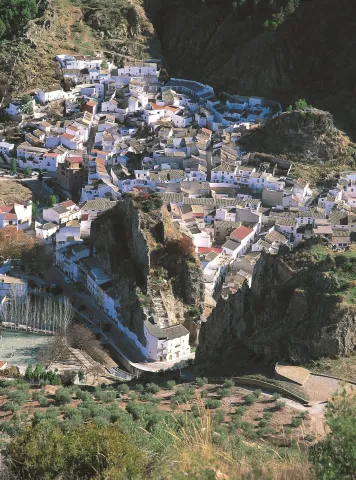
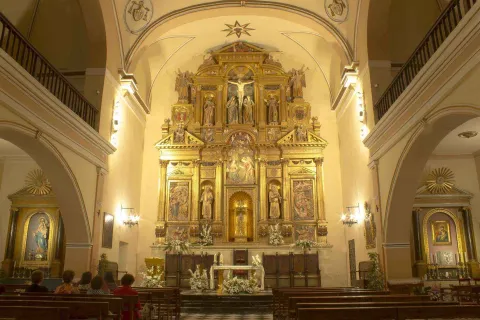
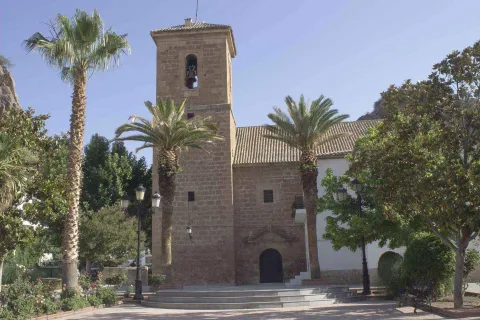
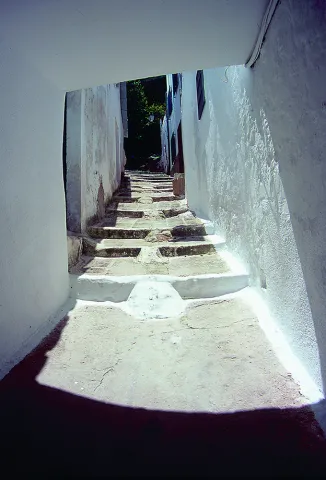
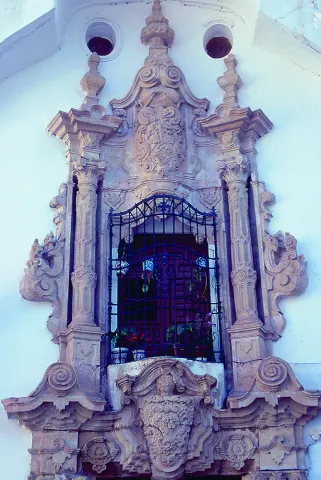
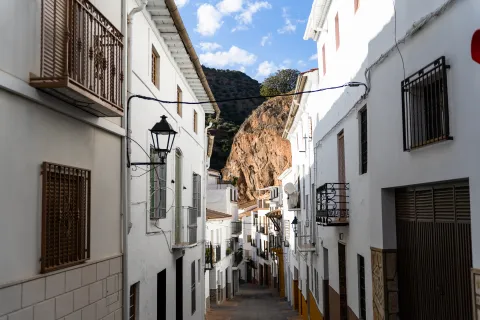
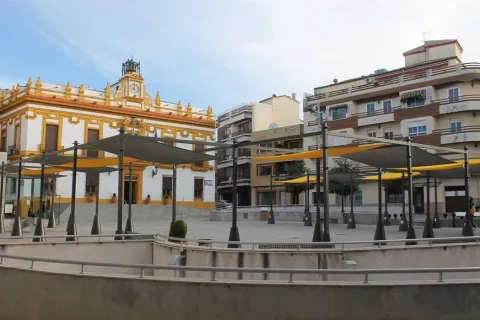
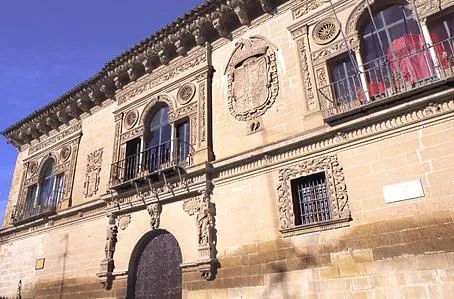
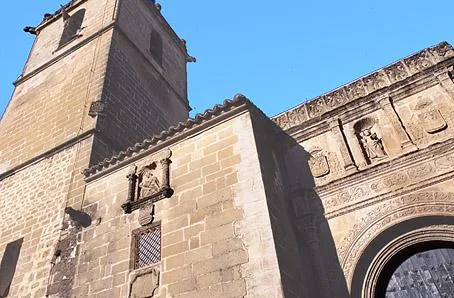
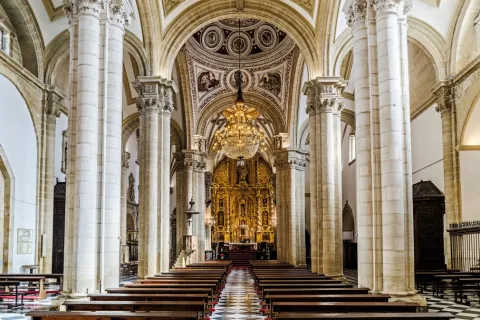
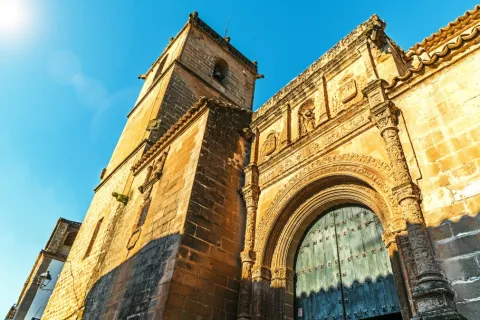
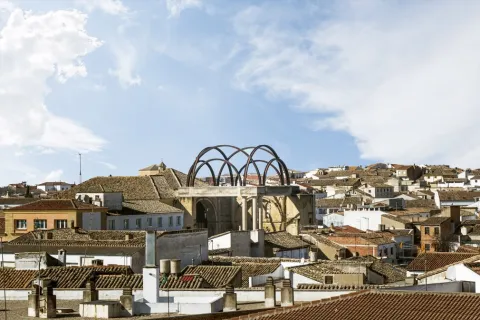
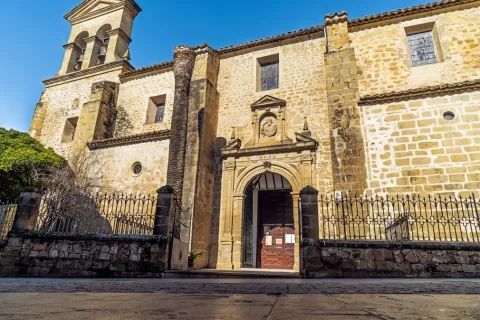
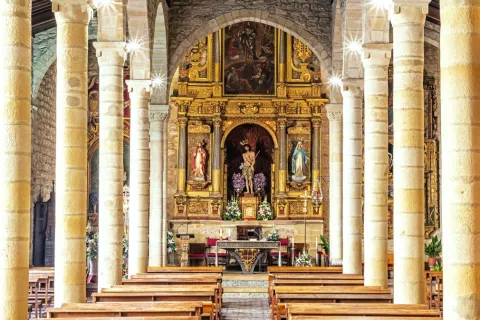
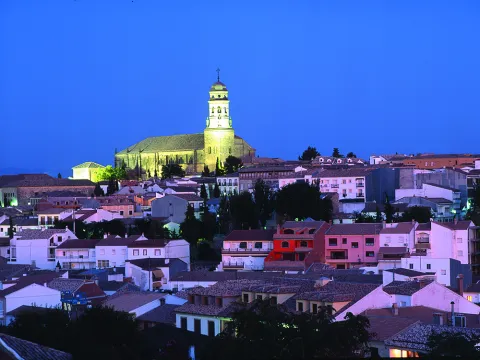
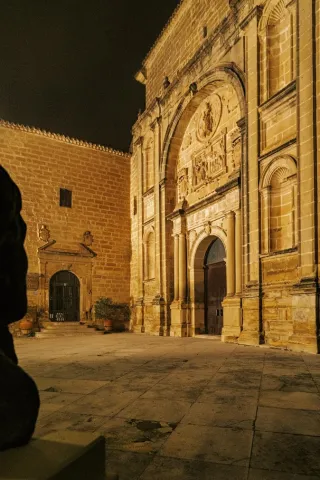
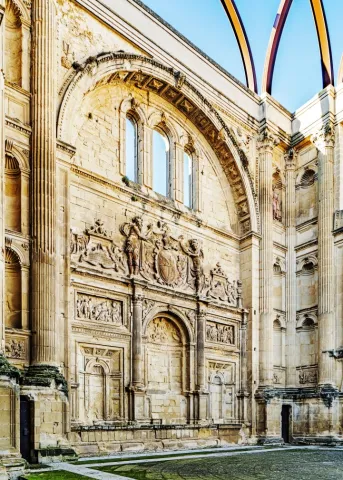
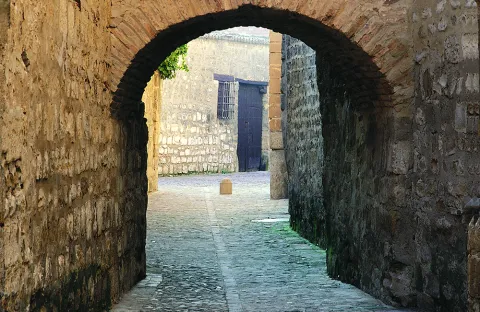
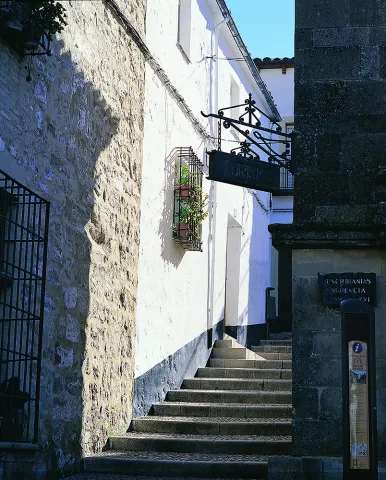
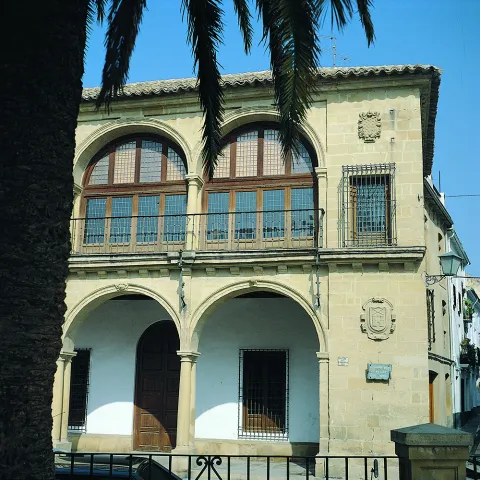
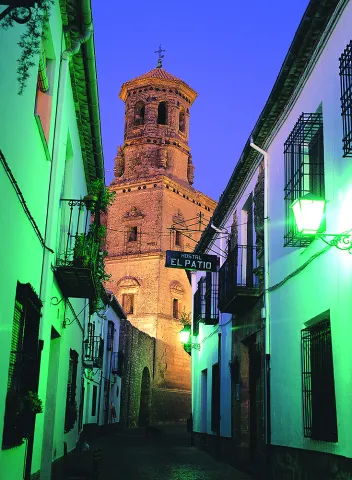
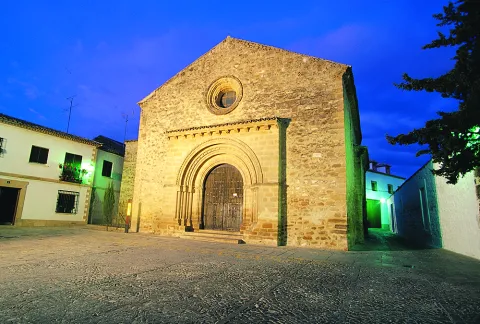
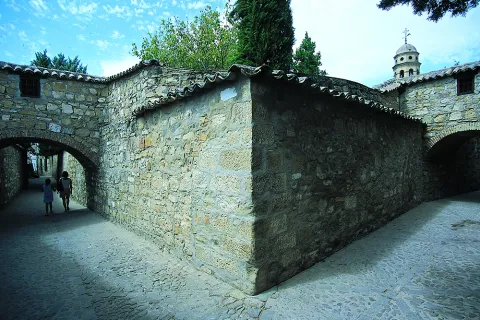
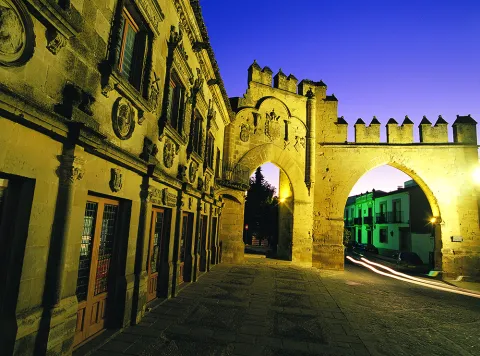
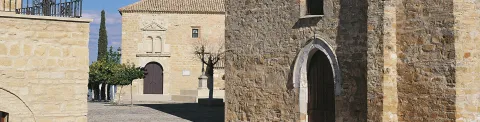
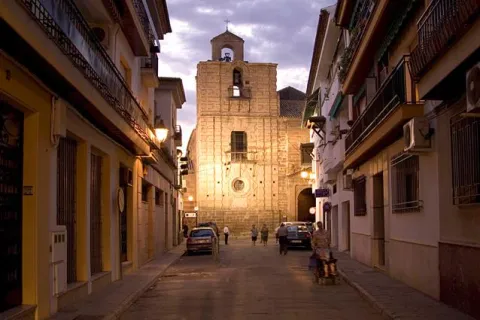
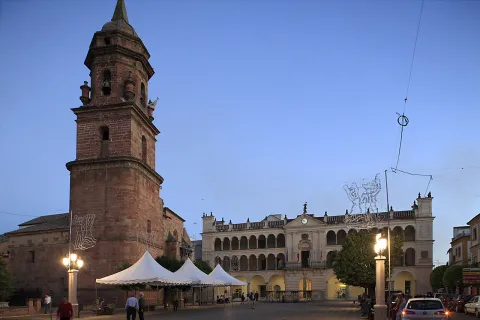
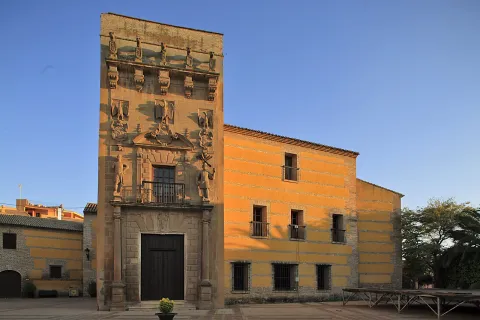
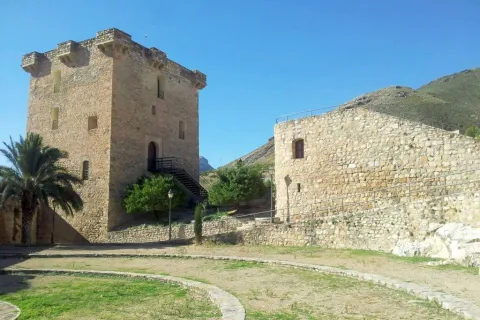
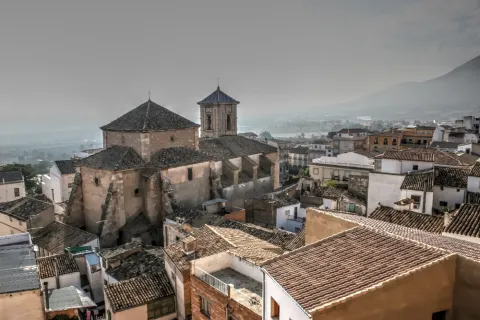
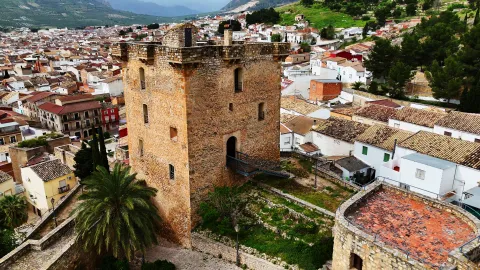
Among its artistic heritage are the Parish Church of the Assumption, the Muslim Castle, the Church-Sanctuary of the Christ of Mercy, the surroundings of the church, streets and squares where you can see traditional buildings of the region with its peculiar layout and the cave houses.

The Artistic Historical Set of Jódar has been in the cultural interest of Andalusia since 2014. Since 1983, together with the Castle and the Church of the Assumption, but the declaration as opened is from the Ministry of Culture.
Telecomunicaciones
Teléfono
635 609 943
Sitio web
www.jodar.es
Fax
953 785 487
Correo electrónico
ayuntamientojodar@hotmail.com
Ubicación
Nombre
Jódar
Latitud
37.840680
Longitud
-3.354860
Distrito
Municipio
Ubicación en el mapa
POINT (-3.35486 37.84068)
Imágenes
imagen
Image
fd00355d-d748-a12a-b7ee-55f5181bf972?t=1595343295258
Imagen principal
Desactivado
imagen
Image
030c38d0-26f7-b111-77a1-44b30528b2b3?t=1595343409514
Imagen principal
Desactivado
imagen
Image
0f1d8f13-742b-a426-a9bd-2b7de31790f0?t=1595343444832
Imagen principal
Desactivado
imagen
Image
63cff0aa-90d1-321d-c72d-cdf5ec8ec82d?t=1619531938975
Imagen principal
Desactivado
imagen
Image
3c652ab6-a47e-0046-f798-ff8965c1ca52?t=1619531939033
Imagen principal
Desactivado
imagen
Image
d64f2f3e-b34c-f649-229a-d56dfa2face3?t=1619531939079
Imagen principal
Desactivado
imagen
Image
6ad3041b-cdb6-901d-366d-7565b6d22278?t=1619531939122
Imagen principal
Desactivado
Información adicional
Curiosidades

Museo de Jódar (Punto de información turística de Jódar)
Casa Municipal de la Cultura
Calle Juan de Mata Carriazo, 4. 2ª Planta - 1ª Puerta.
Tfno: 953 784 012
Web: www.saudar.com
correo@saudar.com 
Horario: De lunes a viernes, de 8 a 15 horas (verano: de 8 a 14 horas).
Domingos: De 11 a 13 horas.
Imágenes cabecera
imagen
Image
jódar
Imagen principal
Desactivado
Datos de interés

Tourist area: Sierra Magina
Distance to the capital (km): 54
Altitude over sea level (m): 600
Extension (km ²): 149
Number of inhabitants: 11,667
Gentilicon: Galduriens
Postal code: 23500

Videos
Video file
Cultura
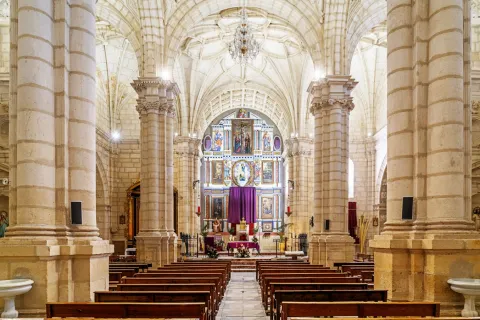
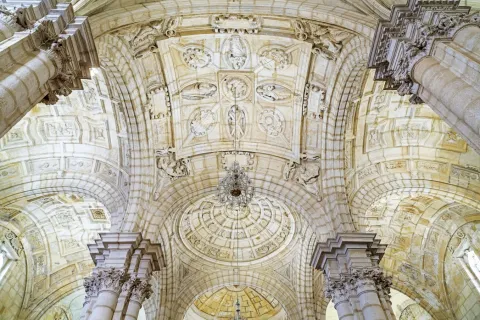
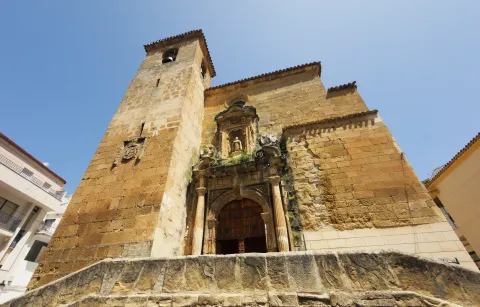
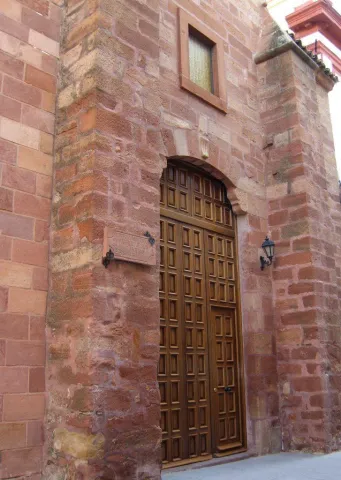
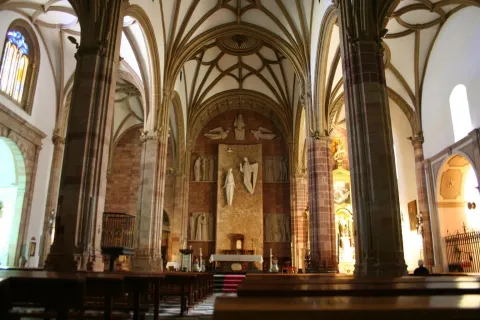
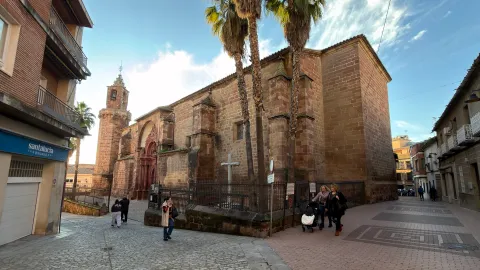
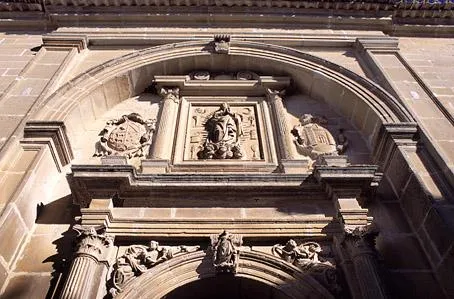
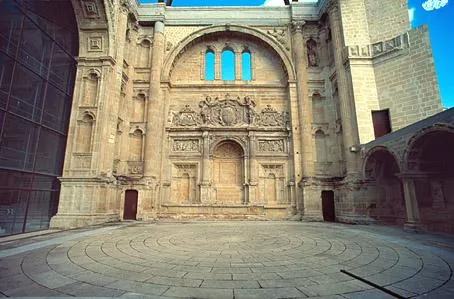
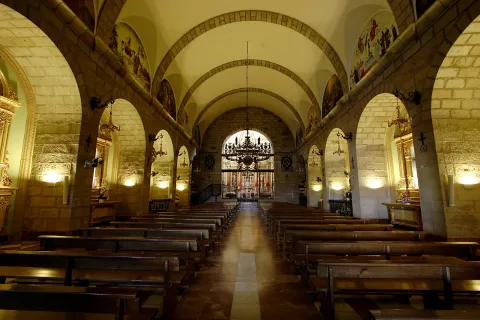
  • The Church of the Assumptionbuilt between the 16th and 17th centuries, of classical Renaissance façade and of great proportions. It has a Latin cross plant, with chapels among the contrasts. The deck is of canyon vault and dome on breast on the cruise. The presbytery, the major chapel and the cruise are 1775. The tower of the mid-17th century is decorated with episcopal shields and the neoclassical cover is one of the best in the province for its proportions. Located on the wall is the valuable "Ibero-Latin inscription of Galdur," mythological city and ancient cradle of Jódar, is from the 1st century BC
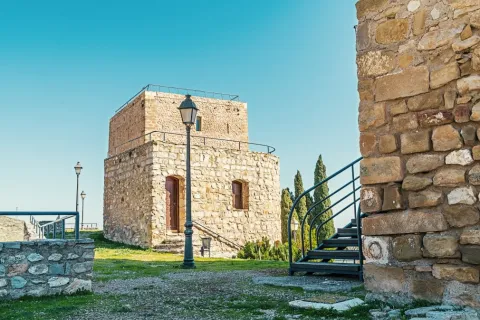
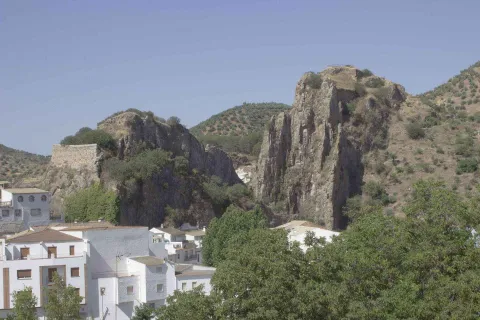
  • Jódar Castle. In the historical core of Jódar, on a rocky podium is the castle, mentioned in documents of 860. It is known that the castle is erected in Iberian times, as indicated by the inscriptions found in one of the armchairs, cthe most dean of the province and one of the oldest in Andalusia. It takes on importance in Muslim times with the Muladian revolts. This fortress has two towers of tribute, one of Arab origin and one raised by Christians. Both are almost square, in the Old Tower the entrance is located at the height of the first floor and has two series of saetera. The New TowerIt consists of a central wall and a central wall. Its saetries similar to those of the North Tower and the interior decks are vaulted vaults of the 16th century. It preserves mudejar stucco remains. Both towers have been restored. The South Tower is currently the Reception and Interpretation Centre of the Natural Park of Sierra Magina. The North Tower has been enabled to recreate and make known the history of the castle and the municipality.declared Historical Monument, under the protection of Good Cultural Interest, in 1985.
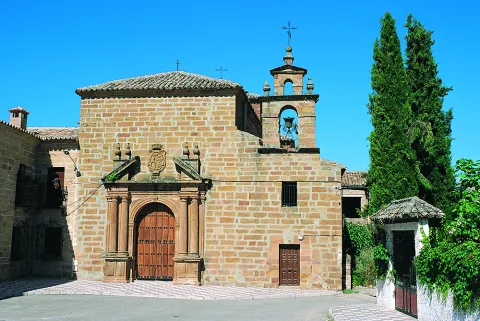
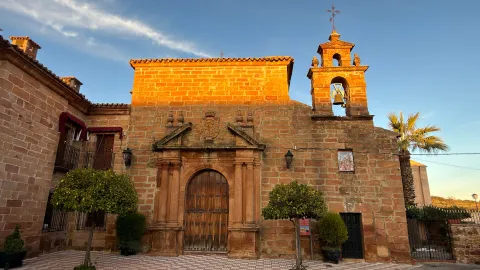
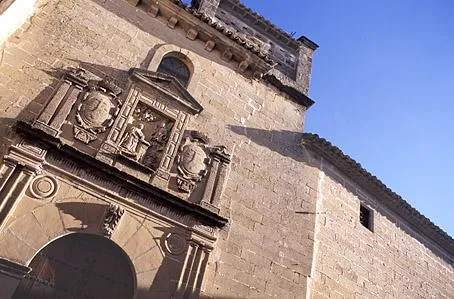
  • Sanctuary Church of the Christ of Mercy. It was built in 1700 on an ancient hermitage. It is of one ship and there is an extraordinary size of the 16th century of the Christ of Mercy. A baptismal stack of 1660 must also be highlighted.
  • Tower of the Pinars, declared Well of Cultural Interest, as Historical Monument in 1985. It sits at the southeast end of a hill that controls the right bank of the Jandulilla River, so its strategic position is beyond doubt. The tower is circular, with a door in height, which divides it into two bodies; the lower one is fully solid and the upper one has a small room also circular. It has an irregular masonry-based mating with plaster argamase, the same material that is used to cover the entire surface of the tower.

Naturaleza

Jódar is located to the north-east of the Sierra Mágina region, in the skirts of the Cerro de San Cristóbal, belonging to its southwestern end to the Sierra Magina Natural Park. From here its territory descends to the Guadalquivir rivers and Jandulilla where the crop fields are given.

Half the territory is farmland in which the olive tree is the majority crop. In the vegas of the rivers, horticultural crops are produced and in the dry cereals.

Economic activity is based on olive groves and the olive industry, although it is raising high expectations for cultivation and industrial processing of vegetables.

The main altitudes of the term are the peaks Carboneras (1,511 m.), the saw La Golondrina (1,258 m.), Jodar's. (1,200 m.) and Altarillas (1066).

To the north of the municipality are the reservoirs bathing this area of the municipal term: Ms Aldonza, Pedro Marín and La Cerrada Bridge, and Natural area of Alto Guadalquivir, along with the river sections between them. Also declared as Special Protection Area for Birds (ZEPA); and Special Conservation Zone (ZEC).

In these mountains the Mediterranean vegetation in which the oak is frequent prevails. In the Vega del Jandulilla the sparthals abound, the result of the abandonment of cereal cultivation due to the scarcity of rains. In the course of the Jandulilla River, the tarays, alffas, common cane and canals are abundant between the main flora.

Of the fauna, the spartal birds, including granivorous birds such as the cogujada, the calandria, totovia and the common terra, draw attention.

  • Garden of the Cora:Located in the heart of the city centre, it is a unique garden that houses the recovery of more than 400 types of missing seeds and plants. It has formed a reservoir of mother plants recovered from extinction.
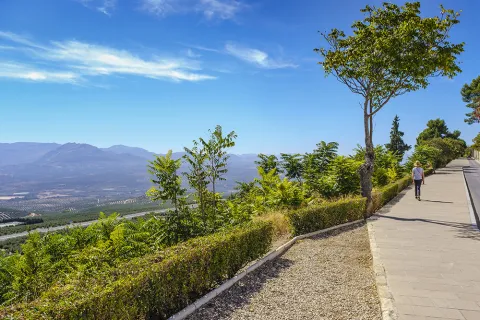
  • Hiking route the Pocco:From the peri-urban park of Traschatina is a marked hiking route called "El Pocico" that ascends through the skirt of the Sierrezuela de Jódar and has as its goal the hill of San Cristóbal, where one of the most wonderful views of the province, the valleys of Guadalquivir, Guadiana Menor and Jandulilla, or the Lomas of Ubeda and the saws of Cazorla and Magina, are seen, as well as an unparalleled view of the city.
  • Via Verde "El Paso" Y Barranco Del Cañaveral:Next to the old Royal Road to Granada, called "El Paso," you will find the Barranco del Cañaveral, a small gift splashed with alffas and juncos, in which ruins of several flour mills can be observed, including the call of Marcón, a true monumental relic. The area was splattered with watchtowers from the Middle Ages, on its wide road we found remains of industrial archaeology of the irrigation channel of the Jandulilla River, as well as one of the largest landlords in the area. The royal road ends on the Roman bridge of the Guadalquivir River, called "The old bridge" next to the ruins of "Ubeda la old."

Fiestas y Eventos

Among the most popular parties, they include:

  • Holy Week. Its origins are they go back to the 16th century. It is one of the most prestigious and rooted celebrations in Jódar. Currently is considered one of the most important and popular in the province of Jaén. It stands out for the quality of its sizes of famous imaginers and for the solemnity of its steps.
  • Festivals of Corpus Christi. The streets through which the procession passes are embellished with the ornaments of palm trees, banners with Eucharistic motifs, altars where the best joules and many others are displayed. The floor is rugged with joint, mastranzo and drawings made with colored sawdust. The Most Holy One goes in a magnificent step and in an overgold silver Custody of the year 1669.
  • Festivals of the Cross of May, 2 and 3 May. They are celebrated from the beginning of this century in honor of the Most Holy Christ of Mercy, pattern of Jodar. Two monumental arches of flowers are raised, popular altars with crosses also of flowers. The day 3 is held the procession of the Christ of Mercy that goes through most of the streets of the population, and after the end of the religious act, Christ returns to his hermitage.
  • Festivity of San Isidro, May 15. Every 14 May it is moved to San Isidro from its hermitage located in the "Fuente Garcíez" to Jodar. The following day, after the Eucharistic celebration, the Holy one returns to his hermitage, but accompanied by riders with chained horses, gilded reels for the occasion many rosemary who will spend the holiday between dances and singers taking as their stage the beauty of Sierra Magina.
  • Real September Fair. Founded by Royal Decree of Elizabeth II in 1837. As in Jódar, traders and farmers had no date to meet and be able to sell and deal with all genders, it was decided that the fair would be held on September 2.3 and 4. Today, many activities are planned, but we highlight their important bullfighting that have in sign the main taurine figures and the lively verbenas that are very busy.

Gastronomía

The gastronomy of Jódar is rich and varied, based on the products of the earth. We have to highlight the quality of your olive oil that enters as an ingredient in most of your dishes. We highlight those with the greatest roots:

  • Pipirrana. It is a salad with tomatoes, green peppers, onion, cucumbers, olive oil salt and tuna.
  • Gazpacho of the reapers. Warm stew based on chunks of cake and accompanied by meat from small game pieces, such as rabbit, perdiz or hare.
  • "The Morrococo." They are cooked chickpeas, tomato, onion, olive oil, salt and cumin.
  • Gachamas. Made of flour, water, olive oil, salt and potatoes. To accompany, longanize, pancake, chorizo...
  • Andrajos. flour cakes with tomato saffrito, onion, garlic, red pepper, and sometimes cod or rabbit.
  • The capers. Salted or curved capers that are taken as an appetizer mainly.

In pastry: The "twists," the wine roses, empanadas and chickpeas.

  • The "risol"is a traditional drink made of coffee, sugar, cinnamon, rose petals and spirits.
Historia

The human presencea in the vicinity of Jódar is documented from prehistory, being the site of The Quebrades the oldest known, dated towards the third millennium a. C.

The remains of the Ibero-Roman period, following the course of the Jandulilla River, including the funeral stone found in the old Villa Xandulilla or the Sphinx del Jandulilla located in Alamus cutamong others.

During Middle age the area remained heavily populated by Islamic settlements, with several alqueras and a castle shelter. In the 10th century it was considered an important urban core and noted oil producer.

About 1,229, the produces the Christian conquest of the city by the troops of Fernando III. From this moment on the town is growing in population and importance, so Alfonso X gives it the title of Villa Leal and the Fuero de Lorca.

During the 15th century it belonged to several owners, and the Catholic Kings created the Largest of Jodar, giving it to the Sanchez Day of Carvajal, his major guard.

The 16th century is prosperous and churches and buildings are built. The work of the spartum It also favours many of its inhabitants, on the contrary, in the following two centuries in which secular hunger, forced migrations and the terrible epidemic of the plague, which occurred in 1681, drastically reduce the population, which doubled in the 19th century and this caused problems, including the lack of housing and which many families moved to live in caves.

With the arrival of the railway and improvements in access, new migrants arrive, exceeding 10,000 inhabitants.

In 1919, Alfonso XIII, gives the villa thecity title, and to the City Council the treatment of Very impressive..
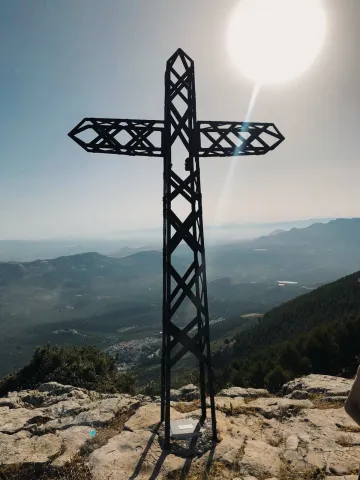
Loading map
Preparing points of interest and routes...
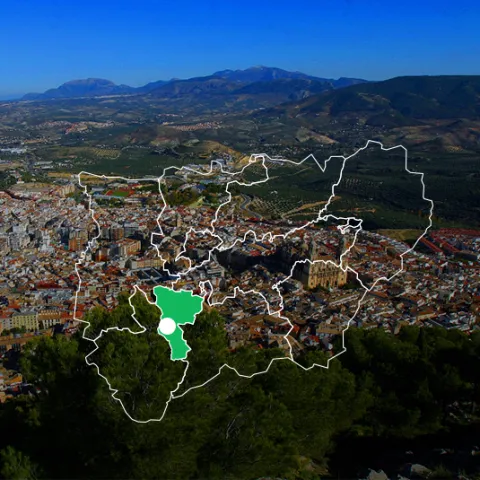
Imagen principal
imagen
Image
jódar
Imagen principal
Activado

Jimena

Submitted by brandcode_deweloper on
Id
737120
Perfil de redes sociales
Facebook
https://www.facebook.com/Ayuntamiento-de-Jimena-1590966931179764/
Descripción
Breve descripción

Jimena is a town located to the south of the province, on the north side of Sierra Mágina, in a landscape that alternates the olive groves, fruit trees and orchards with saw areas.
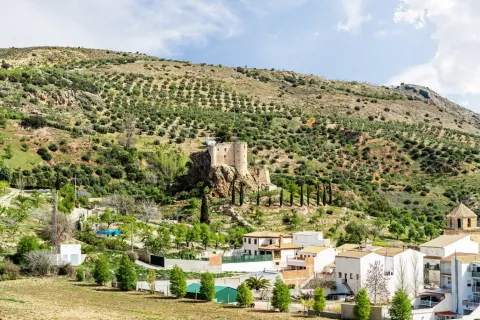
One reason the municipality is known for its production of figs and brewers.

In the municipal term we can distinguish two well-differentiated areas: the south-east sector of mountain orography and is included in the Natural Park of Sierra Magina; the rest of the term is a land of cultivation in which the olive monoculture predominates.

The economic activity is based on the olive tree and its processing industry, and is completed with the cultivation of the fig tree for the use of the figs and the brewers.

From its cultural heritage, the cave paintings of the Cueva de la Graja, of the schematic style, are especially noteworthy. We also have to quote the Castle that was raised in the Middle Ages and delivered in 1434 to the Order of Calatrava, and the Parish Church of Santiago el Mayor, of Gothic style, although rebuilt in 1960.

Telecomunicaciones
Teléfono
953 357 001
Sitio web
www.jimena.es
Fax
953 357 002
Correo electrónico
ayuntamientodejimena@gmail.com
Ubicación
Nombre
Jimena
Latitud
37.840910
Longitud
-3.476520
Distrito
Municipio
Ubicación en el mapa
POINT (-3.47652 37.84091)
Imágenes
imagen
Image
7769e6e9-55c0-d315-7679-71fe181cca7d?t=1608755317328
Imagen principal
Desactivado
imagen
Image
5c2eb610-b641-8a1d-6895-de1efe1d985d?t=1619531351344
Imagen principal
Desactivado
imagen
Image
03078ad5-f191-e3a6-8477-b2ea021fd15b?t=1619531351459
Imagen principal
Desactivado
imagen
Image
13991925-c898-ec97-83b0-783503efe7c0?t=1619531351648
Imagen principal
Desactivado
imagen
Image
5935cba4-862d-fda6-5b60-f877712feec0?t=1595274395356
Imagen principal
Desactivado
imagen
Image
4828a5c3-4035-11db-07e4-ef99210ff376?t=1619531351757
Imagen principal
Desactivado
imagen
Image
73ea9299-fd52-0d29-24af-0121f12f741e?t=1619531351855
Imagen principal
Desactivado
imagen
Image
55a86bdd-af3a-db24-0572-d127b5577f93?t=1619531352024
Imagen principal
Desactivado
imagen
Image
610f258f-cc6d-141e-1760-c350531b3b6c?t=1619531352079
Imagen principal
Desactivado
imagen
Image
3dac1769-bbde-f9e9-0a8b-485721f25d17?t=1619531352134
Imagen principal
Desactivado
Información adicional
Curiosidades

Punto de información del Parque Natural de Sierra Mágina:   

Castillo de Jimena. C/ Audiencia, 5
De lunes a viernes, de 9 a 14 horas.
Sábados y domingos, de 10 a 14 horas.

El Ayuntamiento de Jimena ha creado un moderno portal turístico para visibilizar los atractivos turísticos del municipio.

https://jimenaturismo.grupofortalezas.com/

Actividad subvencionada por la Diputación Provincial de Jaén. Herramientas digitales de promoción turística (ejercicio 2022) 


Imágenes cabecera
imagen
Image
jimena
Imagen principal
Desactivado
Datos de interés

Tourist area: Sierra Magina
Distance to the capital (km): 38
Altitude over sea level (m): 606
Extension (km ²): 48
Number of inhabitants: 1,675
Gentilice: Jimenates or Jimenians
Postal code: 23530

Videos
Video file
Cultura
  • Church of Santiago the Major. It is of three ships highlighting the central ship, and it owes its name to the day in Fernando III won Jimena to the Arabs in 1234. The initial factory of the church is gothic, with elements as significant as vegetable capitals, the pointed backbone that opens the perspective to the major chapel or the starry vault that covers it.His first roof was to move, and the first cover with a half-point bow, you were humming ruthless and wide davelas with ménsula in the key, like the strippers and the aldero piled, show Renaissance prints, which contrasts with the gothic cornice from the outside of the header. The current roofing, the three altarpieces of the header, the size of the Virgin of the Rosary and the square-floor tower, date from the reconstruction of 1960.
  • Hermitage of Our Lady of Remedies. It is a temple of small dimensions and harmonious architecture, plant in the form of a Latin cross and camerín for the patron, was built in 1910.
  • Castle. Su tower of tribute, the only thing preserved in its integrity, recalls the medieval importance of this castle to strengthen with that of Bedmar, the border line. It appears with the shields that evoke the power of the Marquis de Camarasa, successors of the family of the Cobos, to whom Charles I gave the castle expropriating it to the Order of Calatrava. It has been declared Good of Cultural Interest in 1985.
  • Cave of the Graja. It's a shallow coat with rock paintings in which up to seven groups of figures belonging to the schematic style have been located, with red tones. It is attributed to Neolithic period, III millennium BC

Naturaleza

Jimena is located in the centre of the province of Jaén, with an area of 48.04 km ² and an average altitude of 774 m above sea level. It is located at north-west of the region of Sierra Mágina, whose southeast portion is of mountain orography and included in the Natural Park of Sierra Magina. The rest of the territory is the land in which it predominates the olive tree.

The economy is based on olive cultivation and in the processing industry, being completed with the cultivation of the fig tree to use the Breva and the fig.

So that we can get an idea of the scale of brewery production that is harvested, we will say that in 2013 they were collected About 60,000 kg of brews. Of all production, approximately 10% is distributed in the province of Jaén, 25% reach the markets of Andalusia and the challenge is exported to Barcelona, Madrid and Valencia.

In its near environment has the following heights and peaks: Aznaitin (1794 m.), Air Caves (1364 m) and Atalaya (760 m)

As regards its vegetation It is common for the oak trees, whimsical, carrasco pine and salgareño, apart from the olive tree as the emblematic tree of the municipality.

In the municipality of Jimena la fauna is very diverse, among many, species as emblematic as the grubb, brown chotocabra, perdicera eagle, seedling eagle, cappuccino herryillo, pelegrin hawk, roquer plane, pale aguilucho or rastro gavilan, royal eagle or flow eagle, royal owl, common badger, fox, boar, gineet or musk cat, goo, deer, staircase, creek, viperine...
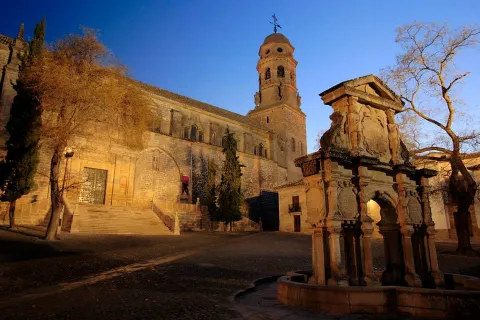
One of the best alternatives to get good views of the municipality is to approach one of the various areas in the environment, among the most visited are:

  • Mount Aznaitín. It's a real landscape milestone. It is one of the most significant landscape units in the Natural Park of Sierra Magina. The panoramic views that are seen are really spectacular. It is only 6 km away. of the town.
  • Pinar del Lancar. It is an indigenous pine of great value due to its testimonial character as a typical species of the Mediterranean forest. 5 km. of the urban core of Jimena.

Fiestas y Eventos

In addition to the traditional Christmas and Easter holidays, in the municipality of Jimena these other days are commemorated:

  • "Lumbres" of Saint Lucia, on December 13. On the eve of the day, there are fires on which rosets of corn and wine are eaten, accompanied by songs and dances.
  • San Marcos, March 25. The saint is honored, as is done in many other municipalities of Sierra Mágina, thanking him for having delivered the people from a plague of locusts that threatened their crops to rise.
  • Corpus Christi. Since the 16th century, there has been a record that the "Maroon bull.", better known as "Thin bull.", forerunner of the current "bull of fire" of the patron parties.
  • Day of the Cross, May 3. A party with a religious part which consists of the procession to the fields of Our Father Jesus on the Cross. And another pagan part the "Guys of Rice", which are dolls made of old clothes filled with paper, which have a pot or a mud pot as their head, and which in jetty positions are placed on the streets of the village with signs in which some event in the village is referred to in a tone of lance. They'll end up being the target of a claw or a burn.
  • Party in honor of Our Lady of Remedies. They are held from 7 to 10 September. On September 7, the image is brought from his hermitage to Jimena, where he will remain until the 10th, and on this day he will be taken back to his the sanctuary of CanavaAt the foot of the saw.
  • As a colophone of the parties they will run to several "fire bulls", metal artifacts that are placed on the back of the carriers and are releasing sparks, flares and "raceous rockets" causing the consequent jolgorium among the spectators.
Gastronomía

The Jimena brewers have been famous since then, which in addition to being an important complement to the local economy, are also reflected in some dishes of gastronomy.

Among the most traditional dishes, we highlight:

  • "Wheat.", is the most sharp dish of the jimenata gastronomy, and consists of a very elaborate stew where the wheat grains are previously crushed and peeled in a stone mortar and once clean the shell are soaked, for the next day to cook it with a chopped onion, a red tomato, green beans and some cod or bowls.
  • "Borullos.", is a farinacea vianda of wide presence in the traditional cuisine of some places of Magina, they are named "talarines"It is a broth in which vegetables and hare meat are cooked next to a mass of peeled flour.
  • "Morococcus"it is a dish that is not only present in the kitchens of Mágin, but also in those of La Loma. It is made with very crushed cooked chickpeasadded the broth and a generous chorreton of olive oil, some fried peppers. All this will be cooked until you get a mashed, which will sometimes be added a chopped onion.
  • Other dishes: the pipirrana and The papajotes.

In the pastry shop: rosses fried in the frying pan, alfajores, fig bread, brewing cheese...

Historia

Jimena has a rich legacy of prehistoric times, a group of rock paintings in the Cave of La Graja, which shows the existence of groups of pastors who lived between the IV and the III millennium BC in the Southern Serras.

Another settlement of this time is that of Cerro Alcalá, fundamental reference for the prehistory and ancient history of this town.

In the Iberian stage Cerro Alcalá will be one of the oppid which will remain occupied in the following centuries until Roman times.

In the Arab period there was an intense occupation of the municipal term of Jimena by small rural or rural populations.

This population had several fortifications for shelter how Source of Moro, Cerro Alcalá or San Estabin. Jimena (Xemena) could have been another of these castles or a fortified house after the conquest of Granada.

The municipality of Jimena will be conquered by Fernando III the day of Santiago of the year 1234, and integrated into the lands of the Council of Baeza. After several changes in membership, in 1434, King John II gave the municipality to the Order of Calatrava which was the commission of Torres, Canena, Jimena and the heiress of Recena.

In the 16th century, Jimena, aligned next to Baeza participated in the communal conflict in the Castile of Carlos V, and even served as a hidden reduction to communeros. And years later it was sold by Carlos V to his secretary, Francisco de los Cobos. From then on, Jimena will become the Lord of Francis of the Cobos and after his descendants. the Marquis of Camarasauntil the extinction of the lordship privileges in 1812.

Loading map
Preparing points of interest and routes...
Imagen principal
imagen
Image
jimena
Imagen principal
Activado

Jaén

Submitted by brandcode_deweloper on
Id
735516
Perfil de redes sociales
Facebook
https://www.facebook.com/Turjaen-880368115409952
Twitter
https://twitter.com/turismodejaen
Instagram
https://www.instagram.com/turismodejaen/?hl=es
Descripción
Breve descripción

Jaén is an extensive municipality located in the south-west centre of the province, and in which the capital is located.

In its term two areas are distinguished: the countrysidewhich is located to the north and another, smaller, located to the south, which is the mountain.

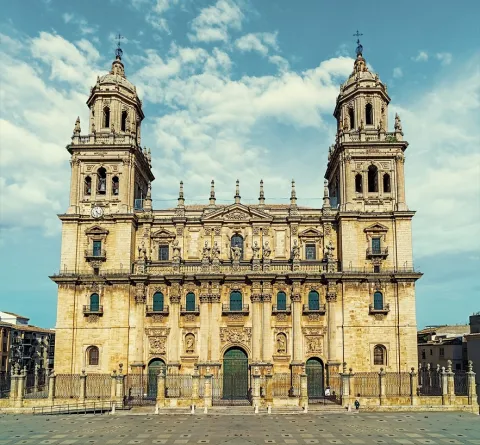
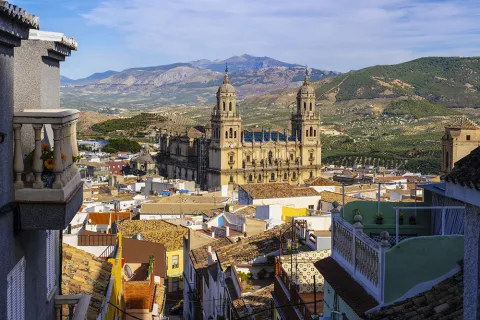
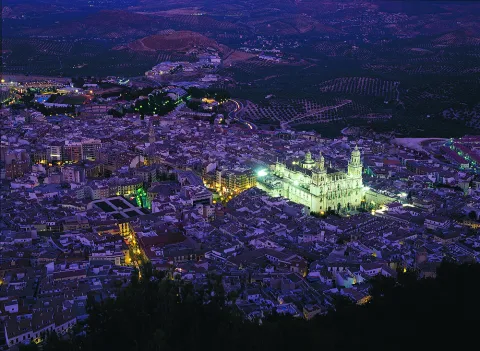
As we go through its historical centre, in streets, corners and monuments we discover the richness of the coexistence of three cultures: Christian, Jewish and Muslim. We will walk through the narrow streets of the Jewish Quarter, we can visit the Arab baths of the 11th century in the basements of the palace of Villardompardo and admire the rosary of churches, some of them raised over ancient mosques and numerous convents. And visible from all points of the historical center is the Cathedrala true jewel of the Spanish Renaissance.

On the hill of Saint Catherine the imposing castle of the same name, from where you can admire extraordinary panoramic views over the Guadalquivir valley, the countryside and the Sierra Sur behind your back.

Jaén, the world's capital of olive oil, is today a modern city as its squares, gardens and large avenues testify.

Telecomunicaciones
Teléfono
953 313 281
Sitio web
https://www.jaencityofgastronomy.com/ www.culturayturismojaen.es
Correo electrónico
otjaen@andalucia.org
Ubicación
Nombre
Jaén
Latitud
37.772770
Longitud
-3.787970
Distrito
Municipio
Ubicación en el mapa
POINT (-3.78797 37.77277)
Imágenes
imagen
Image
565c6eb4-5942-2554-4006-8ceab143b8db?t=1619526386769
Imagen principal
Desactivado
imagen
Image
b424e57e-dc79-a428-daca-35eeb083bea1?t=1619526386986
Imagen principal
Desactivado
imagen
Image
55d454b0-8c1d-d414-0b1e-e823a8ec112e?t=1603985313163
Imagen principal
Desactivado
imagen
Image
7715a631-5b75-15b6-5980-62fd2f46d2e7?t=1603985472695
Imagen principal
Desactivado
imagen
Image
01dc3f35-ff78-28a9-7c8e-35e481da450c?t=1619526387099
Imagen principal
Desactivado
imagen
Image
0fa84b0a-05ed-c54d-7d4b-22183bb3e3a6?t=1619526387156
Imagen principal
Desactivado
imagen
Image
14937a6a-998e-3821-a140-fd3fd1ca419f?t=1603985313279
Imagen principal
Desactivado
imagen
Image
d06ab30b-57dd-c08d-06c5-3ede89eecc14?t=1585768371068
Imagen principal
Desactivado
imagen
Image
e6950987-2c4d-dd30-5a67-62a547b05db3?t=1619526387274
Imagen principal
Desactivado
imagen
Image
3540dc4f-fdd4-e549-c395-e4da63d47419?t=1619526387340
Imagen principal
Desactivado
imagen
Image
bfd586f4-48bc-d3aa-18ee-68705b3b0e19?t=1619526387391
Imagen principal
Desactivado
imagen
Image
144298d6-85db-03e9-e4c2-49526aac5889?t=1619526387572
Imagen principal
Desactivado
imagen
Image
0c7d68e7-f21d-8966-856c-2e62cd746a9f?t=1619526387623
Imagen principal
Desactivado
imagen
Image
48b3d107-5960-f7f2-e080-3c725a30800c?t=1619526387677
Imagen principal
Desactivado
imagen
Image
e1522135-9be2-ee72-37d1-29d49c34f935?t=1603115329866
Imagen principal
Desactivado
imagen
Image
7cae4916-09df-b35e-2986-f704ed193a4f?t=1619526387748
Imagen principal
Desactivado
imagen
Image
30754f84-6bf0-8bce-d131-7832dd6a306b?t=1619526387799
Imagen principal
Desactivado
imagen
Image
d5a8b2be-e7d6-1b7a-01b8-f4412b3d1e07?t=1603117566668
Imagen principal
Desactivado
imagen
Image
32ae96fb-7f94-4623-2b3d-b7fac51e241a?t=1619526387876
Imagen principal
Desactivado
imagen
Image
fcb67e8f-ebc1-467f-7b33-183b53cf1e8f?t=1619526387922
Imagen principal
Desactivado
imagen
Image
fedd54a5-2237-fd6e-425e-7237a8d0f26b?t=1619526388085
Imagen principal
Desactivado
imagen
Image
ec4ce20b-7984-d4fe-3bdf-d035228f9528?t=1619526388368
Imagen principal
Desactivado
imagen
Image
a3a10c78-37e3-21bd-b9d8-813f1849eefc?t=1619526388625
Imagen principal
Desactivado
Información adicional
Curiosidades

Horarios de visita


Oficina de información turística de Jaén.
C/ Carrera de Jesús, 2.
23002 Jaén
Tel. 953 190 455

Imágenes cabecera
imagen
Image
b963ff18-ff49-21ea-0900-3e68f5e313be?t=1606405214909
Imagen principal
Desactivado
Datos de interés

Tourist area: Jaén and surroundings
Altitude over sea level (m): 573
Extension (km ²): 424
Number of inhabitants: 120,021
Gentilicon: Jiennenses
Postal code: 2300x

Videos
Video file
Cultura

Jaén's architecture bears witness to the many civilisations that have inhabited the city and its surroundings throughout the centuries, resulting in an outstanding monumental heritage that includes both religious and civil buildings. Its historical and artistic legacy showcases a variety of architectural styles, including Gothic, Mudéjar, Renaissance, Baroque, and Neoclassical.

Among its most important monuments are the following:

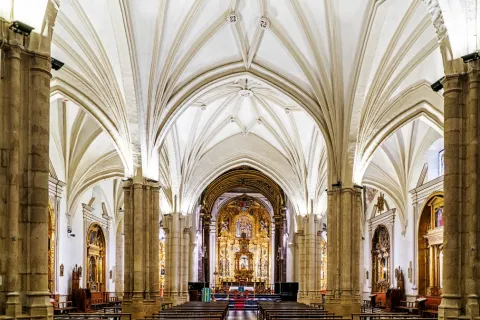
  • Cathedral of the Assumption of the Virgin, a masterpiece by one of the greatest Renaissance architects, Andrés de Vandelvira, and the inspiration for the construction of many cathedrals throughout Latin America. It is regarded as one of the finest examples of Renaissance architecture in Andalusia, which is why the process to obtain UNESCO World Heritage status for the cathedral began several years ago. The city's first cathedral was built on the foundations of the former Great Mosque following the conquest of Jaén by King Ferdinand III of Castile, known as Saint Ferdinand, in 1246. Later, during the 14th century, Bishop Nicolás de Biedma brought to the city the relic of the Holy Face (Santa Faz or Santo Rostro), believed to be one of the three cloths that, according to Christian tradition, Saint Veronica used to wipe the sweat and blood from Jesus' face on his way to Calvary. The presence of this relic in the first Christian cathedral transformed it into an important pilgrimage destination, making its expansion necessary in the Gothic style. Elements of this Gothic phase can still be seen in the apse of the present cathedral. Due to structural problems that arose during the 14th century, a new Renaissance cathedral was commissioned from the architect Andrés de Vandelvira. Although construction continued for nearly three centuries, Vandelvira's original design remained largely faithful throughout the project, resulting in what is considered the most architecturally balanced, harmonious, and proportionate cathedral in Andalusia, with one of the most solemn and majestic interiors in the region.
  • Basilica of Saint Ildefonsus. After the Cathedral, it is the largest church in the city. The earliest records of the original building date back to 1248, when it was established as a chapel serving the Cathedral. Two centuries later, in 1430, it became the setting for the famous miracle of the descent of the Virgin Mary to the city of Jaén. Following this event, it became a sanctuary dedicated to the image of the Virgin housed inside, under the title of Our Lady of the Chapel. In the 16th century, the Virgin of the Chapel was proclaimed the patron saint of Jaén. Finally, in 2010, Pope Benedict XVI granted the church the status of Minor Basilica. The building features three entrances: the oldest, in Gothic style, is located at the rear of the church. The side entrance, in Renaissance style, displays a relief depicting the Chasuble Bestowal upon Saint Ildefonsus. The last to be built was the Neoclassical main façade, crowned by a statue of the saint to whom the basilica is dedicated.
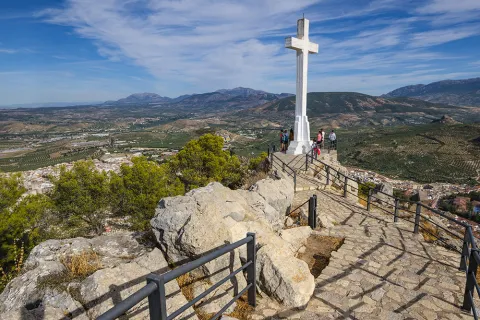
  • Santa Catalina Castle. An ancient Caliphal fortress stood on the summit of Santa Catalina Hill as early as the 9th century. Centuries later, following the conquest of the city by King Ferdinand III in 1246, the Christian castle that survives today was built. During the 19th century, the castle underwent several modifications to strengthen its defensive structures in response to the Napoleonic invasion. Close to the castle, the building that now houses the National Parador was constructed in the 1960s. From the summit there are spectacular panoramic views of the city and its surroundings, especially from the Cross Viewpoint. The fortress also houses an Interpretation Centre that explores the history of the castle.
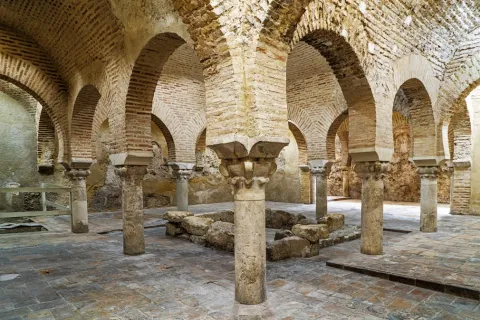
  • The Arab Baths. They are the largest and best-preserved Arab baths in Spain. Built in the 11th century during the reign of Abd al-Rahman II, they are located beneath the Villardompardo Palace in the heart of the city's historic centre. Covering an area of 450 square metres, they still preserve Almohad decorative elements, suggesting that they were restored towards the end of the 12th century. Between the 14th and 15th centuries, after they ceased functioning as public baths, the rooms were converted into tanneries. Later, at the end of the 16th century, Fernando de Torres y Portugal, Count of Villardompardo and Viceroy of Peru, built his palace above them. At the beginning of the 20th century, together with several adjoining buildings, they became part of a women's hospice. A section of the baths was rediscovered in 1913 and, a few years later, they were declared a National Monument. Today, following a restoration project that received the Europa Nostra Award, they form part of the "Arab Baths" Cultural Centre, which also houses the Museum of Popular Arts and Customs and the International Museum of Naïve Art.
  • Chapel of Jesús (Camarín de Jesús). The chapel and the convent church of Saint Joseph are the only surviving remains of the former Convent of Saint Joseph of the Discalced Carmelites, founded in the 16th century. The recently restored church, with its characteristic Carmelite façade featuring a niche, houses both the chapel and the Camarín de Jesús, created in the 17th century to enshrine the celebrated Renaissance sculpture of Nuestro Padre Jesús Nazareno ("El Abuelo"). The image belongs to the brotherhood founded in this very convent in 1588 and is carried in procession during the early hours of Good Friday before thousands of worshippers and pilgrims. The façade is adorned with a beautiful terracotta sculpture of Saint Joseph by the renowned ceramic artist Paco Tito.
  • Church of La Magdalena. Originally the city's Great Mosque during the Islamic period, it was converted into a parish church following the Christian conquest. Its main façade and interior are Gothic in style, while one of its towers still preserves the former Arab minaret. The church contains several important works of art, including Calvary by Jacobo Florentino "El Indaco", a panel of Our Lady of the Pillar attributed to Pedro Machuca, the 16th-century Christ of Clemency by Salvador de Cuéllar, and the 18th-century image of Saint Mary Magdalene by Mateo de Medina. The courtyard of the former mosque, with its rectangular ablution pool, served various public purposes during the Christian era and was landscaped with gardens and ornamental fish during the 20th century.
  • Church of Saint Bartholomew. It is one of the oldest churches still standing in the province of Jaén. Dating back to the medieval period, this religious monument features a Baroque exterior and a Mudéjar interior. Among its highlights is a green glazed ceramic baptismal font decorated with 15th-century Gothic inscriptions.
  • Provincial Council Palace. This palace was built in the mid-19th century by architect Jorge Porrua. Originally, the site was occupied by the Convent of Saint Francis, commissioned by King Ferdinand III in the 13th century. A century later, King Peter I of Castile ("Peter the Cruel") granted it to the Franciscan friars. Following the ecclesiastical confiscations, the building became public property and was eventually converted into the headquarters of the Provincial Council. Today, visitors can explore its central courtyard and the lower galleries.
  • Oppidum of Puente Tablas. The fortified Iberian settlement of Puente Tablas is located just 4 kilometres from Jaén. Over more than thirty years of archaeological research, the site has revealed its outstanding historical importance through evidence of continuous human occupation from the Bronze Age to the Islamic period. However, its most significant phase dates from the Iberian period, particularly the 4th century BC. Visitors can discover how the Iberians of the Upper Guadalquivir lived while exploring one of the most impressive defensive systems of the period, with more than 300 metres of preserved walls standing over 5 metres high. Visitors can enter the settlement by following the same route once used by its ancient inhabitants, passing through the famous Sun Gate.
Naturaleza

Half of the municipality of Jaén lies within the Baetic Mountain Range. This impressive landscape can best be appreciated from Santa Catalina Castle, an exceptional viewpoint overlooking both the city and the surrounding countryside.

To the south stretch rugged mountains and rocky peaks, forming the peri-urban parks of Santa Catalina and Monte La Sierra, where visitors can enjoy a wide variety of hiking trails and mountain routes just a short distance from the city centre.

To the north lies the fertile countryside, with gently rolling hills covered by centuries-old olive groves. Further afield, the landscape gradually gives way to pine forests, terebinths and holm oaks, announcing the arrival of the mountains.
Activities such as hiking, cycling, rock climbing and via ferrata are all within easy reach for both residents and visitors, only minutes from the city centre.

Fiestas y Eventos

The Bonfires and the San Antón International Urban Night Race, declared a Festival of National Tourist Interest, is held on the weekend closest to 17 January. More than 12,000 runners enjoy a unique atmosphere along the route, with music, flaming torches and enthusiastic crowds cheering them on. Afterwards, bonfires are lit in neighbourhoods and squares throughout the city. Around these fires, people gather to sing, dance and enjoy the traditional "melenchones", while sharing local cured meats, regional wines and rosetas (popcorn), creating a warm and festive atmosphere where unforgettable moments are shared.

Carnival. Carnival celebrations in Jaén have a history spanning more than 700 years. For over a month, comparsas, chirigotas and other carnival groups parade through the streets to the Darymelia Theatre, where they perform humorous, satirical and socially critical songs as part of the competition organised by the City Council. Local groups and individuals also take part in the fancy-dress competition, delighting spectators during the colourful parade through the city centre.

Holy Week in Jaén is a religious, cultural and tourist event of outstanding importance. Its brotherhoods and confraternities preserve a legacy dating back to the 16th century, renowned for the beauty and artistic quality of their religious sculptures. Holy Week has been declared both a Festival of National Tourist Interest and of Andalusian Tourist Interest. Twenty-one brotherhoods take part in the processions from Palm Sunday to Easter Sunday, with one of the most moving moments taking place during the early hours of Good Friday, when El Abuelo is carried through the streets.

The International Olive Oil and Related Industries Fair (Expoliva), held every two years at Jaén's Exhibition and Conference Centre, is recognised as one of the world's leading events in the olive oil sector. Over four days, it brings together farmers, machinery manufacturers, transport companies, olive oil producers from around the world, scientific symposiums and conferences, making Jaén the international capital of the olive-growing and olive oil industry.

San Lucas Fair. This fair originated in the 14th century through a privilege granted to the city by King Henry IV of Castile. Originally held in August to coincide with the harvest season, it was moved to October during the 19th century to coincide with a livestock fair. From 12 to 18 October, the city hosts numerous events including bullfights, concerts and theatre performances. At the Alfonso Sánchez Fairground, visitors can enjoy open festival tents serving traditional cuisine, live music, dancing and fairground attractions, as well as the traditional tents at the "La Vestida" fairground.
Music plays an important role in the city's cultural life. Jaén hosts the Autumn Festival, the prestigious Jaén International Piano Competition, Oleosónica, Jaén Sounds Like Opera, the Bolero and Latin American Music Festival, many other music festivals throughout the year, and the internationally recognised Jaén International Jazz Festival: "Jazz Among the Olive Trees".

Other Festivals and Events:

The Bonfires of Saint Anthony, held on 17 January. Amid singing and dancing, the traditional "melenchones" are performed while people share laughter, conversations and "rosetas" (popcorn). This festival has been declared a Festival of National Tourist Interest.

May Crosses Festival. A tradition in which local residents decorate crosses beside churches, in squares and other iconic places throughout the city. Both locals and visitors tour the crosses, enjoying the festive atmosphere, gastronomy and community spirit that surrounds them. Children also take centre stage on Friday afternoon, parading through the city centre with small floats decorated with crosses, Christs and Virgins of their devotion. They are dressed in traditional mantillas and accompanied by civil, religious and military representatives, delighting everyone who watches the procession.

Corpus Christi.

Festival in Honour of the Virgin of the Chapel, co-patron saint of the city. These festivities take place in the popular San Ildefonso district, combining religious devotion to the patron saint with celebrations in Jaén's best-known gastronomic quarter, where bars and restaurants extend their terraces into the streets to offer their finest dishes. The City Council also organises a wide programme of cultural and tourist activities throughout the festival. Every 11 June, the Lola Torres Choirs and Folk Dance Association holds a floral offering to the Virgin. Participants parade dressed in the traditional pastira costume (for women) and chirri costume (for men), joined by many other residents of Jaén. The celebration concludes with the performance of the traditional Bolero de Jaén before the Virgin's image. In the afternoon, the Virgin is carried in procession through the city centre to the cathedral.

25 November – Saint Catherine's Day. The feast day of Jaén's co-patron saint is celebrated on Santa Catalina Hill. After the procession climbs to the castle, a religious service is held inside. Afterwards, visitors enjoy food from the stalls and bars set up around the castle, where grilled sardines, barbecued meats, patatas a lo pobre and paella are among the traditional dishes served in a wonderful atmosphere of celebration and togetherness.

From the beginning of December, the city enjoys a wonderful Christmas atmosphere with the switching on of the festive lights and the start of an extensive programme of activities, including concerts, street music and theatre for all ages. The popular central street, Calle Carrera, is beautifully decorated and welcomes everyone who wishes to share moments of joy and celebration with the people of Jaén.

Gastronomía

Jaén's gastronomy is varied and is based on the Mediterranean diet, in which extra virgin olive oil gives dishes their distinctive aroma and flavour.

Among the city's most traditional dishes are:

  • Pipirrana, made with finely chopped ripe tomatoes and dressed with a mixture of extra virgin olive oil, green pepper, garlic, egg and salt. It is often topped with grated boiled egg and, optionally, tuna.
  • Homemade partridge pâté.
  • Migas with traditional accompaniments.
  • Scrambled eggs with broad beans and Iberian ham.
  • Broad beans, campion greens or spinach with pine nuts, showcasing the quality of Jaén's vegetable gardens.
  • Roast kid goat, chicken, young goat or lamb.
  • Trout from the rivers of Jaén.

Among the desserts, we should mention gachas dulces (sweet porridge), fried milk, and, of course, the traditional pastries made in the local convents (the Bernardas, Santa Clara and the Carmelite nuns).

If you would like to enjoy a unique culinary experience, the San Ildefonso district is home to two Michelin-starred restaurants: "Bagá" and "Dama Juana".

Historia

The human presence in the present city is seen from the calcolitic stage, also called the Copper Age, when there were several villages scattered around the area. In the surroundings of the city, rock paintings and remains of megalithic architecture have been found.

Otra información

Jaén is a city that houses a large number of legends very imbricated in the soul of its people. Maybe the most famous of them is the "Maline lizard"or"Jaén lizard. "The influence is such that it has become one of the symbols of the city, being present in its architecture, rides and concerts. It is based on the existence of a dragon (lizard) that had the population afraid and that with ingenious tactics its inhabitants managed to get rid of it.

Loading map
Preparing points of interest and routes...
Imagen principal
imagen
Image
a4c3eb80-f7b7-801d-a6f0-4d01416611b6?t=1603979481525
Imagen principal
Activado

Huelma

Submitted by brandcode_deweloper on
Id
731976
Perfil de redes sociales
Facebook
https://www.facebook.com/aytohuelma/timeline
Twitter
https://twitter.com/AytoHuelma
Instagram
https://www.instagram.com/aytohuelma/
Descripción
Breve descripción

Huelma is a important location located to the south of the region of Sierra Magina, right on the provincial border with Granada.The third north of the municipality is included in the Natural Park of Sierra Magina, where you reach heights that exceed 2,000 m to go down to the Jandulilla Rivereast of the municipal term. Solera is a population that was annexed to Huelma in 1975.It is an important municipality in the region from an economic point of view. The main industry is the Manufacture of furniture of wood, with national and international markets, and which has been able to be renewed despite times of crisis.The ceramic and textile industry. It has important assets for cultural, nature and sport tourism.

The United Nations agriculture is the most employed, followed by the Services sector,the olive tree is the largest crop, followed by cereal, while fruit and vegetable crops are almost testimonial. Within the industrial fabric there is a oil packaging which belongs to the Designation of Origin of Sierra de Magina.

The livestock It also takes on special relevance, it is raised livestock, sheep, and sows. The exploitation of the montesine sheep, originating in the mountain areas of the province of Granada and the south of the province of Jaén, is noteworthy.Huelma is a compulsory stop in the tourist product "Travel to the time of the Iberians," as it offers a Iberian field dated in the 4th century BC in the place the "Cortijo Pajarillo. "

With regard to his historical-artistic heritage, his castle which stands on a promontory of strong earrings. It is of interest to the parish Church of the Immaculate of the 16th century.

Telecomunicaciones
Teléfono
953 390 210
Sitio web
http://www.aytohuelma.es/
Fax
953 390 000
Correo electrónico
registro@aytohuelma.es
Ubicación
Nombre
Huelma
Latitud
37.647300
Longitud
-3.455180
Distrito
Municipio
Ubicación en el mapa
POINT (-3.45518 37.6473)
Imágenes
imagen
Image
43fe4e80-11d9-0d8b-2169-ad2a0fc6dbe3?t=1617881108892
Imagen principal
Desactivado
imagen
Image
3428f7da-4c13-cfba-84bd-1d2ca1b25d18?t=1611061743692
Imagen principal
Desactivado
imagen
Image
477327e7-5dce-e2cb-4f69-56be2c8b5463?t=1617881108966
Imagen principal
Desactivado
imagen
Image
de13f7fc-a3b5-7cfd-d9ab-7637e127225a?t=1617881109014
Imagen principal
Desactivado
imagen
Image
a6ec54c2-ddf0-721c-d68f-eb0bd60073e1?t=1617881109060
Imagen principal
Desactivado
imagen
Image
c666021c-530c-b870-352b-24ff47f28b2f?t=1617881109115
Imagen principal
Desactivado
imagen
Image
c430746c-b7ba-3f50-1ae0-46fc045a1113?t=1617881109294
Imagen principal
Desactivado
Imágenes cabecera
imagen
Image
huelma
Imagen principal
Desactivado
Datos de interés

Distance to the capital (km): 50
Altitude over sea level (m): 1100
Extension (km ²): 250
Number of inhabitants: 6051
Gentilice; Flakes
Postal code: 23560

Videos
Video file
Cultura

The beautiful urban town of Huelma, made up of a set of white streets and houses, located under the remains of its castle, make up a harmonious and attractive set that has valued their cataloguing as Historical-Artistic Set in 1971.

From its rich heritage we highlight:

  • Huelma or Alburquerque Castle. It is located on the outskirts of the city centre of Huelma, on a hill that dominates the entire population. The strength we contemplate today was probably built by the Lord of the villa, the Duke of Albuquerque, in the first half of the 16th century. On that same place there was a Muslim castle from which only some of the canvases of the wall and the Great peel inside the castle. A quadrangular plant with 4 cylindrical towers, one in each corner, united with each other by a wall cloth and an open door in a half-point arch at ground level. On the west side it stands directly on a large peñasco, cut to peak, which is already a great fortress.
  • Church of the Immaculate Conception. It is considered as a jewel of Renaissance architecture in the province of Jaén. The most great artists of the time: Diego de Siloé, Francisco del Castillo el Viejo, Andrés de Vandelvira and Francisco del Castillo el Joven. The building presents basic plant divided into 3 ships. The header of the flat tester church is covered with canyon vault with cassettes. The southern façade is of great elegance and balance, based on Italian models. He's got the body of peeled bells.
  • Ibero Sanctuary of Pajarillo. It's a oppidum ibero found in the pastry of Cabritas de Huelma, dates from 4th century BC, and the sculptures found are found in the Provincial Museum of Jaén. The figures found are: a wolf, a warrior, two taps, a young boy and a carnivore. This sanctuary is located in the Jandulilla River Valley, the commercial pass between Murcia and the Guadalquivir Valley.
  • Castle of Solera. Here, on a hill, are the remains of a Nazari castle built in the 13th century. From it you can see splendid views of the Vega in which the Jandulilla and Garganton rivers converge.
  • Hermitage of Our Lady of the Fuensana. Located about 7 km. of the population, in the heart of Sierra Magina, the sanctuary of Fuensanta is the epicenter of the devotion of the strikers to be the house of their excellent patron.
Naturaleza

A very important part of the municipality of Huelma is crossed from south to north by the river Jandulilla, dividing it into two similar extension areas. On the left bank of the river is the Mágina saw massif and the town de Huelma. On the right margin, the Cabra saw and the historical core of Solera.Approximately 10% of the area of the municipal term is included in the Sierra Magina Natural Park. There are several signposted itineraries such as the healthy route of the Cordel del Salado, the road of the Borregueras or the path of ascending to the Magina peak that will offer us amazing panoramic views of the region.

The routes by the karst of Sierra Magina will allow us to observe meadows, bushes, sabinars and the vegetation of the summits (blue lead, fine piorno, mountain ruse, thyme and alfacarensis herring), as well as karst formations, snow wells, perdicular eagles, grey colalba, and capillants.

The low areas are covered with olive and almond plantations, mainly, although there are also frequent coals, complaints and pineapples of carrasco and salgareño pine.

Fiestas y Eventos
  • Holy Weekwhich has a unique character within the region, it has the collaboration of numerous cofradies and its processional parades are attended by many neighbors either by devotion or by tradition.
  • May parties and September romance. These are the parties in honor of the Virgin of Fuensanta, patron of Huelma. The first Sunday of May is produced the transfer of the Virgin of the Fuensana and of Saint Lucia from the sanctuary to the parish church, each year participating a greater number of carrozas and rosemary.The first Sunday of September the Romeria in the Sanctuary of the Virgin of Fuensanta.Since the 16th century, the fellowship of Our Lady of Fuensanta and Saint Lucia has organized this pilgrimage that is held every year on the first Sunday of September. The events begin with the reception of the subsidiary cofradies of Cambil, Solera and Torres and the road to the sanctuary. After the Eucharist, the size of the Virgin is processed, which is accompanied on her throne by the image of Saint Lucia. In a typical rosemary environment, a campera day is spent in which you have to drink the water from the well of the sanctuary, to which many miracles have been attributed.
  • Carnival. He's very popular. Since 1989, there has been a competition for groups of Chirigotas and Comparsas, as well as dances. To close the festivities, the "Carnival Filler" is celebrated.
  • August Fair. Also called by Saint Augustine. During the parties the Expooluma Show Fair and the "La Serranilla de Magina" competition is held.
  • Popular holidays in the municipalities, each of the villages belonging to Huelma also celebrate the day of their feast: in May are the Feasts of San Isidro in Solera; in June are the Feasts in Cabritas de Huelma; in July the Feasts in La Calesera and La Unión Plaza Nueva; and in August are the Feasts of the Emigrant in Solera, the Villa and Campo del Moral.

Gastronomía

Huelma's gastronomy is succulent and varied. They highlight strong dishes like the "scallops", bean peas with cod, chotto al ajillo, andrajos with cod, andrajos with hare. It is typical of the "cucumbers" on Holy Week.

In the field of pastry there is a large variety of sweets: "roscos," "flowers," "drunks," "buds," "polvorons," "stained," "moles eggs," "papajotes," "membillo meat," "gachas" and the typical "Hornazo" for Resurrection Sunday.

Historia

One of the most important milestones in the history of Huelma is the presence in these lands of a Heroic shrine of the Iberian era, specifically on the so-called hill "The Pajarillo"which can be given in the 4th century BC This sanctuary would be the entrance door to a territory controlled by an Iberian aristocrat on the Jandulilla River, and whose headquarters would be located in Ubeda. In Roman timesin the third century AD repopulate these lands the high valley of Jandulilla with small farms.

During the Muslim era we are living moments of great splendor in Huelma. From the conquest of the Iberian Peninsula by this civilization, it is when the present core arises around the hill where the castle is located. This Muslim fortification will become a key piece in the Middle Ages border struggles between the kingdoms of Castile and Granada.

The Nazaris They will possess it. to the late date of 1438, year in which it is conquered by Mr Íñigo López de Mendoza, I Marqués de Santillana. King John II will be granted it in a lordship, and years later, in 1474, Henry IV elevates the Lordship to the category of Vizcounty and then County in the person of D. Beltrán de la Cueva, I Duke of Albuquerque. Hence the castle was built at this time on the remains of the ancient Muslim fortress, also known as the "Castle of the Dukes of Albuquerque."

After the end of the Granada war, 1492, Huelma entered a period of political and economic stability during the first half of the 16th century, thanks to the repopulation and the cultivation of new lands. These years of economic bonus will be reflected in the undertaking major religious and civil worksas is the parish church.

It will be in the late 16th and early 17th century when there is a decline in the population due to crises and epidemics. The War of Independence will be the entry of French troops into Huelma who will destroy the fortress.

Loading map
Preparing points of interest and routes...
Imagen principal
imagen
Image
Huelma
Imagen principal
Activado

Castillo de Locubín

Submitted by brandcode_deweloper on
Id
727290
Perfil de redes sociales
Facebook
https://www.facebook.com/ayuntamientocastillodelocubin
Twitter
https://twitter.com/aytoclocubin
Youtube
https://www.youtube.com/channel/UCwDa42I-Buh3vodwwfVgG-A
Descripción
Breve descripción

The people ofCastillo de Locubínis located in theSouth Sierraof Jaén, at the gates of the subbetic mountain range and its municipal term is populated with olive trees and cherry trees. At the edge of the Achillos saw, and located in a valley on the banks of the San Juan river, they alternate areas of saw with valleys of garden tiles.

Its municipal term includes theSales of Carrizal and Los Chopos.The birth of the San Juan River is a place of great beauty enjoyed for its recess by both the castilleros and visitors.

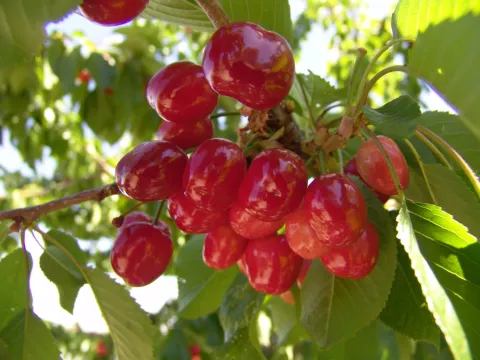
In this town the cherry is the emblematic fruit, the object of a fair and a party around its collection. During the flowering time of this tree, towards the end of March, it offers a picture worthy of being admired.

In its artistic heritage we highlight thethe parish glesia of Saint Peter the Apostle, built in the late 16th century. Its main cover is classic and the side mannerist.

In the surroundings of the city centre there are surveillance towers of the Muslim era, such as theLa Villeta, that still retains the bottom and part of the wall that surrounded it.

Telecomunicaciones
Teléfono
953 591 364
Sitio web
www.aytocastillolocubin.org
Fax
953 591 311
Correo electrónico
info@aytocastillodelocubin.org
Ubicación
Nombre
Castillo de Locubín
Latitud
37.527950
Longitud
-3.942240
Distrito
Ubicación en el mapa
POINT (-3.94224 37.52795)
Imágenes
imagen
Image
c072e489-a7bd-6ea2-ee40-6da8f81ae06c?t=1608754191263
Imagen principal
Desactivado
imagen
Image
eacbb044-91b9-b44c-d698-8d0fd2f2a0bf?t=1617626152992
Imagen principal
Desactivado
imagen
Image
0f6df4ec-51c5-7e6a-dc5d-1a4867f56640?t=1617626153064
Imagen principal
Desactivado
imagen
Image
9838817d-e08b-738b-a044-f2006e34ee8b?t=1610988809820
Imagen principal
Desactivado
imagen
Image
215554f0-7393-a5a4-8b3a-ae69aedc443b?t=1610988878829
Imagen principal
Desactivado
imagen
Image
50981034-f68c-0985-6cc5-3b14f1a341c6?t=1617626153156
Imagen principal
Desactivado
imagen
Image
2277ec7f-6bf1-a043-39a7-311d73938a7f?t=1617626153243
Imagen principal
Desactivado
imagen
Image
ad8aa008-a4da-489a-2fde-88a89eea54f7?t=1617626153454
Imagen principal
Desactivado
imagen
Image
bdef093b-f0da-042c-4702-11f61ae50075?t=1617626153593
Imagen principal
Desactivado
Imágenes cabecera
imagen
Image
castillo de locubin
Imagen principal
Desactivado
Datos de interés

Tourist area: Sierra Sur and Campiña de Jaén
Distance to the capital (km): 68
Altitude over sea level (m): 550
Extension (km ²): 103
Number of inhabitants: 5366
Gentillo: Castilleros
Postal code: 23670

Videos
Video file
Cultura

Its artistic heritage is spread between the city centre and the surrounding area. Inside the city centre we have:

  • The church of San Pedro, built around 1580. On the cover there are two dogrous columns that culminate in a hornaine with a Saint Peter Apostle.
  • Hermitage of Our Father Jesus, of 1700 and that preserves the paintings and the original wood size of the Patron, Our Father Jesus Nazarene.
  • Hermitage of San Antón, dates from 1800, and was demolished and rebuilt in 2001.

In the urban area:

  • Tower of the Batan, of Roman origin to which an Arab body was added. It was used as a flour mill and later oil mill.
  • La Villeta, remains of an Arab fortress from which its bottom and part of the wall are preserved.
  • Low Head of Beautiful Encina, a fortified population centre, founded at a late moment of Iberian culture and that reached its development in the Roman stage.
  • Torre del Marroquín, a medieval atalaya in good condition of 9 m high and that has been declared Good of Cultural Interest.

Naturaleza

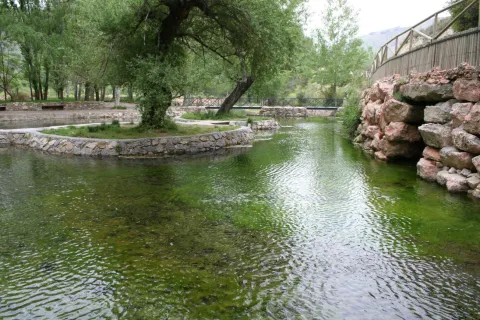
The birth of the river San Juan is the green lung of Castillo de Locubín, it is a place of great beauty, surrounded by vegetation, has an abundant flow of water that sprouts from the interior of the mountain. Around this source, numerous pools of crystalline water have been formed, from which water sprouts into columns of bubbles. A space that has become a recreational area for casters and visitors.

And on both sides of the San Juan River is the vega castilleraa fertile land that welcomes a care and valuable agricultural landscape, in which all kinds of fruit are given, with special predominance of the cherry trees.

To discover in more detail both the fauna and the flora of the municipal term, nothing better than to travel some of the the paths and ways they go through these places. Sendas that, without a high level of difficulty, we can pass them to discover the contrasts that enclose this earth.

One way to know the characteristics of the rocks in these saws is to visit some of the caves that form these rock masses. One of the best known is the Cueva Jabonerowho was inhabited at the age of the Copper.

The visit to Low Head of Beautiful Encina, it is an elongated plateau with abrupt slopes in all directions, which was an archaeological settlement known since ancient times.

The data obtained in the excavations indicate that the oppidium de Cabeza Baja de Encina Hermosa is founded in the late 3rd century a. C., and develops a population that follows the typical Iberian urbanism of Alto Guadalquivir.

Fiestas y Eventos
  • Fair and Feast in honor of Our Father Jesus Nazarene, from 7 to 11 September.
  • Cherry Party, It has been held since 1983 and has been a great boost to tourism and local gastronomy. Among the many activities that are organized, is the free tasting of different products that have the main basis of cherry. Its date is usually in June, when the collection ends.
  • San Antonio party, is celebrated in the Pedanía de Ventes de Carrizal on 13 and 14 June.

Gastronomía

The wide variety of fruits and vegetables that are produced in the gardens of Castillo de Locubín gives us an idea of the diversity of dishes in the town.

Between the strong dishes are: Oreganillo de orza, Migas with melon, the bowling soup, the Holy Week potage, Cod casserole, Chotto al ajillo, rabbit to the oreganillo, gazpacho and Ajowhite with cherries.

The desserts include the multiple fruit compots and jams of the orchard, mainly cherries. We must mention the Cherry Liquor, which is only made in this town.

Among the pastries: the Castling Mantawhich is a biscuit filled with natural products; castles, wrapped in sugar and egg whites; almond trins, papuecas and cherry chocolates.

All these products are served for free at the cherry fair.

Historia

The first testimonies of the human presence in this municipality date back to the 4th millennium BC in the caves of the and the scrap, inhabited by pastors who made ceramic with incisions.

In the municipal term of Castillo de Locubín the Iberian village of Cabeza Baja de Encina Hermosawhich reached its development in the Roman era. And to this Roman imperial era corresponds the Roman villa of the Cortijo del Baño, in the pedanía de Ventes de Carrizal.

During the Islamic stage it was known as Hisn al- Uqbin that some translate by "Castle of the Eagles." The history of this town was very linked to that of Alcalá la Real on which it depended.

In the time of Fernando III, he formed part of the territories of the Order of Calatrava and constituted one of the advanced limits of the commission of Martos. And it will be King Alfonso XI who gives the castle and the village of Castillo de Locubín to the people of Alcalá la Real, which will last until the first decades of the 19th century.

It will be in 1835 when after several attempts he can become independent. In 1915, King Alfonso XIII gave him the title of city.

Otra información

We want to quote one of the many legends that exist around the image of the Nazarene Jesus. It is said that when the image was taken on a wagon to Alcalá La Real, they stayed in Castillo de Locubín, and when the next morning they prepared to continue the road, the weight of the image was such that the oxen of the wagon could not with the weight. What was understood as a sign that the image should remain in this place. So it was done and now it is the image that they venerate as a pattern.

Loading map
Preparing points of interest and routes...
Imagen principal
imagen
Image
castillo de locubin
Imagen principal
Activado

Cambil

Submitted by brandcode_deweloper on
Id
726294
Perfil de redes sociales
Facebook
https://www.facebook.com/ayuntamientodecambil/
Twitter
https://twitter.com/aytocambil?lang=es
Descripción
Breve descripción

Cambil is a municipality located in the south of the province of Jaén and integrated into the Sierra Mágina region. Its municipal term ascends from the Guadalullon River to the south, to the summit of Mount Almadén, the second highest peak of the province. Regored by the rivers Villanueva, Oviedo and Cambil, between fields of cereals, olive trees and fruit.

It is of great interest that the population centres in its term, such as the village of Arbuniel, with a great wealth of water and good weather in summer, make it an ideal place to spend the summer months; or the corrijada of Matabejid, highlighted by the peculiar historical architecture of its constructions.

From the artistic heritage of Cambil, the church of Our Lady of the Incarnation, from the end of the XVI, built in the Renaissance style, stands out. He keeps an extraordinary Renaissance altarpiece from Sebastián Solís.

And also, the Old Hospital, raised in the second half of the 18th century and which is one of the most baroque examples of the province of Jaén.

    Telecomunicaciones
    Teléfono
    953 961 599
    Sitio web
    www.cambil-arbuniel.es
    Fax
    953 961 696
    Correo electrónico
    ayuntamientocambil@gmail.com
    Ubicación
    Nombre
    Cambil
    Latitud
    37.676840
    Longitud
    -3.564920
    Distrito
    Municipio
    Ubicación en el mapa
    POINT (-3.56492 37.67684)
    Imágenes
    imagen
    Image
    d33bc3a9-f232-f251-6b78-a6f430dc6292?t=1585576072643
    Imagen principal
    Desactivado
    imagen
    Image
    5b0fa44f-ec9b-0367-18d9-37822510cdda?t=1616174025504
    Imagen principal
    Desactivado
    imagen
    Image
    2a8a3d78-9893-da68-8d6f-fdfc326f8dfb?t=1585576072117
    Imagen principal
    Desactivado
    imagen
    Image
    2805d7be-df5e-d332-82d2-1f61e4807f94?t=1585576070079
    Imagen principal
    Desactivado
    imagen
    Image
    e29a7b00-d085-f745-8318-b2651f873861?t=1585152488274
    Imagen principal
    Desactivado
    imagen
    Image
    f5a943c2-8333-043c-1c86-89f0aee44ea5?t=1585576068494
    Imagen principal
    Desactivado
    imagen
    Image
    fab3b723-93e3-911c-2441-ae7a68e69096?t=1585576068162
    Imagen principal
    Desactivado
    imagen
    Image
    b02e8f76-d7f5-a19c-4ddb-d3c9b146d21c?t=1603136354445
    Imagen principal
    Desactivado
    imagen
    Image
    b5660670-8dbf-fba1-e515-08dcc324b28d?t=1603138798603
    Imagen principal
    Desactivado
    imagen
    Image
    68856994-720e-0150-e135-2619d62d9167?t=1603139571321
    Imagen principal
    Desactivado
    Imágenes cabecera
    imagen
    Image
    cambil
    Imagen principal
    Desactivado
    Datos de interés

    Tourist area: Sierra Magina
    Distance to the capital (km): 32
    Altitude over sea level (m): 822
    Extension (Km2): 140
    No. of inhabitants 2,703
    Genuine:
    Postal code: 23120

    Videos
    Video file
    Cultura

    From the artistic heritage of Cambil we highlight the following points of interest:

    • Castles of Cambil and Alhabar. The castle of Cambil It is located on the left bank of the Camil River and above a high rock flask, with a wall that falls vertical on the channel. The castle of Alhabar is located on the right bank of the same river, on another rocky flask and in front of the castle of Cambil. Both castles were declared "Good of Cultural Interest" in 1985.
    • Historical helmet, declared Good of Cultural Interest in 2012: located at the foot of two hills crowned by the castles of Cambil and Alhabar, crossed by the River Cambil, and around a historic road: that of Arbuniel. The image that characterizes its historical ensemble is generated by a set of crouched buildings with steep roofs of Arab tile, solarium houses in the lower area, and narrow and winding streets with straps and adarves in the upper parts.
    • Castle of Mata Bejidit is located between the mountains of Magina and Almadén, it seems to be of Christian construction from the early 14th century. Its function is essentially strategic and, by its size, it had the capacity to accommodate a small garrison. Also declared Good of Cultural Interest in 1985.
    • Our Lady of the Incarnation Parish Churchbuilt in the late 16th century, the exterior is sober and compact. Already inside, the main altar has an extraordinary Baroque altarpiece attributed to Sebastian de Solís.
    • Old Hospital of Poor Passengers, raised in the second half of the XVIII and on whose facade the exuberance of the baroque is noticed, being considered one of the most baroque monuments of the province.
    • Single houses: House of the Salazares and House of the Palace in Calle Real, both of them also show baroque facades of the 18th century.
    • Prehistoric reptile tracks, just a mile from Cambil, we found a trace of eight traces of the arcosaur reptile. Several of them are currently in a ballot box inside the conistory building.

    Naturaleza

    Change is the municipality that brings the most area to the Natural Park of Sierra Mágina, 25% of its territory is within it.

    The municipal term extends all the west side from the Guadabullón River until Almadén peak, with an altitude of 2,036 m, in Sierra Magina. For this reason we will find a great variety of both fauna and flora.

    At the same time, this variety at the altitude of the land will allow us to have places from which we can observe extraordinary panoramic views, both of the Jiennense countryside and of the fertile valleys that form the basins of the numerous river courses that travel these slopes.

    The paths and recreational areas that spatter the territory show the diversity and natural wealth of these lands; among the most interesting are: water route and olive groves, Torrecilla route, the Salt Arroyo or the birth of the Arbuniel River, without forgetting the environment of the gradual birth of the Mata in Mata Bejid. In fact, in its term is one of the two Visitors' Centres of the Natural Park of Sierra Magina, the C. Visitors of Mata Bejidfrom which several signposted paths are based: Up to the Pico Magina and Miramundos, El Peralejo, Puerto de la Mata and Sendero Gibralberca.

    To go through these places is to feel nature in its greatest splendor: thus we will find numerous sources, acequias, charcas, river births that go down the slopes to meet the Oviedo and Villanueva rivers. Also with remains of construction related to agricultural uses and old livestock.

    In addition, climbing routes are availablein the same centre of Cambil; thus, in the rock Castillo there are 7 perfectly equipped ways.

    The vegetation is very varied and we will find oaks, complaints, olive trees, cornicabra, alamos, etc. with examples of considerable bearing the Chopos of Mata Bejid,which exceed 30 m in height and 7.5 m in diameter.

    Something similar can be said of the fauna of the area, because here we can find ourselves: the Hispanic goat, the badger, the boar, the gin, the grubby... while it will be very easy to observe the majestic flight of the royal eagle or other rapes.

    But if there's an identifier of your territory, it's water. Ríos, springs, acequias, fountains, etc., model the area of the valley, both in the same town of Cambil, vertebrated by the river, and in Arbuniel, where the sound of the water as a background soundtrack accompanies the visitor from Birth to the very streets of its urban town, on a spicy tour of acequias, light factories, mills, laundry, etc.

    These heritage elements linked to water, and those that have remained the fruit of past agricultural and livestock activities, give the natural environment of Cambio a predominant ethnographic and landscape character.

    Fiestas y Eventos

    Among the parties with the most roots and tradition are:

    • San Antón, San Sebastián, Candelaria and San Blas. On January 17, the feast of San Antón, is blessed to the animals and become "lumbres," which is extended until the 20th of the same month, the day of San Sebastián, with the procession of the saint and the lumbres are repeated. In the Candelaria, on February 2, the fire returned to the village square made with the branches that carry the bakers. And on February 3, in San Blas, doughnuts are blessed and "lumbres" return.
    • Patrons of the Holy Christ of the Marble. It is celebrated the last weekend of February, when the canvas containing the image of Christ is taken to its hermitage, where it will be veiled all night, as it happened in the legend around the image. The next day, Sunday, the image returns to the parish.
    • Patrons of the Blessed Virgin of the Rosarywhich took place on 15 August, since its original celebration was moved in October. This very day a cattle fair is held.
    • St. Anne's Day. "Cultural Week":The holiday of Santa Ana is celebrated on July 23, and a cultural week begins in which the City Council has a large number of sports and play activities.
    • Tambora, a feast that has been held since time immemorial on the day of the Immaculate Conception. On the night of the 7th, a drum is used to carry out the prayer, hence the name of the holiday. The image of the Virgin is processed at 24, 4 and 6 hours in the morning, accompanying the songs with a sound drum.
    • Holy Week.With the arrival of Easter, a period of religious and customary acts that make the people full of incense begin in Cambil.
    • "Historical Recreation" Day in Arbuniel: In August, the neighbors starred in a tour of the different historical stages of the town.
    • Top Trail Magina, a mountain race born in Cambil and ascends to the highest peaks of Jaén. It's quite a reference for the most demanding athletes.
    • Magina Bike, in March, andSan Blas Urban Challenge.

    Gastronomía

    In the gastronomy of Cambil, three elements are common: olive oil, present in all its dishes, which most of the ingredients are from its own harvest or from the rivers and mountains of its surroundings, and which are usually dishes with quite a caloric contribution, as the works in the field consume a lot of energy.

    • Carnerete, is a dish with a lot of energy, as it has a pancake, chorizo, morcilla, fried tomato and meat broth.
    • Almorony, a potation of beans to which various vegetables are added.
    • Brown beans with chorizo.
    • Cod.
    • Crab from the Arbuniel River in salsa.
    • CigaretteThis vegetable is added to the chorizo.
    • Migas.
    • Migas of flour.
    • Cake cakes.

    In the pastry shop they highlight:

    • Sweet peas, are made with milk, flour and chickenpox above.
    • Aguacebámade of water, barley, hazelnut, cinnamon, vanilla and sugar.
    • Guides in spirits.

    Historia

    The oldest testimonies of the territory of Cambil are located in the tunnel of Saint Lucia, where they were found Bronze Age burial (II millennium BC)

    From the year 182 to. C. The romanization of this region begins. They've been found. sarcophages, remains of columns and capitals in Arbuniel.

    The core of Cambil takes on importance from Islamic domination and is already cited in the 12th century (Qanbil). It was divided into two small villages separated by the river and protected by two small castles to ensure its defence.

    The town will be definitely taken from the Nazarian Kingdom in the year 1485 by the Catholic Kings, with the help of six thousand men who arrived from Jaén and the first use of artillery. In thanks to this help, the Catholic Kings determined that Camil would become part of the Jaén Council.

    He will be King Philip II, in 1558who emancipates Cambil from the tutelage of Jaen and orders that the lands of Arbuniel be added.

    In 1676 the segregation of Cambil of the population of Carchelejo including Carchel and Cazalla (today, Cárcheles).

    And it will be in 1862 when it is incorporated to Change the territory of Mata Bejid, which until then had been under Jaén's jurisdiction.

    Already in the 20th century, with the proclamation of the 2nd Republic and the beginning of the Civil War, Cambil is occupied by the Republican side, being bombed by Jaén and its surroundings by the "Legion Condor."

    In the 1960s, Cambil, like the other populations of Sierra Mágina, suffered from emigration from many of its people to the industrial centres and large cities of Spain and Central Europe.

    Loading map
    Preparing points of interest and routes...
    Imagen principal
    imagen
    Image
    cambil
    Imagen principal
    Activado

    Bailén

    Submitted by brandcode_deweloper on
    Id
    725225
    Perfil de redes sociales
    Facebook
    https://www.facebook.com/aytobailen/
    Twitter
    https://twitter.com/aytobailen
    Instagram
    https://www.instagram.com/aytobailen/
    Descripción
    Breve descripción

    The municipality of Bailén is located to the north of the province of Jaén, at the foot of Sierra Morena.

    It is the natural passage of the communications that link the center and north of the peninsula to the South, and also the east to the west of Andalusia.

    The occupation of its inhabitants alternates between activities related to olive and agriculture and industrial activity, especially in this regard the ceramic sector, both artisanal and industrial.

    Among its monuments is the church of the Incarnation, built in the 15th century in the Gothic-isabelin style. The hermitage of Our Lady of Solitude (S. XV) and Gothic style are also highlighted; that of Jesus and Christ, both of Baroque style, and that of the Virgin of Zocueca, patron of the city.

    Very interesting are the historical recreations that take place on the occasion of the anniversary of the Battle of Bailén, which was waged in the framework of the Spanish War of Independence and which was the end of the Napoleonic hegemony in Europe.

    Telecomunicaciones
    Teléfono
    953 678 540
    Sitio web
    www.ayto-bailen.com
    Fax
    953 671 205
    Correo electrónico
    turismo@ayto-bailen.com
    Ubicación
    Nombre
    Bailén
    Latitud
    38.095220
    Longitud
    -3.786720
    Distrito
    Municipio
    Ubicación en el mapa
    POINT (-3.78672 38.09522)
    Imágenes
    imagen
    Image
    01aef382-40cb-d886-3a48-2ceadc544e65?t=1585570572589
    Imagen principal
    Desactivado
    imagen
    Image
    38d2f669-9fc3-1965-6235-3df7c2d584cb?t=1603123241475
    Imagen principal
    Desactivado
    imagen
    Image
    cfaa8bc2-d8cd-29e7-cc45-974fcd634c81?t=1603123482393
    Imagen principal
    Desactivado
    imagen
    Image
    img55-jpg
    Imagen principal
    Desactivado
    imagen
    Image
    img20-jpg
    Imagen principal
    Desactivado
    imagen
    Image
    62d37cfc-f4e4-6d3b-ef25-b36f16fbae80?t=1616523194958
    Imagen principal
    Desactivado
    imagen
    Image
    4713702d-a158-e4b0-6c7a-fd1626699805?t=1616523195002
    Imagen principal
    Desactivado
    imagen
    Image
    img56-jpg
    Imagen principal
    Desactivado
    Información adicional
    Curiosidades

    Plaza Constitución, 1
    Tfno.: 953 678 540

    http://www.turismobailen.es/es/

    turismo@ayto-bailen.com

    Imágenes cabecera
    imagen
    Image
    bailen
    Imagen principal
    Desactivado
    Datos de interés

    Tourist area: Sierra Morena / Sierras de Andújar and Despeñacolos

    Distance to the capital: (km): 39

    Altitude over sea level (m): 343

    Extension (Km2): 117

    Number of inhabitants: 17667

    Gentilicon: Baileans

    Postal code: 23710

    Videos
    Video file
    Cultura

    In literature, Benito Pérez Galdós gives the name Bailén to the fourth delivery of the National Episodes.

    Within the city we must highlight the church of La Encarnación with more than 500 years old. And there are several hermites that are scattered by the municipal term: that of Soledad, which has a shrimp in plaster of Andalusian baroque; that of Jesus Nazarene, of Saint John the Evangelist and of Holy Christ.

    The most recent construction is the Parish of San José Obrero, which was raised in the 1960s, and with a low relief on its façade by the sculptor José Antonio Rivas Fernández. Inside, a fresco painting by the famous painter Francisco Baños, representing the desposorios of the Virgin with San José.

    On the walk known as "de las palmeras" we find the memorial of the Battle of Bailén, also by the artist José Antonio Rivas Fernández.

    And the visit to the Museum of the Battle of Bailén: a striking building that recreates in plant the weapon leading to the battle: the cannon. Two parallel vaults in the adjacent gardens simulate the ammunition used by this artillery weapon. In its interior, six interconnected rooms show in an amena and didactic way the beginnings, causes and consequences of the War of Independence (1808-1814).

    • Parish Church of the Incarnation.We are facing the most emblematic building of local architecture, made of red asperon stone cut into armchairs and started its construction in the 15th century following the canons of the style known as the Catholic Kings or Isabelino, corresponding to the trends marked in other Gothic churches of the province such as that of San Ildefonso de Jaén, Santiago de Andújar or La Concepción de Lopera. Romanesque, Gothic, rebirth and baroque converge in this church declared an Artistic Historical Monument on May 2, 1983. The Mausoleum with the mortal remains of General Don Francisco Castaños and Aragorri, Duke of Bailén and Marqués de Portugalete remain in this church since 1963, when he moved to Bailén from the Pantheon of Ilustrious Men in Madrid.
    • House of Culture.This 19th century house is located in whatever the Jaén Road is; one of the main entrance doors to the city. It was used as a family house since the first third of the 20th century by its owner Don Juan Gracia Alonso, mayor of Bailén at that time, who in 1971 decided to keep inside this house the facade of whatever was the Ducal Palace of the Ponce de León, as the fortress was dismounted stone to stone until it was located on the Street of Our Father Jesus.
    • Hermitage of the Holy Christ. On this occasion we find ourselves in the face of an 18th century building, which at another time did the role of school and which would later be donated by the families of Bailén, Corchado and Barreda to the co-fradry of the Santa Vera Cruz. Through a half-point arch, the cover gives us access to the temple to contemplate the most prominent element of it, the cover of a half-canyon centralized on the cruise and presbyter, with plant motifs such as decoration in which voluminous acanto leaves surround the shields, two of them supported by a few naive children.
    • Hermitage of Our Father Jesus.The street that in the past would unite whatever the Royal High and the Bajo road is known by all with its ancient name as the Cuesta of Jesus, giving greater identity to this 18th century hermitage, which initially responded to the name of the hermitage of the Holy Christ of Nazareth. As we enter the rectangle that delimits its interior, we see two different areas in a presbyter with a half-barrel vault and a quadrangular space with a half-orange dome over four half-point arches. The pechines decorated with baroque plaster next to the oval shields with the symbols of the Passion of Christ adorn the oratory.
    • La Soledad hermitage.The Gothic is reflected in the rectangular ship, segregated in four spaces by three pointed arches, all settled since the end of the XIV. Four centuries later we located the baroque-style camarina tower, where a pointed window serves as a link to the ship, from which in turn you can see that element. The altar presents to its left the access to the sacristy and to its right that of the shrimp, both of stone and intelated, discovering vegetable decorations in the vault.
    • The Hermitage of Clean and Pure.That day of 1808, he would see the Spanish troops parading at his side until they reached the place from which they would defend themselves from the French offensives. A Galo general, known as Dupré, would be killed during the fight when he attacked the Spanish army with his coraceros, so he would be buried in this oratory because of his proximity to the battlefield. It was a small, poor, rustic and encalada hermitage that had been built at the end of the 15th century and whose name would refer to the image of the Immaculate Conception that it guarded within it.
    • Sanctuary of the Virgin of Zocueca.Its building is in the year 1150, when a poor and thick hermitage for the Cross is raised by the MozArab Christians, where a small image of Mary was venerated for having protected its elders and later to them, by winning King Alfonso VII the fields of Bailen. From the end of the 19th century, and annually every last Sunday of September, the people of Bailén celebrate in this place the Romeria in honor of Our Lady the Virgin of Zocueca, patron of Bailen who would intercede in favor of this people in the contest of July 19, 1808.

    Naturaleza

    Just 5 km away. of the city of Bailén, is located Burguillo Dehesa, ideal for the use of livestock (oxen and sheep) and the wood, obtained from pruning and used to make charcoal and pigeon for the braziers. This is the place that best reflects the natural characteristics of the area.

    The Dehesa de Burguillos, next to the Rumblar River, is an ecological lung for the environment, a leisure space and an exemplary place for environmental education. It is located above the valley, in the foothills of Sierra Morena and very close to the natural park Sierra de Andújar.

    It houses a Mediterranean forest in which the oaks, acuches, retamas, jars, and a fantastic riverside forest made up of alarms, willows and strawberries predominate. And in which we can see a varied fauna: nightingale, lavender, martin fisherman, swallows... We can also observe mammals such as the chandelier, the otter, boar, foxes and rabbits. We can also detect the presence of several raptures: leonate vulture, black vulture, real eagle or common mouse.

    The presence of round, eroded rocks that are named after "bowling."

    El Vivero or Parque de Eduardo Carvajal
    This park of extraordinary botanical wealth, popularly known as "El Vivero," is worked between 1893 and 1895, when Mr Eduardo Carvajal would be mayor of Bailén and from whom he has inherited his name.

    Inside you will find a wide variety of floral and arborea like the acacia of three thorns, the tree of love, rosals, American cane, cypress, alhelis, cineraria, carraspiques, sage, rosemary...

    In addition, Bailén offers different tourists hiking routes in direct contact with nature:

    • The Mill of Juan de las Vacas: for 9 kilometers by easy-to-reach trails, surrounded by oaks and jars, we will be able to admire the ruins of what was an ancient mill for the cereal while we are accompanied on our walk by a great diversity of birds.
    • The Cerro de las Trincheras: on a comfortable 5 km tour we will observe what, according to popular custom, were trenches used in the Spanish Civil War. With a little luck we'll see some sour eagle or the mud baths of the boar.
    • The Mirador de los Corrales: We increase the difficulty of the route to go from 260 to 400 meters high at a distance of just 3.5 km. As a curiosity as it is not usual, we will see on this path a tumble. Both the leonate and the black vulture will be the usual species on the itinerary, alternating with deer and bravo bulls.
    • Cerro de los Burguillos: We will have to ascend, but soon we will reach this viewpoint, as the journey has only 2 kilometres. We will get a privileged view of the Jaén olive groves, an extensive gardener and animal species such as the field rabbit or the Iberian hare.
    • River Rumblar: a pleasant walk of 6.6 km along a road that divides the dehesa into two portions and that runs in parallel to the seasonal stream of the Garnet, gives us the opportunity to contemplate numerous animal species and botanical relics until we reach the Rumblar River.
    • The Barranco of Uncle Luis: the longest of the tours with 11.2 kilometers of length, allows to make it without any effort, as it is a smooth journey to an impressive descent that offers beautiful panorama of Sierra Morena and provides the possibility to admire deer and bulls.
    Fiestas y Eventos

    The local parties of Bailén are held from July 17 to 22, the 19th being the commemorative day of the battle of Bailén. The presence of military units in the days of the battle is very prominent and traditional. (especially the Guzmán el Bueno X, in Córdoba).

    In October, groups of Historical Recreation from all over Spain move to Bailén to rebuild the battle with uniforms and weapons of the time.

    The patron of Bailén is the Virgin of Zocueca on August 5, and the Romeria on the last Sunday of September, when they prosecute the patron to the Shrine of Zocueca, a village within the municipal term of Guarroman.

    On May 1, San José, the feast of the neighborhood is celebrated.

    Gastronomía

    The location of Bailén has contributed to the fact that for a long time it has been stopped and fused for all those who were passing through this territory, maintaining up to this day an important host tradition.

    In the traditional recipe of the dance cuisine we find the "Guiñapos," also known as "Andrajos," the "Potatoes with Caldo" or the "Popes to the Poor," all made with the oil obtained from the grinding of the olive of the Picual variety, and watered by the wines of this land.

    All year round, you can make "tapestry routes" in which to taste, accompanied by a refreshing drink, the well-known "tapas" of each of the bars, taverns and plateaus that are distributed throughout the city.

    You can also enjoy a formal meal in the city's restaurants, with traditional cuisine dishes incorporating some of them a current touch.

    Historia

    The final Iberian period belongs to the Battle between the Carthaginians of Asdrúbal and the Romans of Scipion, delivered in 208 a. C. in a place called "Baécula," which some historians have identified with Bailén.

    The origin of the present Bailén is in the foundation of the Visigodo Monastery, which according to Rus de la Puerta and Ximena Jurado, would be the origin of the castle, turning the church into a mosque, and attributing its construction to the Omaya period, between 976 and 1002.

    After the conquest of Fernando III in 1127, several are the occasions on which their lands are mentioned during the long process of the conquest of this area; thus, in the 12th century, it appears that it was donated in 1156 by Alfonso VII to be repopulated to Abdelazis de Baeza; then in 1157, it is again mentioned as a fortress not far from Baeza, to whose jurisdiction it belonged to the Alphoz of this area, appearing as one of its parishes in the relationship of 1311. Once again it appears when it was besieged in 1172, appearing on both occasions under the name of Baly; in the chronicle of the Conquista by Almería by Alfonso VII it appears under the name of Bealim, so it is likely that close to these two forms is the name used in Arabic.

    Alfonso XI sold it in 1349 to Pedro Ponce de León, lord of Marchena, for 140,000 Maravedis. In 1481 it would pass to the Montemayor, and in the 16th century it would be the family to which it will belong until the 19th century.

    The main event in his history is the Battle of July 19, 1808the first great defeat in the open field of Napoleon's troops, when the French army of General Dupont faced the Spanish troops of General Castaños. The victory led to a series of honors for Bailén, granting him the Central Supreme Board in 1809 the title "Very Noble and Leal," a distinction that Fernando VII ratified in 1813. In 1850, he received the title "City" by Elizabeth II, providing that all cities with more than 10,000 inhabitants should name "Bailén" as one of its three most important streets. Special mention is worth the Historical recreation of the Battle of Bailénwhich was first held in October 2005, an aperitif and an essay of the great celebration prepared with illusion throughout the town of the Bicentennial of the Battle of 1808.

    Loading map
    Preparing points of interest and routes...
    Imagen principal
    imagen
    Image
    bailen
    Imagen principal
    Activado

    Baeza

    Submitted by brandcode_deweloper on
    Id
    725103
    Perfil de redes sociales
    Facebook
    https://www.facebook.com/aytobaeza/
    Twitter
    https://twitter.com/AytoBaeza
    Instagram
    https://www.instagram.com/aytobaeza/
    Descripción
    Breve descripción

    Baeza is located in the same geographical centre of the province of Jaén, located in the region of the Loma of which its western capital is considered.

    Located near the Guadalquivir River, in a landscape of fertile land of orchards, olive groves and cereal. The absence of non-agricultural land reduces the areas of natural interest to the Guadalquivir River and the wetlands of the Lagoon Grande, of great ecological wealth and the largest in the province.

    Baeza is a city where the Renaissance is shown in all its splendor, in both civil and religious monuments: palaces and churches that alternate with white houses, portades, porticos, towers, squares and fountains.

    Its period of splendor dates back to the 16th and 17th centuries, although the city has been outstanding since remote times.

    Telecomunicaciones
    Teléfono
    953 740 150
    Sitio web
    www.baeza.net
    Correo electrónico
    sac@baeza.net
    Ubicación
    Nombre
    Baeza
    Latitud
    37.995930
    Longitud
    -3.474130
    Municipio
    Ubicación en el mapa
    POINT (-3.47413 37.99593)
    Imágenes
    imagen
    Image
    6b113f25-c234-0491-af2f-c149a865afa8?t=1603923180029
    Imagen principal
    Desactivado
    imagen
    Image
    a65f89b4-654e-e046-fdbd-d44fa6641988?t=1603922557103
    Imagen principal
    Desactivado
    imagen
    Image
    6310a5e2-e849-e7b1-582a-468d48f758f0?t=1586171131274
    Imagen principal
    Desactivado
    imagen
    Image
    1f236e61-7713-a025-2f0d-35391af76a7d?t=1603922557227
    Imagen principal
    Desactivado
    imagen
    Image
    8a202e8f-385a-5f9e-3afe-569acec987a4?t=1616522299103
    Imagen principal
    Desactivado
    imagen
    Image
    795a0c33-4ee3-408e-1c13-b816123adc64?t=1586171132490
    Imagen principal
    Desactivado
    imagen
    Image
    b6010740-bf62-6b8e-ab23-6d9f76897f5b?t=1586171132143
    Imagen principal
    Desactivado
    imagen
    Image
    750eeda9-773d-709d-2383-372d10701650?t=1586171130098
    Imagen principal
    Desactivado
    imagen
    Image
    a78c862d-3c74-cde9-6ff9-b69630560ce4?t=1586171131756
    Imagen principal
    Desactivado
    imagen
    Image
    beac10cd-9668-0c22-7db3-9966e5eda5b3?t=1586171132006
    Imagen principal
    Desactivado
    imagen
    Image
    479bc6c3-babf-eaef-7fb3-b4ad8b635e5b?t=1616522299289
    Imagen principal
    Desactivado
    imagen
    Image
    f361a4e0-b515-6e7c-a7dc-ff14c67688ec?t=1616522299347
    Imagen principal
    Desactivado
    imagen
    Image
    81e8d636-ef0d-91e5-2750-3f56d6d04808?t=1616522299408
    Imagen principal
    Desactivado
    imagen
    Image
    b1ddae0a-a5ee-4323-53d3-54bc68526d9a?t=1616522299473
    Imagen principal
    Desactivado
    imagen
    Image
    0dee5670-1fe0-cbf4-5867-9147345e2afe?t=1616521131504
    Imagen principal
    Desactivado
    imagen
    Image
    81d1e198-9d29-279e-149f-081024b27891?t=1586171130396
    Imagen principal
    Desactivado
    imagen
    Image
    39a7fbfd-9aa2-1cac-c7d3-238c006f5a28?t=1616522299547
    Imagen principal
    Desactivado
    imagen
    Image
    e016a9da-4297-fc04-4d3c-dfa579da9552?t=1586171130697
    Imagen principal
    Desactivado
    imagen
    Image
    2b452c6d-15df-a819-aa50-e54921bbd0de?t=1616522299619
    Imagen principal
    Desactivado
    imagen
    Image
    805356f8-60e7-d8f0-2e25-1edd5ebffa4d?t=1602694728132
    Imagen principal
    Desactivado
    imagen
    Image
    7172efae-cdfc-d5aa-a347-037b6d6b16aa?t=1616522299688
    Imagen principal
    Desactivado
    imagen
    Image
    36d285cc-5d64-d9a0-6e84-7ad58f539a76?t=1616522299749
    Imagen principal
    Desactivado
    imagen
    Image
    bc9f53d4-3a83-f0a9-e1da-c486d747724b?t=1616522299815
    Imagen principal
    Desactivado
    imagen
    Image
    0da7acd2-1162-bbf8-8c3d-d3a3d8140eaa?t=1603105398568
    Imagen principal
    Desactivado
    imagen
    Image
    f1c392af-765a-3f53-d9a0-c0b6b9acfb77?t=1603105767022
    Imagen principal
    Desactivado
    imagen
    Image
    2c724b20-61d7-99b1-e423-f4292a646491?t=1603106229722
    Imagen principal
    Desactivado
    imagen
    Image
    eaa9f592-f374-8747-0f22-1cadb4e98585?t=1603106434496
    Imagen principal
    Desactivado
    imagen
    Image
    02cdf257-dfc8-6b82-5816-a0ba6ba51dc1?t=1603106654931
    Imagen principal
    Desactivado
    imagen
    Image
    8791fed9-36c1-40e4-b1a6-95e267986d8d?t=1603106857711
    Imagen principal
    Desactivado
    imagen
    Image
    62bf1f22-afbd-c0da-1f93-ce52788b8636?t=1603107417445
    Imagen principal
    Desactivado
    imagen
    Image
    79f98f41-2429-b937-f94c-827a88cb386c?t=1603107482920
    Imagen principal
    Desactivado
    imagen
    Image
    086c140f-fab0-c0f1-595b-9eeda08b0616?t=1616522299958
    Imagen principal
    Desactivado
    imagen
    Image
    59d90e88-c35f-3adb-7dbd-d51422bb9b63?t=1644243699085
    Imagen principal
    Desactivado
    Información adicional
    Curiosidades

    Oficina de Turismo
    Plaza del Pópulo, s/n, 23440
    953 779 982
    otbaeza@andalucia.org

    Imágenes cabecera
    imagen
    Image
    catedral-de-baeza176-2-jpg
    Imagen principal
    Desactivado
    Datos de interés

    Tourist area: Ubeda / Baeza
    Distance to the capital (km): 48
    Altitude over sea level (m): 769
    Extension (Km2): 194
    Number of inhabitants: 16012
    Gentilicon: Baezanos
    Postal code: 23440

    Videos
    Video file
    Cultura

    To understand today's Baeza, we have to go back to the first inhabitants who settled in the place known as the Alcázar hill, in the Bronze Age, evolving to the Iberian city Viatia or Vivatia, passing to the Roman era, when Biatia was one of the most important cities.

    It would be the Muslims who made up the city's murary limits, some of which were remade in the 16th century. After the Christian conquest the epoch of splendor of Baeza begins. The new Christian Baeza begins to grow out of the world, where religious buildings are the most representative.

    • The Cathedral. It is the most representative building in the square. In this enclave there could have been a Roman temple, over which Muslims raise a mosque and, in 1227, under the Marian advocation of the "Nativity", the cathedralicia headquarters is erected. In the 16th century, a reform is carried out, which will be the one that prints the Vandelvirian Renaissance seal to the building. The cover was drawn in 1587 by Juan Bautista Villalpando with "relief of the Nativity of the Virgin." The base of the tower is believed to be the mosque's miner, adding in time of Vandelvira the body of the bells and the deck.
    • Church of Santa Cruz. This work dates from 13th century, of late Romanesque style and preserved after the Christian conquest. The exterior is austere, highlighting its two covers with half-point arquivolts. The interior consists of three ships.
    • Ruins of the convent of San Francisco(extracamides). This work could have been one of the most important of the Andalusian Renaissance, but a number of misfortunes have prevented it, among these, the Lisbon earthquake of 1775 that brought down the vault of the major chapel. In this funeral and conventual complex, Vandelvira developed all its genius. The Latin cross church, which is accessed by a half-point arch that frames the entire cover, still remains with the relief of San Francisco and a tondo with the Virgin, which now give way to a large auditorium.
    • Old House of Correction and Prison, current City Hall(extracamides). It was built in 1520 as a prison at the request of Charles I. Since 1867 it has been home to the City Council. It is composed of the prison, with a more sober cover on which Justice and Charity are represented, and the house of the corridor with rich silver decoration. On the upper floor we find tripartite balconies with the shields of Philip II, the corridor and the city. It is topped with cornice decorated with membranes highlighted with figures. The Salon de Plenos has a Renaissance potter (horizontal and intertwined wooden ceiling) from the convent of San Antonio.
    • Church of St. Andrew. Building from the early 16th century, which held the title of a schoolgirl from 1764 to 1852. The silver-style cover, next to the square tower, stands out. The interior is a large main ship made up of arches pointed with side chapels.
    • Jabalfifth Palace.In front of the church of Santa Cruz, the Jabalfifth palace, one of the highest exponents of the isabelin Gothic style, was built in the late 15th century. The isabelin Gothic We find it on the outside, with decoration based on diamond tips, pineapple nails, fronts, florons, ties, pinacles, mocaronas and heraldic shields. The facade it is overcome with five arches of half-point Renaissance period, as well as the courtyard of the late 16th century. Today it is the seat of the Antonio Machado International University.
    • The St. Mary's Square, Baezan monumental heart, concentrates the largest number of monuments: the cathedral, the conistorial houses, the fountain of Saint Mary; the seminary of St. Philip Neri, with its picturesque facade plagued with cheers, current headquarters of the International University of Andalusia or the house-palace of Rubin de Ceballos, behind the cathedral.
    • The Populo Square, framed by the door of Jaén and the arch of Villalar, is one of the most emblematic squares of the city, where we find the plateresque cover building of the old Escribanías, today the headquarters of the tourist office of the Junta de Andalucía, the old Carnicerías and the source of the Lions in the center.
       
    Naturaleza

    Baeza is located in a dominant place in the region of the Loma and on the right bank of the Guadalquivir River. The city is located on three hills and the small valley that remain in the middle, in a rather high position over the Guadalquivir valley, a situation conducive to being a very important square in ancient times. It is surrounded by the Guadalquivir rivers to the south and Guadalimar to the north.

    A site that as we walk through the walls allows us to contemplate the immense sea of olive trees that is presented to us all around us. From the sights of this walk, you can see the beautiful picture of the Guadalquivir valley, the extensive olive trees, the Cazorla saw, the Segura and Sierra Mágina saw, with the villages of Jimena, Mancha Real, Bedmar and Garciez in the distance.

    The predominant vegetation is the olive tree, but next to the river and the lagoon Grande we find what we call the gallery forest: white, mimberas, tarais, black, and other species of bushes. A vegetation that with the change of the seasons draw a color brush in the landscape, especially in the autumn season.

    The fauna of the town is the one of the Jienese countryside: hares, rabbits, deer, foxes, parrots, quail... They are also easy to see the storks and a wide variety of prey birds. Without forgetting the fauna that lives next to the river line and in the vicinity of the lagoon Grande.

    The absence of non-agricultural land reduces areas of natural interest to the river margins and to the wetlands of the Great Lagoon with a special ecological interest.

    • Laguna Grande: This permanent lagoon that suffers significant level fluctuations, is fed from the Torres River through irrigation channels. Precisely for maintaining water during summers, this wetland is particularly important for waterbirds, it is an ideal place for food and shelter. Around the water, in addition to the vegetation of carrizos, spadañas and juncos stands out the presence of tarajes, alamos, fresnos and zarzas, where there is plenty of the visitor and I shelter the fauna of the place, among which we can mention: common fence, real anade or common porron, highlighting the fly bird, where we can see the nests of this small bird, hanging from the trees of this natural place. The locals of both the Bishop's Bridge and Baeza are willing to visit this beautiful natural site.


    Fiestas y Eventos

    Among the parties with the most roots among the neighbors of Baeza, we highlight:

    • La Candelariaon February 2. On the eve of the feast of the Holy One celebrates the Candelaria, typical of the blessing of the donuts of Saint Blas, protector of the throat, in the parish of El Salvador.
    • Holy Week. Between Andalusian and Spanish, the Holy Week of Baeza, declared of National Tourist Interest, stands out for the artistic richness of its steps. About 20 cofradies process through its streets and squares, in this jewel of the Andalusian Renaissance. Its creation dates back to the 16th century, when the co-fradia of the Vera Cruz, one of the oldest in Andalusia and Spain, emerged. One of the most beautiful moments of Baezan Holy Week, occurs on the morning of Good Friday, with the departure of the fellowship of Our Father Jesus Nazarene and the Cross of St. Helena, better known by the name "El Paso"; when the Nazarene Christ gives the blessing to his mother, through an articulated mechanism, when the images are crossed.
    • May CrossesMay 1. In different plazoletas and neighborhoods of the old town, altars are covered with the only theme of the exaltation of the Holy Cross.
    • Annual city fair. It is celebrated on August 15, the feast of its patron saint, Santa María del Alcázar.
    • Romeria de la Yedra. It is celebrated around the feast of the Nativity of the Virgin (8 September).
    • The Yedra, a pastry of Baeza, located 7 km. to the north of this, and where there is the Marian sanctuary of Our Lady of the Rosel and the Holy Christ of the Yedra. The Romeria itself is celebrated on Saturday day 7, the day when the Virgin travels through the city of Baeza and goes back to her shrine of La Yedra, accompanied by horses, carriages, reels and carrots, all covered with flowers.
    • Corpus Christi. With reminiscent of the 15th and 16th centuries. Procedural custody is certainly the goldsmiths of the city.

    The annual calendar of celebrations is completed with the festivities of San Isidro Labrador, the pattern of farmers, Saint Christopher, pattern of the driving industry,Our Lady of Carmen and Council parties of Baeza in honor of San Andrés.


    Gastronomía

    The gastronomic culture is based on its history and geography. In many of its dishes you can find cultivated influences of Roman, Jewish, Islamic, Moorish and Mudejar cuisine.

    The traditional cuisine is merged with the seasons and with the festivities, as well as the basic raw materials of the earth and all irrigated with the liquid gold of the olive fields of Baeza.

    Among the indigenous dishes are:

    • The orza loin. It is a typical dish of the slaughter, which is used as a preservative, frying the fresh back on a slow heat in its own butter to which different spices, nails, cinnamon, pepper... are added... and then introduced into the orza. It is also done with the chorizos of the slaughter and thus are preserved all winter.
    • Cod to the baezan. In a saffrito of onion, tomato, peas and roasted peppers made from strips, you will add the already fried cod.
    • Pipirrana. In which peppers, tomatoes, garlic, onions and olive oil are used. A refreshing dish that can't be missed in summer.
    • Andrajos. Red pepper, green pepper, onion, garlic, laurel, olive oil, pepper, white wine, vegetables and hare or rabbit. All flavoured with peppermint. For the dough, flour and water.
    • "Sick-cooked"or" dizzy chickpeas, "a dish that tries to take advantage of the remains of another meal. In a pan with oil we chopped onion and added the chickpeas, which when mixed with the spoon are broken. It is added fried tomato and eggs that are mixed and cut.
    • "Eyes." or "Masoil". It consists of a bread of extra virgin oil, pepper and anise. The name comes from being the eighth part of the mass of a bread.

    Warehouse:

    • Virolos, typical pebbles.
    • Butter cakes with nuts.
    • Torrijas, a way to take advantage of the bread left over.
    • Fried milk: It's about bounced and fried milk.
    • Papajotes, It's a frying pan. A mass of fried flour and bounced with sugar and cinnamon.
    • Oil ice cream, with milk, sugar, egg yolks and oil ingredients.


    Historia

    Atalaya over the Guadalquivir valley, its alcázar assured the Spanish rear in the constant threat of the Islamic kingdoms located to the west and south of Guadalquivir.

    Baeza is now known for its olive production, its abundant monumental legacy (declared World Heritage by Unesco in 2003) and for hosting the International University of Andalusia.

    Its main economic activity is agriculture, linked to the olive and the olive industry, although monumental tourism has developed the activity of the hotel.

    Its churches, palaces and towers are a monumental set in which the different architectural styles take place, although the Renaissance and the Gothic isabelin are of particular importance. From its rich architectural heritage, it stands out the cathedral (16th century), the church of Santa Cruz (13th century), the convent of San Francisco, the City Hall and the church of San Andrés, all of the 16th century.

    In short, the historic centre of Baeza is one of the most important monumental ensembles of the world renaissance.


    Culture

    To understand today's Baeza, we have to go back to the first inhabitants who settled in the place known as the Alcázar hill, in the Bronze Age, evolving to the Iberian city Viatia or Vivatia, passing to the Roman era, when Biatia was one of the most important cities.

    It would be the Muslims who made up the city's murary limits, some of which were remade in the 16th century. After the Christian conquest the epoch of splendor of Baeza begins. The new Christian Baeza begins to grow out of the world, where religious buildings are the most representative.

    • The Cathedral. It is the most representative building in the square. In this enclave there could have been a Roman temple, over which Muslims raise a mosque and, in 1227, under the Marian advocation of the "Nativity", the cathedralicia headquarters is erected. In the 16th century, a reform is carried out, which will be the one that prints the Vandelvirian Renaissance seal to the building. The cover was drawn in 1587 by Juan Bautista Villalpando with "relief of the Nativity of the Virgin." The base of the tower is believed to be the mosque's miner, adding in time of Vandelvira the body of the bells and the deck.
    • Church of Santa Cruz. This work dates from 13th century, of late Romanesque style and preserved after the Christian conquest. The exterior is austere, highlighting its two covers with half-point arquivolts. The interior consists of three ships.
    • Ruins of the convent of San Francisco(extracamides). This work could have been one of the most important of the Andalusian Renaissance, but a number of misfortunes have prevented it, among these, the Lisbon earthquake of 1775 that brought down the vault of the major chapel. In this funeral and conventual complex, Vandelvira developed all its genius. The Latin cross church, which is accessed by a half-point arch that frames the entire cover, still remains with the relief of San Francisco and a tondo with the Virgin, which now give way to a large auditorium.
    • Old House of Correction and Prison, current City Hall(extracamides). It was built in 1520 as a prison at the request of Charles I. Since 1867 it has been home to the City Council. It is composed of the prison, with a more sober cover on which Justice and Charity are represented, and the house of the corridor with rich silver decoration. On the upper floor we find tripartite balconies with the shields of Philip II, the corridor and the city. It is topped with cornice decorated with membranes highlighted with figures. The Salon de Plenos has a Renaissance potter (horizontal and intertwined wooden ceiling) from the convent of San Antonio.
    • Church of St. Andrew. Building from the early 16th century, which held the title of a schoolgirl from 1764 to 1852. The silver-style cover, next to the square tower, stands out. The interior is a large main ship made up of arches pointed with side chapels.
    • Jabalfifth Palace.In front of the church of Santa Cruz, the Jabalfifth palace, one of the highest exponents of the isabelin Gothic style, was built in the late 15th century. The isabelin Gothic We find it on the outside, with decoration based on diamond tips, pineapple nails, fronts, florons, ties, pinacles, mocaronas and heraldic shields. The facade it is overcome with five arches of half-point Renaissance period, as well as the courtyard of the late 16th century. Today it is the seat of the Antonio Machado International University.
    • The St. Mary's Square, Baezan monumental heart, concentrates the largest number of monuments: the cathedral, the conistorial houses, the fountain of Saint Mary; the seminary of St. Philip Neri, with its picturesque facade plagued with cheers, current headquarters of the International University of Andalusia or the house-palace of Rubin de Ceballos, behind the cathedral.
    • The Populo Square, framed by the door of Jaén and the arch of Villalar, is one of the most emblematic squares of the city, where we find the plateresque cover building of the old Escribanías, today the headquarters of the tourist office of the Junta de Andalucía, the old Carnicerías and the source of the Lions in the center.
       

    Nature

    Baeza is located in a dominant place in the region of the Loma and on the right bank of the Guadalquivir River. The city is located on three hills and the small valley that remain in the middle, in a rather high position over the Guadalquivir valley, a situation conducive to being a very important square in ancient times. It is surrounded by the Guadalquivir rivers to the south and Guadalimar to the north.

    A site that as we walk through the walls allows us to contemplate the immense sea of olive trees that is presented to us all around us. From the sights of this walk, you can see the beautiful picture of the Guadalquivir valley, the extensive olive trees, the Cazorla saw, the Segura and Sierra Mágina saw, with the villages of Jimena, Mancha Real, Bedmar and Garciez in the distance.

    The predominant vegetation is the olive tree, but next to the river and the lagoon Grande we find what we call the gallery forest: white, mimberas, tarais, black, and other species of bushes. A vegetation that with the change of the seasons draw a color brush in the landscape, especially in the autumn season.

    The fauna of the town is the one of the Jienese countryside: hares, rabbits, deer, foxes, parrots, quail... They are also easy to see the storks and a wide variety of prey birds. Without forgetting the fauna that lives next to the river line and in the vicinity of the lagoon Grande.

    The absence of non-agricultural land reduces areas of natural interest to the river margins and to the wetlands of the Great Lagoon with a special ecological interest.

    • Laguna Grande: This permanent lagoon that suffers significant level fluctuations, is fed from the Torres River through irrigation channels. Precisely for maintaining water during summers, this wetland is particularly important for waterbirds, it is an ideal place for food and shelter. Around the water, in addition to the vegetation of carrizos, spadañas and juncos stands out the presence of tarajes, alamos, fresnos and zarzas, where there is plenty of the visitor and I shelter the fauna of the place, among which we can mention: common fence, real anade or common porron, highlighting the fly bird, where we can see the nests of this small bird, hanging from the trees of this natural place. The locals of both the Bishop's Bridge and Baeza are willing to visit this beautiful natural site.


    Celebrations and Events

    Among the parties with the most roots among the neighbors of Baeza, we highlight:

    • La Candelariaon February 2. On the eve of the feast of the Holy One celebrates the Candelaria, typical of the blessing of the donuts of Saint Blas, protector of the throat, in the parish of El Salvador.
    • Holy Week. Between Andalusian and Spanish, the Holy Week of Baeza, declared of National Tourist Interest, stands out for the artistic richness of its steps. About 20 cofradies process through its streets and squares, in this jewel of the Andalusian Renaissance. Its creation dates back to the 16th century, when the co-fradia of the Vera Cruz, one of the oldest in Andalusia and Spain, emerged. One of the most beautiful moments of Baezan Holy Week, occurs on the morning of Good Friday, with the departure of the fellowship of Our Father Jesus Nazarene and the Cross of St. Helena, better known by the name "El Paso"; when the Nazarene Christ gives the blessing to his mother, through an articulated mechanism, when the images are crossed.
    • May CrossesMay 1. In different plazoletas and neighborhoods of the old town, altars are covered with the only theme of the exaltation of the Holy Cross.
    • Annual city fair. It is celebrated on August 15, the feast of its patron saint, Santa María del Alcázar.
    • Romeria de la Yedra. It is celebrated around the feast of the Nativity of the Virgin (8 September).
    • The Yedra, a pastry of Baeza, located 7 km. to the north of this, and where there is the Marian sanctuary of Our Lady of the Rosel and the Holy Christ of the Yedra. The Romeria itself is celebrated on Saturday day 7, the day when the Virgin travels through the city of Baeza and goes back to her shrine of La Yedra, accompanied by horses, carriages, reels and carrots, all covered with flowers.
    • Corpus Christi. With reminiscent of the 15th and 16th centuries. Procedural custody is certainly the goldsmiths of the city.

    The annual calendar of celebrations is completed with the festivities of San Isidro Labrador, the pattern of farmers, Saint Christopher, pattern of the driving industry,Our Lady of Carmen and Council parties of Baeza in honor of San Andrés.


    Gastronomy

    The gastronomic culture is based on its history and geography. In many of its dishes you can find cultivated influences of Roman, Jewish, Islamic, Moorish and Mudejar cuisine.

    The traditional cuisine is merged with the seasons and with the festivities, as well as the basic raw materials of the earth and all irrigated with the liquid gold of the olive fields of Baeza.

    Among the indigenous dishes are:

    • The orza loin. It is a typical dish of the slaughter, which is used as a preservative, frying the fresh back on a slow heat in its own butter to which different spices, nails, cinnamon, pepper... are added... and then introduced into the orza. It is also done with the chorizos of the slaughter and thus are preserved all winter.
    • Cod to the baezan. In a saffrito of onion, tomato, peas and roasted peppers made from strips, you will add the already fried cod.
    • Pipirrana. In which peppers, tomatoes, garlic, onions and olive oil are used. A refreshing dish that can't be missed in summer.
    • Andrajos. Red pepper, green pepper, onion, garlic, laurel, olive oil, pepper, white wine, vegetables and hare or rabbit. All flavoured with peppermint. For the dough, flour and water.
    • "Sick-cooked"or" dizzy chickpeas, "a dish that tries to take advantage of the remains of another meal. In a pan with oil we chopped onion and added the chickpeas, which when mixed with the spoon are broken. It is added fried tomato and eggs that are mixed and cut.
    • "Eyes." or "Masoil". It consists of a bread of extra virgin oil, pepper and anise. The name comes from being the eighth part of the mass of a bread.

    Warehouse:

    • Virolos, typical pebbles.
    • Butter cakes with nuts.
    • Torrijas, a way to take advantage of the bread left over.
    • Fried milk: It's about bounced and fried milk.
    • Papajotes, It's a frying pan. A mass of fried flour and bounced with sugar and cinnamon.
    • Oil ice cream, with milk, sugar, egg yolks and oil ingredients.


    History

    It's in the Copper age, 3rd millennium BC, when they appear the first villages. Most of them were walled and their economy was based on agriculture and livestock.

    In the Iberian period, 7th century BC, the hill of the Alcázar is considered a consolidated town.

    During the 2nd and 1st centuries BC, in full Roman Empire, appears in several sources as Vivatia or Biatia. It acquires great importance due to its location, as it is a mandatory step on the commercial route Catulo - Málaga.

    The territory of Biatia would be occupied in the second decade of the eighth century by Muslim troops. This time the city is known as Bayyasa.

    Christian kings will take the city and lose it again on several occasions. But it will be Fernando III "the Holy One" who finally conquered it in 1227, and considered it as a bridge head in the reconquest of Al-Andalus, for this reason it is given to the city of privileges and a court, the "Fuero de Cuenca."

    The presence of the Catholic Church is restored, establishing in Baeza the episcopal seat in the 13th century. From this date on, the most important religious and conventual orders were present in the city.

    It will be in the 16th century when Baeza reaches its maximum architectural splendor with the foundation of the University, among other public buildings of interest. The apogee will continue in the 17th century, is the century of the greatest conventional apogee.

    The 18th century will be of decline. With the war of Baeza Independence, he suffers considerable human and economic losses. Excessive demands and contributions would also help. The deamortization of Mendizábal, which brought the disappearance of the convents, was very remarkable.

    The mainly agricultural economy, increases production and increases the area dedicated to olive trees to the detriment of other arable crops.

    In 1966Baeza was declared "Historical-Artistic Set", which was a take-off in tourism services, increased by the Declaration in 2003 by UNESCO, in Baeza as World Heritage.

    University tradition is recovering with headquarters Antonio Machado of the International University of Andalusia.
     

    Otra información

    Other monuments that form part of their heritage are:

    • Old college.
    • Old Seminary of San Felipe Neri.
    • Casa Estudio de Manuel Garrido.
    • Museum of Baeza.
    • Casa-studio Diego Lozano, Father Sifon.
    • Antonio Moreno Museum.
    • Museum of the Olivo Culture.
    • Old Carniceries.
    • Civil Audience and Public Writings 16th Century.
    • Gaspar Becerra Exhibition Room.
    • Church of El Salvador
    • Church of St. Paul
    • Forgiveness door and streets adjacent to the Cathedral.
       
    Loading map
    Preparing points of interest and routes...
    Imagen principal
    imagen
    Image
    c1150e7f-a3ee-92c6-f4dd-7d7b9b44728d?t=1603979507918
    Imagen principal
    Activado
    Literatura

    The city has had a great influence on distinguished authors such as Antonio Machado and Federico García Lorca, who had a momentous meeting here.

    Not forgetting the important presence of San Juan de la Cruz in Baeza and the family ties linking Jorge Manrique to this town.

    Arjona

    Submitted by brandcode_deweloper on
    Id
    723497
    Perfil de redes sociales
    Facebook
    https://www.facebook.com/AytoArjona/?ref=hl
    Twitter
    https://twitter.com/AytoArjona
    Descripción
    Breve descripción

    Arjona is a municipality located in the north-west of the province, 44 km. of the capital and belongs to the region of the countryside of Jaén. It has a population of 6,000 and its municipality has an area of 158, 45 km ².

    It is an eminently agricultural town with a predominance of olive cultivation. Its economy is based on agricultural activity and the olive industry, although the furniture and pastry industry has a recognized prestige and tradition.

    Minor hunting is another of its attractions and the banks of the Salado stream make up areas of natural interest.

    In its historical-artistic heritage is the Sanctuary of the Reliquias, designed by Juan de Aranda Salazar in the 17th century; the church of Santa María, from the 15th century and of an isabelin style, built on the remains of a medieval castle of which a aljibe is preserved, included in the Route of the Castles and the Batallas.

    Other buildings are: the church of Carmen, from which stands out its Mudejar tower and the church of San Martín and San Juan with a plateresque cover.

    Telecomunicaciones
    Teléfono
    953 523 325
    Sitio web
    www.arjona.es
    Fax
    953 523 641
    Correo electrónico
    consistorio@ayto-arjona.com
    Ubicación
    Nombre
    Arjona
    Latitud
    37.935590
    Longitud
    -4.054460
    Distrito
    Municipio
    Ubicación en el mapa
    POINT (-4.05446 37.93559)
    Imágenes
    imagen
    Image
    14c228fb-4685-0007-ab13-56b94d334c04?t=1585584681223
    Imagen principal
    Desactivado
    imagen
    Image
    5bfca9c9-f954-26af-ee99-4eaafdaff3da?t=1616519266775
    Imagen principal
    Desactivado
    imagen
    Image
    ebbdbbbb-4195-e5cf-7332-98a1d7deea28?t=1585584680906
    Imagen principal
    Desactivado
    imagen
    Image
    a991b45b-b46e-144c-a1a0-6f8db1f98f41?t=1585584680776
    Imagen principal
    Desactivado
    imagen
    Image
    85d5220c-799b-d2ce-fce5-36f886b68605?t=1616519266819
    Imagen principal
    Desactivado
    imagen
    Image
    506fd5fd-463b-1599-e49f-303e3c4dbadb?t=1602871305320
    Imagen principal
    Desactivado
    Información adicional
    Imágenes cabecera
    imagen
    Image
    a575386f-120b-ebd2-537c-d68fb2875bba?t=1606405208504
    Imagen principal
    Desactivado
    Datos de interés

    Tourist area: Sierra Morena / Sierras de Andújar and Despeñacolos

    Distance to the capital (km): 44

    Altitude over sea level (m): 458

    Extension (Km2): 158

    Number of inhabitants: 5826

    Gentillo: Arjoneros or Urgavonenses

    Postal code: 23760

    Videos
    Video file
    Cultura

    From its abundant and rich monumental heritage, we highlight:


    • Aljibe Almohade. It is built on the 13th century, work of the pillows and is the oldest building that is preserved in Arjona. It is in the noble area of the ancient alcaza of Aryuna, under what could be the Major Mosque. It is rectangular with 3 canyon vaults, supported on half-point arches that rise on Roman alabaster baseswhich supported Roman sculptures.
    • Church of Santa Maria del Alcázar. It is an isabelin-style temple (16th century) with a single ship and short-arms cruise. Located on a sacred place since ancient times (Roman remains, Visigoths and Muslims), it was built on the remains of the primitive Arab mosque. The church custody since 1843 the images of the patrons of the town: San Bonoso and San Maximiano, next to that of Santa Maria del Alcázar, who was also a patron of the city.
    • Sanctuary of the Saints and the Sagrada Reliquias. The sanctuary was erected during the bishopric of Moscoso and Sandoval to guard the alleged remains of the martyred saints Bonoso and Maximilian, found in this villa in the early 17th century, as well as the remains of more than 3,000 martyrs of the first Christians during the Roman era. He rose between 1617 and 1619 with stone from Santiago de Calatrava and, as John of Aranda and Salazar planned, who also worked in the cathedral of Jaén, two churches were overtaken. At the bottom a camera was billed to be seen from the outside, as a crypt, with access to the cemetery of the Saints. It has a polychrome plaster altarpiece, baroque decoration, which was not finished until the mid-19th century, tombstones with the stories of the martyrs and a silver cover. The upper part has its entrance from the Plaza de Santa María, by a cover of 1659, and its plant is of a single ship covered with canyon vault with lunetes and architrabed pilasters that hold half-point arches. The upper floor was intended to house the stone images of San Bonoso and San Maximiano, which were never placed. In the year 1843, with the Decriminalization of Mendizábal, the images are moved to the church of Santa Maria, and the relics of the martyrs to the upper floor. The lower floor is not functional. This space currently houses the Religious Museum of the parishes of Arjona, where much of the heritage of the fellowship, as well as ancient drawings and photographs are displayed.
    • Church of St. John the Baptist. Building that began to be built in the 16th century, although it was destroyed in the Civil War. His reconstruction was in the hands of Devastated regions which quite changed the plant, adding a more framed crunch over two towers. The inside is of a neo-Gothic style with a three-ship plant separated by pointed arches. Of its primitive construction only remains a cover, of silver style, which gives access to the interior of the temple that was carved by Juan Marquina in 1531. Next to imagining should be noted the sacred made thanks to the donations of gold and silver delivered by the parishioners in donations around 1950. Under the temple of St. John is the Rhipta del Baron de Velasco, covered by a dome made up of thousands of neoByzantine-style tesels.
    • Church of Our Lady of Carmen. It began to be built in 1898. A historical style, with a tarootic plant on its only central ship. Neobarroca on its stone cover, with tile for the image of its headline in curved front. The presbytery welcomes in its central altarpiece a magnificent image of the Virgin of Carmen. The Neomudéjar tower, slender and elegant, with brick and tile masonry.
    • Church of San Martín. It was built on the pillars of an old Roman temple. Its foundations are gothic, but the remodeling of the last centuries changed its physionomy. The tower was erected in the 16th century.
    • City hall and old town hall. The building takes a seat over the old San Miguel hospital. The most important is the room of the former mayor's office, a neo-Arab stay that evokes the palatine dependencies of the Alhambra of Granada and whose decorative elements were brought from the house-palace of the Baron of Velasco. Today it is used as a reception place for official visits and one of the main tourist claims.
    • Stone of desires. This enigmatic sphere, which in Arjona is popularly known as "La Piedra de los Deseos" or "Las Casualidades," was incorporated into the city of Arjona in 1995. Despite these "titles" with which the stone currently counts or is known, it is a bethyl or sacred stone. This type of "Sacred Stone," comes from an excavation that took place in the ancient Gothic Cathedral of Jaén, which reaches Arjona by the well-known writer Juan Eslava Galán.


    Naturaleza

    The lands of Arjona are soft lomas with moderate slopes that are mostly dedicated to agriculture, the cultivation of the olive tree being the most occupied area, followed by cereals. The forest area is non-existent and it is only possible to observe small spots of Mediterranean bushes in the rocky areas of difficult access, in the margins of the streams and in the godparents or liners.

    In the term of Arjona we can distinguish three ecosystems: the olive tree, the banks of the streams with its riverside vegetation and the godparents or liners.

    The olive tree: The olive tree has an important ecological function. To be the main ecosystemIt's the one that determines most of its fauna. In the old logs of the centenary olive trees find numerous refuge birds, mammals and reptiles. Its fruits are a food of great energy value that takes advantage of the species that live in the olive grove as well as those migratory birds that replenish forces for their long traverses. Among the species that live in a continuous way are: the green and the green in the months of spring and summer, and in winter the curled curled, the red petrored and the common zorzal.

    Patrons and banks of the streams: The biodiversity of the olive tree increases when, along with it, streams and godparents or lines of Mediterraneanwhere the thick vegetation can develop: carrizos, telfas and tarajes. In this case the number of species increases, both of nesting species and greenhouses: sparrow, common pinzón, jilguero, nightingale, defeat, golondrin, lettuce, corneja... To the list of birds join others amphibians looking for moisture: common toad, green frog, salamander...Reptiles Like the ripple, stair, common lizard...Mammals Like the rabbit, hare, hedgehog, fox, badger...Fish have disappeared because of the pollution of the streams, especially the Salado stream, the most cuddly.

    Arjona presents to the visitor as Balcony of the Jiennense countryside. As you walk through the historical ensemble it offers the visitor four viewpoints well-cared with panoramic views to the north and south of the Jiennense countryside.


    Fiestas y Eventos

    Among the local parties, we highlight:

    • Fiestas de los Santos Patronos: San Bonoso and San Maximiano. These are Arjona's most important parties. They are celebrated in honor of the patron saints San Bonoso and San Maximiano, which were given by the neighbouring city of Andújar in 1629. They are known by the name of "Festivals." They take place between 11 and 24 August, when day 21 the most important dayin which the procession of the images and relics of the saints takes place. These days take place different traditions who are kept alive from their origins: the repeat of the Campanica del turrón, the transfer of the Sagradas Reliquias to the church of Santa María (August 11), the Pesos to collect donations weighing people in a Roman, to then deliver the equivalent of its weight in wheat, the procession of the luminaire, the Burn of Daciano and, to finish, the transfer of the Sagradas Reliquias to its place of origin (August 22)
    • Real Fair. The old livestock fair that has been held since the 18th century has become the only party "Arjonera" which does not develop around a religious figure. It takes place around to 15 September, celebrating the closest weekend to the date, from Thursday to Sunday. Among other activities is an exhibition and sale of livestock, especially equine. But, above all, they are four days in which the neighbors enjoy four days where singing, dancing and gastronomy are the center of the celebration.
    • Feast of San Isidro. On the 15th of May, in honor of the farmers' pattern, a parade of carrots with tallying tools and cavalers is organized to accompany the saint during the procession. It ends with the blessing of the field on the New Paseo. In this day's vergena, the City invites the typical "singing": bread with olive oil, beans and cod.


    Gastronomía

    Among the most characteristic dishes of Arjona's gastronomy are the following:

    • Migas: The crumbs, Roulera crumbs or shepherd crumbs, they are a culinary preparation that has been common for people who are engaged in Spanish transhumanism, are made from pieces of the roasted bread miga accompanied by minced meat and vegetables.
    • Pipirrana: Also called pimpirrana or pirirach, is a salad whose basic ingredients are onion, tomato, green pepper and cucumber. Sometimes it is added cooked egg, some kind of fish, meat priet or even sausages.
    • Bake: They receive this name a number of food preparations that have in common that are made in the oven with fat bread mass. They are usually eaten from Carnivals until shortly after Easter.

    It's often a kind of Empanada filled with butcher products: loin, ham, chorizo, etc., which are cooked together with the oven mass.

    • Gachas: It is a dish that is made by cooking oats or other cereals or vegetables in water, milk or a mixture of both. They usually serve hot in a bowl or dish.

    In the pastry The following are highlighted: Biscoco de los Santos (is the traditional biscuit covered with ballast sugar), Chocolate millets, Sweet sephardi of nuts, orange and spices, Oil cake and Filled peppers. We must highlight the Christmas products produced by the firm Campos.


    Historia

    In Archaeological Museum of Arjona, opened in 2012, we can observe more than 3,000 pieces found at the end of the town and ranging from the fossil remains to pieces related to modern archaeology. Visiting this museum will be a extraordinary lesson of the History of Arjona and the different peoples and cultures that have passed through this town.

    Of the three rooms that make up the museum the first of them is dedicated to the Prehistory, where we can find material remains of the Paleolithic, Neolithic, Calcolytic and the Age of Metals. Among these remains are: Protro-Bifaces to argaric arrows of the type "Palmeta," made at the time of the Metals.

    We also find the reconstruction of a Paleolithic cave and a Neolithic cabin, they become the didactic bet of this first room.

    In the second room, dedicated to history, shows us some epigraphic remains Iberians, Romans and Muslims. Another type of ceramic utensils are added, in glass and marble that make this room the most complete of the Museum.

    Arjona corresponds to the old Urgavo or Urgao Alba, from Roman times. After Caesar's victory in Monda (year 45 BC), Urgabo received a privileged legal status for his support to the cesarian side, as well as Lliturgi, Isturgi and Obulco.

    Important epigraphic remains have been found that demonstrate the importance of the city in the imperial high time, together with the existence of temples dedicated to Augustus and Plotina, wife of Trajano.

    After the conquest Muslim becomes called Oal'at Aryuna, controlled by the family Bann Bayila. After the fall of the Califate of Córdoba, the city participated in the inner struggles of the period of taifles, a time when the walls are reinforced.

    Here he was born in 1149, Mohamed ibn Yusuf ibn Nâzar, known by the name of Alhamar (the Red), first futureKing Nazarí of Granada. He was born in the alcázar where today the San Miguel hospital rises. It preserves the ruins of a medieval castle. With the Christian conquest carried out by Fernando III, In 1244, the city was besieged and destroyed.

    In 1430, King John II gave it to D. Fabrique de Castro with the title of ducacy. Four years later it would be sold to the constable Mr Alvaro de Luna. In Year 1891Get it. the city title. The third of the rooms is dedicated to the illustrious characters of the History of Arjona: King Alhamar and Helvia Paulina. The room is covered with a collection of audiovisual services that aim to make known the history of the city of Arjona to the visitor. An excellent way to make the history of the city of Arjona known in a friendly and well-founded way.

    Loading map
    Preparing points of interest and routes...
    Imagen principal
    imagen
    Image
    b8afc11d-6ba5-ac68-85db-33e46223f3c5?t=1603889351626
    Imagen principal
    Activado

    Andújar

    Submitted by brandcode_deweloper on
    Id
    1304223
    Perfil de redes sociales
    Facebook
    https://www.facebook.com/AyuntamientodeAndujar
    Twitter
    https://twitter.com/aytoandujar
    Instagram
    https://www.instagram.com/turismo_de_andujar/?hl=es
    Descripción
    Breve descripción

    The city of Andújar is located at the foot of Sierra Morena, to the northwest of the province. Its municipal term is included in the Natural Park of the Sierra de Andújar, with half-mountain formations that contain a Mediterranean ecosystem, composed of masses of encinars, alcornoques, complaints, pineapples, oaks and bushes.

    It is the most extensive and populated municipality of the region of La Campiña, on the banks of the Guadalquivir River, which divides the municipal term into two well-differentiated parts: one of Vega and countryside, to the south, and one of dehesas and Mediterranean forest in Sierra Morena, to the north.

    Agriculture is very varied, with olive groves, although there are other crops such as cereals, legumes and cotton. It also has livestock and larger hunting that represent a significant economic income.

    The city also stands out for a strong manufacturing presence: textile industries, concierges, ceramics... The construction activity, as well as small trade, occupy a significant number of people, although the latter, currently and due to the crisis, is resisting. In addition, the modernization and machining of the field makes it unable to absorb the group of unemployed.

    Telecomunicaciones
    Teléfono
    953 504 959
    Sitio web
    www.andujar.es
    Fax
    953 508 207
    Correo electrónico
    turismodeandujar@andujar.es
    Ubicación
    Nombre
    Andújar
    Latitud
    38.039610
    Longitud
    -4.054940
    Distrito
    Municipio
    Ubicación en el mapa
    POINT (-4.05494 38.03961)
    Imágenes
    imagen
    Image
    b0f7238b-8f63-ac27-4966-827e8a4fa6b8?t=1585581420642
    Imagen principal
    Desactivado
    imagen
    Image
    b1bc38ae-53ae-5bc9-cebd-c7d32d33ba59?t=1585581420473
    Imagen principal
    Desactivado
    imagen
    Image
    ca2cce8f-c738-3a80-a2c0-14697fd628ab?t=1616518390356
    Imagen principal
    Desactivado
    imagen
    Image
    21589599-2dfb-bfd6-fe3d-ac2d69bc36c4?t=1616518390441
    Imagen principal
    Desactivado
    imagen
    Image
    faa23b01-6f15-e7fa-755e-046cf270ce8f?t=1616518390491
    Imagen principal
    Desactivado
    imagen
    Image
    b090f7c9-9aa9-8e0a-b5b0-de0cb34203b5?t=1616518390541
    Imagen principal
    Desactivado
    imagen
    Image
    7cb8d394-b36c-6184-ea34-923bfdbbd7a1?t=1616518390652
    Imagen principal
    Desactivado
    imagen
    Image
    0dcb1e5b-5c56-4471-e932-14f8fed5f461?t=1616518390711
    Imagen principal
    Desactivado
    Información adicional
    Imágenes cabecera
    imagen
    Image
    bb48aa8d-9afc-13a3-7ec4-a1203be45aa8?t=1608747255282
    Imagen principal
    Desactivado
    Datos de interés

    Tourist area: Sierra Morena / Sierras de Andújar and Despeñacolos
    Distance to the capital (km): 42
    Altitude over sea level (m): 212
    Extension (km ²): 964.9
    Number of inhabitants: 36,793
    Gentillo: Andujareños
    Postal code: 23740

    Videos
    Video file
    Cultura

    The city of Andújar continues to maintain a heritage set of great interest, for the quality of its monuments and for the diversity of artistic styles that can be appreciated.

    We highlight some of them:

    • Church of Santa Maria la Mayor. The construction of the church Santa María la Mayor, of a basic plant, began in the 15th century and ended in the first quarter of the 17th century. Its pillars and vaults of the first stretch are Gothic and the rest of the sets of the second half of the 16th century. The plant is articulated in 3 ships of 4 sections each. Among his works of great value is the 16th century paving and two pictorial works, the Prayer in the Garden of the Greco Olives and the Immaculate of Giuseppe Cessari. It has 3 covers: Northern front, in the square of Santa Maria. Designed in the early 16th century, in purist style. South front, dedicated to San Pedro. It is from the second half of the 16th century, in the strictest purism. Foot cover. It belongs to the Herriian style, is characterized by its absence of ornate and the sobriety of its elements.
    • The chapel of the Christ of Agonyis connected to the church of Santa Maria. It is a Neogotic style, built between 1923 and 1925, by Rafael and Mª Elvira Pérez de Vargas (condes de la Quinteria). It is a private chapel conceived as a crypt of the counts. It has a single ship, organized in two sections, with nerve vaults, the header is decorated with five windows pointed with glass windows.
    • Church of San Miguel. It dates from the second half of the 15th century and is a Gothic temple, with a basic plant of three ships. The plant, wider than the sides, ends in polygonal header, while the sides are flat. The interior lacks its own luminosity by not having windows, one of the most characteristic elements. Of its covers, the one of the feet is of a plateresque style; the northern cover is in the transit between the Gothic and the Renaissance; the southern cover has a double conopial bow flanked by pinacles. The 16th century tower has undergone numerous reforms as it is damaged by the Lisbon earthquake.
    • Church of San Bartolomé.It is the first parish built to extramurus and later founded. In the initial project it is conceived as a three-ship gothic, articulated in five sections. From the different remodeling, there are signs: at the door of the sacristy the late Gothic (16th century) is observed, the primitive cross vaults are replaced by others of mannerist sensitivity. The tower, which is inconclusive, is from the 17th century and recalls that of San Miguel, is attributed to Francisco del Castillo, the Young. Of the three doors, the one that gives the runner of San Bartolomé is the most interesting. Its vanity integrates a bent bow pointed by another conopial with cardinals and flanked by pinacles.
    • Church of Santa Marina.Mosque in Muslim times and Christian temple since the village was taken by Fernando III, the Holy (1225). It is a temple of three ships articulated in four sections. Its main chapel was remodeled in the 17th century, with a square section covered with a half-orange vault on the breast, in which the arms shields of Pedro and Luis Pérez de Vargas Palomino, their patrons, are located. Its two covers are of great simplicity, being that of the feet, of baroque style, which presents a greater monumental. He ceased to be a parish in 1843 although he remained open to worship until the 1970s. It is currently used as a cultural space.
    • The Clock Tower.Mudéjar influence tower made in the time of Emperor Charles I (concluded on 20 August 1534). It was part of the royal prison and was conceived as a lookout to observe the village and the surrounding areas of the city. Head the square of Santa María, the heart of the medieval city. Its building is sober, based on alternating brick with stone armchairs. The almenas that kill the whole give it a strong tower air. Two elements stand out in this unique building: the Emperor's bicephalic shield and the beautiful silver-style watch that gives name to the tower. The towers of the church of Santa Maria, both the primitive and the modern, do not exceed the Clock tower in height, as a sign of the primacy of municipal civil power over religious power.
    • House of the Children of Don Gome.This single house of the Cárdenas and Valdivia is popularly known as "the Children of Don Gome," reference to the ten children who had the marriage and was built in the late 16th century. The Renaissance palace is built behind the Almohad wall and in the vicinity of the Sun gate. Torreada fachada built in late XVI and early XVII. Two elements of very different use make up the house of the Children of Don Gome, the house of the inhabitants and the cavalry. On the façade of the solariega house, built in a plane more advanced than that of the cavalry, stands out its portada- tower, built unlike the other elements of the whole in sandstone, in the second third of the 17th century, by Don Gome de Valdivia, Cárdenas and Guzmán and Dona Mayor Nicuesa, and that is in the Baroque style. The pillow cover is almost unnoticed by the exuberant decoration, two Indian-accent, repetitive heraldic, and a highlighted cornice, as more prominent elements. The Children's Palace of Don Gome is the venue of the courses of the University of Autumn. Inside is the Archaeological Museum Professor Sotomayor. The stables are preserved with part of the fish, a porticated courtyard and the winery. In the latter is the Casa del Alfarero, which includes the extensive and rich tradition of ceramics that has characterized this land.
    • Comedian house - town hall.The current town hall is located in the building that was built between 1620- 1631 for comedia house, which it maintained until 1680. In 1787, the Cabildo decided to move to it, as it had lost its old function. The fruit of this remodeling is its central body of neoclassical style and the beautiful staircase of "empire style." Three floors make up their beautiful façade: In the first one a portico and in the second one, a gallery as a lookout for the taurine celebrations of the time. The building is topped with an airy balustrada, articulated in pillars topped with pinacles. This facade has an Italian orientation and can be located within the most classical mannerism.
    • Roman bridge.Its construction dates back to the end of the second century and saves the Guadalquivir River. Built with sandstone armchairs of a seine or brown colour, it has fourteen eyes, of which the twelve on the right bank are of half-point arch and the other two scarves. Like the Merida bridge, it offers lightens or drains on pillars to facilitate the passage of water in the large rivals.
    • Basilica and Royal Sanctuary of Our Lady of the Head. Located in the heart of the Natural Park of the Sierra de Andújar, in the area known as the hill of the Cabezo, 32 km. north of the city of Andújar. The sanctuary is built between 1287 and 1304 and was reformed in the late 16th century. Since 1930 the trinitarians have served the cult in the sanctuary. The façade is made up of the door's vain, arco-sino balcony and two-body swordsman. The interior is a single ship covered with a barrel vault. The trinitarians community makes the enlargements of the two side buildings, leaving a harmonic set. In the very dependencies of the basilica is the Mariano Museum, where an important artistic, documentary and anthropological exhibition of the historical legacy has been developed through the centuries by devotion to the Virgin of the Head.
    • González Orea Museum of Plastic Arts.Located in the old convent of the Capuchino Mothers.
    Naturaleza


    Andújar, head of the region of the countryside of Jaén, with almost 965 km ² of area is the municipality with the largest extension of the province. The city is the third most populated in the province, with approximately 37,000 inhabitants.

    Its municipal term is divided by the Guadalquivir River, with the Sierra de Andújar Natural Park in Sierra Morena in the north and the Vega and countryside in the south.

    • The Vega del Guadalquivir.The territory of the Vega del Guadalquivir is characterized by its very flat landscapes of irrigation, with intensive crops (oranges, lemoneros and orchards). The olive industry, textiles, wood furniture, crafts and ceramics are other sources of economic dynamism, along with the hotel, which takes advantage of natural tourism and its strategic location, right on the motorway of Andalusia.
    • Natural Park of the Sierra de Andújar.It focuses important landscape and wildlife attractions. It extends through the neighbouring municipalities of Villanueva de la Reina, Baños de la Encina and Marmolejo, occupying an area of 74,774 hectares. Agriculture is very varied and dominated by the olive tree, with livestock and major hunting as the predominant agricultural activities. The natural park, in the form of an almost perfect equilateral triangle, is a sample of the typical landscape of Sierra Morena. A large number of emblematic species find here their refuge between the Mediterranean mountain and the dehesas of the heart of the park, the steep northern saws and the dense southern pine trees. The most characteristic species are the oak and the cork in adherent form, while in the higher altitudes, where the humidity is higher, we find the complaint. From the hydrography of the park we highlight the river Jandula, tributary of the Guadalquivir, with numerous streams that will lead to it and that form numerous pools and lagoons. In the end of Andújar we will find numerous sites, trails and routes that will discover the beauty of this term, like the Juncillo path.
    • Junctile Path.Suggestive and easy 5.7 km road that travels a very representative space of Sierra Morena and this natural park. On the road A-6178, about nine kilometres from the Sanctuary of the Virgin of the Head, you reach a crossing with signs to Valdelagrana and Las Tapas, which is where the path begins. In it there are the dehesas on almost flat grounds and Mediterranean mountain stains, both populated by numerous animal species, including various birds, easily visible, or mammals, such as deer, boars, foxes or garduñas, difficult to see but whose traces we will find with some ease. The Madrona and Quintana saws, on the horizon behind these plains, evoke the many legends that these depopulated lands have inspired throughout history.
    • Visit center Viñas de Peñallana. The visitor center is located on the 13th kilometer of the road A-6177 that links the shrine of the Virgin of the Head with the town of Andújar, at the entrance of the natural park, where the visitor can find a first approach to the different environments of the environment, walk through a recreated Mediterranean forest where to identify plant species and their aromas or discover numerous emblematic endangered species that find refuge in these saws; it is the case of the Iberian wolf, the imperial eagle or the Iberian lince, the most threatened feline on the planet.
    • Environmental Park Cercado del Ciprés.It is located in the town of Andújar (past the Hospital Alto Guadalquivir). The Cercado del Ciprés Environmental Park has an area of 11 hectares on which there is an artificial lake and a stream. This complex represents the ecosystems of the Mediterranean forest and the typical river vegetation. It also has different recreational areas such as a bike lane, an aviary, rustic huts, wooden kiosks, lookout, pedestrian trails. In the main building, there is an information point that offers guidance for the visit to the Sierra de Andújar Natural Park. Next to the Cercado del Ciprés Environmental Park is the only Interpretation Centre of the Honey of all of Andalusia.

    Recreational areas El Encinarejo, La Recta, El Jabali. These are traditional areas of leisure and recreation on the road that reaches the shrine of the Virgin of the Head. They have banks, barbecues, tables and containers, so they represent an excellent option to spend an outdoor day in the family.

    • In El Encinarejo, the characteristic vegetation is that of the forests of riverside, strawberries, allies, sardines, thelves and tarayes, which serve as a refuge to the representative fauna of this humid area, such as royal herons, zampullines, water cocks and, if we are lucky, some otter can be observed. Following the river bank you can reach the foot of the small, lake-like Encinarejo swamp dam. From El Encinarejo you can make several hiking routes, for example, being the starting point of the so-called Encinarejo path.
    • The Recreative Area The Straight, 2.7 km, is located on the left side of the road, on the banks of the Jandula River. From there a path is left for which you have to ask for authorization 15 days before.
    • In the El Jabali Recreative AreaOn some rocks there's a granite boar. Through it passes GR-48, which comes from the Encinarejo and reaches the Sanctuary. In addition, the El Jabali trail, of 3.2 km, is started.
    Fiestas y Eventos


    There are numerous parties and events held in the city of Andújar throughout the year, including the following:

    • Romeria de la Virgen de la Cabeza. It is the most outstanding party and has its origin in the first half of the 13th century. It is celebrated in the week of the last Sunday of April:

    On Thursday a flower offering is made to the Virgin of the Head in the City Hall square.
    Friday is the entrance to the cofradies of all of Spain on the Roman bridge.
    On Saturday, people ride up on carts and horses to the sanctuary of the Virgin.
    On Sunday, with the sanctuary full of Liturgypsies, they all want to see the mother of Sierra Morena, to process through the reels.
    After four hours walking through the streets, the Virgin returns to her shrimp, when the rosemary return to their places of origin to wait for the rosemary of next year. It is declared a National Tourist Interest and Cultural Interest Fair.

    • Holy Week. It is considered the big week of the town, celebrated with great recollection and religiosity since ancient times. It highlights the artistic-cultural value of the dominating images of the different cofradies and hermandades that carry out their processions on the streets. The Old Holy Week begins on Palm Sunday with the Brotherhood of the Borriquilla, with the highest splendor being reached on Holy Thursday with Our Father Jesus of Great Power.
    • Patron party in honor of San Euphrassio. It is held on May 15. This saint, a disciple of the Apostle James, has become relevant to the city since 1597, when a relic of the saint was brought to Andújar. Since then, he has been his patron and is dedicated to worship and parties in his honor every year.

    In addition, these other parties are held: Festival of the Candelaria (2 February), carnival, Cruces de Mayo, Feast of the Divine Pastor (16 July) and Santiago Apostle (25 July).

    The following events also take place:

    • Anducab. Since 2004 the Morfológico-Functional Anducab competition has been held, which has been consolidated as one of the five most important competitions in Spain, scoring for the competition in the International Horse Hall (SICAB) that is held annually in Seville. The main objective of this fair is to offer the exhibition and sale of everything related to the world of the horse.
    • Iron and forge competition. This is a meeting of horseshoes from all over Spain in which they come together to show their skills in this modality, making "on-site" plastic horseshoes.
    • Agricultural Fair of Andalusia. Organized by the Jaén Farmers' Association, it is held for three days in October. It includes machinery and utility companies, institutional government stands and different products, such as honey, real jelly, sweets, etc.
    • On the horse from the rock rocks. These are days of coexistence in which a pilgrimage is made on horseback to the sanctuary of the Virgin of the Head. It brings together hundreds of horsemen who with their horses and mules run along the "old road" through the Natural Park to the sanctuary of the Virgin. These days are true "girl romaneries" that they carry out during the year different rosemary collectives.
    • Flamenco. It is a flamenco fashion walkway that takes place outdoors in the market square, unique heritage environment. It is attended by more than 10,000 people for four days (Friday afternoon, Saturday morning and afternoon and Sunday morning).
    • International Fair of Iberian Lince (FILYNX). The International Fair of Iberian Lince is a three-day tourism event for nature observation, with a special focus on Iberian lince, conservation tourism and ecotourism. Its first edition was in 2019.
    Gastronomía


    The gastronomy of Andújar is typical of the serrano villages. Everything revolves around a culinary jewel such as extra virgin olive oil, as well as the high variety of typical products of the earth. The hunting meat that provides us the natural environment of Andújar, attached to the vegetables of the rich land that irrigates the Guadalquivir River.

    We can taste the following dishes:

    • Pipirrana: is a salad whose basic ingredients are onion, tomato, green pepper and cucumber. Sometimes it is added cooked egg, some kind of fish, meat priet or even sausages.
    • Andrajos: cooked in the broth of boiling minor game pieces with peppermint and a saffrito of vegetables and strips of flour made of jirones that take the name.
    • Ajoharina: A saffrito is made with tomato, onion, potato and eggplant. In the frying pan, dry red peppers are tasted, once toast is crushed in the mortar with cumins and salt. When everything is ready, water is added and at the end flour is to be weighed.
    • Mountain meat, preferably deer, which is cooked with potatoes and vegetables.
    • Flamenquin: which originated in Andújar. There is also a variant called flarosquin, or what is the same, flamenco with circular form.

    In pastries we highlight: Holy Week panets, fried rosches, sigh and entangled.

    Historia

    Andújar is in a privileged situation because it is a crossroads of commercial routes and roads for the displacement of populations, that would explain the penetration of artistic and cultural influences from different backgrounds. The proximity of the Guadalquivir River will be an incentive to the settlements of the populations. The oldest remains found date from the Paleolithic, but it is in the Neolithic and first part of the Bronze Age that the population of the area is intensified, for its fertile land for the development of agriculture and mining in Sierra Morena. The first people to settle would be the Oretans, the Iberians who founded the ancient Isturgi in the place that today occupies the pedany of Los Villares de Andújar.

    Everything indicates that it was a flourishing city during the Roman domain, linked to the production and marketing of the high-imperial ceramic (I-II centuries). At the end of Roman rule, the population moved to a nearby place, the current Andújar, losing the name of Isturgi with the arrival of the island.In the year 711, after the battle of Guadalete, the entire southern area of the peninsula would become al-Ándalus. Moving the population from Los Villares to the current Andújar.

    In 1225, the city is conquered by Fernando III, the Holythe Christian troops of the orders of Santiago and Calatrava to settle in the city. The Muslim population leaves the cities of Andújar, Martos and Baeza, the first Christian inhabitants being settled.King Henry IV, in 1467, gives him the title of city. This would begin with a period of population growth and an increase in agricultural land, reaching 13,000 by the end of the 16th century. The population is mainly made up of farmers and farmers.

    In 1808 he will be occupied by French troops, where General Dupont established his headquarters. From here he would send his troops to Bailén, a battle in which he would be defeated. During the Spanish civil war, Andújar was left on the Republican side, which meant that he was bombed by the Franco troops, causing death and resentment on both sides.

    Today, the city of Andújar continues to have a part of its population occupied in the agricultural sector, it also has modern industries, and the tourism sector is making way to make known its rich artistic and natural heritage, which makes it able to face its future with optimism.

    Loading map
    Preparing points of interest and routes...
    Imagen principal
    imagen
    Image
    e6de5d04-2828-525b-0221-966572b7fb26?t=1603888972531
    Imagen principal
    Activado
    Literatura

    Discover San Juan de la Cruz and Miguel Hernández in Andújar.

    A fascinating itinerary not to be missed.